Oscar-winning Hungarian director to speak at Bates
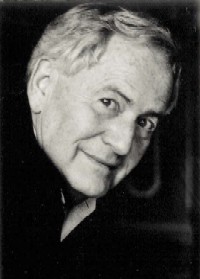
István Szabó, Academy Award-winning director of the 1981 film Mephisto, comes to Bates College to give a lecture titled Close-up: The Art of Film at 8 p.m. Friday, Oct. 24, in the Keck Classroom (G52), Pettengill Hall, Andrews Road.
Szabó, Hungary’s best-known director, won the 1981 Academy Award for Best Foreign Film for Mephisto, the story of an actor in pre-war Germany whose ambition proves to be his downfall. (The director’s full name is pronounced “eesht-vahn saw-boh.”) The film is the subject of a first-year seminar this fall at Bates.
The lecture, sponsored by the Mellon Program in the Humanities at Bates, is open to the public at no charge. For more information, call 207-786-6378.
Szabó, like his late Polish counterpart Krzysztof Kieslowski, is one of the few directors from the former Soviet bloc to win international acclaim, explains Katalin Vecsey, a lecturer in the theater and rhetoric department who invited Szabó to Bates.
“He’s a director from a small country with a strange language who’s been able to step over those barriers and make movies for a worldwide audience,” she says.
Szabó has demonstrated a distinctive grasp of themes central to the human condition, Vecsey says, pointing to 1999’s Sunshine. Starring Ralph Fiennes and set in Hungary, the film explores the impact of anti-Semitism on successive generations of one family through three momentous periods of history — the eras of Habsburg, Nazi and Communist domination.
“It was just so touching, and I think very few people are motivated to make movies like that,” she says. “He’s talking about really universal issues, and it doesn’t matter if you are American or Hungarian or Armenian, it’s just something that you get.”
Born in 1938 in Budapest (also Vecsey’s home town), Szabó became a leading figure in the new wave of Hungarian film following the 1964 release of his first feature film, The Age of Daydreaming. He has won a variety of international awards for his work and has taught film history in London, Berlin and elsewhere. His Bates visit comes during editing in Toronto for his next film, Being Julia, with Annette Bening and Jeremy Irons.
First-year seminars at Bates are designed to introduce the basics of academic writing, research and critical thought. ” ‘Mephisto’: Film, Novel, Screenplay” starts with Klaus Mann’s 1936 novel, loosely based on the career of his brother-in-law. In preparation for the course, Vecsey and the theater department commissioned the first English translation of the Mephisto screenplay, originally written in Hungarian and filmed in German.
The story, says Vecsey, has “a universal message about how far people will go to be successful in their fields. It’s important to see this theme happening nowadays — if you think of network television with all the reality shows, everybody wants to be famous. People will eat anything just to be on television.”
Here are descriptions of the five titles in the István Szabó Film Series at Bates:
Father, Sept. 22 — An important entry in the 1960s Hungarian film renaissance, this is the deeply felt coming-of-age story of a young man who idealizes his dead father. Hungarian with English subtitles. (1966, 95 mins.)
Lovefilm, Sept. 29 — The story of childhood sweethearts separated first by the Nazi invasion of Hungary and again by the stresses of communist rule. Hungarian with English subtitles. (1970, 123 mins.)
Mephisto, Oct. 6 — Klaus Maria Brandauer portrays an actor in pre-war Germany whose desire for success leads him, in effect, to making a pact with evil and thus to his downfall. German with English subtitles. (1981, 144 mins.)
Meeting Venus, Oct. 13 — Szabó’s first English-language film depicts a diva, played by Glenn Close, whose romantic conquests play out against the music of Richard Wagner and the turbulent world of opera. (1991, 121 mins.)
Sunshine, Oct. 20 — Ralph Fiennes plays three roles — father, son and grandson — in a Budapest family that “struggles to survive the anti-Semitism that permeates the generations of each man. The film . . . [recreates] the details of the Austro-Hungarian Empire, Nazi and communist eras in Hungary” (www.facets.org). In English. (1999, 180 mins.)