At the Bates Department of Biology, we are a vibrant group of teacher-scholars dedicated to instilling in our students a love of biology and respect for the natural world while working to develop a program that delivers an excellent and accessible STEM education.
Our curriculum covers the breadth of biology while enabling students to specialize in their upper-level electives. Through authentic, inquiry-driven research courses, capstone projects, and classes geared to learning a specific skill — including field botany, marine genomics, and more — students gain hands-on experience and receive personalized mentorship.
Contact Us
Thomas Pinette, Academic Administrative Assistant
45 Campus Avenue
Bonney Science Center Phone: 207-755-5928
tpinette@bates.edu
What You Will Learn
To explore our place in the natural world and our impacts upon it
To challenge assumptions
How to think critically about scientific data
To develop skills outside of the constraints of the academic term through summer opportunities in the lab and in the field with faculty
To present the findings of your research at regional and national conferences
Practical, transferable skills through course-based research opportunities and innovative skills courses
Life After Bates
The challenging curriculum of innovative coursework and research experiences prepares biology students for postgraduate training in a wide variety of professions including health care, health sciences, research, and education.
91%
of 2020-2024 science and math graduates are employed and/or attending graduate school
“My time at Bates launched and shaped my career in biotechnology. The curriculum taught me to think critically, learn rapidly, ask the right questions, integrate ideas across disciplines, and collaborate effectively—skills essential to drug development. A deeply supportive alumni network helped me gain an early foothold in the industry and provided mentorship that guided my growth. Together, the Bates community and academic experience prepared me to navigate the complex scientific and regulatory challenges of advancing innovative therapies for patients worldwide.”
— Andrew Slugg ’99
Selected Places of Employment/Service
Massachusetts General Hospital
Brigham and Women’s Hospital
Boston Children’s Hospital
Dana-Farber Cancer Institute
Broad Institute of MIT and Harvard
National Institutes of Health (NIH)
Mass General Brigham
The Jackson Laboratory
Accenture
ScribeAmerica
Selected Graduate Schools
Yale University
Harvard University
Johns Hopkins University
Duke University
Cornell University
Dartmouth College
University of Pennsylvania
Tufts University
University of California, San Francisco
New York University
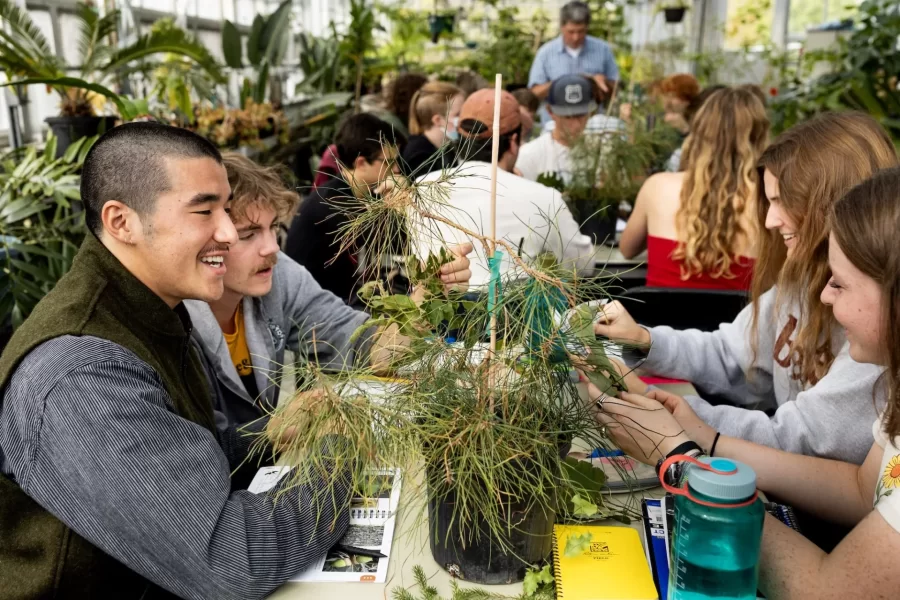
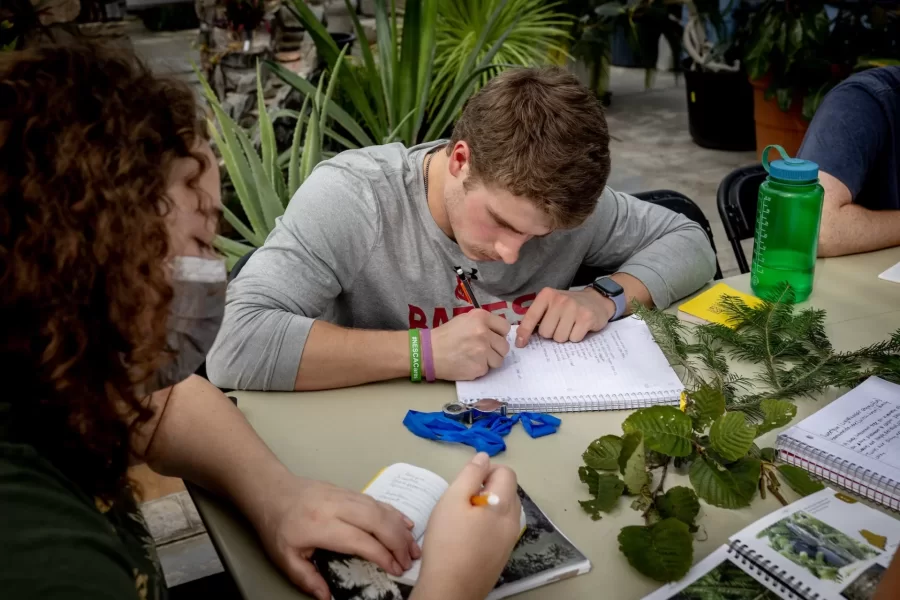
“Usually at this hour, we’d be down in the lecture hall.”
— Associate Professor of Biology Brett Huggett explaining why he took his dendrology students to the Carnegie Greenhouse rather than have them remain in the classroom to identify tree species.
Huggett teaches BIO 271/Dendrology and the Natural History of Tree, a field-based course in which students engage in the scientific study of the natural history and identification of trees and important shrubs native to New England, and some commonly planted non-native trees. Topics include the anatomy, function, taxonomy, biology, and uses of trees. Lecture topics support weekly outdoor laboratories, which may include trips to such field sites as the Saco Heath, Thorncrag Bird Sanctuary, and Wolfe’s Neck State Park. Study of the woody flora of New England serves as a foundation for further work in biology, environmental studies, conservation, or related fields.
(Phyllis Graber Jensen/Bates College)
#batescollege #biology #stem #tress #dendrology #liberalarts #faculty #lab
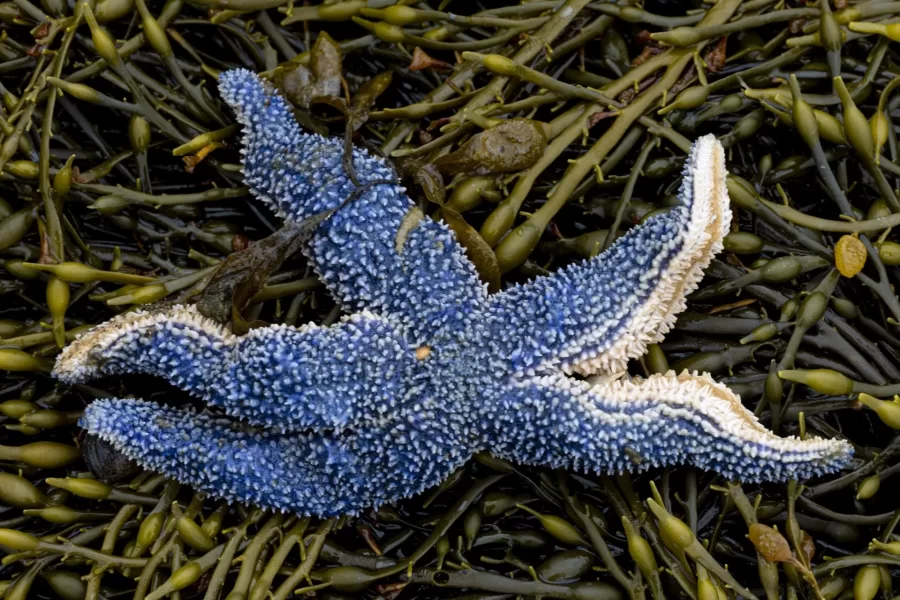
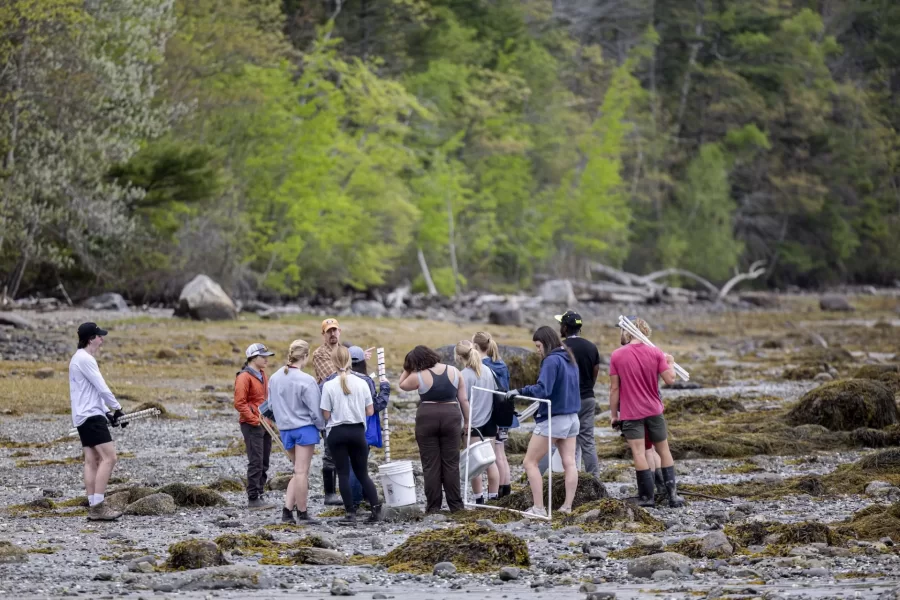
Lecturer in Biology Jesse Minor ’00 takes students in his Short Term on invasive green crabs to Cousins Island in Yarmouth for inventory monitoring and site assessment field trip.
Jessie Batchelder from Manomet joined them.
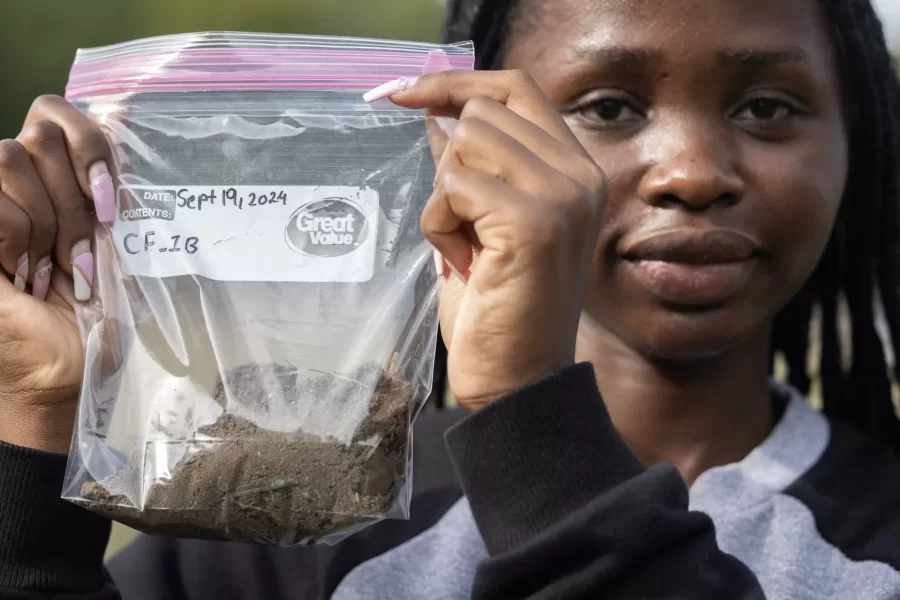
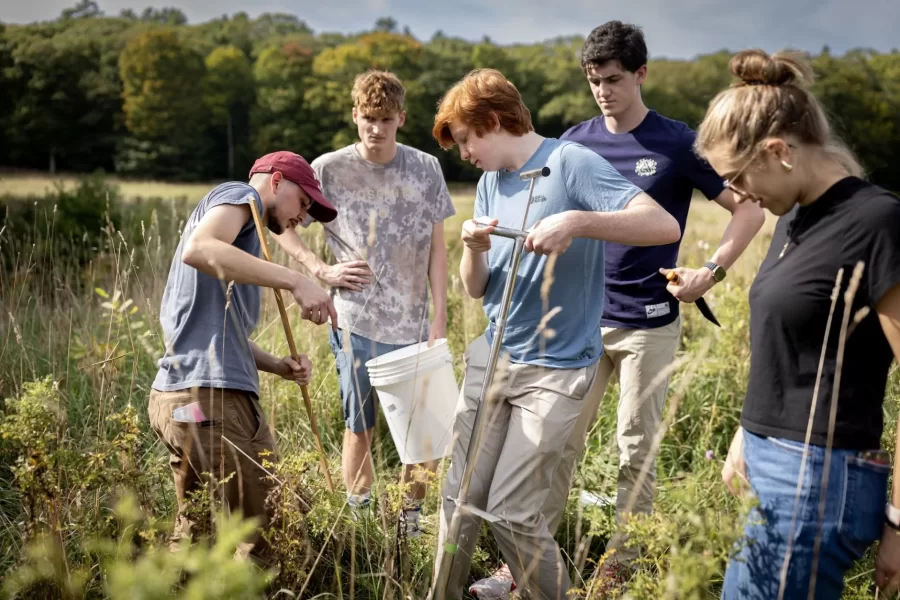
Bates biology students have joined as effort at an organic farm in Freeport to work through the complex issues of soil contamination by PFAS, so-called forever chemicals, caused by the spread of contaminated sludge as fertilizer decades ago.
Here, post-baccalaureate scholar Sebastián León Fallas ’24 (left) is teaching students how to collect a soil core sample. From left, León Fallas, Trent Hieber ’26 of Granby, Conn., John Harun-Delong ’26 of Fairbanks, Alaska, Ben Leach ’27 of Atlanta, and Bryn Murray ’27 of Jupiter, Fla., who is a course teaching assistant.
Laura and Winslow Robinson, owners and operators of Fable Farm, have invited scientists at Bates and Yale University to do grant-funded research to better understand the effects of PFAS on farm and to find scalable solutions to the crisis.
The Bates students are in the course “Biological Research Experience: Molecules to Ecosystems,” taught by Levi Adams, a lecturer in biology. It’s the type of Bates course that engages students in hands-on research experiences, teaching them how to apply various research methods using multiple approaches that span a range of disciplines in biology, from molecular to ecological.
Bates biology students have joined as effort at an organic farm in Freeport to work through the complex issues of soil contamination by PFAS, so-called forever chemicals, caused by the spread of contaminated sludge as fertilizer decades ago.
Here, post-baccalaureate scholar Sebastián León Fallas ’24 (left) is teaching students how to collect a soil core sample. From left, León Fallas, Trent Hieber ’26 of Granby, Conn., John Harun-Delong ’26 of Fairbanks, Alaska, Ben Leach ’27 of Atlanta, and Bryn Murray ’27 of Jupiter, Fla., who is a course teaching assistant.
Laura and Winslow Robinson, owners and operators of Fable Farm, have invited scientists at Bates and Yale University to do grant-funded research to better understand the effects of PFAS on farm and to find scalable solutions to the crisis.
The Bates students are in the course “Biological Research Experience: Molecules to Ecosystems,” taught by Levi Adams, a lecturer in biology. It’s the type of Bates course that engages students in hands-on research experiences, teaching them how to apply various research methods using multiple approaches that span a range of disciplines in biology, from molecular to ecological.
“Usually at this hour, we’d be down in the lecture hall.”
— Associate Professor of Biology Brett Huggett explaining why he took his dendrology students to the Carnegie Greenhouse rather than have them remain in the classroom to identify tree species.
Huggett teaches BIO 271/Dendrology and the Natural History of Tree, a field-based course in which students engage in the scientific study of the natural history and identification of trees and important shrubs native to New England, and some commonly planted non-native trees. Topics include the anatomy, function, taxonomy, biology, and uses of trees. Lecture topics support weekly outdoor laboratories, which may include trips to such field sites as the Saco Heath, Thorncrag Bird Sanctuary, and Wolfe’s Neck State Park. Study of the woody flora of New England serves as a foundation for further work in biology, environmental studies, conservation, or related fields.
(Phyllis Graber Jensen/Bates College)
#batescollege #biology #stem #tress #dendrology #liberalarts #faculty #lab
Lecturer in Biology Jesse Minor ’00 takes students in his Short Term on invasive green crabs to Cousins Island in Yarmouth for inventory monitoring and site assessment field trip.
Jessie Batchelder from Manomet joined them.
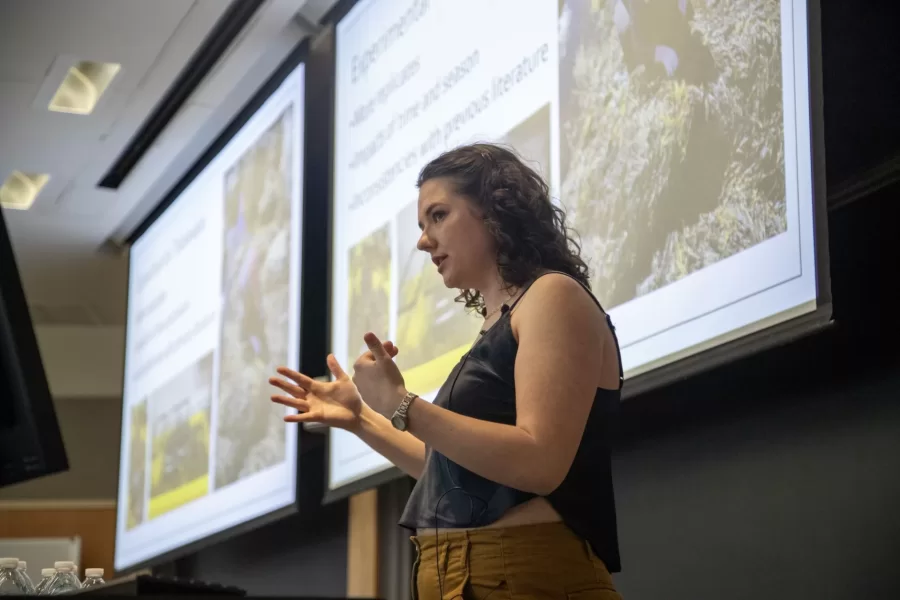
Lucy Hensley ’25 presents her Biology thesis research in the Research in STEM panel on Littorina obtusata prey responses to European green crabs, detailing possible next steps for the study to obtain more conclusive results.
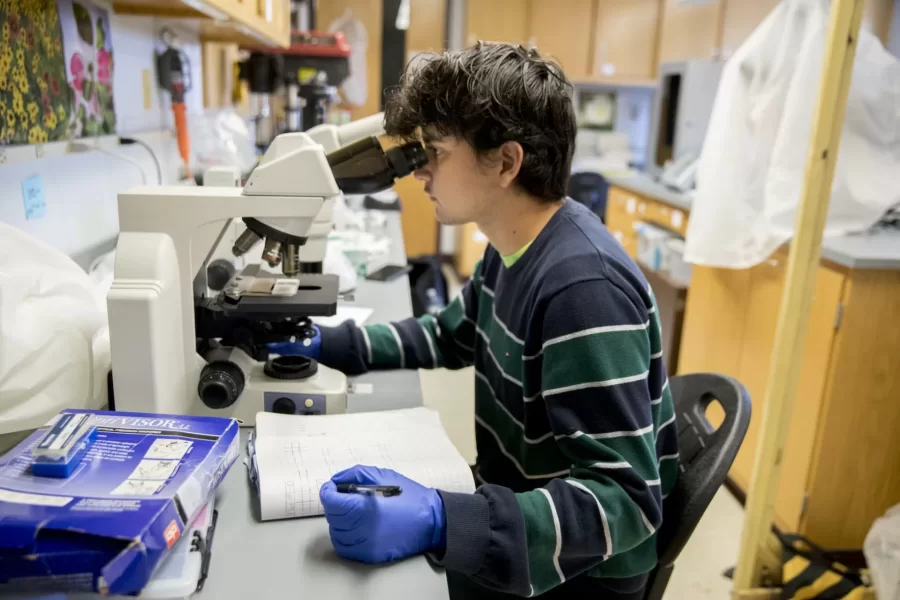
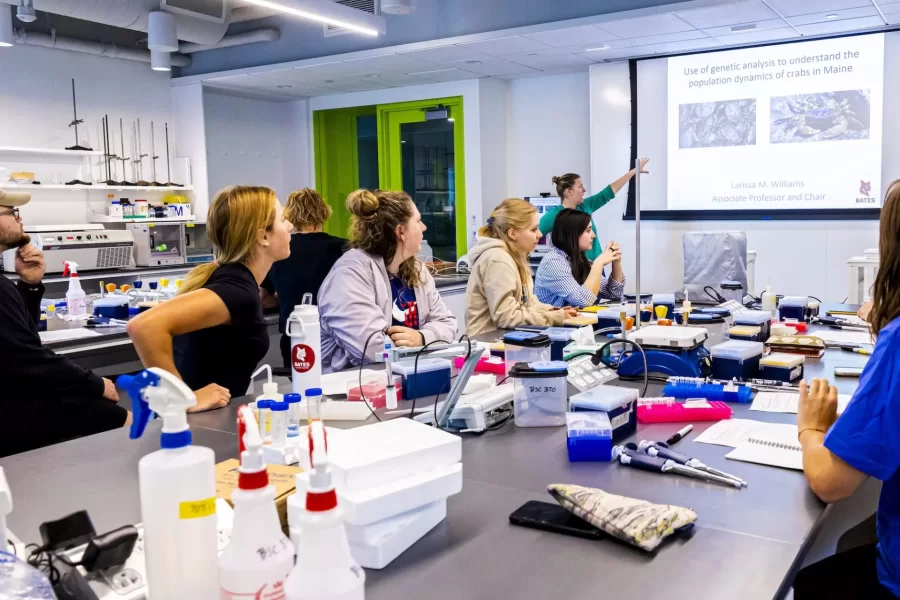
Associate Professor of Biology Larissa Williams teaches students in Bio s39f a lesson on “uses of Genetic analysis to understand the population of dynamics of crabs in Maine.” They met in Bonney 370 laboratory and received instruction on how to use a pipette, including closing their eyes in preparing to click the instrument.
The course’s instructor is Jesse Minor ’00, a lecturer in biology.
Why Study Biology at Bates?
In addition to supporting students who plan to use their biology degree in their future careers, we are invested in helping non-science majors see the value of science to society and to their everyday lives. All students participate in scaffolded, hands-on research experiences that are integrated throughout our curriculum, both in the laboratory and in the field.
Featured Courses
Meet the Faculty
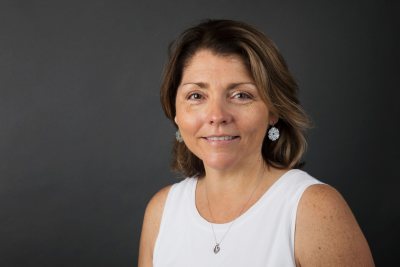
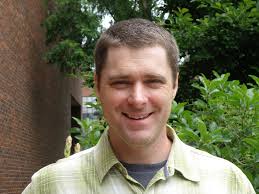
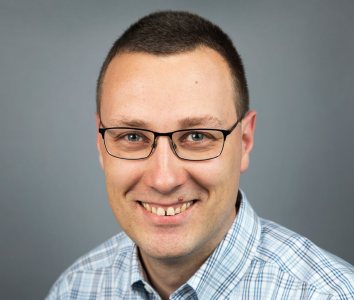
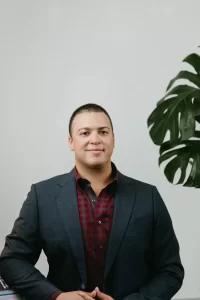
The biology faculty is deeply invested in the growth, learning, and continued success of the program’s students. Faculty have received degrees at a variety of renowned institutions in the U.S. and around the world. Over the last five years, their research has been supported by multiple grants from the National Institutes of Health, the National Science Foundation, and the Gordon and Betty Moore Foundation. The results of faculty- and student-driven research in the biology department have been published in nearly 50 different peer-reviewed journals over the last few years.
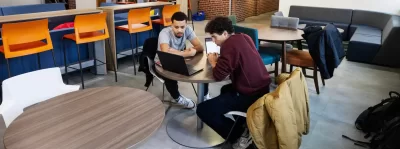
In the Student Center for Belonging and Community, first-generation Bates students mentor their younger peers, providing guidance on everything from academics to internships to social life.
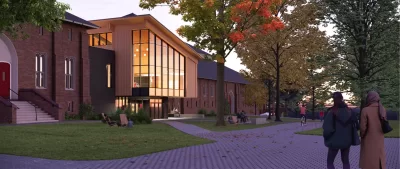
Bates is embarking on a $45 million project to update two key athletic facilities and construct a new fitness and well-being center. A gift of $10 million from Jon W. Brayshaw ’90, P’25 and Jocelyn Stoddard Brayshaw ’88, P’25 has brought the college a vital step closer to construction. The new facility will be named the Stoddard Fitness and Well-Being Center.
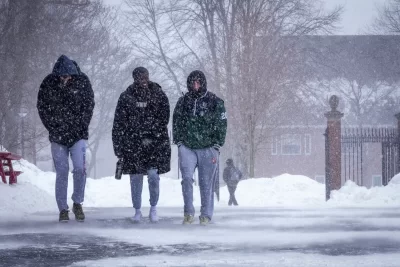
February on campus saw sports successes, several large snowfalls, and our annual Winter Carnival — a week of events celebrating the joys of the chilly season.