









Classical and Medieval Studies at Bates

The Program in Classical and Medieval Studies combines a uniquely interdisciplinary study of cultural history with an emphasis on empowering students to read and interrogate texts in ancient languages.

The program centers on questions about power, oppression, and the constructed nature of culture, identity, and the past itself. We offer courses on a variety of topics, from religion to politics to literature, and students who major in CMS take both language and culture courses before completing a senior capstone.

Contact Us

Matt Von Vogt, Academic Administrative Assistant
4 Andrews Rd
Pettengill Hall
Phone: 207-786-8296 mvonvogt@bates.edu

What You Will Learn

garnet iconography with stack of books and desktop computer
To synthesize information with attention to both detail and creativity
garnet iconography with open notebook and people with chat bubble
How to think analytically and empathetically
garnet iconography with stack of papers, pen, and brain
How to write clearly with imagination
garnet iconography with academic building, books on a shelf, and globe
To learn about the past through hands-on opportunities in archives, at museums, and beyond
garnet iconography with books, open book, and magnifying glass
How to use lessons gleaned from the past to gain new understanding of current culture
garnet iconography with academic building, people, and trifold map with marker
How to examine ancient cultures through critical lenses, considering questions of race, gender, class, and more

Life After Bates

Classical and medieval studies students often pursue careers in library science, publishing, editing, education, museum curation, and conservation, among others. Some proceed to medical or law schools, where their foundation in ancient languages provides a distinct advantage.

90%

of 2020-2024 humanities graduates are employed and/or attending graduate school

  • Harvard University
  • New York University
  • Boston University
  • Columbia University
  • George Washington University
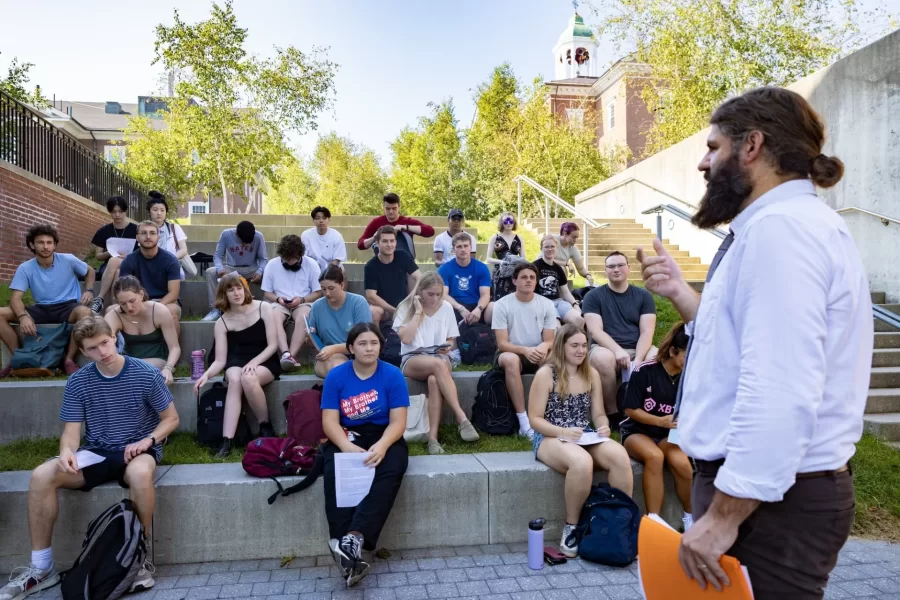
Assistant Professor of Classical and Medieval Studies Mark Tizzoni fishes up teaching on the steps between Pettengill and Lane halls on the morning of Sept. 7, 2023.

His course is titled “CMS 291 - Colonization and Resistance in Late Antique North Africa” and it’s described this way:


While treated by some scholars as peripheral, North Africa was and is a central arena in global history. This course examines the Maghreb in the dynamic period of transformation that saw the Roman Empire devolve into separate political and social entities, ca.200-700 C.E. In these critical centuries, North Africa and North Africans served both as anchors preserving Roman culture and society, and key agents in its transformation and devolution. Approaching the topic through primary and secondary sources, this course focuses on key themes: colonization and resistance, ethnicity and identity, and cultural and social cohesion. Recommended background: CM/HI 102.

Assistant Professor of Classical and Medieval Studies Mark Tizzoni fishes up teaching on the steps between Pettengill and Lane halls on the morning of Sept. 7, 2023. His course is titled “CMS 291 – Colonization and Resistance in Late Antique North Africa” and it’s described this way: While treated by some scholars as peripheral, North Africa was and is a central arena in global history. This course examines the Maghreb in the dynamic period of transformation that saw the Roman Empire devolve into separate political and social entities, ca.200-700 C.E. In these critical centuries, North Africa and North Africans served both as anchors preserving Roman culture and society, and key agents in its transformation and devolution. Approaching the topic through primary and secondary sources, this course focuses on key themes: colonization and resistance, ethnicity and identity, and cultural and social cohesion. Recommended background: CM/HI 102.

Phyllis Graber Jensen 
Attachments
Mon, Nov 26, 5:57 PM (4 days ago)
to me

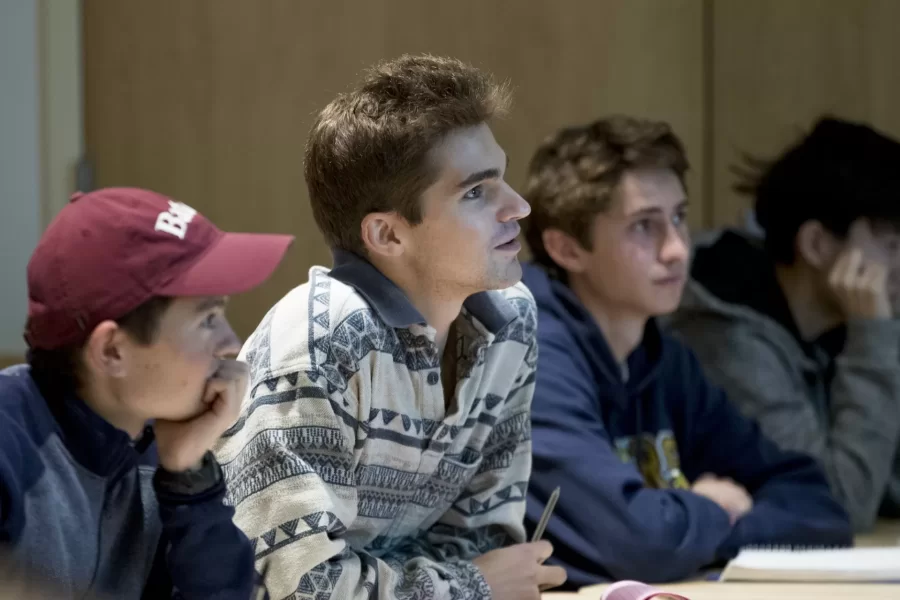
"This is a great place to study."
.

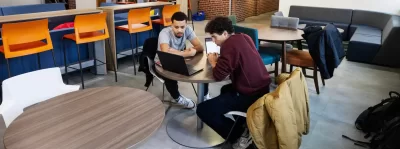
-- Classical and medieval studies major Matthew Berdon '19 of Hartsdale, N.Y., commenting on the peace and quiet he's enjoying in Pettengill Hall's second-floor classical and medieval studies lounge. 
.
Borton was working on a reading response to 17th-century English poet John Milton's epic poem "Paradise Lost." (Phyllis Graber Jensen/Bates College)

Phyllis Graber Jensen Attachments Mon, Nov 26, 5:57 PM (4 days ago) to me “This is a great place to study.” . — Classical and medieval studies major Matthew Berdon ’19 of Hartsdale, N.Y., commenting on the peace and quiet he’s enjoying in Pettengill Hall’s second-floor classical and medieval studies lounge. . Borton was working on a reading response to 17th-century English poet John Milton’s epic poem “Paradise Lost.” (Phyllis Graber Jensen/Bates College)

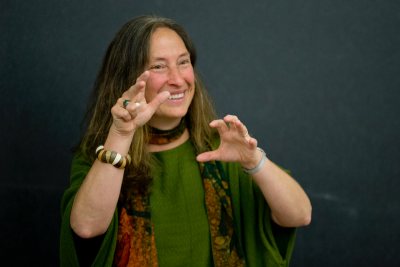
Associate Professor of Classical and Medieval Studies Lisa Maurizio teaches CMRE 218 - Greek and Roman Myths during Back to Bates Weekend as a few parents sit in on the class.

Associate Professor of Classical and Medieval Studies Lisa Maurizio teaches CMRE 218 – Greek and Roman Myths during Back to Bates Weekend as a few parents sit in on the class.

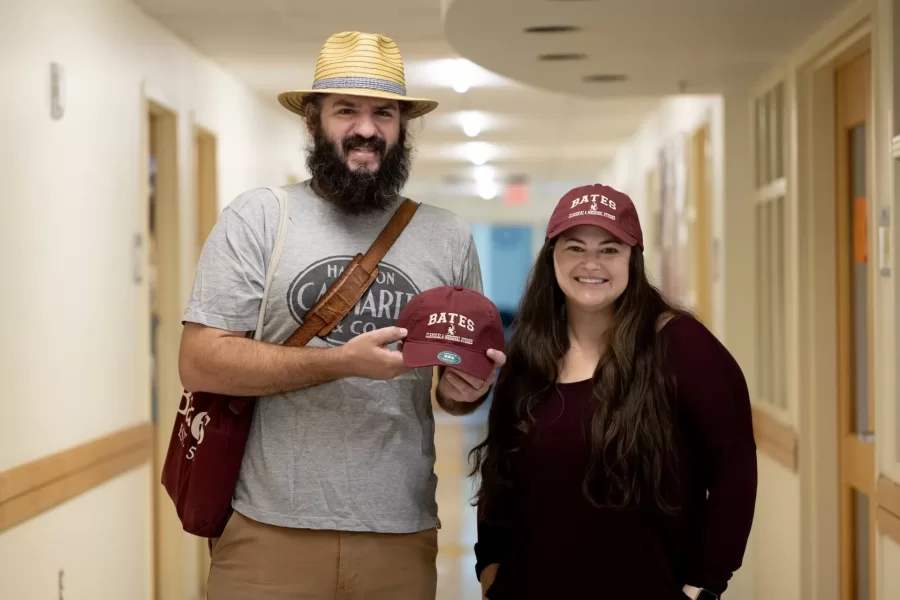
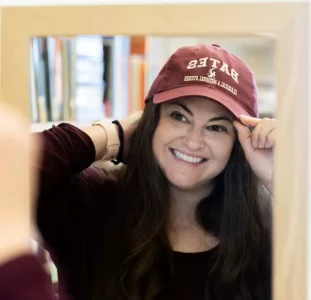
They wanted hats and representation for their students, said @bates.classical.and.medieval studies professors Liana Brent and Mark Tizzoni, speaking outside of their second-floor Pettengill Hall offices.

“We’re a small program in Classical and Medieval Studies, and we have really enthusiastic students and faculty, Brent said, seen here checking out her new head gear in her office mirror.

In thinking of a design, she and her colleagues considered columns or something that dealt with the classical past, “but we are classical AND medieval studies,” she pointed out, so their choice for a griffin — a little mythological creature or symbol with the body of a lion and the head and wings of an eagle — “spans the classical and medieval world. And it’s one that is not associated with the whiteness of the past the way a column or a temple might be, so it really hints at some of our values and ideals in this program,” Brent said.

They wanted hats and representation for their students, said @bates.classical.and.medieval studies professors Liana Brent and Mark Tizzoni, speaking outside of their second-floor Pettengill Hall offices. “We’re a small program in Classical and Medieval Studies, and we have really enthusiastic students and faculty, Brent said, seen here checking out her new head gear in her office mirror. In thinking of a design, she and her colleagues considered columns or something that dealt with the classical past, “but we are classical AND medieval studies,” she pointed out, so their choice for a griffin — a little mythological creature or symbol with the body of a lion and the head and wings of an eagle — “spans the classical and medieval world. And it’s one that is not associated with the whiteness of the past the way a column or a temple might be, so it really hints at some of our values and ideals in this program,” Brent said.

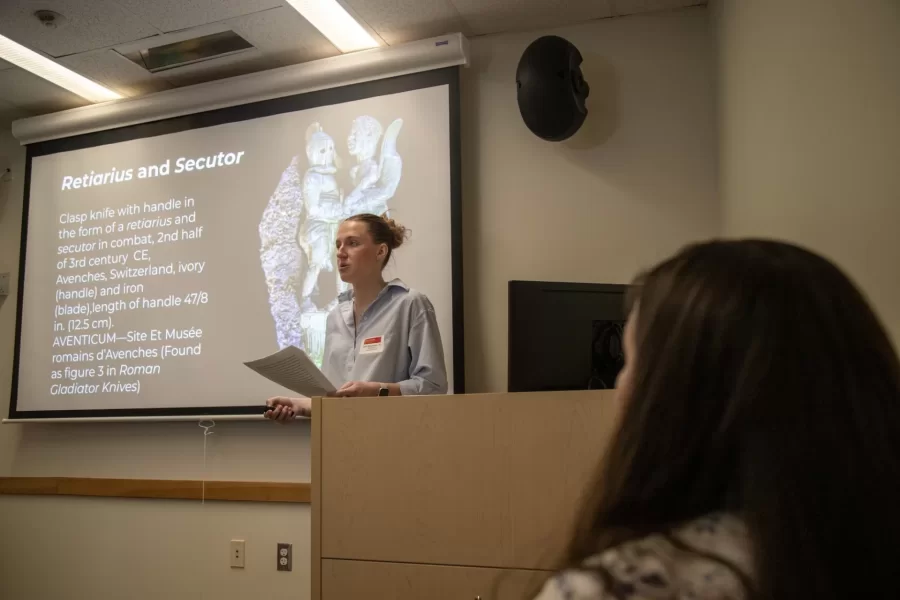
Classical & Medieval Studies professor Liana Brent watches as Julia Neumann '25 presents on enslaved Roman gladiators as part of a panel on Roman slavery by students of Brent's Fall 2024 course, Slavery in Ancient Rome.

Classical & Medieval Studies professor Liana Brent watches as Julia Neumann ’25 presents on enslaved Roman gladiators as part of a panel on Roman slavery by students of Brent’s Fall 2024 course, Slavery in Ancient Rome.

We foster the development of a historical imagination, giving students a new lens through which to view the classical and medieval periods.  By studying past cultures, students gain valuable insights for today’s debates, enriching their understanding of the world and the way we live. Students are encouraged to study abroad, providing on-the-ground opportunities to deepen their understanding of diverse cultures, and to apply their knowledge in real-world settings within the local community.

Featured Courses

Photo of Cynthia M. Baker

Cynthia M. Baker

Professor of Religious Studies

Photo of Megan R. Boomer

Megan R. Boomer

Assistant Professor of Art and Visual Culture

Photo of Liana Brent

Liana Brent

Assistant Professor of Classical and Medieval Studies

Photo of Emma Ianni

Emma Ianni

Assistant Professor of Classical and Medieval Studies

Photo of Sarah B. Lynch

Sarah B. Lynch

Assistant Professor of Classical and Medieval Studies

Photo of Lisa Maurizio

Lisa Maurizio

Professor of Classical and Medieval Studies

Photo of Laurie O'Higgins

Laurie O’Higgins

Euterpe B. Dukakis Professor of Classical and Medieval Studies

Photo of Mark L. Tizzoni

Mark L. Tizzoni

Assistant Professor of Classical and Medieval Studies

Photo of Henry J. Walker

Henry J. Walker

Senior Lecturer in Classical and Medieval Studies

News & Events

Bates announces Stoddard Fitness and Well-Being Center and athletics facilities upgrades
March 5, 2026

Bates announces Stoddard Fitness and Well-Being Center and at…

Bates is embarking on a $45 million project to update two key athletic facilities and construct a new fitness and well-being center. A gift of $10 million from Jon W. Brayshaw ’90, P’25 and Jocelyn Stoddard Brayshaw ’88, P’25 has brought the college a vital step closer to construction. The new facility will be named the Stoddard Fitness and Well-Being Center. 

Over the woodlands brown and bare, over the harvest-fields forsaken, silent, and soft, and slow descends the snow. — Longfellow Back on campus after the February freak storm, Bates feels suspended between motion and stillness; cars crunch in half-melted tracks, boots drip by radiators, flights and plans still catching up somewhere in the clouds. Some of us are here, some are delayed, and the quiet holds space for both. It’s a strange return; rushed arrivals, late-night drives, weather maps open on our phones, yet the air itself feels calm, like the world pressed pause just long enough for us to notice it. The paradox is real; chaos in the forecast, steadiness on the quad. Snow does that. It softens edges, lowers voices, makes even a campus full of movement feel like it’s breathing slowly.
March 5, 2026

February at Bates

February on campus saw sports successes, several large snowfalls, and our annual Winter Carnival — a week of events celebrating the joys of the chilly season.