





Economics at Bates

Whether through exploring market dynamics, inequality, or environmental sustainability, students within the Department of Economics learn to examine how individuals, firms, and governments make decisions.

Our program is designed to foster “intelligent citizenship” and rigorous scholarship, equipping students with the tools to analyze complex human behavior and social issues. Policy makers in business, government, and the nonprofit sector frequently evaluate complex economic issues. The economics major culminates in a senior thesis, where students apply their cumulative knowledge to an original research question, ensuring every graduate leaves our program with deep, practical expertise in the discipline.

Contact Us

Matt Von Vogt, Academic Administrative Assistant
4 Andrews Rd
Pettengill Hall
Phone: 207-786-8296 mvonvogt@bates.edu

What You Will Learn

garnet iconography with stack of papers, brain, and speech bubbles
How to think critically, communicate effectively, and research capably
garnet iconography with pie chart, crowd of people, and bar chart
To understand how to use micro- and macroeconomic models to analyze behavior and aggregate phenomena
garnet iconography with desktop computer, circuit pathways, and stacked paper
To employ statistical and econometric techniques to test hypotheses and interpret data-driven evidence
garnet iconography with globe, people, and desktop computer
To apply economic concepts to pressing real-world problems—from healthcare and development to financial crises and social justice — while considering diverse perspectives
garnet iconography with speech bubbles, presentation slide, and clipboard with pen
To articulate complex economic arguments clearly in both written and oral forms for various audiences
garnet iconography with magnifying glass, books, and academic building
To formulate original research questions, locate relevant data, and execute a professional-grade study

Life After Bates

Our graduates consistently secure placements at top organizations and graduate schools. More than two-thirds of economics majors eventually pursue further study, with acceptances to top MBA and Ph.D. programs. Alumni have embarked on their careers at top firms, research institutes, and governmental departments.

94%

of 2020-2024 social sciences graduates are employed and/or attending graduate school

  • Columbia University
  • University of Pennsylvania Carey Law School
  • Wharton School of the University of Pennsylvania
  • University of Chicago
  • Tuck School of Business at Dartmouth
  • NYU Tandon School of Engineering
  • University College London
  • Emory University School of Law
  • Harvard University
  • Massachusetts Institute of Technology
  • Stanford University
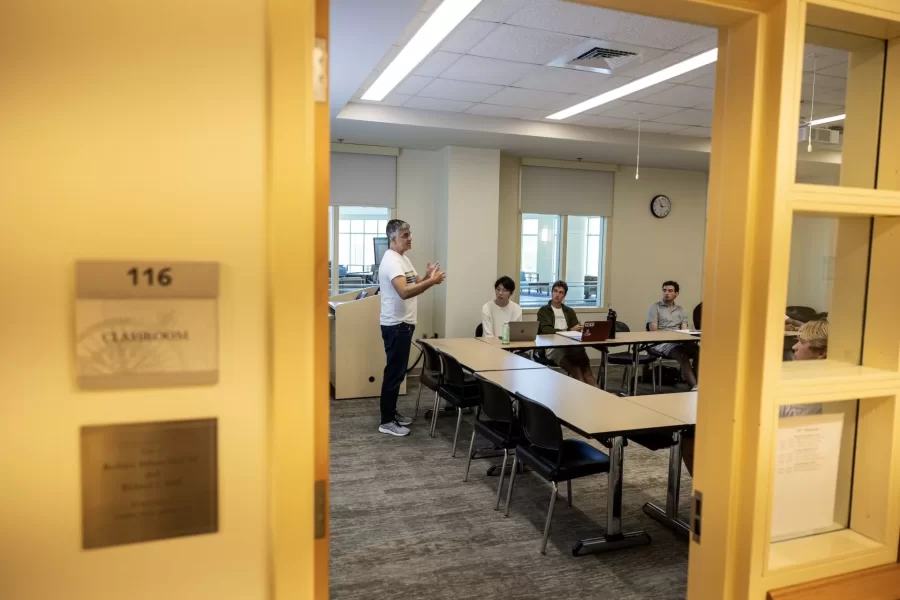
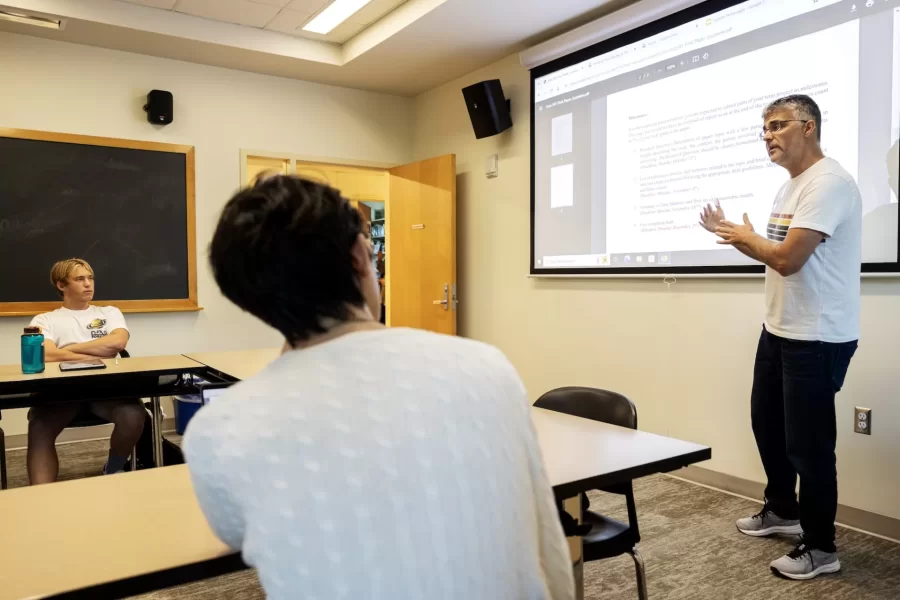
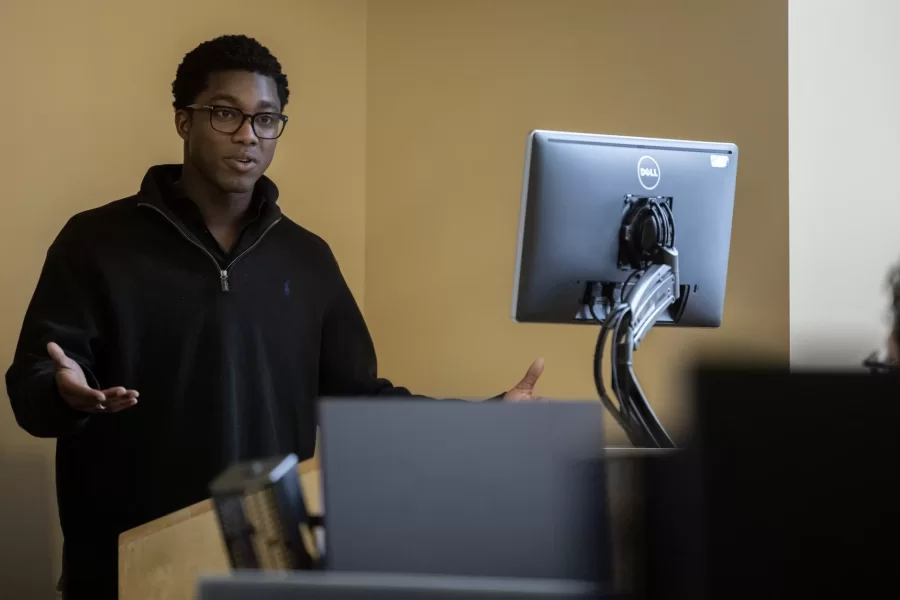
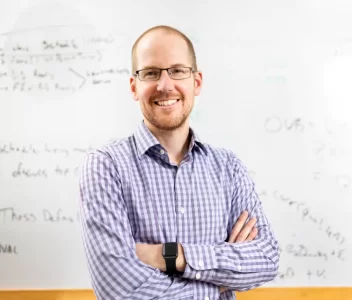
Daniel Riera-Crichton, Betty Doran Stangle Professor of Applied Economics, instructs students during their first day of International Finance seminar on September 4, 2024. 

(Theophil Syslo | Bates College)

Daniel Riera-Crichton, Betty Doran Stangle Professor of Applied Economics, instructs students during their first day of International Finance seminar on September 4, 2024. (Theophil Syslo | Bates College)

=Economics class sends team to Fed Challenge at Federal Reserve Bank in Boston

The course is “Central Banking and the College Fed Challenge” taught by visiting professor Michael Osei

Course meets Tue-Thur, 11-12:20, Pettigrew 300, The final team will be chosen on 10/31.
11:05: Five-person team has moot presentation on Tues, Nov. 5.
The team goes to the 2019 Boston Regional Fed Challenge competition at the Federal Reserve Bank of Boston on Friday, Nov. 8. Other students will go to Boston and support the team.
The team presents their views on the ideal course of U.S. monetary policy and field questions from outside economists. Here is a report containing the class’s views on the current state of the U.S. economy and the outlook as of Oct. 14.
If they win, the team will then advance to the National Competition at the Board of Governors in Washington D.C.  

Heads-up: so a total of 26 teams (23 University/College teams and 3 community colleges) have registered for the competition.   

Here are the lists:
Presenters (5)
Jackson Davis
Ryan Rigione
Thomas Dodge
Jonathan Nichols
James MacDonald

Sophie Matt (alternate)
Espen Wheeler (run slides)
Jeff Yang  (participant)
Ethan Johnson (participant)
Chris Bierwirth (driver)

=Economics class sends team to Fed Challenge at Federal Reserve Bank in Boston The course is “Central Banking and the College Fed Challenge” taught by visiting professor Michael Osei Course meets Tue-Thur, 11-12:20, Pettigrew 300, The final team will be chosen on 10/31. 11:05: Five-person team has moot presentation on Tues, Nov. 5. The team goes to the 2019 Boston Regional Fed Challenge competition at the Federal Reserve Bank of Boston on Friday, Nov. 8. Other students will go to Boston and support the team. The team presents their views on the ideal course of U.S. monetary policy and field questions from outside economists. Here is a report containing the class’s views on the current state of the U.S. economy and the outlook as of Oct. 14. If they win, the team will then advance to the National Competition at the Board of Governors in Washington D.C. Heads-up: so a total of 26 teams (23 University/College teams and 3 community colleges) have registered for the competition. Here are the lists: Presenters (5) Jackson Davis Ryan Rigione Thomas Dodge Jonathan Nichols James MacDonald Sophie Matt (alternate) Espen Wheeler (run slides) Jeff Yang (participant) Ethan Johnson (participant) Chris Bierwirth (driver)

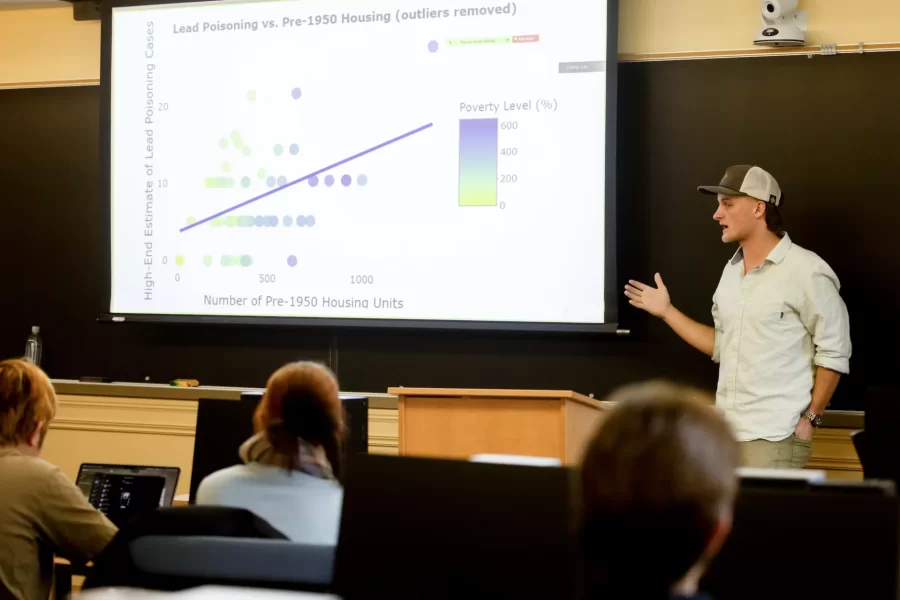
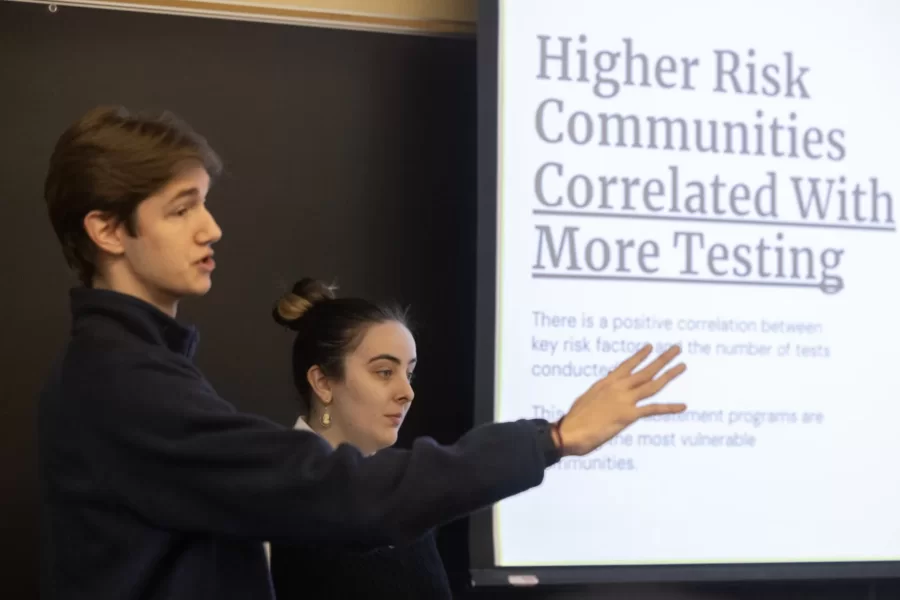
1. Yes, that is the course name. It is ECON/DCS 368
2. I'm working with Jacqueline Crucet in the Economic & Community Development Department. The relationship was set up by the Harward Center -- it is our second semester working together. Morgan Kinney introduced us and has been a point person to help this CEL project work two semesters in a row now. 
3. The Harward Center is constantly working to set up these relationships. Jacqueline likes to work with students on these opportunities. Last semester she and I collaborated on a hackathon concerning the relationship between streetlights and crime -- I think she wanted to do another semester project after that one.
4. & 5. The data are administrative city records and census data. (Technically the census is a survey, but it is aggregated to the "block" level, which is a Census unit that roughly corresponds to a city block.) The admin data was collected by the city. It is information on each household's participation.

1. Yes, that is the course name. It is ECON/DCS 368 2. I’m working with Jacqueline Crucet in the Economic & Community Development Department. The relationship was set up by the Harward Center — it is our second semester working together. Morgan Kinney introduced us and has been a point person to help this CEL project work two semesters in a row now. 3. The Harward Center is constantly working to set up these relationships. Jacqueline likes to work with students on these opportunities. Last semester she and I collaborated on a hackathon concerning the relationship between streetlights and crime — I think she wanted to do another semester project after that one. 4. & 5. The data are administrative city records and census data. (Technically the census is a survey, but it is aggregated to the “block” level, which is a Census unit that roughly corresponds to a city block.) The admin data was collected by the city. It is information on each household’s participation.

1. Yes, that is the course name. It is ECON/DCS 368
2. I'm working with Jacqueline Crucet in the Economic & Community Development Department. The relationship was set up by the Harward Center -- it is our second semester working together. Morgan Kinney introduced us and has been a point person to help this CEL project work two semesters in a row now. 
3. The Harward Center is constantly working to set up these relationships. Jacqueline likes to work with students on these opportunities. Last semester she and I collaborated on a hackathon concerning the relationship between streetlights and crime -- I think she wanted to do another semester project after that one.
4. & 5. The data are administrative city records and census data. (Technically the census is a survey, but it is aggregated to the "block" level, which is a Census unit that roughly corresponds to a city block.) The admin data was collected by the city. It is information on each household's participation.

1. Yes, that is the course name. It is ECON/DCS 368 2. I’m working with Jacqueline Crucet in the Economic & Community Development Department. The relationship was set up by the Harward Center — it is our second semester working together. Morgan Kinney introduced us and has been a point person to help this CEL project work two semesters in a row now. 3. The Harward Center is constantly working to set up these relationships. Jacqueline likes to work with students on these opportunities. Last semester she and I collaborated on a hackathon concerning the relationship between streetlights and crime — I think she wanted to do another semester project after that one. 4. & 5. The data are administrative city records and census data. (Technically the census is a survey, but it is aggregated to the “block” level, which is a Census unit that roughly corresponds to a city block.) The admin data was collected by the city. It is information on each household’s participation.

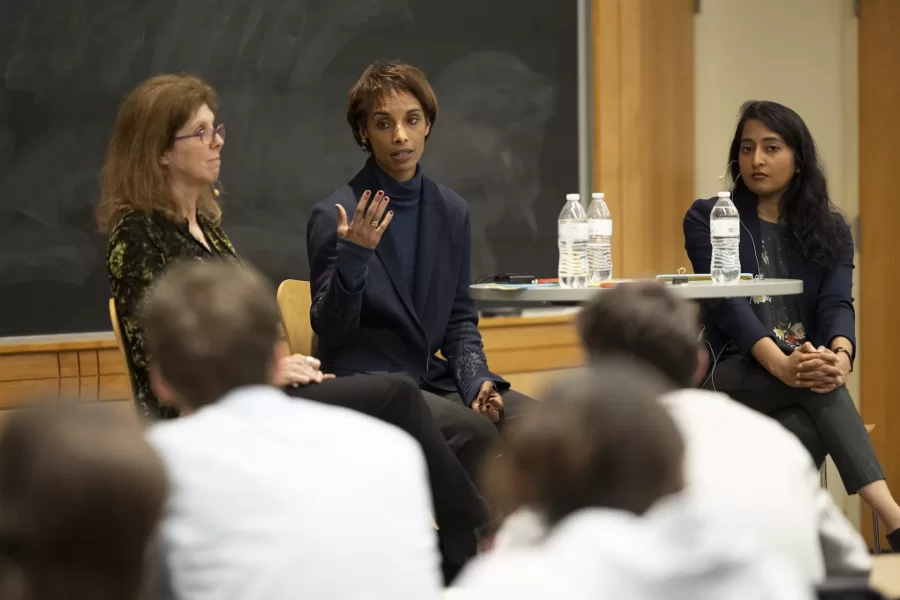
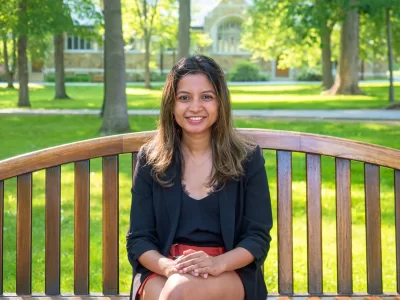
Cecilia Rouse, who serves as chair of the White House Council of Economic Advisers and is a professor of economics and public affairs at Princeton University, meets with Bates students at a welcome reception hosted by the Bates student club WE@Bates (Women in Economics) at the Fireplace Lounge on April 7, 2022.

Later in the evening, Elmer W. Campbell Professor of Economics Lynne Lewis and Assistant Professor of Economics Nivedhitha Subramanian engaged Rouse in a lively Q&A session in Pettengill Hall’s Keck Classroom, followed by audience questions from students, faculty, and staff.

Women in Economics provides a welcoming space for Bates students to explore the historically male-dominated fields of economics, finance, and consulting through mentorship groups; talks with leading researchers and Bates alumni; and support for students in discovering post-college opportunities.

Rouse holds the Lawrence and Shirley Katzman and Lewis and Anna Ernst Professorship in the Economics of Education at Princeton.

Cecilia Rouse, who serves as chair of the White House Council of Economic Advisers and is a professor of economics and public affairs at Princeton University, meets with Bates students at a welcome reception hosted by the Bates student club WE@Bates (Women in Economics) at the Fireplace Lounge on April 7, 2022. Later in the evening, Elmer W. Campbell Professor of Economics Lynne Lewis and Assistant Professor of Economics Nivedhitha Subramanian engaged Rouse in a lively Q&A session in Pettengill Hall’s Keck Classroom, followed by audience questions from students, faculty, and staff. Women in Economics provides a welcoming space for Bates students to explore the historically male-dominated fields of economics, finance, and consulting through mentorship groups; talks with leading researchers and Bates alumni; and support for students in discovering post-college opportunities. Rouse holds the Lawrence and Shirley Katzman and Lewis and Anna Ernst Professorship in the Economics of Education at Princeton.

Daniel Riera-Crichton, Betty Doran Stangle Professor of Applied Economics, instructs students during their first day of International Finance seminar on September 4, 2024. 

(Theophil Syslo | Bates College)

Daniel Riera-Crichton, Betty Doran Stangle Professor of Applied Economics, instructs students during their first day of International Finance seminar on September 4, 2024. (Theophil Syslo | Bates College)

1. Yes, that is the course name. It is ECON/DCS 368
2. I'm working with Jacqueline Crucet in the Economic & Community Development Department. The relationship was set up by the Harward Center -- it is our second semester working together. Morgan Kinney introduced us and has been a point person to help this CEL project work two semesters in a row now. 
3. The Harward Center is constantly working to set up these relationships. Jacqueline likes to work with students on these opportunities. Last semester she and I collaborated on a hackathon concerning the relationship between streetlights and crime -- I think she wanted to do another semester project after that one.
4. & 5. The data are administrative city records and census data. (Technically the census is a survey, but it is aggregated to the "block" level, which is a Census unit that roughly corresponds to a city block.) The admin data was collected by the city. It is information on each household's participation.

1. Yes, that is the course name. It is ECON/DCS 368 2. I’m working with Jacqueline Crucet in the Economic & Community Development Department. The relationship was set up by the Harward Center — it is our second semester working together. Morgan Kinney introduced us and has been a point person to help this CEL project work two semesters in a row now. 3. The Harward Center is constantly working to set up these relationships. Jacqueline likes to work with students on these opportunities. Last semester she and I collaborated on a hackathon concerning the relationship between streetlights and crime — I think she wanted to do another semester project after that one. 4. & 5. The data are administrative city records and census data. (Technically the census is a survey, but it is aggregated to the “block” level, which is a Census unit that roughly corresponds to a city block.) The admin data was collected by the city. It is information on each household’s participation.

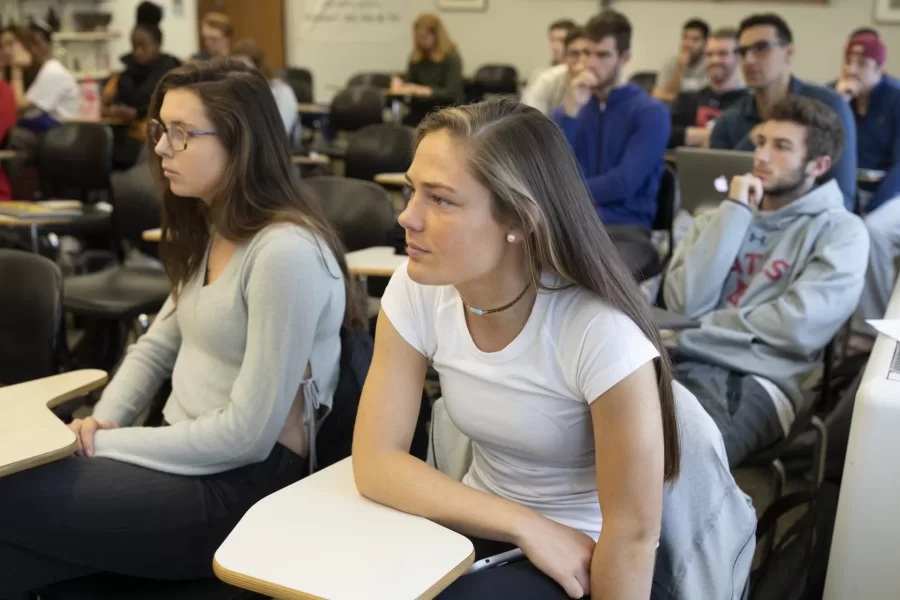
Students choose economics to gain a powerful lens for understanding the world, supported by a curriculum that emphasizes both quantitative rigor and critical thinking. Through partnerships with the Harward Center for Community Partnerships, certain courses allow students to work directly with Lewiston-Auburn community partners on local economic development projects. In addition, students frequently work alongside faculty as research assistants, gaining direct experience in academic inquiry, and regularly present their findings at summits and conferences. The program is committed to intellectual discovery and “informed civic action,” preparing graduates for diverse careers in business, policy, and academia.

Featured Courses

Photo of Samuel S. Bird

Samuel S. Bird

Assistant Professor of Economics

Photo of Pubali Chakraborty

Pubali Chakraborty

Assistant Professor of Economics

Photo of Eugene S. Choo

Eugene S. Choo

Professor of Economics

Photo of Sandra H. Goff

Sandra H. Goff

Associate Professor of Economics

Photo of Leshui He

Leshui He

Associate Professor of Economics

Photo of James W. Hughes

James W. Hughes

Thomas Sowell Professor Emeritus of Economics

Photo of Amanda R. Lindsay

Amanda R. Lindsay

Assistant Professor of Economics

Photo of Margaret Maurer-Fazio

Margaret Maurer-Fazio

Betty Doran Stangle Professor Emerita of Applied Economics

Photo of Ben Moodie

Ben Moodie

Visiting Lecturer in Sociology and European Studies

Photo of Curtis S. Morrill

Curtis S. Morrill

Visiting Assistant Professor of Economics

Photo of Michael P. Murray

Michael P. Murray

Charles Franklin Phillips Professor Emeritus of Economics

Photo of Daniel Riera-Crichton

Daniel Riera-Crichton

Betty Doran Stangle Professor of Applied Economics

Photo of Edith E. Sallah

Edith E. Sallah

Visiting Assistant Professor of Economics

Photo of Carl R. Schwinn

Carl R. Schwinn

Professor Emeritus of Economics

Photo of Anamika Sen

Anamika Sen

Assistant Professor of Economics

Photo of Paul J. Shea

Paul J. Shea

Dowling Family Professor of Economics

Photo of Austin C. Smith

Austin C. Smith

Associate Professor of Economics

Photo of Sam Stelnicki

Sam Stelnicki

Visiting Assistant Professor of Economics

Photo of Xinhao Wang

Xinhao Wang

Visiting Assistant Professor of Economics

Photo of Anne D. Williams

Anne D. Williams

Professor Emerita of Economics

News & Events

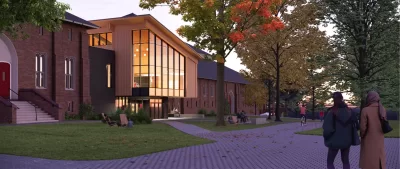
Bates announces Stoddard Fitness and Well-Being Center and athletics facilities upgrades
March 5, 2026

Bates announces Stoddard Fitness and Well-Being Center and at…

Bates is embarking on a $45 million project to update two key athletic facilities and construct a new fitness and well-being center. A gift of $10 million from Jon W. Brayshaw ’90, P’25 and Jocelyn Stoddard Brayshaw ’88, P’25 has brought the college a vital step closer to construction. The new facility will be named the Stoddard Fitness and Well-Being Center. 

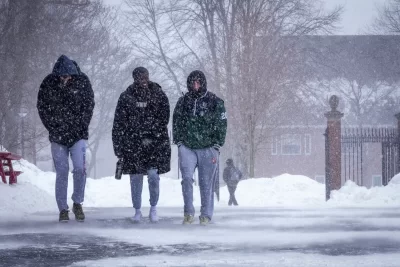
Over the woodlands brown and bare, over the harvest-fields forsaken, silent, and soft, and slow descends the snow. — Longfellow Back on campus after the February freak storm, Bates feels suspended between motion and stillness; cars crunch in half-melted tracks, boots drip by radiators, flights and plans still catching up somewhere in the clouds. Some of us are here, some are delayed, and the quiet holds space for both. It’s a strange return; rushed arrivals, late-night drives, weather maps open on our phones, yet the air itself feels calm, like the world pressed pause just long enough for us to notice it. The paradox is real; chaos in the forecast, steadiness on the quad. Snow does that. It softens edges, lowers voices, makes even a campus full of movement feel like it’s breathing slowly.
March 5, 2026

February at Bates

February on campus saw sports successes, several large snowfalls, and our annual Winter Carnival — a week of events celebrating the joys of the chilly season.