European Studies at Bates

The Program in European Studies is an interdisciplinary program that draws on the humanities and social sciences to broaden understanding of the European region.

Offering a flexible framework, the program allows students to pursue their own interests in the histories, cultures, geographies, peoples, and languages of Europe. The curriculum spans a remarkable range, from the punks, pioneers, and protestors of Eastern Europe to the legacies of World War I and the Cold War. Students study up to two modern European languages — French, German, Russian, or Spanish — enabling in-depth scholarly work.

Contact Us

Indya Childs, Academic Administrative Assistant
9 Andrews Road
Roger Williams Hall
ichilds@bates.edu

What You Will Learn

garnet iconography with books on a shelf, globe, and magnifying glass
To question assumptions about Europe’s role in the world
garnet iconography with people and academic building
How to analyze European histories, societies, politics, and cultures from multiple perspectives
garnet iconography with stack of papers, people, and books on a shelf
To interpret cultural texts and situate them within their sociopolitical contexts
garnet iconography with presentation slide, chat bubbles, and clipboard with pen
How to communicate effectively in oral, written, and presentational formats
garnet iconography with chat bubbles, globe, stack of paper, and pen
To develop proficiency in at least one European language besides English
garnet iconography with light bulb, trifold map with marker, and interlocking gears
How to think critically across linguistic, cultural, and national borders

Life After Bates

European studies graduates often continue their studies at prestigious post-graduate programs, pursuing politics, art, or foreign languages, sometimes abroad. Others embark on successful careers in government, law, public policy, museums, and more.

90%

of 2020-2024 humanities graduates are employed and/or attending graduate school

  • Tufts University
  • Georgetown University
  • Harvard University
  • Johns Hopkins University
  • Dartmouth College
  • University of Wisconsin–Madison
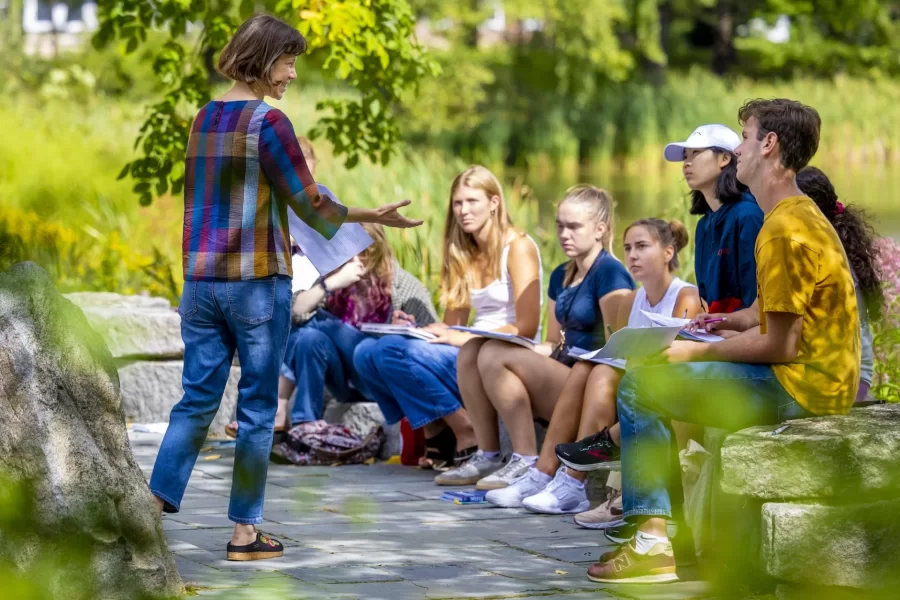
“It was a great day to be talking under the trees.”

— Associate Professor of History Joe Hall, describing the first meeting of his first-year seminar, “This Land is Whose Land?” on the Historic Quad.

The class, along with all other first-year seminars, met for the first time on Thursday morning, Sept. 1, 2022, as an opportunity for classmates to connect with each other and their instructor, who will also serve as their first-year advisor.

Swipe left for a few additional moments from yesterday’s first-year seminars, including:

“Beyond Nelson Mandela: Themes and Personalities in South African History,” taught by Assistant Professor of History Patrick Otim;

“Arts and Spirituality: Art Making and Aesthetic Experience as Conduits for Reflection and Connection,” taught by Lecturer in the Humanities and Multifaith Chaplain Brittany Longsdorf; and

“Reading Refugees and Migration in European Children’s Literature,” taught by Associate Professor of German Raluca Cernahoschi.

“It was a great day to be talking under the trees.” — Associate Professor of History Joe Hall, describing the first meeting of his first-year seminar, “This Land is Whose Land?” on the Historic Quad. The class, along with all other first-year seminars, met for the first time on Thursday morning, Sept. 1, 2022, as an opportunity for classmates to connect with each other and their instructor, who will also serve as their first-year advisor. Swipe left for a few additional moments from yesterday’s first-year seminars, including: “Beyond Nelson Mandela: Themes and Personalities in South African History,” taught by Assistant Professor of History Patrick Otim; “Arts and Spirituality: Art Making and Aesthetic Experience as Conduits for Reflection and Connection,” taught by Lecturer in the Humanities and Multifaith Chaplain Brittany Longsdorf; and “Reading Refugees and Migration in European Children’s Literature,” taught by Associate Professor of German Raluca Cernahoschi.

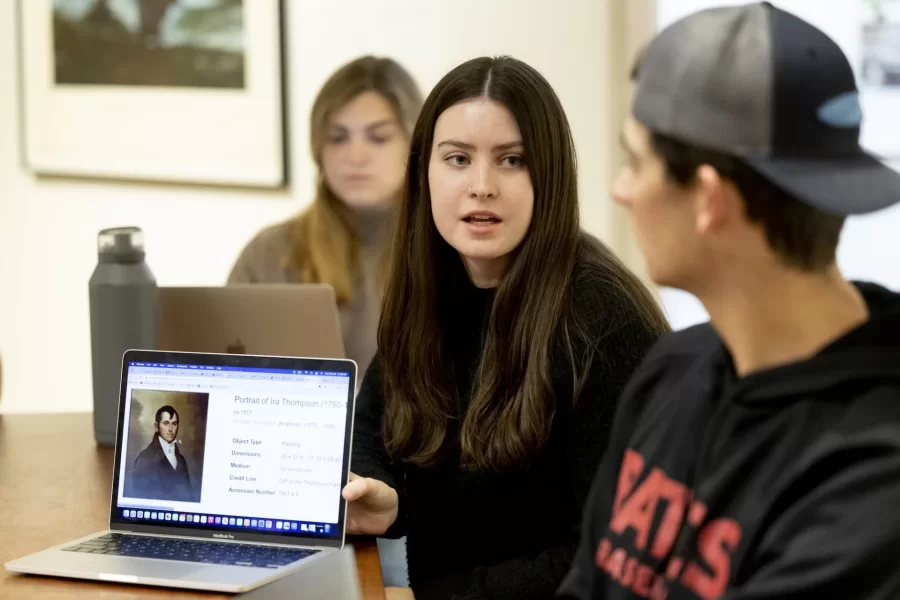
Historical Methods class, taught by Associate Professor of History Caroline Shaw, meets in the Lower Gallery of the Museum of Art in the Olin Arts Center. Working with Peter Philbin í22, assistant museum curator, the students broke into several groups to consider four works of art, and how they would use that artwork along with other pieces in the museum collection, to create an exhibition.

HIST 399 - Historical Methods
This seminar refines students' proficiency as historians and prepares them to write their senior thesis. The course is designed around two interrelated goals. First, students analyze how different approaches to history and sources matter to understandings of the past. Second, students design and test their own arguments, drawing upon critical readings of primary sources and close engagement with historiography. The course culminates in the completion of individual thesis proposals. Prerequisite(s): one HIST 301 seminar.

Students at table, from head of the table, left:

Hanna Matthews í24, brown sweater, long blonde hair
Matt Connelly í24, white shirt
Chris Ly í24, black hoodie
Emily Everett í24, light gray sweater
Bridget Lee í24, gray sweater, brown pants
Ben Fasciano í23, gray sweater
James Guinee í24,blue/green sweater
Ned Farrington í24, blue flannel
Sebastien Kleitman í24, black hat
Luke Linnehan í24, black baseball hoodie and hat
Campbell McKendry í24, black sweater, brown hat


Historical Methods class, taught by Associate Professor of History Caroline Shaw, meets in the Lower Gallery of the Museum of Art in the Olin Arts Center. Working with Peter Philbin í22, assistant museum curator, the students broke into several groups to consider four works of art, and how they would use that artwork along with other pieces in the museum collection, to create an exhibition. HIST 399 – Historical Methods This seminar refines students’ proficiency as historians and prepares them to write their senior thesis. The course is designed around two interrelated goals. First, students analyze how different approaches to history and sources matter to understandings of the past. Second, students design and test their own arguments, drawing upon critical readings of primary sources and close engagement with historiography. The course culminates in the completion of individual thesis proposals. Prerequisite(s): one HIST 301 seminar. Students at table, from head of the table, left: Hanna Matthews í24, brown sweater, long blonde hair Matt Connelly í24, white shirt Chris Ly í24, black hoodie Emily Everett í24, light gray sweater Bridget Lee í24, gray sweater, brown pants Ben Fasciano í23, gray sweater James Guinee í24,blue/green sweater Ned Farrington í24, blue flannel Sebastien Kleitman í24, black hat Luke Linnehan í24, black baseball hoodie and hat Campbell McKendry í24, black sweater, brown hat

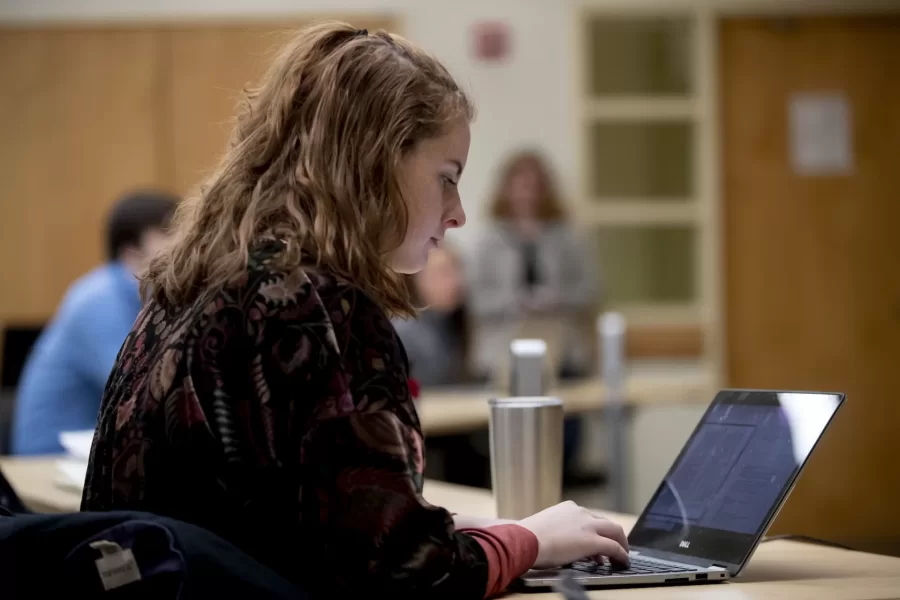
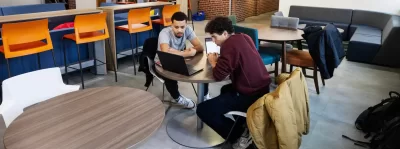
A day in the life of Pettengill Hall, featuring staff, faculty and students engaged in learning, studying, and working, with both internal and external images.

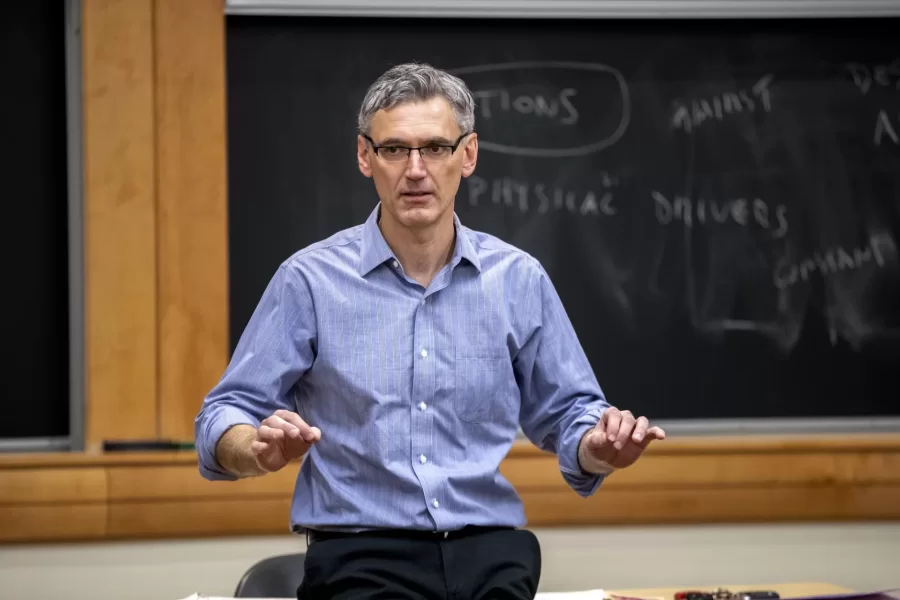
Francesco Duina teaches “Theoretical Foundations of Sociology,” G65

A day in the life of Pettengill Hall, featuring staff, faculty and students engaged in learning, studying, and working, with both internal and external images. Francesco Duina teaches “Theoretical Foundations of Sociology,” G65

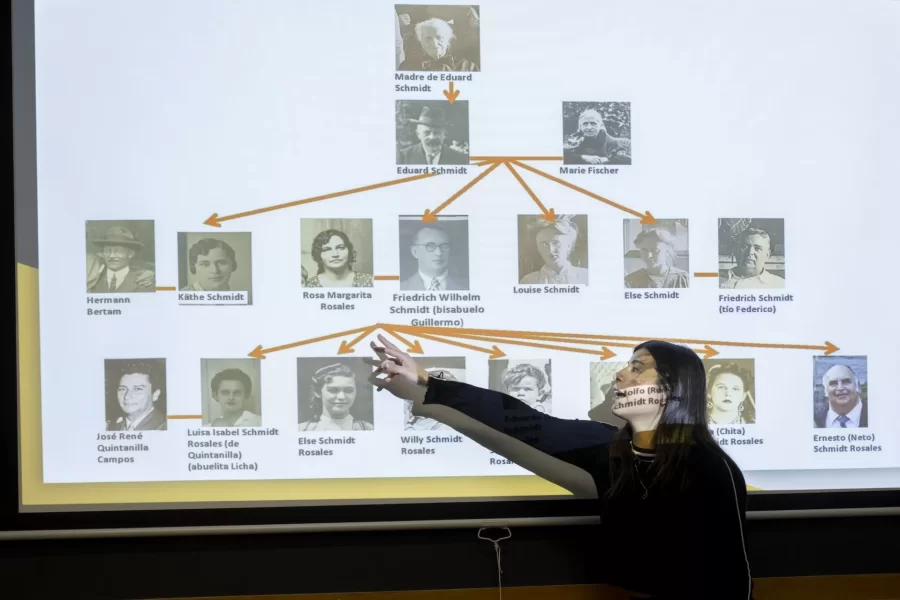
The Mount David Summit 2023 Panel: German Literature and Identity, 
Clayton Spencer listens as Erica Parker '23 presents: "Feeling of BEing. Home" (Raluca Cernahoschi, German and Russian Studies)

The Mount David Summit 2023 Panel: German Literature and Identity, Clayton Spencer listens as Erica Parker ’23 presents: “Feeling of BEing. Home” (Raluca Cernahoschi, German and Russian Studies)

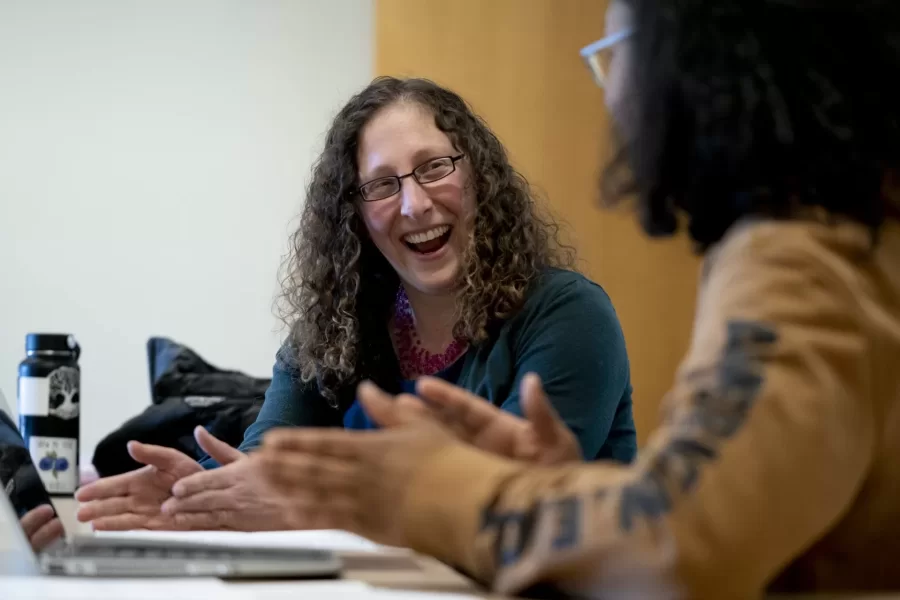
Associate Professor of History Caroline Shaw works with Ursula Rall ’20 of Kent, Ohio, during Shaw’s course on sex, gender, and modern cities. Shaw received a grant from the National Endowment for the Humanities to research a book on the history and importance of reputation in Britain. (Phyllis Graber Jensen/Bates College)

Associate Professor of History Caroline Shaw works with Ursula Rall ’20 of Kent, Ohio, during Shaw’s course on sex, gender, and modern cities. Shaw received a grant from the National Endowment for the Humanities to research a book on the history and importance of reputation in Britain. (Phyllis Graber Jensen/Bates College)

A day in the life of Pettengill Hall, featuring staff, faculty and students engaged in learning, studying, and working, with both internal and external images.

Francesco Duina teaches “Theoretical Foundations of Sociology,” G65

A day in the life of Pettengill Hall, featuring staff, faculty and students engaged in learning, studying, and working, with both internal and external images. Francesco Duina teaches “Theoretical Foundations of Sociology,” G65

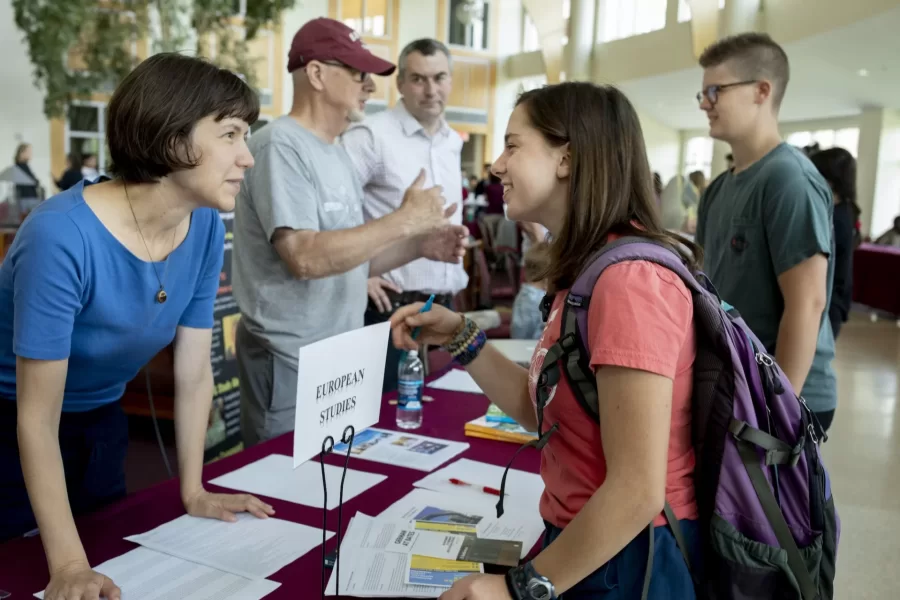
Associate Professor of German Raluca Cernahoschi speaks with first-year student Elliott Vahey of Shaker Heights, Ohio, while Associate Professor of Russian Dennis Browne and Associate Professor of German Jakub Kazecki talk with Ollie Young '23 of Burlington, Vt., during an Academic Fair in Pettengill Hall's Perry Atrium. For three hours this morning, faculty spoke with members of the Class of 2023 about their departments' offerings.

Associate Professor of German Raluca Cernahoschi speaks with first-year student Elliott Vahey of Shaker Heights, Ohio, while Associate Professor of Russian Dennis Browne and Associate Professor of German Jakub Kazecki talk with Ollie Young ’23 of Burlington, Vt., during an Academic Fair in Pettengill Hall’s Perry Atrium. For three hours this morning, faculty spoke with members of the Class of 2023 about their departments’ offerings.

European studies at Bates is for the curious — students who want to understand how the past shapes the present, how cultures interact across borders, and how one region’s complexities connect to global challenges. The program’s design allows students to create a plan of study that reflects their interests while expanding their horizons. Students can study abroad in a number of European locations and engage with prominent guest speakers who visit campus to present on contemporary European issues.

Featured Courses

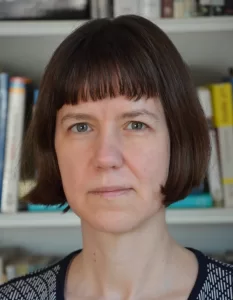
Photo of Laura C. Balladur

Laura C. Balladur

Senior Lecturer in French and Francophone Studies

Photo of Raluca Cernahoschi

Raluca Cernahoschi

Associate Professor of German

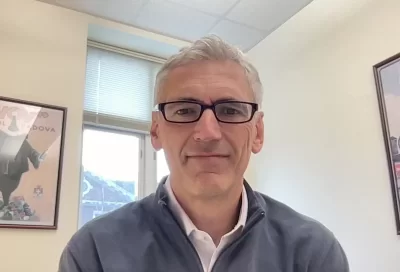
Photo of Francesco G. Duina

Francesco G. Duina

Charles A. Dana Professor of Sociology

Photo of David R. George Jr.

David R. George Jr.

Senior Lecturer in Hispanic Studies

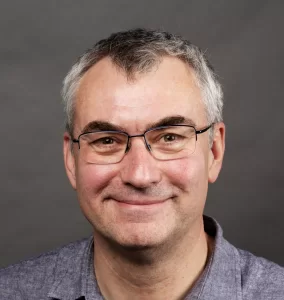
Photo of Jakub J. Kazecki

Jakub J. Kazecki

Associate Professor of German

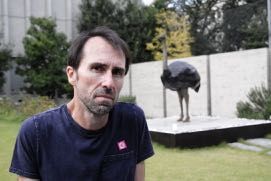
Photo of Zen T. Kuriyama

Zen T. Kuriyama

Assistant Professor of Music

Photo of Alex McAuliff

Alex McAuliff

Assistant Professor of Politics

Photo of Ben Moodie

Ben Moodie

Visiting Lecturer in Sociology and European Studies

Photo of Caroline E. Shaw

Caroline E. Shaw

Associate Professor of History

News & Events

Bates announces Stoddard Fitness and Well-Being Center and athletics facilities upgrades
March 5, 2026

Bates announces Stoddard Fitness and Well-Being Center and at…

Bates is embarking on a $45 million project to update two key athletic facilities and construct a new fitness and well-being center. A gift of $10 million from Jon W. Brayshaw ’90, P’25 and Jocelyn Stoddard Brayshaw ’88, P’25 has brought the college a vital step closer to construction. The new facility will be named the Stoddard Fitness and Well-Being Center. 

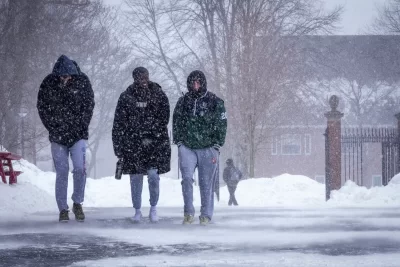
Over the woodlands brown and bare, over the harvest-fields forsaken, silent, and soft, and slow descends the snow. — Longfellow Back on campus after the February freak storm, Bates feels suspended between motion and stillness; cars crunch in half-melted tracks, boots drip by radiators, flights and plans still catching up somewhere in the clouds. Some of us are here, some are delayed, and the quiet holds space for both. It’s a strange return; rushed arrivals, late-night drives, weather maps open on our phones, yet the air itself feels calm, like the world pressed pause just long enough for us to notice it. The paradox is real; chaos in the forecast, steadiness on the quad. Snow does that. It softens edges, lowers voices, makes even a campus full of movement feel like it’s breathing slowly.
March 5, 2026

February at Bates

February on campus saw sports successes, several large snowfalls, and our annual Winter Carnival — a week of events celebrating the joys of the chilly season.