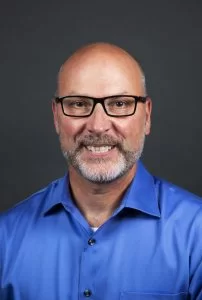
Malcolm S. Hill
Professor of Earth and Climate Sciences
About
Pronouns: he/him/his
Ph.D. Marine Evolutionary Ecology, University of Houston
Research interests
I am broadly interested in the evolutionary placement of sponges in the broader scope of metazoan history, and the role sponges and their symbionts play in the communities in which they reside. Research in my lab has focused on the phylogenetics of Porifera, the ecological role sponges play in their ecosystems, phenotypic plasticity and the genetic control of aspects of development, body size evolution, and interspecific interactions and how they are negotiated (especially in the realm of intracellular symbiosis). Some questions we pursue include: What unique features of sponges shed light on the earliest evolution of animals? How does one organism (the symbiont) end up residing within another (the host) and how are these interactions maintained through evolutionary time? How do two organisms with distinct evolutionary histories and trajectories coexist in intimate interactions? How does specialization evolve? We use marine and freshwater sponges as models and work in habitats ranging from tropical coral reefs to temperate streams in Maine. New work on cricoid mycorrhizal symbioses has also begun with a detailed microscopic analysis of the Diapensiaceae.
Student Research Opportunities
Research in my lab is trans-disciplinary and highly collaborative. We use a broad diversity of tools, but also partner with experts who have skills in many different areas. Our work involves the use of traditional field-based research as part of our ecological work, modeling approaches to understand symbiosis, and microscopy and molecular analyses to study a range of phenomena. While we have a strong focus on symbionts and sponges, we are also doing work with fungal partners associated with the roots of plants.
Expertise
Current Courses
Fall Semester 2026
Oceanography
Oceanography is the science of the world’s oceans, and is a trans-disciplinary enterprise combining geology, physics, chemistry, and biology to understand how the marine systems operate on this planet. The course begins with deep geologic time and a description of the ocean basins and their origin…
Biostatistics
A course in the use of statistics in the biological sciences, focusing on core concepts and skills necessary for the analysis and interpretation of data, including types of data, the fundamentals of study design, sampling distributions, the meaning and interpretation of p-values and confidence inter…