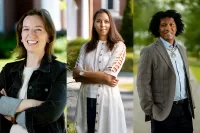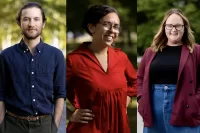
Bates is welcoming a number of new faculty members for the 2026-2027 academic year, including 11 tenured or on the tenure track. Bates News will introduce these faculty over the next few weeks, beginning with those below.
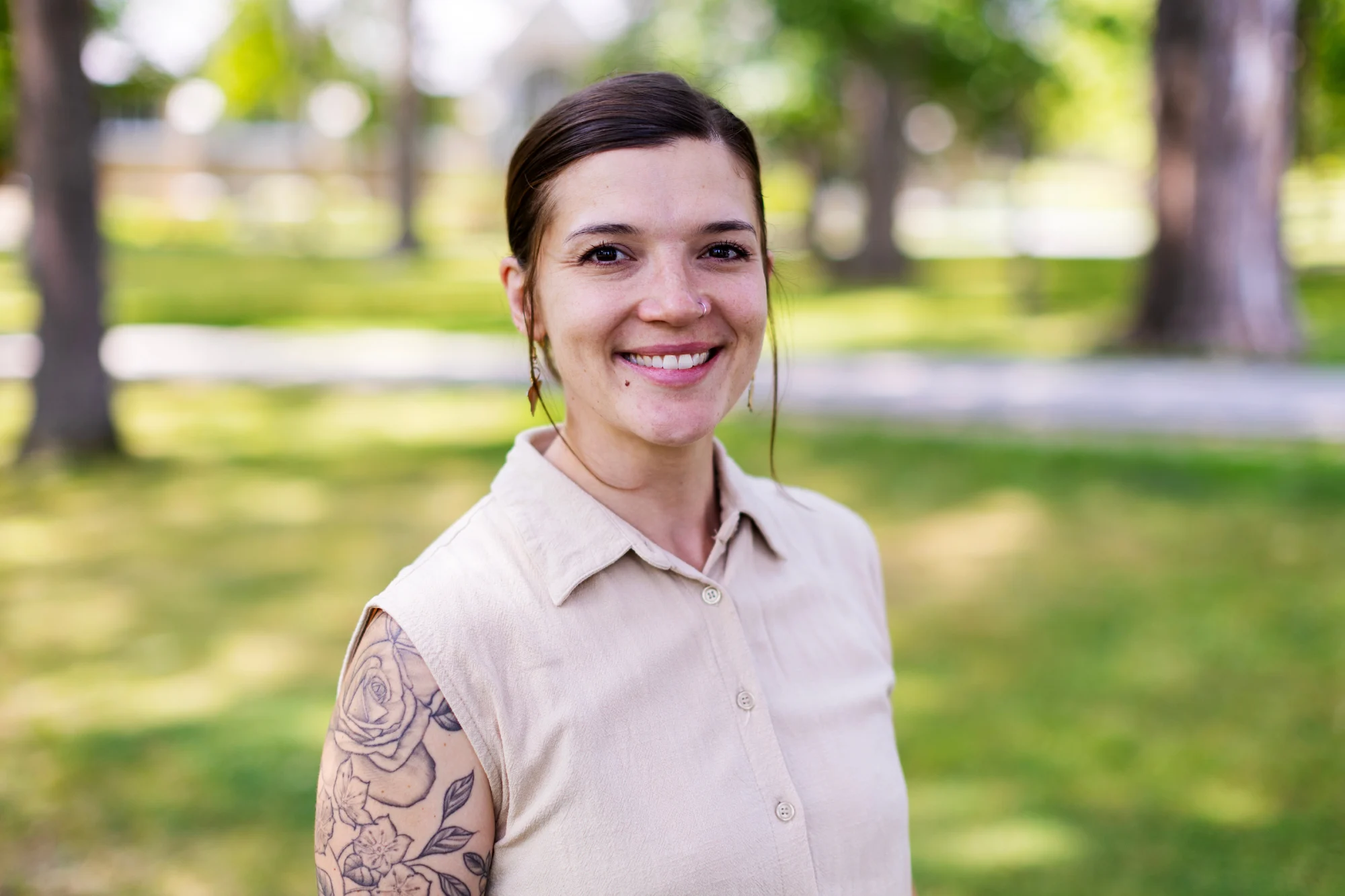
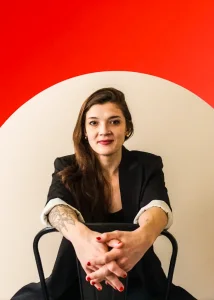
Emily Culbreath, assistant professor of dance
Tell us a little bit about yourself.
I am a dance-theater practitioner, educator, choreographer, writer, and performer. Originally from Denver, Colo., by way of Philadelphia, Penn., I co-direct Snack Break Movement Arts, a hip-hop theater organization, with my husband, Josh Culbreath, who is also an assistant professor of dance at Bates. My work centers on collaboration, embodied storytelling, and creating meaningful artistic experiences that connect people across communities. I am passionate about teaching, mentoring, and cultivating spaces where creativity and curiosity can thrive. Outside of my artistic work, I enjoy staying active, skiing, spending time outdoors, discovering new coffee shops, and being somewhat of a foodie.
What is the focus of your teaching and scholarship?
My teaching and scholarship center hip-hop theater and dance as ways of learning that are embodied, collaborative, and rooted in lived experience. I guide students to use movement as a tool for inquiry — exploring culture, identity, history, and power through both practice and reflection. In my classroom and creative work, I prioritize curiosity, rigor, and care, building environments where students can take creative risks and develop their own artistic voices. My work draws from African American vernacular dance traditions, critical race and gender studies, and autoethnography. I aim to help students connect artistic practice with critical thinking, community engagement, and social awareness.
What are you most excited about in the coming year at Bates?
I am most looking forward to building meaningful relationships across the Bates community and becoming part of the creative and intellectual life of the campus. As a new faculty member in the Department of Theater and Dance, I am excited to work closely with students in the studio and in performance, while also collaborating with colleagues across disciplines. I am especially eager to contribute to campus-wide conversations that connect hip-hop dance and embodied practice with broader questions of culture, identity, and activism. Beyond the classroom, I look forward to engaging with community partners and exploring opportunities for reciprocal work both in Lewiston-Auburn and throughout Maine. I am also excited to experience the landscape of Maine; the seasons, the coastline, and the outdoors!
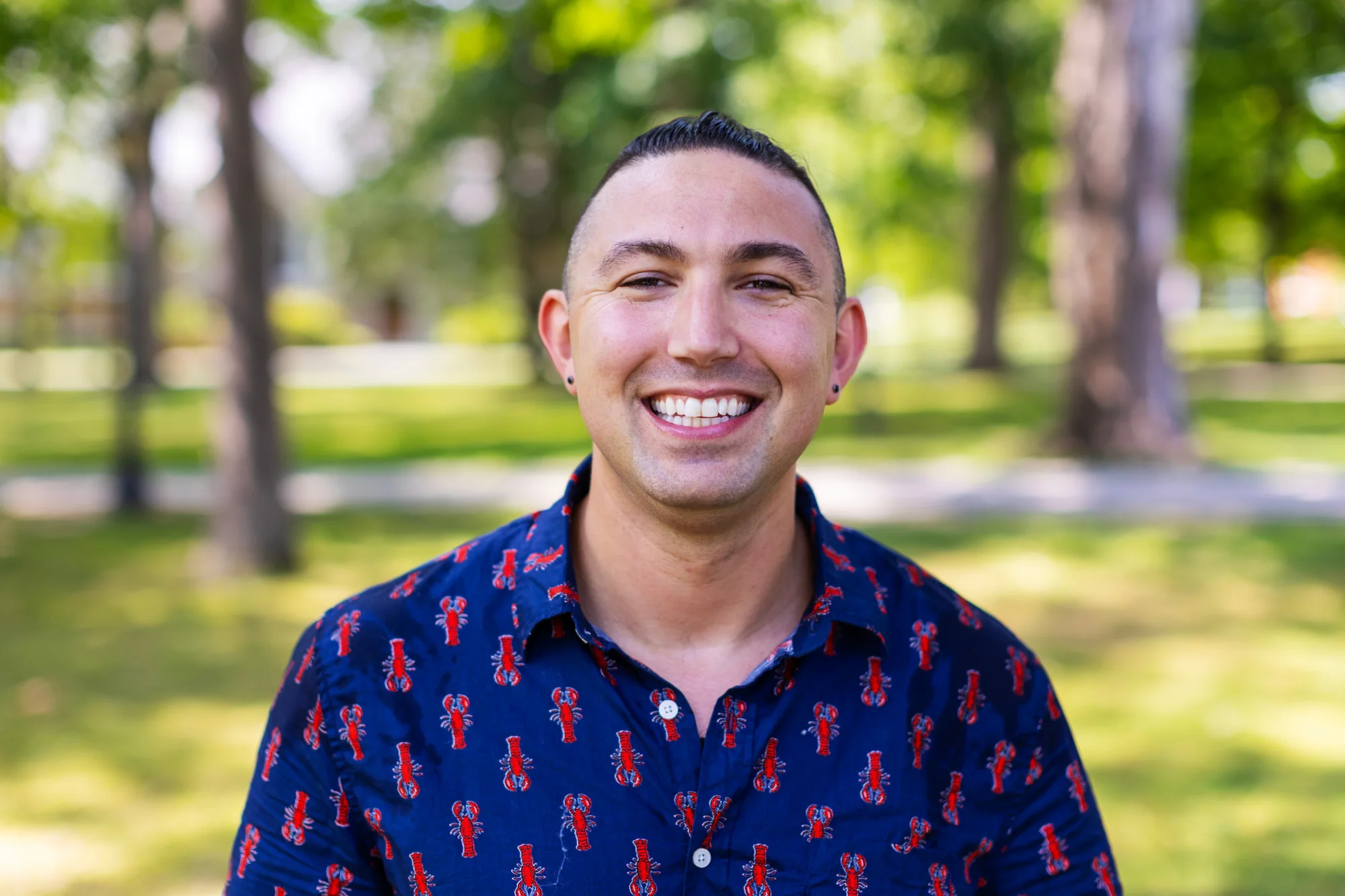
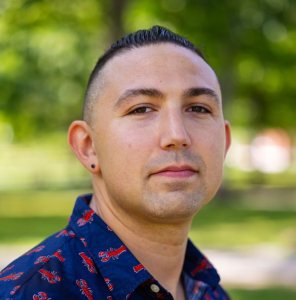
Conrad Fihn, assistant professor of chemistry and biochemistry
Tell us a little bit about yourself.
My scientific interests are rooted in applying chemical tools to biologically relevant problems. I am especially interested in understanding how chemical communication and signaling regulate bacterial virulence and interfering with those systems to disrupt virulent behavior. My graduate work focused on developing small-molecule disruptors of virulence pathways in Pseudomonas aeruginosa and other gram-negative pathogens as non-bactericidal treatment strategies. My postdoctoral studies branched into developing mass spectrometry methodologies for screening substrate analogs against mutant enzyme libraries for novel chemical modulators. At Bates, my lab will study quorum sensing, a process bacteria use to coordinate group behaviors by producing and responding to small-molecule signals. Using mass spectrometry, microbiology, synthetic chemistry, and molecular biology techniques, we will screen for new quorum-sensing molecules that alter communication and virulence in P. aeruginosa. Our goal is to better understand bacterial communication and identify new ways to treat infections without relying solely on traditional antibiotics.
What is the focus of your teaching and scholarship?
Pseudomonas aeruginosa is a pathogenic bacterium that communicates with chemical signals, a process called quorum sensing, allowing groups of cells to act together in ways that can make infections harder to treat. My research uses mass spectrometry methods to screen for novel quorum-sensing molecules in pathogens like Pseudomonas and test how these unique chemical signals disrupt communication and pathogenic behavior. The long-term goal is to better understand bacterial communication and identify new ways to weaken infections without relying solely on traditional antibiotics. In the classroom, I will teach biochemistry and advanced courses in bioanalytical chemistry, medicinal chemistry, and chemical biology.
What are you most excited about in the coming year at Bates?
I’m really looking forward to teaching new classes and working on exciting new research projects with students in the lab. I had a wonderful undergraduate experience at a liberal arts college, and I am excited to return to that kind of community as a faculty member. I look forward to offering Bates students the same kind of mentorship and encouragement that helped shape my own undergraduate experience. I am especially excited to work with students as they develop as scientists. I also hope to share my excitement for mass spectrometry, bacterial communication, and the ways chemistry can help us better understand the living world.
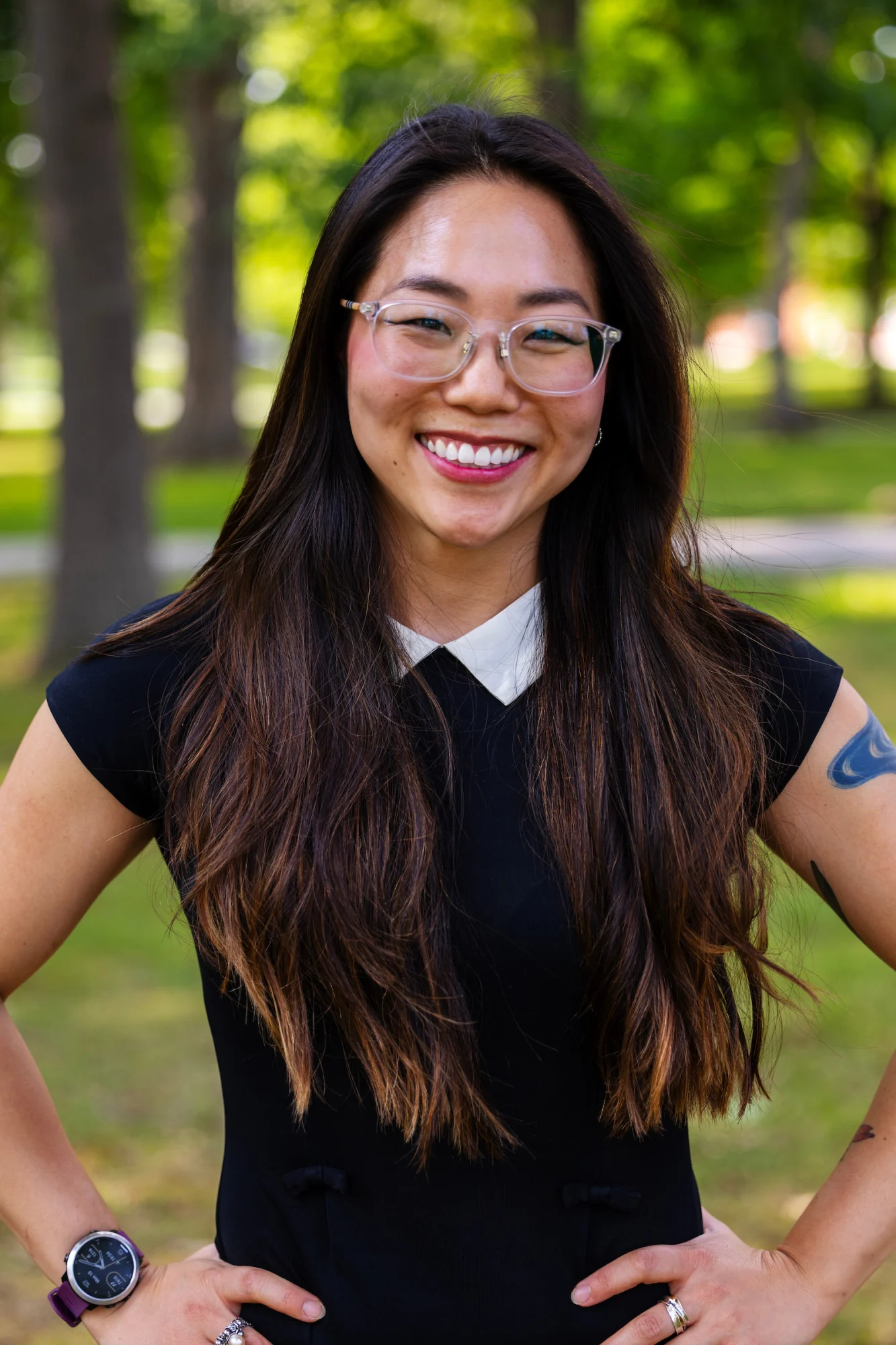
Angie Jo, assistant professor of politics
Tell us a little bit about yourself.
I was born in South Korea, and grew up in the suburbs of the Bay Area, Vancouver, and Seoul. I’ve always been drawn to many things and the connections between things rather than just one thing, which perhaps foretold my job as a liberal arts college professor! I studied civic architecture in college, worked at a macro hedge fund, and researched master-planned cities in China during my master’s. I eventually realized that a thread connecting these interests was a discipline called political economy. Studying this has become my occupation, but I still think of myself as someone who is generally interested in trying to understand the forces that arrange our society, with the goal of collectively reconfiguring it through politics, education, and art into a more just one. I love running, writing, horseback riding, the gym, dancing salsa, and having New England adventures with my dog Luna.
What is the focus of your teaching and scholarship?
I study comparative and American political economy, which is broadly about how states govern markets and how economic forces shape politics. My current research focuses on how welfare state institutions in wealthy democracies change (or do not change) in response to large collective crises, such as COVID-19, the 2008 financial crisis, and natural disasters. I’m interested in the relationship between “everyday” systems — such as eligibility rules governing who can benefit from social policies or arguments about the proper role and size of the federal government — and “emergency” times, when risks are heightened, correlated across populations, or seen as exceptional in some way.
What are you most excited about in the coming year at Bates?
In this moment, I’m most looking forward to the deep discussions I know I’ll have with my students and fellow faculty about some of the difficult political problems of our time: rising inequality, uncontrollable climate and technological change, identity politics, and othering in such extreme forms. … It’s been my experience that facing even the most brutal challenges is easier when done together, especially with thoughtful and diverse colleagues. After hours, I can’t wait to find a stable and a horse to ride in the area. My dog Luna is probably looking forward to crashing into piles of leaves and romping in the snow in a couple of months. After a quiet summer (I’ve been calling it my Maine writer’s retreat), we’re both excited for the students to arrive on campus.
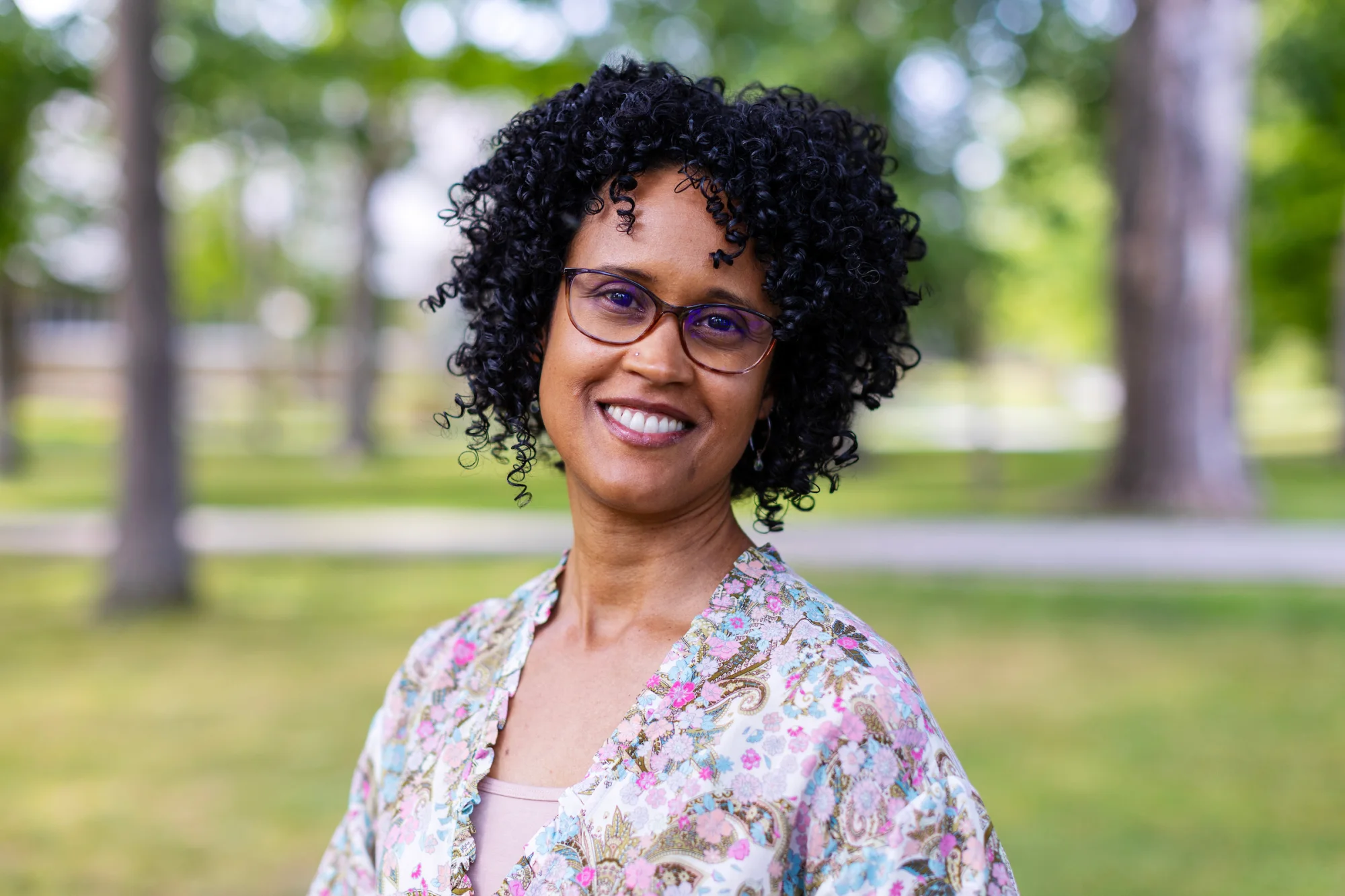
Jasmine Mena, professor of psychology
Tell us a little bit about yourself.
How are psychological outcomes shaped, in part, by how people are treated? How do experiences of discrimination and oppression get under the skin? And what can we do to cope with and challenge oppression? These and related questions animate my work, which examines the influence of cultural and contextual factors on mental and physical health. I am especially interested in understanding how multi-level experiences impact the health outcomes of marginalized populations. Critical and decolonial perspectives, self-reflexivity, and community engagement shape the ways in which I approach questions as a researcher and a teacher. In addition to my work, I enjoy many hobbies including baking bread, reading popular fiction, knitting, riding horses, and spending time with my family.
What is the focus of your teaching and scholarship?
I will be teaching “Principles of Psychology,” “Latinx Psychology,” and “Multicultural Perspectives on Mental Health,” among other courses. Each of my courses will touch on themes of culture, context, and justice, in one way or another because understanding how we think, feel, and act is central to psychology and always relevant to ideas of oppression and liberation. Alongside my teaching, in the coming year I will continue to develop my scholarship related to inclusive teaching and learning of psychology. I also hope to design new research which examines dehumanization as a mechanism through which people justify the oppression of others.
What are you most excited about in the coming year at Bates?
This coming year at Bates is sure to be filled with new and exciting experiences and I can’t wait to take them all in! I am eager to meet students and faculty and establish new collaborations. I am definitely looking forward to getting to know the local community and partnering on important local projects. I am also looking forward to making new connections in the classroom, during office hours, in the lab, or in the hallway, and seeing where we end up.
Faculty Featured
Jasmine A. Mena
Professor of Psychology
Angie Jo
Assistant Professor of Politics
Conrad A. Fihn
Assistant Professor of Chemistry and Biochemistry
Emily A. Culbreath
Assistant Professor of Dance