In Commons, Dining featured a different global dish each day. Athletics spotlighted international coaches and student athletes. The International Club hosted the cultural showcase, the South Asian Student Association celebrated Diwali, the Africana Club sponsored a gala, and the Multifaith Chaplaincy held a banquet. During International Education Week, 13 events and gatherings from offices, clubs, and departments across campus invited the Bates community to celebrate the world from their own campus.
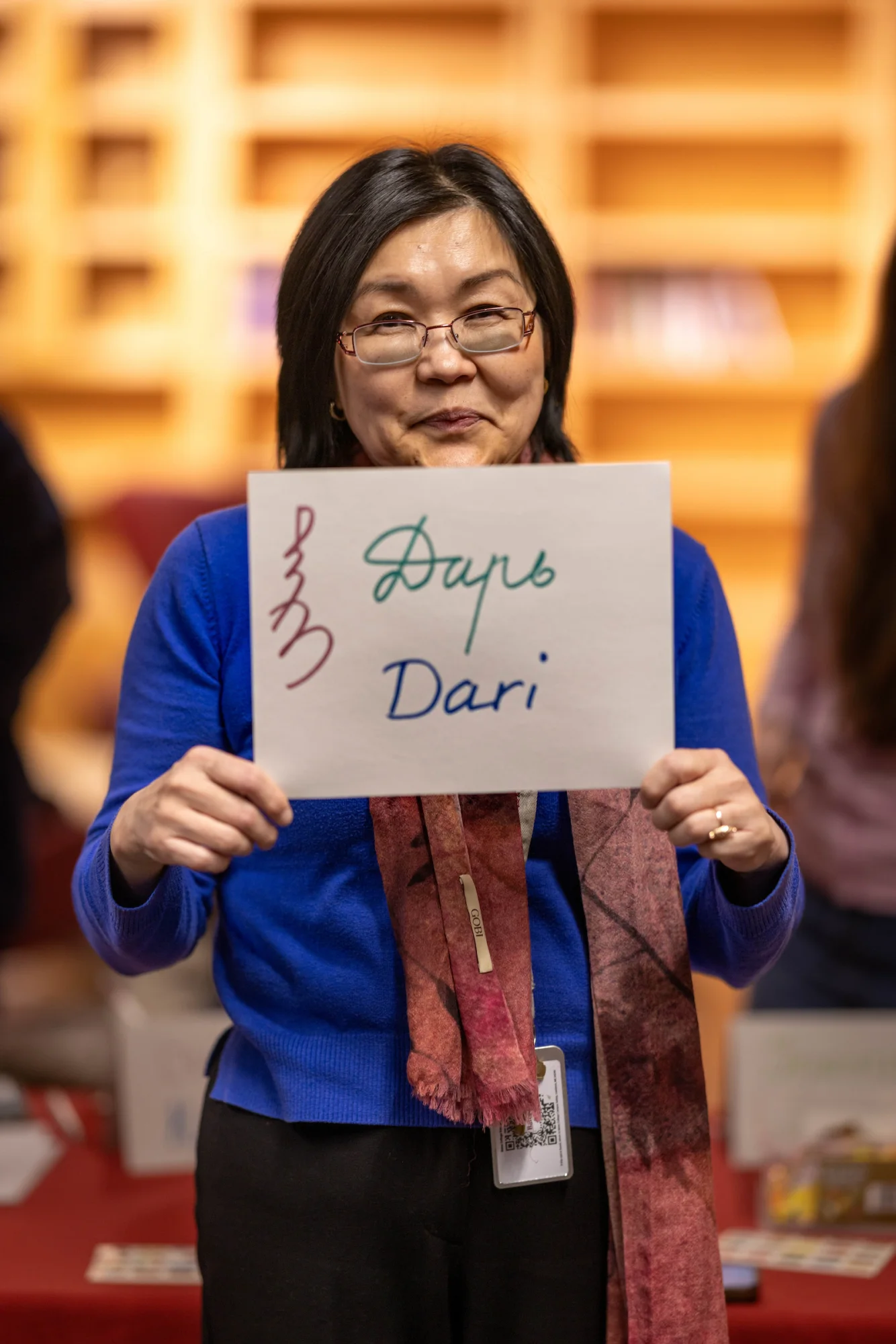
The person who built that impressively packed calendar is Dari Jigjidsuren, who was appointed assistant dean for international students in March. (Jigjidsuren is pronounced just like you’d guess — jig-jid-suh-ren — but she’s known as Dean Dari around campus.) Bringing it all together, she said, was less about managing every event than about linking together the people who already care about international engagement. “It’s more like connecting small dots, really, putting together a lot of events,” she said.
Jigjidsuren said she relied on decades of work by Associate Dean of Students James Reese, who has worked at Bates for 49 years and advised international students for much of that time. International Education Week itself is still relatively new. Reese said it began about five or six years ago, when staff in the Center for Global Education read about the national observance and decided to localize it for Bates. The center led the week for about three years before student groups, including the International Club, began shaping it. “Students have become very excited about the International Education Week,” Reese said. The energy and dedication they’ve brought to it makes him wonder, “what is it going to look like in eight and 10 and 12 years?”
Building programs collaboratively meant conversations with Athletics; Dining, Conferences, and Campus Events; and Residence Life, along with the Center for Global Education and student groups. “I’m thankful to my many partners,” Jigjidsuren said.
A dean who has made the journey herself
Jigjidsuren first came to the United States from Mongolia in 2004 as a Fulbright fellow, earning graduate degrees in social work and public health at the University of North Carolina at Chapel Hill. After three years back home, she returned in 2019 to teach and work with international students at Mississippi State University and Wesleyan University before coming to Bates.
“My professional background is shaped not only by my educational training but also my lived experience as an international student,” Jigjidsuren said. “I understand the experience of international students from multiple angles, not just as a student, but also as a parent and an advocate.” She has college-aged children.
Bates drew her for the same reason it draws many students. “I liked the community at Bates and how genuine the community seemed and how they cared about inclusion and helping others,” Jigjidsuren said.
Her aim is belonging, in every sense of the word. “I really want students to have an environment where they can flourish and have a sense of belonging,” Jigjidsuren said. “My goal is to help international students be visible, be represented, and feel like equal members of this community.”
She is clear that belonging cannot be the work of one office. “It has to be the responsibility of the entire campus, of all departments,” Jigjidsuren said. Thus International Education Week at Bates in fall 2026 was a living, breathing representative of her philosophical approach to this work.
In order to achieve that sense of belonging, the first thing she did was listen to international students’ experiences in years past. Those stories — about orientation trips where students felt isolated from domestic students or about their first days on campus spent on bare mattresses while awaiting bedding shipped from home — shaped how she went about making change this year.
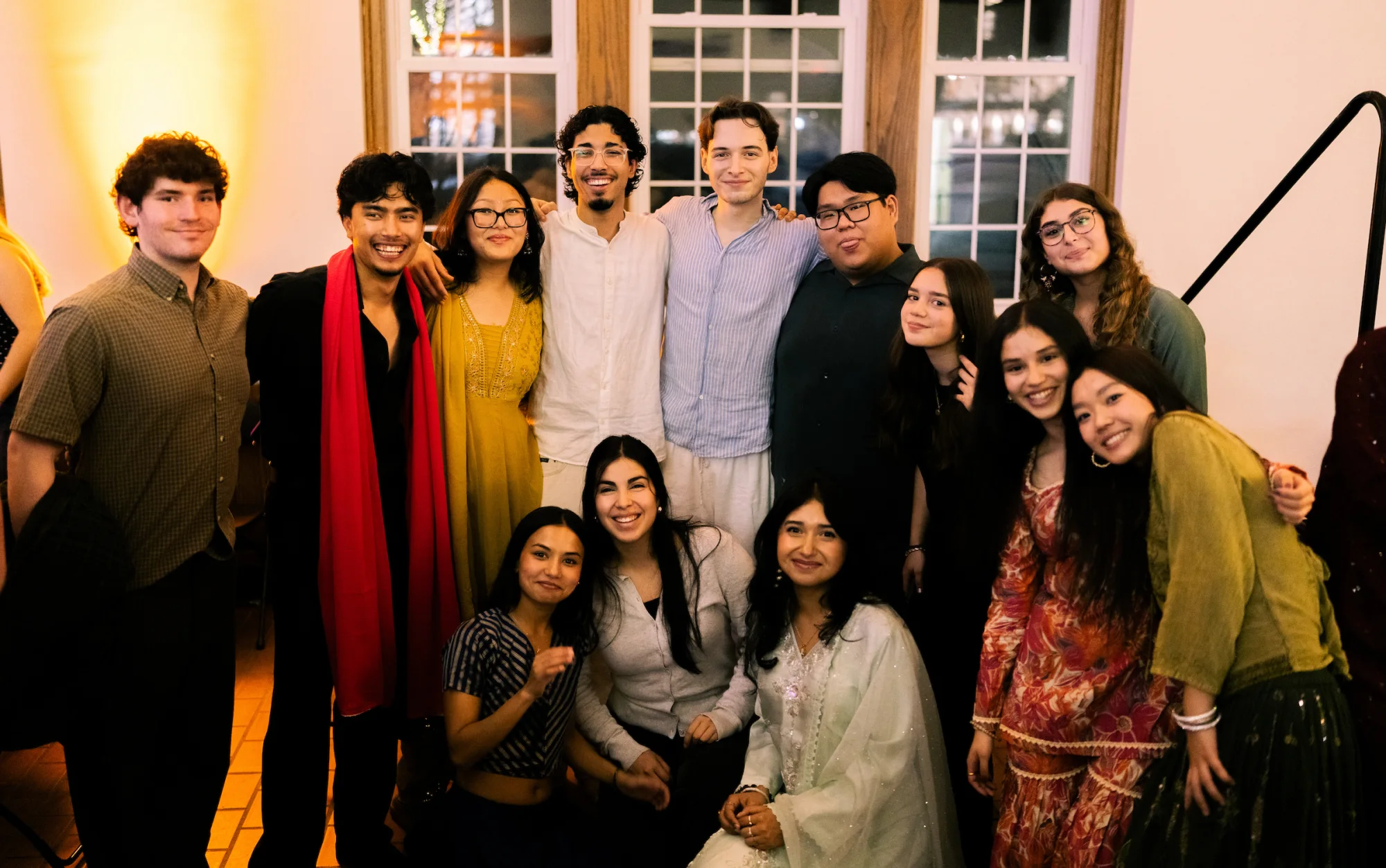
Creating the International Circle
Associate Dean of Students James Reese, known to generations of students as Dean Reese, has worked at Bates for 49 years. “I was hired for two years and they asked me to stay a third, and then that morphed into 49,” Reese said. “Happy years.”
For about 15 of those years, he said, he served solely as the college’s international student advisor. In March, he moved from the Center for Global Education to the student affairs office, where he now works with a wider range of student groups, a return to the way he worked in the 1990s. He said Jigjidsuren, the new assistant dean for international students, “is excited to be here and has started out very well.”
The community he serves has grown. During his first fall at Bates in 1977, he greeted nine new international students from a total of 29 international students at the college. Today, Bates has about 180, roughly 10 percent of the college, and the Class of 2030 has 50 international students.
The International Circle is specific to Bates. Reese said he and colleagues started using the term about 15 years ago so that orientation would welcome everyone, in addition to students who need visas. The circle also includes permanent residents, dual citizens, and U.S. citizens who have never lived in the United States. “We just kind of coined a term of a circle, a circle of people who have international experiences,” Reese said.
Bringing the group to campus earlier than most students arrive addresses jet lag, Reese said, but also differences that are easy to overlook. “Many students of the International Circle will share that if they’re in a class and encouraged, even by the professor, to call the faculty member by the first name, there’s some discomfort there,” Reese said. A long running part of the orientation, a panel of sophomores sharing what they feared before coming to Bates, is a feature Bates plans to expand to the whole incoming class. “We’re going to put it into the new student orientation,” Reese said.
The first voice students hear
Assistant Director of Global Education Services Shelley Palmer, who has worked at Bates for 12 years and serves as the college’s principal designated school official, is often the first person international students hear from after they are admitted. “I have the privilege of being among the first at Bates to be in contact with our international students shortly after they’ve been admitted,” Palmer said. “And that contact carries right through their time here and beyond.”
Palmer is the college’s liaison with the federal government for students on F-1 visas, keeping their records accurate and up-to-date, as well as guiding students on maintaining compliance with F-1 status regulations.
In her years in international student services, she has watched the landscape change. Students face an “increasingly complex regulatory landscape,” she said, and they are looking for more mental health resources, career support tailored to non-citizens, and “inclusive spaces where they feel truly integrated and not isolated.”
What has not changed, Palmer said, is “the fundamental need for human connection, empathy and belonging.”
Palmer said the new programming builds on Bates’ foundation. “Jigjidsuren’s perspective as an international person herself helps shape some of the programming that goes on here,” Palmer said. Events such as pumpkin carving are simple fun, she said, and “there’s always an eye toward helping the students understand American culture, but also feel a part of this campus and this life here.”
The goal is lasting. “We want the international students to leave Bates feeling fully empowered and resilient and deeply connected to a global network of peers and mentors,” Palmer said.
Full rooms, full hearts
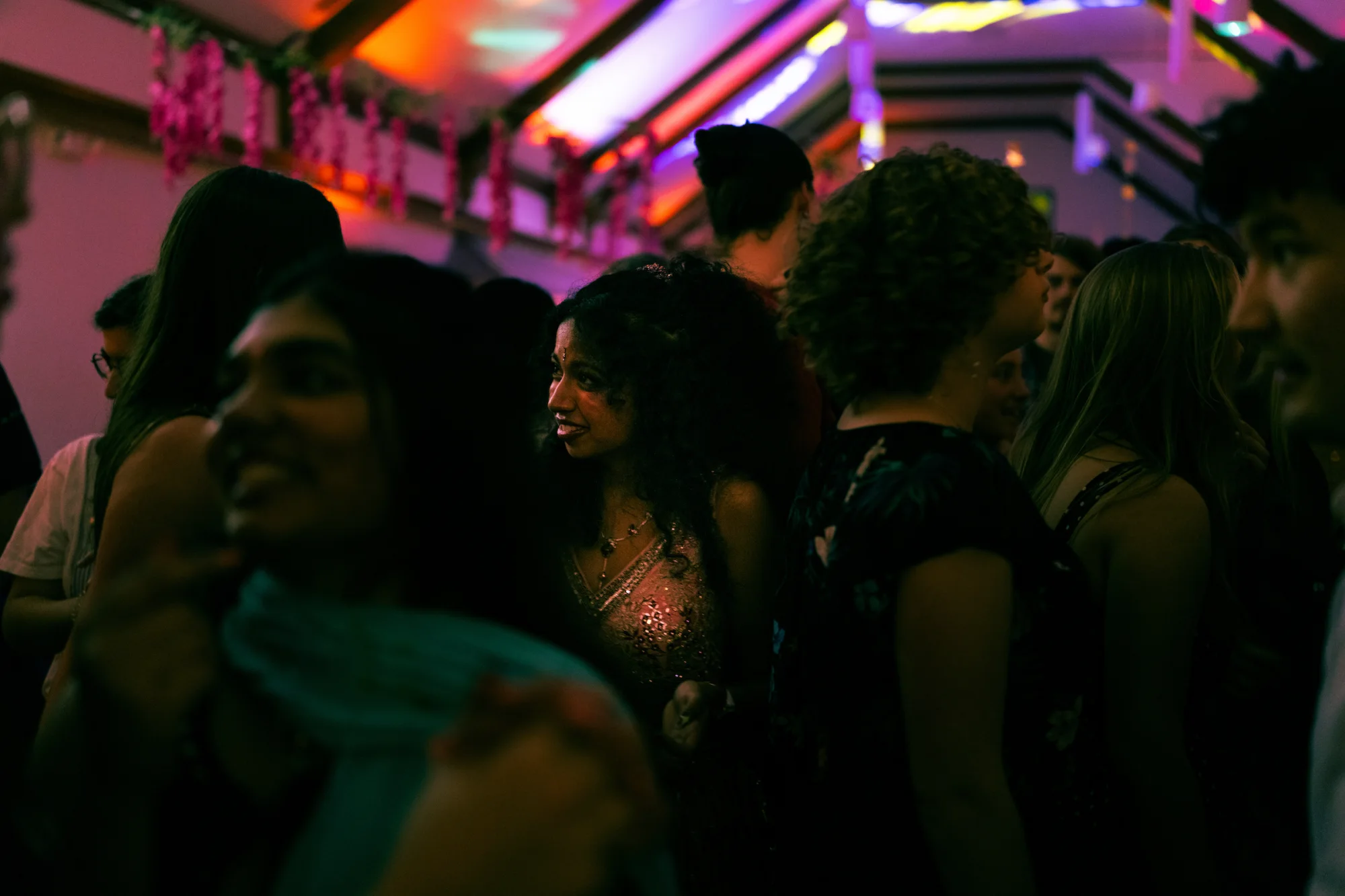
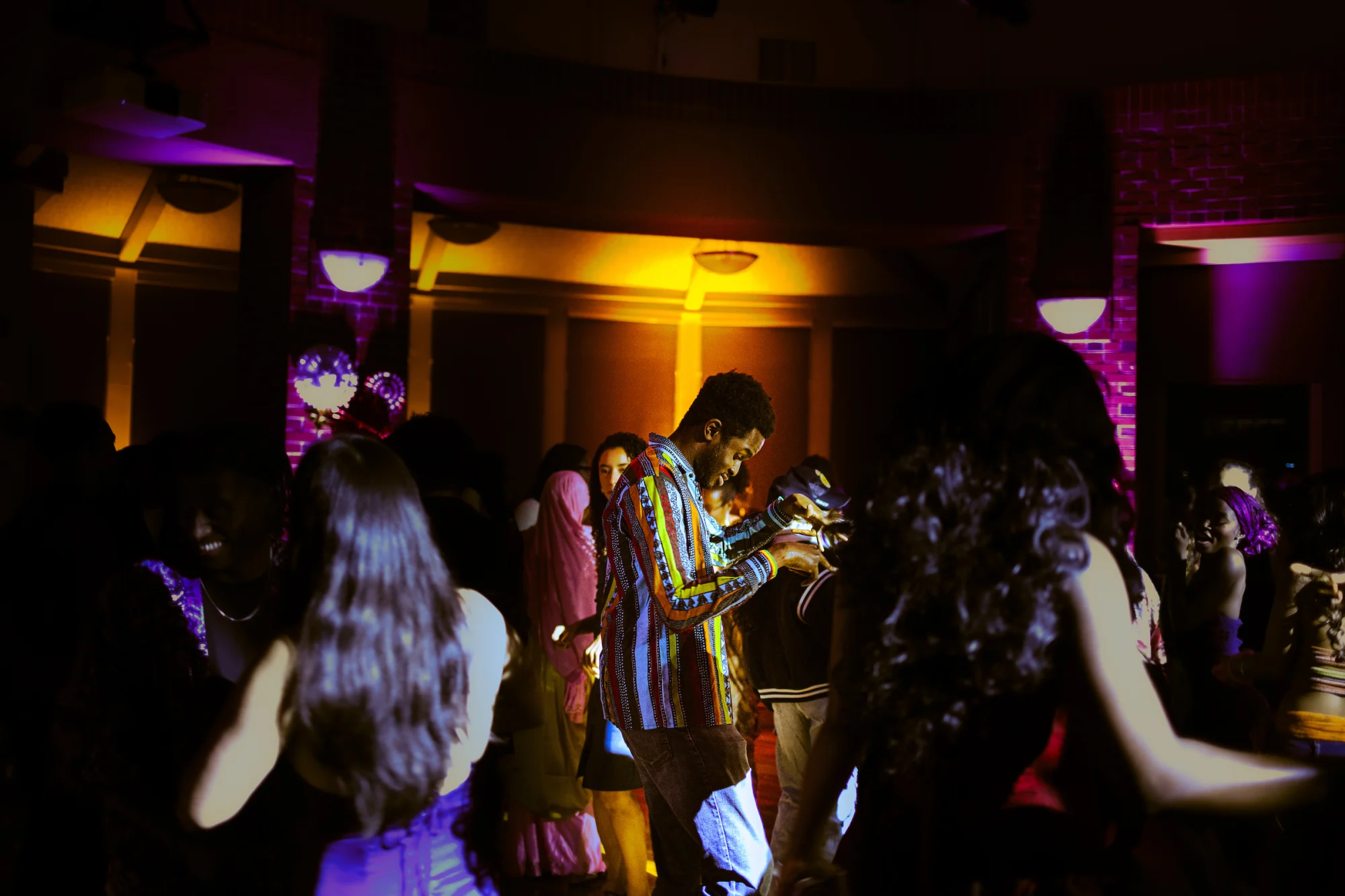
The week ended as it began, with full rooms. Diwali, hosted by the South Asian Student Association, drew about 300 people. The Cultural Showcase performance, hosted by the International Club, drew 260. The Global Eats Potluck, hosted by the Center for Global Education, was another standout.
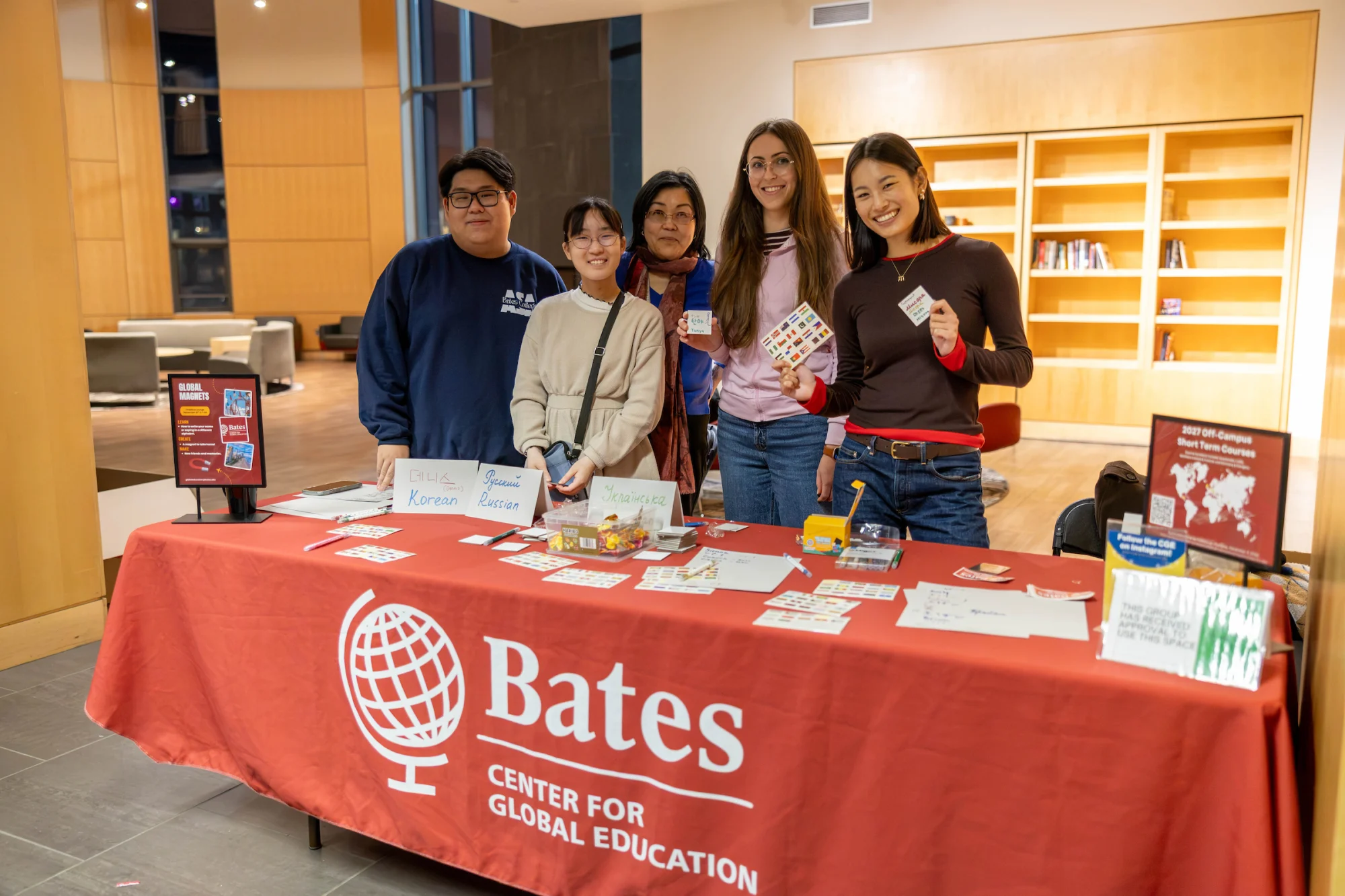
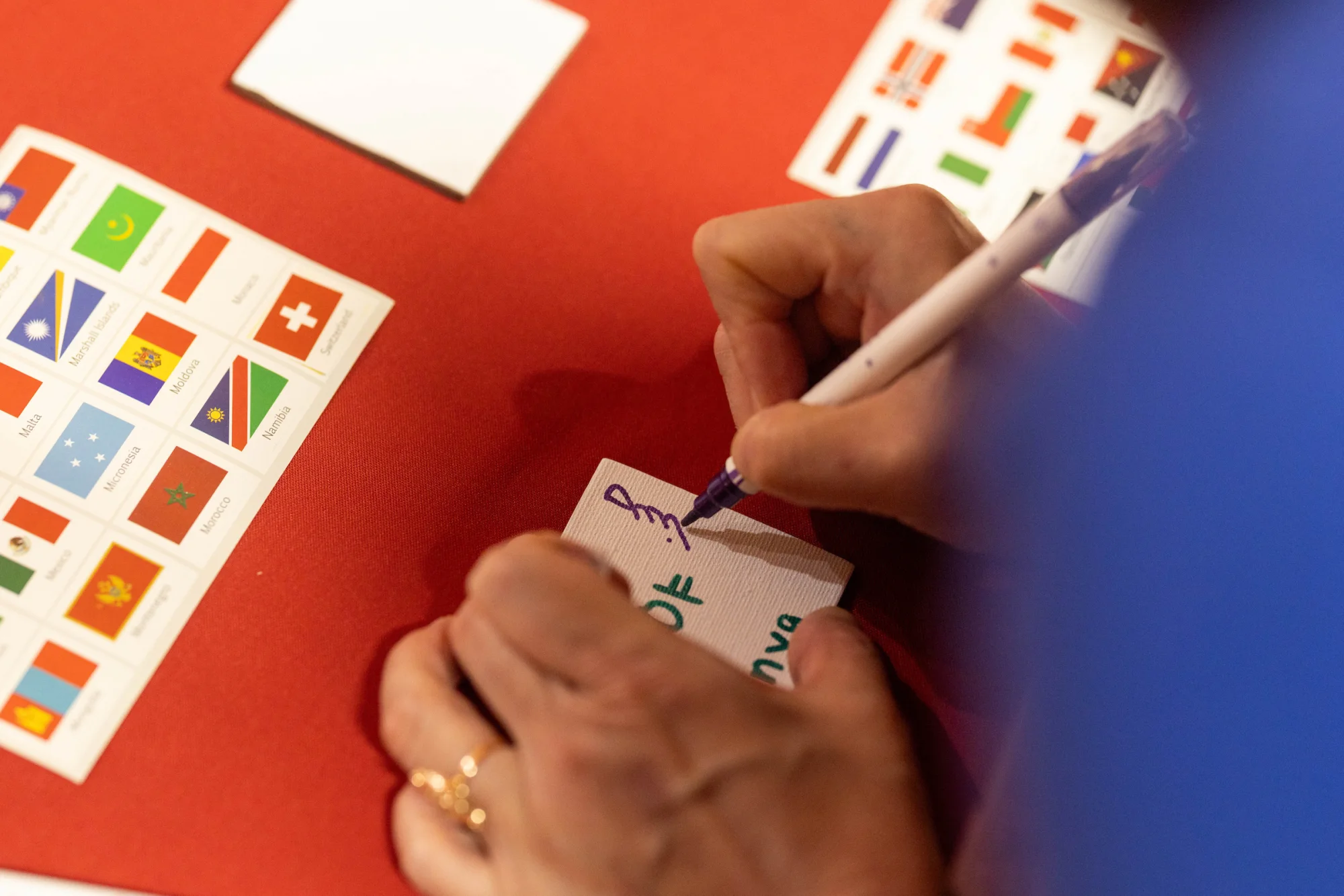
The Global Magnets event, held Monday, showed how simple an invitation to connect can be. Students received magnets and wrote their names on them in different languages, learning from classmates who write in those scripts. It was a small activity with a clear point: learning how someone writes their name is a way of getting to know them.
Events like this happen throughout the year, from pumpkin carving to Global Ed gatherings such as Bring Your Roommate and boba tea afternoons. International Education Week is the most visible stretch of work that goes on all year.
In their words
For Katie Qian, a first year student from China, the strength of the Bates community was evident upon her arrival for orientation. “Even though the week was short, I felt the most genuine connections being built between the people that I’ve met within that week compared to everyone else,” she says. Jigjidsuren has been a steady presence since.
“I just felt like she was always there for me, someone that I can just talk to and have a million solutions in the backup,” Qian said. “She still followed up with me, emailed me and checked if I was okay.”
Gabriel Gracies, a sophomore biology major from Mumbai, India, describes the staff in the Center for Global Education as a constant. “Global Ed is always there when we hit a burnout or a tough spot,” Gracies said. “I feel very grounded and supported.”
Gracies also points to the Multifaith Chaplaincy, which hosted a banquet as part of the week’s festivities. “An issue that international students can face when they come to campus is practicing their faith,” Gracies said. “But I think Bates does a really good job with that.”
When it comes to pursuing study abroad, which Gracies called especially complex for international students, the Global Ed staff, “do a great job of calming your nerves, telling you what is important and what you need to get done.”
Maximilian Hase, a sophomore from Quakenbrück, Germany, remembers how intimidated he felt before arriving. Emails from Associate Dean of Students James Reese and Assistant Director of Global Education Services Shelley Palmer “made it, I guess, a bit more tangible, the whole idea of actually coming here and getting settled.”
He expected a cultural barrier to mean less involvement on campus. “It turns out that it’s the opposite,” said Hase. “I feel like because I’m an international student, I’m more involved and more in touch with the Bates community.” He serves as a buddy to two international first0year students.
Ethan Castillo, a first-year student from Belize, credits friends for always being there for him and helping him adjust to the new environment. “The International Circle Orientation did help to start things, but in the end, the friends I’ve made made it smoother because I found people I could actually connect with,” Castillo said.
What comes next
Jigjidsuren’s list of next steps is already taking shape. She hopes to establish an international students advisory board, a formal channel for students to raise concerns, in order to further embed support into the framework of the college. It’s very deliberately not a club; an advisory board, she said, is an official means of pursuing advocacy for all students.
For Gracies, the week was a reminder of what international students bring to Bates: perspectives from around the world. “And that’s a beautiful thing,” said Gracies.
Jigjidsuren’s work comes down to a simple belief. “Sometimes I believe they just need a little nudge, a little help to get on an equal footing with the rest. And then usually magic happens. They thrive.”
A softer landing: How Bates is welcoming international students
This year’s changes are practical, personal, and often small by design:
- An earlier arrival. International students arrived ahead of the rest of campus for International Circle Orientation, giving them time to recover from travel. “They have to have a few days to adjust,” Jigjidsuren said. New this year: parents were also invited to attend, which set the orientation apart from past years.
- Student leaders and buddies. The Bates International Buddy program, new this year, pairs new students with returning students.
- Small gestures and big welcomes. For students on financial aid, bedding and other room essentials were bought and placed in their rooms before arrival, and all students received 30 days of free SIM card access so they could stay connected from the start. “I know it’s a small gesture,” Jigjidsuren said, “but I hope that this is something for them to feel already that they have been cared for, that they belong here.”
- Simpler paperwork. As a designated school official handling compliance and immigration, Jigjidsuren streamlined the process for obtaining a Social Security number. By partnering with the payroll office to build it into orientation, Jigjidsuren enabled every student to finish the process right away, which speeds up on-campus employment eligibility. Jigjidsuren has also initiated the ITIN application process, helping students comply with federal tax filing requirements.
- Company over breaks. This semester included a trip to a state fair during fall break, and a Thanksgiving host family program is in the works. “I try to do events during breaks so that students are not feeling alone or left out,” Jigjidsuren said.
Categories BatesNews