Anthropology at Bates

Anthropologists investigate cultural variation, with particular attention to race, gender, ethnicity, political and social change, and human evolution.

Anthropology is the study of what it means to be human. The Bates Department of Anthropology specializes in sociocultural anthropology, with forays into archaeology and linguistics. We focus on analyses of social challenges and opportunities and train students in systems-level thinking, attuning our students to how meaning and power are created and contested in everyday life. Our anthropology program emphasizes the importance of global study while preparing students to critically examine their own cultures.

Contact Us

Tobie Akerley Gordon
Pettengill Hall
Phone: 207-786-8295 takerley@bates.edu

What You Will Learn

garnet iconography with books on a shelf, brain, and interlocking gears
How to read and think critically and design multifaceted responses to challenging questions

garnet iconography with people, speech bubbles, and lightbulb
To collaborate with faculty in ongoing research projects through coursework and/or independent projects

garnet iconography with globe, map maker, clipboard and pencil
The purpose of ethnographic fieldwork and how to conduct it

garnet iconography with speech bubbles and presentation slide
How to construct and deliver compelling arguments in both oral and written form

garnet iconography with open notebook, globe, and circuit pathways
To develop the skills and adaptability to navigate our rapidly changing world

garnet iconography with crowd of people, academic building, and graduation cap
How to present unique findings to peers and mentors at regional and national conferences

Life After Bates

Our students leave Bates with a strong understanding of and ability to engage in ethnographic work. Graduates are creative and effective oral, visual, and written communicators and skilled observers of social life who are able to connect theory and practice in their lives and careers after Bates.

94%

of 2020-2024 social sciences graduates are employed and/or attending graduate school

  • American University
  • Yale University
  • University of Pennsylvania
  • New York University
  • Columbia University
  • City University of New York
  • University of Chicago
  • Boston University
--------------------------------------------------

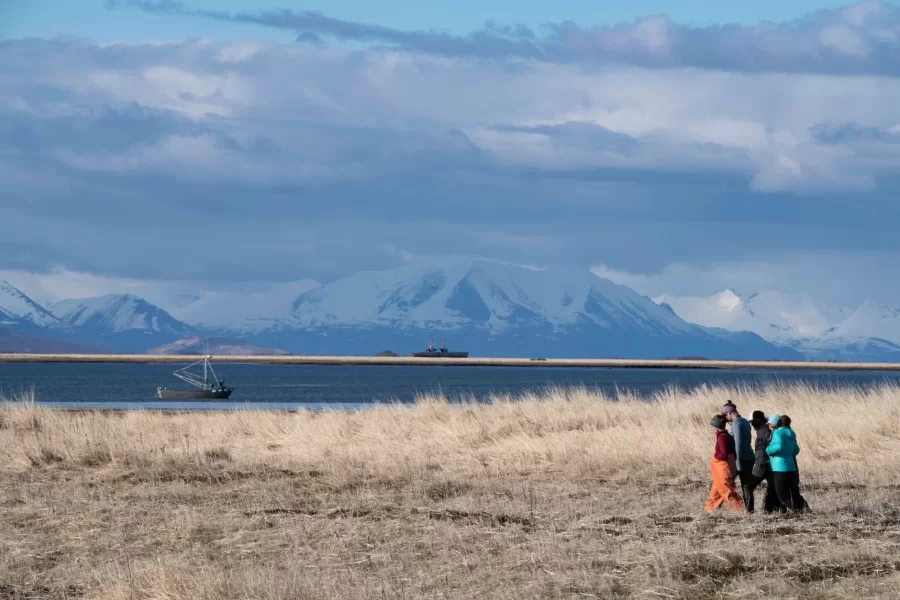
ANTH s32: Archaeological Field Experience, Alaska: Temyiq Tuyuryaq, a Collaborative
Indigenous Archaeology. This field experience introduces students to both contemporary and
ancient Alaska native lifeways in southwest and south central Alaska. The primary focus will be
Temyiq Tuyuryaq, the old village of Togiak where we will practice community engaged
archaeology and ethnography in collaboration with Togiak tribal elders, community members,
and local students. We will also visit Anchorage and communities and ancient sites along the
Kenai Peninsula, including a stay in Homer for subsistence studies. The course includes
camping and significant time living "off the grid."
Instructor: Kristen Barnett, Department of Anthropology
Maximum Enrollment: 12 students with instructor permission and application interview. Open
to all students.
Approximate Dates off Campus: April 27 - May 19.

————————————————– ANTH s32: Archaeological Field Experience, Alaska: Temyiq Tuyuryaq, a Collaborative Indigenous Archaeology. This field experience introduces students to both contemporary and ancient Alaska native lifeways in southwest and south central Alaska. The primary focus will be Temyiq Tuyuryaq, the old village of Togiak where we will practice community engaged archaeology and ethnography in collaboration with Togiak tribal elders, community members, and local students. We will also visit Anchorage and communities and ancient sites along the Kenai Peninsula, including a stay in Homer for subsistence studies. The course includes camping and significant time living “off the grid.” Instructor: Kristen Barnett, Department of Anthropology Maximum Enrollment: 12 students with instructor permission and application interview. Open to all students. Approximate Dates off Campus: April 27 – May 19.

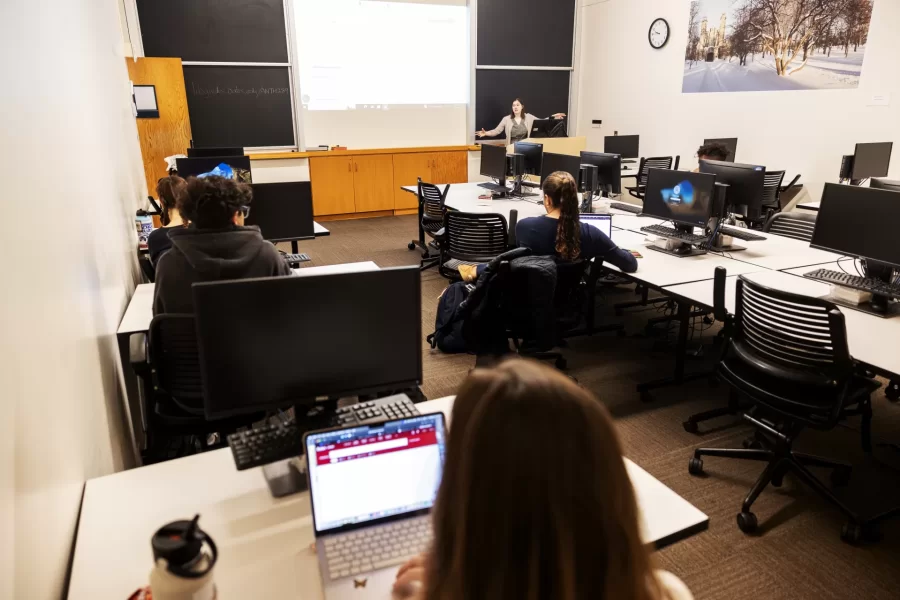
Day in the Life of Ladd Library on March 12, 2025. (Theophil Syslo | Bates College)

Day in the Life of Ladd Library on March 12, 2025. (Theophil Syslo | Bates College)

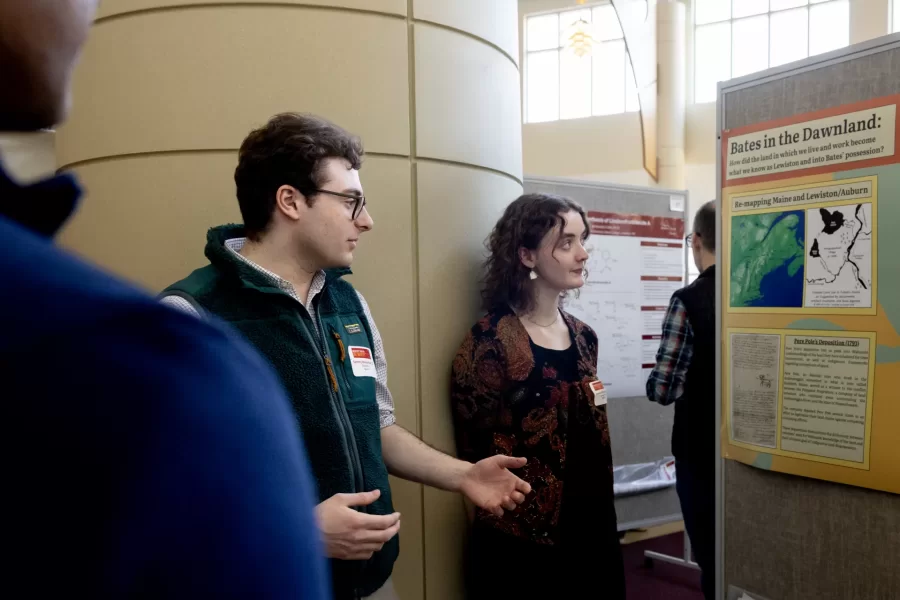
Our students choose to study anthropology because they are curious about humans and human behavior and seek answers to today’s most pressing social issues. Many engage in faculty-student research, while others may design their own learning trajectory to make the most of their anthropology education. With opportunities to study abroad and enroll in community-engaged courses, our anthropology program fosters students’ abilities to function effectively in new settings and to appreciate the value of cultural diversity.

Featured Courses

Photo of Joyce N. Bennett

Joyce N. Bennett

Associate Professor of Anthropology

Photo of Jennifer A. Hamilton

Jennifer A. Hamilton

Professor of Anthropology

Photo of Kamal A. Kariem

Kamal A. Kariem

Assistant Professor of Anthropology

Photo of Ashley E. Smith

Ashley E. Smith

Visiting Assistant Professor

News & Events

Bates announces Stoddard Fitness and Well-Being Center and athletics facilities upgrades
March 5, 2026

Bates announces Stoddard Fitness and Well-Being Center and at…

Bates is embarking on a $45 million project to update two key athletic facilities and construct a new fitness and well-being center. A gift of $10 million from Jon W. Brayshaw ’90, P’25 and Jocelyn Stoddard Brayshaw ’88, P’25 has brought the college a vital step closer to construction. The new facility will be named the Stoddard Fitness and Well-Being Center. 

Over the woodlands brown and bare, over the harvest-fields forsaken, silent, and soft, and slow descends the snow. — Longfellow Back on campus after the February freak storm, Bates feels suspended between motion and stillness; cars crunch in half-melted tracks, boots drip by radiators, flights and plans still catching up somewhere in the clouds. Some of us are here, some are delayed, and the quiet holds space for both. It’s a strange return; rushed arrivals, late-night drives, weather maps open on our phones, yet the air itself feels calm, like the world pressed pause just long enough for us to notice it. The paradox is real; chaos in the forecast, steadiness on the quad. Snow does that. It softens edges, lowers voices, makes even a campus full of movement feel like it’s breathing slowly.
March 5, 2026

February at Bates

February on campus saw sports successes, several large snowfalls, and our annual Winter Carnival — a week of events celebrating the joys of the chilly season.