Earth and climate sciences are key to addressing scientific issues relating to energy, mineral, and water resource security; ecosystem and environmental stewardship; hazards risk assessment; adaptation and mitigation; and climate variability and change.
The Department of Earth and Climate Sciences strives to instill in students a lifelong curiosity of the Earth across vast spatial and temporal scales. We study the planet as a dynamic, interconnected system that evolves through time to shape our environment and to sustain life. At Bates, we investigate planetary history and habitability across diverse spatial and temporal scales — from the study of processes that affect our planet over deep time to the immediate impacts of sudden tectonic ruptures and rapid anthropogenic change.
Contact Us
Dr. Beverly Johnson
44 Campus Ave
Carnegie Science Phone: 207-786-6062
bjohnso3@bates.edu
What You Will Learn
To work with your peers and faculty to build new knowledge and solve real-world problems
To translate complex data into compelling narratives for policymakers, the public, and the scientific community
How to design and conduct independent research and learn about new cultures while working with faculty and collaborators around the globe
To apply field observations from the Maine coast to global climate models and the geological history of other rocky planets
To gain hands-on mastery of sophisticated laboratory, field, and computational skills
How to present your research at professional regional and national conferences, where you’ll get the opportunity to network with global experts
Life After Bates
We prepare students for professional careers and to be well-informed, engaged citizens who use their expertise ethically to contribute to equity and social justice. We count among our notable alumni project scientists at NASA, professors at Harvard and Boston College, hydrogeologists, policy shapers, and researchers. Our alumni network is a cornerstone of the EACS experience, serving as a professional bridge for students as they transition from the classroom to the workforce. We facilitate direct connections with graduates who are leaders in their fields, and our alumni frequently return to campus to mentor current majors and help them navigate their own paths from the Maine coast to the global stage.
91%
of 2020-2024 science and math graduates are employed and/or attending graduate school
I loved Geology because it combines every science: biology, ecology, chemistry, geochemistry, physics. It’s a little bit of everything. And you get to be outside a lot; the opportunity for field work was incredible. A Geochemistry course in particular is the class that finally helped me decide I wanted to become a geologist. It really opened things up for me.
— Madeline Bruno ‘17
Selected Places of Employment/Service
Enel X
Haley & Aldrich
Wood Group
Radar Solutions International Inc.
VHB
Marine Biological Laboratory
Hurricane Island Center for Science and Leadership
Harvard University
Mount Holyoke Range State Park
Excel Academy
Selected Graduate Schools
University of California, Berkeley
University of Canterbury
Boston College
Columbia University
Tufts University
Oregon State University
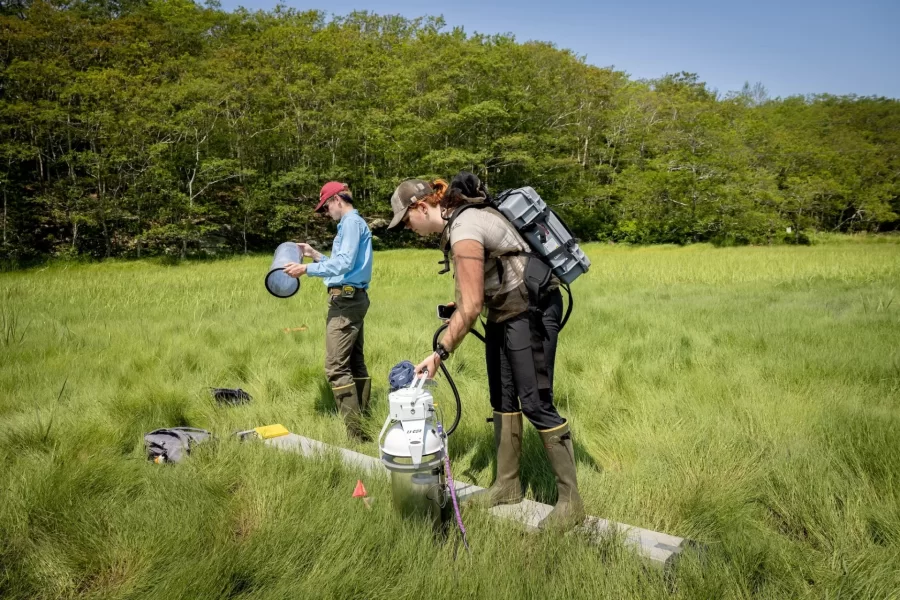
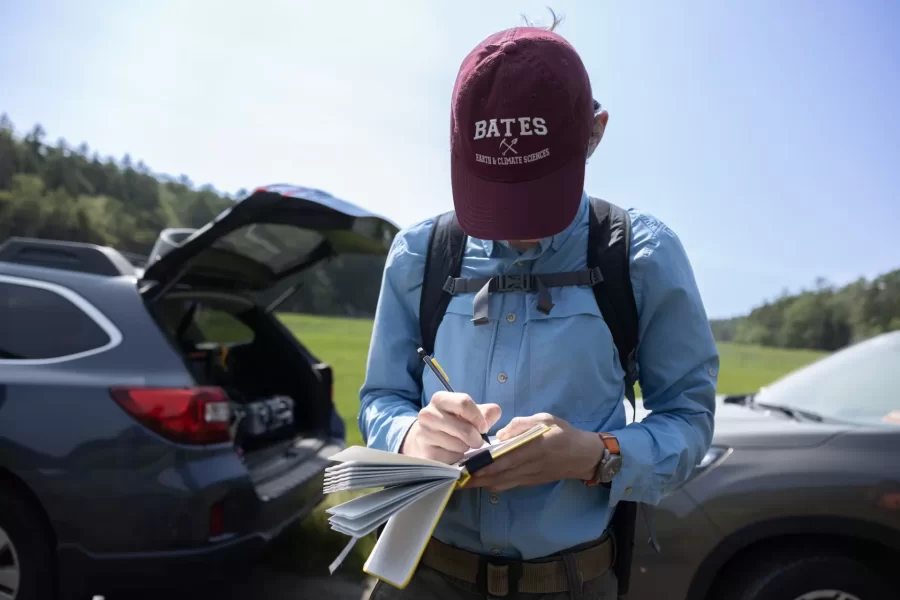
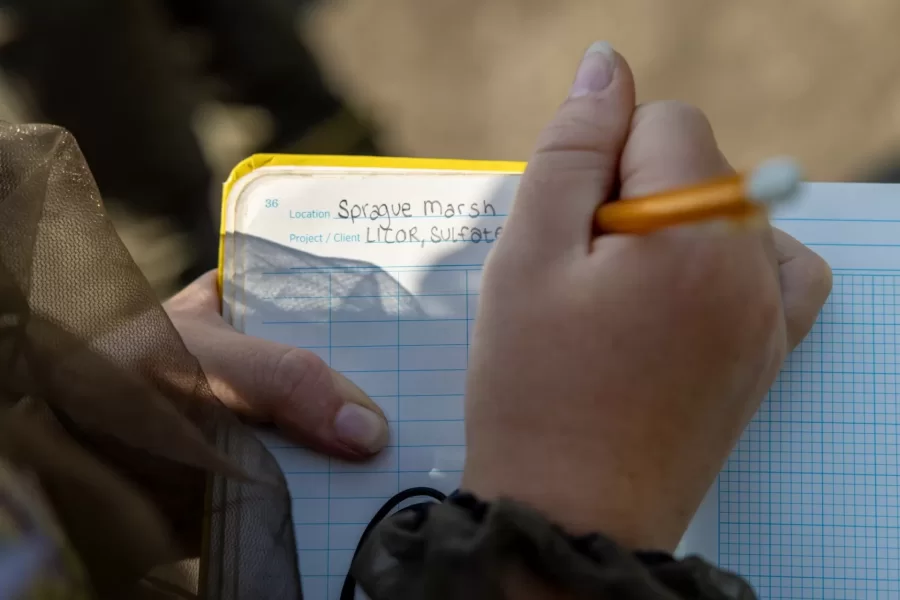
Professor of Earth and Climate Sciences Beverly Johnson takes her summer research students who are studying blue carbon cycling in salt marshes to Bates-MorseMountain in Phippsburg.
An EPA regional assessment of blue carbon stocks has recently been released. Maine data are almost entirely from Johnson’s lab so Bates is heavily featured (mostly her thesis students).
Anna Sarazin (EACS 2024; funded by Maine Sea Grant) —- short with red/blonde hair
Kate Dickson (EACS 2024; funded by Maine Sea Grant) —- tall, carried the backpack, red hair
Hayden Eckblom (EACS 2025; funded by Maine Climate Science Information Exchange) — the only male
Fiona Wilson (Biology, 2025; funded by Maine Community Foundation) —– the one wearing all the netting, blondish/red hair in pigtails
Evelyn Marchand (EACS 2026; funded by Maine Community Foundation) — dark hair
Professor of Earth and Climate Sciences Beverly Johnson takes her summer research students who are studying blue carbon cycling in salt marshes to Bates-MorseMountain in Phippsburg.
An EPA regional assessment of blue carbon stocks has recently been released. Maine data are almost entirely from Johnson’s lab so Bates is heavily featured (mostly her thesis students).
Anna Sarazin (EACS 2024; funded by Maine Sea Grant) —- short with red/blonde hair
Kate Dickson (EACS 2024; funded by Maine Sea Grant) —- tall, carried the backpack, red hair
Hayden Eckblom (EACS 2025; funded by Maine Climate Science Information Exchange) — the only male
Fiona Wilson (Biology, 2025; funded by Maine Community Foundation) —– the one wearing all the netting, blondish/red hair in pigtails
Evelyn Marchand (EACS 2026; funded by Maine Community Foundation) — dark hair
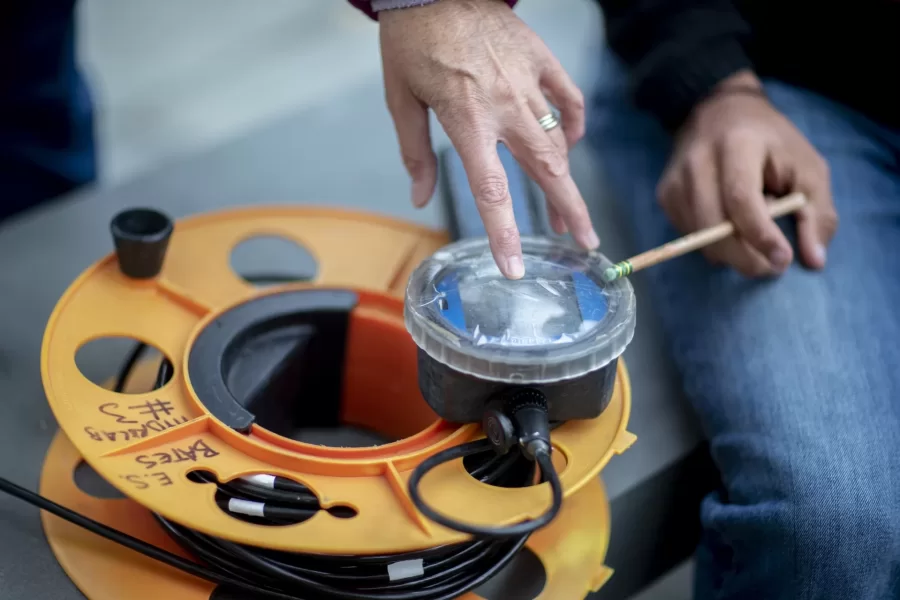
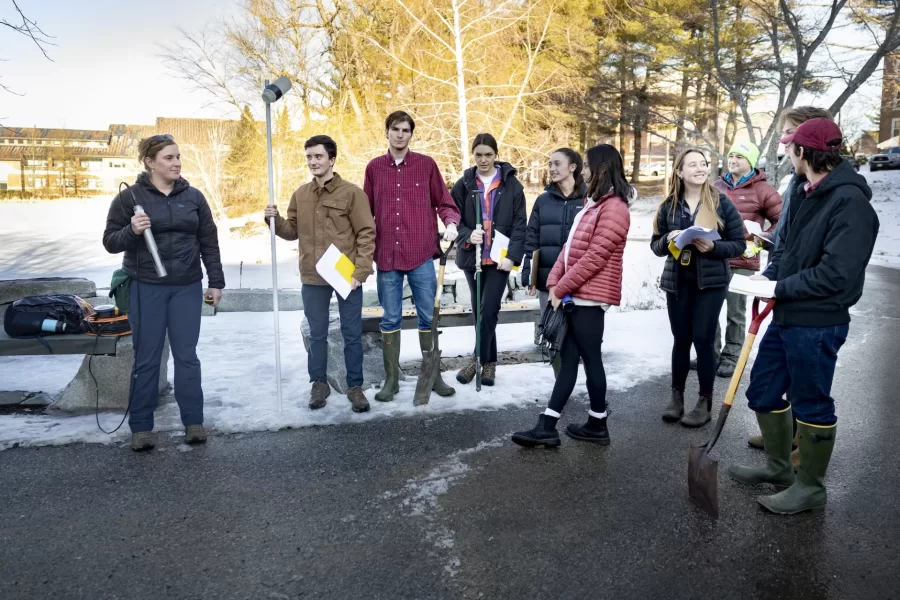
Professor of Earth and Climate Sciences Beverly Johnson teaches class at Lake Andrews with her students from EACS 240 – Environmental Geochemistry/Lab, where she asked the students to collect water and measure the following:
— (dissolves) oxygen
— specific conductivity
— temperature
— depth
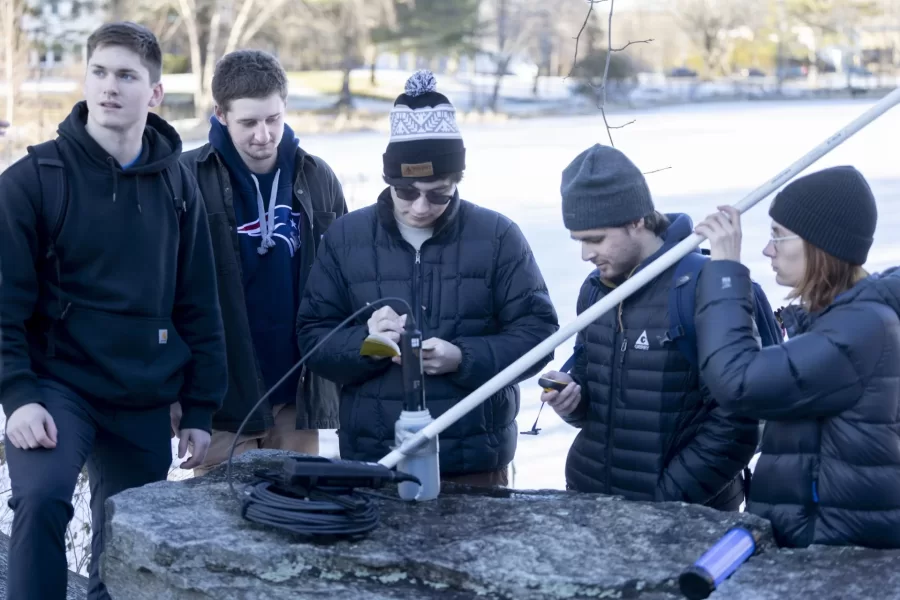
Four students working behind Parker Hall gathered and measured their water with the sensor provided by Johnson to each small group:
Katie Caperton ’23 in green pullover
Victoria Scott ’23 in Bates sweatshirt
Henry King ’22 in orange jacket
Peter Dunbar ’23 in tan hat
Professor of Earth and Climate Sciences Beverly Johnson takes her summer research students who are studying blue carbon cycling in salt marshes to Bates-MorseMountain in Phippsburg.
An EPA regional assessment of blue carbon stocks has recently been released. Maine data are almost entirely from Johnson’s lab so Bates is heavily featured (mostly her thesis students).
Anna Sarazin (EACS 2024; funded by Maine Sea Grant) —- short with red/blonde hair
Kate Dickson (EACS 2024; funded by Maine Sea Grant) —- tall, carried the backpack, red hair
Hayden Eckblom (EACS 2025; funded by Maine Climate Science Information Exchange) — the only male
Fiona Wilson (Biology, 2025; funded by Maine Community Foundation) —– the one wearing all the netting, blondish/red hair in pigtails
Evelyn Marchand (EACS 2026; funded by Maine Community Foundation) — dark hair
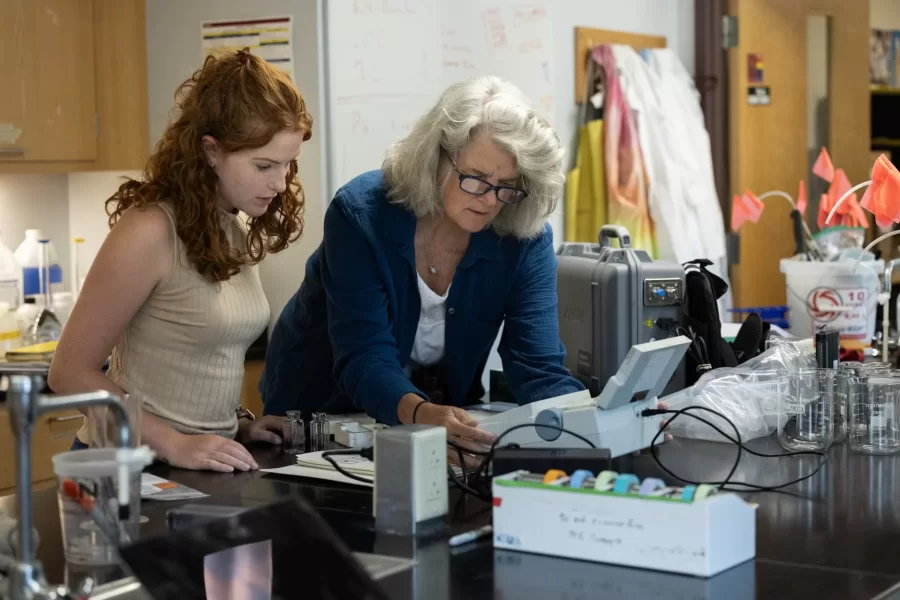
Visiting Assistant Professor of Earth and Climate Sciences Anne Fetrow leads students in her class in a lab at Lake Andrews where they learn to use scientific equipment to evaluate water qualities.
EACS 240 – Environmental Geochemistry/Lab
Environmental geochemistry draws from concepts in earth, climate, and environmental sciences, biology, and chemistry to study the behavior of natural and anthropogenic materials as they cycle through the various components of the Earth System. In this introduction to the field, students explore rock-water interactions, chemical equilibria, and biogeochemical cycling and develop field, laboratory, and modeling skills to work on local current environmental problems. Students may investigate climate change; mitigation and adaptation; surface and groundwater contamination by salt, arsenic, nutrients, and/or heavy metals; acid mine drainage; and the history of atmospheric lead deposition. The laboratory includes fieldwork, chemical analysis of environmental samples using inductively coupled plasma emission spectroscopy, and stable isotope ratio mass spectrometry and modeling using STELLA. Prerequisite(s): any 100-level earth and climate sciences course.
jacket and brown hair
Professor of Earth and Climate Sciences Beverly Johnson takes her summer research students into her Carnegie Science lab the day after they visited Bates-Morse Mountain to study blue carbon cycling in salt marshes.
Also in Johnson’s lab was Phil Dostie, Laboratory Manger Environmental Geo Chemistry Lab
An EPA regional assessment of blue carbon stocks has recently been released. Maine data are almost entirely from Johnson’s lab so Bates is heavily featured (mostly her thesis students).
Anna Sarazin (EACS 2024; funded by Maine Sea Grant) —- short with red/blonde hair
Kate Dickson (EACS 2024; funded by Maine Sea Grant) —- tall, carried the backpack, red hair
Hayden Eckblom (EACS 2025; funded by Maine Climate Science Information Exchange) — the only male
Fiona Wilson (Biology, 2025; funded by Maine Community Foundation) —– the one wearing all the netting, blondish/red hair in pigtails
Evelyn Marchand (EACS 2026; funded by Maine Community Foundation) — dark hair
Visiting Assistant Professor of Earth and Climate Sciences Anne Fetrow leads students in her class in a lab at Lake Andrews where they learn to use scientific equipment to evaluate water qualities.
EACS 240 – Environmental Geochemistry/Lab
Environmental geochemistry draws from concepts in earth, climate, and environmental sciences, biology, and chemistry to study the behavior of natural and anthropogenic materials as they cycle through the various components of the Earth System. In this introduction to the field, students explore rock-water interactions, chemical equilibria, and biogeochemical cycling and develop field, laboratory, and modeling skills to work on local current environmental problems. Students may investigate climate change; mitigation and adaptation; surface and groundwater contamination by salt, arsenic, nutrients, and/or heavy metals; acid mine drainage; and the history of atmospheric lead deposition. The laboratory includes fieldwork, chemical analysis of environmental samples using inductively coupled plasma emission spectroscopy, and stable isotope ratio mass spectrometry and modeling using STELLA. Prerequisite(s): any 100-level earth and climate sciences course.
jacket and brown hair
Professor of Earth and Climate Sciences Beverly Johnson takes her summer research students into her Carnegie Science lab the day after they visited Bates-Morse Mountain to study blue carbon cycling in salt marshes.
Also in Johnson’s lab was Phil Dostie, Laboratory Manger Environmental Geo Chemistry Lab
An EPA regional assessment of blue carbon stocks has recently been released. Maine data are almost entirely from Johnson’s lab so Bates is heavily featured (mostly her thesis students).
Anna Sarazin (EACS 2024; funded by Maine Sea Grant) —- short with red/blonde hair
Kate Dickson (EACS 2024; funded by Maine Sea Grant) —- tall, carried the backpack, red hair
Hayden Eckblom (EACS 2025; funded by Maine Climate Science Information Exchange) — the only male
Fiona Wilson (Biology, 2025; funded by Maine Community Foundation) —– the one wearing all the netting, blondish/red hair in pigtails
Evelyn Marchand (EACS 2026; funded by Maine Community Foundation) — dark hair
Why Study Earth and Climate Sciences at Bates?
Studying EACS at Bates means choosing a program where you aren’t just a student — you’re a scientist from day one. You join a community that uses the dramatic landscape of Maine as a gateway to understanding global systems and planetary evolution. We offer the rare combination of high-tech field and laboratory access, an intimate faculty-to-student ratio, and the freedom to pursue research that ranges from local coastal resilience to the fundamental requirements for life on other worlds. From our 100-level courses to the senior thesis, we stress the importance of experiential learning and discovery, communication, and collaboration.
Featured Courses
Meet the Faculty
Our faculty are world-class teacher-scholars who bridge the gap between high-level research and undergraduate mentorship. With PhDs from premier institutions, they are recognized leaders in their fields as well as prolific authors whose research appears regularly in top scientific journals. Beyond the classroom, they hold leadership and editorial roles in global organizations like the Geological Society of America, the American Geophysical Union, and the European Geosciences Union, ensuring that Bates students are learning from the very people shaping the global conversation on climate change, tectonics, and planetary habitability.
In the Student Center for Belonging and Community, first-generation Bates students mentor their younger peers, providing guidance on everything from academics to internships to social life.
Bates is embarking on a $45 million project to update two key athletic facilities and construct a new fitness and well-being center. A gift of $10 million from Jon W. Brayshaw ’90, P’25 and Jocelyn Stoddard Brayshaw ’88, P’25 has brought the college a vital step closer to construction. The new facility will be named the Stoddard Fitness and Well-Being Center.
February on campus saw sports successes, several large snowfalls, and our annual Winter Carnival — a week of events celebrating the joys of the chilly season.