Economics at Bates
Whether through exploring market dynamics, inequality, or environmental sustainability, students within the Department of Economics learn to examine how individuals, firms, and governments make decisions.
Our program is designed to foster “intelligent citizenship” and rigorous scholarship, equipping students with the tools to analyze complex human behavior and social issues. Policy makers in business, government, and the nonprofit sector frequently evaluate complex economic issues. The economics major culminates in a senior thesis, where students apply their cumulative knowledge to an original research question, ensuring every graduate leaves our program with deep, practical expertise in the discipline.
Contact Us
Matt Von Vogt, Academic Administrative Assistant
4 Andrews Rd
Pettengill Hall
Phone: 207-786-8296
mvonvogt@bates.edu
What You Will Learn

How to think critically, communicate effectively, and research capably

To understand how to use micro- and macroeconomic models to analyze behavior and aggregate phenomena

To employ statistical and econometric techniques to test hypotheses and interpret data-driven evidence

To apply economic concepts to pressing real-world problems—from healthcare and development to financial crises and social justice — while considering diverse perspectives

To articulate complex economic arguments clearly in both written and oral forms for various audiences

To formulate original research questions, locate relevant data, and execute a professional-grade study
Life After Bates
Our graduates consistently secure placements at top organizations and graduate schools. More than two-thirds of economics majors eventually pursue further study, with acceptances to top MBA and Ph.D. programs. Alumni have embarked on their careers at top firms, research institutes, and governmental departments.
94%
of 2020-2024 Bates graduates are employed and/or attending graduate school — settled into their next opportunity within 6 months of graduation.
My choice to double major in biochemistry and economics reflected curiosity more than a clear plan, and the Bates environment encouraged me to connect those interests. Science taught me to think critically and sit with uncertainty, while economics helped me understand systems and decision-making. Now, I bring that scientific mindset into finance, helping set business strategy by grounding decisions in data.
— Johannes Schwarz ‘25
Selected Places of Employment/Service
- Goldman Sachs
- Morgan Stanley
- JPMorgan Chase & Co.
- Barclays
- Bank of America
- Boston Consulting Group
- Deloitte
- Fidelity Investments
- BlackRock
- Federal Reserve Bank of New York
- Merrill Lynch
- Analysis Group
- National Economic Research Associates
Selected Graduate Schools
- Yale University
- Columbia University
- University of Pennsylvania Carey Law School
- Wharton School of the University of Pennsylvania
- University of Chicago
- Tuck School of Business at Dartmouth
- NYU Tandon School of Engineering
- University College London
- Emory University School of Law
- Harvard University
- Vanderbilt University
- Massachusetts Institute of Technology
- Stanford University

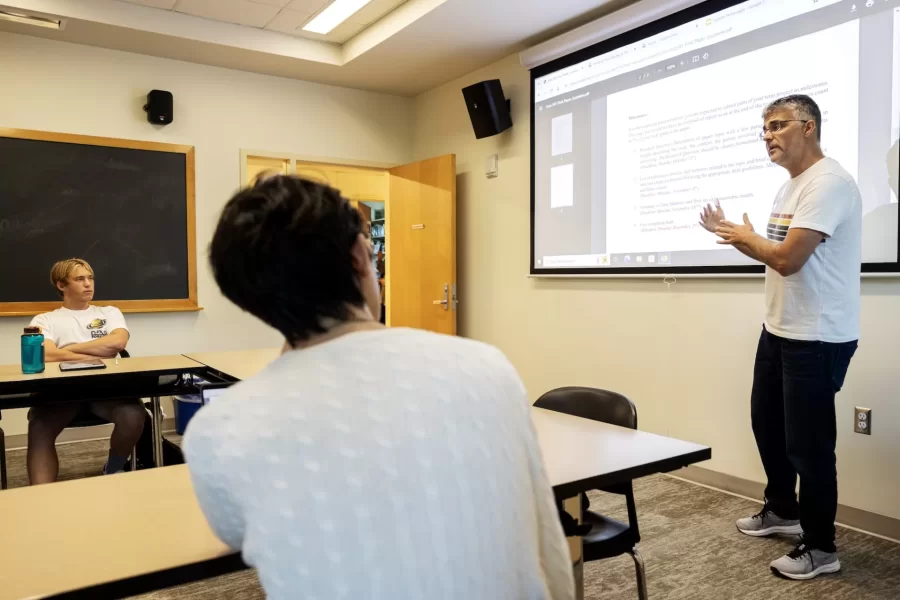
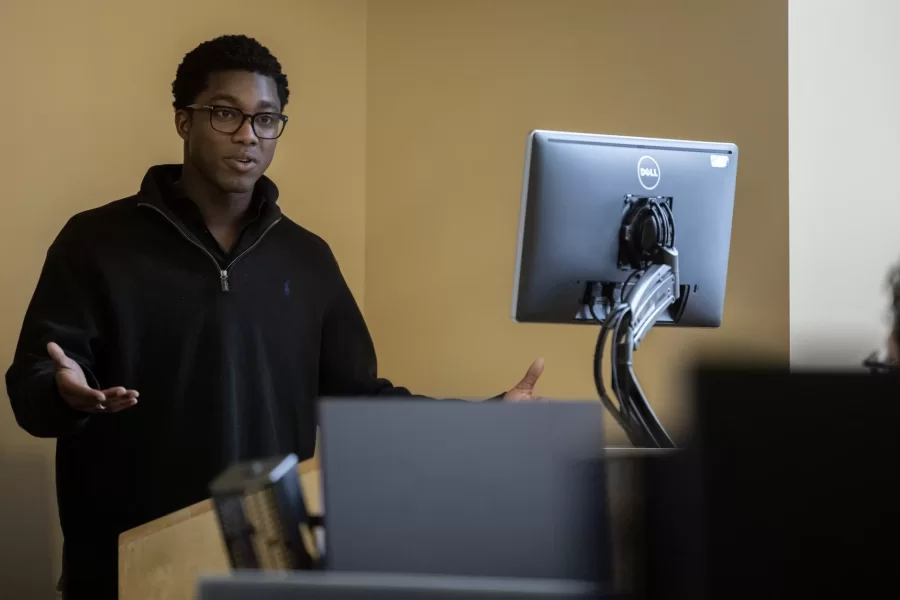
Why Study Economics at Bates?
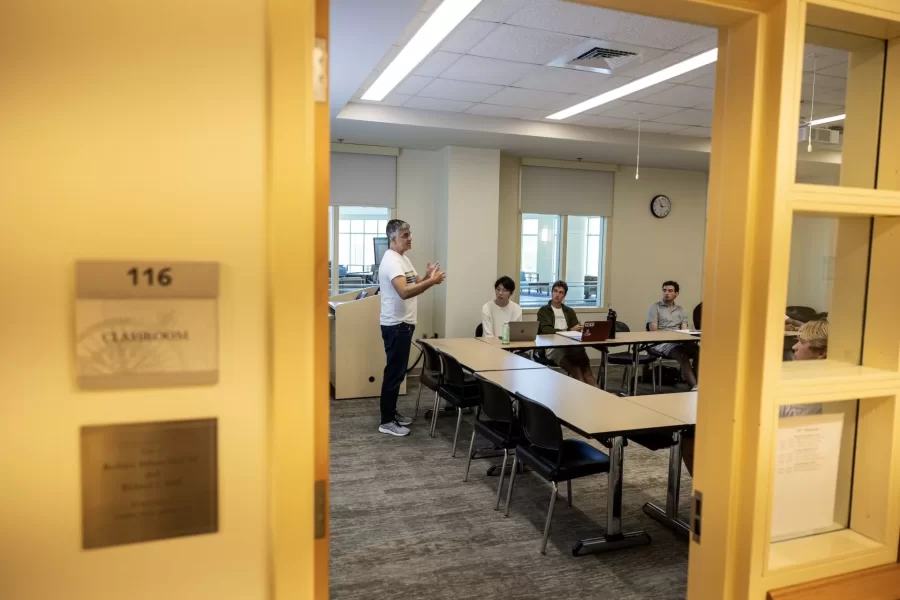
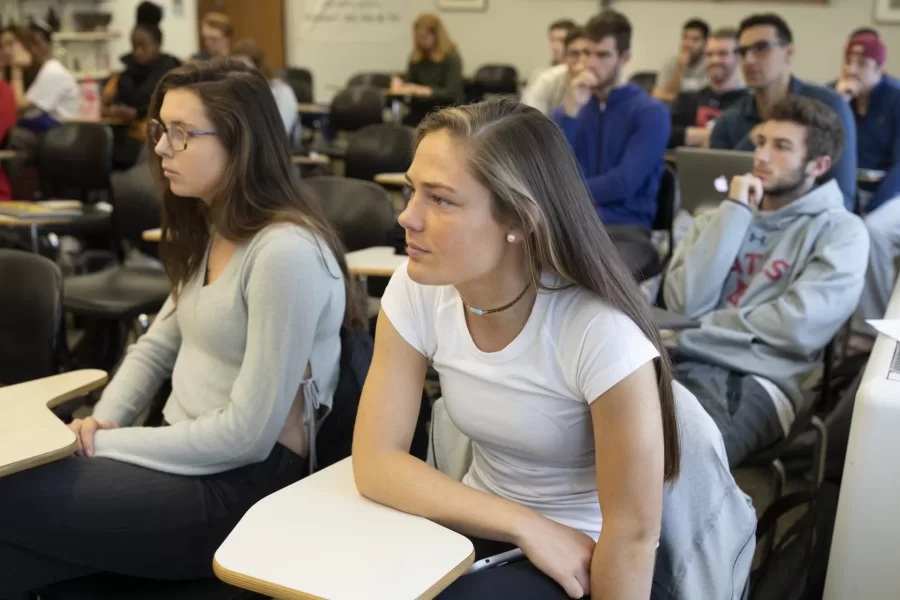
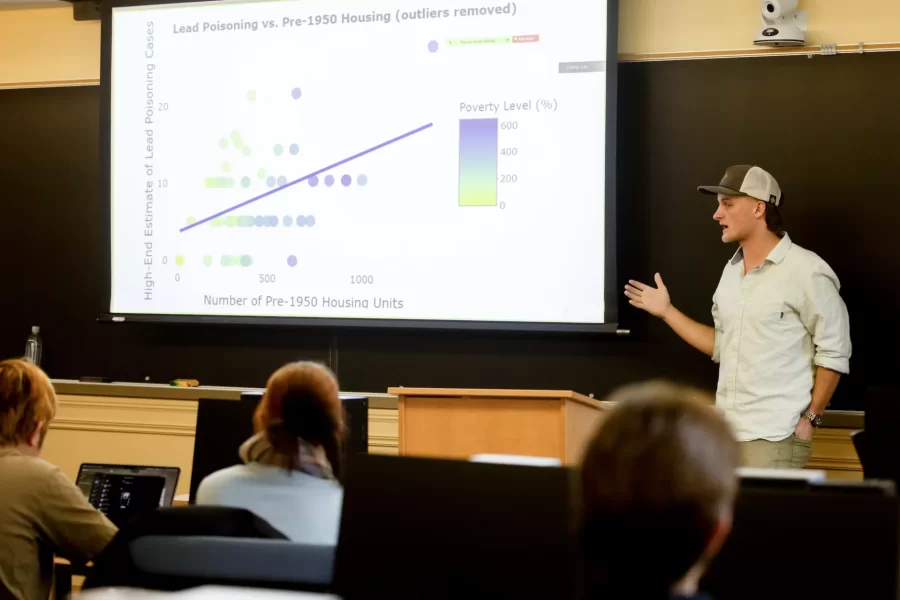
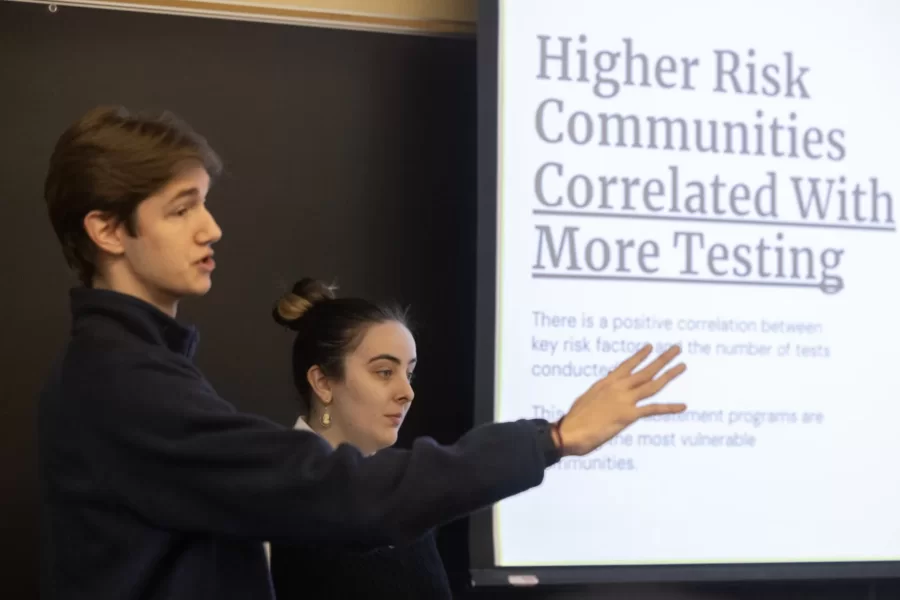
Students choose economics to gain a powerful lens for understanding the world, supported by a curriculum that emphasizes both quantitative rigor and critical thinking. In collaboration with the Harward Center for Community Partnerships, certain courses allow students to work directly with Lewiston-Auburn community partners on local economic development projects. In addition, students frequently work alongside faculty as research assistants, gaining direct experience in academic inquiry, and regularly present their findings at summits and conferences. The program is committed to intellectual discovery and “informed civic action,” preparing graduates for diverse careers in business, policy, and academia.