Remembering Philip J. Otis ’95
The Otis Lecture is named in memory of Philip J. Otis ’95, a student committed to thinking about the human impact on the environment and the environmental impact on humans. In his thesis, which he wrote under the direction of the late Carl Straub, dean emeritus of the faculty, professor emeritus of religion, and Clark A. Griffith Professor Emeritus of Environmental Studies, Otis wrote about “the suffering of nature because of human greed and arrogance.” Straub, who died in 2019, remembered Otis’ focus on the “‘hidden resources within religious traditions,” which Otis felt could “heal our fractured life with one another and broken life with nature.” As Joe Hall, chair of the Otis Committee and associate professor of history, put it, Otis “cared about environmental studies before there was an environmental studies major.”
After Otis died in 1995, Straub recalled how deeply engaged Otis was in his honors thesis, while also joyfully embracing the world around him. Straub noted Otis roller skating across campus, declaring “It’s spring!” as can be well understood by Mainers on a warming April day.
Otis joined the Student Conservation Corps in 1995 and was working at Mount Rainier as a Park Ranger intern. It was “the job of a lifetime,” his stepfather C. Angus Wurtele remembers him saying. In August, Otis responded to an emergency call for three climbers in distress — one had broken an ankle. Otis and another ranger, Sean Ryan, both died from a fall during the rescue. The rock climbers were recovered safely.
In honor of their son’s desire, in his own words, “to foster a sense of compassion toward the earth,” Margaret V.B. and C. Angus Wurtele established an endowment to support Bates college programs with an environmental focus. In addition to grants for students, the fund supports the annual lecture.
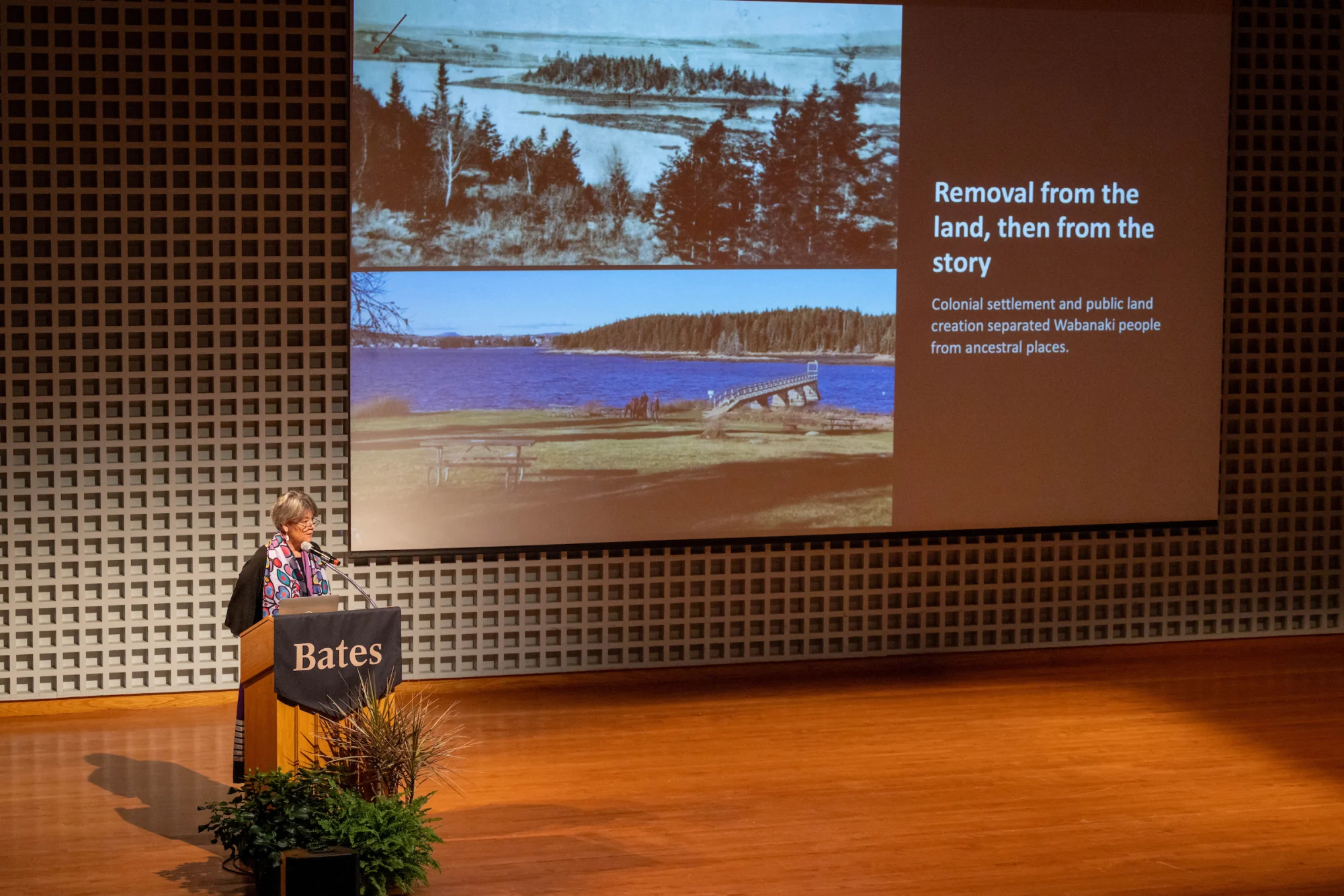
At the 29th annual Otis Lecture on Nov. 2, Bonnie Newsom gave a talk entitled “Holding Ground: Wabanaki Archaeology as Resilience across Landscapes of Erasure.” Newsom, associate professor of anthropology and faculty associate at the Climate Change Institute at the University of Maine, emphasized multiple forms of erasure in Wabanaki archaeology. An Indigenous archeologist working near her ancestral home, Newsom researches regional coastal shell heaps that are threatened by rising sea levels and erosion.
Since it was established in 1996, the Otis Lecture has welcomed speakers to campus for several days spent with the community, culminating in a public lecture. Among the notable speakers who have been supported by the Otis Endowment are Terry Tempest Williams, Mary Oliver, Michael Pollan, N. Scott Momaday, Elizabeth Kolbert, Winona LaDuke, and Ross Gay. Typically speakers work at the intersection of the humanities and the environment, honoring Philip J. Otis’ commitment to and interest in the spiritual and moral dimensions of humankind’s relationship with the environment.
Joe Hall, chair of the Otis committee and associate professor of history, describes the event as a unique opportunity to be in conversation with other students, faculty, and a leading scholar around a topic of shared interest. “That, to me, is the real richness,” Hall said. Newsom arrived Sunday night for dinner with Indigenous students at Bates, spent Monday and Tuesday visiting with classes — including a First-Year Seminar — talked with faculty about Bates-Wabanaki relations, and then joined environmental studies faculty and students for a dinner at Nezinscot Farm.
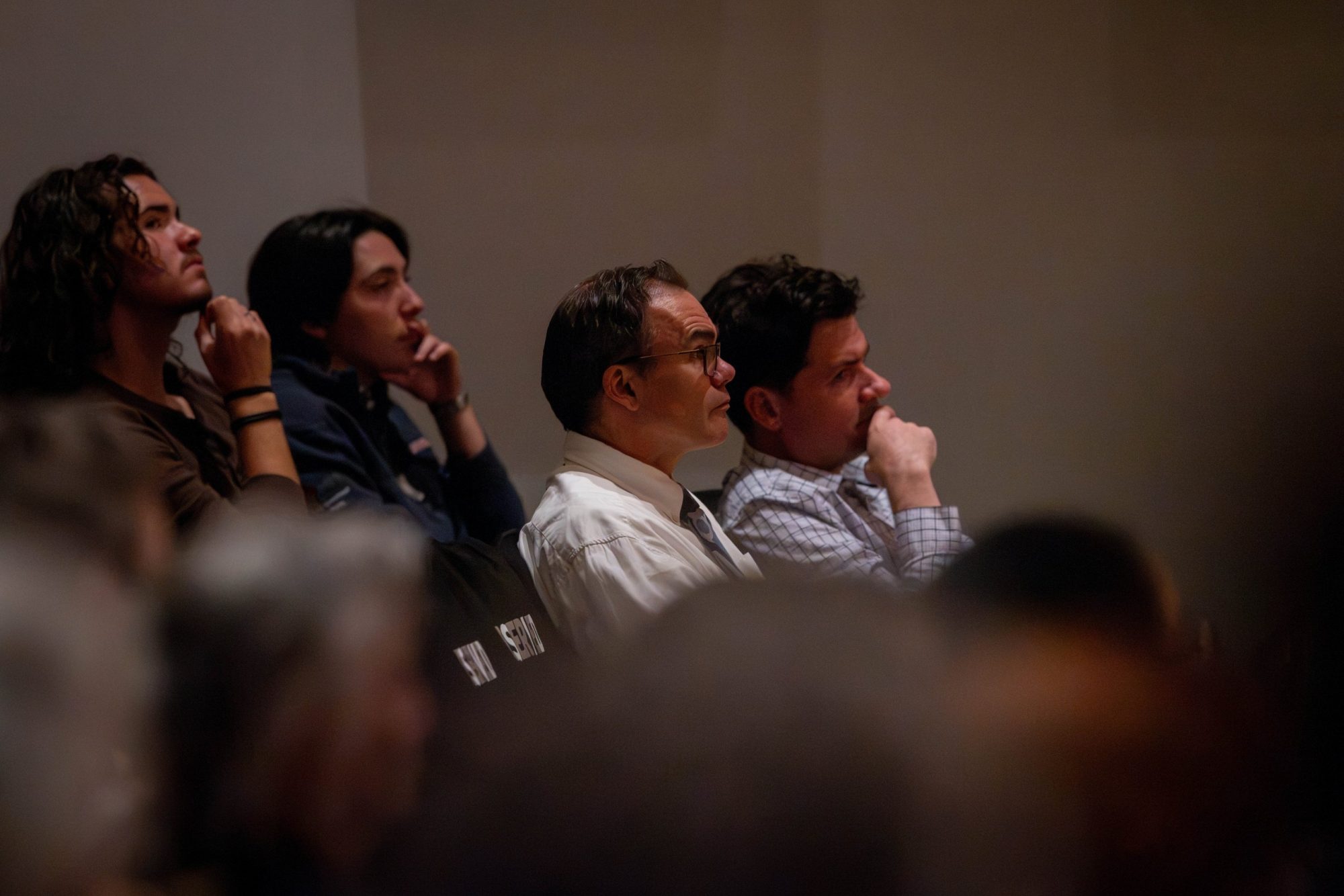
Introducing Newsom and her work, Hall called the audience in Olin Concert Hall to action in a way that might honor the memory of Philip J. Otis, saying, “We have a particularly situated responsibility to ask how we might build a world more just than the one that made this place possible.”
At the start of her college career, a young Newsom thought she would major in social work. She knew that she wanted to help people. A citizen of the Penobscot Nation, Newsom was beginning to imagine the impact that she might have beyond her community. But when she took an anthropology class and saw the ways that her professor, who was writing about and working with members of the Sikh community, was able to give them a voice, Newsom was intrigued. “There aren’t many Native people in archaeology,” she recalls her professor telling her. “You could do a lot for your community by trying to give Indigenous peoples a voice in archaeology.”
Newsom’s commitment to the Wabanaki peoples (which includes the Penobscot Nation) paired with her deepening knowledge of archaeology led her, eventually, to research Wabanaki culture through the shell heaps — a cultural accumulation of shells — that Wabanaki people left behind. The shell heaps contain thousands of years of cultural history, not only in their very presence as a record of where Indigenous people gathered and shared meals, but also in what they hold — pieces of pottery with unique markings, pollen that gives clues about the plants growing at the time, and bones of extinct animals like the sea mink. At Frazer Point in what is now Acadia National Park, a shell heap held a cultural artifact, a 5-centimeter flute made from a bird bone. “The flute reminds us that people did more than hunt and fish and gather,” Newsom said, pointing to an image of the found flute during her talk.
Newsom focused on three forms of erasure of Wabanaki life illustrated through archaeology. “By erasure,” Newsom said, “I mean the processes that remove a people from a place or from the account of a place so that the place begins to look empty and its past begins to look like someone else’s.” The first form of erasure is removal from the land. Newsom discussed the ways that ancestral places were treated and narrativized as a second form of erasure. She described outsiders extracting parts of the Whaleback Shell Midden State Historic Site on the Damariscotta River for their own use.
The Wabanaki did not see the oyster heap as “a resource on which to build wealth,” Newsom explained; rather, the heap was “something to share under rules of care.” That generosity was abused and the culture was misunderstood. The third form of erasure comes in the form of climate change and sea level rise, which has and will continue to literally remove the cultural imprint of thousands of years of Wabanaki living on this land. As the water rises, erosion quickly rearranges landscapes, and certain shell heaps, along with the stories they can tell, are under threat — especially from storms.
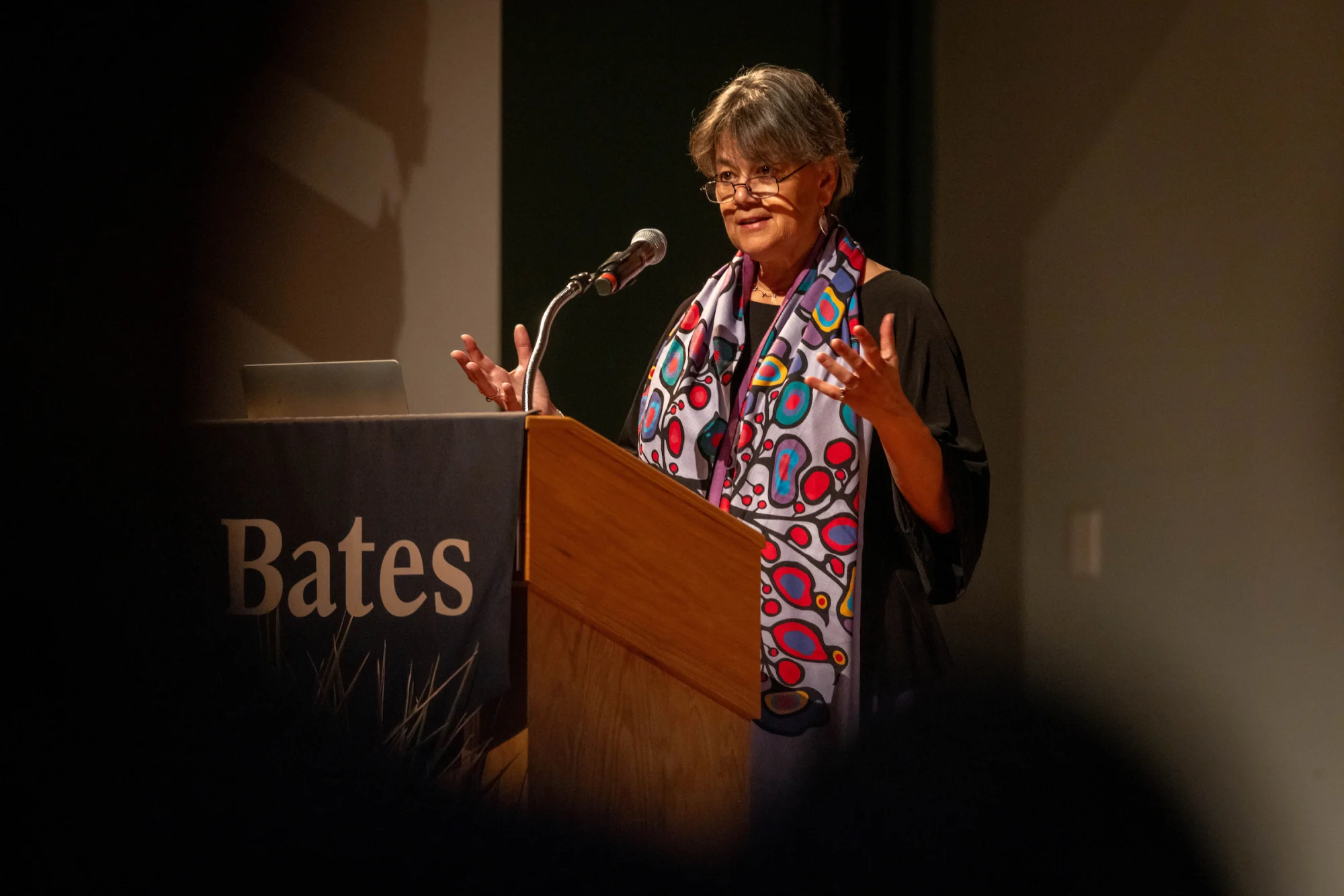
Newsom emphasized the importance of resilience.
“When I look at what is actually happening on this coast,” Newsom said, “I find agency living where it always has: with Wabanaki people who are making decisions and renewing relationships with place, but under conditions that they didn’t choose.” It is possible that a people can “emerge stronger from the struggle,” she said. Pointing to photographs of Wabanaki elders connecting with ancestral lands and learning to use ancient tools, Newsom ended with optimism.
“The work can strengthen cultural identity and confront heritage loss, and we can restore erased connections to Maine history and Wabanaki history and bring Wabanaki perspectives into archeological interpretation,” she said.
A robust question and answer period following her talk focused on everything from the destructive nature of archaeology to collaboration with Canadian colleagues and Indigenous communities. Bianca Vega, Bates’ Kessler Scholars program coordinator, asked about the power of interdisciplinary research.
“I am a big fan of breaking down silos,” Newsom answered. “I’m not too proud to say I don’t know how to do something, and I’ll go and find somebody who can help with whatever thing I want to do.” Working across disciplines, together, she said, “creates a more holistic view of the past. It gives us more information and more evidence to understand the environment and how people were living in the past.”
Faculty Featured
Joseph M. Hall Jr.
Associate Professor of History