European Studies at Bates

The Program in European Studies is an interdisciplinary program that draws on the humanities and social sciences to broaden understanding of the European region.

Offering a flexible framework, the program allows students to pursue their own interests in the histories, cultures, geographies, peoples, and languages of Europe. The curriculum spans a remarkable range, from the punks, pioneers, and protestors of Eastern Europe to the legacies of World War I and the Cold War. Students study up to two modern European languages — French, German, Russian, or Spanish — enabling in-depth scholarly work.

Contact Us

Indya Childs, Academic Administrative Assistant
9 Andrews Road
Roger Williams Hall
ichilds@bates.edu

What You Will Learn

garnet iconography with books on a shelf, globe, and magnifying glass
To question assumptions about Europe’s role in the world

garnet iconography with people and academic building
How to analyze European histories, societies, politics, and cultures from multiple perspectives

garnet iconography with stack of papers, people, and books on a shelf
To interpret cultural texts and situate them within their sociopolitical contexts

garnet iconography with presentation slide, chat bubbles, and clipboard with pen
How to communicate effectively in oral, written, and presentational formats

garnet iconography with chat bubbles, globe, stack of paper, and pen
To develop proficiency in at least one European language besides English

garnet iconography with light bulb, trifold map with marker, and interlocking gears
How to think critically across linguistic, cultural, and national borders

Life After Bates

European studies graduates often continue their studies at prestigious post-graduate programs, pursuing politics, art, or foreign languages, sometimes abroad. Others embark on successful careers in government, law, public policy, museums, and more.

94%

of 2020-2024 Bates graduates are employed and/or attending graduate school — settled into their next opportunity within 6 months of graduation.

  • Tufts University
  • Georgetown University
  • Harvard University
  • Johns Hopkins University
  • Dartmouth College
  • University of Wisconsin–Madison
A professor teaches her students sitting outside near Lake Andrews.
A student turns their computer screen towards their peer during a Historical Methods class in Olin Arts Center.
A student works independently on their laptop in a classroom in Pettengill Hall.
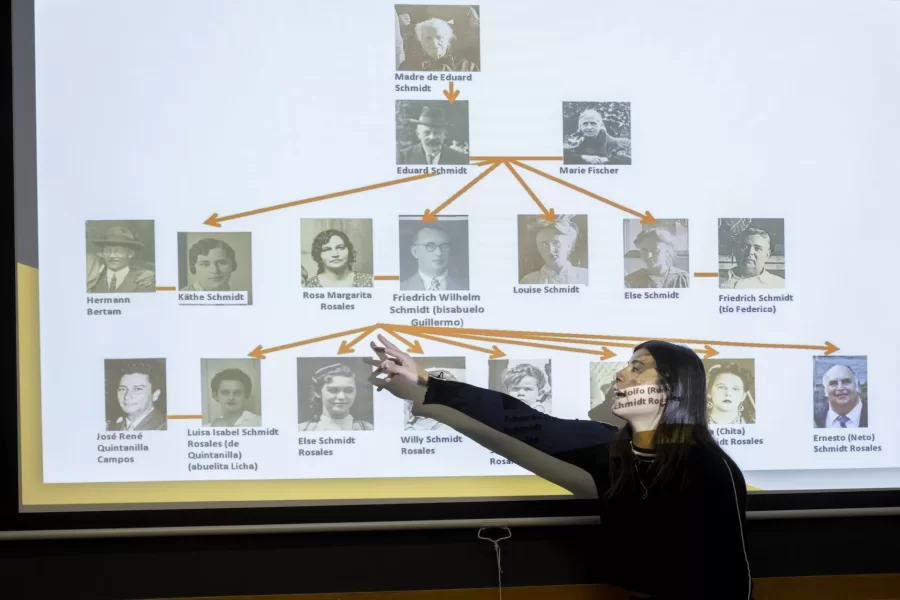
A student points at the projector while giving a presentation during the Mount David Summit 2023 Panel on German Literature and Identity.
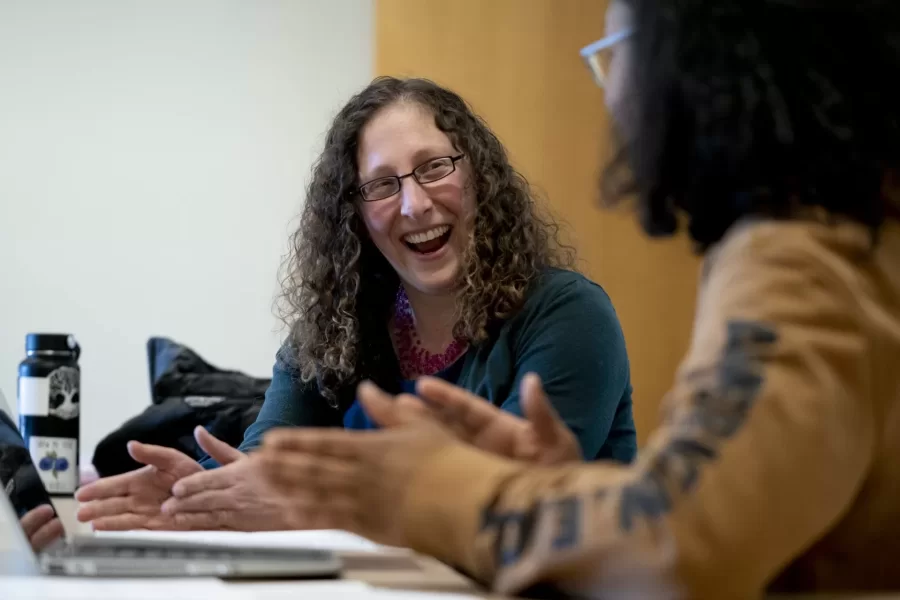
A professor laughs while conversing with their student.
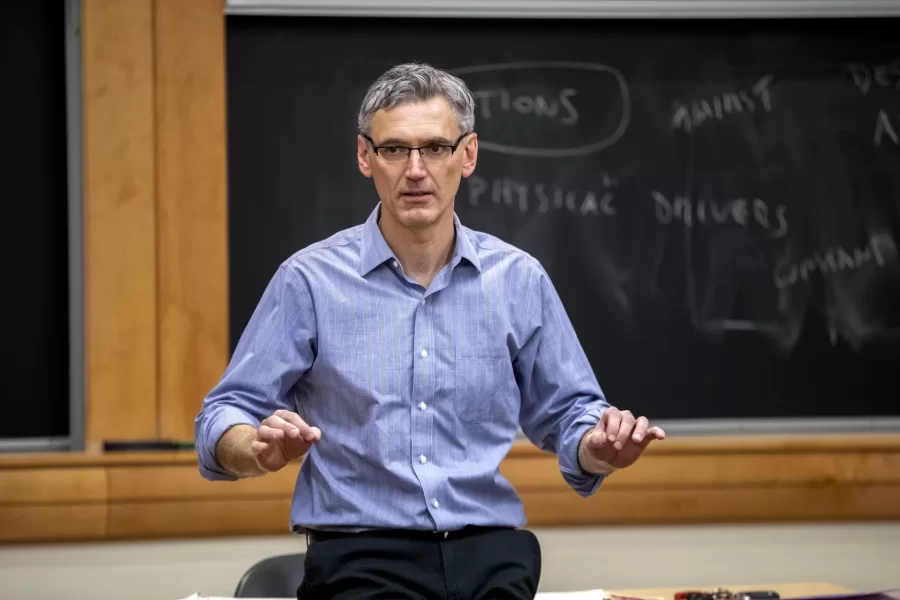
A professor stands in front of a chalkboard while teaching a class in Pettengill Hall.
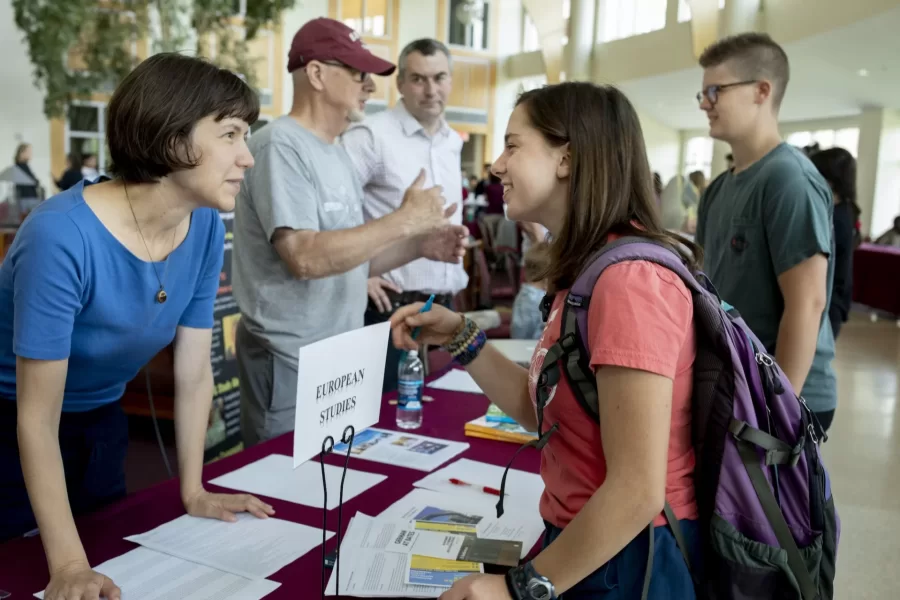
A student engages with a representative from the European Studies department during an Academic Fair in Pettengill Hall’s Perry Auditorium.

European studies at Bates is for the curious — students who want to understand how the past shapes the present, how cultures interact across borders, and how one region’s complexities connect to global challenges. The program’s design allows students to create a plan of study that reflects their interests while expanding their horizons. Students can study abroad in a number of European locations and engage with prominent guest speakers who visit campus to present on contemporary European issues.

Featured Courses

Photo of Laura C. Balladur

Laura C. Balladur

Associate Professor of French and Francophone Studies and European Studies

French and Francophone Studies, European Studies
Photo of Raluca Cernahoschi

Raluca Cernahoschi

Associate Professor of German and European Studies

German, European Studies Chair
Photo of Francesco G. Duina

Francesco G. Duina

Charles A. Dana Professor of Sociology and European Studies

Sociology, European Studies
Photo of David R. George Jr.

David R. George Jr.

Associate Professor of Hispanic Studies and European Studies

Hispanic Studies, European Studies, Asian Studies
Photo of Jakub J. Kazecki

Jakub J. Kazecki

Professor of German and European Studies

German, European Studies
Photo of Zen T. Kuriyama

Zen T. Kuriyama

Assistant Professor of Music and European Studies

Music, European Studies
Photo of Alex McAuliff

Alex McAuliff

Assistant Professor of Politics and European Studies

Politics, European Studies
Photo of Caroline E. Shaw

Caroline E. Shaw

Associate Professor of History and European Studies

History, European Studies

News & Events

Independent art historian and long-time Marsden Hartley scholar, Gail R. Scott  is photographed on the lower level of the Bates College Museum of Art on Aug. 21, 2027, after an interview with Mary Pols for a Bates Magazine story.. Scott is photographed with a painting, “Intellectual Niece” and a photograph that shows  Hartley and a woman who is believed to be Norma Berger, an important figure in the Bates/Hartley connection.

Scott and the Bates College Museum of Art inaugurated the Marsden Hartley Legacy Project: The Complete Paintings and Works on Paper (MHLP). This comprehensive, annotated online catalogue of all known paintings and works on paper created by Hartley during his lifetime will establish a legacy befitting Marsden Hartley’s place in American art.
October 22, 2026

Launching the Legacy: A celebration of Marsden Hartley Schola…

For more than 10 years, for five days a week — “at least” — art historian Gail R. Scott worked on the Marsden Hartley Legacy Project: The Complete Paintings and Works on Paper.  The Legacy Project, now live and available to anyone with access to the internet,  is a comprehensive, annotated online catalogue of all known paintings and works on paper created by the Lewiston-born Hartley (1877-1943).

Fall Color seen on Bates College campus on October 14, 2026.(Theophil Syslo | Bates College)
October 22, 2026

Bates joins National Student Success Project 

A major project geared at addressing practical concerns from students and families about the value of a college degree launched today in Washington, D.C. The National Student Success Project, in development since early 2026, is led by five higher education associations and the presidents and chancellors of 19 colleges and universities.