Art and Visual Culture at Bates
The Department of Art and Visual Culture balances creation and critique, providing foundations in studio practice and in contemporary and historical analysis.
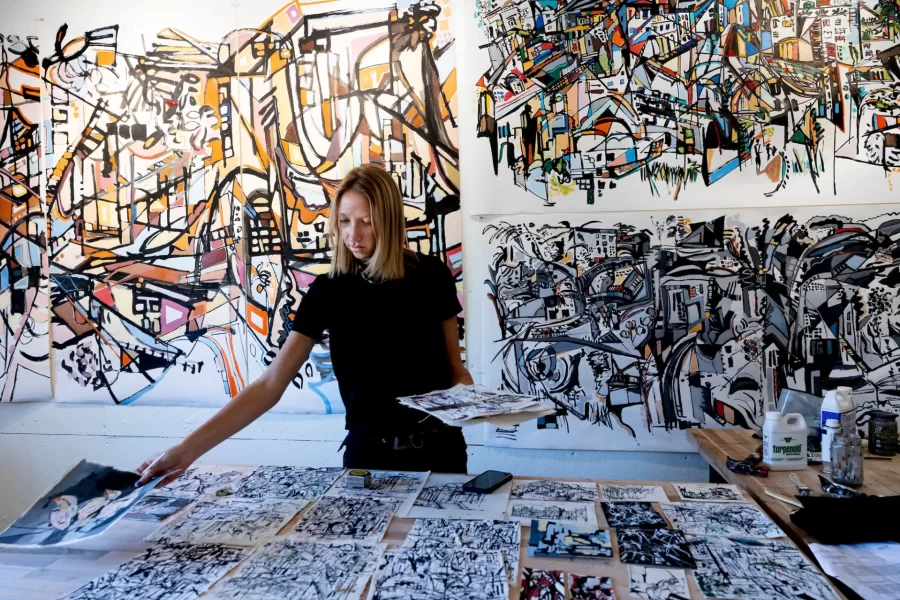
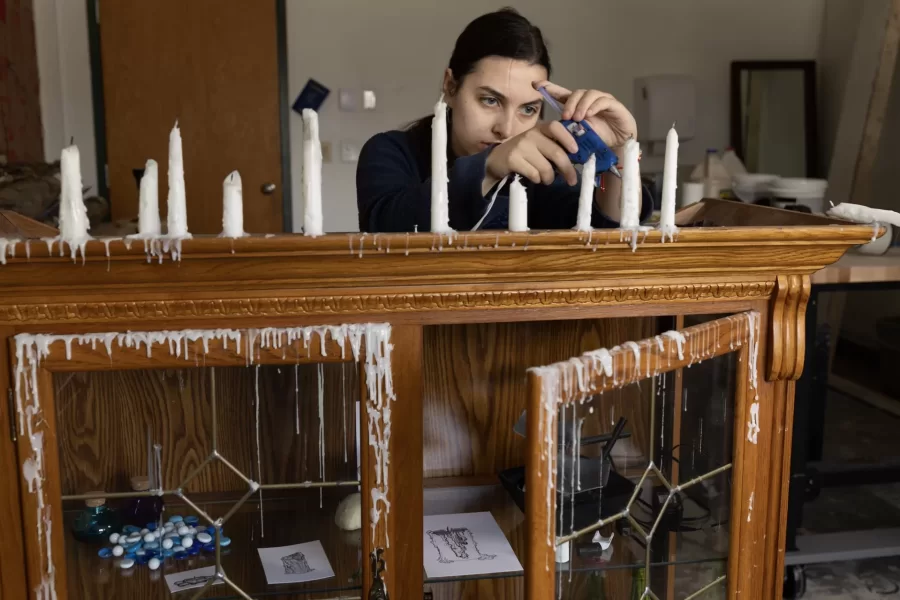
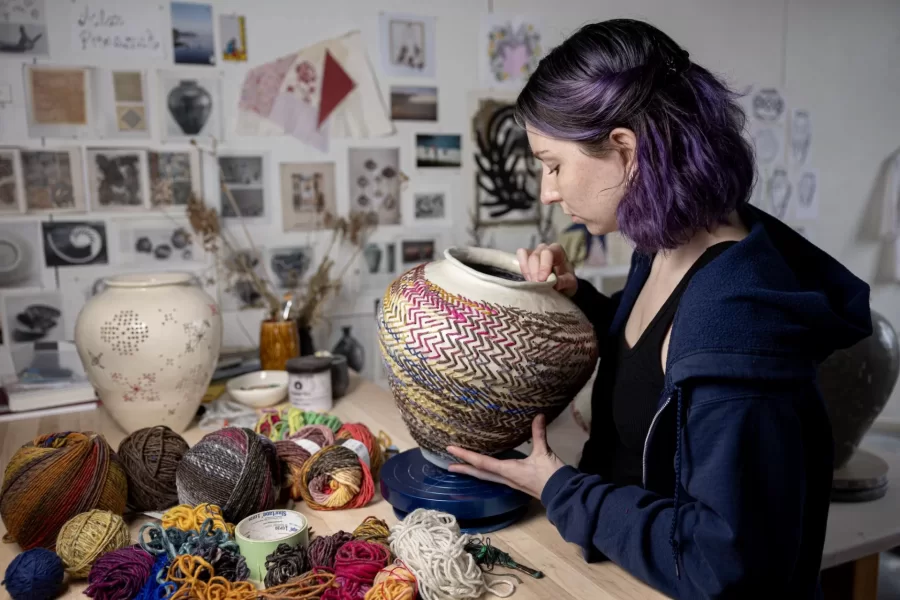
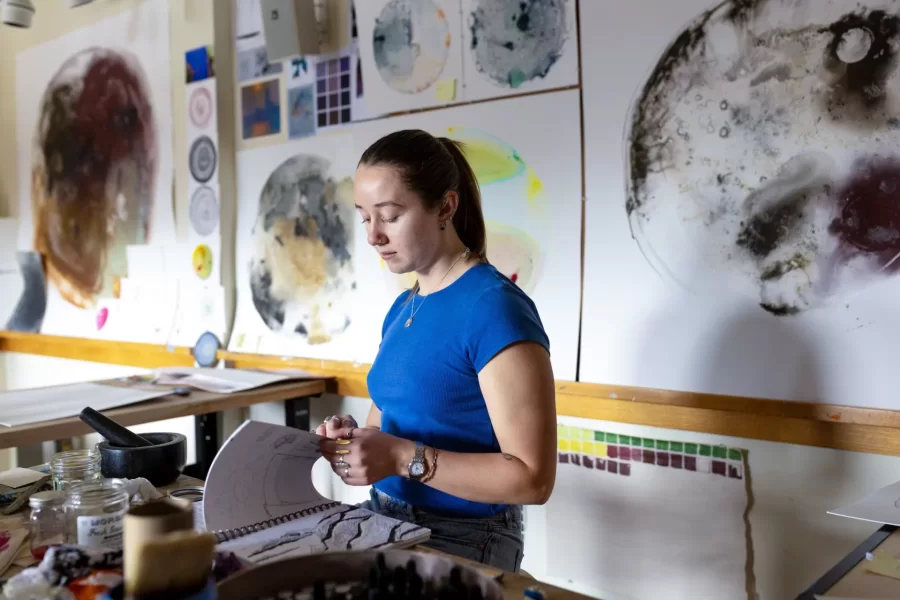
The major offers two tracks: one in history and criticism and the other in studio art. The history and criticism courses focus on images, objects, and architecture made by people from different periods and places, which students situate in historical and social contexts, while the studio art courses concentrate on making, including animation, ceramics, drawing, film, painting, photography, and print.
Contact Us
Marisa C. Wickersham, Academic Administrative Assistant
75 Russell St
Olin Arts Center
Phone: 1-207-786-8212
mwickersham@bates.edu
What You Will Learn

To develop an independent voice, either through critical analysis or creative production

To think alongside a broad range of authors and artists

A diverse set of approaches to studying media and representation that will ground the creative practice

To explore the sociohistorical context of works of art and visual culture

How to examine art and visual culture through the lens of power and privilege

To develop an experimental attitude and a tolerance for risk as it pertains to art and visual culture
Life After Bates
The visual arts field is broad, and we prepare our students to find their place in it. Graduates have pursued careers in a variety of fields, including museum and curatorial studies, architecture, art therapy, education, film, and art conservation. Many alumni have pursued MFA and Ph.D. degrees, building on the foundations that they gained at Bates to become museum directors, arts policy leaders, professional fine artists, corporate consultants, and more.
94%
of 2020-2024 Bates graduates are employed and/or attending graduate school — settled into their next opportunity within 6 months of graduation.
I really loved the breadth and depth of the art and visual culture department and how it taught me the ability to think across time and geography. In particular, a museum studies class I took is really what sparked my entire career in the museum world.
—Rachel Ferrante ‘10
Selected Places of Employment/Service
- Sotheby’s
- Gladstone Gallery
- Department of Justice
- Bloomsbury Publishing Plc
- Minted
- McGovern Institute for Brain Research
- Gerson Lehrman Group
- AmeriCorps
- Kellogg, Hansen, Todd, Figel & Frederick PLLC
- Connelly Partners
Selected Graduate Schools
- University of Oxford
- Harvard Divinity School
- Yale University
- Tufts University School of Medicine
- Boston University School of Medicine
- University of North Carolina at Chapel Hill
- Harvard University
- University of Pennsylvania
- Columbia University
- Johns Hopkins University
Why Study Art and Visual Culture at Bates?
Our program asks students to slow down and think about how art and visual media is made, as well as what it represents, what it obscures, and how it shapes our thinking. Studio art majors undertake a yearlong thesis, concluding in an exhibition of their work at the nationally-recognized Bates Museum of Art. History and criticism-focused majors conduct independent research projects that may include hands-on experience in museums and archives.