




October 8, 2026
There’s a new (Bob)cat in town!
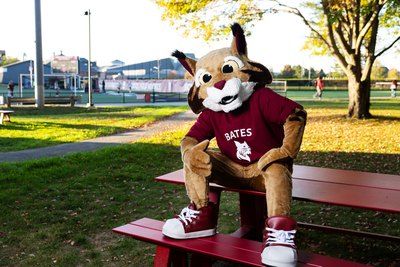
After a year-long effort to redesign the Bobcat mascot, the new Bobcat is out and about on campus. The mascot debuted on Sept. 26 at the home football season opener.
The Department of Chemistry and Biochemistry focuses on teaching, learning, and scholarship within chemistry and intersecting disciplines.
Students will develop an understanding of the foundational theories of chemistry, apply these theories to the practice of reasoning from evidence, and learn to appreciate the role of science in society.
Thomas Pinette, Academic Administrative Assistant
45 Campus Avenue
Bonney Science Center
Phone: 207-755-5928
tpinette@bates.edu






Many majors go on to earn graduate degrees in chemistry, biochemistry, engineering, molecular biology, or microbiology. Students are well-prepared for professional post-graduate, health-related study in medical school, nursing school, veterinary school, dental school, and public health. Recent grads work in fields related to healthcare, consulting, pharmaceutical research and development, biotech, materials, and energy, among others.
of 2020-2024 Bates graduates are employed and/or attending graduate school — settled into their next opportunity within 6 months of graduation.
” Looking back, I felt exceptionally well-prepared for medical school and my subsequent career in surgery following my degree in biological chemistry from Bates. Throughout my education, I was challenged academically in a manner that made me think critically and required a deep understanding of the subject matter well beyond simple memorization. These skills were invaluable as I made my way through the rigorous curriculum of medical school. My education at Bates was capped by my honors thesis, which I performed under the mentorship of Paula Schlax. I still consider my thesis experience, from study design and lab work through a presentation in Washington, D.C., and manuscript preparation, the start of my career as an academic surgeon.”
— Nicholas Swerdlow ’09
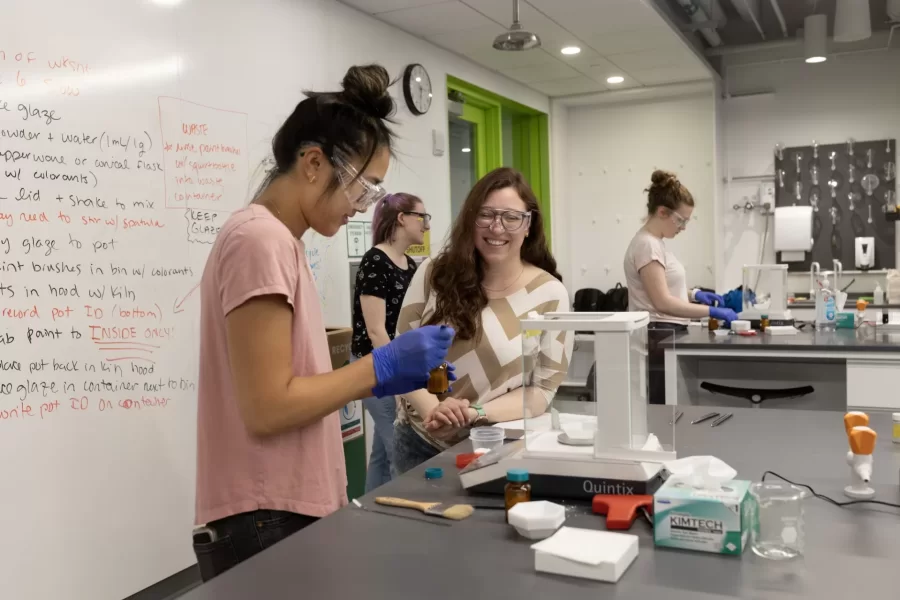
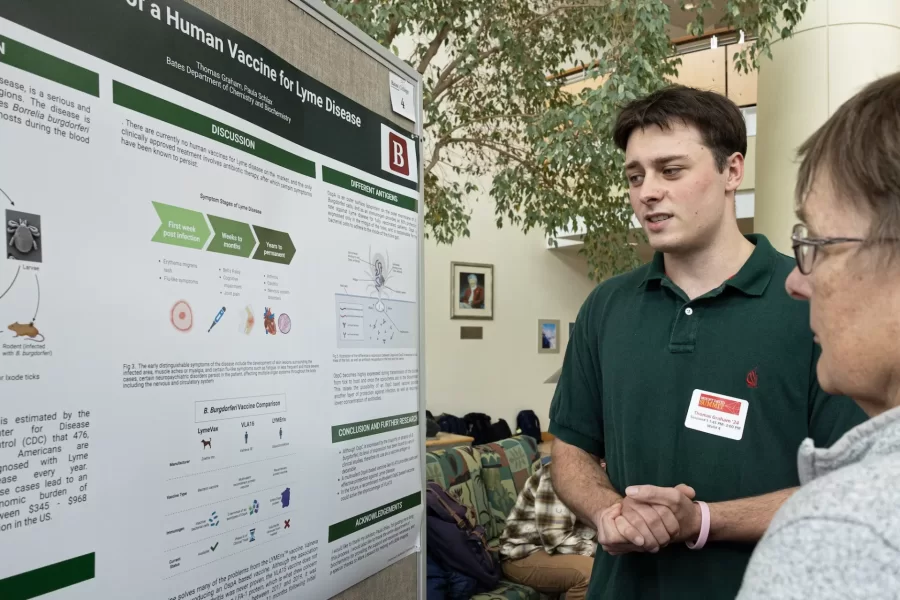
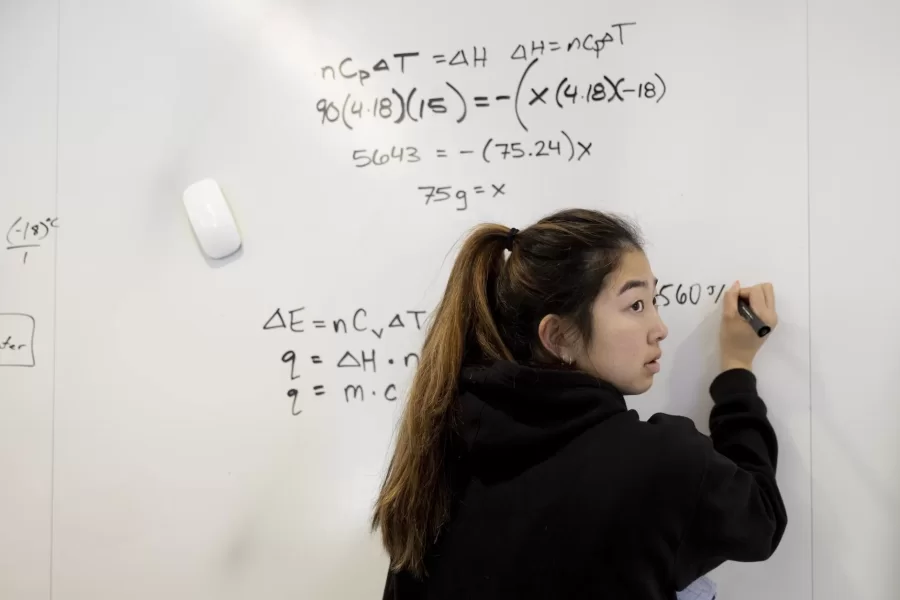
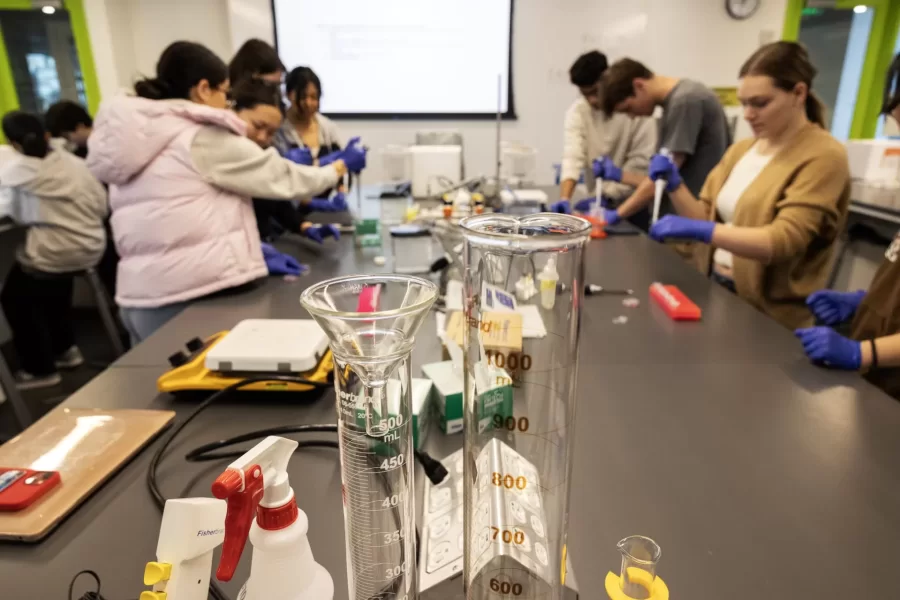
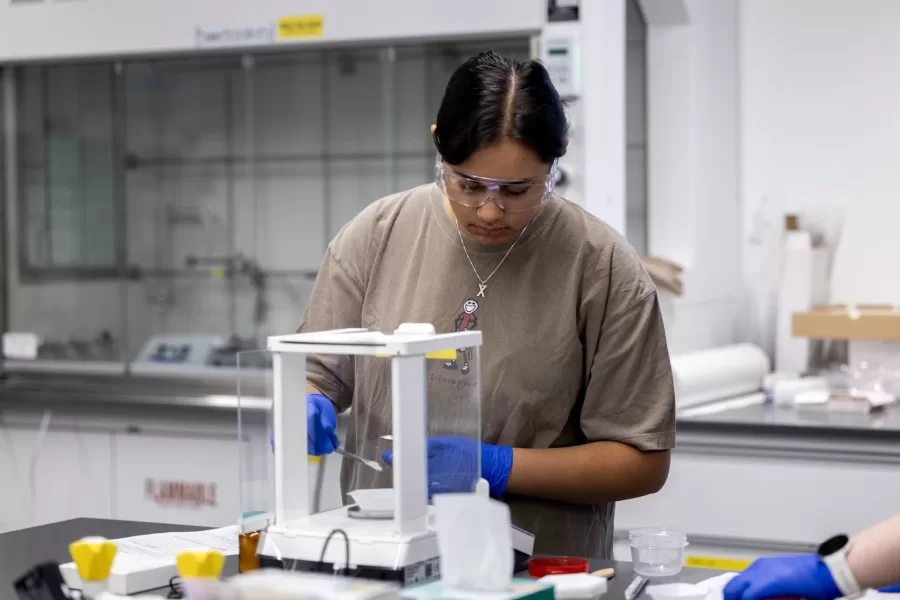
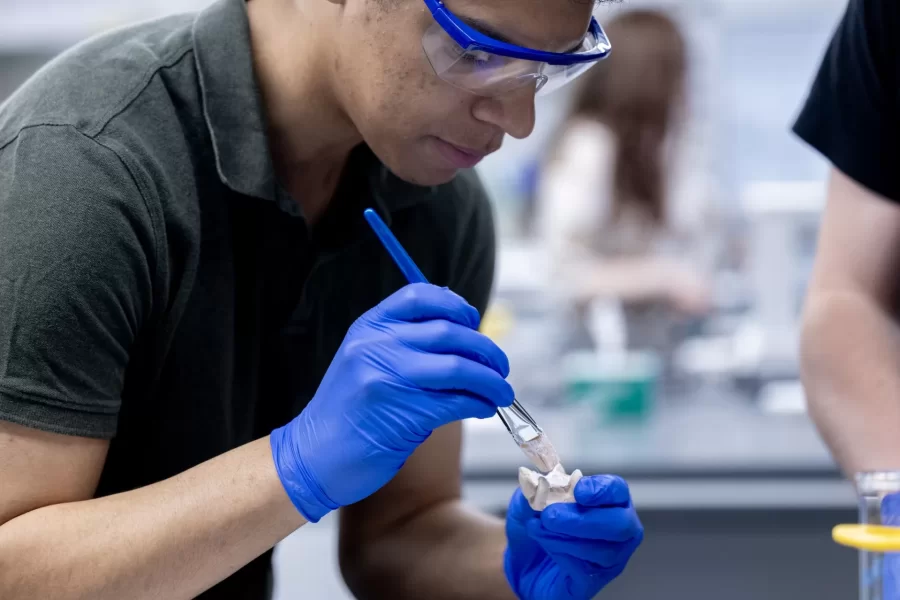
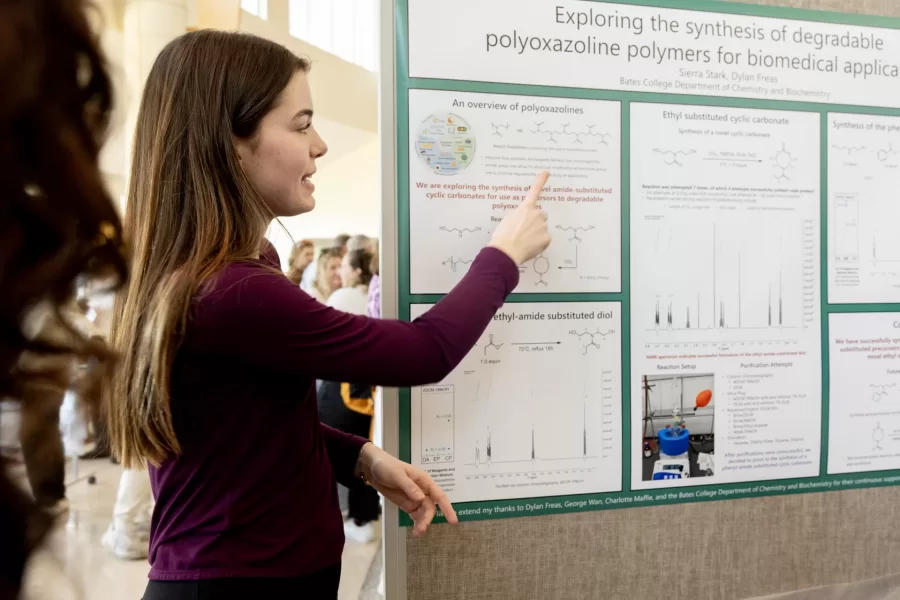
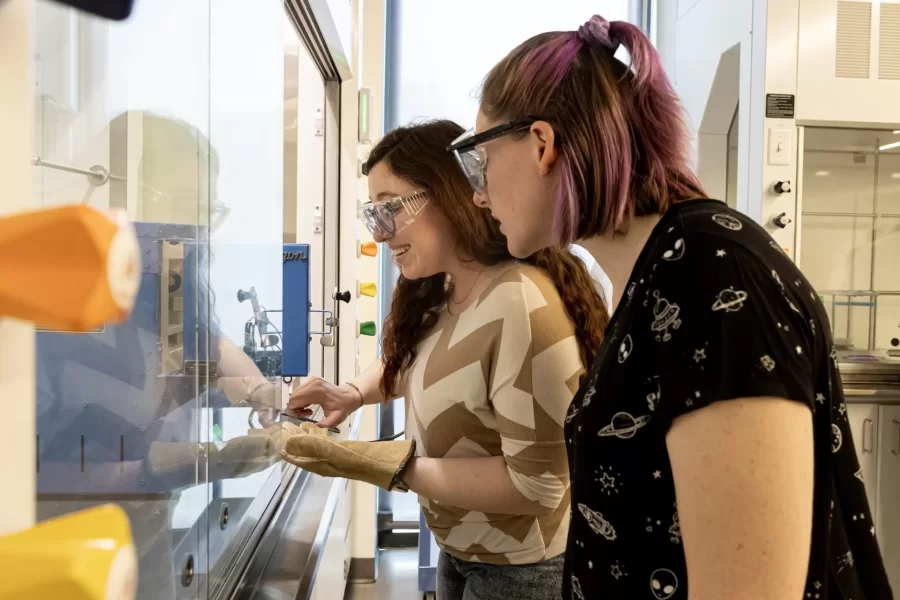
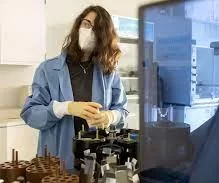
Our classes emphasize active learning both in the classroom and the laboratory, offering a variety of hands-on learning opportunities. Students and faculty work closely together to conduct scholarly work through real-time experimentation in instructional and research labs. The department supports collaboration of faculty and students across disciplines and endeavors to create a supportive, inclusive environment for all members of the Bates community interested in chemistry and related fields.
My choice to double major in biochemistry and economics reflected curiosity more than a clear plan, and the Bates environment encouraged me to connect those interests. Science taught me to think critically and sit with uncertainty, while economics helped me understand systems and decision-making. Now, I bring that scientific mindset into finance, helping set business strategy by grounding decisions in data.
Johannes Schwarz ‘25
Faculty members have expertise in all areas of chemistry, including analytical, biochemistry, computational, inorganic, organic, and physical chemistry, and every faculty member is active in research in their respective fields. Some have received grants from NIH, while others collaborate with researchers at major universities to break new scientific ground. Faculty present their work at national meetings and specialty conferences and regularly co-author with students on publications in nationally renowned journals.
After a year-long effort to redesign the Bobcat mascot, the new Bobcat is out and about on campus. The mascot debuted on Sept. 26 at the home football season opener.

This news roundup includes alumni achievements from the Class of 1977 to 2026; faculty recognition, publication, and appearances; and coverage of President Garry W. Jenkins’ participation in the annual Presidents’ Dinner for media.
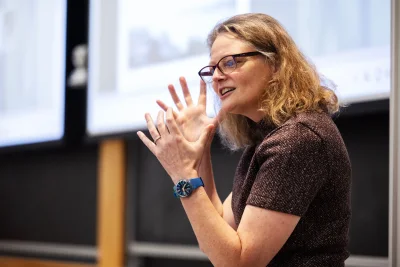
Associate Professor of English Jess Anthony ’96 gave a lecture for her Kroepsch Award for Excellence in Teaching on Sept. 30. She discussed and read from her most recent novel, The Most.