

October 8, 2026
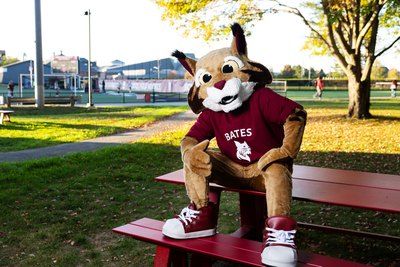
There’s a new (Bob)cat in town!
After a year-long effort to redesign the Bobcat mascot, the new Bobcat is out and about on campus. The mascot debuted on Sept. 26 at the home football season opener.
The Department of English allows students to develop the ability to read closely and engage in skilled textual analysis in order to gain an understanding of literary genres and diverse literary histories.
Through courses as varied as “Shakespeare and Early Modern Racialization,” “English Literature Before 1100,” and “African American Literary Criticism,” students will expand their capacity for critical reading, writing, and thinking. In addition, English majors who wish to concentrate in creative writing can focus on either fiction or poetry, culminating in a creative thesis to cap off their academic experience.
Hannah Underwood, Academic Administrative Assistant
Hathorn Hall
Phone: (207) 786-6495
hunderwood@bates.edu






Graduates from the English department go on to a wide variety of careers, including content creation, teaching, publishing, writing, and more. In addition, English majors from Bates have embarked on graduate study in literature as well as graduate programs that focus on medicine, law, business, public health, bioethics, and library science.
of 2020-2024 Bates graduates are employed and/or attending graduate school — settled into their next opportunity within 6 months of graduation.
“My exploration of narrative medicine and creative writing firmly grounded me in why I want to pursue medicine, and allowed me to envision the kind of physician that I want to be: one that grounds my practice in the story.”
— Sommer Glasgow ’21

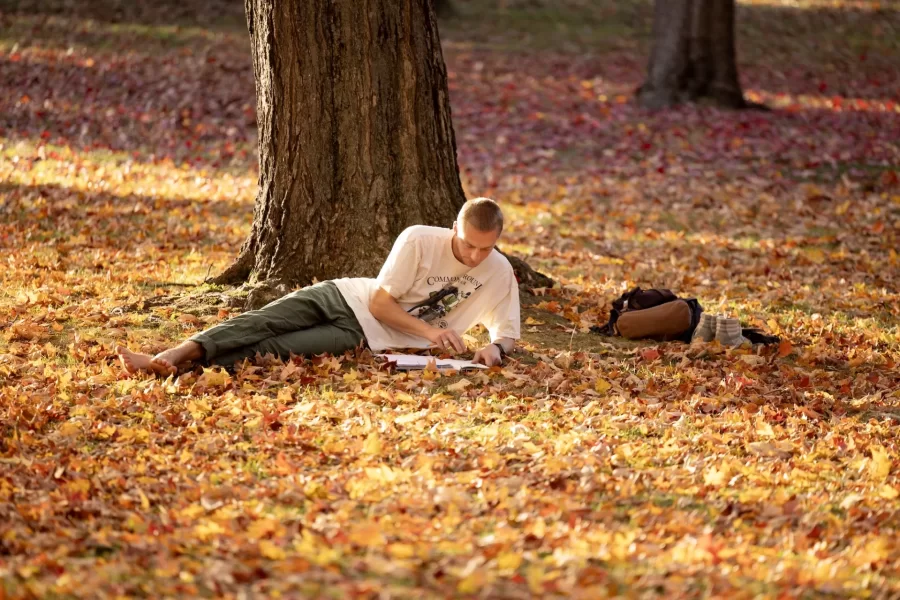

English at Bates is a hands-on major where students read critically, discuss their ideas passionately, and produce written work with the ability to move people. Students have the chance to meet authors and poets at Literary Arts Live, a series that has hosted readings, class visits, and residencies for over 100 authors, including Richard Russo, Colson Whitehead, and notable Bates alumni like Elizabeth Strout ’77. In addition, students can engage with Bates’ literary arts journal, Snaggletooth Magazine, to showcase their work to the broader writing community.
“My time at Bates sharpened both my writing skills and my critical thinking ability. Coming up with an interpretation of a piece of literature is one thing, explaining the steps you took to arrive at that conclusion and providing supporting evidence is quite another. The professors I had were both rigorous and hugely entertaining and I consider several of them mentors who provided life lessons far afield from books. Working to deadlines and writing with economy and precision became a large part of my work life. My English degree also led to a 36-year side gig as a public library trustee. Instead of explaining products, I had to explain how a library is not just a building full of books, but a vital social and educational hub of the community. Bates provided me with the skills and flexibility to make this happen.”
Ronald Brown ‘74
Faculty members hold postgraduate degrees from a variety of renowned universities and have received several prestigious teaching and research awards. In addition, they have published articles in scholarly journals and write and publish books, including many that have been long-listed for the National Book Award. Their expertise includes the British Renaissance, post-racialism and nineteenth-century British fiction, African American studies, late medieval French and Latin literatures, poetry, and disability literatures.
After a year-long effort to redesign the Bobcat mascot, the new Bobcat is out and about on campus. The mascot debuted on Sept. 26 at the home football season opener.
This news roundup includes alumni achievements from the Class of 1977 to 2026; faculty recognition, publication, and appearances; and coverage of President Garry W. Jenkins’ participation in the annual Presidents’ Dinner for media.
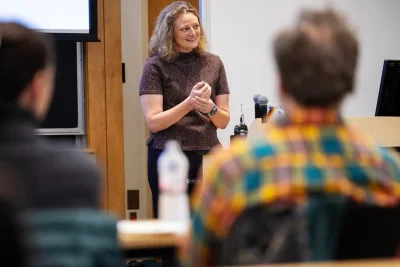
Associate Professor of English Jess Anthony ’96 gave a lecture for her Kroepsch Award for Excellence in Teaching on Sept. 30. She discussed and read from her most recent novel, The Most.