European Studies at Bates
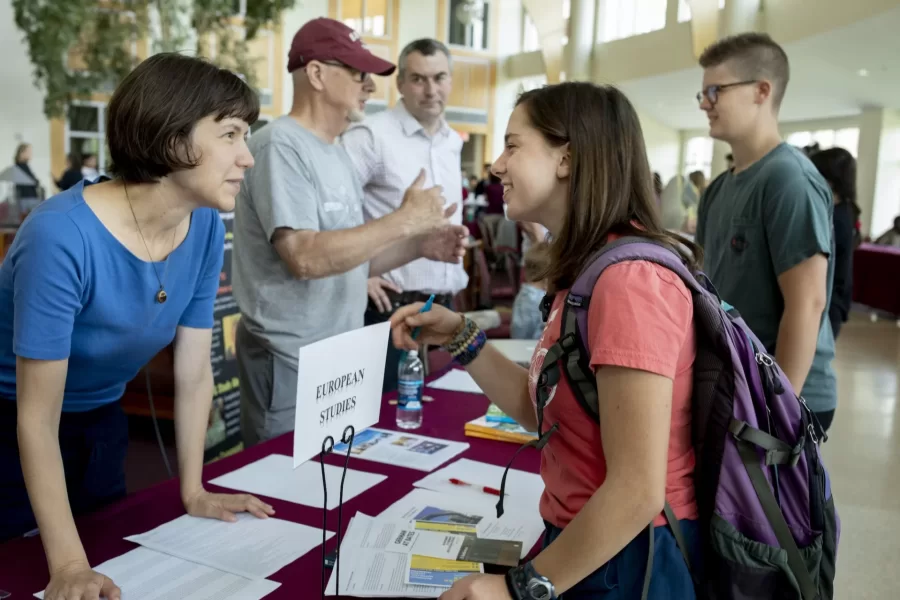
The Program in European Studies is an interdisciplinary program that draws on the humanities and social sciences to broaden understanding of the European region.
Offering a flexible framework, the program allows students to pursue their own interests in the histories, cultures, geographies, peoples, and languages of Europe. The curriculum spans a remarkable range, from the punks, pioneers, and protestors of Eastern Europe to the legacies of World War I and the Cold War. Students study up to two modern European languages — French, German, Russian, or Spanish — enabling in-depth scholarly work.
Contact Us
Indya Childs, Academic Administrative Assistant
9 Andrews Road
Roger Williams Hall
ichilds@bates.edu
What You Will Learn

To question assumptions about Europe’s role in the world
How to analyze European histories, societies, politics, and cultures from multiple perspectives
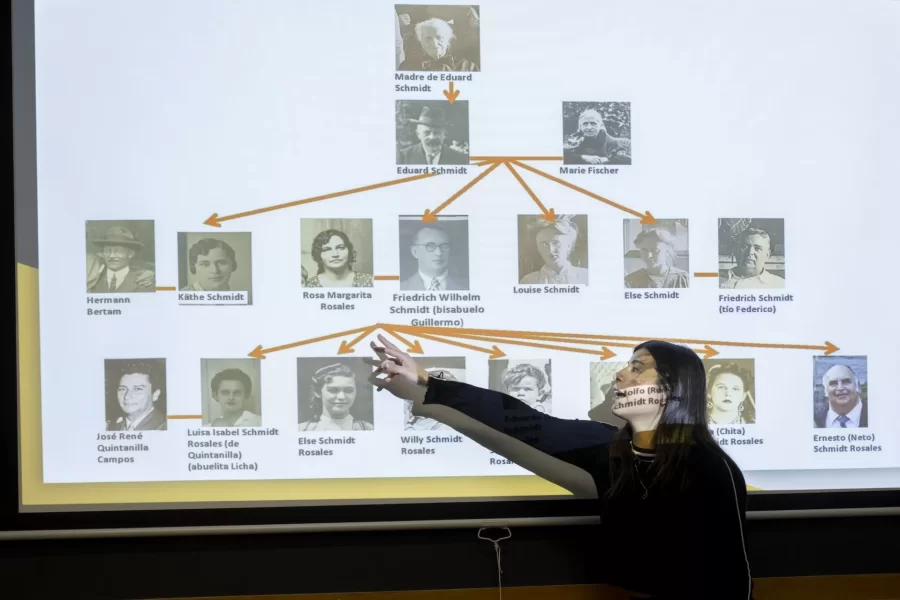
To interpret cultural texts and situate them within their sociopolitical contexts

How to communicate effectively in oral, written, and presentational formats

To develop proficiency in at least one European language besides English

How to think critically across linguistic, cultural, and national borders
Life After Bates
European studies graduates often continue their studies at prestigious post-graduate programs, pursuing politics, art, or foreign languages, sometimes abroad. Others embark on successful careers in government, law, public policy, museums, and more.
94%
of 2020-2024 Bates graduates are employed and/or attending graduate school — settled into their next opportunity within 6 months of graduation.
Selected Places of Employment/Service
- Taft School
- Atlantic Seaboard, LLC
- International Republican Institute
- Uwharrie Harm Reduction Initiative
Selected Graduate Schools
- Columbia University
- Tufts University
- Georgetown University
- Harvard University
- Johns Hopkins University
- Dartmouth College
- University of Wisconsin–Madison


Why Study European Studies at Bates?
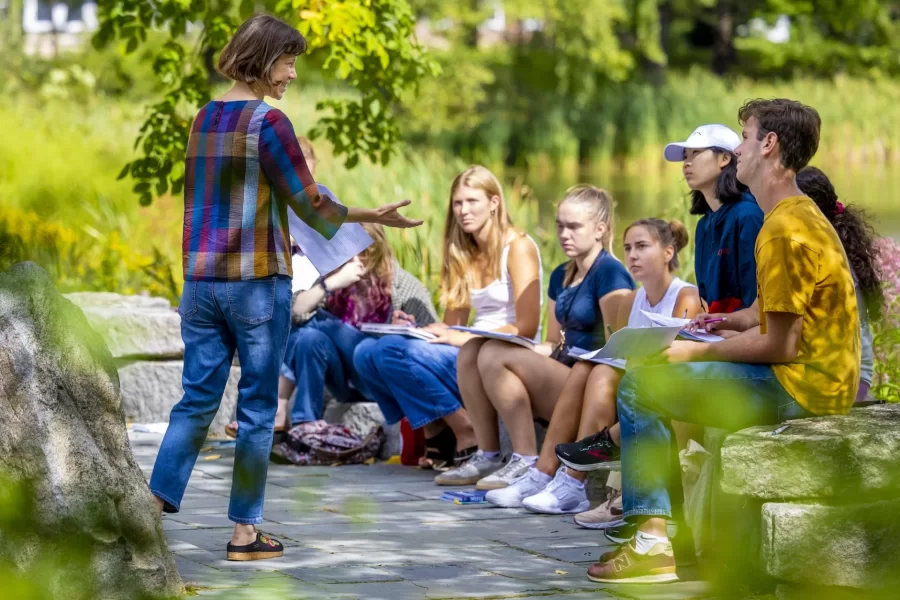
European studies at Bates is for the curious — students who want to understand how the past shapes the present, how cultures interact across borders, and how one region’s complexities connect to global challenges. The program’s design allows students to create a plan of study that reflects their interests while expanding their horizons. Students can study abroad in a number of European locations and engage with prominent guest speakers who visit campus to present on contemporary European issues.