French and Francophone Studies at Bates

The Department of French and Francophone Studies focuses on developing French language proficiency while exploring the histories, cultures, and societies of the French-speaking countries around the world.

Drawing on film, literature, theater, graphic novels, and pop culture, courses in this department focus on decolonization and anti-racism within this subject. All courses are taught in French, except in the case of some courses cross-listed with other departments or programs, giving students ample exposure to the language as they fine-tune their French skills.

Contact Us

Indya Childs, Academic Administrative Assistant
9 Andrews Road
Roger Williams
ichilds@bates.edu
What You Will Learn

garnet iconography with speech bubbles, stack of paper, and pencil
Strong written and oral expression in the French language
garnet iconography with people, books on a shelf, and magnifying glass
To explore a diversity of experiences in Francophone cultures
garnet iconography with people, globe, and trifold map with marker
To engage directly with Francophone communities through study abroad, internships, and community-engaged learning
garnet iconography with magnifying glass, open book, and computer
How to evaluate the credibility and reliability of information across different media, platforms, and sources
garnet iconography with stack of books, concentric circles, person, and open notebook
To engage thoughtfully with the cultural experiences of others
garnet iconography with people, speech bubble, academic building, and graduation cap
Significant research skills via prolonged mentorship with faculty

Life After Bates

French and Francophone studies majors graduate from Bates with strong cross-cultural and analytical skills which are valued across a wide range of careers, including journalism, law, international finance, museum curation, and global community engagement. Recent majors have embarked on successful jobs in media, psychology research, the film industry, and at the Metropolitan Museum of Art.

94%

of 2020-2024 Bates graduates are employed and/or attending graduate school — settled into their next opportunity within 6 months of graduation.

“I was able to take my French major and spin it into international business. After Bates, I went into investment banking at a French investment bank. I really built on that and am now running an international business for a U.S.- based financial media company. I really got that foundation to say, okay, what are some of the building blocks of a career?”

— Marsha Larned ’07
  • Columbia University Irving Medical Center
  • Georgetown University
  • Central Saint Martins — University of the Arts London
  • Harvard Business School
  • Yale University
  • Tufts University
  • Boston College
  • Cornell University
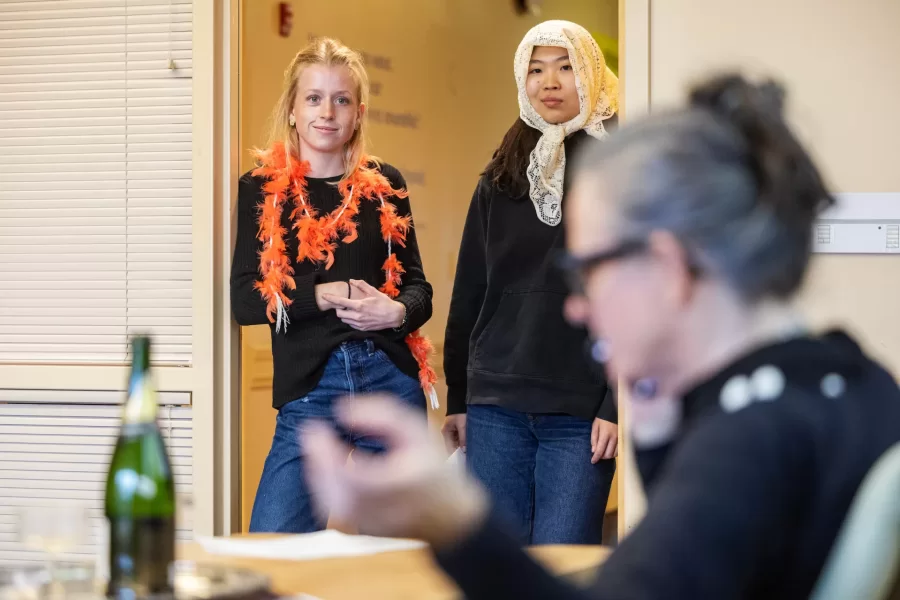
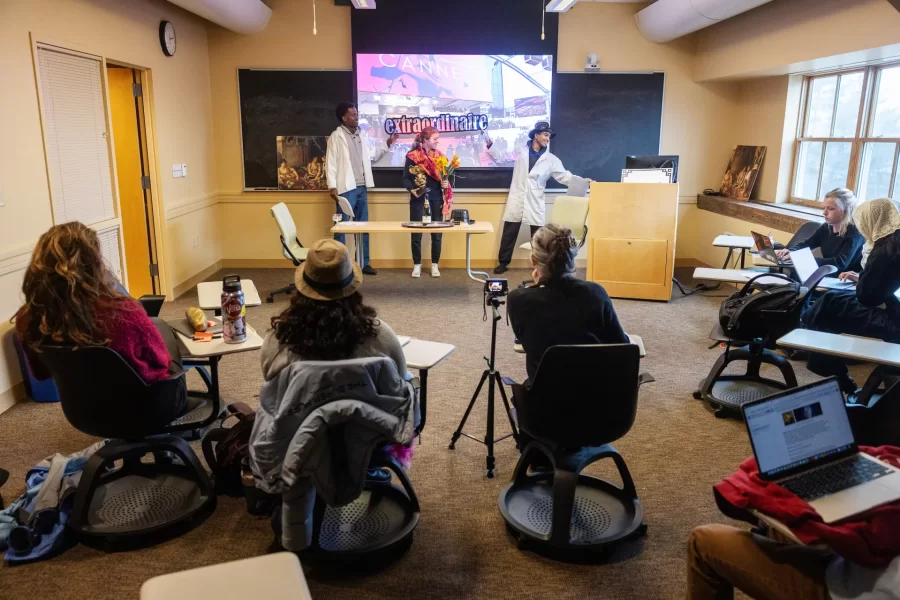
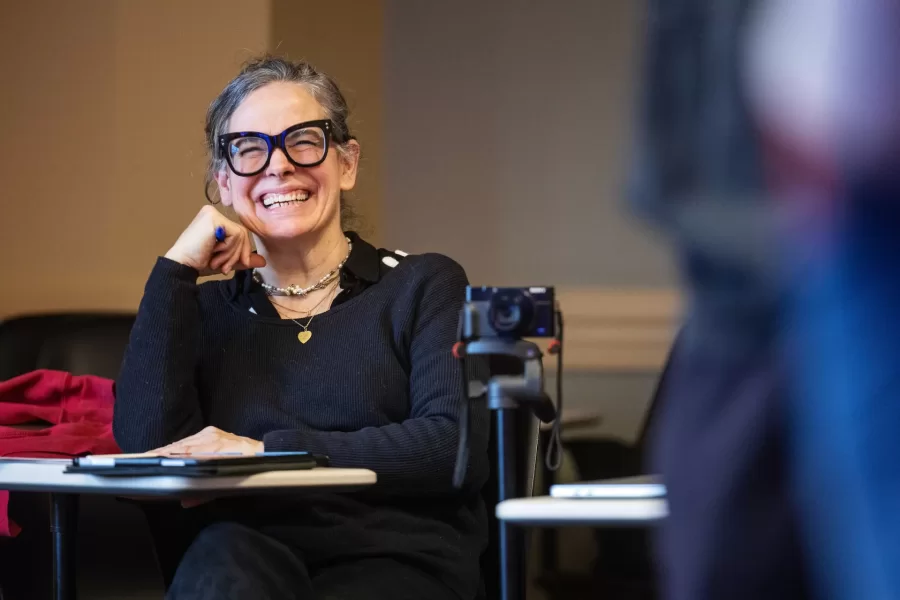
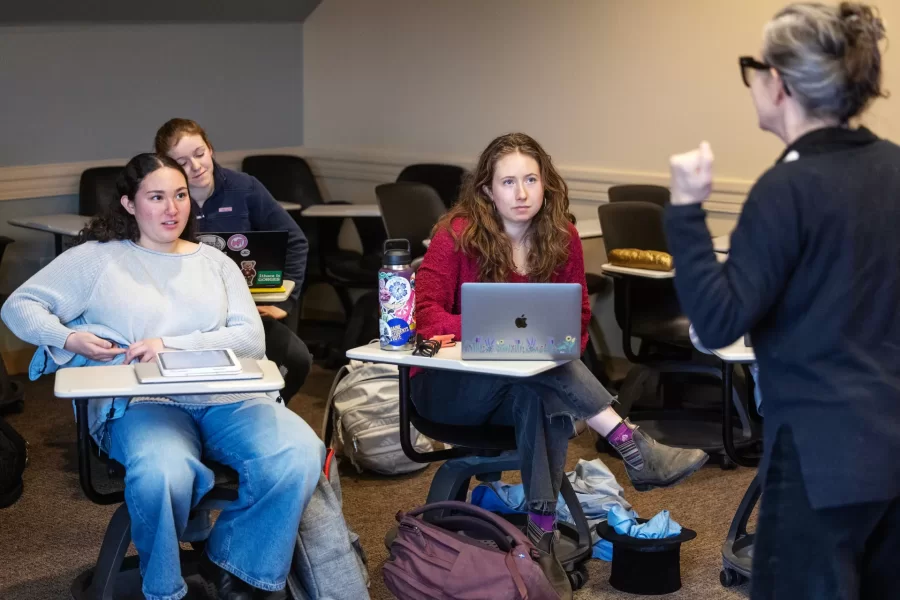
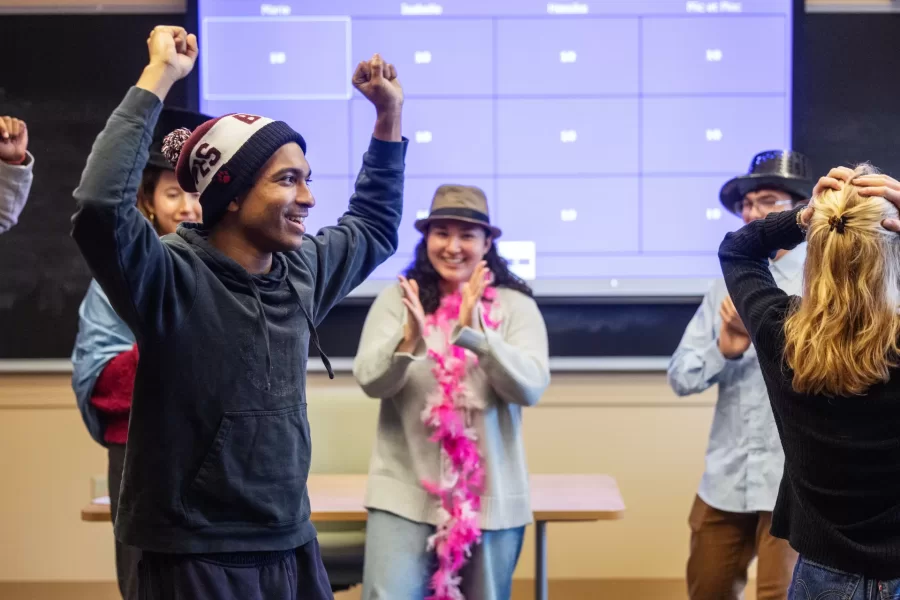
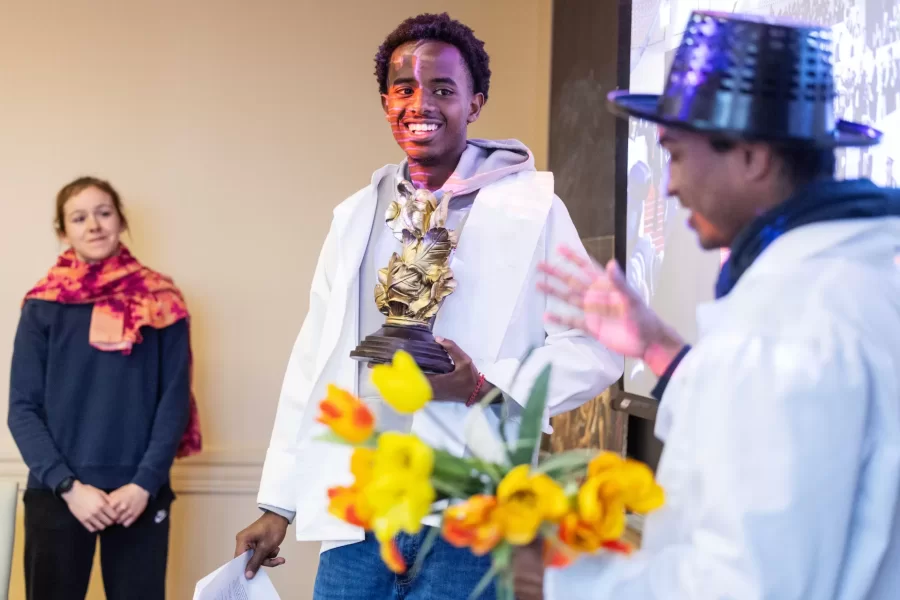
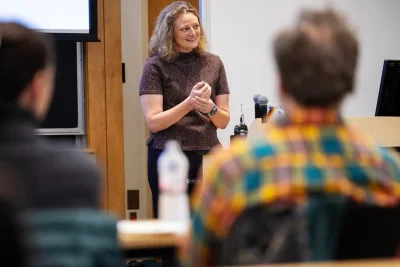
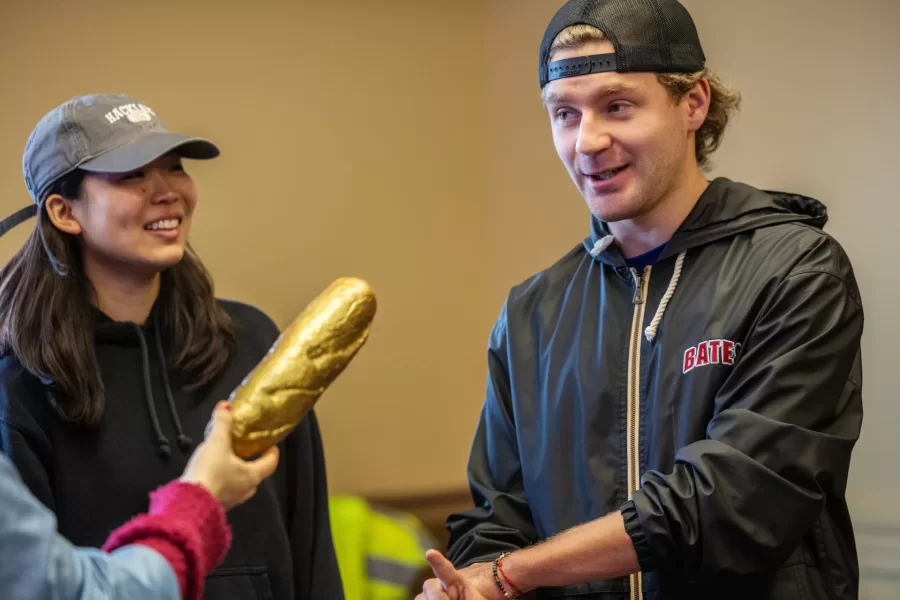
Moments from inside Laura Balladur's course FR205 in Roger WIlliams Hall captured on March 16th, 2026. Monday's are a performance day and often include theater-based games and improv.(Theophil Syslo | Bates College)

Laura Balladur is Lecturer in the French and Francophone Studies department at Bates College since 2003. Her broad interests include translation both in theory and practice, cinema, the relationship between literature and science, and the embodied mind. Her dissertation “Imagination, Physiology, and the Dynamics of Representation” (2005) explored the emergence of proto-biology in various 17th and 18th-century scientific texts in Europe. She has published on translation as well as on the history of science. Her latest article offered an alternate reading to Descartes’s dualism. True to her other undergraduate degree in Studio Arts, she keeps returning to her interest in creative projects. Currently, she is working on a creative non-fiction project describing our relationship with the Democratic Republic of the Congo, both past and present. With a generous Faculty Development Grant (April 2022), she traveled to the colonial archives in Brussels, followed by a trip to the Democratic Republic of Congo, in the North and South Kivu capitals: Goma, in the foothills of Mt Nyiragongo, and Bukavu, at the southern tip of Lake Kivu. She wanted to follow the imprints of colonial-era infrastructures onto the present-day territory. The collected voices from the many guides she met reveal the lasting wounds of colonialism with its persisting extractive economies that form the bedrock of our modern life. During the trip to the DRC, she taught a two-hour workshop on The Art of Creative Non-Fiction at the Université Catholique de Bukavu. In Fall 2022, students in her translation course met over Zoom with a few students from Bukavu who participated in that summer’s workshop. Her students’ translations along with the originals can be found here: Bridges to Bukav

Moments from inside Laura Balladur’s course FR205 in Roger WIlliams Hall captured on March 16th, 2026. Monday’s are a performance day and often include theater-based games and improv.(Theophil Syslo | Bates College) Laura Balladur is Lecturer in the French and Francophone Studies department at Bates College since 2003. Her broad interests include translation both in theory and practice, cinema, the relationship between literature and science, and the embodied mind. Her dissertation “Imagination, Physiology, and the Dynamics of Representation” (2005) explored the emergence of proto-biology in various 17th and 18th-century scientific texts in Europe. She has published on translation as well as on the history of science. Her latest article offered an alternate reading to Descartes’s dualism. True to her other undergraduate degree in Studio Arts, she keeps returning to her interest in creative projects. Currently, she is working on a creative non-fiction project describing our relationship with the Democratic Republic of the Congo, both past and present. With a generous Faculty Development Grant (April 2022), she traveled to the colonial archives in Brussels, followed by a trip to the Democratic Republic of Congo, in the North and South Kivu capitals: Goma, in the foothills of Mt Nyiragongo, and Bukavu, at the southern tip of Lake Kivu. She wanted to follow the imprints of colonial-era infrastructures onto the present-day territory. The collected voices from the many guides she met reveal the lasting wounds of colonialism with its persisting extractive economies that form the bedrock of our modern life. During the trip to the DRC, she taught a two-hour workshop on The Art of Creative Non-Fiction at the Université Catholique de Bukavu. In Fall 2022, students in her translation course met over Zoom with a few students from Bukavu who participated in that summer’s workshop. Her students’ translations along with the originals can be found here: Bridges to Bukav

Moments from inside Laura Balladur's course FR205 in Roger WIlliams Hall captured on March 16th, 2026. Monday's are a performance day and often include theater-based games and improv.(Theophil Syslo | Bates College)

Laura Balladur is Lecturer in the French and Francophone Studies department at Bates College since 2003. Her broad interests include translation both in theory and practice, cinema, the relationship between literature and science, and the embodied mind. Her dissertation “Imagination, Physiology, and the Dynamics of Representation” (2005) explored the emergence of proto-biology in various 17th and 18th-century scientific texts in Europe. She has published on translation as well as on the history of science. Her latest article offered an alternate reading to Descartes’s dualism. True to her other undergraduate degree in Studio Arts, she keeps returning to her interest in creative projects. Currently, she is working on a creative non-fiction project describing our relationship with the Democratic Republic of the Congo, both past and present. With a generous Faculty Development Grant (April 2022), she traveled to the colonial archives in Brussels, followed by a trip to the Democratic Republic of Congo, in the North and South Kivu capitals: Goma, in the foothills of Mt Nyiragongo, and Bukavu, at the southern tip of Lake Kivu. She wanted to follow the imprints of colonial-era infrastructures onto the present-day territory. The collected voices from the many guides she met reveal the lasting wounds of colonialism with its persisting extractive economies that form the bedrock of our modern life. During the trip to the DRC, she taught a two-hour workshop on The Art of Creative Non-Fiction at the Université Catholique de Bukavu. In Fall 2022, students in her translation course met over Zoom with a few students from Bukavu who participated in that summer’s workshop. Her students’ translations along with the originals can be found here: Bridges to Bukav

Moments from inside Laura Balladur’s course FR205 in Roger WIlliams Hall captured on March 16th, 2026. Monday’s are a performance day and often include theater-based games and improv.(Theophil Syslo | Bates College) Laura Balladur is Lecturer in the French and Francophone Studies department at Bates College since 2003. Her broad interests include translation both in theory and practice, cinema, the relationship between literature and science, and the embodied mind. Her dissertation “Imagination, Physiology, and the Dynamics of Representation” (2005) explored the emergence of proto-biology in various 17th and 18th-century scientific texts in Europe. She has published on translation as well as on the history of science. Her latest article offered an alternate reading to Descartes’s dualism. True to her other undergraduate degree in Studio Arts, she keeps returning to her interest in creative projects. Currently, she is working on a creative non-fiction project describing our relationship with the Democratic Republic of the Congo, both past and present. With a generous Faculty Development Grant (April 2022), she traveled to the colonial archives in Brussels, followed by a trip to the Democratic Republic of Congo, in the North and South Kivu capitals: Goma, in the foothills of Mt Nyiragongo, and Bukavu, at the southern tip of Lake Kivu. She wanted to follow the imprints of colonial-era infrastructures onto the present-day territory. The collected voices from the many guides she met reveal the lasting wounds of colonialism with its persisting extractive economies that form the bedrock of our modern life. During the trip to the DRC, she taught a two-hour workshop on The Art of Creative Non-Fiction at the Université Catholique de Bukavu. In Fall 2022, students in her translation course met over Zoom with a few students from Bukavu who participated in that summer’s workshop. Her students’ translations along with the originals can be found here: Bridges to Bukav

Moments from inside Laura Balladur's course FR205 in Roger WIlliams Hall captured on March 16th, 2026. Monday's are a performance day and often include theater-based games and improv.(Theophil Syslo | Bates College)

Laura Balladur is Lecturer in the French and Francophone Studies department at Bates College since 2003. Her broad interests include translation both in theory and practice, cinema, the relationship between literature and science, and the embodied mind. Her dissertation “Imagination, Physiology, and the Dynamics of Representation” (2005) explored the emergence of proto-biology in various 17th and 18th-century scientific texts in Europe. She has published on translation as well as on the history of science. Her latest article offered an alternate reading to Descartes’s dualism. True to her other undergraduate degree in Studio Arts, she keeps returning to her interest in creative projects. Currently, she is working on a creative non-fiction project describing our relationship with the Democratic Republic of the Congo, both past and present. With a generous Faculty Development Grant (April 2022), she traveled to the colonial archives in Brussels, followed by a trip to the Democratic Republic of Congo, in the North and South Kivu capitals: Goma, in the foothills of Mt Nyiragongo, and Bukavu, at the southern tip of Lake Kivu. She wanted to follow the imprints of colonial-era infrastructures onto the present-day territory. The collected voices from the many guides she met reveal the lasting wounds of colonialism with its persisting extractive economies that form the bedrock of our modern life. During the trip to the DRC, she taught a two-hour workshop on The Art of Creative Non-Fiction at the Université Catholique de Bukavu. In Fall 2022, students in her translation course met over Zoom with a few students from Bukavu who participated in that summer’s workshop. Her students’ translations along with the originals can be found here: Bridges to Bukav

Moments from inside Laura Balladur’s course FR205 in Roger WIlliams Hall captured on March 16th, 2026. Monday’s are a performance day and often include theater-based games and improv.(Theophil Syslo | Bates College) Laura Balladur is Lecturer in the French and Francophone Studies department at Bates College since 2003. Her broad interests include translation both in theory and practice, cinema, the relationship between literature and science, and the embodied mind. Her dissertation “Imagination, Physiology, and the Dynamics of Representation” (2005) explored the emergence of proto-biology in various 17th and 18th-century scientific texts in Europe. She has published on translation as well as on the history of science. Her latest article offered an alternate reading to Descartes’s dualism. True to her other undergraduate degree in Studio Arts, she keeps returning to her interest in creative projects. Currently, she is working on a creative non-fiction project describing our relationship with the Democratic Republic of the Congo, both past and present. With a generous Faculty Development Grant (April 2022), she traveled to the colonial archives in Brussels, followed by a trip to the Democratic Republic of Congo, in the North and South Kivu capitals: Goma, in the foothills of Mt Nyiragongo, and Bukavu, at the southern tip of Lake Kivu. She wanted to follow the imprints of colonial-era infrastructures onto the present-day territory. The collected voices from the many guides she met reveal the lasting wounds of colonialism with its persisting extractive economies that form the bedrock of our modern life. During the trip to the DRC, she taught a two-hour workshop on The Art of Creative Non-Fiction at the Université Catholique de Bukavu. In Fall 2022, students in her translation course met over Zoom with a few students from Bukavu who participated in that summer’s workshop. Her students’ translations along with the originals can be found here: Bridges to Bukav

Moments from inside Laura Balladur's course FR205 in Roger WIlliams Hall captured on March 16th, 2026. Monday's are a performance day and often include theater-based games and improv.(Theophil Syslo | Bates College)

Laura Balladur is Lecturer in the French and Francophone Studies department at Bates College since 2003. Her broad interests include translation both in theory and practice, cinema, the relationship between literature and science, and the embodied mind. Her dissertation “Imagination, Physiology, and the Dynamics of Representation” (2005) explored the emergence of proto-biology in various 17th and 18th-century scientific texts in Europe. She has published on translation as well as on the history of science. Her latest article offered an alternate reading to Descartes’s dualism. True to her other undergraduate degree in Studio Arts, she keeps returning to her interest in creative projects. Currently, she is working on a creative non-fiction project describing our relationship with the Democratic Republic of the Congo, both past and present. With a generous Faculty Development Grant (April 2022), she traveled to the colonial archives in Brussels, followed by a trip to the Democratic Republic of Congo, in the North and South Kivu capitals: Goma, in the foothills of Mt Nyiragongo, and Bukavu, at the southern tip of Lake Kivu. She wanted to follow the imprints of colonial-era infrastructures onto the present-day territory. The collected voices from the many guides she met reveal the lasting wounds of colonialism with its persisting extractive economies that form the bedrock of our modern life. During the trip to the DRC, she taught a two-hour workshop on The Art of Creative Non-Fiction at the Université Catholique de Bukavu. In Fall 2022, students in her translation course met over Zoom with a few students from Bukavu who participated in that summer’s workshop. Her students’ translations along with the originals can be found here: Bridges to Bukav

Moments from inside Laura Balladur’s course FR205 in Roger WIlliams Hall captured on March 16th, 2026. Monday’s are a performance day and often include theater-based games and improv.(Theophil Syslo | Bates College) Laura Balladur is Lecturer in the French and Francophone Studies department at Bates College since 2003. Her broad interests include translation both in theory and practice, cinema, the relationship between literature and science, and the embodied mind. Her dissertation “Imagination, Physiology, and the Dynamics of Representation” (2005) explored the emergence of proto-biology in various 17th and 18th-century scientific texts in Europe. She has published on translation as well as on the history of science. Her latest article offered an alternate reading to Descartes’s dualism. True to her other undergraduate degree in Studio Arts, she keeps returning to her interest in creative projects. Currently, she is working on a creative non-fiction project describing our relationship with the Democratic Republic of the Congo, both past and present. With a generous Faculty Development Grant (April 2022), she traveled to the colonial archives in Brussels, followed by a trip to the Democratic Republic of Congo, in the North and South Kivu capitals: Goma, in the foothills of Mt Nyiragongo, and Bukavu, at the southern tip of Lake Kivu. She wanted to follow the imprints of colonial-era infrastructures onto the present-day territory. The collected voices from the many guides she met reveal the lasting wounds of colonialism with its persisting extractive economies that form the bedrock of our modern life. During the trip to the DRC, she taught a two-hour workshop on The Art of Creative Non-Fiction at the Université Catholique de Bukavu. In Fall 2022, students in her translation course met over Zoom with a few students from Bukavu who participated in that summer’s workshop. Her students’ translations along with the originals can be found here: Bridges to Bukav

Moments from inside Laura Balladur's course FR205 in Roger WIlliams Hall captured on March 16th, 2026. Monday's are a performance day and often include theater-based games and improv.(Theophil Syslo | Bates College)

Laura Balladur is Lecturer in the French and Francophone Studies department at Bates College since 2003. Her broad interests include translation both in theory and practice, cinema, the relationship between literature and science, and the embodied mind. Her dissertation “Imagination, Physiology, and the Dynamics of Representation” (2005) explored the emergence of proto-biology in various 17th and 18th-century scientific texts in Europe. She has published on translation as well as on the history of science. Her latest article offered an alternate reading to Descartes’s dualism. True to her other undergraduate degree in Studio Arts, she keeps returning to her interest in creative projects. Currently, she is working on a creative non-fiction project describing our relationship with the Democratic Republic of the Congo, both past and present. With a generous Faculty Development Grant (April 2022), she traveled to the colonial archives in Brussels, followed by a trip to the Democratic Republic of Congo, in the North and South Kivu capitals: Goma, in the foothills of Mt Nyiragongo, and Bukavu, at the southern tip of Lake Kivu. She wanted to follow the imprints of colonial-era infrastructures onto the present-day territory. The collected voices from the many guides she met reveal the lasting wounds of colonialism with its persisting extractive economies that form the bedrock of our modern life. During the trip to the DRC, she taught a two-hour workshop on The Art of Creative Non-Fiction at the Université Catholique de Bukavu. In Fall 2022, students in her translation course met over Zoom with a few students from Bukavu who participated in that summer’s workshop. Her students’ translations along with the originals can be found here: Bridges to Bukav

Moments from inside Laura Balladur’s course FR205 in Roger WIlliams Hall captured on March 16th, 2026. Monday’s are a performance day and often include theater-based games and improv.(Theophil Syslo | Bates College) Laura Balladur is Lecturer in the French and Francophone Studies department at Bates College since 2003. Her broad interests include translation both in theory and practice, cinema, the relationship between literature and science, and the embodied mind. Her dissertation “Imagination, Physiology, and the Dynamics of Representation” (2005) explored the emergence of proto-biology in various 17th and 18th-century scientific texts in Europe. She has published on translation as well as on the history of science. Her latest article offered an alternate reading to Descartes’s dualism. True to her other undergraduate degree in Studio Arts, she keeps returning to her interest in creative projects. Currently, she is working on a creative non-fiction project describing our relationship with the Democratic Republic of the Congo, both past and present. With a generous Faculty Development Grant (April 2022), she traveled to the colonial archives in Brussels, followed by a trip to the Democratic Republic of Congo, in the North and South Kivu capitals: Goma, in the foothills of Mt Nyiragongo, and Bukavu, at the southern tip of Lake Kivu. She wanted to follow the imprints of colonial-era infrastructures onto the present-day territory. The collected voices from the many guides she met reveal the lasting wounds of colonialism with its persisting extractive economies that form the bedrock of our modern life. During the trip to the DRC, she taught a two-hour workshop on The Art of Creative Non-Fiction at the Université Catholique de Bukavu. In Fall 2022, students in her translation course met over Zoom with a few students from Bukavu who participated in that summer’s workshop. Her students’ translations along with the originals can be found here: Bridges to Bukav

Moments from inside Laura Balladur's course FR205 in Roger WIlliams Hall captured on March 16th, 2026. Monday's are a performance day and often include theater-based games and improv.(Theophil Syslo | Bates College)

Laura Balladur is Lecturer in the French and Francophone Studies department at Bates College since 2003. Her broad interests include translation both in theory and practice, cinema, the relationship between literature and science, and the embodied mind. Her dissertation “Imagination, Physiology, and the Dynamics of Representation” (2005) explored the emergence of proto-biology in various 17th and 18th-century scientific texts in Europe. She has published on translation as well as on the history of science. Her latest article offered an alternate reading to Descartes’s dualism. True to her other undergraduate degree in Studio Arts, she keeps returning to her interest in creative projects. Currently, she is working on a creative non-fiction project describing our relationship with the Democratic Republic of the Congo, both past and present. With a generous Faculty Development Grant (April 2022), she traveled to the colonial archives in Brussels, followed by a trip to the Democratic Republic of Congo, in the North and South Kivu capitals: Goma, in the foothills of Mt Nyiragongo, and Bukavu, at the southern tip of Lake Kivu. She wanted to follow the imprints of colonial-era infrastructures onto the present-day territory. The collected voices from the many guides she met reveal the lasting wounds of colonialism with its persisting extractive economies that form the bedrock of our modern life. During the trip to the DRC, she taught a two-hour workshop on The Art of Creative Non-Fiction at the Université Catholique de Bukavu. In Fall 2022, students in her translation course met over Zoom with a few students from Bukavu who participated in that summer’s workshop. Her students’ translations along with the originals can be found here: Bridges to Bukav

Moments from inside Laura Balladur’s course FR205 in Roger WIlliams Hall captured on March 16th, 2026. Monday’s are a performance day and often include theater-based games and improv.(Theophil Syslo | Bates College) Laura Balladur is Lecturer in the French and Francophone Studies department at Bates College since 2003. Her broad interests include translation both in theory and practice, cinema, the relationship between literature and science, and the embodied mind. Her dissertation “Imagination, Physiology, and the Dynamics of Representation” (2005) explored the emergence of proto-biology in various 17th and 18th-century scientific texts in Europe. She has published on translation as well as on the history of science. Her latest article offered an alternate reading to Descartes’s dualism. True to her other undergraduate degree in Studio Arts, she keeps returning to her interest in creative projects. Currently, she is working on a creative non-fiction project describing our relationship with the Democratic Republic of the Congo, both past and present. With a generous Faculty Development Grant (April 2022), she traveled to the colonial archives in Brussels, followed by a trip to the Democratic Republic of Congo, in the North and South Kivu capitals: Goma, in the foothills of Mt Nyiragongo, and Bukavu, at the southern tip of Lake Kivu. She wanted to follow the imprints of colonial-era infrastructures onto the present-day territory. The collected voices from the many guides she met reveal the lasting wounds of colonialism with its persisting extractive economies that form the bedrock of our modern life. During the trip to the DRC, she taught a two-hour workshop on The Art of Creative Non-Fiction at the Université Catholique de Bukavu. In Fall 2022, students in her translation course met over Zoom with a few students from Bukavu who participated in that summer’s workshop. Her students’ translations along with the originals can be found here: Bridges to Bukav

Moments from inside Laura Balladur's course FR205 in Roger WIlliams Hall captured on March 16th, 2026. Monday's are a performance day and often include theater-based games and improv.(Theophil Syslo | Bates College)

Laura Balladur is Lecturer in the French and Francophone Studies department at Bates College since 2003. Her broad interests include translation both in theory and practice, cinema, the relationship between literature and science, and the embodied mind. Her dissertation “Imagination, Physiology, and the Dynamics of Representation” (2005) explored the emergence of proto-biology in various 17th and 18th-century scientific texts in Europe. She has published on translation as well as on the history of science. Her latest article offered an alternate reading to Descartes’s dualism. True to her other undergraduate degree in Studio Arts, she keeps returning to her interest in creative projects. Currently, she is working on a creative non-fiction project describing our relationship with the Democratic Republic of the Congo, both past and present. With a generous Faculty Development Grant (April 2022), she traveled to the colonial archives in Brussels, followed by a trip to the Democratic Republic of Congo, in the North and South Kivu capitals: Goma, in the foothills of Mt Nyiragongo, and Bukavu, at the southern tip of Lake Kivu. She wanted to follow the imprints of colonial-era infrastructures onto the present-day territory. The collected voices from the many guides she met reveal the lasting wounds of colonialism with its persisting extractive economies that form the bedrock of our modern life. During the trip to the DRC, she taught a two-hour workshop on The Art of Creative Non-Fiction at the Université Catholique de Bukavu. In Fall 2022, students in her translation course met over Zoom with a few students from Bukavu who participated in that summer’s workshop. Her students’ translations along with the originals can be found here: Bridges to Bukav

Moments from inside Laura Balladur’s course FR205 in Roger WIlliams Hall captured on March 16th, 2026. Monday’s are a performance day and often include theater-based games and improv.(Theophil Syslo | Bates College) Laura Balladur is Lecturer in the French and Francophone Studies department at Bates College since 2003. Her broad interests include translation both in theory and practice, cinema, the relationship between literature and science, and the embodied mind. Her dissertation “Imagination, Physiology, and the Dynamics of Representation” (2005) explored the emergence of proto-biology in various 17th and 18th-century scientific texts in Europe. She has published on translation as well as on the history of science. Her latest article offered an alternate reading to Descartes’s dualism. True to her other undergraduate degree in Studio Arts, she keeps returning to her interest in creative projects. Currently, she is working on a creative non-fiction project describing our relationship with the Democratic Republic of the Congo, both past and present. With a generous Faculty Development Grant (April 2022), she traveled to the colonial archives in Brussels, followed by a trip to the Democratic Republic of Congo, in the North and South Kivu capitals: Goma, in the foothills of Mt Nyiragongo, and Bukavu, at the southern tip of Lake Kivu. She wanted to follow the imprints of colonial-era infrastructures onto the present-day territory. The collected voices from the many guides she met reveal the lasting wounds of colonialism with its persisting extractive economies that form the bedrock of our modern life. During the trip to the DRC, she taught a two-hour workshop on The Art of Creative Non-Fiction at the Université Catholique de Bukavu. In Fall 2022, students in her translation course met over Zoom with a few students from Bukavu who participated in that summer’s workshop. Her students’ translations along with the originals can be found here: Bridges to Bukav

"Truth"-- first year seminar 481A

Prof. Alexandre Dauge-Roth French and francophone studies
Prof. Michael Murray economics
MWF 1:10-2:30 / PGILL G10

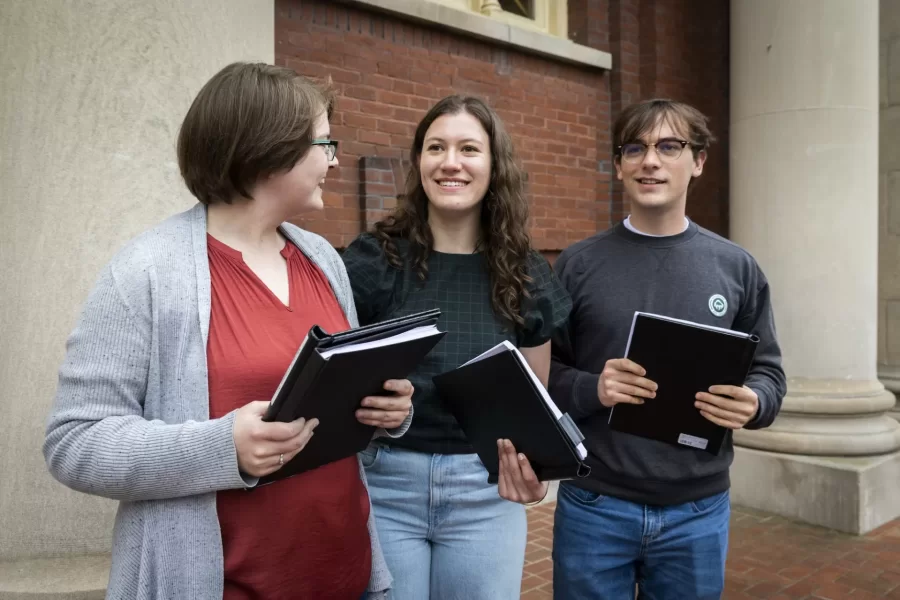
Student designers of first-year-seminar on Truth meet students taking the class.

Trevor Fry, Gillian Coyne, Owen Lewis, Isabel Pearson Kramer, Julian Seers, and Mahmoud Yousry.

Two neutron stars colliding 130 million years ago confirmed Einstein’s gravity theory. Does confirmation
mean Einstein’s theory is true? How is truth defined within the many truth and reconciliation commissions
around the world? What promise of truth lies within historical archives? Within documentaries? Within
fiction? How can we speak truthfully about unspeakable acts? This seminar joins thinkers modern and
ancient drawn from many disciplines to explore what is meant by "truth," how people form ideas about what
is true, why people care greatly about truth, and how social forces influence what people think is true.

“Truth”– first year seminar 481A Prof. Alexandre Dauge-Roth French and francophone studies Prof. Michael Murray economics MWF 1:10-2:30 / PGILL G10 Student designers of first-year-seminar on Truth meet students taking the class. Trevor Fry, Gillian Coyne, Owen Lewis, Isabel Pearson Kramer, Julian Seers, and Mahmoud Yousry. Two neutron stars colliding 130 million years ago confirmed Einstein’s gravity theory. Does confirmation mean Einstein’s theory is true? How is truth defined within the many truth and reconciliation commissions around the world? What promise of truth lies within historical archives? Within documentaries? Within fiction? How can we speak truthfully about unspeakable acts? This seminar joins thinkers modern and ancient drawn from many disciplines to explore what is meant by “truth,” how people form ideas about what is true, why people care greatly about truth, and how social forces influence what people think is true.

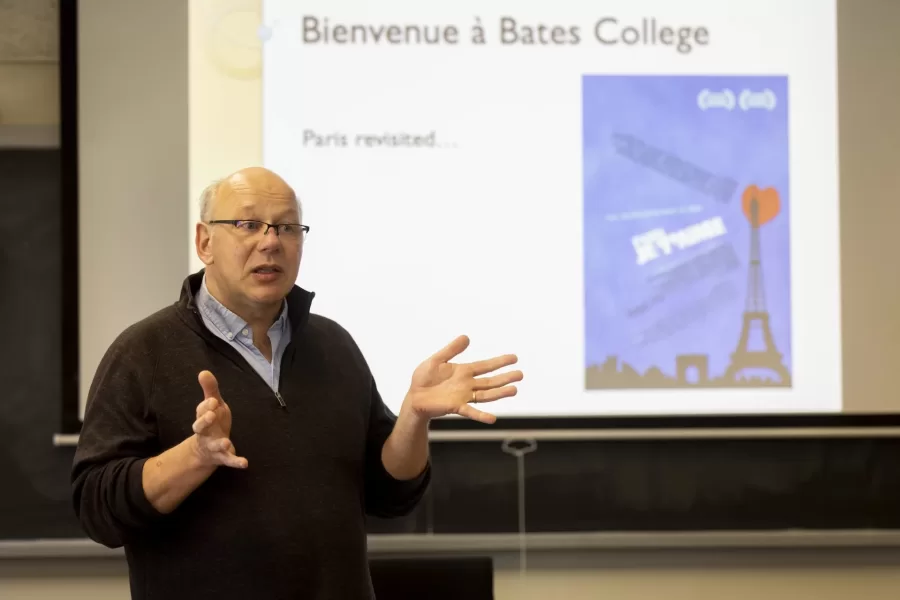
Admitted students and their parents got a chance to see Bates’ classroom culture up close and personal during a masterclass titled “Master Class: Paris Revisited,” delivered by Professor of French and Francophone Studies Alexandre Dauge-Roth during the Admitted Students Reception on April 14.

Admitted students and their parents got a chance to see Bates’ classroom culture up close and personal during a masterclass titled “Master Class: Paris Revisited,” delivered by Professor of French and Francophone Studies Alexandre Dauge-Roth during the Admitted Students Reception on April 14.

“My thesis is about the evolving role of French in Maine, and as a Franco-American and French speaker, Herb has been a great friend and contributor to the brainstorming process surrounding my thesis.”

Martha Coleman ’23 of Seattle, a double major in French and Francophone studies and American studies, took to the steps of Coram Library to bind her honors thesis, along with other students, staff, and faculty.

Coleman recruited the help of Herb Saucier, the Learning Shuttle bus driver for the Harward Center for Community Partnerships, to bind her thesis, titled “Le français et le Franco(phone)s: An exploration of the evolving significance of French in Maine,” advised by Professor of French and Francophone Studies Mary Rice-Defosse.

“Over the last four years, I've gotten to be here and speak this language, and speak it with people who grew up here speaking French,” she said.

Saucier has been a “supporter and cheerleader” for Coleman throughout the thesis writing process. “I just think it's such a nod to how important community work and community members have been to this project.”

“Community engagement has been a huge part of my time at Bates and I hope that my thesis binding will be an opportunity to recognize and celebrate the community members who made my thesis project, and my Bates career as a whole, possible,” says Coleman.

Allison Fischman ’23, a sociology major from Woodbridge, Conn., and Sam Manogue ‘26 of Wynnewood, Penn., were binding Fischman’s thesis, titled “Adverse Childhood Experiences (ACEs): Conceptualizations in Research and Policy,” advised by Professor of Sociology Emily Kane.

Liam Daly-Smith ‘23, a physics major from Montclair, N.J., got help from Jing Fang ’23 of Beijing, and Adriana Pastor Almiron ’25 of Asuncion, Paraguay, to bind his thesis, titled “Tidal Energy in Cobscook Bay: An Analysis of Tidal Range Energy and Tidal Barrage Generation Paradigms,” advised by Professor of Physics John S

“My thesis is about the evolving role of French in Maine, and as a Franco-American and French speaker, Herb has been a great friend and contributor to the brainstorming process surrounding my thesis.” Martha Coleman ’23 of Seattle, a double major in French and Francophone studies and American studies, took to the steps of Coram Library to bind her honors thesis, along with other students, staff, and faculty. Coleman recruited the help of Herb Saucier, the Learning Shuttle bus driver for the Harward Center for Community Partnerships, to bind her thesis, titled “Le français et le Franco(phone)s: An exploration of the evolving significance of French in Maine,” advised by Professor of French and Francophone Studies Mary Rice-Defosse. “Over the last four years, I’ve gotten to be here and speak this language, and speak it with people who grew up here speaking French,” she said. Saucier has been a “supporter and cheerleader” for Coleman throughout the thesis writing process. “I just think it’s such a nod to how important community work and community members have been to this project.” “Community engagement has been a huge part of my time at Bates and I hope that my thesis binding will be an opportunity to recognize and celebrate the community members who made my thesis project, and my Bates career as a whole, possible,” says Coleman. Allison Fischman ’23, a sociology major from Woodbridge, Conn., and Sam Manogue ‘26 of Wynnewood, Penn., were binding Fischman’s thesis, titled “Adverse Childhood Experiences (ACEs): Conceptualizations in Research and Policy,” advised by Professor of Sociology Emily Kane. Liam Daly-Smith ‘23, a physics major from Montclair, N.J., got help from Jing Fang ’23 of Beijing, and Adriana Pastor Almiron ’25 of Asuncion, Paraguay, to bind his thesis, titled “Tidal Energy in Cobscook Bay: An Analysis of Tidal Range Energy and Tidal Barrage Generation Paradigms,” advised by Professor of Physics John S

Teaching as if Their Lives Depend on it: Preparing Students for Bates and Beyond
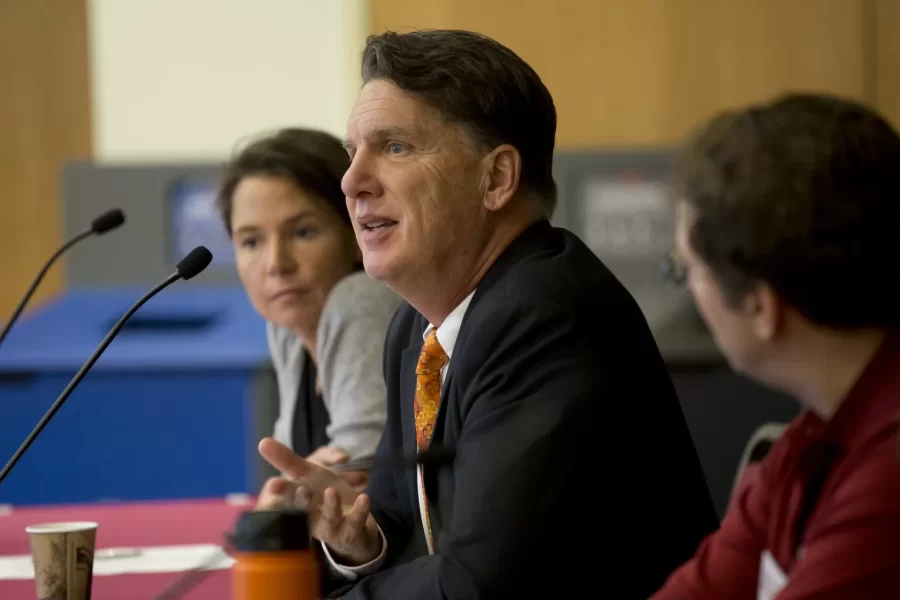
Whether your children are first-years or seniors, they will be anxious about getting a job after Bates. Parents are not immune to this anxiety either. While they are here, we encourage our students to be engaged, motivated, and to challenge themselves in their academic work. It’s a continuum: students develop both habits of mind and practices that they’ll carry from their academic work into lives of engaged citizenship. How do the liberal arts prepare individuals for life beyond college? Why does intellectual breadth in college enrich one’s life both at Bates and in the future? How do we challenge students to discover new passions and the wide range of options open to them? What do we need to instill in our students to help them succeed in college and beyond? In this panel discussion, professors from a variety of disciplines talk about teaching for life, pre-professionalism and discovery, and tout the benefits of finding one’s path and wandering off it.

Moderator: Kathryn Low, Professor of Psychology and Interim Vice President for Academic Affairs and Dean of the Faculty

Panelists:

Lee Abrahamsen, Associate Professor of Biology and Chair of Medical Studies Committee
Matthew Jadud, Associate Professor of Digital and Computational Studies
Kirk Read, Professor of French and Francophone Studies
Mara Tieken, Associate Professor of Education
Pettengill Hall, Keck Classroom (Room G52)

Teaching as if Their Lives Depend on it: Preparing Students for Bates and Beyond Whether your children are first-years or seniors, they will be anxious about getting a job after Bates. Parents are not immune to this anxiety either. While they are here, we encourage our students to be engaged, motivated, and to challenge themselves in their academic work. It’s a continuum: students develop both habits of mind and practices that they’ll carry from their academic work into lives of engaged citizenship. How do the liberal arts prepare individuals for life beyond college? Why does intellectual breadth in college enrich one’s life both at Bates and in the future? How do we challenge students to discover new passions and the wide range of options open to them? What do we need to instill in our students to help them succeed in college and beyond? In this panel discussion, professors from a variety of disciplines talk about teaching for life, pre-professionalism and discovery, and tout the benefits of finding one’s path and wandering off it. Moderator: Kathryn Low, Professor of Psychology and Interim Vice President for Academic Affairs and Dean of the Faculty Panelists: Lee Abrahamsen, Associate Professor of Biology and Chair of Medical Studies Committee Matthew Jadud, Associate Professor of Digital and Computational Studies Kirk Read, Professor of French and Francophone Studies Mara Tieken, Associate Professor of Education Pettengill Hall, Keck Classroom (Room G52)

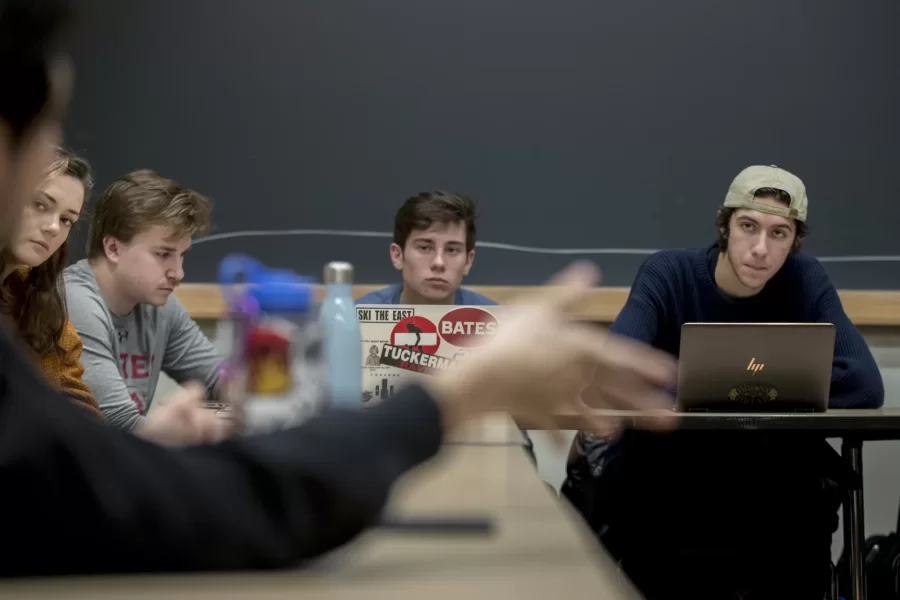
The French and Francophones studies department takes a wholly interdisciplinary approach, delving into sociology, anthropology, rhetoric, and more to give students a well-rounded view on the subject. The majority of students study abroad for one semester or a year in places including Bordeaux, France; Paris; and Rabat, Morocco. In addition, Lewiston has a rich and diverse Francophone population, allowing students to converse with French Canadians and new Mainers from various sub-Saharan Francophone countries and get first-hand exposure to the voices and topics they’re studying.

Featured Courses

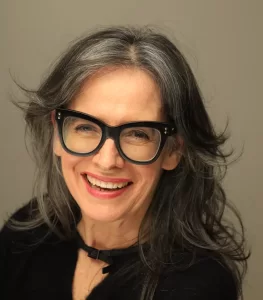
Photo of Laura C. Balladur

Laura C. Balladur

Senior Lecturer in French and Francophone Studies

French and Francophone Studies, European Studies
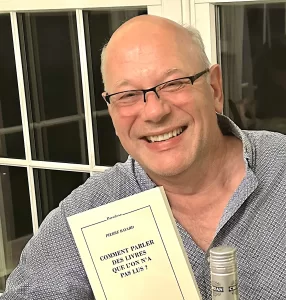
Photo of Alexandre E. Dauge-Roth

Alexandre E. Dauge-Roth

Professor of French and Francophone Studies

French and Francophone Studies Chair
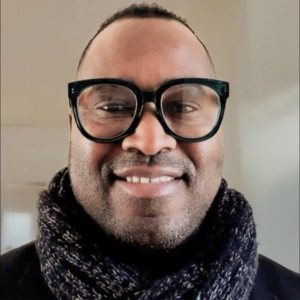
Photo of Kirk D. Read

Kirk D. Read

Professor of French and Francophone Studies

French and Francophone Studies
Photo of Mary T. Rice-DeFosse

Mary T. Rice-DeFosse

Professor of French and Francophone Studies

French and Francophone Studies

News & Events