Mathematics at Bates

With connections to many disciplines, mathematics is vital in understanding science, technology, and society.

The Department of Mathematics provides students with essential foundational math knowledge while allowing them to tailor their studies to their areas of interest. Entry-level courses in the department introduce students to basic concepts and hint at some of the power and beauty behind these fundamental results, while upper-level courses and the capstone experience provide majors with the opportunity to explore mathematical topics in greater depth and sophistication.

Contact Us

Hathorn Hall
Phone: 207-753-6963 pphilbin@bates.edu

What You Will Learn

garnet iconography with calculator, brain, and desktop computer
To develop a strong foundational understanding of core mathematical concepts in calculus and linear algebra
garnet iconography with pie chart and academic building
How to recognize the role of, and application for, mathematical skill across various fields
garnet iconography with desktop computer, interlocking gears, and bar graph
To explore advanced mathematical topics such as analysis, algebra, geometry, computational mathematics, and mathematical modeling
garnet iconography with lightbulb, folder with papers, and pen
To develop independence in thinking, problem-solving, and the creative application of mathematical concepts
garnet iconography with chat bubbles, people, and globe
How to communicate mathematical topics to diverse audiences
garnet iconography with academic building, people, and compass
How to analyze and critique mathematical arguments

Life After Bates

Recent math graduates have pursued a variety of careers: public health, software engineering, biostatistics, law, consulting, education, and sports statistics, to name a few. Whether working as data scientists at Spotify, biostatisticians on AIDS research, or principal engineers for acoustical engineering firms, graduates from the program have found a wide range of uses for their degrees.

91%

of 2020-2024 science and math graduates are employed and/or attending graduate school

  • University of Oxford
  • Harvard University
  • Yale University
  • University of Pennsylvania
  • Columbia University
  • University of Chicago
  • Northwestern University
  • Stanford University
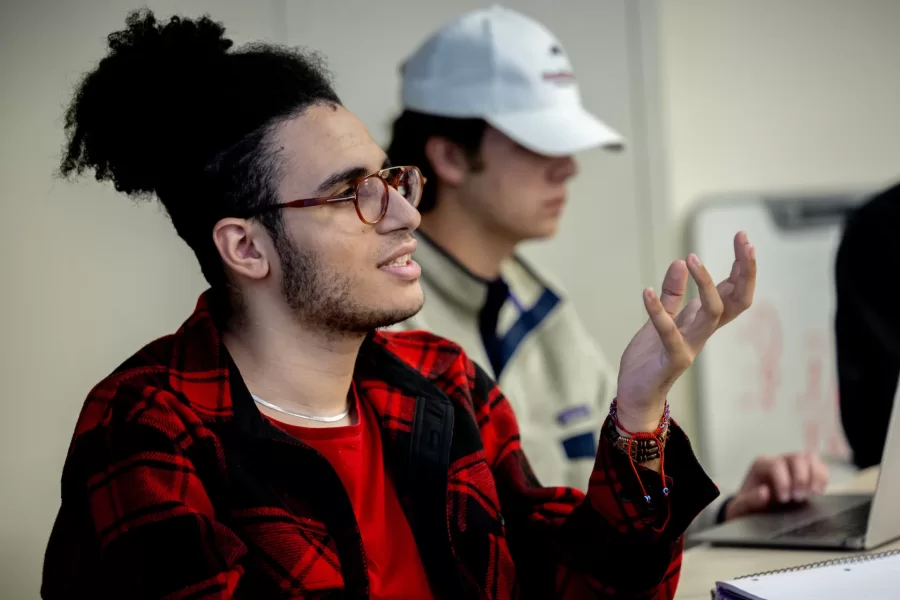
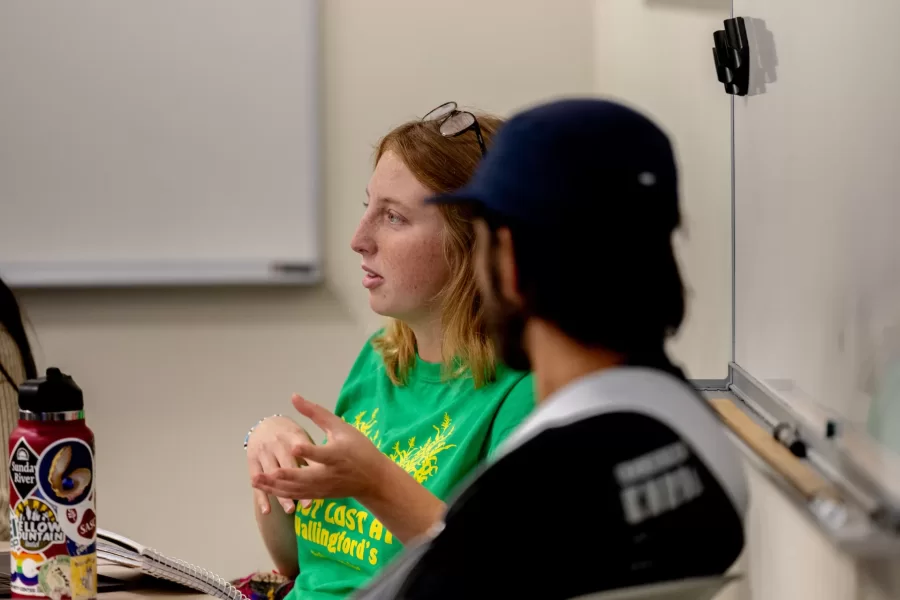
Meredith Greer's upper-level "Advanced Topics in Biomathematics" today at 1:10-2:30pm in Hathorn 207.

Mathematics students in the class:

Sam Findlen-Golden '20, math major
El Khansaa Kaddioui '20, math and economics double major
In front fow with hat and black vest speaking with Meredith.

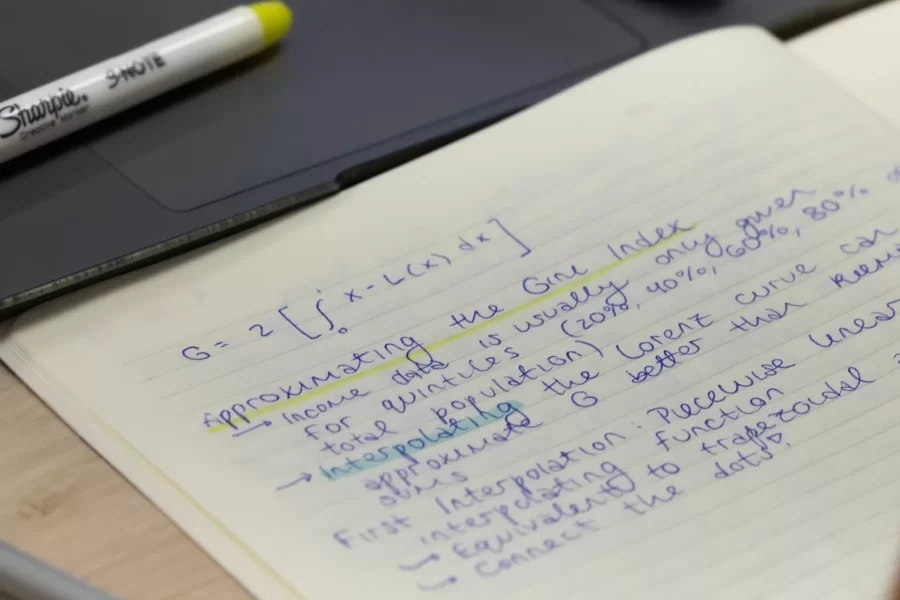
They are reviewing simplest compartmental model of diseases spread. Differential equations describe how disease moves. They are learning the details of that model so they know the groundwork and can then tackle more complicated models.

Three students together in the back, from left:

Gabe Nelson '20, South Burlington, Vt.
Adena Bernot '20, Old Westbury, N.Y.
Josie Blanchon '20, Wash D>C>

Front row, classroom right:
Luca Polar '20, Budapest
Jason Canaday '20

Two women together
Helen Daigle '20 in lilac
Casey Snow '20, stripes

Rear, classroom right
XuChong Show '20 Shanghai, China
Katie Leeke '20, Minnetonka, Minn.

Meredith Greer’s upper-level “Advanced Topics in Biomathematics” today at 1:10-2:30pm in Hathorn 207. Mathematics students in the class: Sam Findlen-Golden ’20, math major El Khansaa Kaddioui ’20, math and economics double major In front fow with hat and black vest speaking with Meredith. They are reviewing simplest compartmental model of diseases spread. Differential equations describe how disease moves. They are learning the details of that model so they know the groundwork and can then tackle more complicated models. Three students together in the back, from left: Gabe Nelson ’20, South Burlington, Vt. Adena Bernot ’20, Old Westbury, N.Y. Josie Blanchon ’20, Wash D>C> Front row, classroom right: Luca Polar ’20, Budapest Jason Canaday ’20 Two women together Helen Daigle ’20 in lilac Casey Snow ’20, stripes Rear, classroom right XuChong Show ’20 Shanghai, China Katie Leeke ’20, Minnetonka, Minn.

Small, but sophisticated.

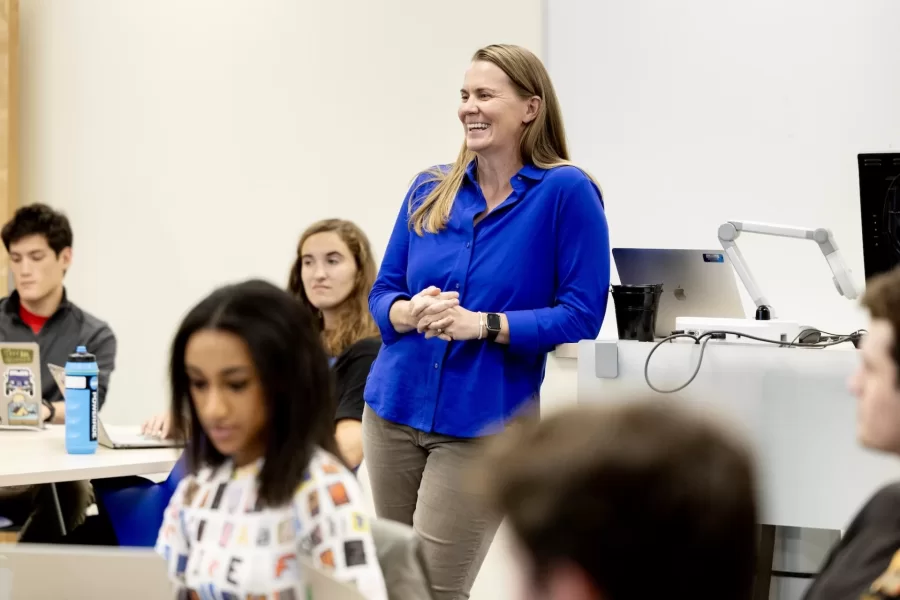
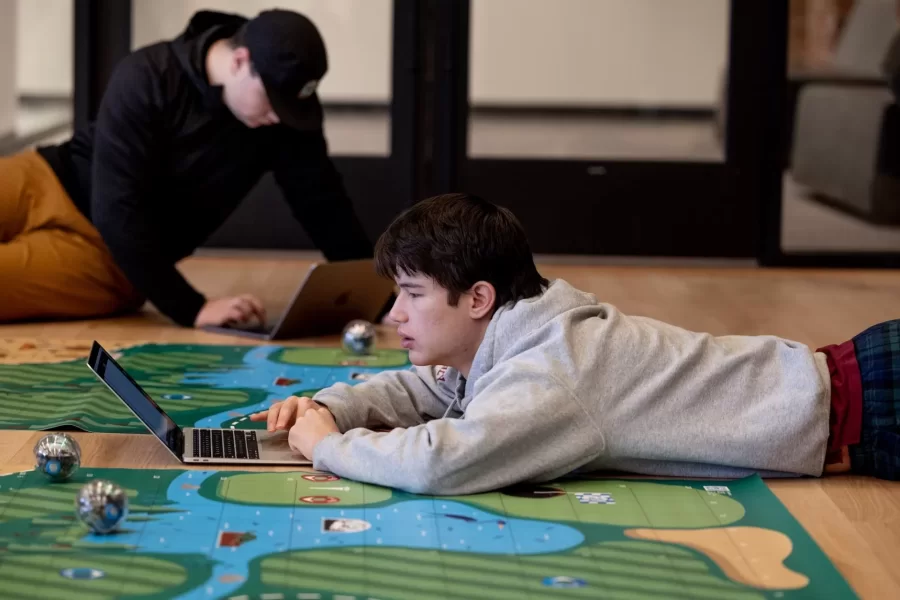
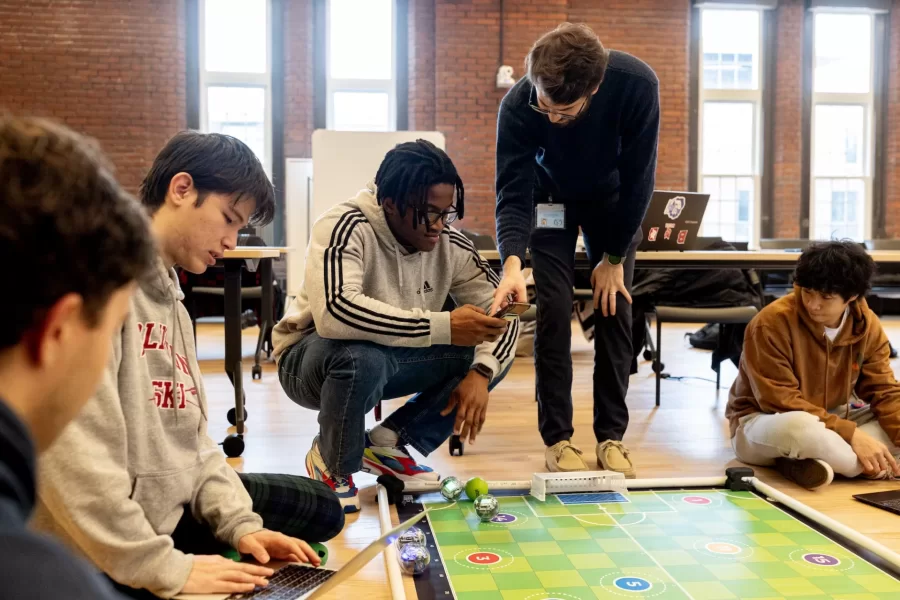
That’s what first-year students of Professor of Mathematics Meredith Greer discovered about one kind of small robot during a visit to Bates by a team of Lewiston Public Schools educators on Nov. 14.

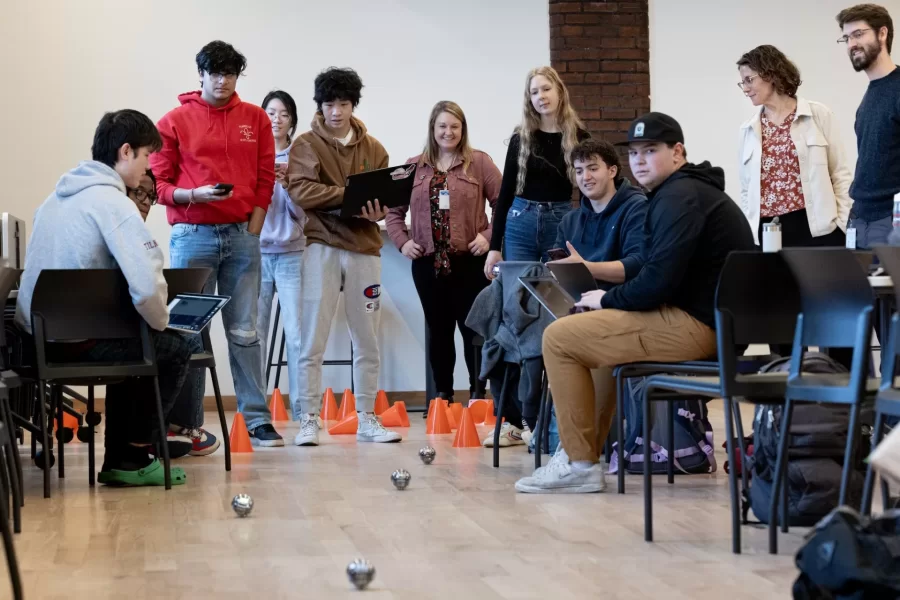
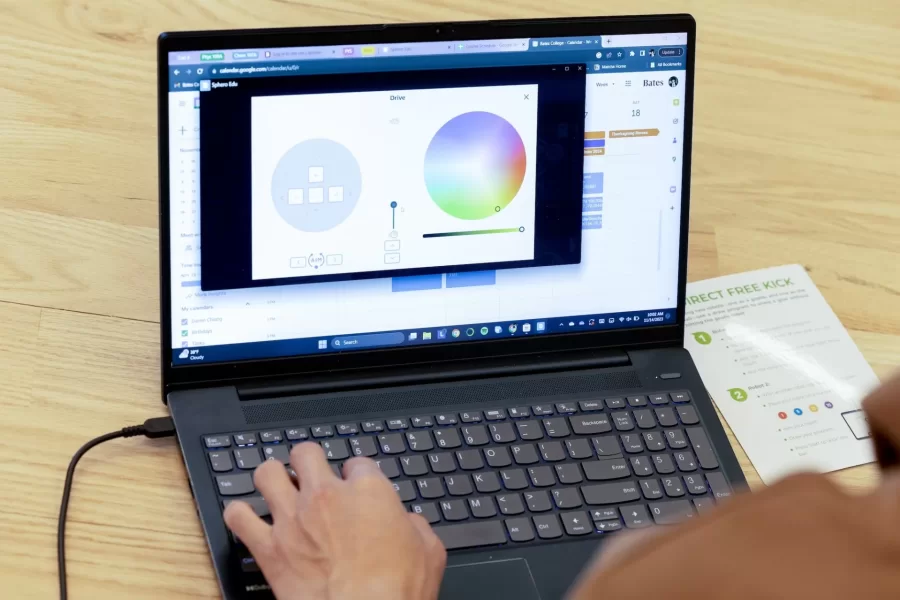
The team of instructional specialists and tech coaches brought Sphero BOLT robots with them during the morning visit to Chase Hall Lounge. Designed for educational and recreational purposes, they’re often used in schools to teach coding and robotics.

From left, first-year students Darien Chiang of Quincy, Mass., Julian Tilney of Arlington, Mass., and Finn Sheehy of Burlingame, Calif., get a handle on how to program the robots.

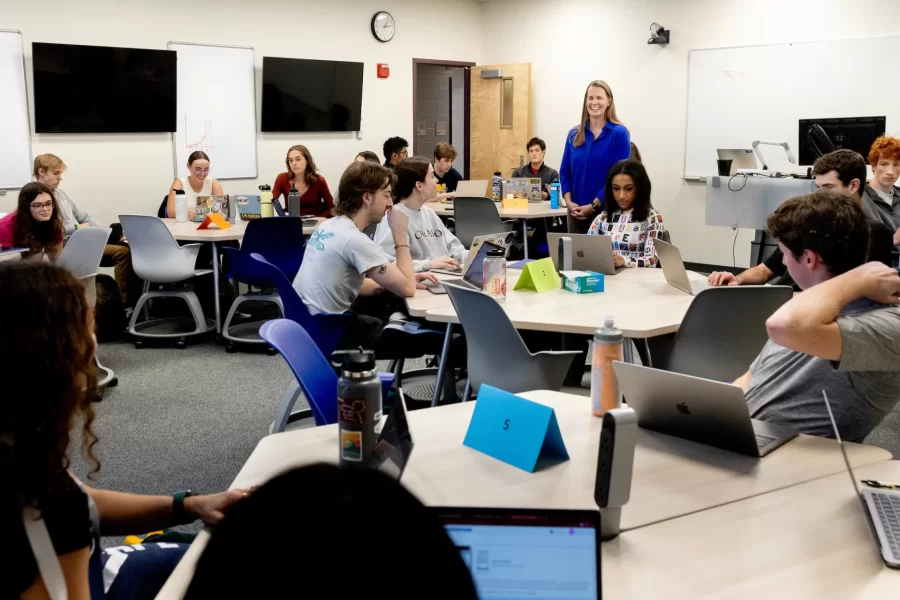
The students are in Greer’s First-Year Seminar, “Learning Math Using Crafts, Coding, and Games,” which investigates “how humans think about math at age 5, age 12, or age 18 and beyond.” During the semester, the students focused on learning through a variety of methods, including hands-on crafts, open-ended class meetings, and age-appropriate computer coding.

This was the educators’ third visit to the course, and for each visit, they brought with them age-appropriate robots.

Connecting with the Lewiston educators, and gaining insights into “specific activities they do with the robots at specific grade levels,” Greer explains, “has given us multiple chances to connect our studies with specific grade-level-based math learning standards that are used across the state of Maine.”

For the Lewiston educators, the three visits reflect growing outreach efforts into their community. “They were both enthusiastic and generous about bringing these lessons into our classroom,” says Greer. “Moving forward, we are continuing to think about ongoing collaborations.”


Small, but sophisticated. That’s what first-year students of Professor of Mathematics Meredith Greer discovered about one kind of small robot during a visit to Bates by a team of Lewiston Public Schools educators on Nov. 14. The team of instructional specialists and tech coaches brought Sphero BOLT robots with them during the morning visit to Chase Hall Lounge. Designed for educational and recreational purposes, they’re often used in schools to teach coding and robotics. From left, first-year students Darien Chiang of Quincy, Mass., Julian Tilney of Arlington, Mass., and Finn Sheehy of Burlingame, Calif., get a handle on how to program the robots. The students are in Greer’s First-Year Seminar, “Learning Math Using Crafts, Coding, and Games,” which investigates “how humans think about math at age 5, age 12, or age 18 and beyond.” During the semester, the students focused on learning through a variety of methods, including hands-on crafts, open-ended class meetings, and age-appropriate computer coding. This was the educators’ third visit to the course, and for each visit, they brought with them age-appropriate robots. Connecting with the Lewiston educators, and gaining insights into “specific activities they do with the robots at specific grade levels,” Greer explains, “has given us multiple chances to connect our studies with specific grade-level-based math learning standards that are used across the state of Maine.” For the Lewiston educators, the three visits reflect growing outreach efforts into their community. “They were both enthusiastic and generous about bringing these lessons into our classroom,” says Greer. “Moving forward, we are continuing to think about ongoing collaborations.”

Small, but sophisticated.

That’s what first-year students of Professor of Mathematics Meredith Greer discovered about one kind of small robot during a visit to Bates by a team of Lewiston Public Schools educators on Nov. 14.

The team of instructional specialists and tech coaches brought Sphero BOLT robots with them during the morning visit to Chase Hall Lounge. Designed for educational and recreational purposes, they’re often used in schools to teach coding and robotics.

From left, first-year students Darien Chiang of Quincy, Mass., Julian Tilney of Arlington, Mass., and Finn Sheehy of Burlingame, Calif., get a handle on how to program the robots.

The students are in Greer’s First-Year Seminar, “Learning Math Using Crafts, Coding, and Games,” which investigates “how humans think about math at age 5, age 12, or age 18 and beyond.” During the semester, the students focused on learning through a variety of methods, including hands-on crafts, open-ended class meetings, and age-appropriate computer coding.

This was the educators’ third visit to the course, and for each visit, they brought with them age-appropriate robots.

Connecting with the Lewiston educators, and gaining insights into “specific activities they do with the robots at specific grade levels,” Greer explains, “has given us multiple chances to connect our studies with specific grade-level-based math learning standards that are used across the state of Maine.”

For the Lewiston educators, the three visits reflect growing outreach efforts into their community. “They were both enthusiastic and generous about bringing these lessons into our classroom,” says Greer. “Moving forward, we are continuing to think about ongoing collaborations.”

Small, but sophisticated. That’s what first-year students of Professor of Mathematics Meredith Greer discovered about one kind of small robot during a visit to Bates by a team of Lewiston Public Schools educators on Nov. 14. The team of instructional specialists and tech coaches brought Sphero BOLT robots with them during the morning visit to Chase Hall Lounge. Designed for educational and recreational purposes, they’re often used in schools to teach coding and robotics. From left, first-year students Darien Chiang of Quincy, Mass., Julian Tilney of Arlington, Mass., and Finn Sheehy of Burlingame, Calif., get a handle on how to program the robots. The students are in Greer’s First-Year Seminar, “Learning Math Using Crafts, Coding, and Games,” which investigates “how humans think about math at age 5, age 12, or age 18 and beyond.” During the semester, the students focused on learning through a variety of methods, including hands-on crafts, open-ended class meetings, and age-appropriate computer coding. This was the educators’ third visit to the course, and for each visit, they brought with them age-appropriate robots. Connecting with the Lewiston educators, and gaining insights into “specific activities they do with the robots at specific grade levels,” Greer explains, “has given us multiple chances to connect our studies with specific grade-level-based math learning standards that are used across the state of Maine.” For the Lewiston educators, the three visits reflect growing outreach efforts into their community. “They were both enthusiastic and generous about bringing these lessons into our classroom,” says Greer. “Moving forward, we are continuing to think about ongoing collaborations.”

Small, but sophisticated.

That’s what first-year students of Professor of Mathematics Meredith Greer discovered about one kind of small robot during a visit to Bates by a team of Lewiston Public Schools educators on Nov. 14.

The team of instructional specialists and tech coaches brought Sphero BOLT robots with them during the morning visit to Chase Hall Lounge. Designed for educational and recreational purposes, they’re often used in schools to teach coding and robotics.

From left, first-year students Darien Chiang of Quincy, Mass., Julian Tilney of Arlington, Mass., and Finn Sheehy of Burlingame, Calif., get a handle on how to program the robots.

The students are in Greer’s First-Year Seminar, “Learning Math Using Crafts, Coding, and Games,” which investigates “how humans think about math at age 5, age 12, or age 18 and beyond.” During the semester, the students focused on learning through a variety of methods, including hands-on crafts, open-ended class meetings, and age-appropriate computer coding.

This was the educators’ third visit to the course, and for each visit, they brought with them age-appropriate robots.

Connecting with the Lewiston educators, and gaining insights into “specific activities they do with the robots at specific grade levels,” Greer explains, “has given us multiple chances to connect our studies with specific grade-level-based math learning standards that are used across the state of Maine.”

For the Lewiston educators, the three visits reflect growing outreach efforts into their community. “They were both enthusiastic and generous about bringing these lessons into our classroom,” says Greer. “Moving forward, we are continuing to think about ongoing collaborations.”

Small, but sophisticated. That’s what first-year students of Professor of Mathematics Meredith Greer discovered about one kind of small robot during a visit to Bates by a team of Lewiston Public Schools educators on Nov. 14. The team of instructional specialists and tech coaches brought Sphero BOLT robots with them during the morning visit to Chase Hall Lounge. Designed for educational and recreational purposes, they’re often used in schools to teach coding and robotics. From left, first-year students Darien Chiang of Quincy, Mass., Julian Tilney of Arlington, Mass., and Finn Sheehy of Burlingame, Calif., get a handle on how to program the robots. The students are in Greer’s First-Year Seminar, “Learning Math Using Crafts, Coding, and Games,” which investigates “how humans think about math at age 5, age 12, or age 18 and beyond.” During the semester, the students focused on learning through a variety of methods, including hands-on crafts, open-ended class meetings, and age-appropriate computer coding. This was the educators’ third visit to the course, and for each visit, they brought with them age-appropriate robots. Connecting with the Lewiston educators, and gaining insights into “specific activities they do with the robots at specific grade levels,” Greer explains, “has given us multiple chances to connect our studies with specific grade-level-based math learning standards that are used across the state of Maine.” For the Lewiston educators, the three visits reflect growing outreach efforts into their community. “They were both enthusiastic and generous about bringing these lessons into our classroom,” says Greer. “Moving forward, we are continuing to think about ongoing collaborations.”
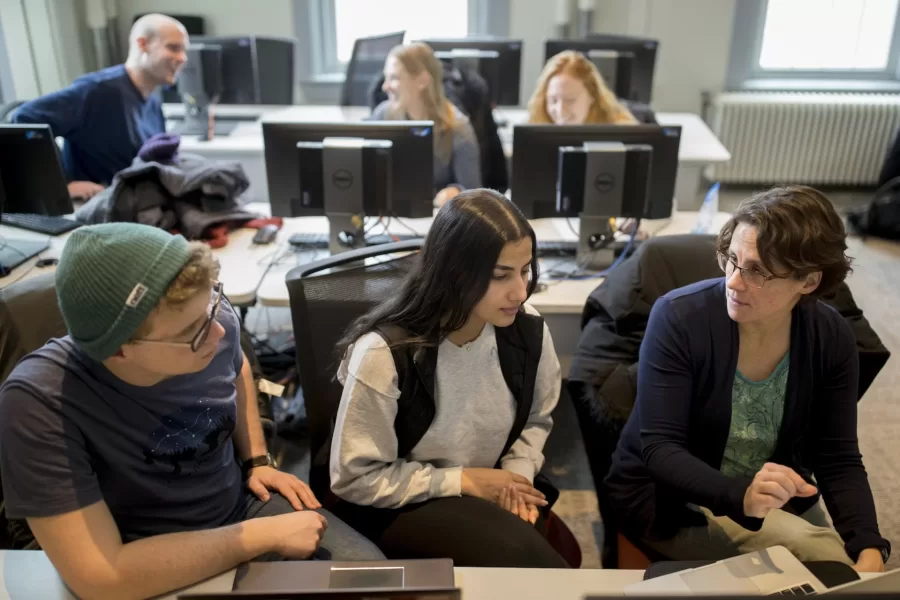
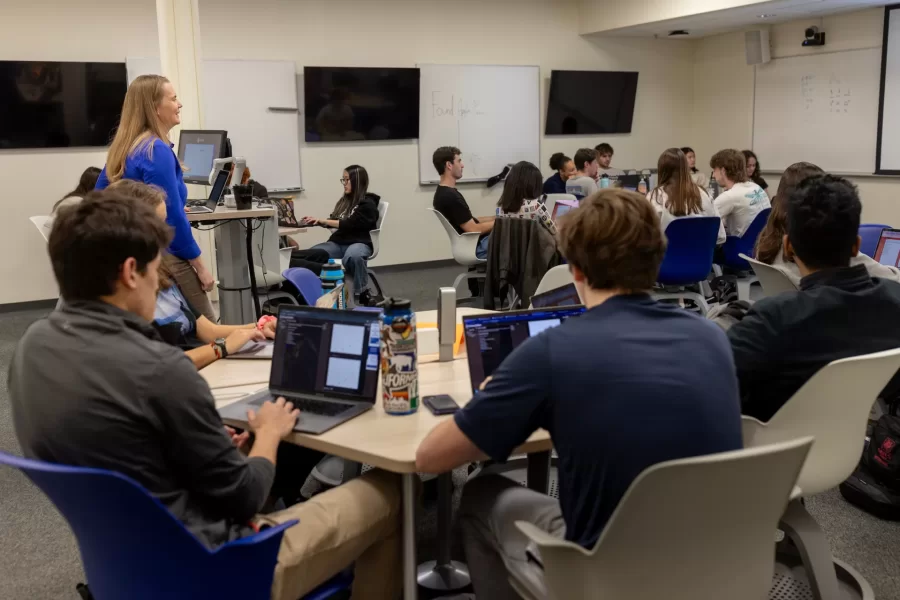
Associate Professor of Mathematics Katy Ott teaches “Mathematics for Justice" course in Carnegie 339 on Thursday, Sept. 28, at 1:10 p.m.

MATH 233 - Mathematics for Social Justice
This course teaches quantitative literacy, critical thinking and problem solving skills in a socially relevant context. Students use mathematics as a powerful analytic framework for understanding and developing realistic solutions to issues of social, political, and economic justice. The overarching goal of this course is for students to develop the ability and inclination to use mathematics to understand, and improve, the world around them. Prerequisite(s): MATH 106. Recommended background: MATH 205.

Associate Professor of Mathematics Katy Ott teaches “Mathematics for Justice” course in Carnegie 339 on Thursday, Sept. 28, at 1:10 p.m. MATH 233 – Mathematics for Social Justice This course teaches quantitative literacy, critical thinking and problem solving skills in a socially relevant context. Students use mathematics as a powerful analytic framework for understanding and developing realistic solutions to issues of social, political, and economic justice. The overarching goal of this course is for students to develop the ability and inclination to use mathematics to understand, and improve, the world around them. Prerequisite(s): MATH 106. Recommended background: MATH 205.

Small, but sophisticated.

That’s what first-year students of Professor of Mathematics Meredith Greer discovered about one kind of small robot during a visit to Bates by a team of Lewiston Public Schools educators on Nov. 14.

The team of instructional specialists and tech coaches brought Sphero BOLT robots with them during the morning visit to Chase Hall Lounge. Designed for educational and recreational purposes, they’re often used in schools to teach coding and robotics.

From left, first-year students Darien Chiang of Quincy, Mass., Julian Tilney of Arlington, Mass., and Finn Sheehy of Burlingame, Calif., get a handle on how to program the robots.

The students are in Greer’s First-Year Seminar, “Learning Math Using Crafts, Coding, and Games,” which investigates “how humans think about math at age 5, age 12, or age 18 and beyond.” During the semester, the students focused on learning through a variety of methods, including hands-on crafts, open-ended class meetings, and age-appropriate computer coding.

This was the educators’ third visit to the course, and for each visit, they brought with them age-appropriate robots.

Connecting with the Lewiston educators, and gaining insights into “specific activities they do with the robots at specific grade levels,” Greer explains, “has given us multiple chances to connect our studies with specific grade-level-based math learning standards that are used across the state of Maine.”

For the Lewiston educators, the three visits reflect growing outreach efforts into their community. “They were both enthusiastic and generous about bringing these lessons into our classroom,” says Greer. “Moving forward, we are continuing to think about ongoing collaborations.”
Small, but sophisticated. That’s what first-year students of Professor of Mathematics Meredith Greer discovered about one kind of small robot during a visit to Bates by a team of Lewiston Public Schools educators on Nov. 14. The team of instructional specialists and tech coaches brought Sphero BOLT robots with them during the morning visit to Chase Hall Lounge. Designed for educational and recreational purposes, they’re often used in schools to teach coding and robotics. From left, first-year students Darien Chiang of Quincy, Mass., Julian Tilney of Arlington, Mass., and Finn Sheehy of Burlingame, Calif., get a handle on how to program the robots. The students are in Greer’s First-Year Seminar, “Learning Math Using Crafts, Coding, and Games,” which investigates “how humans think about math at age 5, age 12, or age 18 and beyond.” During the semester, the students focused on learning through a variety of methods, including hands-on crafts, open-ended class meetings, and age-appropriate computer coding. This was the educators’ third visit to the course, and for each visit, they brought with them age-appropriate robots. Connecting with the Lewiston educators, and gaining insights into “specific activities they do with the robots at specific grade levels,” Greer explains, “has given us multiple chances to connect our studies with specific grade-level-based math learning standards that are used across the state of Maine.” For the Lewiston educators, the three visits reflect growing outreach efforts into their community. “They were both enthusiastic and generous about bringing these lessons into our classroom,” says Greer. “Moving forward, we are continuing to think about ongoing collaborations.”
Associate Professor of Mathematics Katy Ott teaches “Mathematics for Justice" course in Carnegie 339 on Thursday, Sept. 28, at 1:10 p.m.

MATH 233 - Mathematics for Social Justice
This course teaches quantitative literacy, critical thinking and problem solving skills in a socially relevant context. Students use mathematics as a powerful analytic framework for understanding and developing realistic solutions to issues of social, political, and economic justice. The overarching goal of this course is for students to develop the ability and inclination to use mathematics to understand, and improve, the world around them. Prerequisite(s): MATH 106. Recommended background: MATH 205.

Associate Professor of Mathematics Katy Ott teaches “Mathematics for Justice” course in Carnegie 339 on Thursday, Sept. 28, at 1:10 p.m. MATH 233 – Mathematics for Social Justice This course teaches quantitative literacy, critical thinking and problem solving skills in a socially relevant context. Students use mathematics as a powerful analytic framework for understanding and developing realistic solutions to issues of social, political, and economic justice. The overarching goal of this course is for students to develop the ability and inclination to use mathematics to understand, and improve, the world around them. Prerequisite(s): MATH 106. Recommended background: MATH 205.

Associate Professor of Mathematics Katy Ott teaches “Mathematics for Justice" course in Carnegie 339 on Thursday, Sept. 28, at 1:10 p.m.

MATH 233 - Mathematics for Social Justice
This course teaches quantitative literacy, critical thinking and problem solving skills in a socially relevant context. Students use mathematics as a powerful analytic framework for understanding and developing realistic solutions to issues of social, political, and economic justice. The overarching goal of this course is for students to develop the ability and inclination to use mathematics to understand, and improve, the world around them. Prerequisite(s): MATH 106. Recommended background: MATH 205.

Associate Professor of Mathematics Katy Ott teaches “Mathematics for Justice” course in Carnegie 339 on Thursday, Sept. 28, at 1:10 p.m. MATH 233 – Mathematics for Social Justice This course teaches quantitative literacy, critical thinking and problem solving skills in a socially relevant context. Students use mathematics as a powerful analytic framework for understanding and developing realistic solutions to issues of social, political, and economic justice. The overarching goal of this course is for students to develop the ability and inclination to use mathematics to understand, and improve, the world around them. Prerequisite(s): MATH 106. Recommended background: MATH 205.

Associate Professor of Mathematics Katy Ott teaches “Mathematics for Justice" course in Carnegie 339 on Thursday, Sept. 28, at 1:10 p.m.

MATH 233 - Mathematics for Social Justice
This course teaches quantitative literacy, critical thinking and problem solving skills in a socially relevant context. Students use mathematics as a powerful analytic framework for understanding and developing realistic solutions to issues of social, political, and economic justice. The overarching goal of this course is for students to develop the ability and inclination to use mathematics to understand, and improve, the world around them. Prerequisite(s): MATH 106. Recommended background: MATH 205.

Associate Professor of Mathematics Katy Ott teaches “Mathematics for Justice” course in Carnegie 339 on Thursday, Sept. 28, at 1:10 p.m. MATH 233 – Mathematics for Social Justice This course teaches quantitative literacy, critical thinking and problem solving skills in a socially relevant context. Students use mathematics as a powerful analytic framework for understanding and developing realistic solutions to issues of social, political, and economic justice. The overarching goal of this course is for students to develop the ability and inclination to use mathematics to understand, and improve, the world around them. Prerequisite(s): MATH 106. Recommended background: MATH 205.

Associate Professor of Mathematics Katy Ott teaches “Mathematics for Justice" course in Carnegie 339 on Thursday, Sept. 28, at 1:10 p.m.

MATH 233 - Mathematics for Social Justice
This course teaches quantitative literacy, critical thinking and problem solving skills in a socially relevant context. Students use mathematics as a powerful analytic framework for understanding and developing realistic solutions to issues of social, political, and economic justice. The overarching goal of this course is for students to develop the ability and inclination to use mathematics to understand, and improve, the world around them. Prerequisite(s): MATH 106. Recommended background: MATH 205.

Associate Professor of Mathematics Katy Ott teaches “Mathematics for Justice” course in Carnegie 339 on Thursday, Sept. 28, at 1:10 p.m. MATH 233 – Mathematics for Social Justice This course teaches quantitative literacy, critical thinking and problem solving skills in a socially relevant context. Students use mathematics as a powerful analytic framework for understanding and developing realistic solutions to issues of social, political, and economic justice. The overarching goal of this course is for students to develop the ability and inclination to use mathematics to understand, and improve, the world around them. Prerequisite(s): MATH 106. Recommended background: MATH 205.

Associate Professor of Mathematics Katy Ott teaches “Mathematics for Justice" course in Carnegie 339 on Thursday, Sept. 28, at 1:10 p.m.

MATH 233 - Mathematics for Social Justice
This course teaches quantitative literacy, critical thinking and problem solving skills in a socially relevant context. Students use mathematics as a powerful analytic framework for understanding and developing realistic solutions to issues of social, political, and economic justice. The overarching goal of this course is for students to develop the ability and inclination to use mathematics to understand, and improve, the world around them. Prerequisite(s): MATH 106. Recommended background: MATH 205.

Associate Professor of Mathematics Katy Ott teaches “Mathematics for Justice” course in Carnegie 339 on Thursday, Sept. 28, at 1:10 p.m. MATH 233 – Mathematics for Social Justice This course teaches quantitative literacy, critical thinking and problem solving skills in a socially relevant context. Students use mathematics as a powerful analytic framework for understanding and developing realistic solutions to issues of social, political, and economic justice. The overarching goal of this course is for students to develop the ability and inclination to use mathematics to understand, and improve, the world around them. Prerequisite(s): MATH 106. Recommended background: MATH 205.

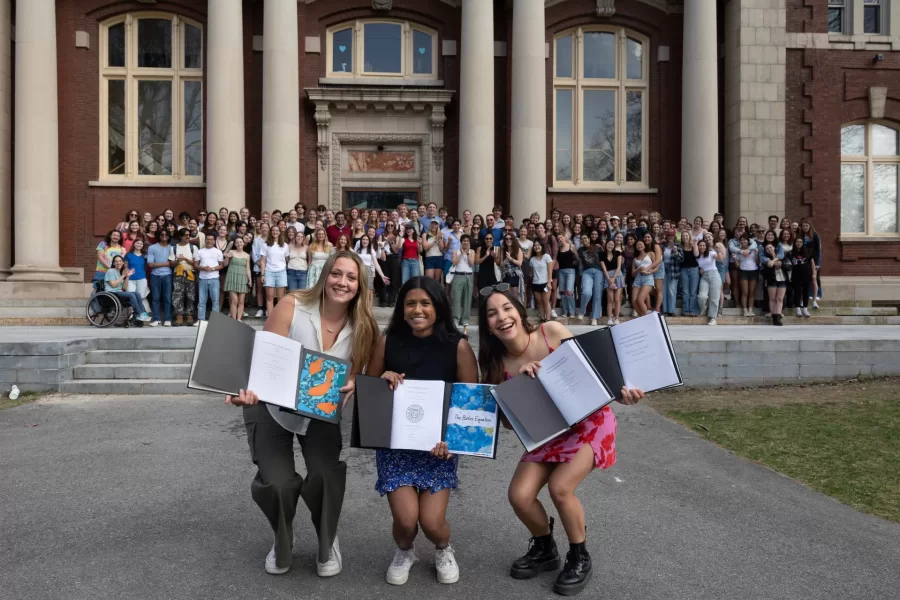
Francisca, Mallika and I have been friends since the first day of freshman year as we all lived in Page Hall on the 4th floor. Francisca and Mallika were first-year roommates and Francisca and Livia met through their Calc II class and became closer after forming a study group for it.  After the first day of classes, Livia invited Francisca to her birthday get-together that night, Mallika tagged along, and the rest was history! We all stayed very good friends for the entirety of our college careers and are very thankful for having each other through a very stressful freshman year. Living through freshman year with all of the COVID restrictions brought us closer together and here we are four years later still best friends (and all Math majors). 

For the binding today, Mallika Jena and I bound our math capstone first. We took Katy Ott's math capstone class titled Mathematical Exposition, where our class produced a collaborative final math magazine for the audience of undergraduate mathematics majors or potential majors. The magazine is titled, The Bates Equation, and specifically includes Mallika's and I's written work that analyzes primary sources of mathematical literature associated with the Pythagorean theorem, which we all know and love.

Your name: Maria Francisca Rocha
Hometown: Porto, Portugal
Majors: Biochemistry, Mathematics
The title of each of your theses and advisor:
•	“Mathematical Model of the Response of Bacterial Biofilms to Antibiotic Treatments” Professor Colleen O'Loughlin.- Professor Meredith Greer, Mathematics department
•	“Characterizing the morphology of Staphylococcus epidermidis bacterial biofilms using scanning electron microscopy”
Guests: I am part of the frisbee team, I work at the Office of Global Education, and I am one of the Managers of the Ronj, so I invited my teammates, coworkers, and friends from those groups and beyond! 
Quote: It was heartwarming to see all my friends gathered to celebrate the culmination of my work a

Francisca, Mallika and I have been friends since the first day of freshman year as we all lived in Page Hall on the 4th floor. Francisca and Mallika were first-year roommates and Francisca and Livia met through their Calc II class and became closer after forming a study group for it. After the first day of classes, Livia invited Francisca to her birthday get-together that night, Mallika tagged along, and the rest was history! We all stayed very good friends for the entirety of our college careers and are very thankful for having each other through a very stressful freshman year. Living through freshman year with all of the COVID restrictions brought us closer together and here we are four years later still best friends (and all Math majors). For the binding today, Mallika Jena and I bound our math capstone first. We took Katy Ott’s math capstone class titled Mathematical Exposition, where our class produced a collaborative final math magazine for the audience of undergraduate mathematics majors or potential majors. The magazine is titled, The Bates Equation, and specifically includes Mallika’s and I’s written work that analyzes primary sources of mathematical literature associated with the Pythagorean theorem, which we all know and love. Your name: Maria Francisca Rocha Hometown: Porto, Portugal Majors: Biochemistry, Mathematics The title of each of your theses and advisor: • “Mathematical Model of the Response of Bacterial Biofilms to Antibiotic Treatments” Professor Colleen O’Loughlin.- Professor Meredith Greer, Mathematics department • “Characterizing the morphology of Staphylococcus epidermidis bacterial biofilms using scanning electron microscopy” Guests: I am part of the frisbee team, I work at the Office of Global Education, and I am one of the Managers of the Ronj, so I invited my teammates, coworkers, and friends from those groups and beyond! Quote: It was heartwarming to see all my friends gathered to celebrate the culmination of my work a

Mathematics is an integral part of a liberal arts education. Students can choose to focus on theoretical or applied mathematics courses, and mathematics majors at Bates often double major in a related field, such as economics, physics, or engineering. Students get the chance to engage in math beyond the classroom, whether through math competitions, community-engaged learning opportunities at local schools and nonprofits, or on-campus math seminars.

Featured Courses

Photo of Laurie L. Baker

Laurie L. Baker

Assistant Professor of Mathematics

Photo of Scott H. Balcomb

Scott H. Balcomb

Visiting Instructor in Mathematics

Photo of Grace L. Coulombe

Grace L. Coulombe

Lecturer and Director of Student Academic Support

Photo of Meredith L. Greer

Meredith L. Greer

Professor of Mathematics

Photo of Logan Hambric

Logan Hambric

Visiting Assistant Professor of Mathematics

Photo of Martin W. Montgomery

Martin W. Montgomery

Visiting Lecturer in Mathematics

Photo of Katharine A. Ott

Katharine A. Ott

Thomas Sowell Professor of Mathematics

Photo of Fatoumata Sanogo

Fatoumata Sanogo

Assistant Professor of Mathematics

Photo of Austyn W. Simpson

Austyn W. Simpson

Assistant Professor of Mathematics

Photo of Laura S. Storch

Laura S. Storch

Assistant Professor of Mathematics

Photo of Cigole Thomas

Cigole Thomas

Assistant Professor of Mathematics

Photo of Peter N. Wong

Peter N. Wong

Phillips Professor of Mathematics

News & Events

Bates announces Stoddard Fitness and Well-Being Center and athletics facilities upgrades
March 5, 2026

Bates announces Stoddard Fitness and Well-Being Center and at…

Bates is embarking on a $45 million project to update two key athletic facilities and construct a new fitness and well-being center. A gift of $10 million from Jon W. Brayshaw ’90, P’25 and Jocelyn Stoddard Brayshaw ’88, P’25 has brought the college a vital step closer to construction. The new facility will be named the Stoddard Fitness and Well-Being Center. 

Over the woodlands brown and bare, over the harvest-fields forsaken, silent, and soft, and slow descends the snow. — Longfellow Back on campus after the February freak storm, Bates feels suspended between motion and stillness; cars crunch in half-melted tracks, boots drip by radiators, flights and plans still catching up somewhere in the clouds. Some of us are here, some are delayed, and the quiet holds space for both. It’s a strange return; rushed arrivals, late-night drives, weather maps open on our phones, yet the air itself feels calm, like the world pressed pause just long enough for us to notice it. The paradox is real; chaos in the forecast, steadiness on the quad. Snow does that. It softens edges, lowers voices, makes even a campus full of movement feel like it’s breathing slowly.
March 5, 2026

February at Bates

February on campus saw sports successes, several large snowfalls, and our annual Winter Carnival — a week of events celebrating the joys of the chilly season.