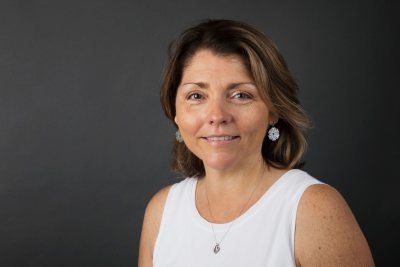
April L. Horton
Wagener Family Professor of Equity and Inclusion in STEM
About
Pronouns: she/her/hers
Ph.D. Human Genetics, University of Houston
Research interests
My research is focused on studying the evolution of conserved gene regulatory networks. In my lab, we are particularly interested in how changes to genomes and gene regulatory networks have led to the diversity of animal forms and functions. We use marine and freshwater sponges as model systems to ask questions about the genetics and development of animal evolution and symbioses. Sponges are ancient animals that retain characteristics of an early and successful experiment in multicellularity while also sharing some highly conserved features (e.g., stem cells) and molecular blueprints with all other animals, including humans. These unique features provide a system where we can explore hypotheses about the evolution of all animals.
Student Research Opportunities
Research projects in my lab focus on the role of conserved developmental control genes and gene regulatory networks that are uniquely animal, but may have originated prior to the advent of adaptations such as nervous and immune systems, muscles, or eyes. We also study gene networks and the molecular linkages between intracellular algal symbionts and sponges as we try to understand how the host:symbiont interaction is important for animal development and function. Along these lines, some students also study the unique features of the symbiotic microalgae that inhabit sponge cells. We employ molecular, cellular, developmental, and functional genomic approaches and frequently collaborate with field biologists and computational scientists to address our questions. The research projects in my lab have implications for basic biomedical research as well as environmental and climate change studies.
Selected Publications
(*denotes student co-author)
A.L. Horton, H. Neighmond*, A. Neighmond*, R. Anderson*, M. Lessard, V. Price, S.P. Leys, A. Riesgo. (2026) Molecular and spatial integration of algal endosymbionts of the freshwater sponge, Ephydatia muelleri, throughout development in light and dark conditions. BMC Genomics. 27, 763. https://doi.org/10.1186/s12864-026-12618-w
R. Cassidy, L. de la Cruz, K. Mitsi, C. Galià-Camps, A. Benítez-López, C. Gracia-Sancha, J. Lorente-Sorolla, A. Álvarez, R. Mozo, S. Kolomyjec, S. Nichols, R. Manconi, R. Pereira, K. Evans, V. Itskovitch, A.L. Horton, S.P. Leys, S. Taboada, A. Riesgo. (2026) Genomic Connectivity and Adaptation Signals of the Freshwater Sponge Ephydatia muelleri across its distribution. Journal of Biogeography. 53:e70142.
C. Cevallos*, A.L. Leigh White*, B. Fazio*, L. Wendt, J. Feng, D. Posfai, A.L. Horton, J. Warrick, O.A. Quintero-Carmona. (2025) Transcriptomic Analysis of CAD Cell Differentiation. microPublication Biology. 10.17912.
S.P. Leys, L Grombacher, D. Field, V. Ho, G.R.D. Elliot, A.S. Kahn, P. Reid, A. Riesgo, E. Lanna, Y. Bobkov, J.F. Ryan, A.L. Horton. (2025) A Morphological Cell Atlas of the Freshwater Sponge, Ephydatia muelleri, with Key Insights from Targeted Single-Cell Transcriptomes. EvoDevo 16:1. https://doi.org/10.1186/s13227-025-00237-7
H. Neighmond*, A. Quinn*, B. Schmandt*, K. Ettinger*, A.L. Hill, L. Williams. (2023) Developmental Bisphenol S Toxicity in Two Freshwater Animal Models. Environmental Toxicology and Pharmacology 104:104311. https://doi.org/10.1016/j.etap.2023.104311.
M.S. Hill, B. Lawson, J.W. Cain, N. Rahman*, S. Toolsidass*, T. Wang*, S. Geraghty*, E. Raymundo*, A.L. Hill, (2023) Sustained Beneficial Infections: Priority Effects, Competition, and Specialization Drive Patterns of Association in Phototroph:Heterotroph Mutualisms. Frontiers in Ecology and Evolution 11. https://doi.org/10.3389/fevo.2023.1221012
K. Hustus, K. Mitsi, J. Nutakki*, V. Kering*, I. Nguyen*, M. Gomes Spencer*, S.P. Leys, M.S. Hill, A. Riesgo, A.L. Hill (2023) Algal Symbionts of the Freshwater Sponge Ephydatia muelleri. Symbiosis. https://doi.org/10.1007/s13199-023-00934-8.
S. Jones, A. Blake, L. Corado-Santiago, J Crenshaw, E. Goldman, F. Gomez, C. Hall, H. Hoke, S. Holmes, B. Kornegay, P. Kwarteng, B. Lawson, M. Leber, G. Leconte, E. Modeste, K. Nolin, M. Norris, J. Santinni Roma, A. Swackhammer, M. Torres, J. Wares, D. Williams, A. Hill, K. Hoke, C. Parish, BD Pierce. (2023) A SMART Decade: Outcomes of an Integrated, Inclusive, First-Year College-Level STEM Curricular Innovation. Frontiers in Education 8:1152339. doi: 10.3389/feduc.2023.1152339
S. Geraghty*, V. Koutsouveli, C. Hall, L. Chang*, O. Sacristan-Sorianob , M.S. Hill, A. Riesgo, A.L. Hill (2021) Establishment of host:algal endosymbioses: Genetic response to symbiont versus prey in a sponge host. Genome Biology and Evolution. 13: evab252. https://doi.org/10.1093/gbe/evab252.
C. Hall, S, Camilli, H. Dwaah, B. Kornegay, C. Lacy, M.S. Hill, A.L. Hill (2021) Freshwater sponge hosts and their green algae symbionts: a tractable model to understand intracellular symbiosis. PeerJ. 11:e10654. doi: 10.7717/peerj.10654
N.J. Kenny, W.R. Francis, R.E. Rivera-Vicéns, K. Jurval, A. de Mendoza, C. Díez-Vives, R. Lister, L. Bezares-Calderon, L. Grombacher, M. Roller, L.D. Barlow, S. Camilli*, J.F. Ryan, G. Wöheide, A.L. Hill, A. Riesgo, S.P. Leys (2020) Tracing animal genomic evolution with the chromosomal-level assembly of the freshwater sponge Ephydatia muelleri. Nature Communications. 11: 3676. https://rdcu.be/b5ROn
C. Hall, M. Rodriguez*, J. Garcia*, D. Posfai*, R. Dumez*, E. Wictor*, O. Quintero, M. Hill, A. Rivera, A. Hill (2019) Secreted frizzled related protein is a target of PaxB and plays a role in aquiferous system development in the freshwater sponge, Ephydatia muelleri. PLOS ONE. https://doi.org/10.1371/journal. pone.0212005
O. Sacristán-Soriano, M. Winkler, P. Erwin, J. Weisz, O. Harriott, G. Heussler, E. Bauer, B. West Marsden*, A. Hill, M. Hill (2019) Ontogeny of symbiont community structure in two carotenoid-rich, viviparous marine sponges: comparison of microbiomes and analysis of culturable pigmented heterotrophic bacteria. Environmental Microbiology Reports.
P. Windsor-Reid, E. Matveev, A. McClymont, D. Posfai*, A. Hill, S.P. Leys (2018) Wnt signaling and polarity in freshwater sponges. BMC Evolutionary Biology. 18:12.
J. Cramer, D. Pohlmann*, F. Gomez, L. Mark*, B. Kornegay*, C. Hall*, N. Walavalkar, S. Bilinovich, J. Prokop, A. Hill, D. Williams (2017) Methylation specific targeting of a chromatin remodeling complex from sponges to humans. Scientific Reports. 7:40674.
Q. Schenkelaars, O. Quintero, C. Hall*, L. Fierro-Constain, E. Renard, C. Borchiellini, A. Hill (2016) ROCK inhibition abolishes the establishment of the aquiferous system in Ephydatia muelleri (Porifera, Demospongiae). Developmental Biology. 412: 298-310.