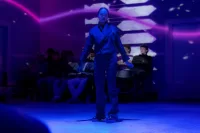
Bates alumnus returns to the newsroom
On Dec. 15, the Boston Globe announced in a story that Brian McGrory ’84 would return to its newsroom. McGrory, who began working at the Globe in 1989, served as editor from 2012 until 2023. He stepped down in 2023 to join the journalism department at Boston University.
“Life doesn’t always follow plans, and this wasn’t part of mine,” McGrory said in the Globe’s story. “But pretty much my entire career has been tied to the Globe, proudly so, and I’m honored to return and play what I hope will be a helpful role during this complicated moment in the region and beyond.”
During McGrory’s earlier years as editor, the Globe won three Pulitzer Prizes. During his time away from the newspaper, McGrory served as chair of the journalism department at Boston University and established a local reporting initiative that paired student reporters with professional news organizations.
McGrory was lauded in an article in WBUR for his willingness to step back into the role of editor, replacing Nancy Barnes, who was editor from 2023 until she stepped down in December. “Brian’s passion for the Globe and his love of Boston are deeply intertwined,” Linda Henry, CEO of Boston Globe Media, said in a statement shared with WBUR. “We are thrilled to welcome Brian back and look forward to the work our world-class newsroom will continue to do under his leadership.”
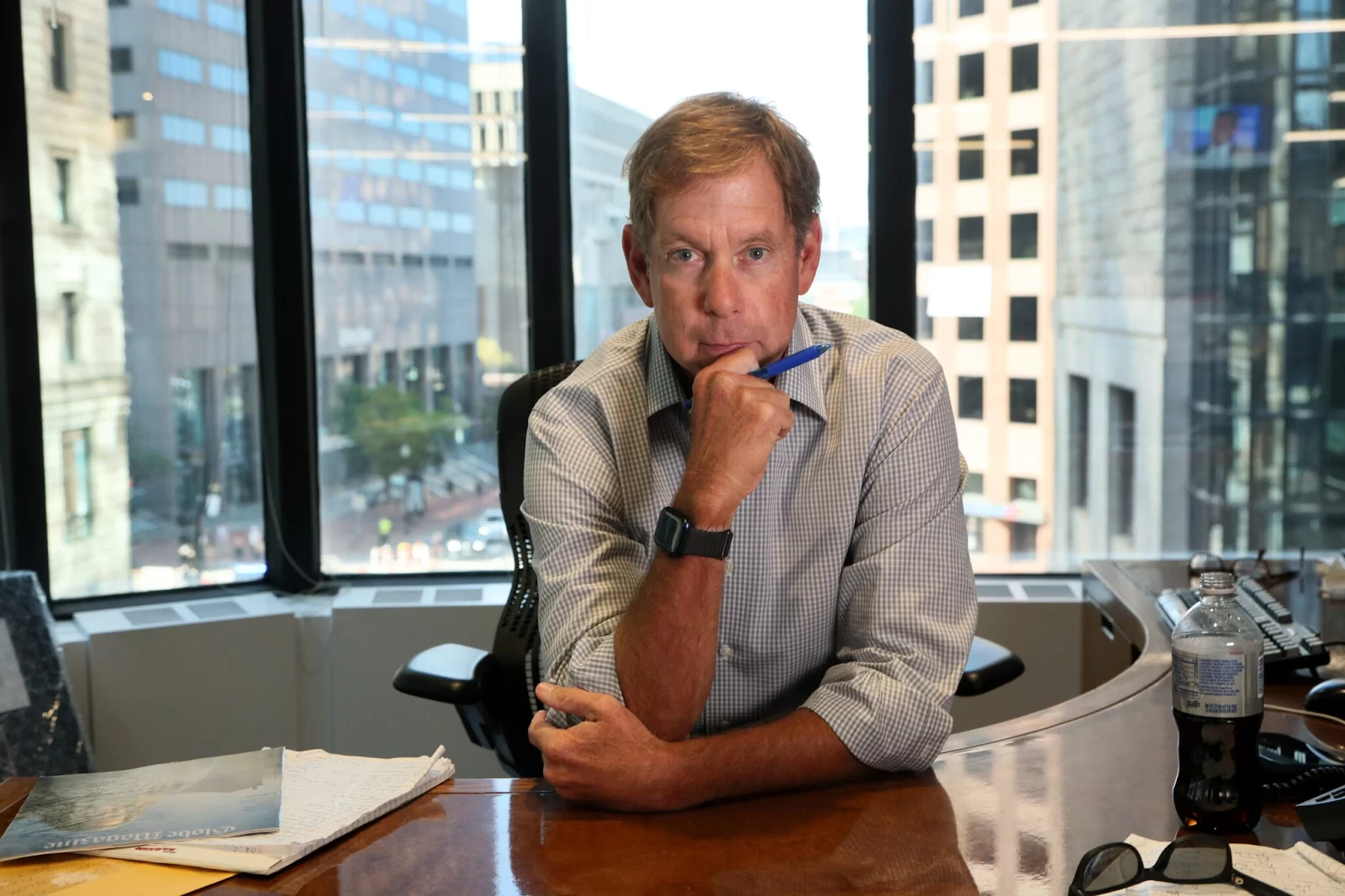
Associate Professor of Anthropology Joyce Bennett in El País
In late December, Associate Professor of Anthropology Joyce Bennett was quoted extensively in an EL PAÍS story* about Maya weavers fighting back against the appropriation of their ancestral designs by global manufacturers.
“One woman told me she could still feel her mother’s hands over hers when she wove,” Bennett told EL PAÍS reporter Ana Rodríguez Álvarez. “That is the spirituality behind the textile.”
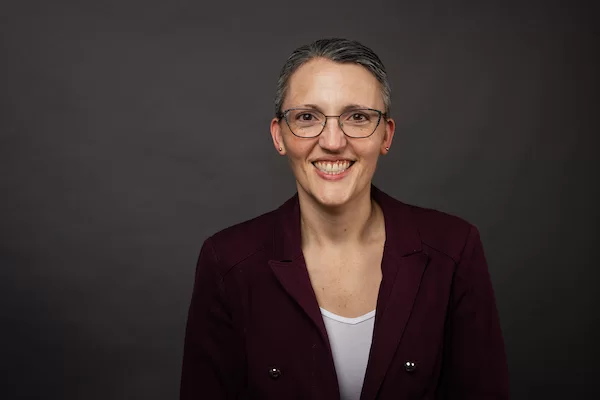
Bennett, who chairs the Anthropology department, has done extensive research on Maya women in Guatemala, interviewing over 130 weavers, and tracked their attempts to protect their traditional weavings through intellectual property rights. She is the recipient of a Fulbright U.S. Scholars award in 2022-2023 and an Engaged Research Grant from the Wenner-Gren Foundation, also in 2022-2023, which supports that work. She brings this work into the classroom at Bates, where students have supported some of the work and even presented it with Bennett at academic conferences, including the Northeastern Anthropological Association.
In recent years, the National Women’s Weaving Movement of Guatemala has been pushing back on the way national and international manufacturers, often fast fashion brands such as SHEIN, have reproduced traditional designs without recognizing their creators or paying them for their designs. The organization of weavers takes issue with their traditional designs being reproduced in international markets without recognition or benefit to the communities that create and safeguard them over time. The article notes that in Guatemala, the issue is complicated by the lack of a legal framework that recognizes the collective ownership of these textiles, something that Bennett’s ongoing work analyzes.
“Global fashion wants inspiration,” Bennett told EL PAÍS. “But what it often does is extraction. They take designs that have been collectively protected for centuries and register them as their own. It is a silent but devastating violence.”
*Spanish translation assistance from Bennett
Associate Professor of Physics Aleksandar M. Diamond-Stanic on Maine Calling
Associate Professor of Physics and Chair of Physics and Astronomy Aleksandar M. Diamond-Stanic was a guest on Maine Calling for a show on “Winter Light” on December 19, 2025 in advance of the winter solstice.
Diamond-Stanic, whose research focuses on the evolution of galaxies and the growth of supermassive black holes through cosmic time, was joined on panel by Sarah Tuttle, host and producer of Maine Public Classical and Jessica Miller, host of Weekend Edition and radio operations announcer for Maine Public.
![They run together, research together, and read together.
During his nine years as a Bates faculty member, Associate Professor of Physics Aleks Diamond-Stanic has worked with 40 summer researchers, “and these deeper connectioTns with students and recent graduates have been the most valuable part of my work as a professor, advisor, and mentor.”
Summer research at Bates, says Diamond-Stanic, is an opportunity to take a deeper dive into learning skills and techniques that are applicable beyond Bates (e.g., for data analysis, modeling, and visualization in his lab), while also “exploring open scientific questions and the limits of their current understanding, and building community and relationships (and a sense of belonging) through positive shared experiences.”
Posed for a group portrait in a Carnegie Science classroom [slide 7], are front row: Alessandra Fariñas ‘27, Grace LaFountain ‘26, and Brandon Villalta Lopez ‘25, and back row, Sarah McOsker ‘28, Diamond-Stanic, Sonya Moo ‘28, Nick Hoerle ‘27, and Byars Langdon ‘27.
They’ve been engaged in two projects studying galactic winds and star formation in galaxies. “Team JWST” has been studying five compact starburst galaxies with fast outflows using mid-infrared spectroscopy from the James Webb Space Telescope.
“Team eBOSS” has been studying the relationship between galaxies and their outflows using stacked spectra of many thousands of galaxies from the Sloan Digital Sky Survey and the Extended Baryon Oscillation Spectroscopic Survey.
The group has also been reading “A Mind for Numbers” by Barbara Oakley and “The Disordered Cosmos” by Chanda Prescod-Weinstein and discussing strategies for success in STEM, open questions in astrophysics and cosmology, and how the fields of physics and astronomy can be improved from a humanistic perspective.
Swipe left to see them in action — after a 5K Bates employee race, presenting their research in a Carnegie classroom, and during a w](https://www.bates.edu/news/files/2026/01/250627_Physics_Reading_Tea_0341.webp)
Host Jennifer Rooks kicked off the conversation with the question “What do you do to appreciate the winter light?” in advance of the winter solstice. Diamond-Stanic weighed in with an astronomy-based perspective, giving context to the movement of the sun and explaining this season from the perspective of light and heat. “Earth’s orbit is… in an ellipse. When you’re a little bit closer [to the sun], earth is also moving a little bit faster,” he said. Diamond-Stanic explained that the way that we feel the sun “is connected to the exposure to sunlight.”
Asked to discuss different cultures that mark the solstice in a notable way, Diamond-Stanic noted his own experiences drawing from his Serbian heritage. Slava, he explains, is a celebration near solstice. He described it as a way to celebrate something that we are all experiencing but do not have control over. “Coming together in moments of otherwise darkness to bring light is really human [tendency],” Diamond-Stanic says.
In September, Diamond-Stanic appeared in another Maine Calling show, on that special quality of “Maine light” that has attracted artists for centuries, once again breaking down the scientific perspective for the audience.
Bates student’s TEDx talk covered in Lake Okeechobee News
Ben Wolking ’29 recently gave a TEDx talk about grit and overcoming uncertainty in the face of a life-changing event. The talk, and his story was covered by the Lake Okeechobee News. Wolking discovered that he had an undiagnosed heart condition last fall when he passed out in a pool during Bates swim practice.
In the following months, he wrestled with recovery and reimagining his future as doctors told him he may never be able to competitively swim again.
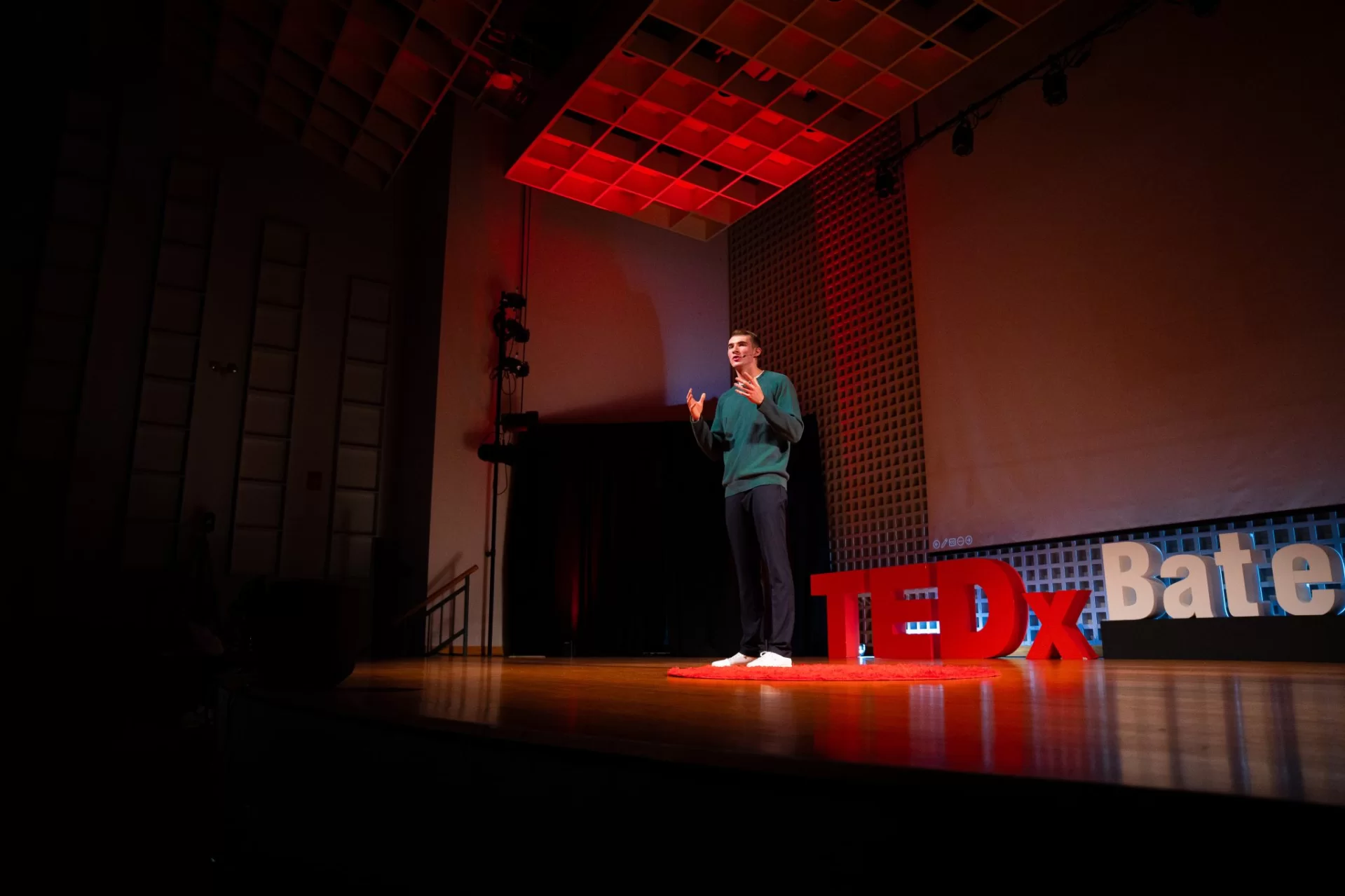
“I found tremendous meaning in the striving itself – … obsessively working with coaches to modify practices to my new limitations, the 8 p.m. bedtimes to be well-rested for the 5 a.m. swims, the grueling practices alongside my teammates, even the soreness after a long day in the gym – that’s what I looked back on most fondly,” Wolking said in his TEDx talk.
He learned how to clearly develop and craft a message as a student in Florida 4-H, Lake Okeechobee reports, during which he completed various projects and presented in front of Florida legislators and leaders at the state capitol.
“There’s a lot of different ways you can develop that resilience through 4-H,” Wolking told Lake Okeechobee. “It’s one of those underlying themes that goes through all the different projects.”
The Associated Press covers Bates alumnus’ unique art project
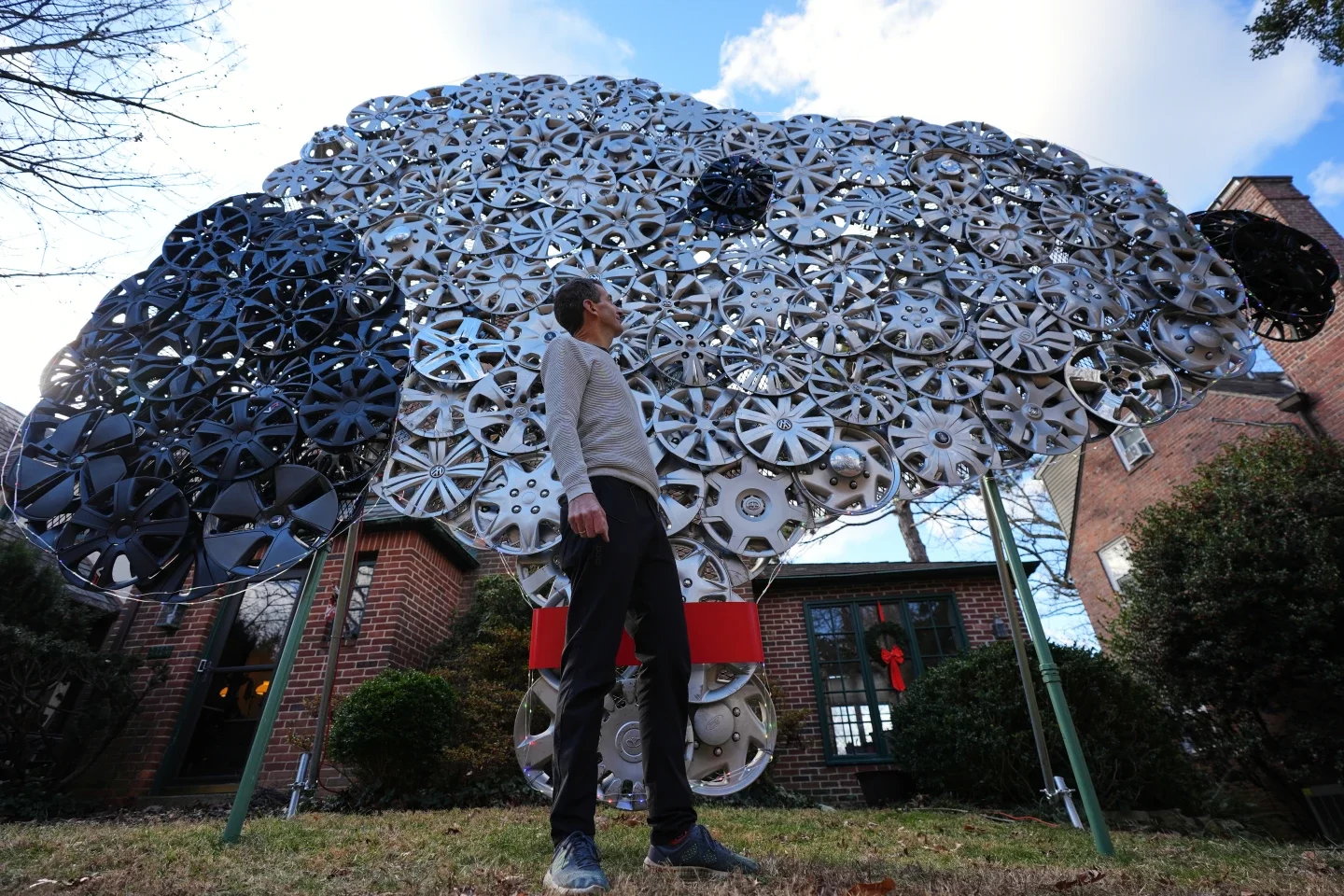
Barnaby Wickham ’94, cyclist and Bates grad, gained recent media attention for a pastime that grew into something larger. The Associated Press ran a story about Wickham and his hubcap art on Dec. 16. Wickham, who lives in Baltimore, began collecting discarded hubcaps that he found on his rides around town.
What began as a small project has become a large installation of Snoopy standing 16 feet tall by 21 feet across in his front yard.
Asked to explain what motivates him to create art from these collected hubcaps, Wickham told the AP . “I think it’s sort of the excitement of the hunt, for one thing. I love to cycle. I love Baltimore. I love to go out in Baltimore, and there’s just enough hubcaps and other things like car grills to be interesting, but not so many that it’s too easy.”
Sun Journal publishes alumnus dispatch from Madagascar
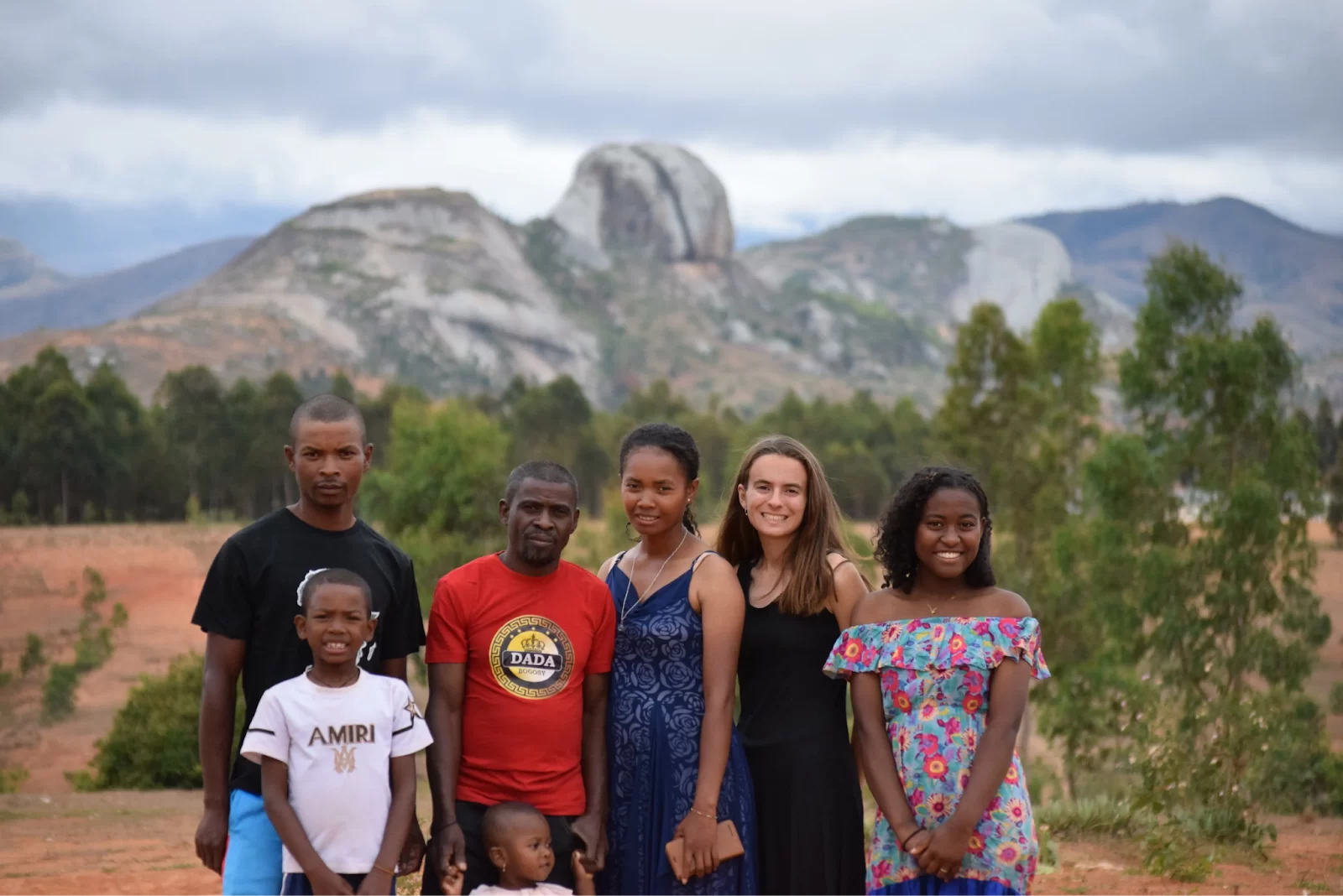
Vanessa Paolella ’21 wrote her final column for “Letters from Madagascar” published in the December 21 issue of the Sun Journal. Since joining the Peace Corps, Paolella has written over twenty dispatches home from Madagascar for the Sun Journal. Her two years of service ended in November, and Paolella returned to Pennsylvania for the holidays, where she wrote that she looked forward to being able to “cook Thanksgiving dinner with my mom and sing along to Christmas songs on the radio.”
In what she predicts will be her final letter, Paolella reflects on how her exposure to life in Madagascar — particularly the poverty impacting children around her — has impacted her.
“Over the past two years, it’s gotten more difficult, not less, for me to live at the juncture of such deeply unequal worlds,” she writes, sharing details about the conditions that shocked her, even after two years. “As Peace Corps volunteers, we lived among people in deep poverty and experienced life as they do, to an extent. But for us, it was always a choice,” she writes. “We will always have more money, more opportunities, and a way out — something the people we lived among will likely never have.”
While that distance will persist, Paolella decided to return to Madagascar.
“My Peace Corps service is finished, but I still feel like there’s more work to be done,” she writes. Paolella will continue her work with the Fianarantsoa School for the Deaf, intending to “formalize our current programs and bring more resources to improve and expand the school.”
Bates student’s outdoors exploration group covered in the New Hampshire Bulletin
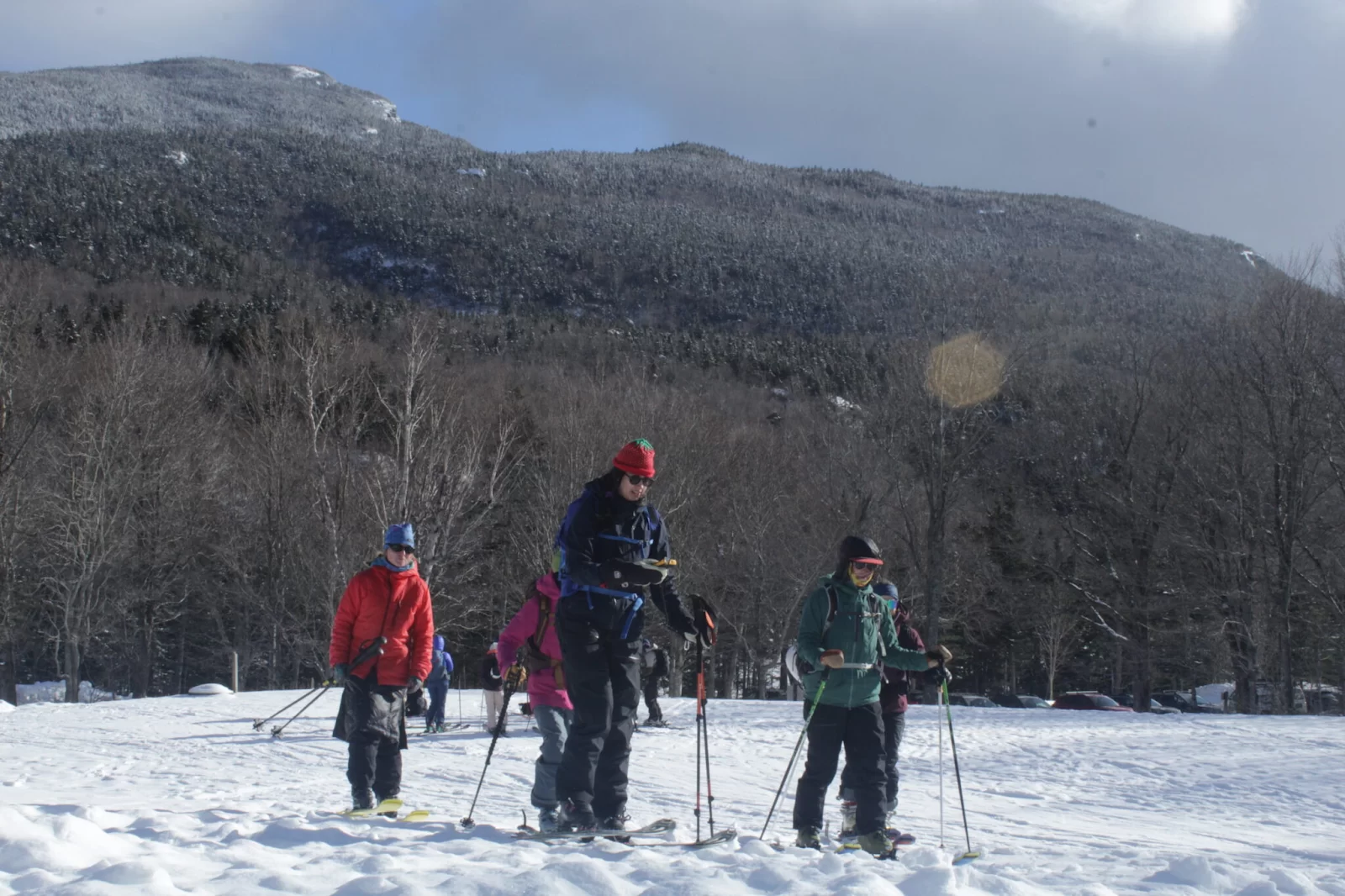
The New Hampshire Bulletin profiled Hannah Kothari ’26 of Houston and her outdoor recreation club for women in New England, Chicks on Cliffs. Kothari founded the club late last year, the Bulletin reports, as a way to help women safely and confidently explore the outdoors while creating community. Since the club’s inception, Kothari has hosted an outdoor meet-up — whether that be downhill skiing, backcountry skiing, or hiking — nearly every weekend, and @chicksoncliffs has garnered almost 6,000 followers on Instagram.
Kothari told the Bulletin she aims to be the mentor that she herself never had. In her early years at Bates, Kothari struggled to keep up with her peers during physical activities despite her active lifestyle, which, she later discovered, was because of a leaky valve in her heart that caused already strenuous activities to feel even more difficult. As a result, Kothari taught herself most of what she knows about outdoor activities, and wants other women to have a more welcoming experience as they explore.
“It’s been very empowering for me to be outside with other women for the first time, really, in my life,” Kothari told the Bulletin.
Categories BatesNews