Whenever the Bates photography/video team of Phyllis Graber Jensen (director of photography and video) and Theophil Syslo (multimedia producer) come back from assignment, they bring back hundreds if not thousands of images and sometimes, hours of video.
These are gifts for the editorial team, images that show the texture of campus life, introduce us to students we haven’t (yet) met, and create connections well beyond the parameters of the Bates campus. Because our work is collaborative, the photos you see on our website and social media are often selected by a team of people in the Bates Communications and Marketing office.
As we close out the calendar year, it is our tradition to step back from that collective selection process and ask Phyllis and Theo to tell us what their favorite 10 images (or videos) were from 2025. (Phyllis would interject right here to say, these are “some of our favorites, not all of our favorites.”) Because it’s hard to choose. In the captions they tell us the story behind their work, including what they were feeling at the time they captured these images. Reading about their process is so fun, but our favorite part of photographers’ favorites is learning why these photographic works mattered to this talented, dedicated duo.
The Ultimate Event
Phyllis Graber Jensen says:
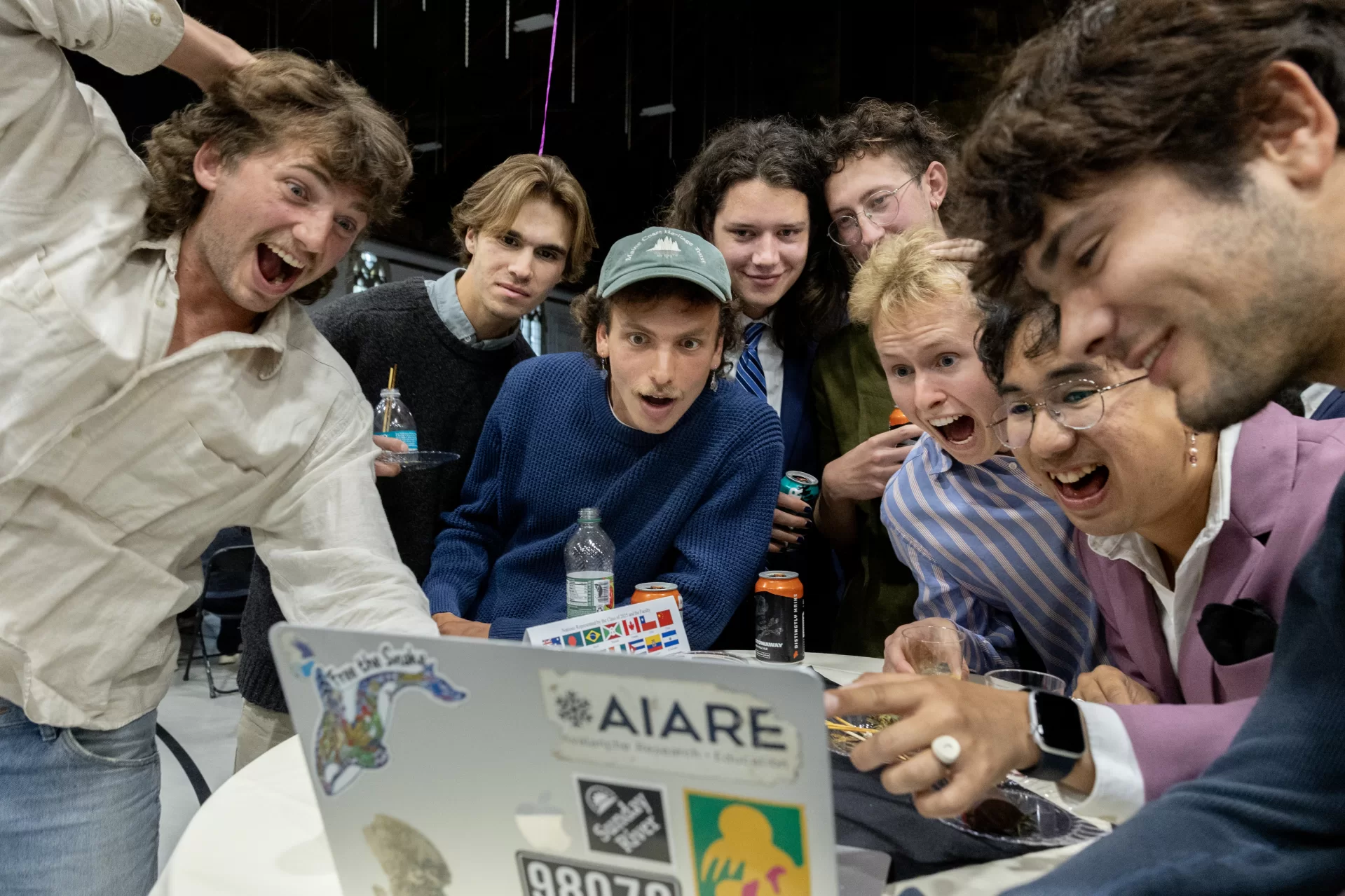
These students were going wild, and I wondered why.
The annual Farewell Celebration for Seniors and Faculty was everything it’s meant to be. Heartfelt and joyful, seniors celebrated side by side in Gray Athletic building with the faculty members who’ve helped shape their journeys at Bates.
But this group was focused on a laptop. That’s because Daniel Snider ’25 (green cap) and his Bates Orange Whip ultimate frisbee teammates were streaming the Division III Ultimate championship.
It was easy to see why Snider couldn’t miss it. He helped lead Bates to its first-ever berth in the previous year’s national tournament and was named winner of the 2025 Donovan Award — Ultimate’s highest honor for skill, spirit, and leadership.
“This event was special,” said Snider, a French and Francophone major from Belfast, Maine, “because we were able to be around each other as friends, rather than just as students and professors. Saying goodbye isn’t easy — but I’m grateful for everyone who made Bates such a meaningful place.”
I’m grateful, too, for the chance to share some of that meaning.
Rainy Day Reunion
Theophil Syslo says:
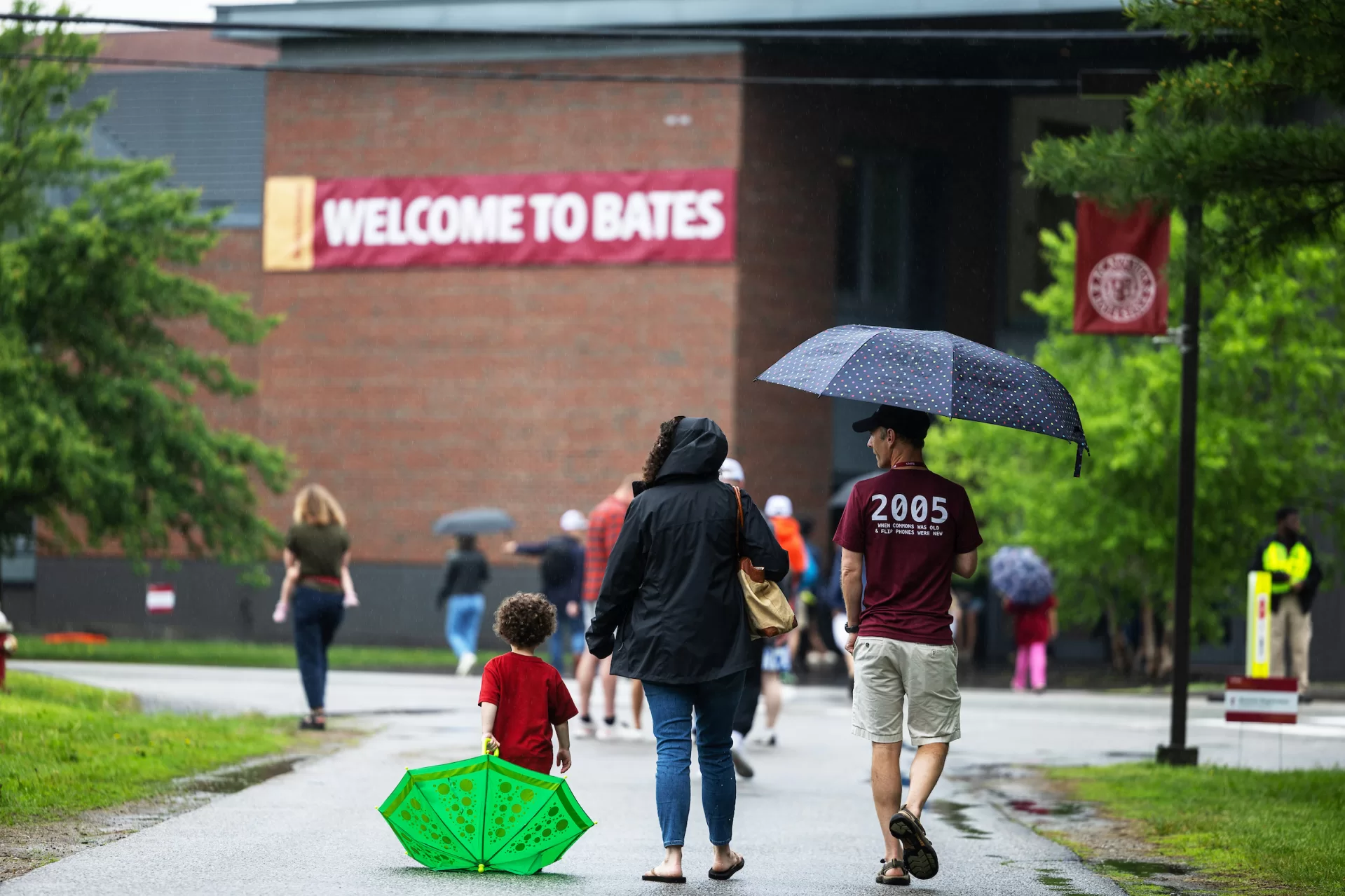
When I saw this scene developing I thought to myself, “Do I capture this now, with everyone walking toward me, and risk the child changing their behavior, or do I allow them to pass by me and capture them walking away?” Historically, I want to see faces, but photographically, that umbrella on the ground is just as good as any face. For me, the child’s gesture and casual umbrella use was enough to stop and wait for this frame to play out. I did my best to “keep it cool” as I did not want to break mine or the child’s focus. As I made my way past the family, I calmly took a knee, turned around, and made my frame and had a laugh. Happy reunion.
Look Up
Phyllis Graber Jensen says:
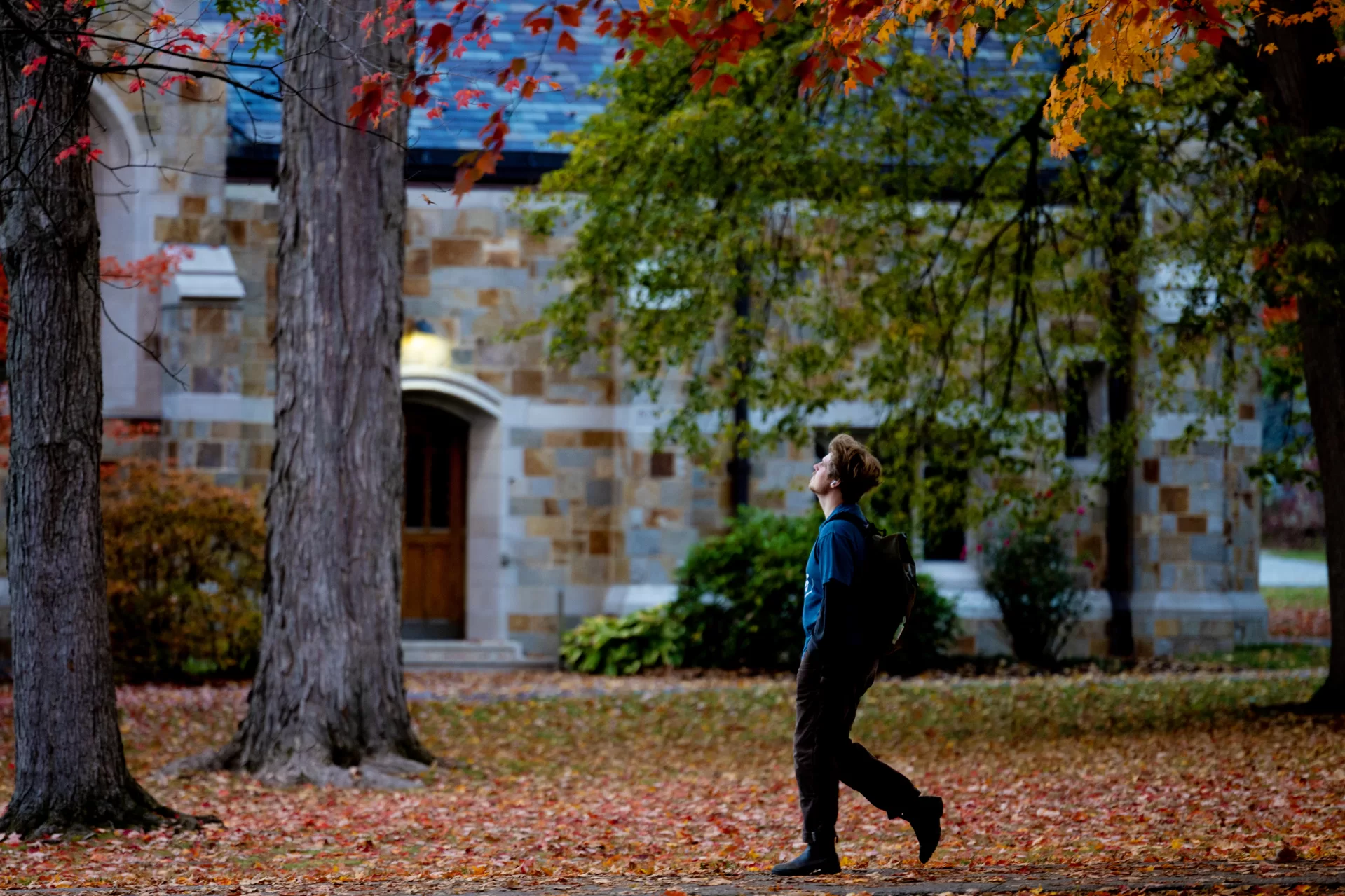
I noticed this Quad Walker from a distance. His behavior distinguished him from me and the countless others who cross campus with smart phones or mirrorless cameras — less so with our mind’s eye — intent on memorializing what we see.
The way he was looking up in awe at the beautiful fall foliage reminded me of the simple but profound advice Bates Commencement honorand Gwen Ifill offered 2012 graduates. “Look up,” she suggested.
“It’s so much simpler to look down. Your feet are down there, our screens are down there. But our fears are down there too. If you look up and away from the fear you will see the destinations you are headed toward, and you will see the opportunities. If you look up, you will see the chance to speak and to act on behalf of the discouraged and the diminished. … If you look up you will see that a Bates degree is the beginning of your life’s education but not the end.”
Her words, not mine, but they represent a blueprint for life worth keeping.
A Moment in Gomes
Theophil Syslo says:
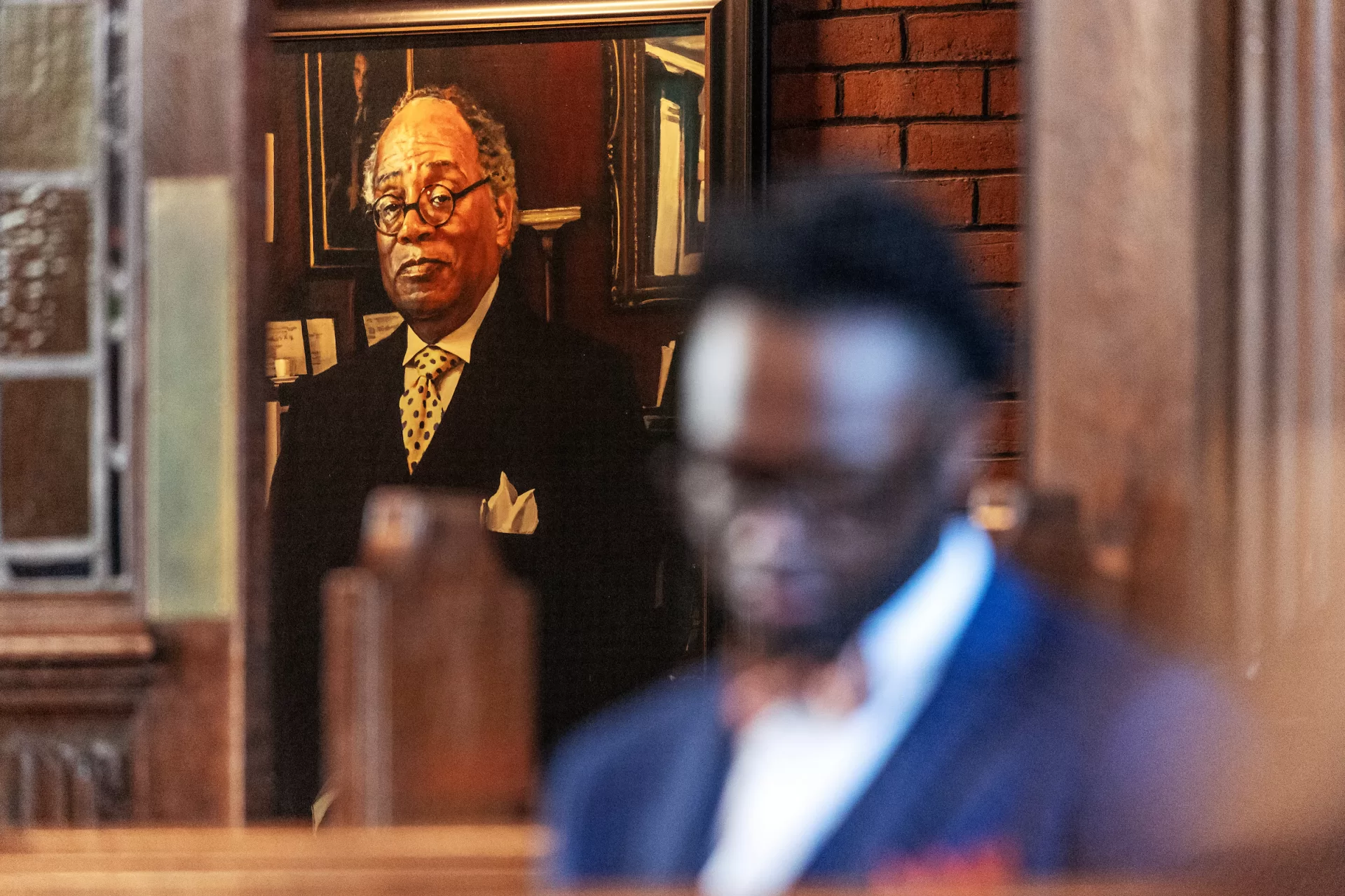
Morehouse College student Junias Lunsford-Peaks ’28, foreground, writes in a notepad while sitting in a pew in Gomes Chapel ahead of the Dr. Martin Luther King Jr. Day Keynote presentation on Jan. 20, 2025. A painting of the Rev. Peter J. Gomes ’65 is seen through the main door nave hanging on the entrance lobby wall. MLK Day on Bates’ campus has so many layers. What’s always stood out to me are the individuals, the participants, and especially the students who have chosen to be there. I like the color temperature and color palette, the daylight in the foreground and amber in the background. I like the attire; I really like the tie and bowtie. I like the bricks and polka dots. I like the focus, the idea, and the moment. I really like whoever propped the main door open because this was the first time I saw this opportunity.
Floating Over the City
Phyllis Graber Jensen says:
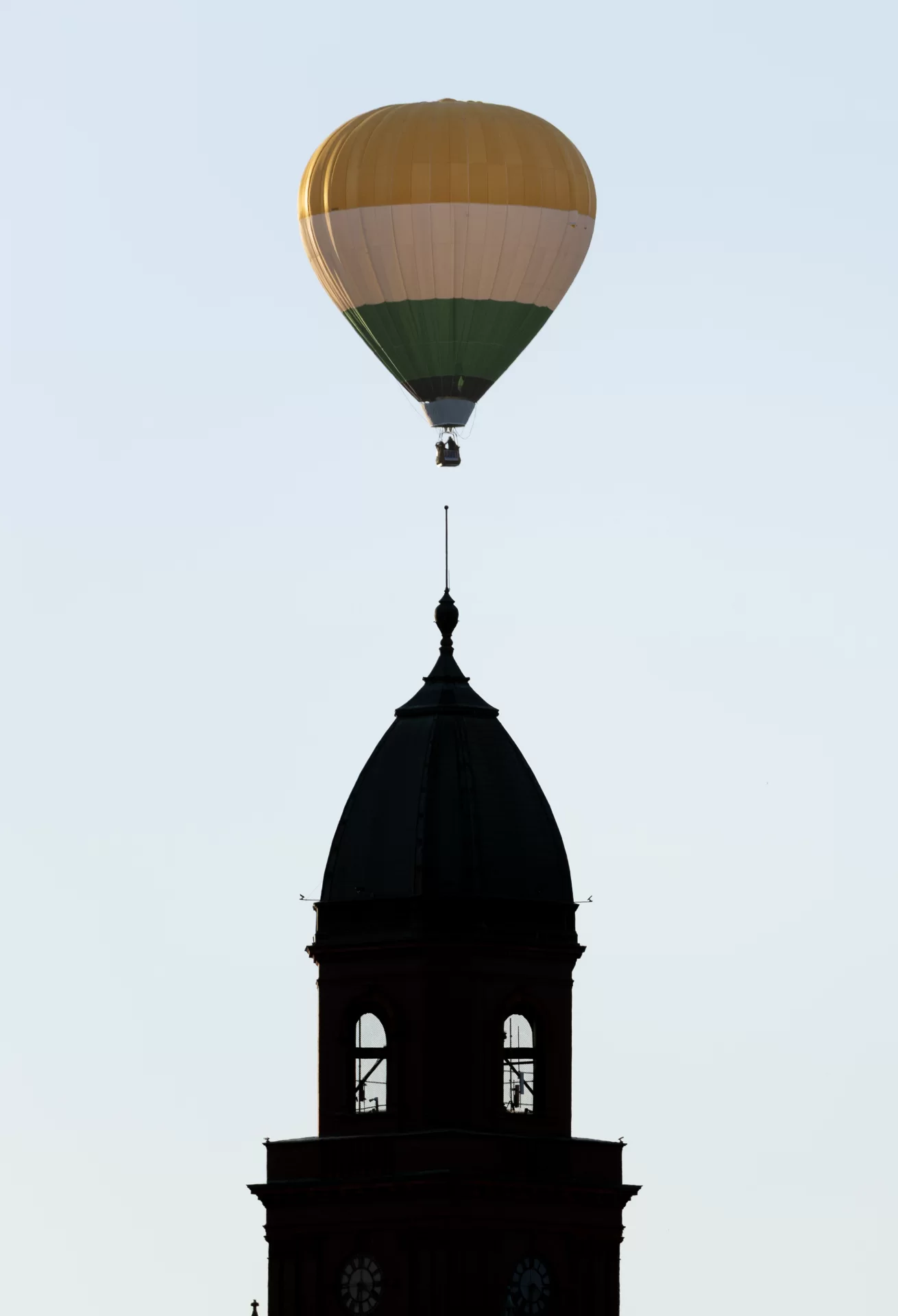
The 2025 Lewiston-Auburn Balloon Festival is a community celebration centered on hot air balloons, and typically attracts 100,000 visitors. The festival features more than 20 food stands, live entertainment, 13 balloons, and a parade. This year’s theme, “The Rise of the Balloons,” perfectly characterizes the scene I documented..
Like an angler, a photographer has to choose a favorable location and hope that you’ll land something. Each year at the balloon festival, I’m humbled by my need to accept that I’m at the mercy of the elements. Will the balloons even take off (the day before they couldn’t), and if they do, will the winds send them my way? As I crouched at Auburn’s Liberty Park on Main Street for the 6 a.m. launch, I tamped down my minimal expectations. The odds were not in my favor that I would leave with anything memorable, I thought. But why even stumble out of bed if I can’t gin up the enthusiasm necessary to animate my efforts? And honestly, the balloons typically deliver in one way or another.
So I tried. On this Saturday morning, loaded with passengers, they sailed over the piercing spire of Lewiston City Hall, one after another. Does this represent symmetry? Vulnerability? Silhouette? Take what you like. I was happy to leave with this moment.
Color of the Coast
Theophil Syslo says:
I don’t think there’s a single word in photography to describe removing the horizon line. … Something adjacent to maybe 2D? It’s a deliberate artistic choice. In this photograph, I chose to emphasize the visual elements of the subject and the environment, focusing on its form, texture, color, lines, and shape. In removing the horizon line, I hoped to deepen the relationship with the subject and environment versus incorporating the division of foreground and background — a dynamic canvas painted by the waves and rusted rock life.

That Big Grin
Phyllis Graber Jensen says:
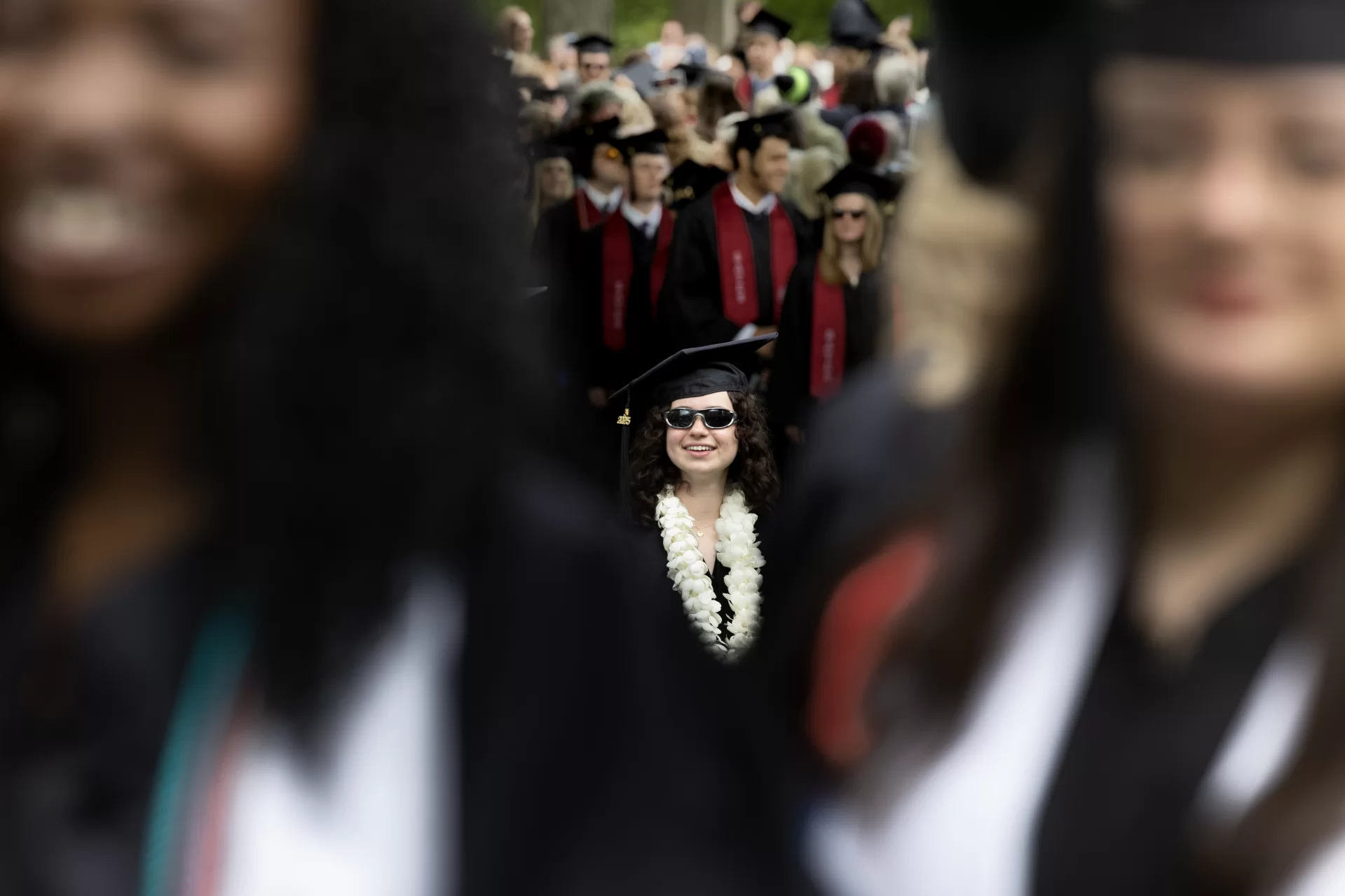
As members of the Class of 2025 processed by the sundial to take their seats, I stood in front of the stage to photograph their arrival. After four years in proximity, it’s not surprising that I recognized many of them. But suddenly Izzy Beck ’25 floated into my viewfinder. I had photographed her at various times during her Bates experience: as a coxswain for the men’s rowing team, as a Center for Purposeful Work intern for the Maine Immigrant Rights Coalition, and then again as a Purposeful Work fellow. Just a couple of weeks before, Izzy had described her senior honors thesis, “A President or a Prince? Tracing the Development of Unitary Executive Theory,” to me as I’d made a portrait of her for the Admission team. So I quickly focused on her blissful smile. This layered photograph, with out of focus foreground and background, accentuates her uniqueness. I like to think that it supports my belief that each and every individual on this campus has a story to tell.
For the Win
Theophil Syslo says:
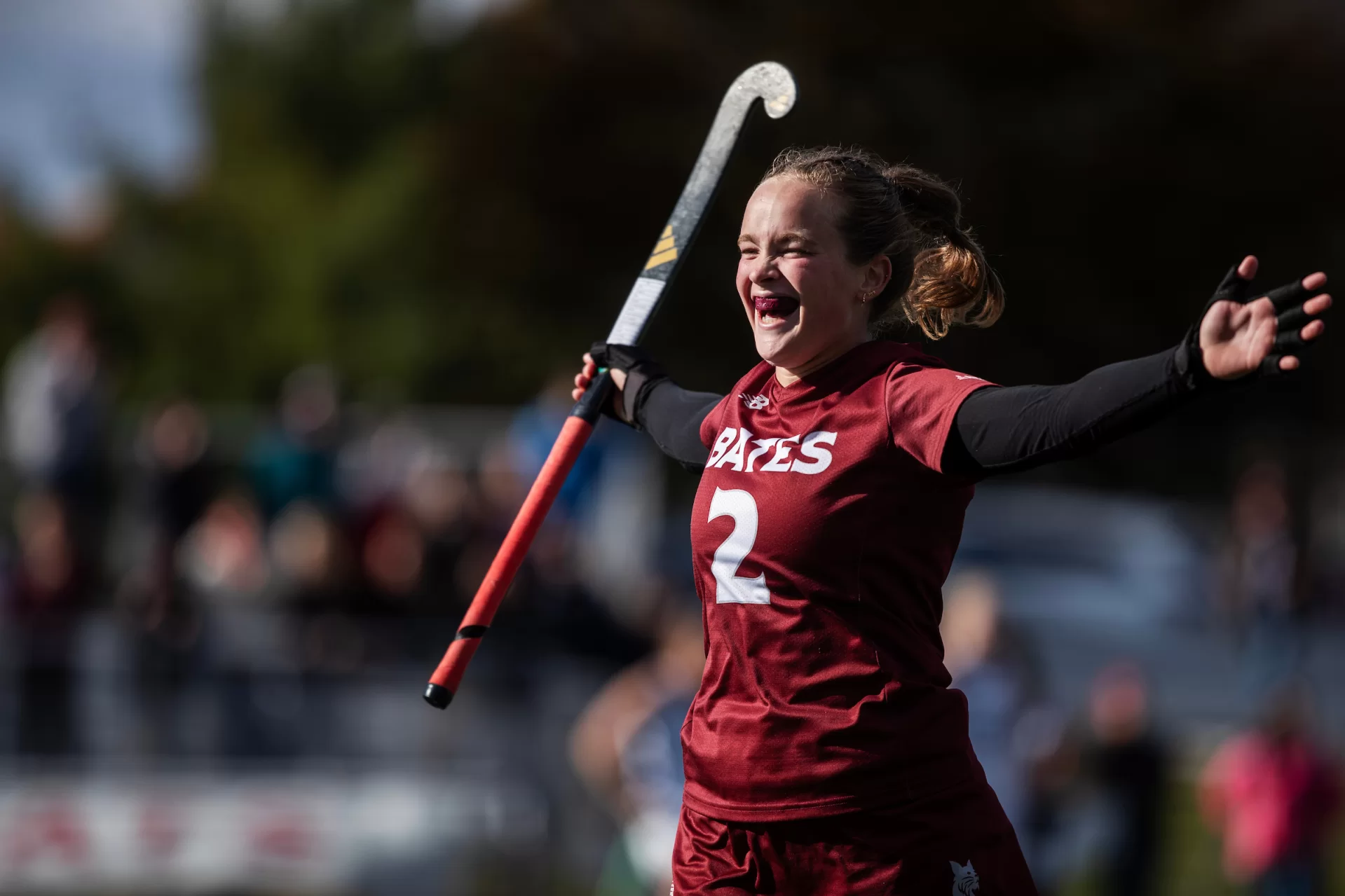
I learn something new about field hockey every year. This year I learned that after two overtimes, you go to a shootout. At the sound of the buzzer after the overtime periods, I asked Bates Associate Athletics Communications Director Aaron Morse, “What happens next?” After a short pause, everyone at the scoring bench declared with puzzled expressions, “I’ve never witnessed a field hockey shootout.” I asked if it would be like ice hockey, to which they replied, “No clue.” As a buckle-up for what was about to happen, which, to me, could have been anything at that point, I planted myself at what would be the 25-yard line on a football field — enough space to catch the goal or reaction depending on what happened. As I watched our goalie give the performance of a lifetime, I prepared for player reactions. Caught in full frame, I watched as #2 Elena Agosti ’27 celebrated after scoring her goal during the shootout. I really enjoy that this frame is not cropped, captured on a 300mm lens, and truly the best part is that it’s not centered. Yes, I might be slightly in love with symmetry, but I really love some un-centered, full-framed photographs. I had a really good time following the field hockey team’s journey this season and congratulate them on an impressive season.
Running for Awareness
Phyllis Graber Jensen says:
It was a beautiful June day for the annual Bates BWell 5K run and walk, where more than 200 Bates faculty and staff made their way through a winding course that ends with the home stretch on Alumni Walk.
While approaching the finish of the BWell 5K is a positive and joyful moment for most, it was especially meaningful for Associate Professor of Sociology Heidi Taylor, who triumphantly removed her shirt revealing her double mastectomy as she approached the finish line. It’s a practice some breast cancer survivors use to normalize mastectomy and show the positive sides of healing.
An avid runner, Taylor was treated for breast cancer in 2021 and had to cancel many of her races in order to schedule various treatments and surgeries. But there was a short window between surgeries when she could fit in one race — and that just happened to be the 2021 Bates BWell 5K. “It meant so much to me. I was sort of nervous about it, and my friend [Associate Professor of History] Joe Hall met me and he raced to the end of it with me. And it just felt so victorious,” said Taylor.
I had photographed her then as well, her arms spontaneously raised as she sped toward my camera. She told me her story after the race.
Later, at another Bates BWell 5K, she mentioned that she might like a photographic portrait without her shirt. Someday.
“Any time you’re ready, just let me know,” I said.
When Taylor passed me early on in this year’s race, she raised her arms in celebration as she had in previous years. I smiled in recognition. It felt like part of a tradition. I had moved to the finish line when Taylor suddenly re-appeared in my viewfinder, shirtless. I wasn’t as ready as I wanted to be — moving to the right would have eliminated that row of trash cans. But the power of her gesture trumps the background.
“Last year I thought I would whip my shirt off and then I didn’t. But this year … I’m like ‘Just do it.’” she said. Awareness matters.
![This year was no different. It was a beautiful Maine summer day for the annual Bates BWell 5K run and walk, where more than 200 Bates faculty and staff — including @presgarryjenkins and his lightning-fast husband @jonleelawprof — came out to make their way through a winding course that touched all parts of campus and ended with the long home stretch — about the length of a modern aircraft carrier — on Alumni Walk.
And while approaching the finish of the BWell 5K is a positive and joyful moment for many who participate, it was especially meaningful for Associate Professor of Sociology Heidi Taylor, who triumphantly removed her shirt revealing her double mastectomy shortly before crossing the finish line. It’s a practice some breast cancer survivors use to normalize mastectomy to show the positive sides of healing.
An avid runner, Taylor was treated for breast cancer in 2021 and had to cancel many of her races in order to schedule various treatments and surgeries. But there was a short window between surgeries when she could fit in one race — and that just happened to be the 2021 Bates BWell 5K.
“It meant so much to me. I was sort of nervous about it, and my friend [Associate Professor of History] Joe Hall met me and he raced to the end of it with me. And it just felt so victorious,” said Taylor.
And on this year’s t-shirt “celebration”?
“Last year I thought I would whip my shirt off and then I didn’t. But this year… I’m like ‘Just do it.’ So I think it’s good for awareness.”
At the BWell 5K, it’s not just about the finish line — it’s about who runs (and walks) beside you.](https://www.bates.edu/news/files/2025/12/250612_Employee_5k_2653.webp)
Head in the Game
Theophil Syslo says:
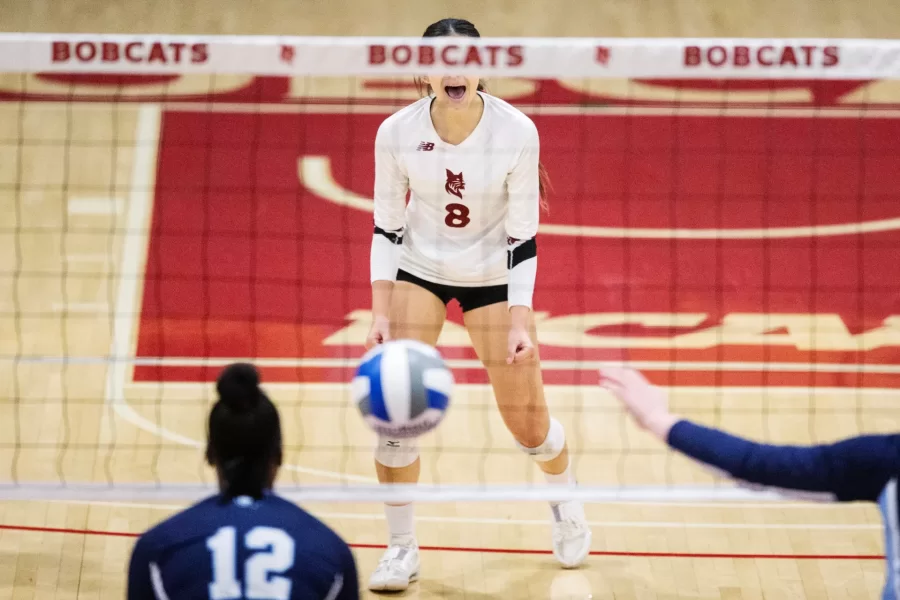
I like the graphic-ness of this photograph. With the player yelling, I almost feel like I can still hear the ringing in my ears from all the “woos.” Often, I find myself deselecting frames like this one thinking that there’s definitely a better storytelling photo or action photo available from the shoot. There usually is. However, it is assignments like this one (photo favorites) where I’m asked to reflect and am reminded that diversifying content has its upsides and a place. Sometimes the photo right before or after the moment is fun in a slightly different way. In this photograph, I’d argue it leans toward that direction, with the net removing the eyes of the subject.
Saying Yes to a Dream
Phyllis Graber Jensen says:
A typical summer for me — pandemic notwithstanding — includes spending several days in my hometown, NYC, where I photograph a lineup of Bates students with Purposeful Work internships. We photograph interns in other cities, too, but I relish the New York experience. It’s a chance to be in a place that I love, doing what I love.
We’ve covered the bases from sustainability to the arts, from activism to law, from finance and communications to medical research. But nothing quite like this one.
Reagan White ’26 of Duxbury, Mass., was to be one of 18 interns at Kleinfeld Bridal, where hit TLC television show Say Yes to the Dress was filmed for 23 seasons, each episode chronicling the shopping adventures of brides on the hunt for their perfect gowns. White had been watching the show since childhood, when she would sketch dresses after each show, pretending she was a designer. And during her study abroad semester in Italy, she worked as a wedding dress seamstress, sewing gowns for eight hours a day at Atelier Daniela De Souza in Milan.
I knew of Say Yes to the Dress, but had never watched it, although I’d seen wedding dress hunting rituals on other reality shows. My own experiences of wedding dress shopping, for myself in 1978, and then decades later in 2023 for my daughter, were nothing like those. But I am not sure any research would have prepared me for the shock of marching into the showroom at 110 W 20th St.
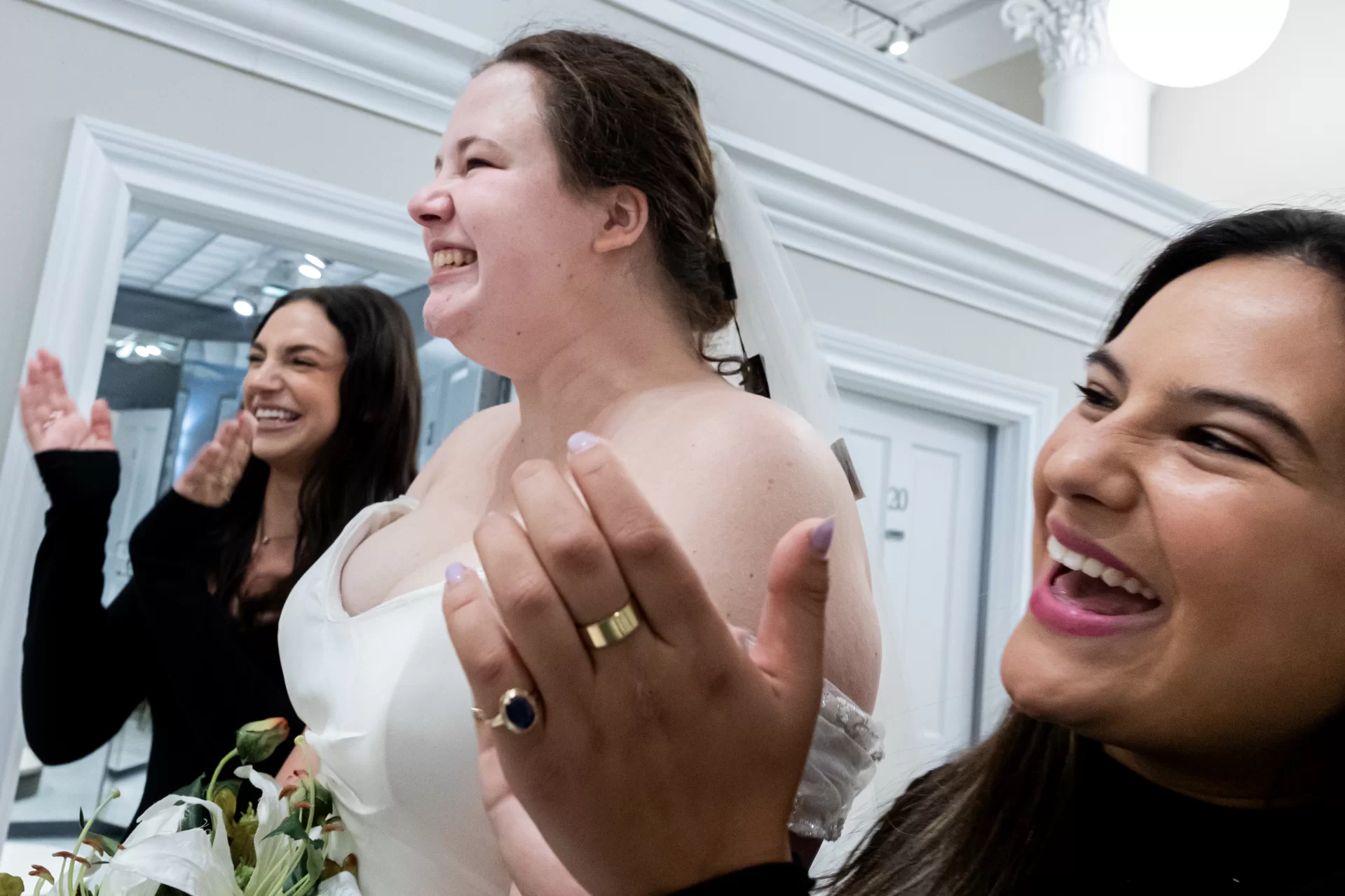
One of the brides (from El Paso, Texas) was being attended to by White and Kleinfeld stylist Caroline Roy (left), who shouted in unison to her: “Are you ready to make a commitment to this dress?” She shouted back that she was. I literally almost fainted. But instead, I moved in closer to experience — and show— their emotion. Wow. This was, in fact, a real, not manufactured moment, that resulted from 90 minutes of the trio working together to find just what this bride had dreamed of. From watching clients fall for a dress, to modeling couture itself, to seriously considering a future in fashion industry communications, White, a rhetoric, film, and screen studies major, enjoyed the “summer of a lifetime.” Sampling the visual feast with my cameras made my day at Keinfeld the photographic highlight of my summer, proving that at least for the two of us, Kleinfeld is “the happiest place on earth.” (See our picture story, She Said Yes to a Lifelong Dream written by staff writer Alexandra DeMarco)
Ardor for Alumni
Theophil Syslo says:
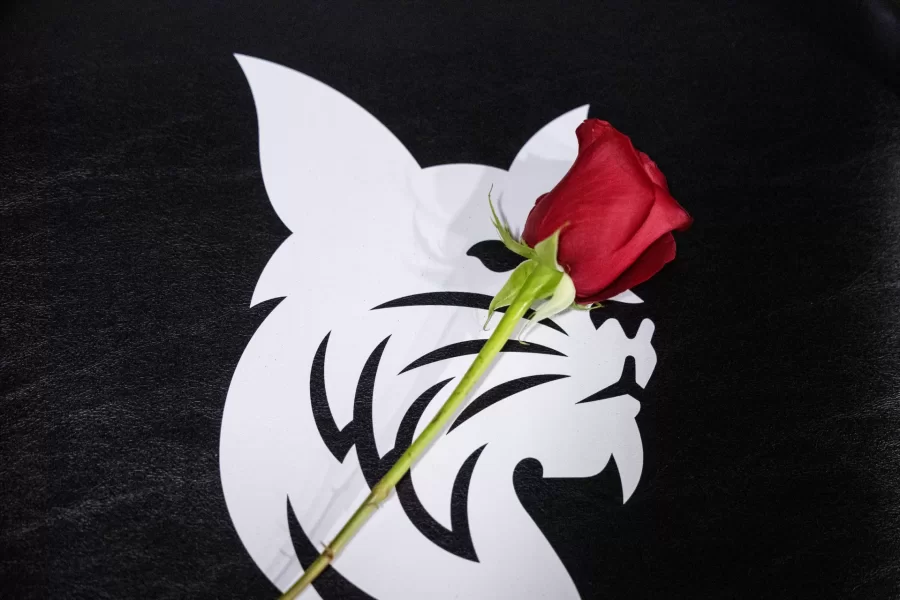
Sweet and simple, a rose and its promise, in this case, the Bobcat. I have a flair for the dramatic and an ardor for the poetic. As I was shooting a Bates Women’s Basketball game against Tufts on Feb. 16, I was drawn to the simple black and white leather seat cushion in Alumni Gym, an emblem of the institution, and the deep color red (so close to garnet), which evoked the love, courage, and excellence we recognize as associated with Bates.
Unveiling Ali
Phyllis Graber Jensen says:
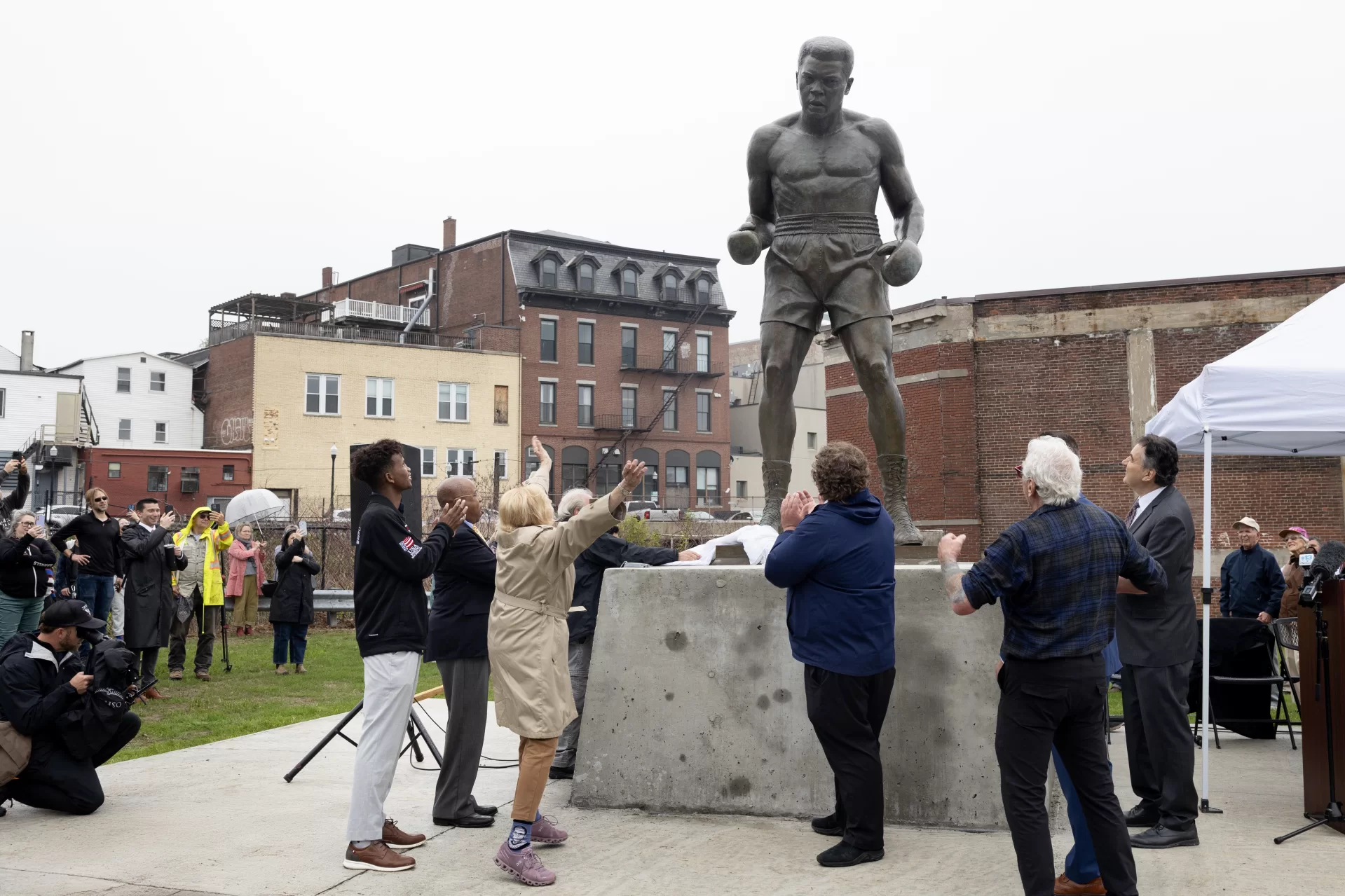
When the 10-foot bronze state of Muhammed Ali was unveiled at 65 Main St. near Lewiston’s Bates Mill #5 on Sat., June 1, much of the Twin Cities turned out. The Ali tribute, designed by Philadelphia-based artist Zenos Frudakis, is the first full-body bronze statue of Ali and celebrates Ali’s 1965 “Phantom Punch” victory that put Lewiston on the global sports map 60 years ago. Ali’s fight with Sonny Liston lasted just two minutes and 12 seconds. Its legacy — like Lewiston’s — is enduring.
A series of speeches prefaced the statue’s reveal, and the crowd’s energy was palpable. The gathering included the press, local boxers, summer residents, elected state and city officials, and Bates students, faculty, and staff — including President Garry W. Jenkins and Ilyas Bashir ’25, who you can see here, just to the left of center — a newly minted Bates grad from Auburn, and New England Golden Gloves champ. Maine Governor Janet Mills told the crowd that she, as a 17-year-old, was supposed to attend the fight: her boyfriend had bought them tickets. But at the last minute, they broke up, and she didn’t go.
Architect and developer Tom Platz, who attended the fight as a seventh grader and worked with a local group to shepherd the project through years of fundraising, pulled the cover off the statue.
Up jumped Gov. Mills,. who thrust her arms into the air, revealing her Ruth Bader Ginsburg socks — and her admiration for those who stood for what they believed in. This moment, imperfect as it is, with some obscured, and others with backs to the camera, represents some of the emotion I experienced that day. Our news team had agreed that I would not photograph the event, but my vivid memories of the fight — I was 11 in 1965 — and my respect for Ali propelled me to attend at the last minute. I’m so happy that I did.
Logo Around Town
Theophil Syslo says:
If you look closely enough at the opening clip, you can see that the edges of the magnet have been through the wringer. I didn’t think of making an establishing shot until after capturing the 123 photographs. This meant that the magnet I was using for this project looked brand new in certain shots and very used in others, though I can promise I purchased that magnet from the College Store specifically for this video. Beyond my intro sequence mishap, I really found this production to be a creative use of photography as a means for vertical video. Did the video really need an establishing shot? Debatable, but I do think it helps the viewer to understand that this was a human-created project and that the Bates logo was printed on a real-life object versus created in post-production. This summer project has inspired me to create an adjacent project this upcoming summer using a similar technique, but with different execution. Stay tuned.
A Freezing Anniversary
Phyllis Graber Jensen says:
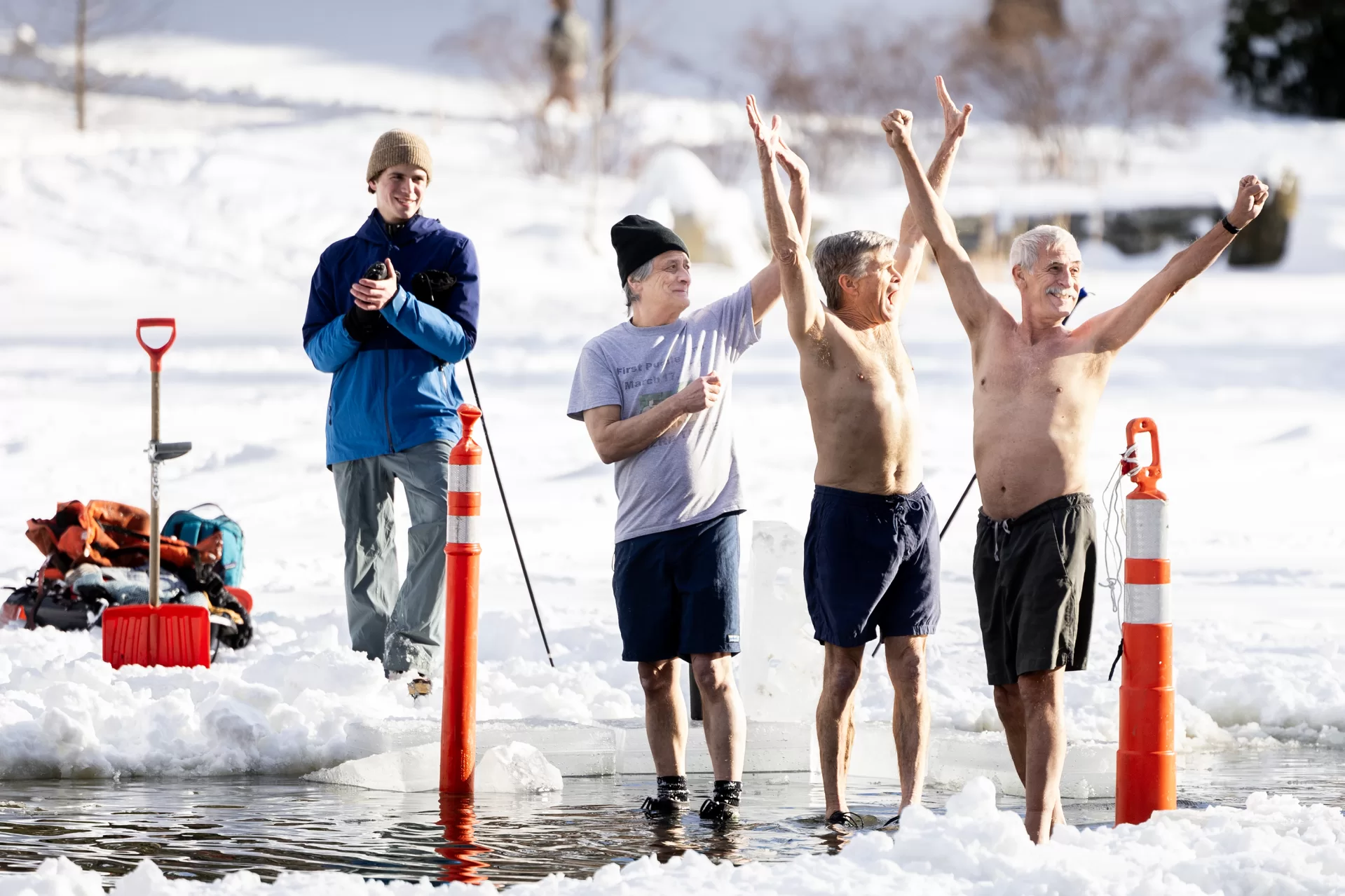
Here’s another group who — with good reason— couldn’t contain their excitement. “Best buds for 50 years,” said Chris Callahan ’78 (center) as he and classmates Scott Copeland ’78 (right) and Lars Llorente ’78 (left) responded to cheers from students lined up on the shore of Lake Andrews. The trio was about to leap into the Puddle to kick off the 50th anniversary of the Puddle Jump. It was Feb. 7, 2025. I have covered this event for decades and usually I begin by standing on the ice with the jumpers. But this year, I yielded that position to one of our student photographers. I would instead roam and shoot whatever from wherever. So I was actually off-ice when I photographed this moment of elation. I had last photographed them when they returned to jump in 2019. They were excited — and younger — then, but the 50th catapulted them and their fellow Bobcats to new levels of engagement. It was a founders’ moment, to be celebrated as they celebrated, and a pleasing alternative to catching them making their chilly leap.
Flying through the Fog
Theophil Syslo says:
I had an idea, and this was not it, but I’m happy with where it went. I scheduled myself to fly a drone camera during sunrise on campus knowing that there was a really good opportunity to see fog and partial sun, but when I arrived , there was no fog. I circled back the next day and showed up on time, ready to fly, with extra batteries charged and a hot drink in the Yeti. We had some fog and a sunrise light. Jackpot. My flight on the previous day helped inform where I would fly and what my “lines,” or key framing, would be for this moment. I captured my opening and closing clips and began exploring the lines I saw the previous day. It wasn’t until I reached my last battery with ten minutes of flying time left that I had the idea to sequence clips of people walking across campus. As soon as I saw it, I thought that we needed to lean into that sequencing theme. I quickly doubled down on some previously used vantage points and began capturing footage. In all of the places I’ve been and lived, I’ve never quite experienced fog like I have experienced it here in Maine.
In the Reflection
Phyllis Graber Jensen says:
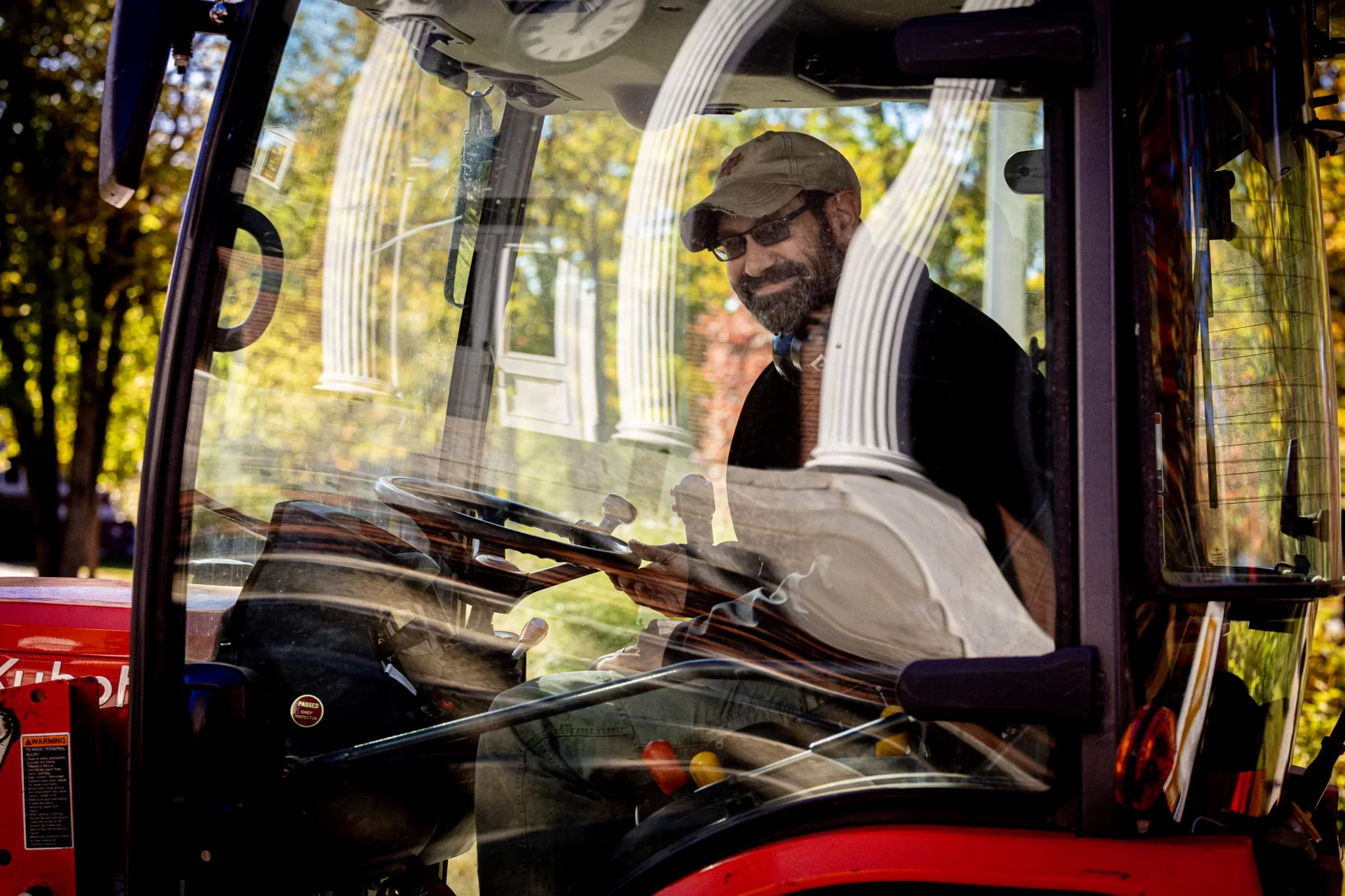
When our paths cross, Ian Brownlie, a grounds and maintenance worker for Facility Services, and I often stop to talk. On the morning of Oct.17, I prowled the Historic Quad during my annual hunt for foliage pictures; he navigated the terrain in a truck designed to collect fallen leaves as they dropped, rather than waiting for one final cleanup. I asked if I could photograph him at the wheel of his enclosed vehicle, and he agreed, flashing me a generous smile before he drove off. I noticed some reflection as I took the photograph but didn’t pay much attention. When I uploaded the images and inspected them with my editing software, I realized that the picture included a detailed reflection of Hathorn Hall, its columns and clock framing him in a Bates environment. A little wacky, a little offbeat, mostly unexpected: that’s what I love about his portrait. It’s the kind of fun surprise that makes a photographer’s day.
Bates to Bluefin
Theophil Syslo says:
The only thing I love more than a good story is a good challenge. This story, “From Bates to Bluefin,” was certainly that, from the beginning abstract and creative processes to post-production. As I began to draft my email to Amelia McAvoy ’27, I wondered what she would think upon reading my request, “Hi, I’d like to produce a video of your summer research. You cut the heads off of tunas with a chainsaw, yeah?” Luckily for me, she was game. The next challenge would be excluding the element of gore while framing everything so that the impact would still make the viewer feel like they were right there in the middle of the moment. In the end, I was impressed with the number of angles and shots I was able to use within the vertical video format of social media. But what truly made the video stand out was Amelia’s inspiration, curiosity, and drive. For me, something that can help elevate a story beyond its words and visuals is the heart of the subject.
Cheers for Commencement
Phyllis Graber Jensen says:
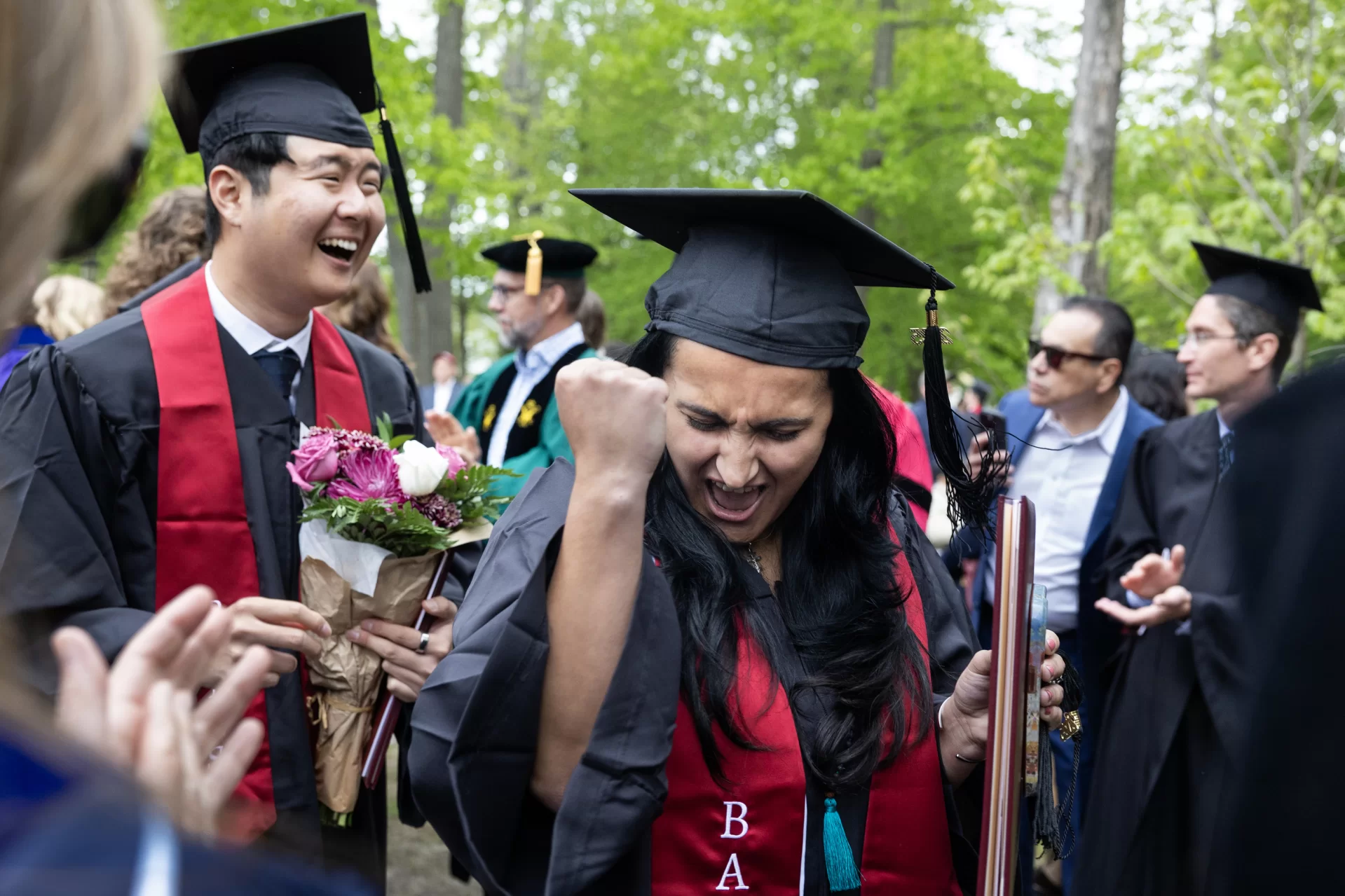
With mortarboards — and lots of but not all the energy — released, the Bates Commencement recession began with the platform party departing the stage, followed by faculty and the members of the Class of 2025, who, led by their class marshals, greet their professors. I usually try to find someplace to photograph some of this emotional discharge, as students and faculty exult.
Standing among them on their level is usually intrusive; extricating myself by photographing from the steps of Hathorn takes valuable time and effort. So I vacillate each year about where to stand. This year, like a bull in a china shop, I inserted myself into the lineup and caught this moment as Hope Seketa ’25, an economics and mathematics double major from, pumped her fist in the midst of the faculty lineup. At left is Jangmin Song ’25, a mathematics major. You’d have to ask Seketa what she was feeling at that moment: was it ecstasy, empowerment, joy, relief — hope even? A cocktail of those emotions? Whatever it was, I think the image conveys a timeless graduation message.
Messages from Home
Theophil Syslo says:
The project started with me sending a half dozen emails around campus looking for a vintage phone that might work for this project’s purpose, creating a “phone booth” for families to send messages to their students during drop-off day. Once we found the “red hot” phone, I started looking for a way to install lavalier microphones inside the mouthpiece. Unfortunately, the mics were slightly too big. In the end, I actually just set a microphone next to the phone instead of inside. I also set up multiple static cameras and held one camera on a monopod. As I finished clicking the last camera into its tripod plate, I wondered, “Will parents show up this morning for this video project?” Fortunately, enough did, and we produced what you see above. I found this project to be a fun example of flirting between the lines of performative and authentic.
Faculty Featured
Heidi L. Taylor
Associate Professor of Sociology
Categories BatesNews