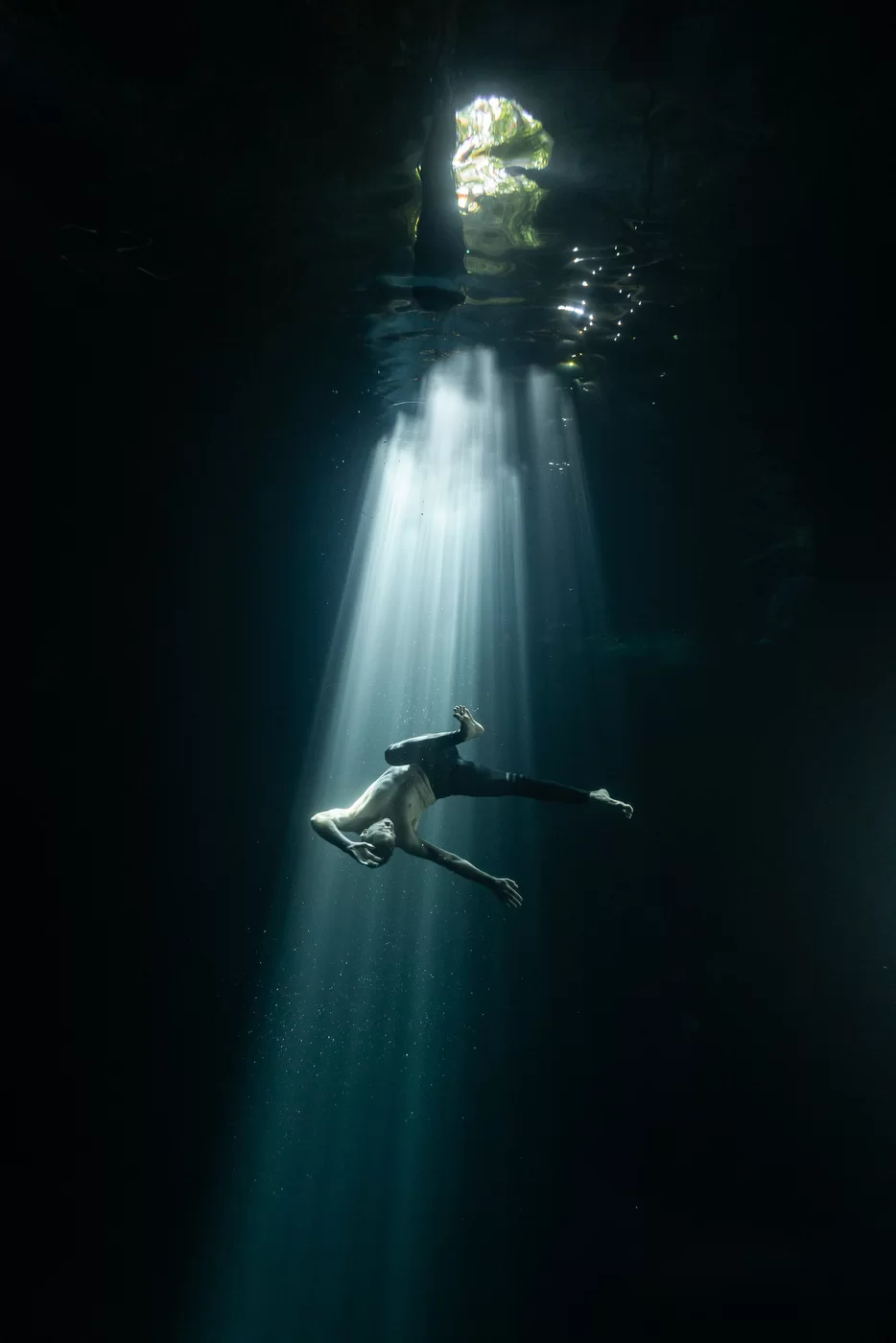
When she’s dancing underwater, Meredith Sallee ’07 carefully holds her breath, her arms and legs moving freely around her. The restrictions of a traditional performance fall away far beneath the ocean’s surface — buoyancy diminishes gravity’s effect, and the sandy floor is softer than a stage.
“What is so comforting about the medium of underwater dance is that you actually don’t need to have any steps memorized,” Sallee says. “It is a somatic experience of opening into the space, connecting with your surroundings and just being.”
For the last several years, Sallee has directed her decades of dance experience toward this new medium of underwater dancing, which combines freediving — holding one’s breath for several minutes without scuba gear while submerged underwater — with dancing. Sallee and her husband Gabriel Forestieri are, respectively, the co-director and artistic director of projectLIMB, a dance project that has evolved over the years to focus on underwater dancing.
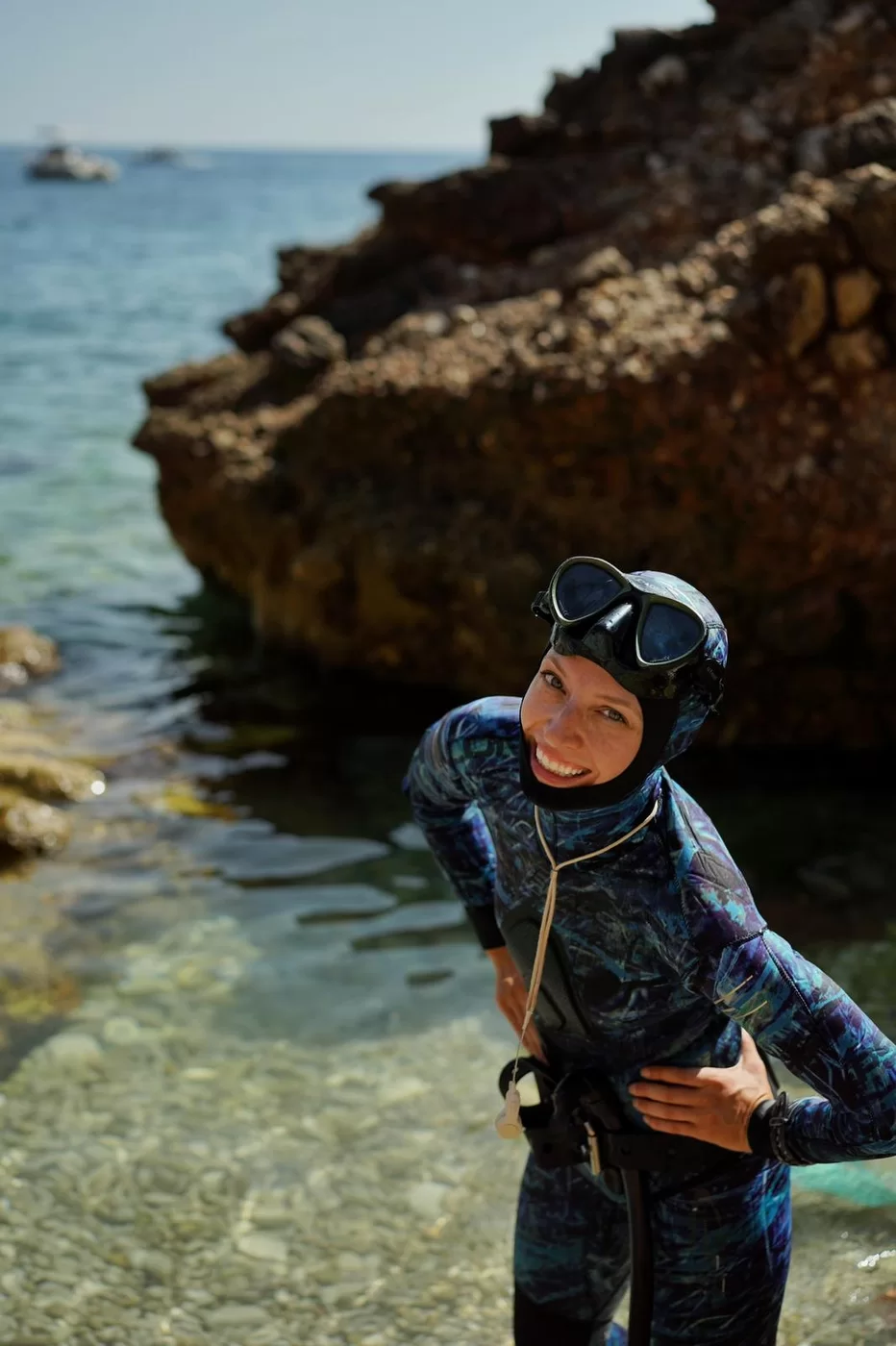
This practice may sound entirely modern, but there is evidence of underwater dance practices dating back thousands of years, and modern underwater dance has roots in both freediving, an ancient technique that gained popularity as a sport in the mid-1900s, and artistic swimming, which emerged as a sport in the late 1800s.
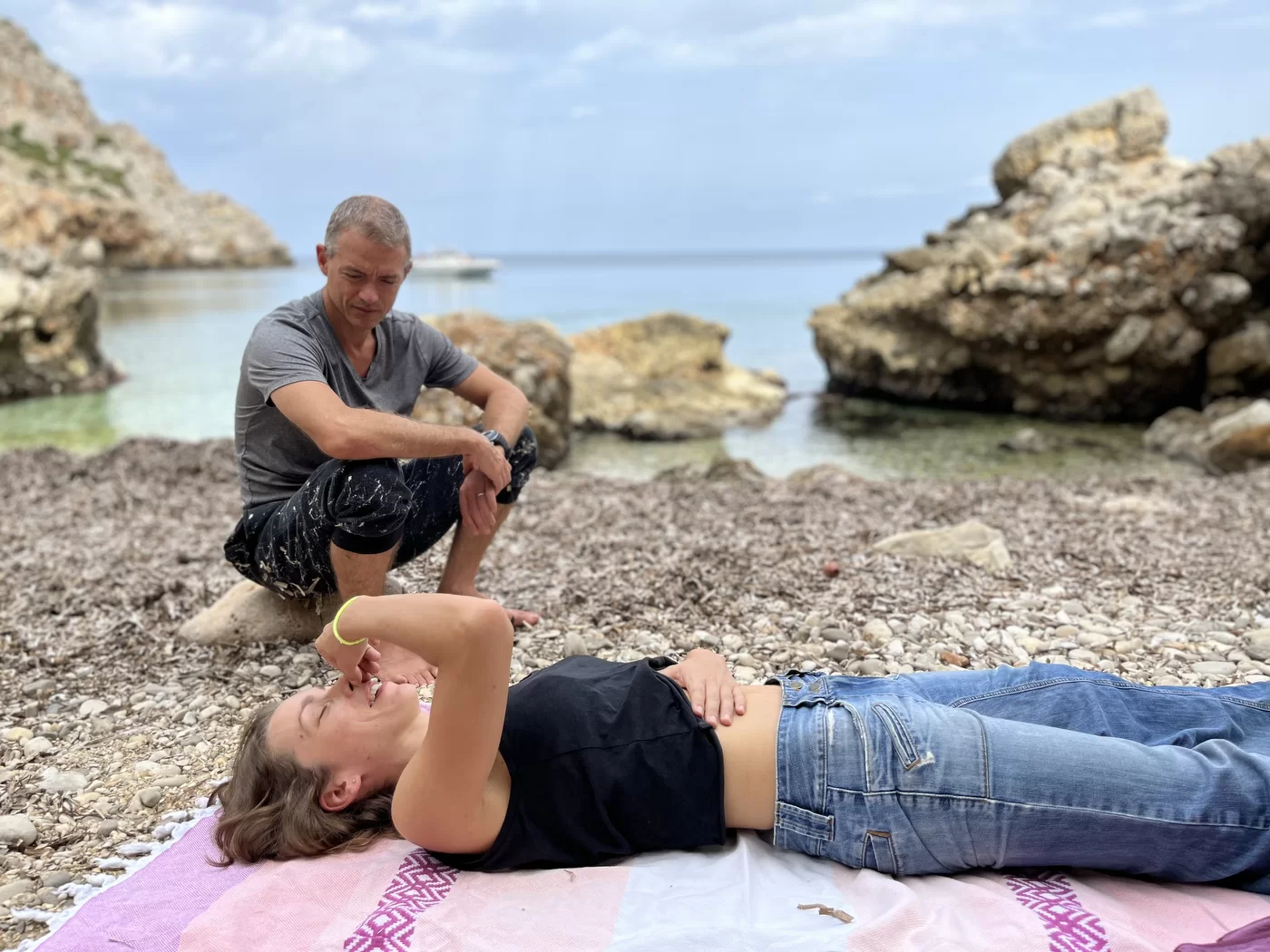
From their home in Calatafimi, Sicily, the pair run week-long workshops in underwater dancing and freediving, open to all, regardless of dance background. Their classrooms are a small dance studio in their farmhouse, the nearby beach, and the Mediterranean Sea. Students travel from around the world to attend the workshops, which place an emphasis on personal exploration through dance instead of performance outcomes.
“I really work to try to create an environment where you’re learning from yourself,” Forestieri says. “I try to make a safe environment where you feel protected, and then you can practice at your own pace and time.”
Nearly seven years ago, when the couple relocated to Sicily from the U.S., Forestieri, a certified freediving instructor, taught Sallee how to freedive. For most of her life, she would never have pictured spending so much time in the ocean; she was afraid of open water after nearly drowning in a pool as a child. But she had always envisioned a life as a dancer. Sallee began dancing at three years old and continued throughout her childhood. When she arrived at Bates in 2003, Sallee saw Bates dancers performing outside of Ladd Library during orientation weekend. They seemed so cool and talented, and she was eager to join them, but also a little intimidated. Sallee introduced herself to the late Marcy Plavin, Bates founding director of dance, who died in 2016.
“She just immediately took my hand,” Sallee says. “She goes, ‘You’re a dancer. You’re coming with us. You’re going to be part of this.’”
The Bates dance program, launched by Plavin in 1965, was unlike anything Sallee had experienced in her small, hometown studio in Georgia. It was freeing.
“I got to roll on the floor,” Sallee says. “I got to discover new ways of moving. After that first semester, I was like, ‘Yep, okay, so this is what I want to keep doing forever.’”
Bates didn’t yet offer dance as a major, so Sallee majored in art and visual culture, with a minor in dance. After graduation, she worked as a professional dancer, dance educator, and studio manager, primarily focused on modern dance. She spent a decade at Khambatta Dance Company in Seattle but has worked around the world, with stints in India, Brazil, Mexico, Canada, Lithuania, and Romania. In 2019, she met Forestieri at Khambatta, where he was a visiting choreographer. Forestieri had already been running projectLIMB, which began as a way to explore the relationship between people and the natural world, for 15 years.
Learning about Forestieri’s underwater dancing reminded Sallee that, despite her fear of water, she had always been drawn to the ocean. When the couple relocated from the U.S. to Sicliy, where the rugged, rocky coastline is flanked by aquamarine waves on one side and ancient temples on the other, Sallee began slowly approaching the ocean, with Forestieri’s support, and eventually overcame her fear of water to begin dancing underwater herself.
“One of my favorite sensations is being down and actually looking up at the sunlight coming through the water and seeing it ripple and move,” Sallee says. “Everything stops. Everything is silent. Everything is peaceful.”
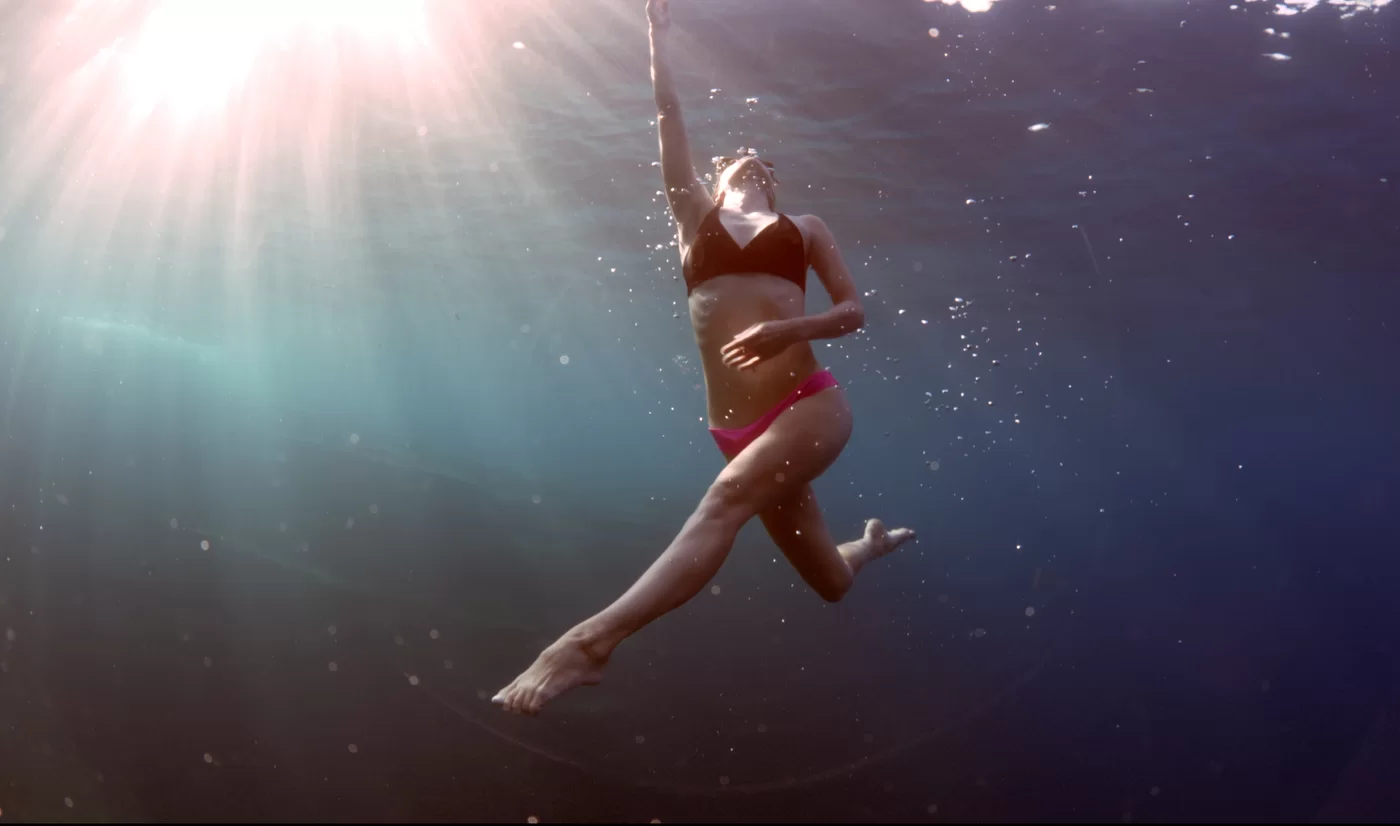
Dancing underwater, as Sallee was learning, is not about performing for a traditional audience or perfectly executing a routine. Every time you submerge, usually for two to five minutes, you are “meeting yourself,” she explains, in the quiet, meditative sea.
“Sometimes, you just snap and feel this connection with almost everything,” Sallee says. “It’s like you’re touching the molecules, and the fish are with you, and there’s just life. It’s invigorating and freeing.”
To maintain some record of their ethereal art, Sallee and Foriesteri frequently film themselves dancing. Last summer, projectLIMB student and Maine-based filmmaker Juliette Sutherland produced a short film about the couple and their work, filming all of the underwater scenes while freediving herself.
As engaging and fulfilling as it is, projectLIMB is not the couple’s full-time livelihood. They spend more of their time, actually, on their primarily remote roles as organizers of Montessori Model United Nations conferences. During the gatherings for students, who range in age between nine and 15, participants study international conflicts and human rights violations and then prepare resolutions to share with UN ambassadors.
On the surface, these conferences may seem strikingly different from the practice of underwater dancing, but a deeper look at both endeavors reveals a common thread. With the conferences, Sallee aims to empower youth to understand and make change in the world, while projectLIMB workshops empower participants to connect with the world.
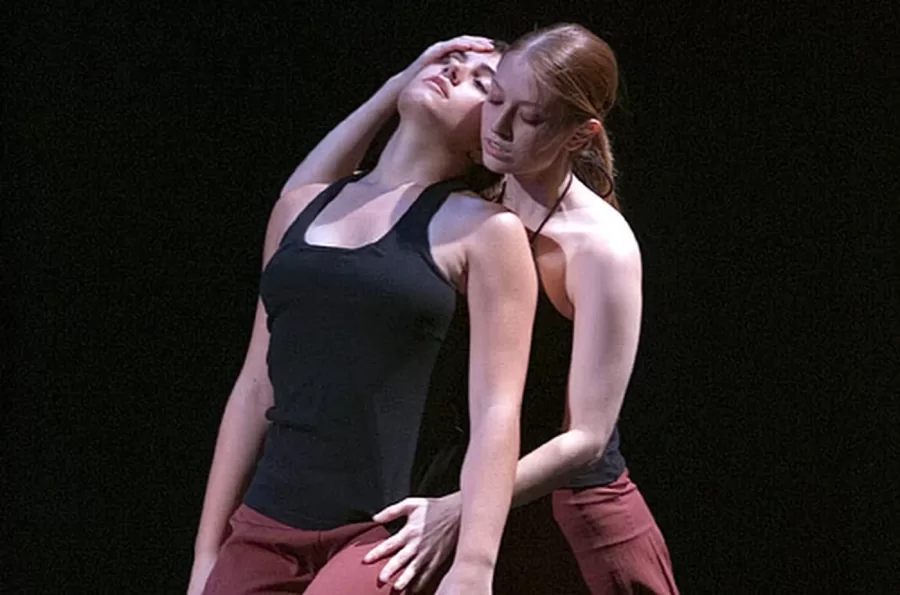
Helping her students explore a new dance world, Sallee remembers the way Plavin welcomed her to Bates dance more than two decades ago — a seemingly small gesture of kindness that propelled Sallee toward dance as a career and introduced her to many lifelong friends. When fellow Bates dance alumna Julie Yeterian ’06 traveled to Sicily to visit Sallee, the two danced together once again in Sallee’s small home studio, reminiscing about Plavin and their inside jokes and the world of Bates dance. Plavin played a central role in helping many dancers find their place in Bates dance, Sallee says, and develop a love of the art for life.
“I am so honored Marcy is part of my dance lineage. If she hadn’t opened the doors so generously to me, it might have taken me more time to get involved as a Bates dancer,” Sallee says. “Marcy was such a force of nature.”
Categories BatesNews