The Bates Film Festival might at first seem like any other film festival. There are screenings, facilitated panel discussions, and featured guests. Running May 12-17, activities will take place on campus and in theaters and galleries across the region. What might not be obvious at first glance, and what makes the BFF so unique, is that it is a fully student-led film festival that features nationally and internationally respected films. It may be the only one of its sort.
It is also a course, taught by Professor of Rhetoric, Film, and Screen Studies and Founding Director of the Bates Film Festival Jon Cavallero, who orchestrates a film festival reaching an increasingly wider audience since its beginnings in 2018. And for each festival, Cavallero starts with a cohort who will design the festival — students who enroll in “Film Festival Studies.”
“As a teacher, I’m committed to trusting my students,” Cavallero said. “I worked as a board member at some film festivals, saw the work that we were doing, and thought, ‘I think my students could do this. And maybe they could do it better than we’re doing it. Maybe they could bring a fresh perspective to it.’” Cavallero trusted his instinct to trust his students, and those students, he said, “never disappoint.” In fact, he said, “It’s one of the coolest things about the festival.”
For Eli Greenwald ’26 of Scarsdale, N.Y., the coolest thing is the opportunity to create an actual product.
“In most classes, you’re working to get a grade,” Greenwald said. “In this class, you’re not really doing this for a grade. You’re doing it because you’re building a tangible event that you can see with your own eyes. You actually see your work pay off.” Greenwald, a history major, hopes to work in the media industry after college. He realizes that Bates is offering him a rare experience to see the process from its inception through to its production.
Cavallero understands that students like Greenwald will be more able to network when they have had genuine experiences with film and meaningful interactions with professionals in the industry. As Cavallero was designing the course, he thought of the “awkward” conversations that students have as they work to set up internships and find work. He imagined a better conversation.
“I wanted to create a way where that conversation could evolve naturally out of a project they were working on together,” Cavallero said.
The class recently made their final decisions about which films will be shown this year. For the sake of efficiency, the students are divided into two groups: the fiction team and the documentary team. But rather than separating them, that division — like everything else in this class — seems to enable collaboration. As each group narrowed their selections, they ran into some difficult decisions. Unable to form a consensus, one group called upon the other group to help out. The trust that the students had developed over the semester enabled them to rely on one another as they made these final calls.
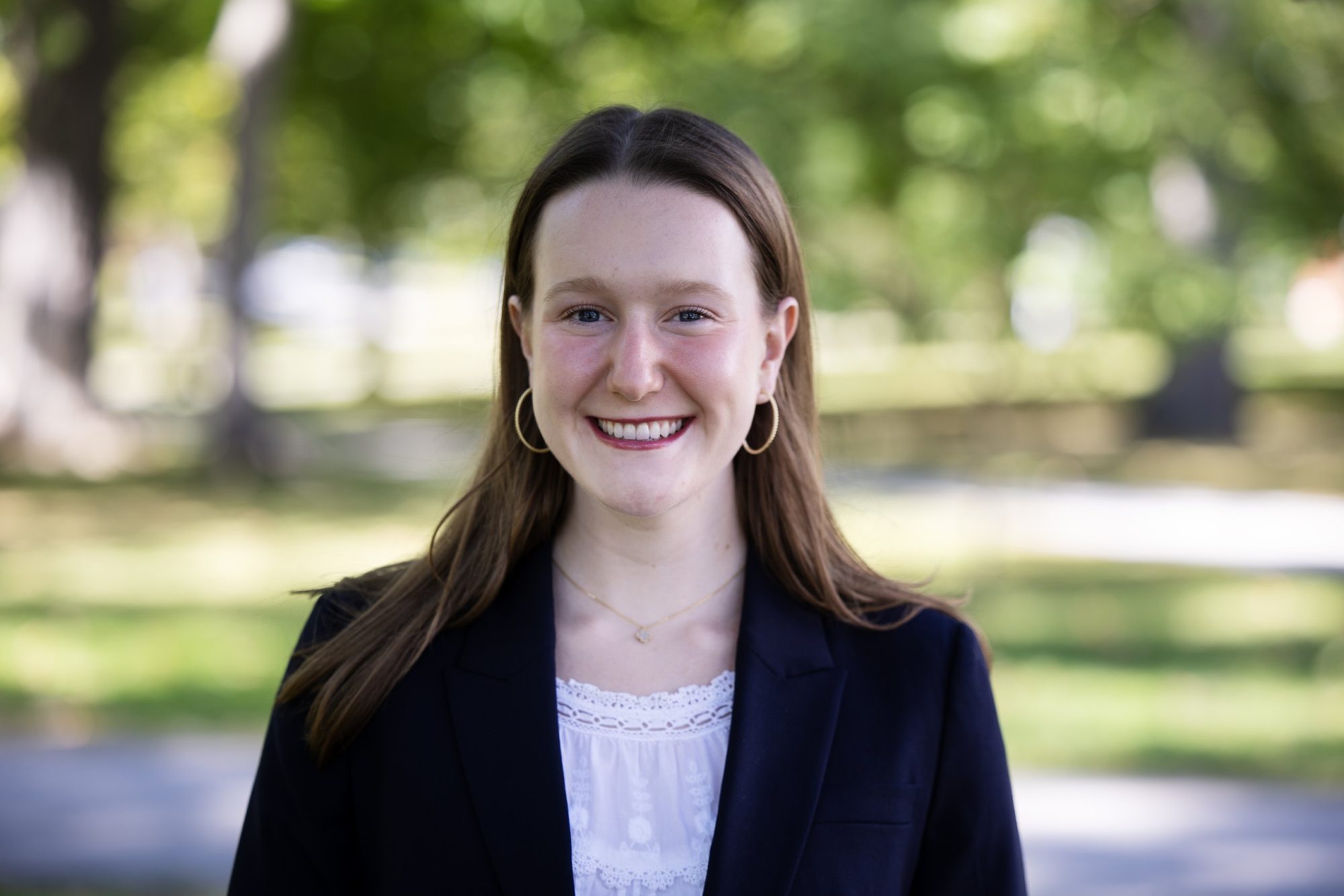
Claire Orfield ’26, a rhetoric, film, and screen studies and politics double major from Houston, knew that she could rely on her classmates with this final decision.
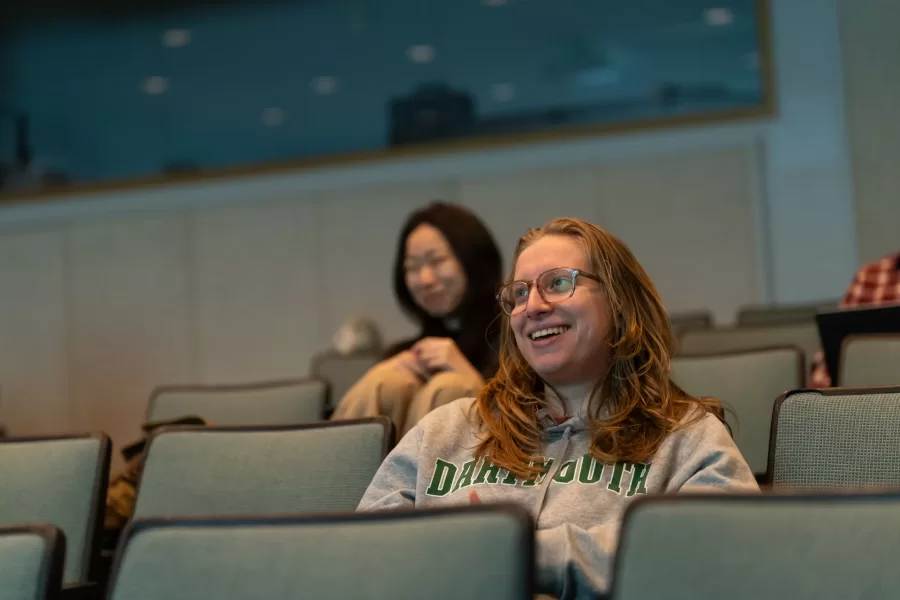
“I mean, of course I knew that my classmates were amazing,” she said, “but I was just so impressed with the types of conversations that were happening.” Each classmate listened to the debates as the choices were made, and by the end of the class session, finalized the list together.
Orfield was drawn to the film festival her sophomore year in 2024, when the festival featured Against All Enemies, a film on paramilitary training camps, which Maine had just banned. Much of the film had been shot in Texas, where Orfield is from. Although she was not taking the course, she wanted to be a part of the conversations that it might spark, ensuring that multiple perspectives were represented. She not only attended, but was invited to facilitate a panel discussion that included the filmmaker and the state representative who had introduced the bill to ban paramilitary training camps. On the day of the event, Cavallero went up to Orfield and said, “We need to add a line to your introduction of the film. The attorney general of Maine just walked in, and you need to thank him for coming.”
Orfield certainly remembers that day well, and knew she wanted to take the course the next time Cavallero offered it. When she talks about why she chose to be involved in the Bates Film Festival, she focuses on empathy.
Cavallero remembers this moment as affirming his trust in his students. He recalls thinking, “Wow, these are people that probably wouldn’t even meet each other if it weren’t for this event. They’re each interested in what the other is doing, and at the center of it is Claire. A Bates College sophomore isn’t just watching this discussion or participating in it, she’s leading it!”
“Leading with empathy is so important. And I think film does a really good job of doing that because whether it’s a documentary or a fiction film, you are transported into a person’s life at least for a short period. You’re getting things from their perspective and it almost feels like living with them.”
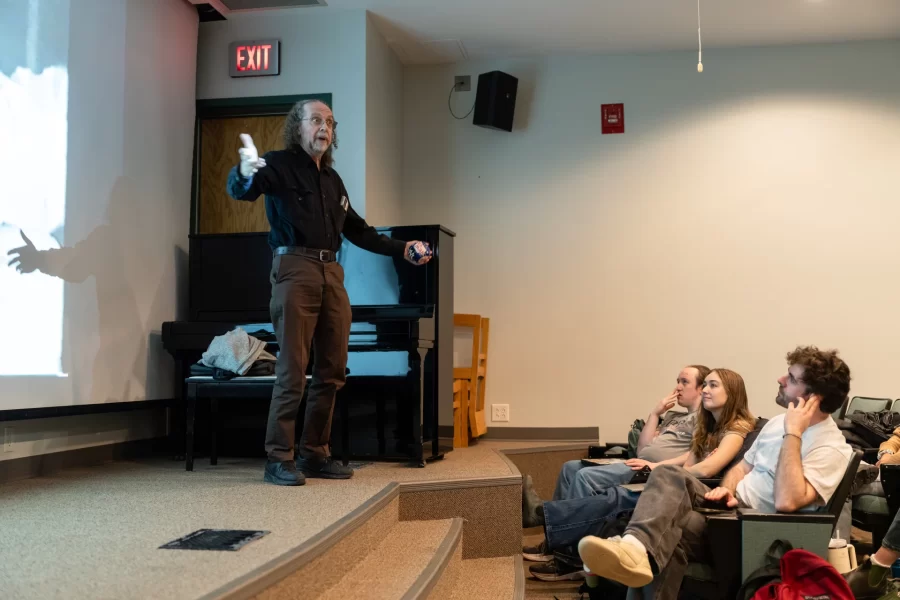
Mekkawy Mohamed ’29 is a little bit like Orfield was in 2024, not yet part of the Bates Film Festival, but eager to explore it. When he was looking for colleges, he knew that he wanted an opportunity to grow as a filmmaker. He was coming all the way from Egypt and made sure that at least there was a space for filmmakers to screen their short films.
“I remember reading about Bates, and sending an email to the Admission office. I mentioned that I would love to initiate a club that makes films about diverse stories of people at Bates.”
Admission told him about Bates Film Festival and pointed him to its website. Now that he is on campus, Mohamed will have his first opportunity to attend the festival. Next time Cavallero offers the course, Mohamed could be programming it.
The Bates Film Festival always features Maine-based filmmakers and actors. Last festival David Camlin and Megan Grumbling showed We Are The Warriors. Fresh off their premieres at Sundance Film Festival, Jared Lank screened Bay Of Herons, and Matthew Tyler showed The Looming Cloud.
Maine-based actors invited to the 2026 festival include Matthew Delamater, Xander Berkeley, and Dustin Tucker. In a panel entitled, “The Art of Adaptation with Michael Koryta,” The New York Times-bestselling author will read from his novel Those Who Wish Me Dead, talk about how he adapted an individual scene in the screenplay of the same name, and then show the clip from the 2021 film, made by Warner Brothers, directed by Taylor Sheridan, starring Angelina Jolie and Jon Bernthal.
Maine-based producer, screenwriter, and playwright Desi Van Til will screen the 2015 film Tumbledown and will engage in a Q&A with Sean Mewshaw — her husband and the director of Tumbledown and other films. Van Til, who grew up in Farmington and lives now in Portland, is thrilled to be a part of the Bates Film Festival for the first time. “Anytime I have an opportunity to screen the movie in the state where the film is set, and which is my home state, feels great. Particularly if it was selected by students.”
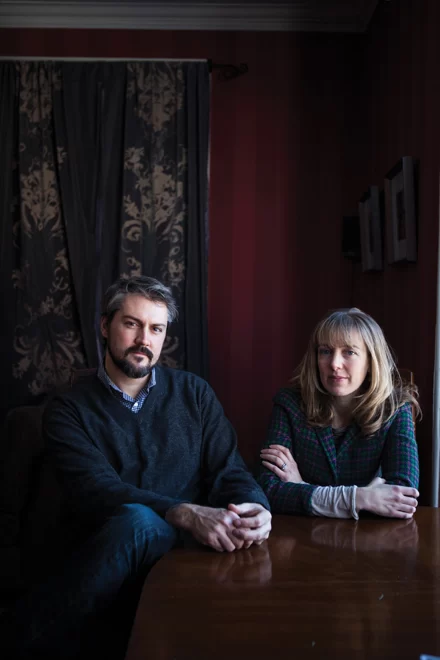
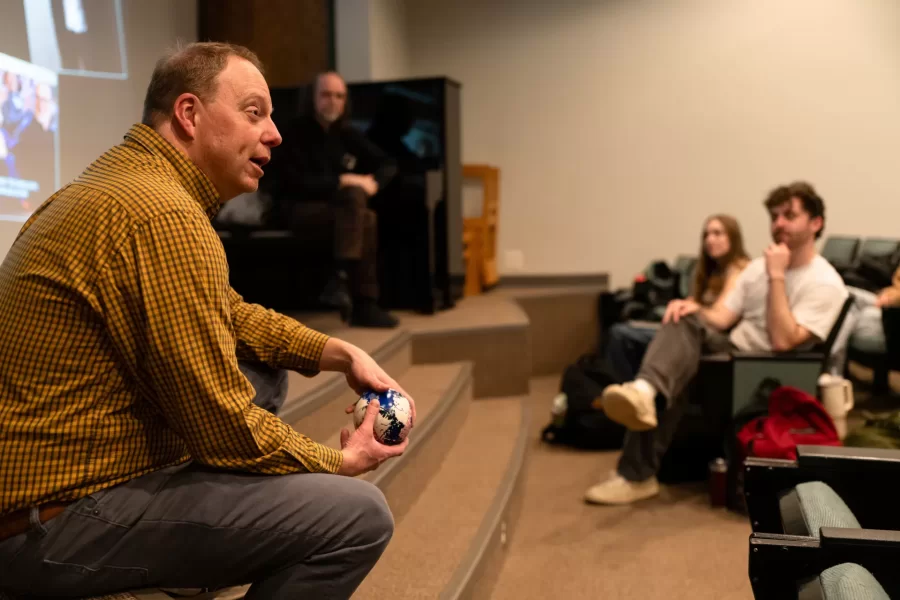
(photo by Greta Rybus)
(photo courtesy of author)
The Bates Film Festival is committed to inclusivity. “We want to use film to bring as many different people as possible into the room so that they can learn from each other,” Cavallero said. He pointed out that most festivals lean into the idea of exclusivity, with expensive locations and high ticket prices. “Accessibility has always been at our core, and that’s why we’ve always been free and open to the public. In a world where festivals establish their importance by embracing exclusivity, we’re building an event defined by its inclusivity.”
The Bates Film Festival has its home at Bates and originally, all films were screened in Lewiston. In 2022, the festival expanded, holding events in both Lewiston and Freeport, and then in 2024, the festival held events both on campus and in Portland. Maintaining a base in Lewiston while expanding to surrounding communities is intentional. “There are two reasons for it,” Cavallero said. “One is pedagogical. I like that my students have to imagine planning for an audience that is not just Bates. It introduces an interesting component for them as they confront their own assumptions about who that audience is and what their preferences would be, and then they get to see how accurate their predictions were.”
Cavallero’s second reason to screen films and host events beyond Bates’ campus is a bit more existential.
“I don’t think the things that we do at Bates and the values that we espouse and the mission that drives us should be confined to the campus,” said Cavallero. “There’s a movie on any topic one can imagine so the BFF actively tries to initiate conversations and collaborations with many Bates departments and programs as well as organizations in the community at large. The festival is an interactive, public-facing, portable way to bring Bates’ mission, ethos, and programs into the larger community and surrounding region.”
Orfield echoes this value when she thinks about what is most important to her about the Bates Film Festival. “It’s really important to engage with Lewiston and Auburn,” she said. “I think being free and open to the public is a big part of our mission. We’re committed to that because it makes our events accessible. Community organizations that will be part of the festival are an important part of that as well.”
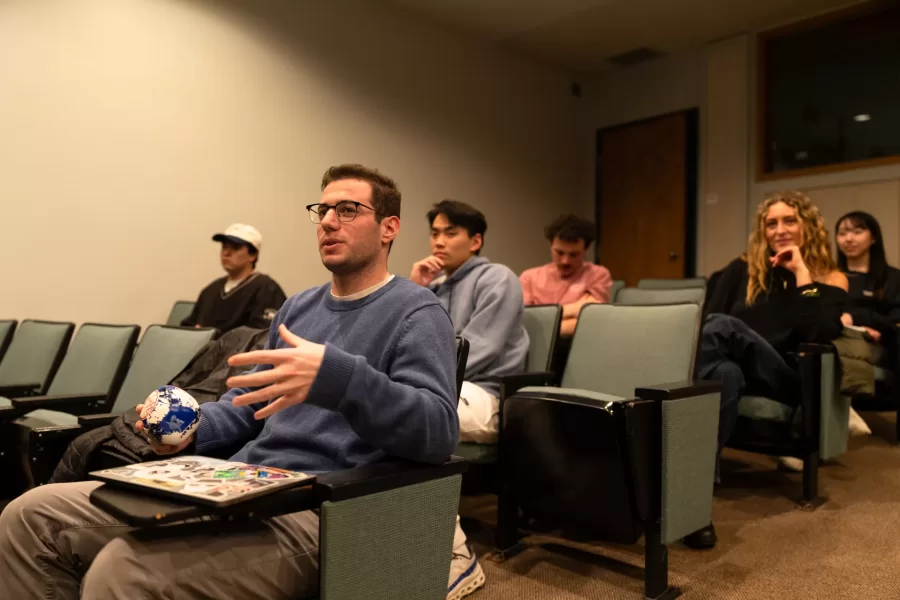
As the semester draws to a close and the components of the festival — which will take place during Short Term — are mostly in place, the students are shifting into anticipatory mode.
“I’m really looking forward to being there and seeing how it turns out and seeing people coming and enjoying everything we’ve set up for them,” Greenwald said. “And after four years of classes, this is a really cool new experience to have right before I graduate, and it feels like a good transitional class to go into professional life.”
For Cavallero, there isn’t much anxiety. This is the fifth time he has guided students through the process of creating a film festival, and he is continually encouraged by the caliber of student he works with at Bates.
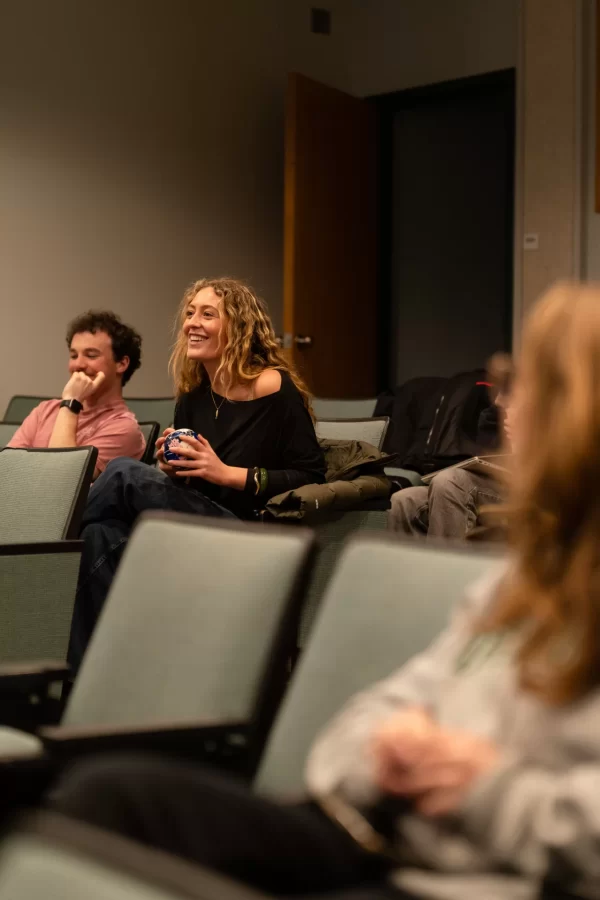
“Back in 2018, I went to the first ‘Film Festival Studies’ class with an idea of what the festival would be. I outlined that idea for my students, and immediately, they started to make it better. They insisted that being a festival wasn’t enough, it also needed to be a social justice oriented event. That focus has persisted from year to year from one festival team to the next. It is one of the festival’s core principles. So, from the beginning, the shape of the Bates Film Festival has been molded at least as much by the students as by me.”
That commitment comes through, even in the planning. Desi Van Til said she recently read an article explaining that students enrolled in film classes often cannot sit through a full screening due to decreased attention spans.
“Reading that article I felt a little bit dismayed,” Van Til said, “but then knowing that the Bates Film Festival is being run by students who are curating these films and who are obviously really engaged, wanting to not only screen the films in their entirety, but also dig in and have engaged discussion with each other and with the filmmakers afterwards … it gives me hope.”
Categories BatesNews