At Bates, student researchers are empowered to ask and answer big questions across numerous fields of study. They tackle everything from human biology and marine ecology, to literature reviews of legal movements and the politics of memory, to media analysis of film, literature, and television.
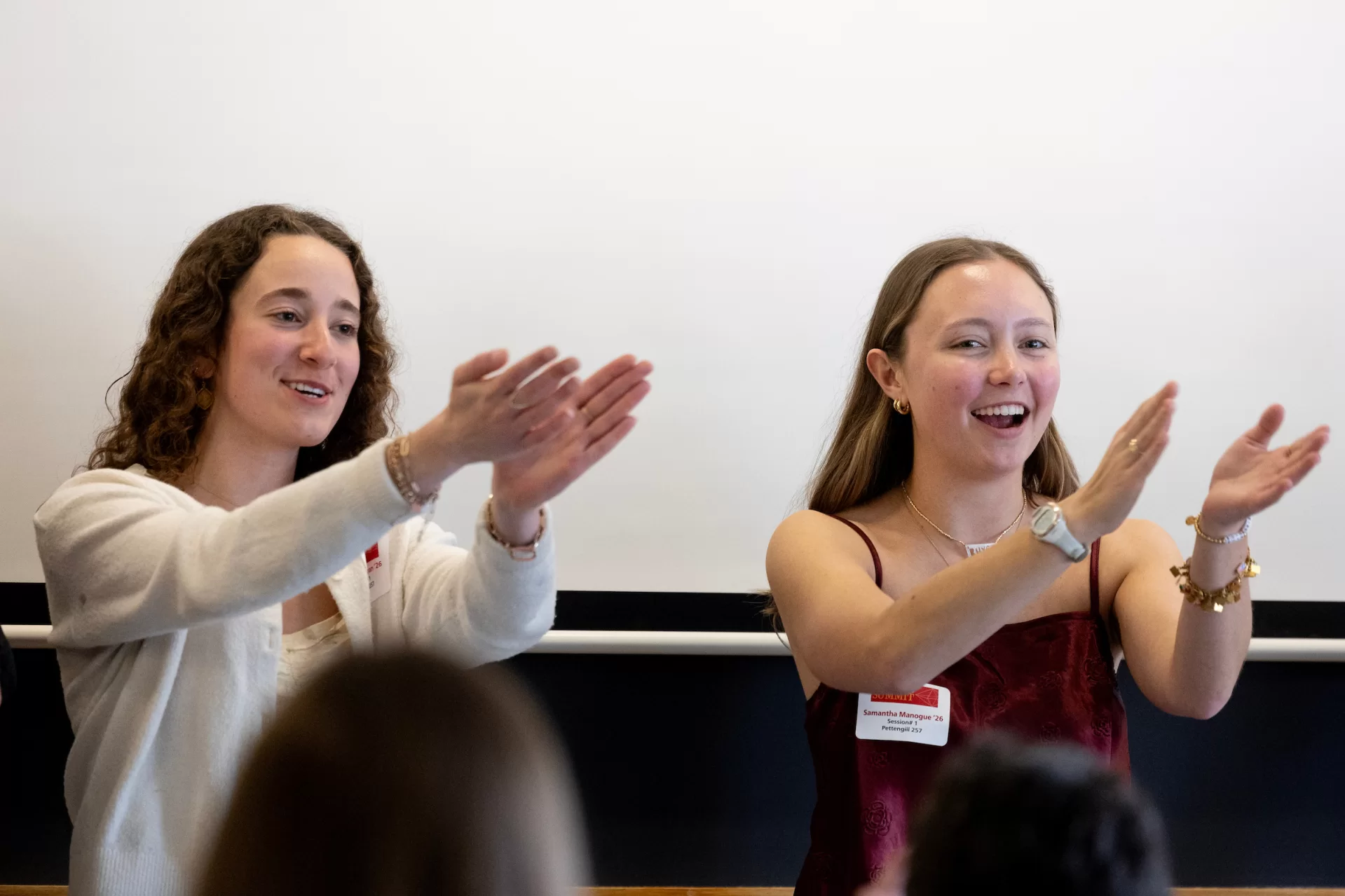
On April 10, more than 200 of these student researchers presented their work to the Bates community and their family and friends during the annual Mount David Summit in Pettengill Hall.
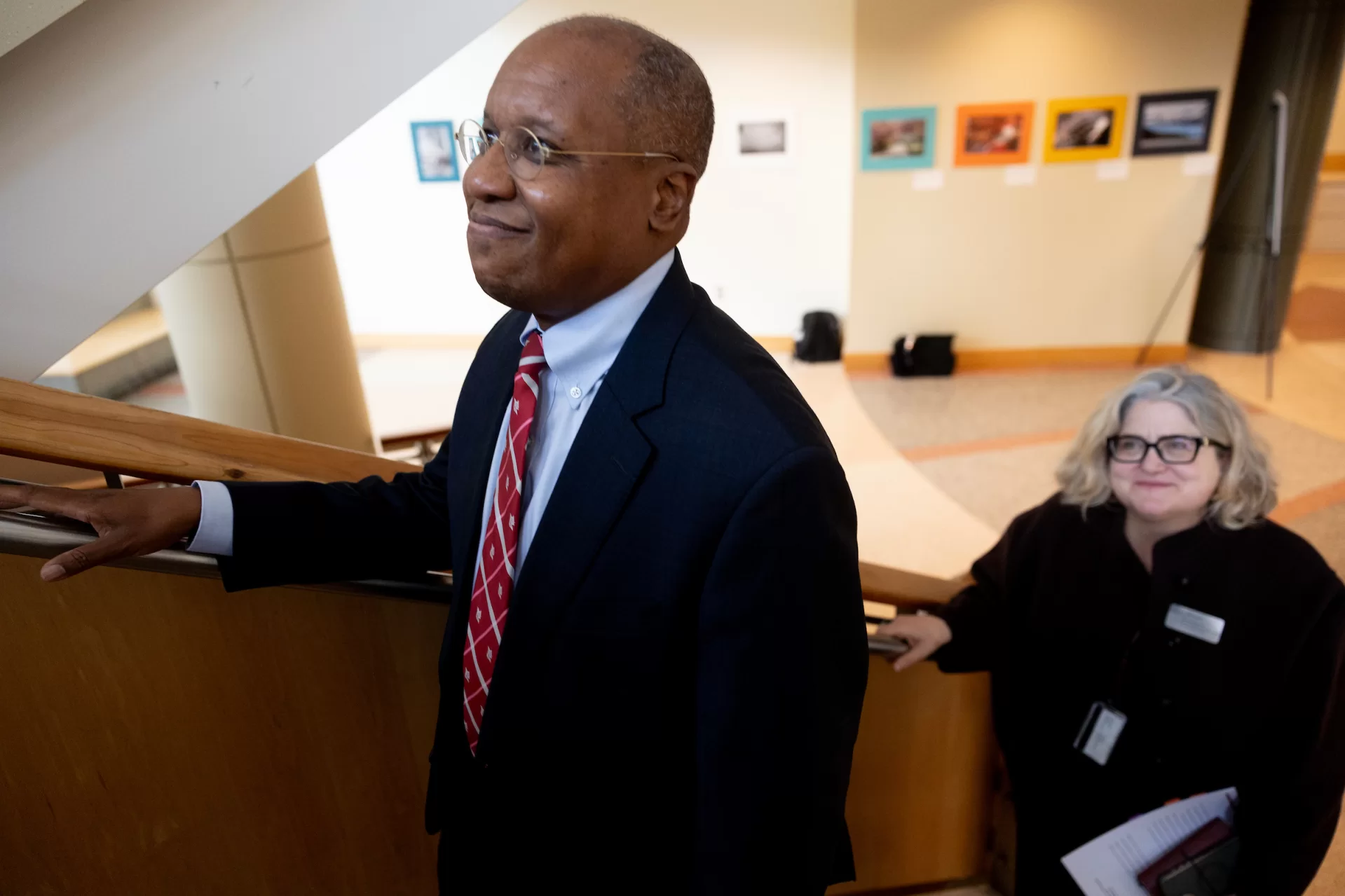
“Mount David is not just a harbinger of spring and the nearing conclusion of the winter semester, though it is those things,” Bates President Garry W. Jenkins said during the day’s opening remarks. “It’s also a chance for our community to come together to celebrate the academic heart of our mission. And it’s an extraordinary opportunity for Bates students to show off their research, their brilliant and insightful analysis, and their dazzling creativity.”
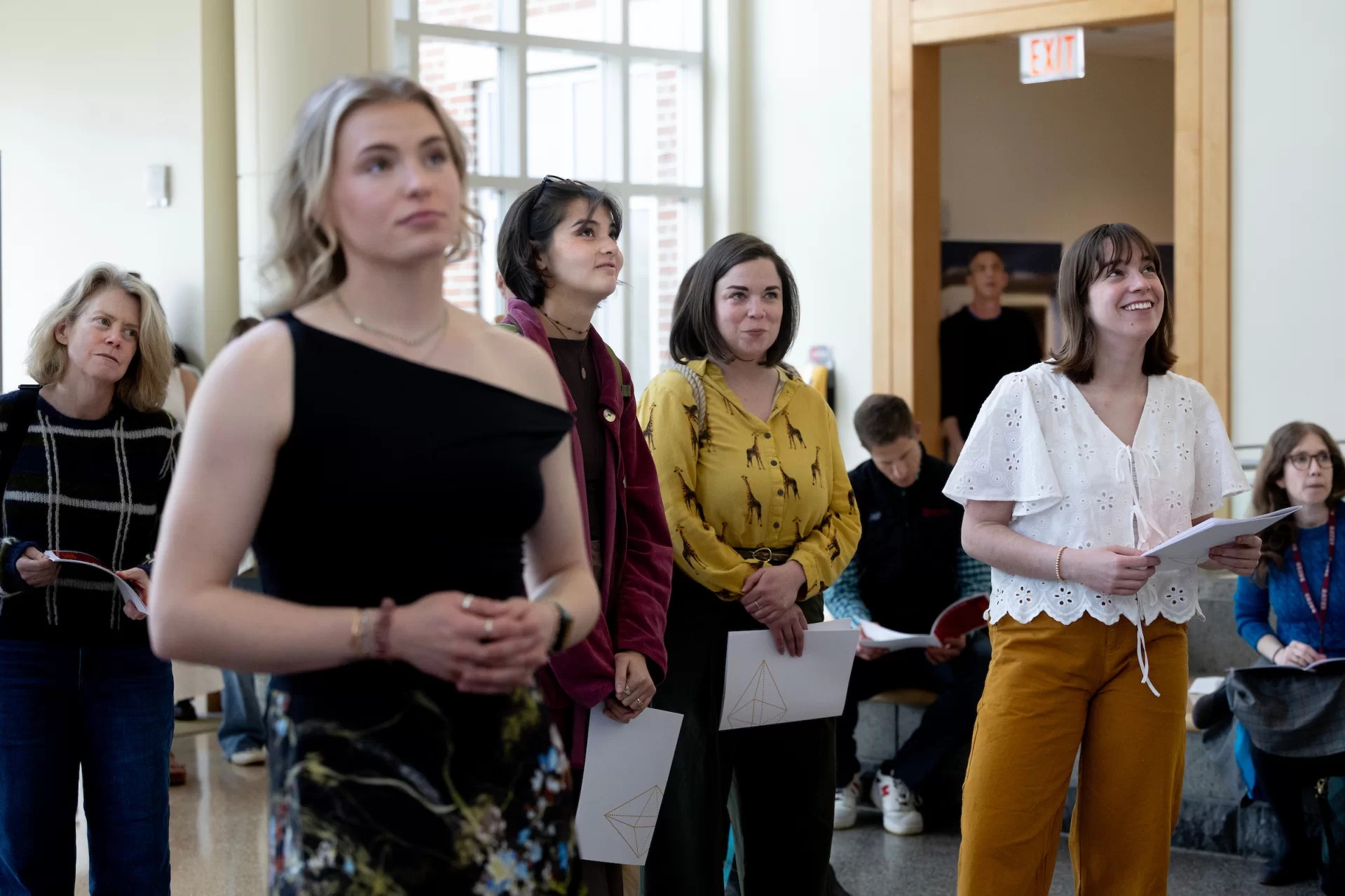
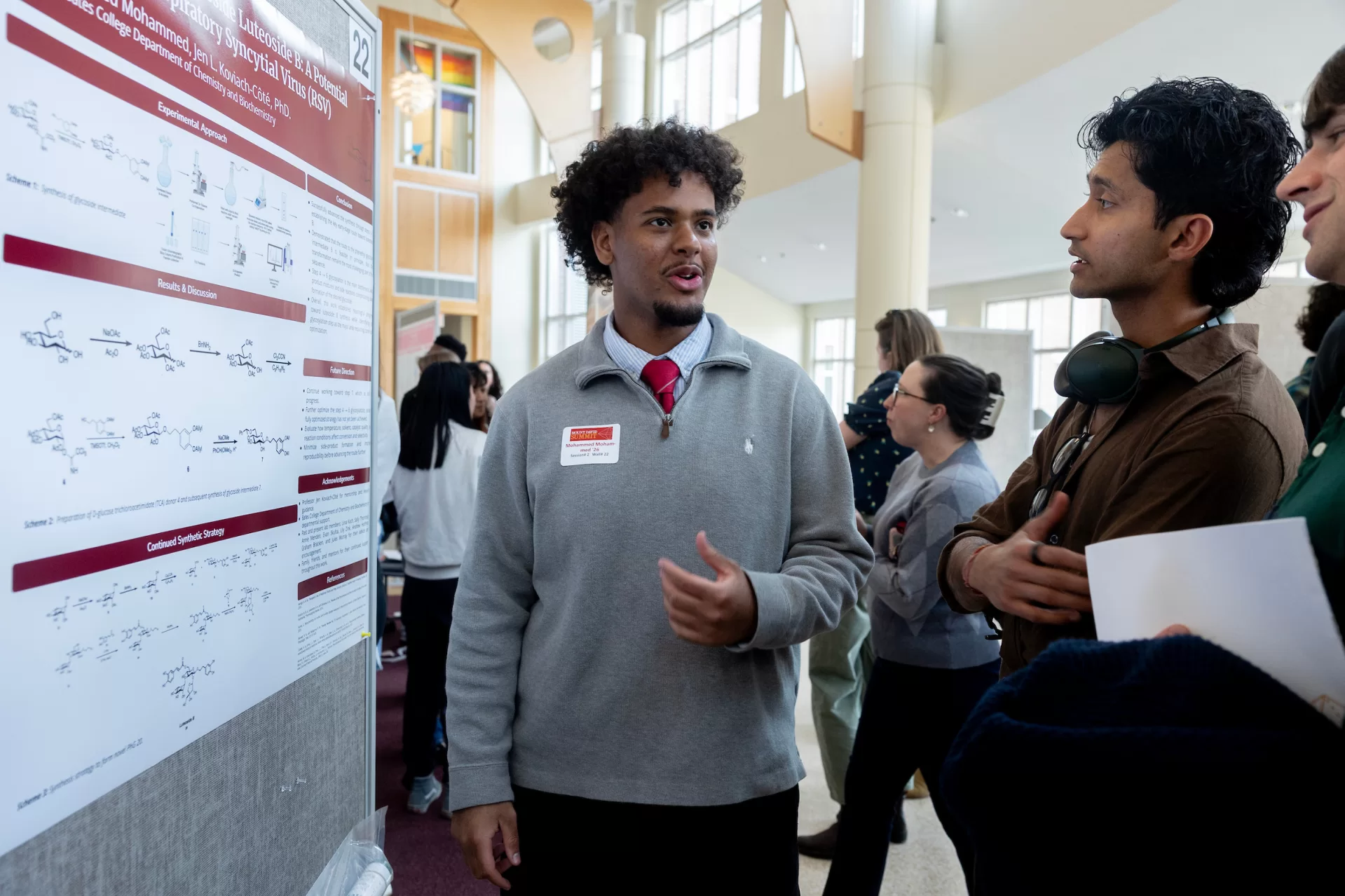
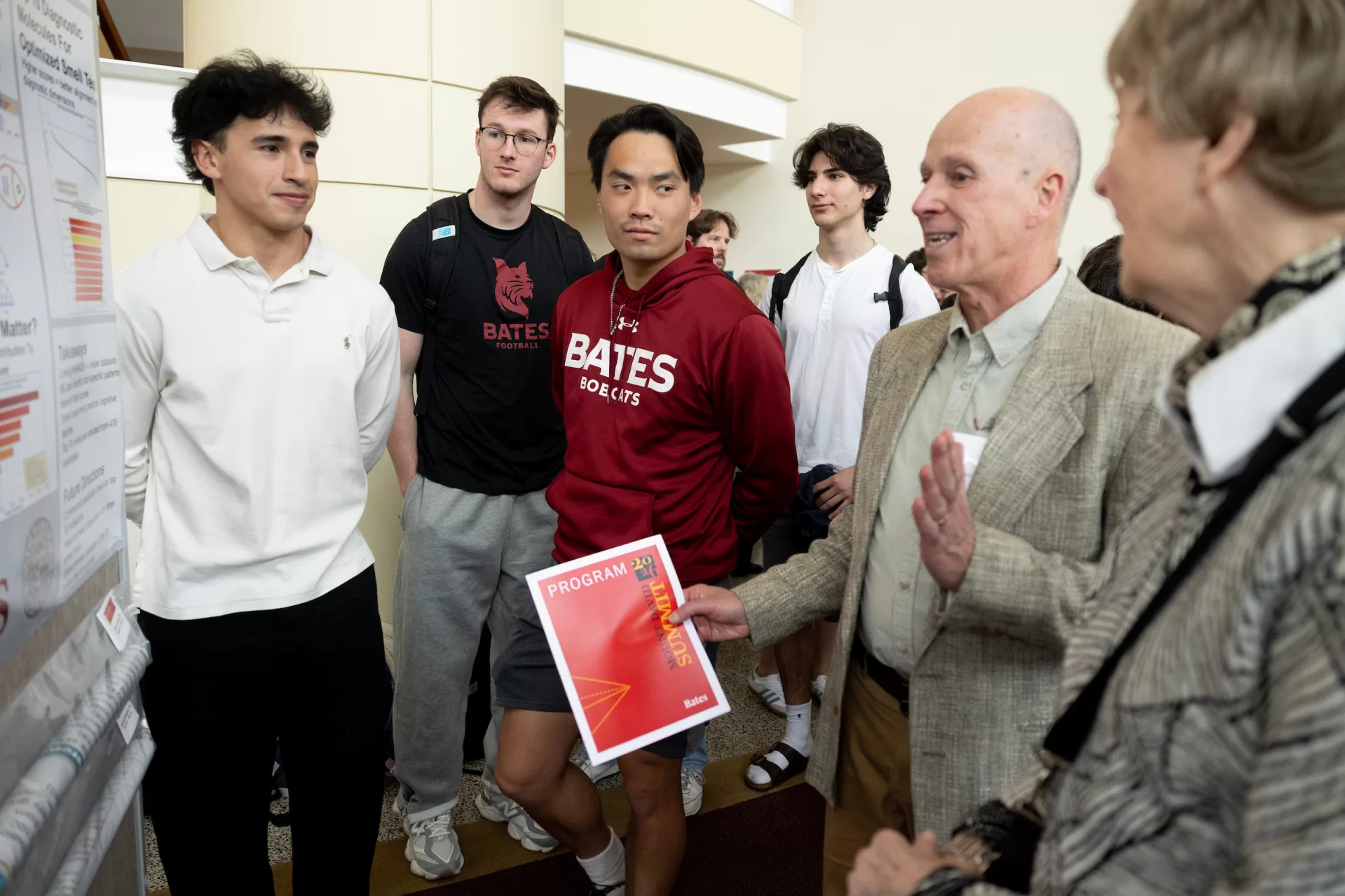
In between attending student-led talks and panels, attendees weaved through rows of posters on display in Pettengill’s Perry Atrium. The room was buzzing with questions, and students were eager to answer, discussing their research methods, their main takeaways, and why they were motivated to pursue their projects.
Most of the student researchers were presenting their senior thesis work, representing the culmination of their Bates academic careers. Mount David Summit is a day to celebrate student achievement and the people who supported the students along the way, said Joanne Roberts, vice president for academic affairs and dean of the faculty.
“It takes a village to bring an idea from its first spark through its final expression, and we owe a huge thank you to everyone involved, from our committed faculty, to our stellar academic staff, and our invaluable research librarians,” Roberts said.
Learn more about a few of the 200-plus student projects from across disciplines:
STEM
Biology major Zoe Ash ’26 of New York City presented a poster on bottle-nose dolphins’ social behavior as it corresponds to how often they do or don’t follow boats. She conducted research while studying abroad in Croatia, where a day in the lab looked like spending hours on a boat sailing over the Adriatic Sea, snapping photos of dolphins.
“My favorite discovery from this project was that we see higher social associations in dolphins that follow boats less frequently than we do in dolphins that follow boats more frequently or not at all. … It tells you that discreet communities are forming,” Ash said.
Also presenting a poster was Enathe Muhawenimana ’26 of Rusizi, Rwanda, a double major in biology and French and Francophone studies, whose project investigated why skin infections are often more severe in patients with diabetes. Her research determined that high glucose level in a diabetic patient was correlated with a higher severity of skin infection. She hopes that her work could be used to advance antibiotic or other therapeutic treatment for diabetes patients.
“Learning about this is so rewarding to me, but it can help people out there as well,” Muhawenimana said.
During an afternoon presentation by members of the Harward Center for Community Partnerships’ Community-Engaged Research Fellowship Program, seven students shared their senior thesis projects. Mathematics major Hope Stafford ’26 of Mountain View, Calif., shared her research on flooding patterns in Providence, R.I. Using a community flood-reporting app called MyCoast, Stafford discovered that floods were likely caused not only by rainfall but also by infrastructure varying across the city.
“The reason I was using this [app] is to emphasize community voice,” Stafford said. “We really want to focus on floods that community members are pointing out.”
During that same panel, neuroscience major Ariya Tayal ’26 of Pittsburgh, Penn., shared her research on how women who are experiencing homelessness access reproductive health resources, a project inspired by Tayal’s experience working as an emergency room technician and noticing that many women she had met through volunteering in the Lewiston-Auburn community were coming to the ER to access primary care.
“That’s such a sad thing to see in our healthcare system,” Tayal said. “People should not be finding out if they’re pregnant or not at the ER. That’s not appropriate.”
For her research, Tayal interviewed 19 local women experiencing homelessness and distributed disposable cameras among them for a research method called photovoice, during which participants document their lived experiences and narratives by taking photographs.
In a panel on STEM research, James Hillers ’26 of De Witt, N.Y., presented his research, entitled “Agent-Based Modeling of Sponge and Algae Endosymbioses.” Looking closely at the relationship between sponge and algae, Hillers used simulations to determine that even though these two symbionts are “comparatively unfit,” they thrive together.
“I really like making the visualizations,” Hillers said. “Whenever you’re doing computational work, you produce a lot of data, and it’s kind of a pain to do individual visualization. So getting to create robust scripts that can take a ton of data and visualize it into super nice experimental stuff is super fun.”
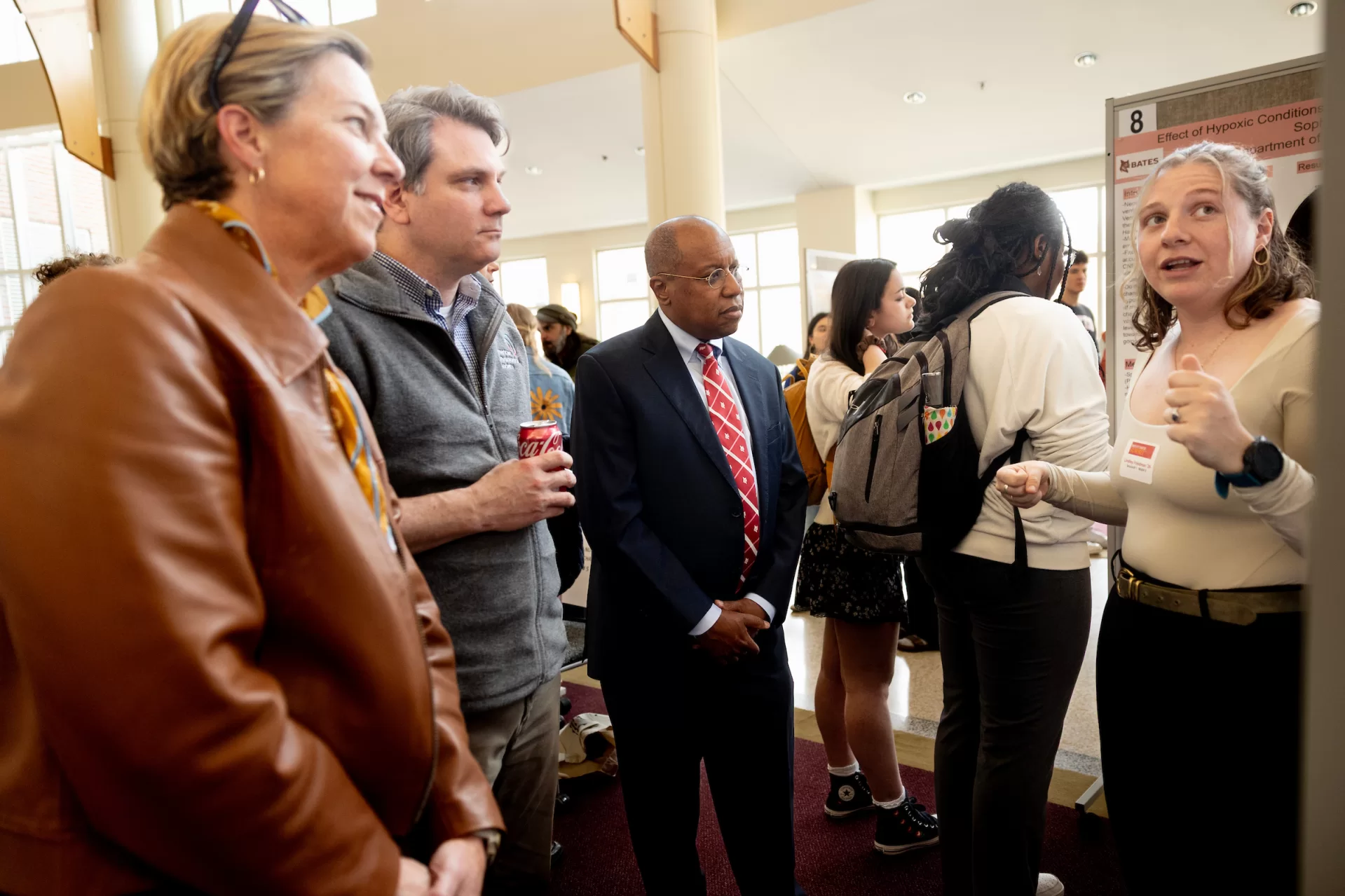
In the same panel, Gemma DeCarolis ’26 of Santa Monica, Calif., presented research drawn from her summer internship at Mote Marine Laboratory in Sarasota, Fla. The 2024 hurricane season resulted in significant vegetation loss, and DeCarolis studied the impact on sea turtle nesting.
“I was able to take nesting data, disorientation data, and aerial imagery from Sarasota County GIS,” DeCarolis said. “After I’d done all of this quantification and worked with the data, I did statistical analysis in R, using generalized linear models and beta regressions.” She hopes to continue parts of this research as she moves forward with her studies.
Social Sciences
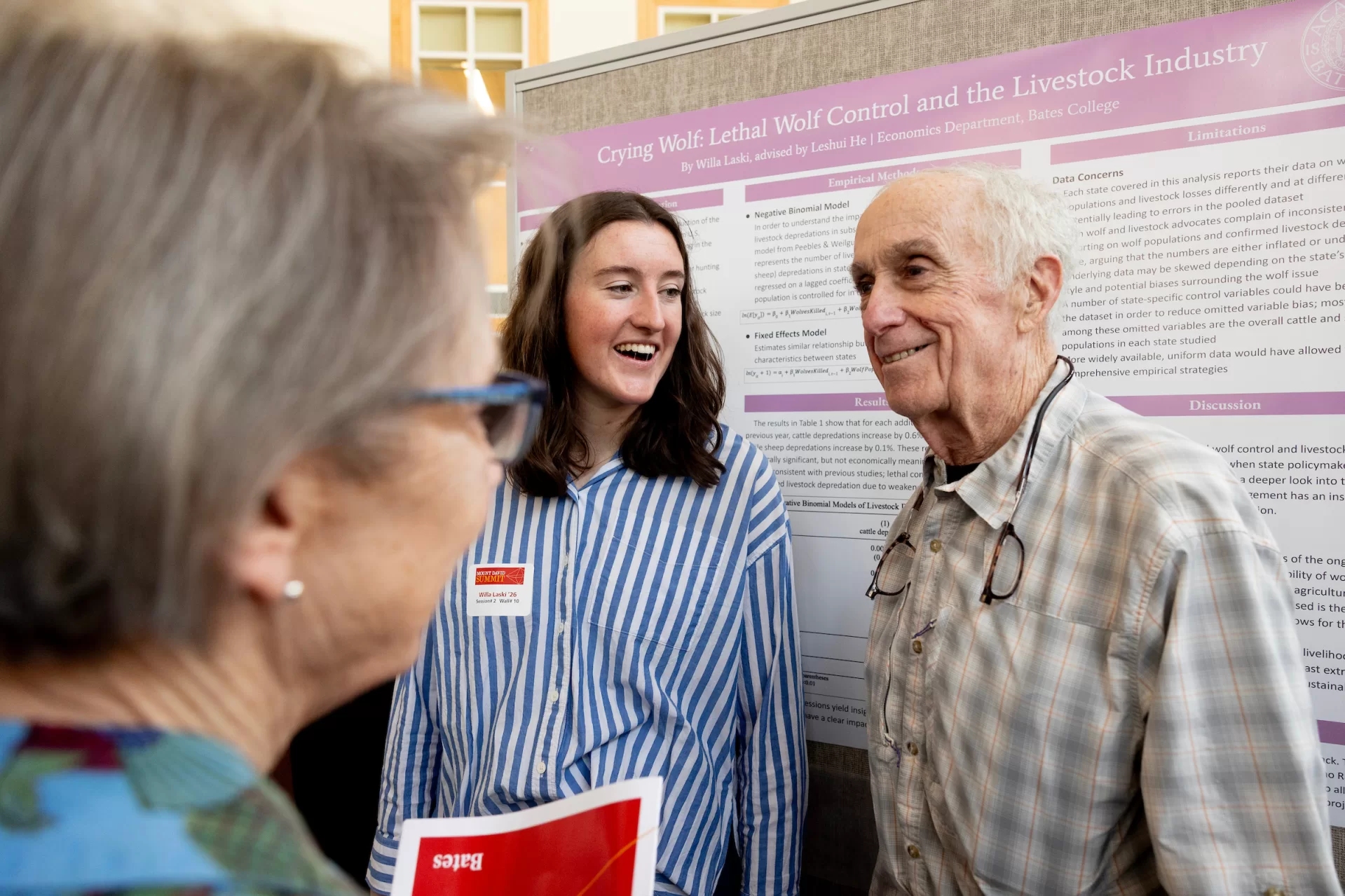
Economics major Willa Laski ’26 of Bellevue, Idaho, presented a poster on her senior thesis research investigating the relationship between the reintroduction of the gray wolf to the western U.S. and the livestock ranching industry in that region. Laski’s research found that lethal control of wolf populations did not have a statistically significant effect on livestock depredation — meaning that controlling wolf populations with lethal measures did not meaningfully impact, positively or negatively, livestock populations.
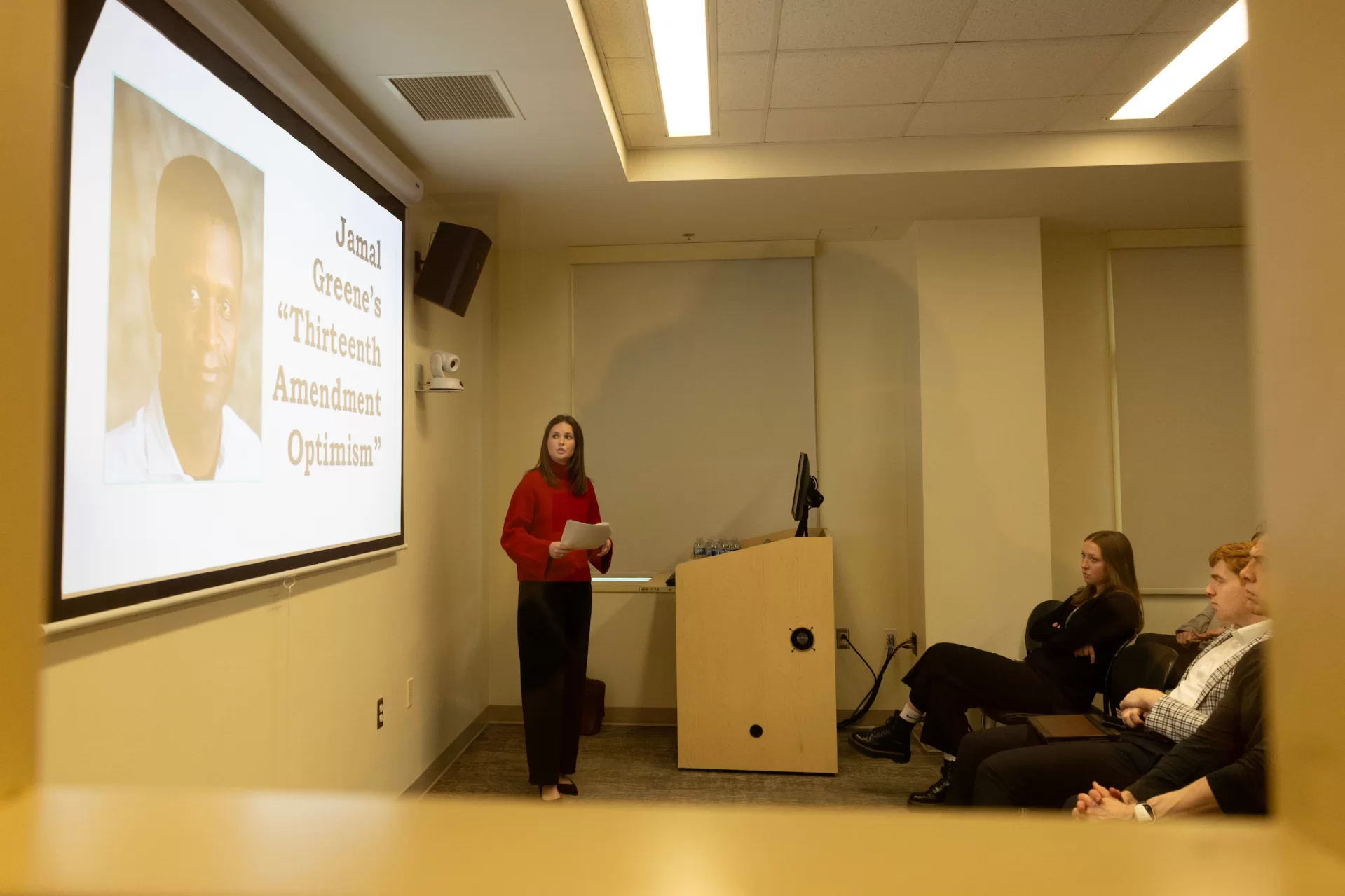
During a panel called “What’s Law Got To Do With It?” three senior politics students shared thesis research that explored the law and legal questions. Their presentations covered centuries of U.S. court precedent and legal writing — from research by Matthew Peeler of New York City exploring intricacies of legal language dating as far back as the 1700s, to research by Sammy Freeman of Dallas exploring how religious exercise arguments from a Jewish standpoint could be used to advocate for abortion access, to a literature review by Reese Hillman of Wayne, Penn., investigating division in the conservative legal movement during President Donald J. Trump’s second term in office.
“My thesis comes out of my desire to make sense of some of Donald Trump’s more puzzling legal actions this year,” Hillman said.
And as psychology major and community-engaged research fellow Katie Heumann ’26 of Ann Arbor, Mich., shared during the Harward Center’s presentation, civic engagement can begin long before adulthood. Heumann researched how students experience civic engagement in elementary school classrooms in Lewiston through collective participation and norms like classroom jobs, development of individual agency, and socialization.
“A lot of these classrooms really fostered pro- social behaviors,” Heumann said. “These were things like respect and kindness, but more importantly, inclusivity. Being a friend to all, celebrating one another, being inclusive, being friends to boys and girls were some of the key things that students talked about.
Arts and Humanities
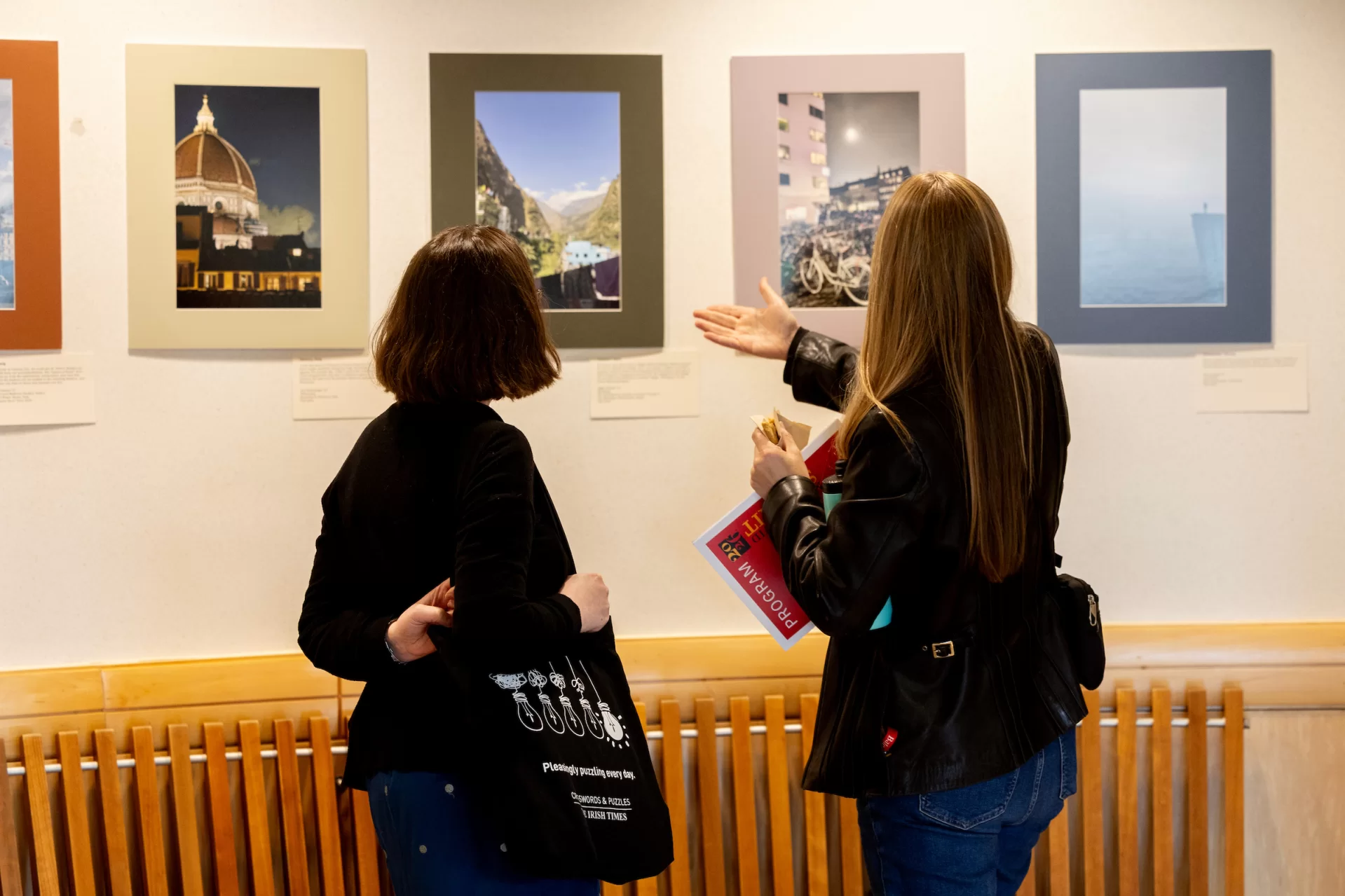
Lining the walls of Perry Atrium, on the edge of the bustling crowds at the poster presentation, were more than 50 photos from the Barlow Off-Campus Study Photography exhibition featuring countries like Nepal, Chile, Hungary, France, Japan, China, and the Netherlands.
Some students, like religious studies major Shay Campolongo ’26 of Midlothian, Va., found ways to incorporate visual art into their thesis projects on other subjects. For her thesis research on how people understand and memorialize the United States’ Japanese-American internment camps during World War II, with particular attention to memorialization of Buddhists in the camps, Campolongo invited Bates faculty, staff, and students to two listening sessions prior to Mount David Summit where she presented her research, led discussions, and invited attendees to fold paper cranes. These cranes, made in every color of the rainbow and with intricate patterns, lined her poster during Mount David Summit.
“Japanese-American internment is a piece of history that is often forgotten, but especially the Buddhist lens, and the way that it was not only racially but religiously motivated,” Campolongo said.
Catalina Passino ’26 of Leesburg, Va., a community-engaged research fellow who presented during the Harward Center’s panel, connected her psychology thesis research to visual art, inspired by her experience taking ceramics classes at Bates.
“I was just amazed about how clay affected me and the restorative effects that I felt personally,” Passino said. “I thought, ‘Man, we should study this beyond just me.’”
Passino organized an eight-week clay workshop for children in the Lewiston-Auburn immigrant and refugee community and observed how the children experienced mindfulness, resilience, belonging, and emotional regulation throughout the workshop. For their final project, Passino asked the children to create a clay pot that represented each of them, resulting in a collection of unique pieces that Passino displayed in Olin Arts Center.
Connor Gerraughty ’26 of Hartsdale, N.Y., presented work on synoptic surveillance in The Truman Show, a project which emerged after a patient process of selecting just the right film and finding just the right lens through which to read the film. Though he certainly learned about Foucault and film along the way, his biggest takeaway was about the writing process. “There is no perfect, is what I realized,” Gerraughty said. “It’s basically just improving and improving. You could work on it forever and you could still make it better.”
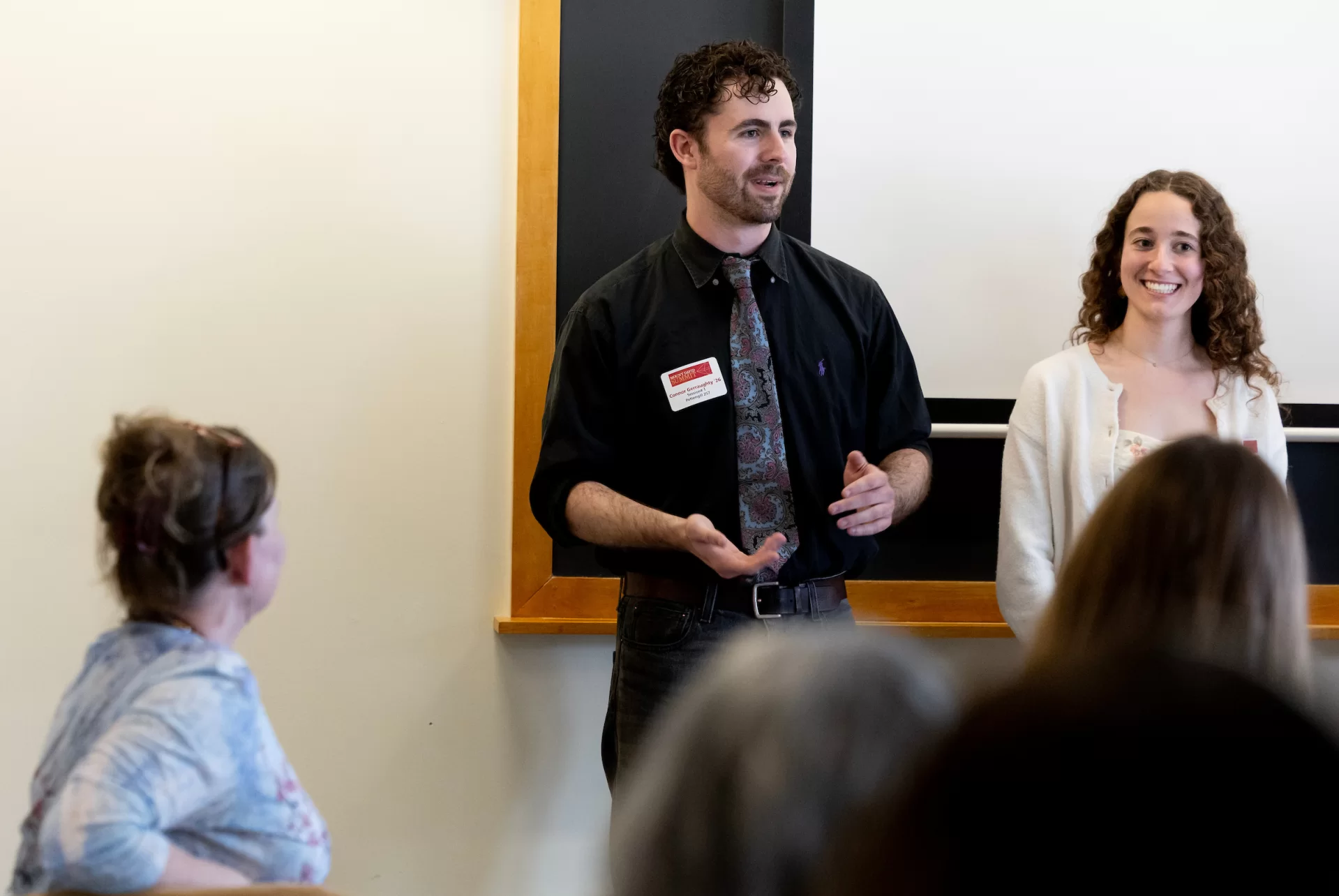
In response, his advisor, Professor of Rhetoric, Film, and Screen Studies Stephanie Kelley-Romano said, “I’m so heartened to hear that it wasn’t going to be perfect and you’re okay with that. I love it. My job here is done.”
Faculty Featured
Stephanie Kelley-Romano
Professor of Rhetoric, Film, and Screen Studies