Bates welcomed 11 new tenured or tenure-track faculty for the 2026-2027 academic year, and Bates News is highlighting these faculty in three installments. Read about our new faculty here and here, and read below for the final group of new faculty this year.
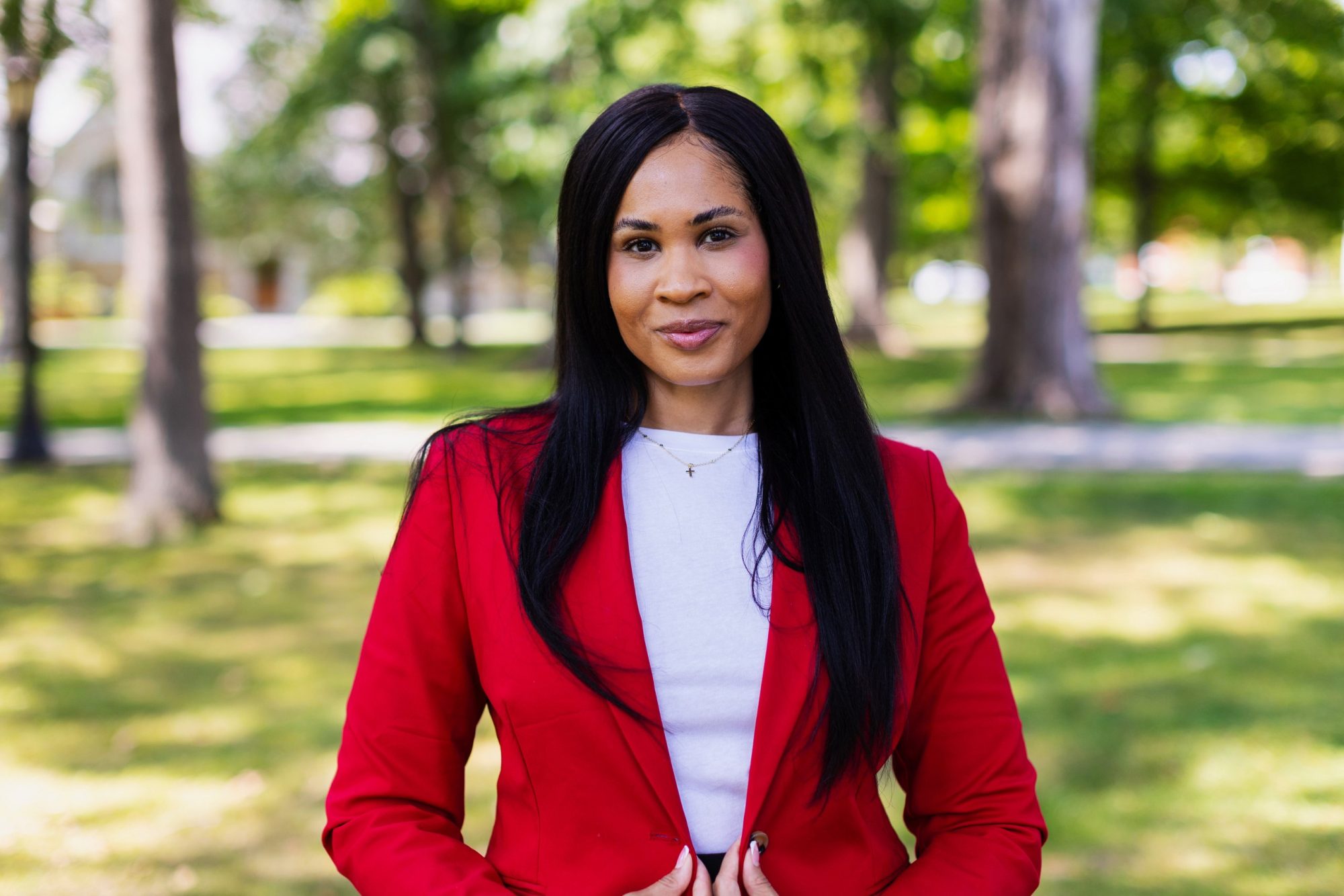
Camille Borders, assistant professor of history
Tell us a little bit about yourself.
At my core, I am a Midwesterner with a deep love of storytelling. Growing up in Cincinnati along the Ohio River, where many enslaved people crossed to claim their freedom, my scholarly and teaching passions are framed by a desire to excavate lesser-known narratives of Black life. My goal is to make the history of the United States interesting, accessible, and exciting to my classrooms and to communities outside of the college. Importantly, there is no monolithic narrative of our country, and I feel called to elevate the voices and stories of those often obscured or left out. I deeply know that building a truer narrative of our collective past is transformative. Over the past 10 years, I have moved more than 12 times across three continents, and I look forward to settling in and making Lewiston my home. Along with history, I love to weight lift, meditate, read historical romance novels, and spend time with my family.
Tell us about your teaching and scholarship.
As a social historian of 19th and 20th century U.S. history with a specialty in women’s history and Black feminist thought, I will be teaching “African American Women’s History” this fall. This course is triple-listed across one department and two programs, highlighting the inherent interdisciplinary nature of my work! Overall, within my work, I seek to understand how Black people in America built, resisted, and thrived under the shadows of social and political domination. I think about the archives in expansive ways, utilizing government documents, children’s books, poetry, visual art, and sound. As a lover of British sleuth television (Sherlock and Midsomer Murders) I truly believe being a good historian is the same as being a good detective. We locate clues, read between the lines, and are ruthless pursuers of some sort of truth. In the classroom, I cannot wait to get students to begin looking at primary sources and unearthing their own conclusions. We will be doing this weekly in my fall course, along with a visit to the Muskie Archives to learn about the important African American history happening on campus in the 19th century.
What are you most excited about in the coming year at Bates?
I am excited to get to know my students! I came to Bates because I knew a small liberal arts campus would be the place where I could contribute the most. I look forward to building an intellectual community with my students, learning who they are and what they care about, and integrating their passions into my courses and syllabi. As someone new to the region, I am excited to learn more about Maine and do some hiking, especially in Acadia National Park. And as the temperatures dip, I look forward to sampling some snow-related hobbies, like skiing for the first time, though I think snowshoeing may be more up my alley. I’ll also be on the sidelines supporting my students at their sporting events. I was once a rower, so I will definitely attend a regatta.
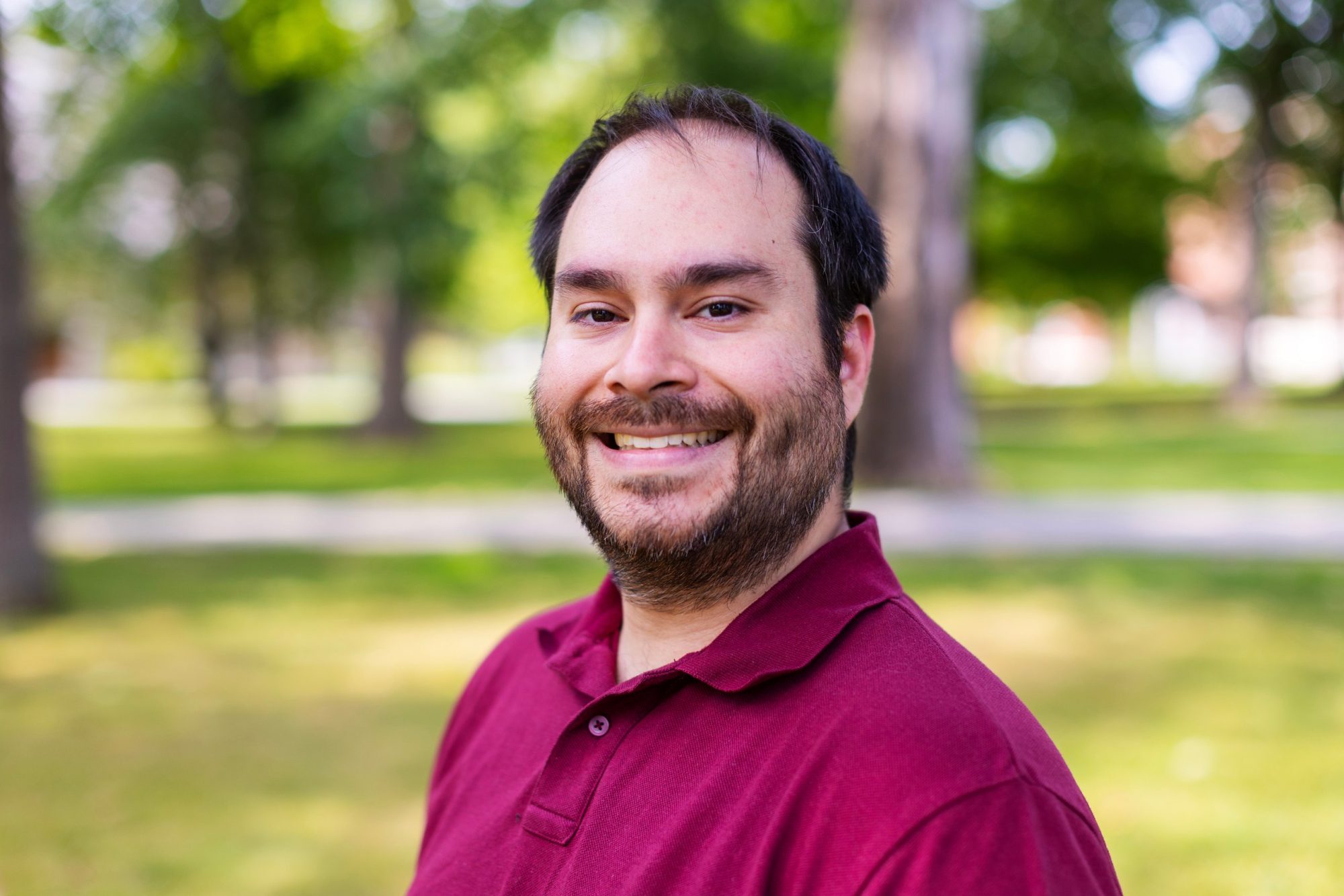
Leonardo dos Anjos Cunha, assistant professor of chemistry and biochemistry
Tell us a little bit about yourself.
My academic journey started in Brazil, where I earned a bachelor’s degree in electronics engineering and a master’s in physics. After realizing I could combine my passion for chemistry with the relative safety of working with computers, rather than in a traditional wet lab, I moved to California to pursue a Ph.D. in computational chemistry at the University of California, Berkeley, graduating in 2023. For the past three years, I have been a Flatiron Research Fellow at the Center for Computational Quantum Physics in New York City, where I studied exotic molecular properties that arise when light interacts strongly with electrons. Outside the classroom and the lab, I enjoy photographing wildlife (mostly squirrels so far), hiking, and exploring new places, so I am excited to see what Maine’s nature has to offer.
What is the focus of your teaching and scholarship?
At Bates, I will be teaching general and physical chemistry courses and mentoring students on their senior research projects. My research lab uses computational methods to model complex chemical systems. We are working to make these calculations more efficient so we can better understand how light-sensitive molecules store energy and convert it to more useful forms. Additionally, we are interested in exploring the unique properties of heavy elements to design better catalysts for chemical reactions and new materials that could advance quantum computing technologies.
What are you most excited about in the coming year at Bates?
I am most excited to supervise and mentor students. I look forward to guiding them as they combine the knowledge they have acquired throughout their coursework at Bates with tools from computational chemistry to tackle pressing challenges in energy, catalysis, and materials science. I am also eager to engage with the broader academic community at Bates, learning from my colleagues how they effectively integrate inclusive teaching and research into their classrooms and labs. Finally, on a non-academic note, I am particularly looking forward to experiencing the vibrant fall colors here, especially around the Quad.
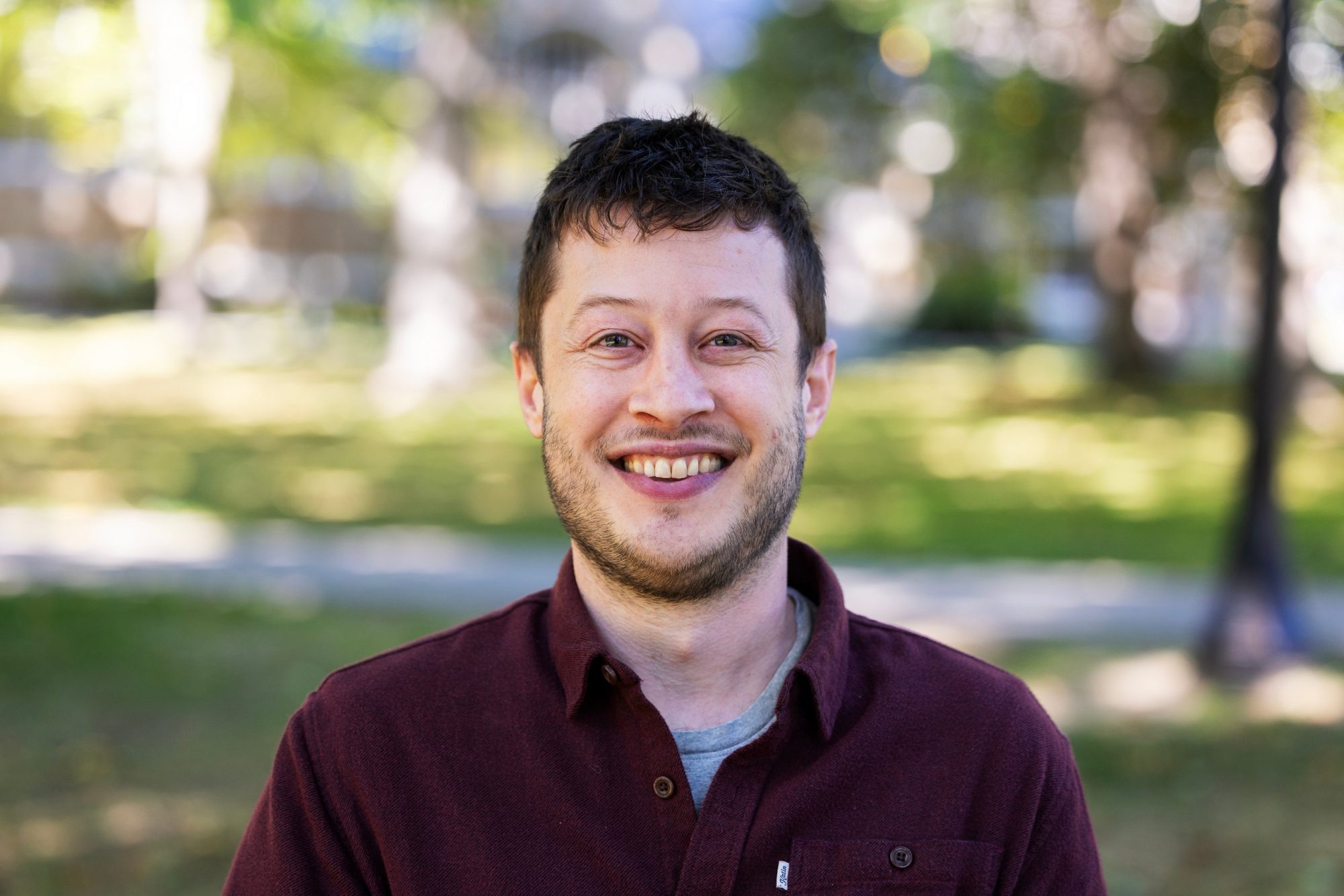
Curtis Morrill, assistant professor of economics
Tell us a little bit about yourself.
I’m an applied microeconomist working at the intersection of political economy, public economics, criminal justice, and economic development. Across both U.S. and international settings, my research examines how poverty and inequality shape—and are shaped by—government institutions. As a former liberal arts student, I feel fortunate to be back in this environment, where I can pursue meaningful questions with the intellectual flexibility and breadth that Bates encourages. Outside the classroom, I enjoy canoeing, birding, cross-country skiing, and watching Derrick White play basketball.
What is the focus of your teaching and scholarship?
My current research explores a wide variety of interactions between poverty and state institutions — from the effects of international aid on local political outcomes to the impact of criminal record remediation on future employment outcomes. In my teaching to date, I’ve designed courses that allow students to explore questions in these same spaces, and these topics have been brought to life by students who bring such a broad range of perspectives and lived experience to the classroom. Having taught at Bates as a visitor over the past several years, some of the most meaningful interactions I’ve had with students have come while guiding projects on housing assistance and educational outcomes, gang violence in a student’s home country, gender pay disparities in STEM, and other topics of personal significance.
What are you most excited about in the coming year at Bates?
So many things. In the classroom, I’ll be teaching both “Econometrics” and “Senior Thesis,” which gives me the chance to introduce students to modern empirical inquiry and then help them use that toolkit to pursue questions they’re passionate about. In my own research, I’m excited to bring new data online to study the long-run consequences of the 2012 Massachusetts drug lab scandal, which dramatically altered the criminal records of tens of thousands of individuals. Outside of work, I’m looking forward to exploring more of Maine’s wilderness and getting to know life in the Portland area.
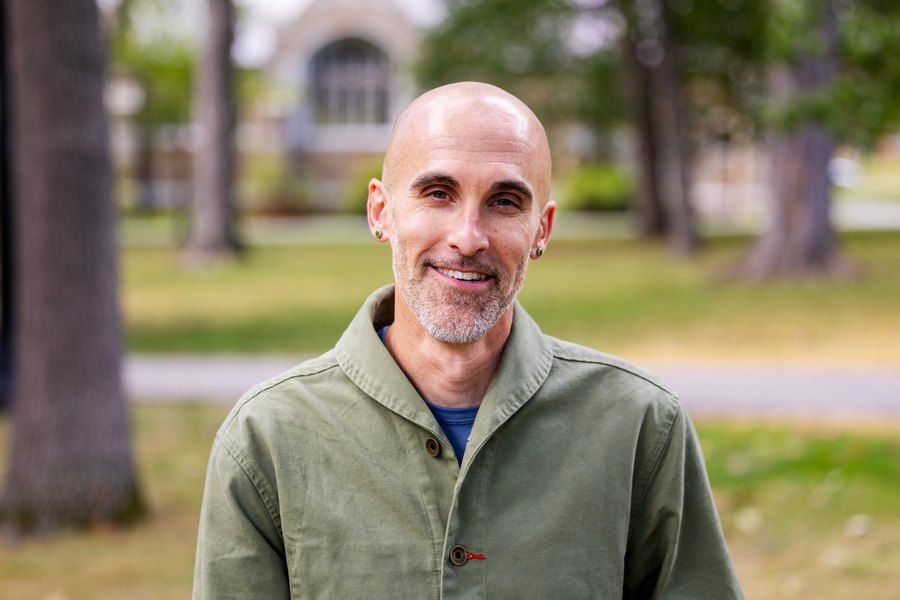
P. Khalil Saucier, professor of Africana Studies
Tell us a little bit about yourself.
I am a teacher and writer who works collaboratively and collectively in the classroom and in research. I am currently working on a three-part series that explores the entanglement of race, sports, and outdoor leisure. The first monograph is titled Black Frames: (Anti)Blackness and the Sport of Cycling, a book that addresses the place of cycling within Black diasporic struggles for freedom and recognition within contemporary “post-racial” America. The second and third book projects are tentatively called Angling for Change: Fly Fishing and Black Lives and Hunting for Diversity: The Hidden Heritage of Black Hunters and Conservation. Both books engage with socio-cultural notions of racial and ethnic identity by exploring the ways in which Black fly fishers and Black hunters negotiate their identity through multiple articulations of diaspora, community, the outdoors, and more.
What is the focus of your teaching and scholarship?
Taken collectively, both my scholarship and teaching analyze the entanglement between race and various socio-cultural spaces as a means to disrupt normative assumptions of Western social thought and rethink the civic and existential aims of education. In doing so, my hope is always to create the conditions for careful study, greater self-awareness, and a reordering of consciousness that creates the conditions for (collective) response, rather than reaction. That is, my aim is to cultivate an optical alternative to seeing this world and by extension explore how to think about it, rather than what to think about it.
What are you most excited about in the coming year at Bates?
At first blush, I am looking forward to developing and teaching some new courses. Specifically, I am looking forward to teaching “Race and the Great Outdoors: Past and Present” during the upcoming winter term. This course will explore Black people’s relationship with nature and outdoor recreation, as well as the public imagination and by extension perception of Black people in outdoor spaces hunting, fishing, foraging, hiking, and more. Additionally, I am eager to work with students in ways that not only prepare them for the world, but also in ways that permit students to question the authority, adequacy, and normativity of received traditions of knowledge and power, in turn fostering new directions for research and new conceptual spaces for the yet unborn answers.
Faculty Featured

Camille A. Borders
Assistant Professor of History
P. Khalil Saucier
Professor of Africana
Curtis S. Morrill
Assistant Professor of Economics
Leonardo dos Anjos Cunha
Assistant Professor of Chemistry and Biochemistry
Categories BatesNews