History at Bates

The past is everywhere around us, baked into the structures, narratives, and questions that shape our society.

The Department of History at Bates centers on exploring the past in order to help us better understand our present. Students examine evidence left by those who lived before us in order to make sense of their decisions, and how and why societies change.

Contact Us

Karen Melvin
Thomas Hedley Reynolds Professor of History
Pettengill Hall
kmelvin@bates.edu

What You Will Learn

garnet iconography with open book, magnifying glass, and books on a shelf
To hone your ability to evaluate evidence

garnet iconography with stack of papers, pen, chat bubbles, and lightbulb
How to construct well-reasoned arguments

garnet iconography with academic building and people with chat bubble
To communicate your findings clearly for a diverse audience

garnet iconography with desktop computer, globe, and brain
To understand how systems of domination and oppression were created and sustained

garnet iconography with people, presentation slide, and academic building
How to present your work at local and national conferences
garnet iconography with stack of papers, graduation cap, and stack of books
To craft papers that are submitted and potentially published in journals of undergraduate research

Life After Bates

History majors graduate from Bates informed thinkers ready to contribute to their communities and to thrive in their lives. The skills they’ve learned transfer readily to history-related fields, such as teaching and museum work, but also to a limitless range of professions. Students have gone on to top graduate and professional programs, attended Oxford as Marshall scholars, and served around the world as Fulbright grantees. Recent majors are flourishing as lawyers, engineers, doctors, journalists, public health experts, and corporate executives.

90%

of 2020-2024 humanities graduates are employed and/or attending graduate school

  • University of Oxford
  • Harvard University
  • University of Pennsylvania
  • University of California, Berkeley
  • Duke University
  • Northwestern University
  • University College London
  • University of Edinburgh
  • Emory University
  • Vanderbilt University
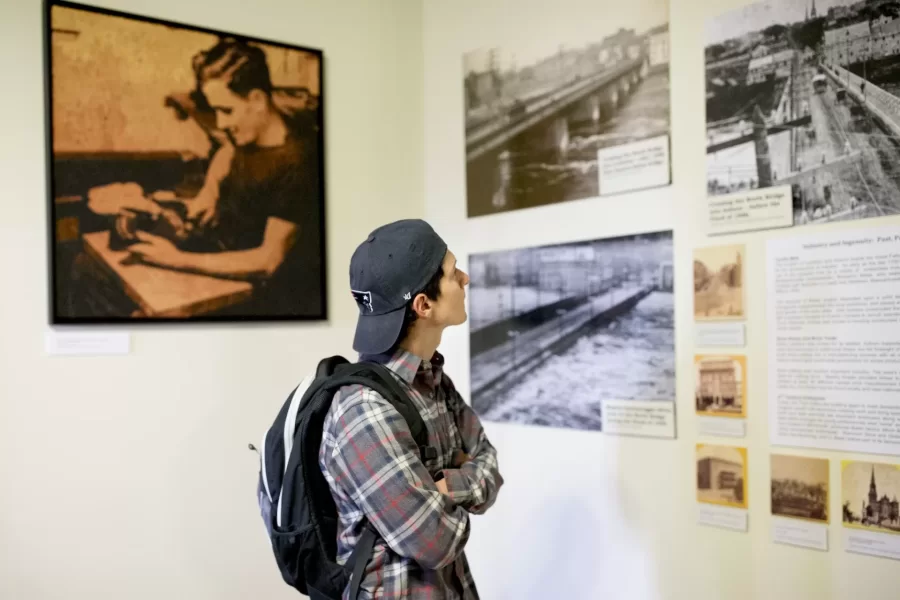
Students in the "Introduction to Historical Methods" Short Term unit taught by historians Margaret Creighton and Hilmar Jensen take a walking tour of Lewiston led by local attorney Elliott Epstein, founder of Museum L-A. The focus of this year's course is immigration. Here, the group stops to view the Basilica of Saints Peter and Paul on Ash Street, including sophomores James Erwin, Ben Aicher, George Bishop and Cristopher Hernandez Sifontes. 

Class list
Ben Aicher 
George Bishop (not on Quebec City trip)
Andrew Cahill
Mike Cronin
Brooke Drabkin
Jack Dugan
James Erwin
Kevin Franco
Lucas Gillespie
Tim Grogan
Quinn Hayward
Cristopher Hernandez Sifontes
Josh Leiner
Kiernan Majerus-Collins
Peter McIntyre
Matt Morris
Daniel Murphy
Marianna Paone
Halley Posner
Collin Richardson
Bridget Ruff
Lily Shi
Sophia Thayer
Andrew Veilleux
Justin Zukowski

Professor of History Margaret Creighton
Associate Professor of  History Hilmar Jensen
Teaching Assistants: Evan Molinari and Madeleine

Students in the “Introduction to Historical Methods” Short Term unit taught by historians Margaret Creighton and Hilmar Jensen take a walking tour of Lewiston led by local attorney Elliott Epstein, founder of Museum L-A. The focus of this year’s course is immigration. Here, the group stops to view the Basilica of Saints Peter and Paul on Ash Street, including sophomores James Erwin, Ben Aicher, George Bishop and Cristopher Hernandez Sifontes. Class list Ben Aicher George Bishop (not on Quebec City trip) Andrew Cahill Mike Cronin Brooke Drabkin Jack Dugan James Erwin Kevin Franco Lucas Gillespie Tim Grogan Quinn Hayward Cristopher Hernandez Sifontes Josh Leiner Kiernan Majerus-Collins Peter McIntyre Matt Morris Daniel Murphy Marianna Paone Halley Posner Collin Richardson Bridget Ruff Lily Shi Sophia Thayer Andrew Veilleux Justin Zukowski Professor of History Margaret Creighton Associate Professor of History Hilmar Jensen Teaching Assistants: Evan Molinari and Madeleine

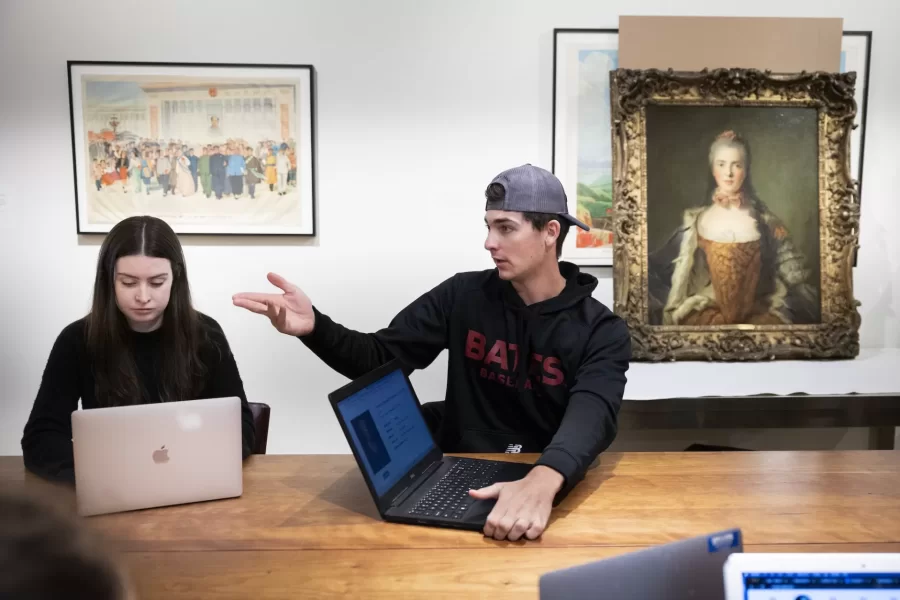
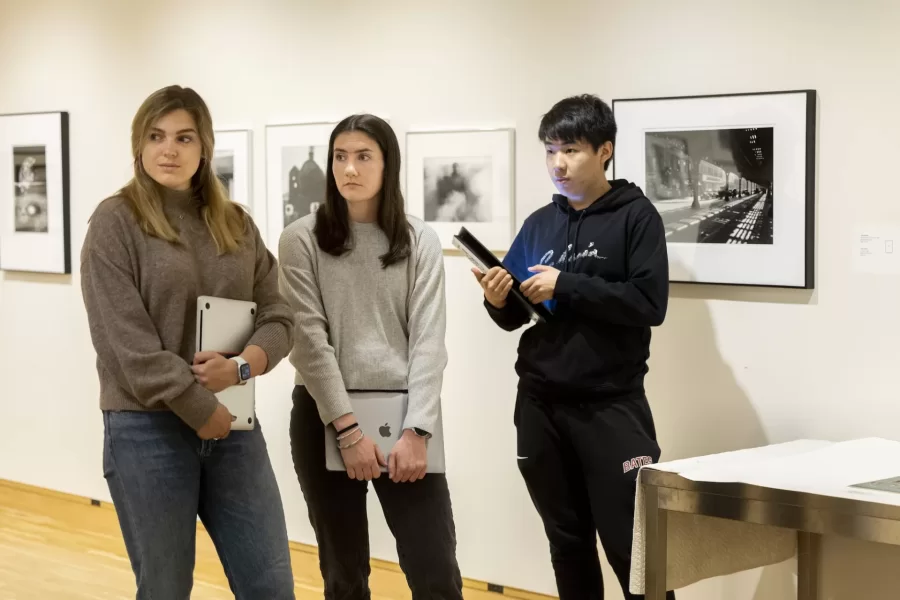
Historical Methods class, taught by Associate Professor of History Caroline Shaw, meets in the Lower Gallery of the Museum of Art in the Olin Arts Center. Working with Peter Philbin ’22, assistant museum curator, the students broke into several groups to consider four works of art, and how they would use that artwork along with other pieces in the museum collection, to create an exhibition.

HIST 399 - Historical Methods
This seminar refines students' proficiency as historians and prepares them to write their senior thesis. The course is designed around two interrelated goals. First, students analyze how different approaches to history and sources matter to understandings of the past. Second, students design and test their own arguments, drawing upon critical readings of primary sources and close engagement with historiography. The course culminates in the completion of individual thesis proposals. Prerequisite(s): one HIST 301 seminar.

Students at table, from head of the table, left:

Hanna Matthews ’24, brown sweater, long blonde hair
Matt Connelly ’24, white shirt
Chris Ly ’24, black hoodie
Emily Everett ’24, light gray sweater
Bridget Lee ’24, gray sweater, brown pants
Ben Fasciano ’23, gray sweater
James Guinee ’24,blue/green sweater
Ned Farrington ’24, blue flannel
Sebastien Kleitman ’24, black hat
Luke Linnehan ’24, black baseball hoodie and hat
Campbell McKendry ’24, black sweater, brown hat

Historical Methods class, taught by Associate Professor of History Caroline Shaw, meets in the Lower Gallery of the Museum of Art in the Olin Arts Center. Working with Peter Philbin ’22, assistant museum curator, the students broke into several groups to consider four works of art, and how they would use that artwork along with other pieces in the museum collection, to create an exhibition. HIST 399 – Historical Methods This seminar refines students’ proficiency as historians and prepares them to write their senior thesis. The course is designed around two interrelated goals. First, students analyze how different approaches to history and sources matter to understandings of the past. Second, students design and test their own arguments, drawing upon critical readings of primary sources and close engagement with historiography. The course culminates in the completion of individual thesis proposals. Prerequisite(s): one HIST 301 seminar. Students at table, from head of the table, left: Hanna Matthews ’24, brown sweater, long blonde hair Matt Connelly ’24, white shirt Chris Ly ’24, black hoodie Emily Everett ’24, light gray sweater Bridget Lee ’24, gray sweater, brown pants Ben Fasciano ’23, gray sweater James Guinee ’24,blue/green sweater Ned Farrington ’24, blue flannel Sebastien Kleitman ’24, black hat Luke Linnehan ’24, black baseball hoodie and hat Campbell McKendry ’24, black sweater, brown hat

"HOW COLLEGES CONFRONT THEIR RACIST PASTS”
February 28that 7 pm
Pettengill Hall, G21

Sponsored by the Department of History

Kristen Doerer (in red and black blazer) a freelance journalist based in Washington, DC. She has written for the PBS NewsHour, The Guardian, The Chronicle of Higher Education, and Teen Vogue, among others. She has covered topics ranging from the business of women's boxing and youth gun control activism to solutions in higher education and national U.S. politics. Doerer graduated from Bates College in 2014, with a degree in U.S. history. 
____________________________

Joe Hall, associate professor history

Pat Webber, Information & Library Services
Director of Archives and Special Collections, Muskie Archives

Caitlin Lampman, Information & Library Services, Reference and Outreach Archivist, Muskie Archives

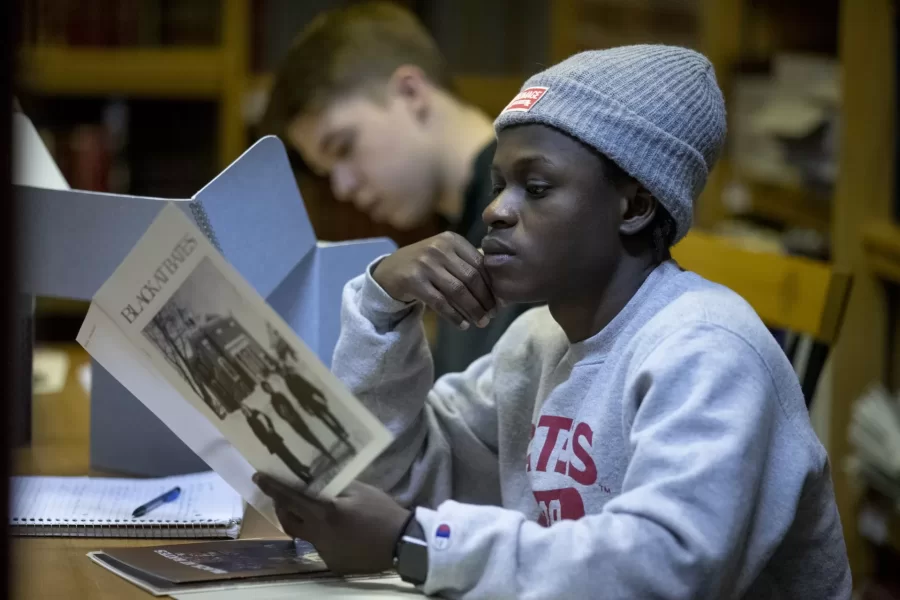
Student is Joe Hall's historical methods course visit the Muskie Archives where they learned about what the Archives has to offer and examined materials that included papers from Oren Chaney and the Bates Debte Society, as well as printed materials from Admission promoting the College.

Ursula Rall, glasses and black/gray sweater
Evandro Monteiro, hoodie with scarf
Nell Pearson, stripes
Annabel Mahon, grey sweater and scarf
Benni Magnusson McComish, green plaid
Eric Opoky, gray hat and Bates sweatshirt
Ke'ala Brosseau, black sweater
Andrew Facing, green sweater
Zach Jonas, white button-down shirt, black pattern
Xin "Judy" Wang '20, blazer, necklace
 
. Students in Associate Professor of History Joe Hall’s historical methods course visit the Muskie Archives where they learned about what the Archives has to offer and examined materials that included papers from Oren Chaney and the Bates Debate Society, as well as printed materials from Admission promoting the College.  From left, Benni Magnusson McComish, Zach Jonas, Eric Opoku, Andrew Fasciano, and Ke'ala Brosseau.

“HOW COLLEGES CONFRONT THEIR RACIST PASTS” February 28that 7 pm Pettengill Hall, G21 Sponsored by the Department of History Kristen Doerer (in red and black blazer) a freelance journalist based in Washington, DC. She has written for the PBS NewsHour, The Guardian, The Chronicle of Higher Education, and Teen Vogue, among others. She has covered topics ranging from the business of women’s boxing and youth gun control activism to solutions in higher education and national U.S. politics. Doerer graduated from Bates College in 2014, with a degree in U.S. history. ____________________________ Joe Hall, associate professor history Pat Webber, Information & Library Services Director of Archives and Special Collections, Muskie Archives Caitlin Lampman, Information & Library Services, Reference and Outreach Archivist, Muskie Archives Student is Joe Hall’s historical methods course visit the Muskie Archives where they learned about what the Archives has to offer and examined materials that included papers from Oren Chaney and the Bates Debte Society, as well as printed materials from Admission promoting the College. Ursula Rall, glasses and black/gray sweater Evandro Monteiro, hoodie with scarf Nell Pearson, stripes Annabel Mahon, grey sweater and scarf Benni Magnusson McComish, green plaid Eric Opoky, gray hat and Bates sweatshirt Ke’ala Brosseau, black sweater Andrew Facing, green sweater Zach Jonas, white button-down shirt, black pattern Xin “Judy” Wang ’20, blazer, necklace . Students in Associate Professor of History Joe Hall’s historical methods course visit the Muskie Archives where they learned about what the Archives has to offer and examined materials that included papers from Oren Chaney and the Bates Debate Society, as well as printed materials from Admission promoting the College. From left, Benni Magnusson McComish, Zach Jonas, Eric Opoku, Andrew Fasciano, and Ke’ala Brosseau.

Historical Methods class, taught by Associate Professor of History Caroline Shaw, meets in the Lower Gallery of the Museum of Art in the Olin Arts Center. Working with Peter Philbin í22, assistant museum curator, the students broke into several groups to consider four works of art, and how they would use that artwork along with other pieces in the museum collection, to create an exhibition.

HIST 399 - Historical Methods
This seminar refines students' proficiency as historians and prepares them to write their senior thesis. The course is designed around two interrelated goals. First, students analyze how different approaches to history and sources matter to understandings of the past. Second, students design and test their own arguments, drawing upon critical readings of primary sources and close engagement with historiography. The course culminates in the completion of individual thesis proposals. Prerequisite(s): one HIST 301 seminar.

Students at table, from head of the table, left:

Hanna Matthews í24, brown sweater, long blonde hair
Matt Connelly í24, white shirt
Chris Ly í24, black hoodie
Emily Everett í24, light gray sweater
Bridget Lee í24, gray sweater, brown pants
Ben Fasciano í23, gray sweater
James Guinee í24,blue/green sweater
Ned Farrington í24, blue flannel
Sebastien Kleitman í24, black hat
Luke Linnehan í24, black baseball hoodie and hat
Campbell McKendry í24, black sweater, brown hat

Historical Methods class, taught by Associate Professor of History Caroline Shaw, meets in the Lower Gallery of the Museum of Art in the Olin Arts Center. Working with Peter Philbin í22, assistant museum curator, the students broke into several groups to consider four works of art, and how they would use that artwork along with other pieces in the museum collection, to create an exhibition. HIST 399 – Historical Methods This seminar refines students’ proficiency as historians and prepares them to write their senior thesis. The course is designed around two interrelated goals. First, students analyze how different approaches to history and sources matter to understandings of the past. Second, students design and test their own arguments, drawing upon critical readings of primary sources and close engagement with historiography. The course culminates in the completion of individual thesis proposals. Prerequisite(s): one HIST 301 seminar. Students at table, from head of the table, left: Hanna Matthews í24, brown sweater, long blonde hair Matt Connelly í24, white shirt Chris Ly í24, black hoodie Emily Everett í24, light gray sweater Bridget Lee í24, gray sweater, brown pants Ben Fasciano í23, gray sweater James Guinee í24,blue/green sweater Ned Farrington í24, blue flannel Sebastien Kleitman í24, black hat Luke Linnehan í24, black baseball hoodie and hat Campbell McKendry í24, black sweater, brown hat

Unveiling Histories of of Lewiston on Dec. 10, 2024 at Maine MILL, 35 Canal Street, that included a performance and talkback by students of Assistant Professor of Theater Amy Huang.

The students bring Lewiston’s history to life in original, devised performances rooted in archival research. 

Please join us for a unique opportunity to hear stories from Lewiston's past brought to life in several short performances by Bates students. Students in professor Amy Huang's Devising Performance class conducted archival research during the past semester and now look forward to sharing some of their findings through short, devised performances at the Maine MILL, 35 Canal Street in Lewiston. This Tuesday at 7:00 pm. Free and open to the public.

Devising is a contemporary performance-making practice that declines the traditional single author/choreographer/director/script model of theater in favor of a collaborative approach to generating themes, content, forms, and aesthetics for creating performance. In this hybrid course students learn about devising practices, theories, and politics through the exploration of how performance companies work in this generative space, and explore devising techniques to practice these methodologies in action.

Unveiling Histories of of Lewiston on Dec. 10, 2024 at Maine MILL, 35 Canal Street, that included a performance and talkback by students of Assistant Professor of Theater Amy Huang. The students bring Lewiston’s history to life in original, devised performances rooted in archival research. Please join us for a unique opportunity to hear stories from Lewiston’s past brought to life in several short performances by Bates students. Students in professor Amy Huang’s Devising Performance class conducted archival research during the past semester and now look forward to sharing some of their findings through short, devised performances at the Maine MILL, 35 Canal Street in Lewiston. This Tuesday at 7:00 pm. Free and open to the public. Devising is a contemporary performance-making practice that declines the traditional single author/choreographer/director/script model of theater in favor of a collaborative approach to generating themes, content, forms, and aesthetics for creating performance. In this hybrid course students learn about devising practices, theories, and politics through the exploration of how performance companies work in this generative space, and explore devising techniques to practice these methodologies in action.

Historical Methods class, taught by Associate Professor of History Caroline Shaw, meets in the Lower Gallery of the Museum of Art in the Olin Arts Center. Working with Peter Philbin í22, assistant museum curator, the students broke into several groups to consider four works of art, and how they would use that artwork along with other pieces in the museum collection, to create an exhibition.

HIST 399 - Historical Methods
This seminar refines students' proficiency as historians and prepares them to write their senior thesis. The course is designed around two interrelated goals. First, students analyze how different approaches to history and sources matter to understandings of the past. Second, students design and test their own arguments, drawing upon critical readings of primary sources and close engagement with historiography. The course culminates in the completion of individual thesis proposals. Prerequisite(s): one HIST 301 seminar.

Students at table, from head of the table, left:

Hanna Matthews í24, brown sweater, long blonde hair
Matt Connelly í24, white shirt
Chris Ly í24, black hoodie
Emily Everett í24, light gray sweater
Bridget Lee í24, gray sweater, brown pants
Ben Fasciano í23, gray sweater
James Guinee í24,blue/green sweater
Ned Farrington í24, blue flannel
Sebastien Kleitman í24, black hat
Luke Linnehan í24, black baseball hoodie and hat
Campbell McKendry í24, black sweater, brown hat

Historical Methods class, taught by Associate Professor of History Caroline Shaw, meets in the Lower Gallery of the Museum of Art in the Olin Arts Center. Working with Peter Philbin í22, assistant museum curator, the students broke into several groups to consider four works of art, and how they would use that artwork along with other pieces in the museum collection, to create an exhibition. HIST 399 – Historical Methods This seminar refines students’ proficiency as historians and prepares them to write their senior thesis. The course is designed around two interrelated goals. First, students analyze how different approaches to history and sources matter to understandings of the past. Second, students design and test their own arguments, drawing upon critical readings of primary sources and close engagement with historiography. The course culminates in the completion of individual thesis proposals. Prerequisite(s): one HIST 301 seminar. Students at table, from head of the table, left: Hanna Matthews í24, brown sweater, long blonde hair Matt Connelly í24, white shirt Chris Ly í24, black hoodie Emily Everett í24, light gray sweater Bridget Lee í24, gray sweater, brown pants Ben Fasciano í23, gray sweater James Guinee í24,blue/green sweater Ned Farrington í24, blue flannel Sebastien Kleitman í24, black hat Luke Linnehan í24, black baseball hoodie and hat Campbell McKendry í24, black sweater, brown hat

The history major guides students through a globe’s worth of history, from ancient Rome to the modern-day United States, from China and Latin America to Africa and Europe. Students work closely with faculty, partnering on research topics of their choosing to complete a senior thesis. You’ll have the chance to hold history in your hands in our on-campus archive and venture to museums during study abroad semesters. We prioritize making learning about history accessible to all students, so few of our courses have prerequisites; interested students are able to take almost any history class, even at the 200 and 300 levels.

Featured Courses

Photo of Frances R. Bell

Frances R. Bell

Visiting Assistant Professor of History

Photo of Erik Bernardino

Erik Bernardino

Assistant Professor of History

Photo of Sarah Bramao Ramos

Sarah Bramao Ramos

Visiting Assistant Professor of History

Photo of Wesley B. Chaney

Wesley B. Chaney

Associate Professor of History

Photo of Joseph M. Hall Jr.

Joseph M. Hall Jr.

Associate Professor of History

Photo of Sarah B. Lynch

Sarah B. Lynch

Assistant Professor of Classical and Medieval Studies

Photo of Karen Melvin

Karen Melvin

Thomas Hedley Reynolds Professor of History

Photo of Patrick W. Otim

Patrick W. Otim

Associate Professor of History

Photo of Zef M. Segal

Zef M. Segal

Visiting Assistant Professor of Digital and Computational Studies and History

Photo of Caroline E. Shaw

Caroline E. Shaw

Associate Professor of History

Photo of Anelise H. Shrout

Anelise H. Shrout

Associate Professor of Digital and Computational Studies

Photo of Mark L. Tizzoni

Mark L. Tizzoni

Assistant Professor of Classical and Medieval Studies

News & Events

Bates announces Stoddard Fitness and Well-Being Center and athletics facilities upgrades
March 5, 2026

Bates announces Stoddard Fitness and Well-Being Center and at…

Bates is embarking on a $45 million project to update two key athletic facilities and construct a new fitness and well-being center. A gift of $10 million from Jon W. Brayshaw ’90, P’25 and Jocelyn Stoddard Brayshaw ’88, P’25 has brought the college a vital step closer to construction. The new facility will be named the Stoddard Fitness and Well-Being Center. 

Over the woodlands brown and bare, over the harvest-fields forsaken, silent, and soft, and slow descends the snow. — Longfellow Back on campus after the February freak storm, Bates feels suspended between motion and stillness; cars crunch in half-melted tracks, boots drip by radiators, flights and plans still catching up somewhere in the clouds. Some of us are here, some are delayed, and the quiet holds space for both. It’s a strange return; rushed arrivals, late-night drives, weather maps open on our phones, yet the air itself feels calm, like the world pressed pause just long enough for us to notice it. The paradox is real; chaos in the forecast, steadiness on the quad. Snow does that. It softens edges, lowers voices, makes even a campus full of movement feel like it’s breathing slowly.
March 5, 2026

February at Bates

February on campus saw sports successes, several large snowfalls, and our annual Winter Carnival — a week of events celebrating the joys of the chilly season.