Welcome
The past is everywhere around us, baked into the structures, narratives, and questions that shape our society today. It is neither a single set of details etched in time nor a single account of lives and events now distanced from us.
What is History at Bates
The past is everywhere around us, baked into the structures, narratives, and questions that shape our society today. It is neither a single set of details etched in time nor a single account of lives and events now distanced from us. History as a discipline examines the very constructions of those pasts over time and emphasizes the dynamic means by which we come to understand, construct, and narrate it today.
Engaging in these constructions of the past requires us to identify and reckon with systems of knowledge and relationships of power in their varied contexts in a given location, and across communities, geographies, and across time. Such work requires great care. The past has often been invoked by people who have sought to support systems of oppression. The study of history helps us understand how these systems of domination were created and how they were and are sustained.
Our goal is to bring to the fore viable and ethical narratives about the past. We invite all students to our classes so that they can all, regardless of their embodied identities, recognize themselves as creators of history.
How we structure History classes at Bates
Our overarching goal for History at Bates is that courses are accessible to all students. We recognize that students enter our courses with a range of interests and experiences with the study of history. Few of our courses have prerequisites and none have them at the 100 and 200 levels. As a result, students may take almost any HIST course as their first History course, even though our courses are listed as 100-, 200-, and 300-level classes.
We encourage students to start at the 100 and 200 levels, which provide an entry into the discipline of history. All 100-level HIST courses introduce students to the methods of history. In them, students learn to analyze primary sources, to make arguments and use evidence, to consider how history is constructed, to recognize the importance of context, and to develop curiosity and empathy. Students continue to encounter and hone these approaches at 200- and 300-levels.
In the 301 seminars students think about history as a process and undertake independent research and writing related to the course’s topics. These classes are the department’s [W2] courses and set students up for the 399 Historical Methods class. HIST 399 reflects upon both the major and discipline and prepares students to undertake their own thesis research. Ideally, students take 399 the semester immediately preceding their thesis.
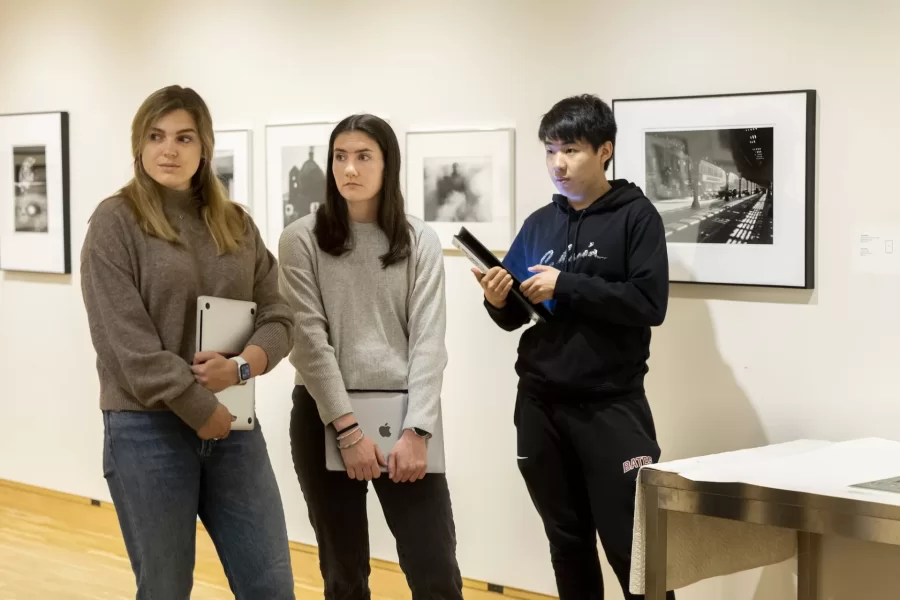
Historical Methods class, taught by Associate Professor of History Caroline Shaw, meets in the Lower Gallery of the Museum of Art in the Olin Arts Center. Working with Peter Philbin í22, assistant museum curator, the students broke into several groups to consider four works of art, and how they would use that artwork along with other pieces in the museum collection, to create an exhibition. HIST 399 – Historical Methods This seminar refines students’ proficiency as historians and prepares them to write their senior thesis. The course is designed around two interrelated goals. First, students analyze how different approaches to history and sources matter to understandings of the past. Second, students design and test their own arguments, drawing upon critical readings of primary sources and close engagement with historiography. The course culminates in the completion of individual thesis proposals. Prerequisite(s): one HIST 301 seminar. Students at table, from head of the table, left: Hanna Matthews í24, brown sweater, long blonde hair Matt Connelly í24, white shirt Chris Ly í24, black hoodie Emily Everett í24, light gray sweater Bridget Lee í24, gray sweater, brown pants Ben Fasciano í23, gray sweater James Guinee í24,blue/green sweater Ned Farrington í24, blue flannel Sebastien Kleitman í24, black hat Luke Linnehan í24, black baseball hoodie and hat Campbell McKendry í24, black sweater, brown hat
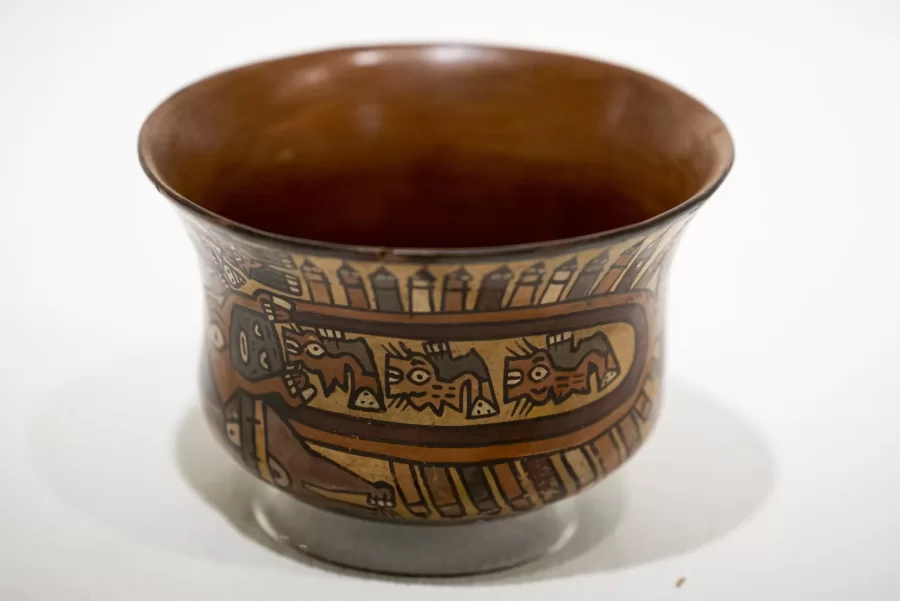
Historical Methods class, taught by Associate Professor of History Caroline Shaw, meets in the Lower Gallery of the Museum of Art in the Olin Arts Center. Working with Peter Philbin í22, assistant museum curator, the students broke into several groups to consider four works of art, and how they would use that artwork along with other pieces in the museum collection, to create an exhibition. HIST 399 – Historical Methods This seminar refines students’ proficiency as historians and prepares them to write their senior thesis. The course is designed around two interrelated goals. First, students analyze how different approaches to history and sources matter to understandings of the past. Second, students design and test their own arguments, drawing upon critical readings of primary sources and close engagement with historiography. The course culminates in the completion of individual thesis proposals. Prerequisite(s): one HIST 301 seminar. Students at table, from head of the table, left: Hanna Matthews í24, brown sweater, long blonde hair Matt Connelly í24, white shirt Chris Ly í24, black hoodie Emily Everett í24, light gray sweater Bridget Lee í24, gray sweater, brown pants Ben Fasciano í23, gray sweater James Guinee í24,blue/green sweater Ned Farrington í24, blue flannel Sebastien Kleitman í24, black hat Luke Linnehan í24, black baseball hoodie and hat Campbell McKendry í24, black sweater, brown hat
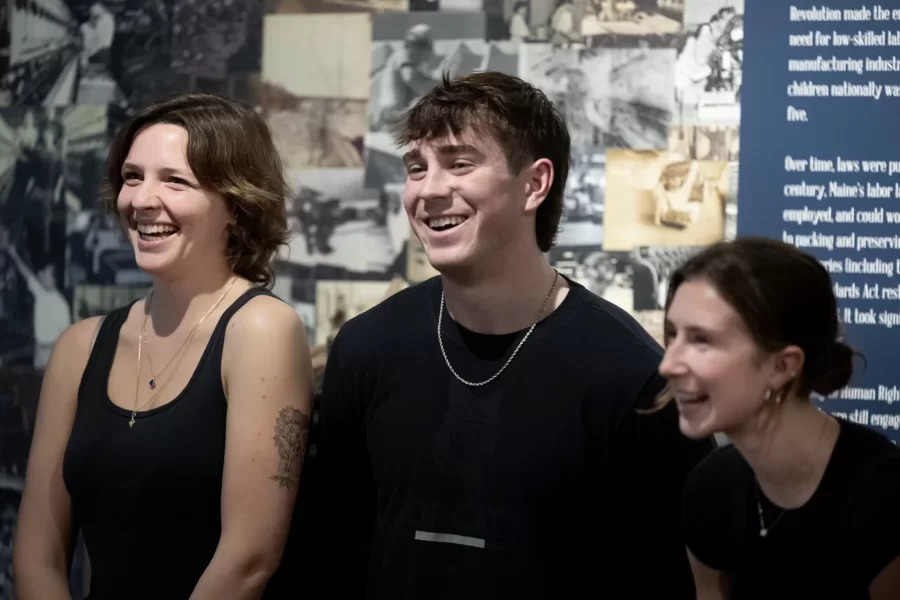
Unveiling Histories of of Lewiston on Dec. 10, 2024 at Maine MILL, 35 Canal Street, that included a performance and talkback by students of Assistant Professor of Theater Amy Huang. The students bring Lewiston’s history to life in original, devised performances rooted in archival research. Please join us for a unique opportunity to hear stories from Lewiston’s past brought to life in several short performances by Bates students. Students in professor Amy Huang’s Devising Performance class conducted archival research during the past semester and now look forward to sharing some of their findings through short, devised performances at the Maine MILL, 35 Canal Street in Lewiston. This Tuesday at 7:00 pm. Free and open to the public. Devising is a contemporary performance-making practice that declines the traditional single author/choreographer/director/script model of theater in favor of a collaborative approach to generating themes, content, forms, and aesthetics for creating performance. In this hybrid course students learn about devising practices, theories, and politics through the exploration of how performance companies work in this generative space, and explore devising techniques to practice these methodologies in action.
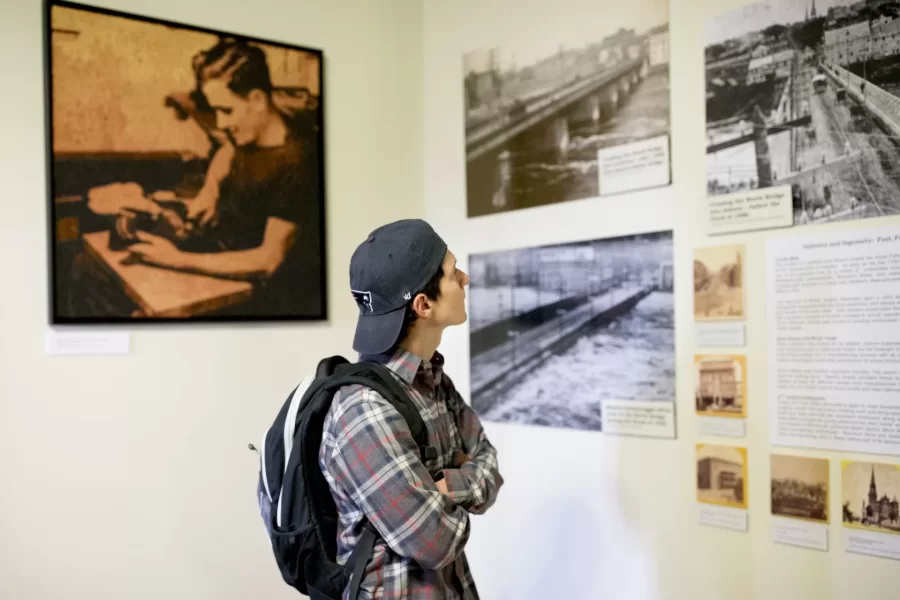
Students in the “Introduction to Historical Methods” Short Term unit taught by historians Margaret Creighton and Hilmar Jensen take a walking tour of Lewiston led by local attorney Elliott Epstein, founder of Museum L-A. The focus of this year’s course is immigration. Here, the group stops to view the Basilica of Saints Peter and Paul on Ash Street, including sophomores James Erwin, Ben Aicher, George Bishop and Cristopher Hernandez Sifontes. Class list Ben Aicher George Bishop (not on Quebec City trip) Andrew Cahill Mike Cronin Brooke Drabkin Jack Dugan James Erwin Kevin Franco Lucas Gillespie Tim Grogan Quinn Hayward Cristopher Hernandez Sifontes Josh Leiner Kiernan Majerus-Collins Peter McIntyre Matt Morris Daniel Murphy Marianna Paone Halley Posner Collin Richardson Bridget Ruff Lily Shi Sophia Thayer Andrew Veilleux Justin Zukowski Professor of History Margaret Creighton Associate Professor of History Hilmar Jensen Teaching Assistants: Evan Molinari and Madeleine
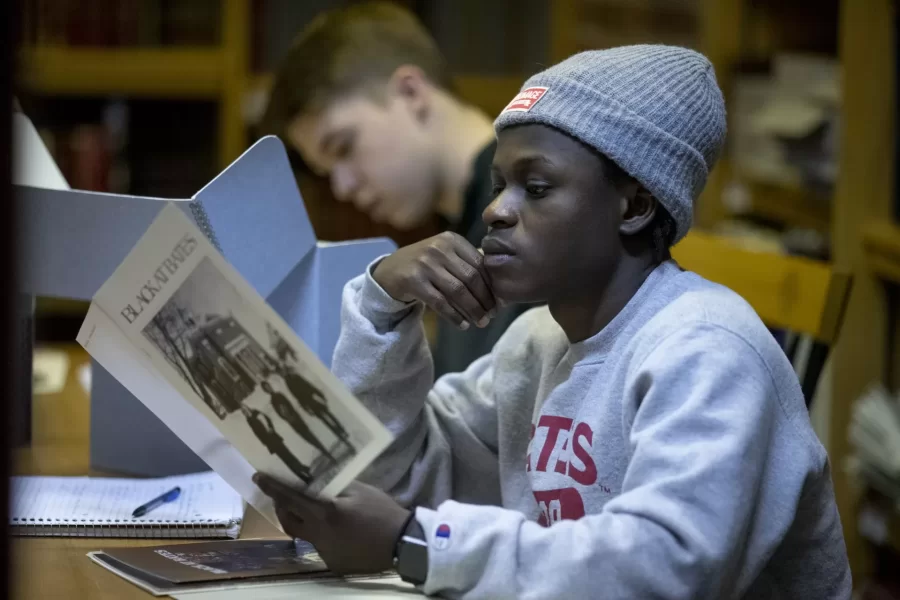
“HOW COLLEGES CONFRONT THEIR RACIST PASTS” February 28that 7 pm Pettengill Hall, G21 Sponsored by the Department of History Kristen Doerer (in red and black blazer) a freelance journalist based in Washington, DC. She has written for the PBS NewsHour, The Guardian, The Chronicle of Higher Education, and Teen Vogue, among others. She has covered topics ranging from the business of women’s boxing and youth gun control activism to solutions in higher education and national U.S. politics. Doerer graduated from Bates College in 2014, with a degree in U.S. history. ____________________________ Joe Hall, associate professor history Pat Webber, Information & Library Services Director of Archives and Special Collections, Muskie Archives Caitlin Lampman, Information & Library Services, Reference and Outreach Archivist, Muskie Archives Student is Joe Hall’s historical methods course visit the Muskie Archives where they learned about what the Archives has to offer and examined materials that included papers from Oren Chaney and the Bates Debte Society, as well as printed materials from Admission promoting the College. Ursula Rall, glasses and black/gray sweater Evandro Monteiro, hoodie with scarf Nell Pearson, stripes Annabel Mahon, grey sweater and scarf Benni Magnusson McComish, green plaid Eric Opoky, gray hat and Bates sweatshirt Ke’ala Brosseau, black sweater Andrew Facing, green sweater Zach Jonas, white button-down shirt, black pattern Xin “Judy” Wang ’20, blazer, necklace . Students in Associate Professor of History Joe Hall’s historical methods course visit the Muskie Archives where they learned about what the Archives has to offer and examined materials that included papers from Oren Chaney and the Bates Debate Society, as well as printed materials from Admission promoting the College. From left, Benni Magnusson McComish, Zach Jonas, Eric Opoku, Andrew Fasciano, and Ke’ala Brosseau.
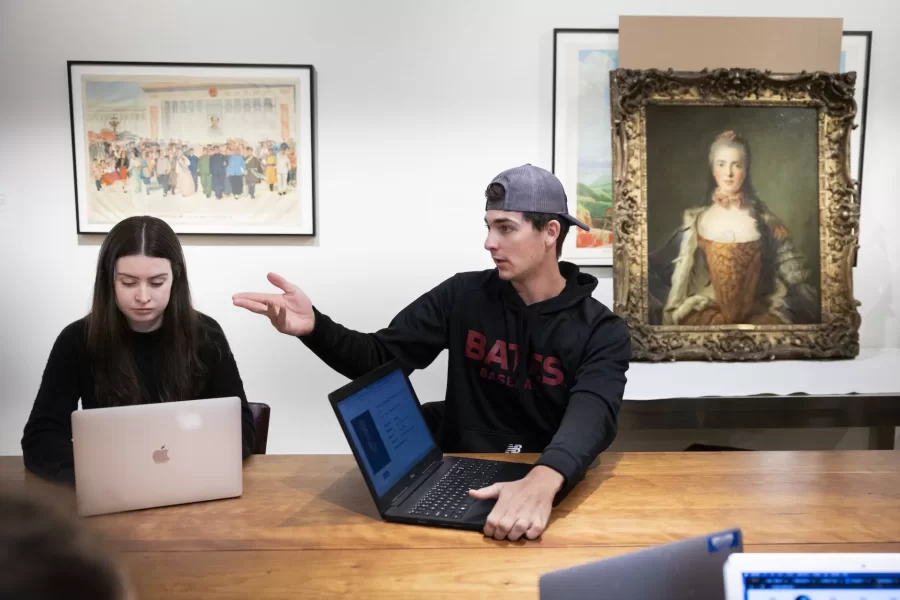
Historical Methods class, taught by Associate Professor of History Caroline Shaw, meets in the Lower Gallery of the Museum of Art in the Olin Arts Center. Working with Peter Philbin ’22, assistant museum curator, the students broke into several groups to consider four works of art, and how they would use that artwork along with other pieces in the museum collection, to create an exhibition. HIST 399 – Historical Methods This seminar refines students’ proficiency as historians and prepares them to write their senior thesis. The course is designed around two interrelated goals. First, students analyze how different approaches to history and sources matter to understandings of the past. Second, students design and test their own arguments, drawing upon critical readings of primary sources and close engagement with historiography. The course culminates in the completion of individual thesis proposals. Prerequisite(s): one HIST 301 seminar. Students at table, from head of the table, left: Hanna Matthews ’24, brown sweater, long blonde hair Matt Connelly ’24, white shirt Chris Ly ’24, black hoodie Emily Everett ’24, light gray sweater Bridget Lee ’24, gray sweater, brown pants Ben Fasciano ’23, gray sweater James Guinee ’24,blue/green sweater Ned Farrington ’24, blue flannel Sebastien Kleitman ’24, black hat Luke Linnehan ’24, black baseball hoodie and hat Campbell McKendry ’24, black sweater, brown hat