Student Research
At Bates, you don’t just learn what is known; you gain the tools to discover what isn’t.
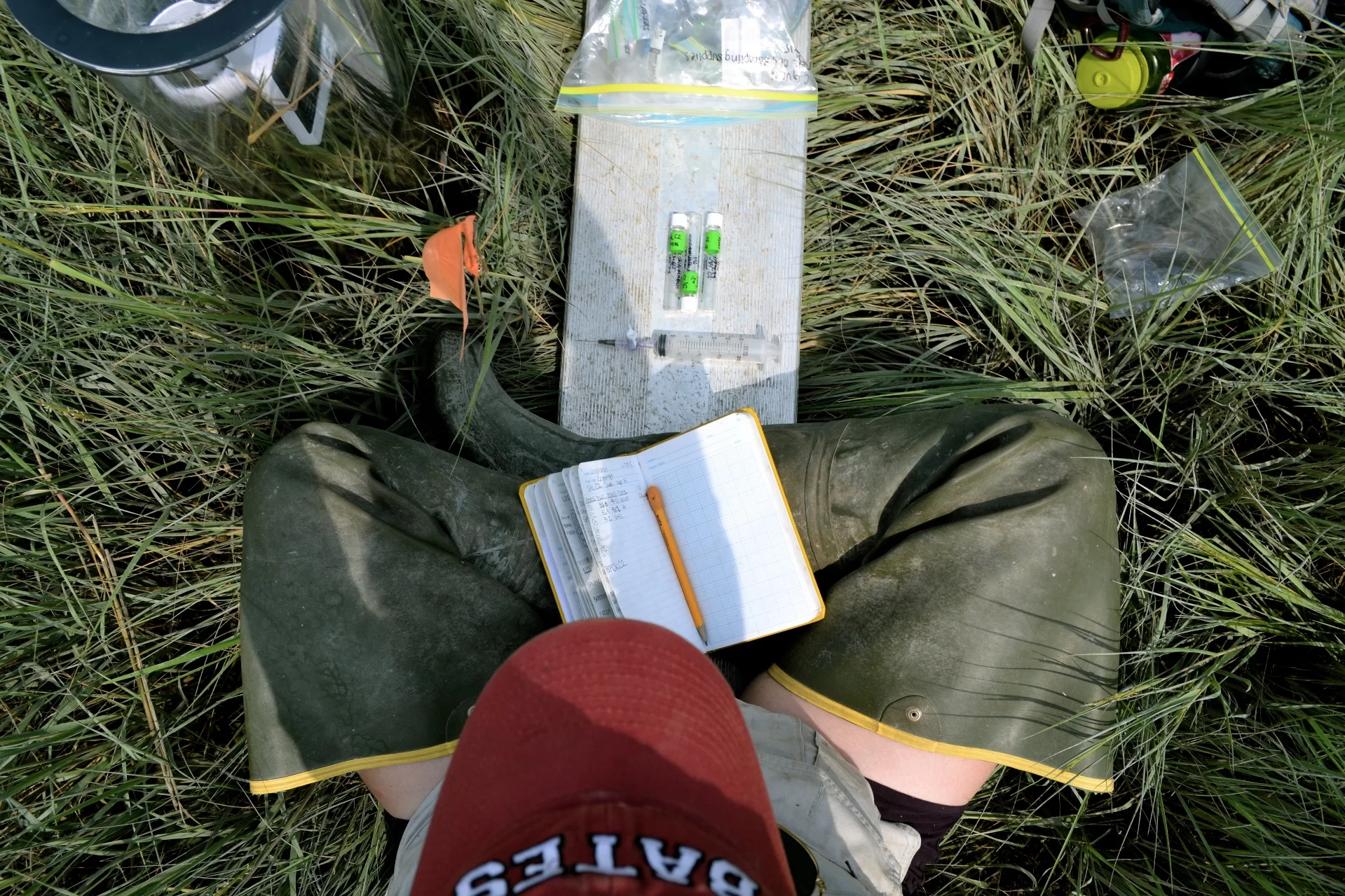
A distinctive characteristic of a Bates education is the emphasis on student research. At Bates, every student is a scholar. Research opportunities from across the curriculum extend learning beyond the classroom. Students immerse themselves in research questions, shaping their undergraduate experience as their interests evolve and deepen, while being mentored by Bates faculty who are leading scholars and artists in their fields. Opportunities abound in faculty labs, field stations, studios, museums, archives, and in locations around the world.
Summer Research Opportunities
During the beautiful Maine summer, the Bates campus is home to 30 to 50 students engaged in full-time research with a faculty member. Another 20 to 30 Bates students receive funding to conduct research around the country and the world.
High Impact Research
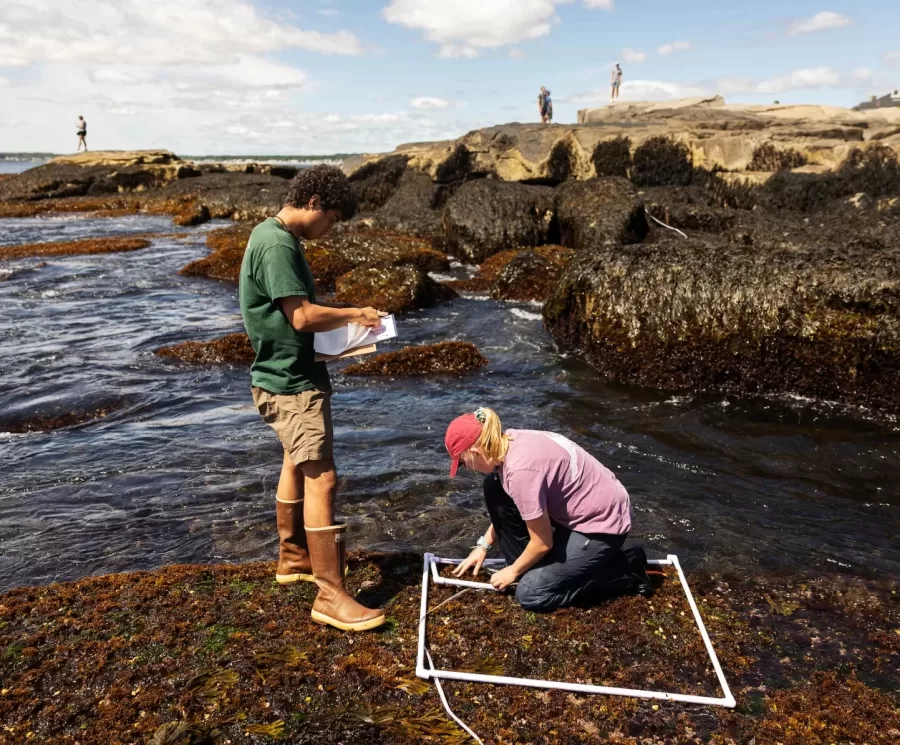
“I have really enjoyed my ability to get out into the field at Bates. The school does that really well — lab experience, field experience. You’re not just always in the classroom.”
— Amanda Power ’26
Short Term
Short Term is a unique opportunity for coursework that cannot be offered in the fall and winter regular semesters. It is a four-week period in May during which students immerse themselves in one course, either on the Bates campus or by traveling to destinations around the globe.
Senior Thesis and Capstone
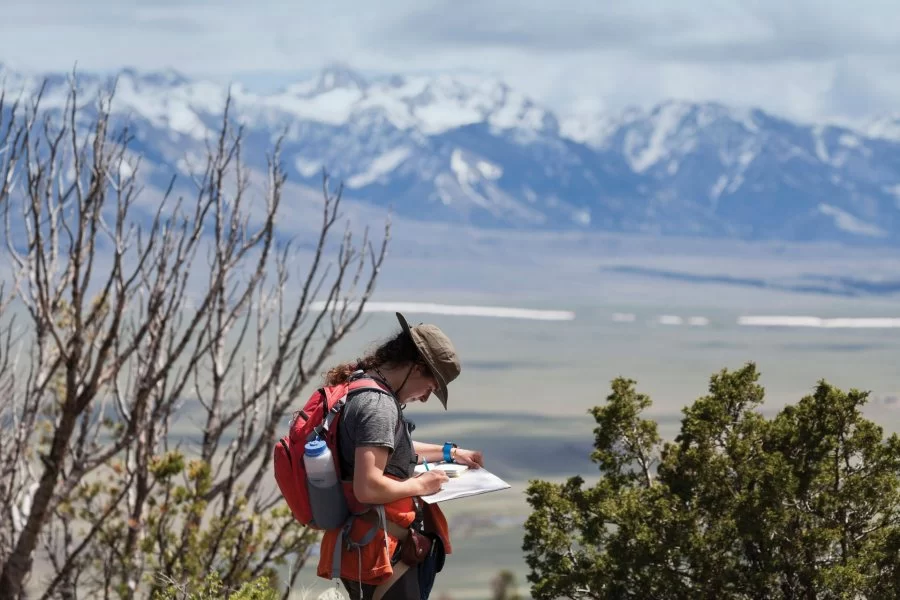
A hallmark of the Bates curriculum is the senior thesis or capstone, which allow students to explore a topic in depth with faculty mentorship. Completing one or the other is required for most majors.
Presenting and Publishing
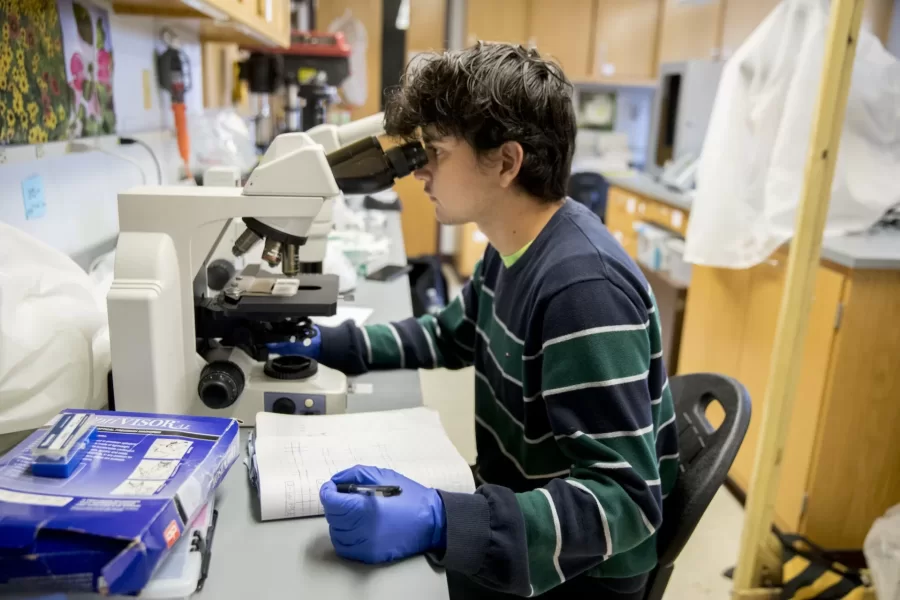
Bates affords students an exceptional opportunity to attend and present research at national and international scholarly conferences. In addition, many students collaborate with faculty as co-authors on papers published in academic journals.
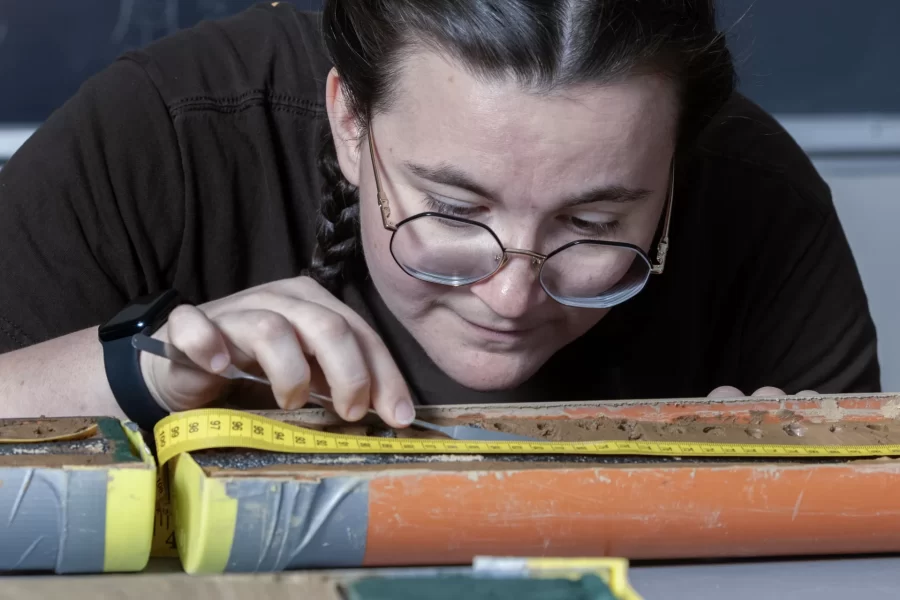
“This is just too cool to happen. And then, I was on a plane.”
— Hadley Blodgett ’26 on presenting her thesis research at a conference in
Greenland
Community-engaged research
Community-engaged research (or community-based research) is a type of academic inquiry conducted with deep collaboration from a community partner for whom the project is beneficial. Under the advising of faculty in their discipline, and with support from Harward Center Staff, students can apply their research skills to off-campus contexts in reciprocal relationships with local organizations that can use added capacity for work such as data collection or analysis, literature review, or best practice scans. At Bates, CER can be found in community-engaged learning courses such as ECON 344: Finance and Society, PSY 379: Youth Sociopolitical Development, and ENVR 417: Practicum in Community-Based Research.
Students can also pursue CER through independent study or senior thesis, and are eligible to apply for the Harward Center’s Community-Engaged Research Fellowship, which supports students undertaking independent CER projects each winter semester. CER Fellows engage in an ungraded bi-weekly seminar with an interdisciplinary cohort of peers, receive a small stipend to support their work, and benefit from additional advisory support from Harward Center Staff. Recent CER Fellows’ thesis titles include:
- “Investigating Educational Outcomes for Providence Community Advocacy,” Christian Cabello (Mathematics)
- “Developing a Whole Sense of Self Among Somali Refugee Daughters: a Mixed-Methods Approach to Identity Exploration,” Maggie Kornfeind (Psychology)
- “Ecosystem Cycling: Comparison Across Land Usages to Predict Forest Regeneration via the Lens of Carbon, Nitrogen, and Mycorrhizal Fungi,” Heidi Nydam (Environmental Studies: Ecology and Earth Systems)
Interested in learning more about CER? Contact Associate Director of Community-Engaged Research & Learning, Morgan Kinney at mkinney2@bates.edu.
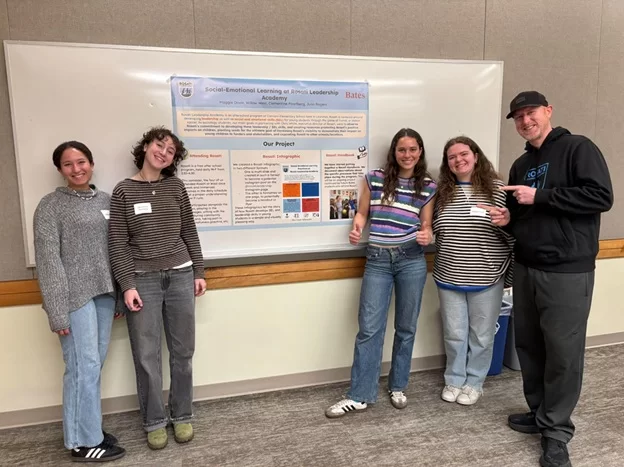
Students in Prof. Emily Kane’s SOC 250: Privilege, Power, Inequality, share their research on the socioemotional learning benefits of Rosati Leadership Academy’s youth soccer program with Chris White, Executive Director.
Support and Resources
- Barlow Thesis Research Grants support senior thesis research in the student’s study abroad country.
- Bates Student Research Grant supports students in their efforts to gain research experience with independent research associated with curricular programs.
Bates Environmental Internships give students a chance to understand some of the complexities and unpredictable variables that accompany environmental work. The experience also provides a way for students to test in the field some of the theories and arguments encountered in courses.
Bouley-Creasy Fund supports thesis research in field-based geologic mapping. - Community-Engaged Research Grants support material costs related to promising research projects undertaken by Bates students in collaboration with local or statewide community partners.
Harvard Center Academic Year Grant provide resources for students who design volunteer service projects or an academically-related community-engaged learning project. - Hoffman Research Support Grants funds students in all disciplines engaged in research, covering travel to a research site, research supplies, or other related expenses.
- INBRE Summer Fellowships for research and science education support research in cell and molecular biology, biochemistry, and neuroscience with preference given to projects focused on functional genomics.
- Otis Fellowships provide major funding for students who have designed an independent project focusing on the relationship between individuals, societies, and the natural world.
- Phillips Fellowships provide major funding for an international or otherwise cross-cultural experience. Fellowships may focus on research, community engagement, the arts, career exploration, or some combination.
- STEM Student-Faculty Research Grants support students in collaborating with Bates faculty mentors on research in the sciences and math.
- Summer Research Apprenticeships provide support for students in all disciplines working full time for 8 to10 weeks as a research assistant to a member of the faculty.
- Summer Research Fellowships provide support of full-time research for 8 weeks in the summer.
STEM Conference Grant fund Bates students to present their research and network with experts at regional and national conferences across the natural sciences, mathematics, neuroscience, environmental science, biomedical fields, and science education. - Technos International Week Fellowships provide complete support for two students to travel to Japan for two weeks in early June.
A Coastal Laboratory
Bates–Morse Mountain and Shortridge
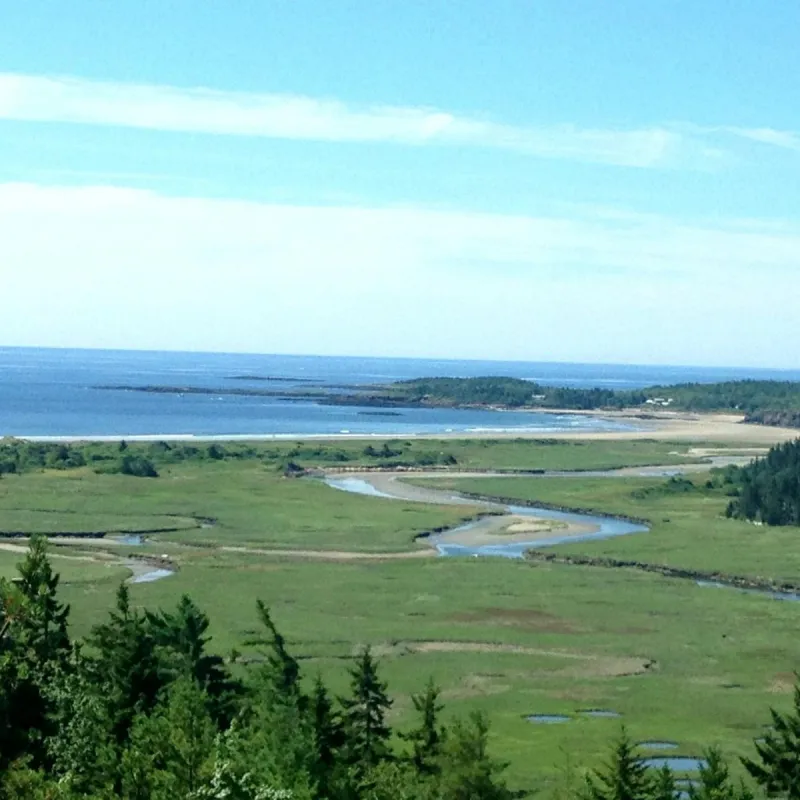
A spectacular 600+ acre conservation area comprised of varied woodlands, wetlands, and ponds leading to the Atlantic Ocean affords endless opportunities for research for Bates faculty and students.
The Shortridge Summer Residency
The Shortridge Coastal Center provides the opportunity for students, faculty, and researchers to work in a unique coastal setting over the course of a summer. Students conduct field research; engage with state agents and community members regarding coastal change, sea level rise, and public policy; serve as interns in local conservation organizations; and work as artists-in-residence.