Education at Bates

The Bates Department of Education seeks to foster the democratic possibilities of schooling through the study of education in the United States and internationally.

Education students work closely with faculty and with each other to analyze the complex dynamics between the purposes and products of schooling and the social structures and cultural processes that constitute the broader context for education. Because education is a field rather than a discipline, our faculty and the courses in our minors cross multiple fields — including psychology, philosophy, sociology, the arts, the sciences, history, and anthropology. 

Contact Us

Tobie Akerley Gordon
Pettengill Hall
Phone: 207-786-8295 takerley@bates.edu

What You Will Learn
garnet iconography with academic building, open notebook with pen, and magnifying glass
To better understand and critically examine the purpose and impact of schooling in society

garnet iconography with people in front of concentric circles, bar chart, and interlocking gears
To examine the possibilities and importance of education reform

garnet iconography with speech bubbles, crowd of people, and globe
To develop concern for the common good through community connection

garnet iconography with presentation slide, speech bubbles, and books
To bridge teaching theory and teaching practice early on

garnet iconography with light bulb, books, and academic building
To contribute to the field of education through teaching, learning, and/ or research
garnet iconography with open book, brain, and people with thought bubble
To apply multidisciplinary perspectives to the field of education

Life After Bates

Students who successfully complete the teacher education minor are eligible to obtain a teaching certificate in Maine, with reciprocity in at least 45 states — and it does not expire, meaning you could begin teaching immediately, or years after graduation. The educational studies minor prepares students to be strong applicants to post-graduate elementary education, school counseling, and other graduate programs in education. It also provides a solid foundation for students interested in applying knowledge of educational structures to work in a variety of fields, including medicine, public policy, and law.
94%

of 2020-2024 Bates graduates are employed and/or attending graduate school — settled into their next opportunity within 6 months of graduation.

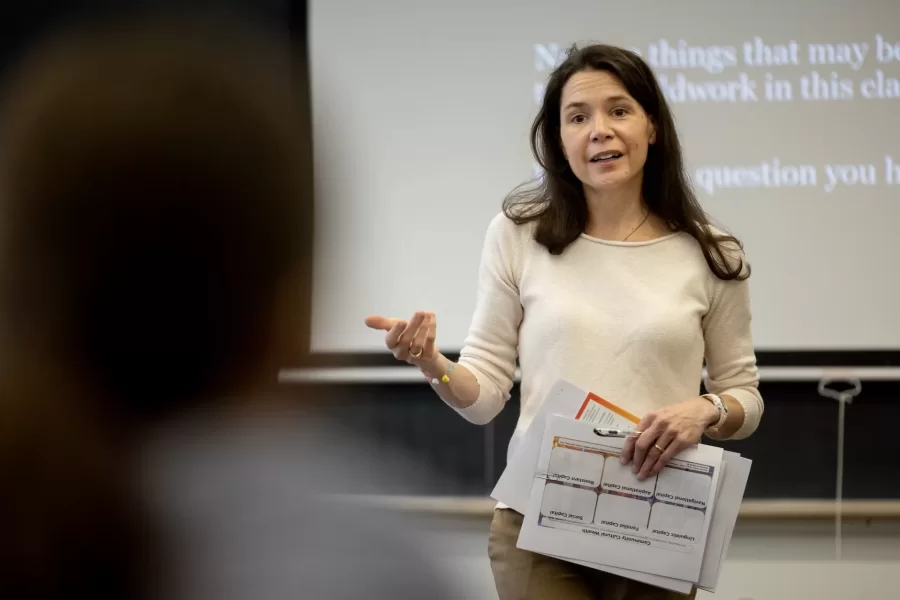
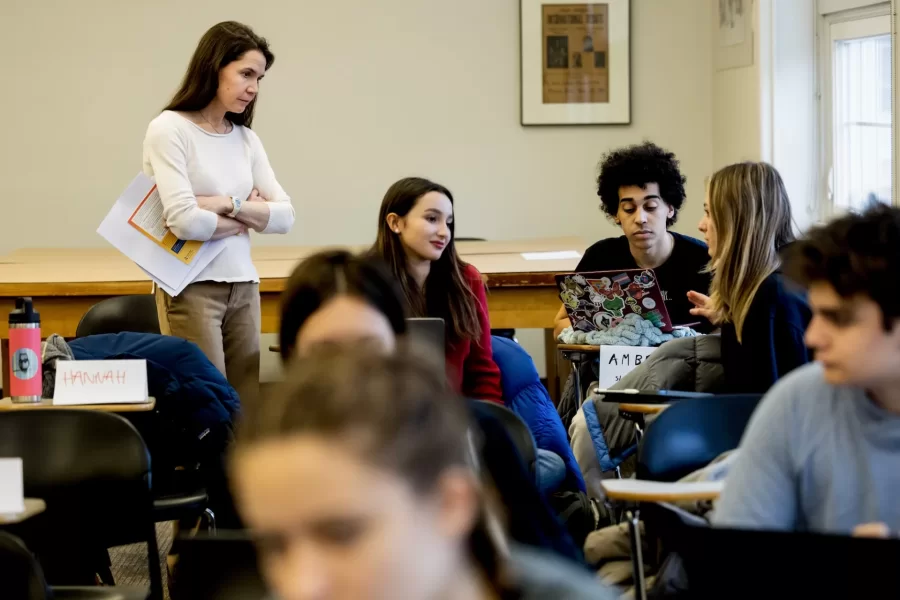
Associate Professor of Education Mara Tieken, winner of the 2024 Kroepsch Teaching Award, teaches students in her course “EDUC 231 - Perspectives on Education” in Pettigrew 30 on January 16, 2025.

EDUC 231 - Perspectives on Education
This course introduces students to foundational perspectives (anthropological, historical, philosophical, psychological, and sociological) on education and helps students apply these perspectives to contemporary schools and classrooms. The course considers several large questions: What should be the purpose of education in a democratic society? What should be the role of the school? Who should participate in making decisions about schools? In what ways do schools reflect and perpetuate larger social inequities, and, alternately, how can they contribute to a more just and inclusive society? Students must complete at least thirty hours of fieldwork.

Associate Professor of Education Mara Tieken, winner of the 2024 Kroepsch Teaching Award, teaches students in her course “EDUC 231 – Perspectives on Education” in Pettigrew 30 on January 16, 2025. EDUC 231 – Perspectives on Education This course introduces students to foundational perspectives (anthropological, historical, philosophical, psychological, and sociological) on education and helps students apply these perspectives to contemporary schools and classrooms. The course considers several large questions: What should be the purpose of education in a democratic society? What should be the role of the school? Who should participate in making decisions about schools? In what ways do schools reflect and perpetuate larger social inequities, and, alternately, how can they contribute to a more just and inclusive society? Students must complete at least thirty hours of fieldwork.

Associate Professor of Education Mara Tieken, winner of the 2024 Kroepsch Teaching Award, teaches students in her course “EDUC 231 - Perspectives on Education” in Pettigrew 30 on January 16, 2025.

EDUC 231 - Perspectives on Education
This course introduces students to foundational perspectives (anthropological, historical, philosophical, psychological, and sociological) on education and helps students apply these perspectives to contemporary schools and classrooms. The course considers several large questions: What should be the purpose of education in a democratic society? What should be the role of the school? Who should participate in making decisions about schools? In what ways do schools reflect and perpetuate larger social inequities, and, alternately, how can they contribute to a more just and inclusive society? Students must complete at least thirty hours of fieldwork.

Associate Professor of Education Mara Tieken, winner of the 2024 Kroepsch Teaching Award, teaches students in her course “EDUC 231 – Perspectives on Education” in Pettigrew 30 on January 16, 2025. EDUC 231 – Perspectives on Education This course introduces students to foundational perspectives (anthropological, historical, philosophical, psychological, and sociological) on education and helps students apply these perspectives to contemporary schools and classrooms. The course considers several large questions: What should be the purpose of education in a democratic society? What should be the role of the school? Who should participate in making decisions about schools? In what ways do schools reflect and perpetuate larger social inequities, and, alternately, how can they contribute to a more just and inclusive society? Students must complete at least thirty hours of fieldwork.

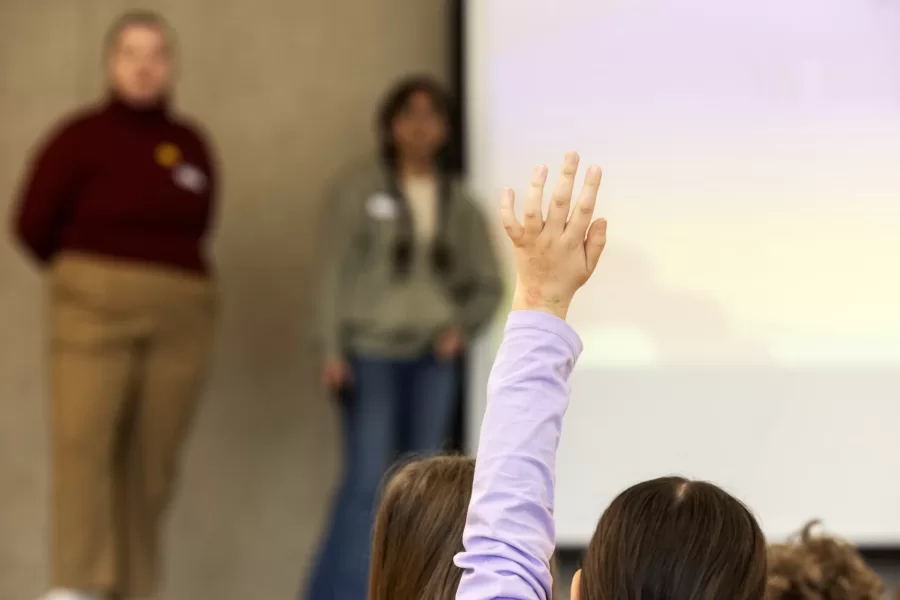
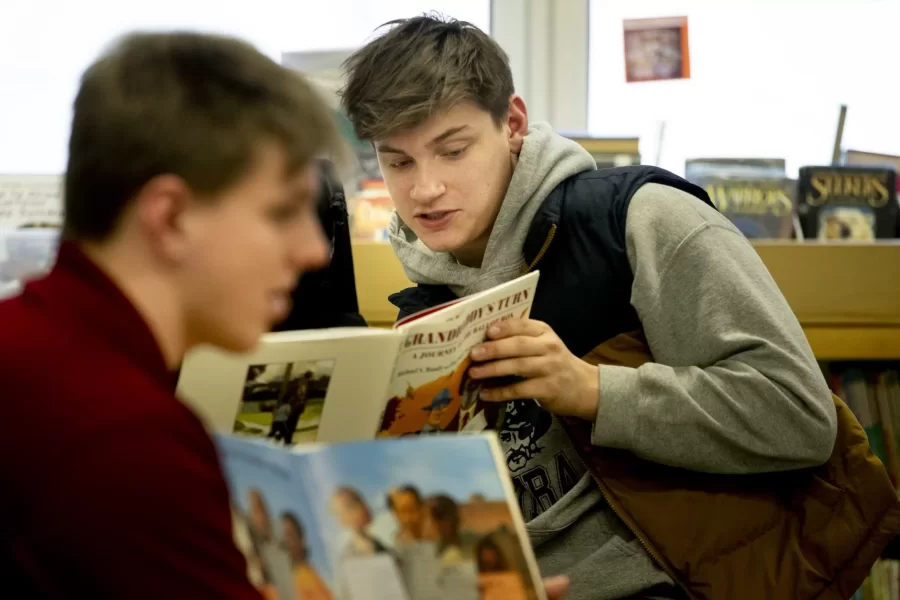
Bates College students from FYS 491: Reading Japan in Multicultural Picture Books taught by Keiko Konoeda, lecturer in Japanese, visit 5th graders from Geiger Elementary School on December 12, 2023. Bates students helped the 5th graders make their own Onigiri and paper cranes. (Theophil Syslo | Bates College)

Bates College students from FYS 491: Reading Japan in Multicultural Picture Books taught by Keiko Konoeda, lecturer in Japanese, visit 5th graders from Geiger Elementary School on December 12, 2023. Bates students helped the 5th graders make their own Onigiri and paper cranes. (Theophil Syslo | Bates College)

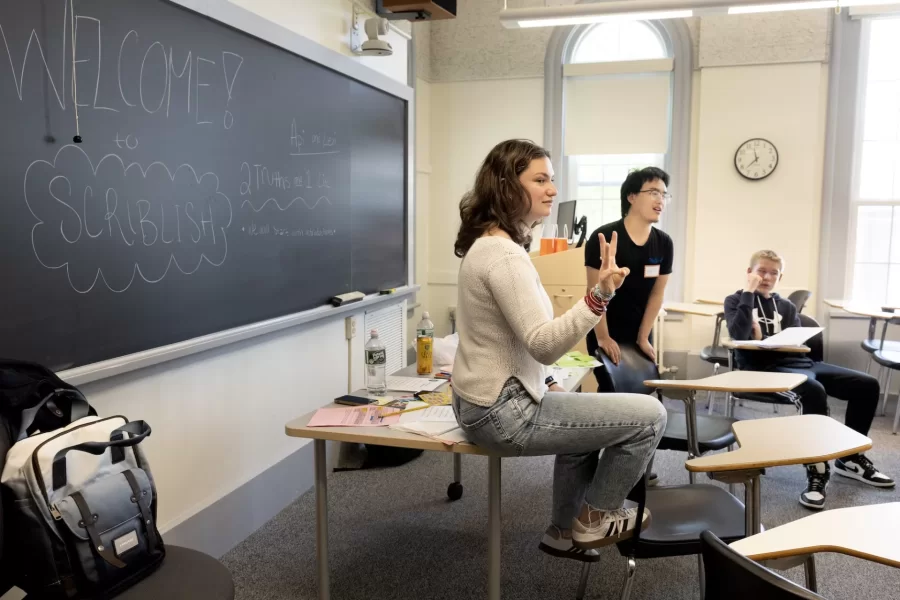
Lewiston Middle School students participate in a WriteIn! Program on May 20, 2024, with with Bates student tutors from the Bates Student Writing and Language Center. 


These two classes of LMS students taught by LMS English teacher Elizabeth Arlene were led in a creative writing exercise in Hathorn Hall  by Bates students George Miller and Amy XX?? And Ahige Api ’27 and Lexi Inter ’26. The activity was called Scriblish where one person started a story by writing one line and passing it along for a total of five writers (or you could add a drawing) until a story was completed and read aloud to the group.

Lewiston Middle School students participate in a WriteIn! Program on May 20, 2024, with with Bates student tutors from the Bates Student Writing and Language Center. These two classes of LMS students taught by LMS English teacher Elizabeth Arlene were led in a creative writing exercise in Hathorn Hall by Bates students George Miller and Amy XX?? And Ahige Api ’27 and Lexi Inter ’26. The activity was called Scriblish where one person started a story by writing one line and passing it along for a total of five writers (or you could add a drawing) until a story was completed and read aloud to the group.

As an education minor at Bates, you will gain real-world experience through community-engaged learning, which takes place as part of almost every education course through a variety of community and school-based settings. We offer two minor pathways. Students may choose a grades 6-12 teaching certification pathway that includes student teaching (the teacher education minor) or take an exploratory approach based on emerging interests in education (the educational studies minor). Both include real world classroom and community experiences.

Featured Courses

Photo of Patricia S. Buck

Patricia S. Buck

Associate Professor of Education

Education
Photo of Anita S. Charles

Anita S. Charles

Senior Lecturer in Education and Director of Secondary Teacher Education

Education Co-Chair
Photo of Isabel Martinez-Cuenca

Isabel Martinez-Cuenca

Visiting Lecturer in Education

Education
Photo of Bronwyn M. Sale

Bronwyn M. Sale

Lecturer in Education

Education Co-Chair
Photo of Stacy L. Smith

Stacy L. Smith

Visiting Lecturer in Education

Education
Photo of Mara C. Tieken

Mara C. Tieken

Professor of Education

Education Co-Chair

News & Events