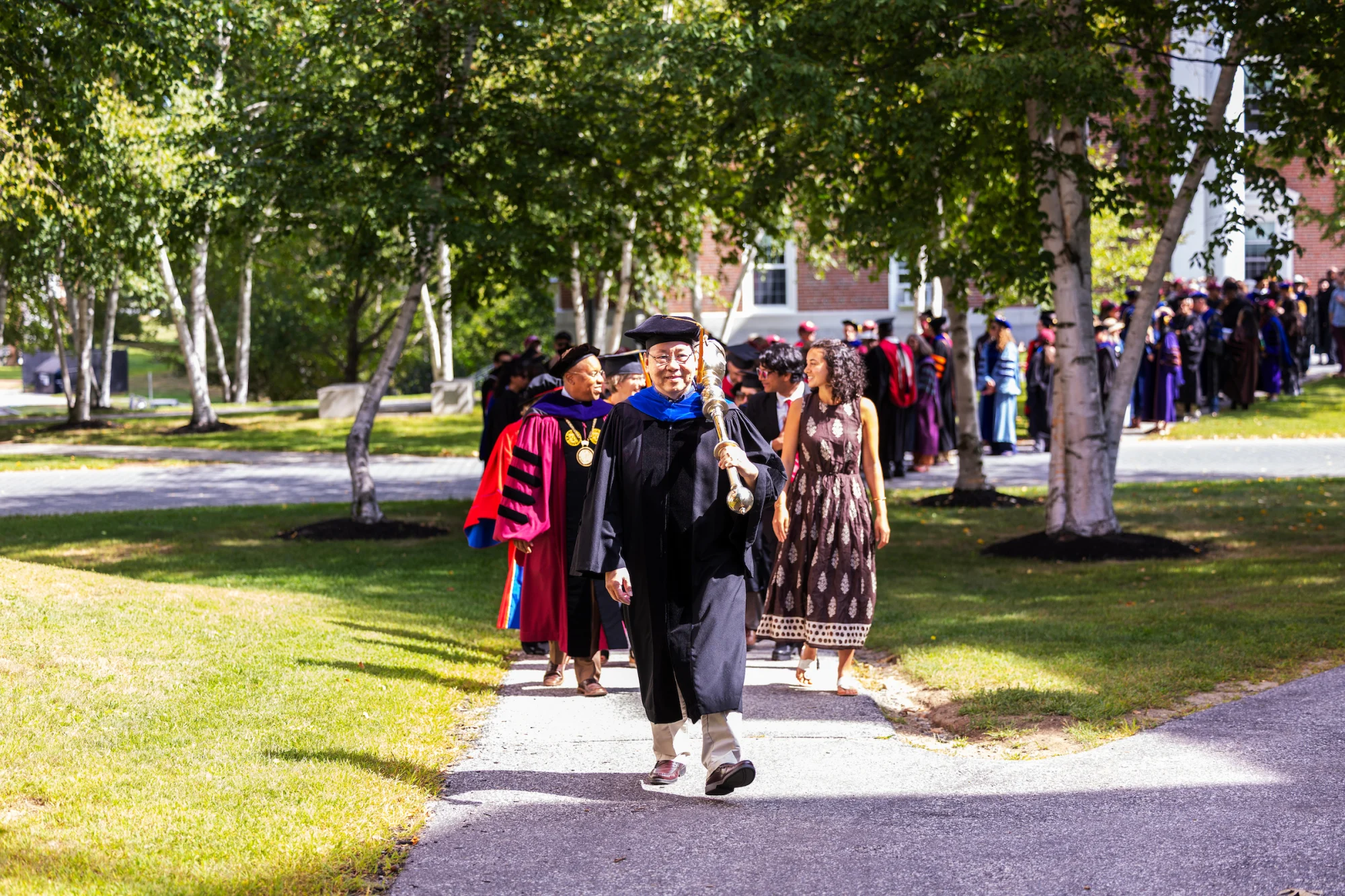
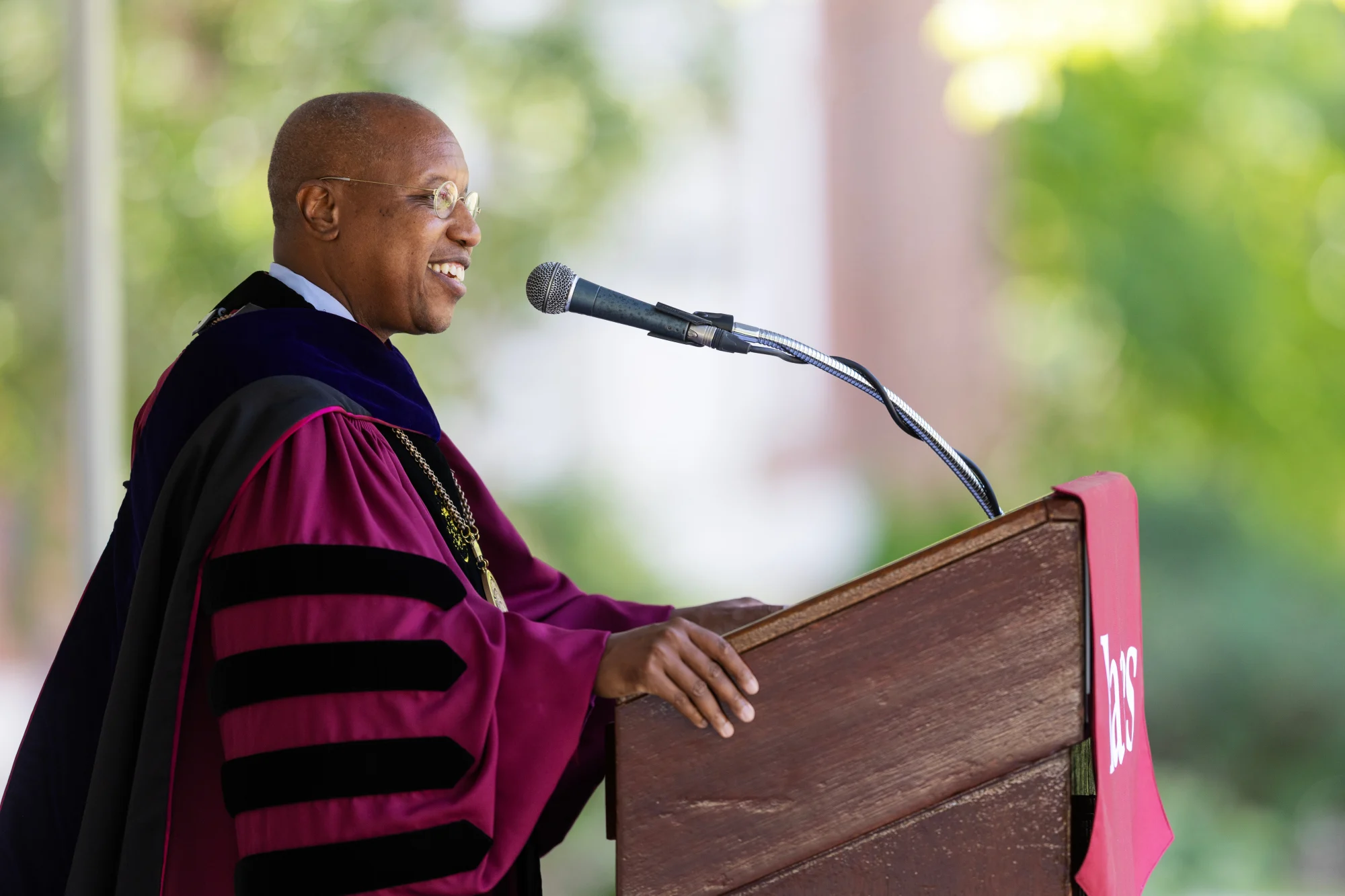
Welcoming the Class of 2030 and new transfer students to the official start of the new academic year at the Sept. 1 Convocation, President Garry W. Jenkins reminded the group gathered on the Historic Quad that there is no expectation of perfection ahead of them and recommended that they focus instead on “the notion of evolution.”
“There is no single end goal,” Jenkins said, encouraging both the class of 552 first-year students and 13 transfer students to use their time at Bates to be adventurous in their thinking, ways of moving through the world and exploring their sense of self.
Like each individual, Jenkins said, Bates itself continues to change. “Institutions evolve. We don’t stand still. We hit bumps in the road, and we make mistakes. We have aspirations and ideals that we may not always reach — but we continue to grasp for. And it’s that grasping, that trying, not absolute perfection, that is our goal as an institution and our goal for you, our students.”
Jenkins closed by offering the incoming class the advice that his own mother gave him when he first left home for college. Her four core words of advice: “learn, care, share, and enjoy.”
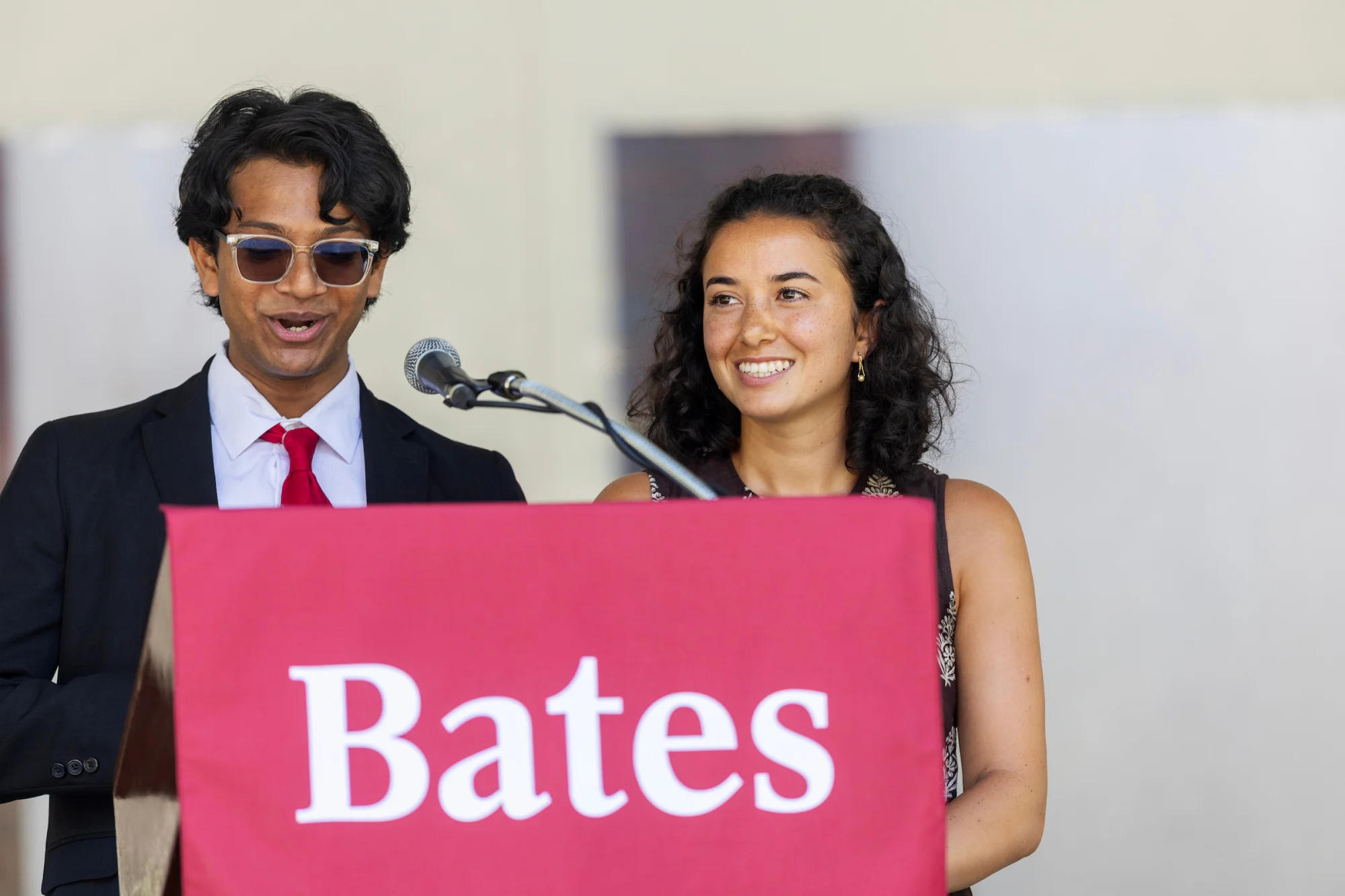
Ava B. Steinberger ’27 of Wilmington, Del., and Mohammad Zayd ’27 of the Bronx, N.Y. — co-presidents of Bates College Student Government — greeted the new class with a joke, namely that they were the only people not happy to be attending Convocation. Why? This represented their first “last” they said, marking the beginning of their senior, and last full, year at Bates.
Steinberger and Zayd continued the theme of exploring and trusting the unfolding experience. “Take the plunge,” they said. The two co-presidents reminded the Class of 2030 that they chose Bates, but Bates also chose them. They encouraged incoming students to attend events, try something new, volunteer with the Harward Center for Community Partnerships, get to know Lewiston, and be a part of the “collective effervescence” of the community they are joining.
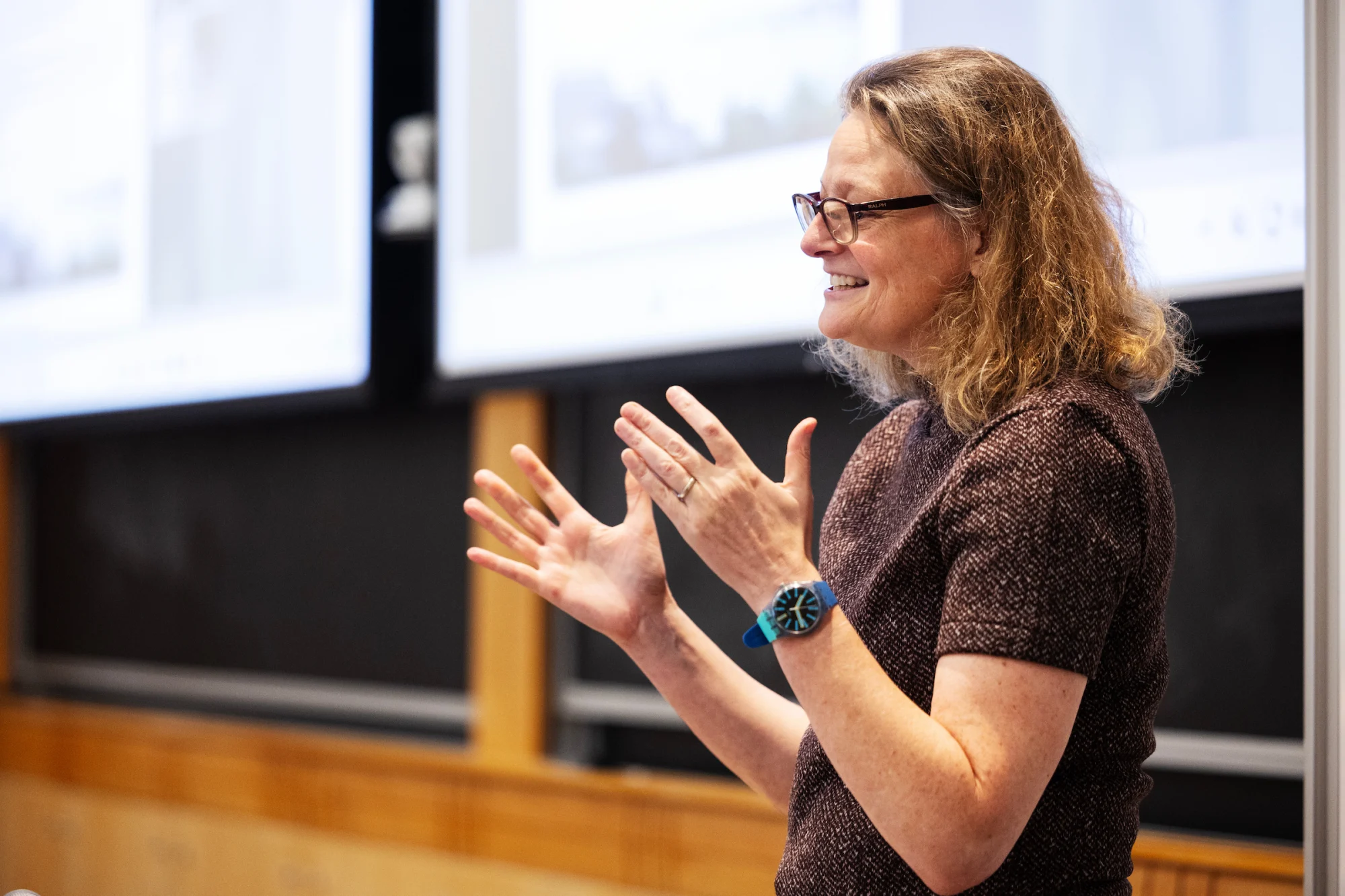
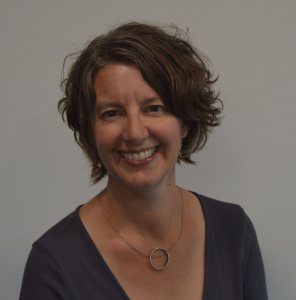
Whitehouse Professor of Psychology Amy Bradfield Douglass took the stage to offer the Convocation Address. Jenkins introduced Douglass by explaining, “The convocation speaker is chosen by the outgoing senior class as a gift to the incoming first-year class — and Professor Douglass was the choice of the Class of 2026 for the Class of 2030.”
Douglass spoke on the theme of “social contagion” as a force for good. “Social contagion,” a term coined in the late 19th century by French social psychologist Gustave Le Bon, originally referred to the ways that crowds “lose rational thinking and personal identities fade.” This concept need not be negative, Douglass told the audience, as she tied the concept to the Bates mission statement.
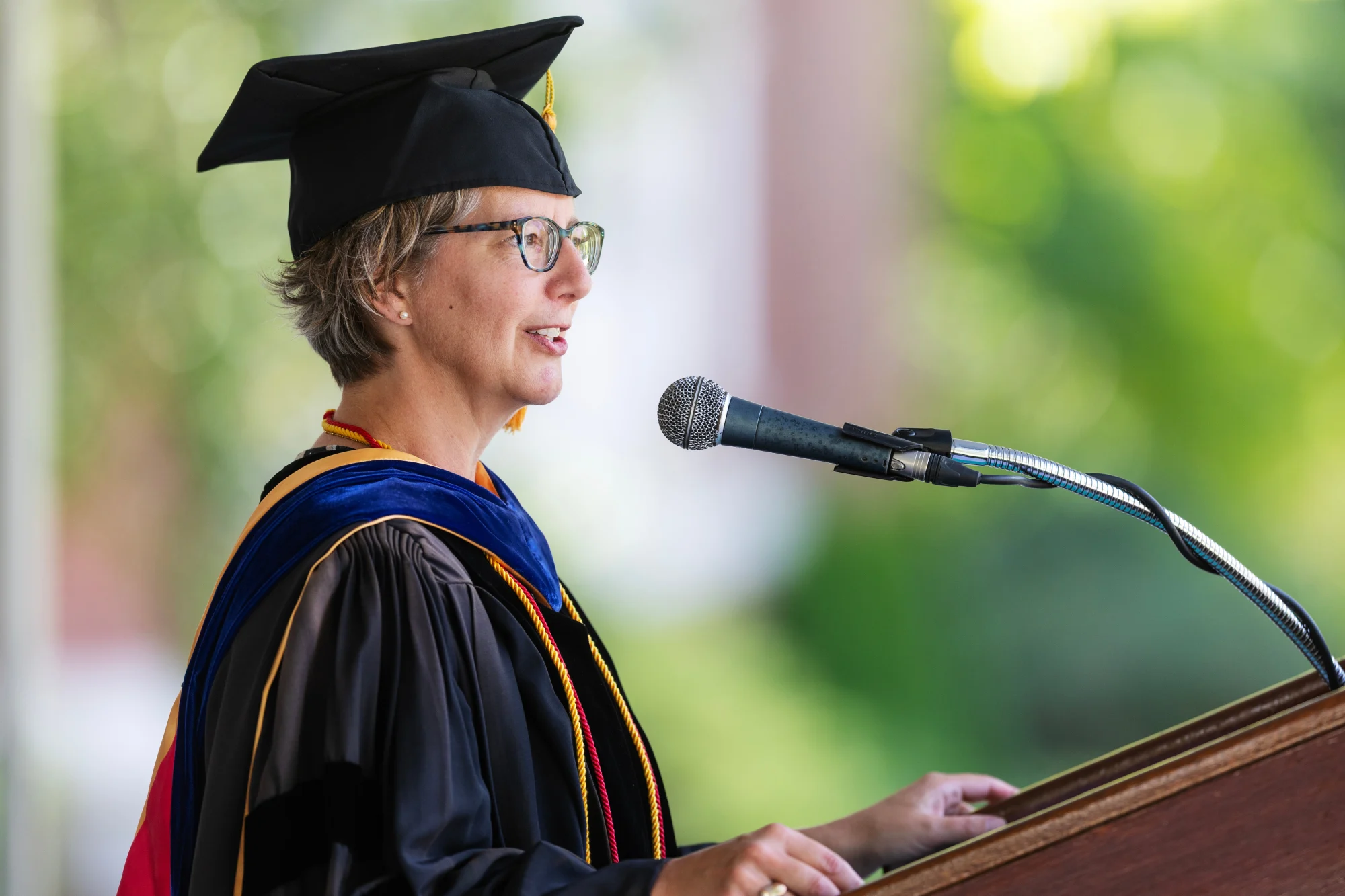
“One of the ways that social contagion can serve as a force for good right here on this campus is through the process of cultivating intellectual discovery,” Douglass began, sharing a story about her own experience discovering the connection between psychology and law, which drove her career path. “Take advantage of the passion we faculty have for our chosen pursuits and let social contagion work its magic by creating excitement about a field you never heard of or one you thought you already knew.”
At Bates, in our commitment to be a “collaborative residential community,” there is another opportunity to focus on the “power of positive interactions,” she said. In awkward conversations where connection is a challenge, Douglass encouraged the Class of 2030 to expect the best in these moments: “In whatever way works for you, listen intently to those around you and focus on the goal of producing a positive interaction rather than preventing a bad one.”
Finally, Douglass encouraged students to connect the positive outcomes of social contagion to the component of Bates’ mission that celebrates the transformative power of our differences. Using examples from Bates graduates and a recent Short Term course, Douglass elevated the ways that Batesies are improved through their interactions with students who come from different backgrounds, share different experiences, or hold different beliefs.
Multifaith Chaplain Rob S. Benson closed the ceremony with a benediction as the class recessed.
Following Convocation, a tree was planted near Gomes Chapel in remembrance of members of the Bates community who have died in the past year.
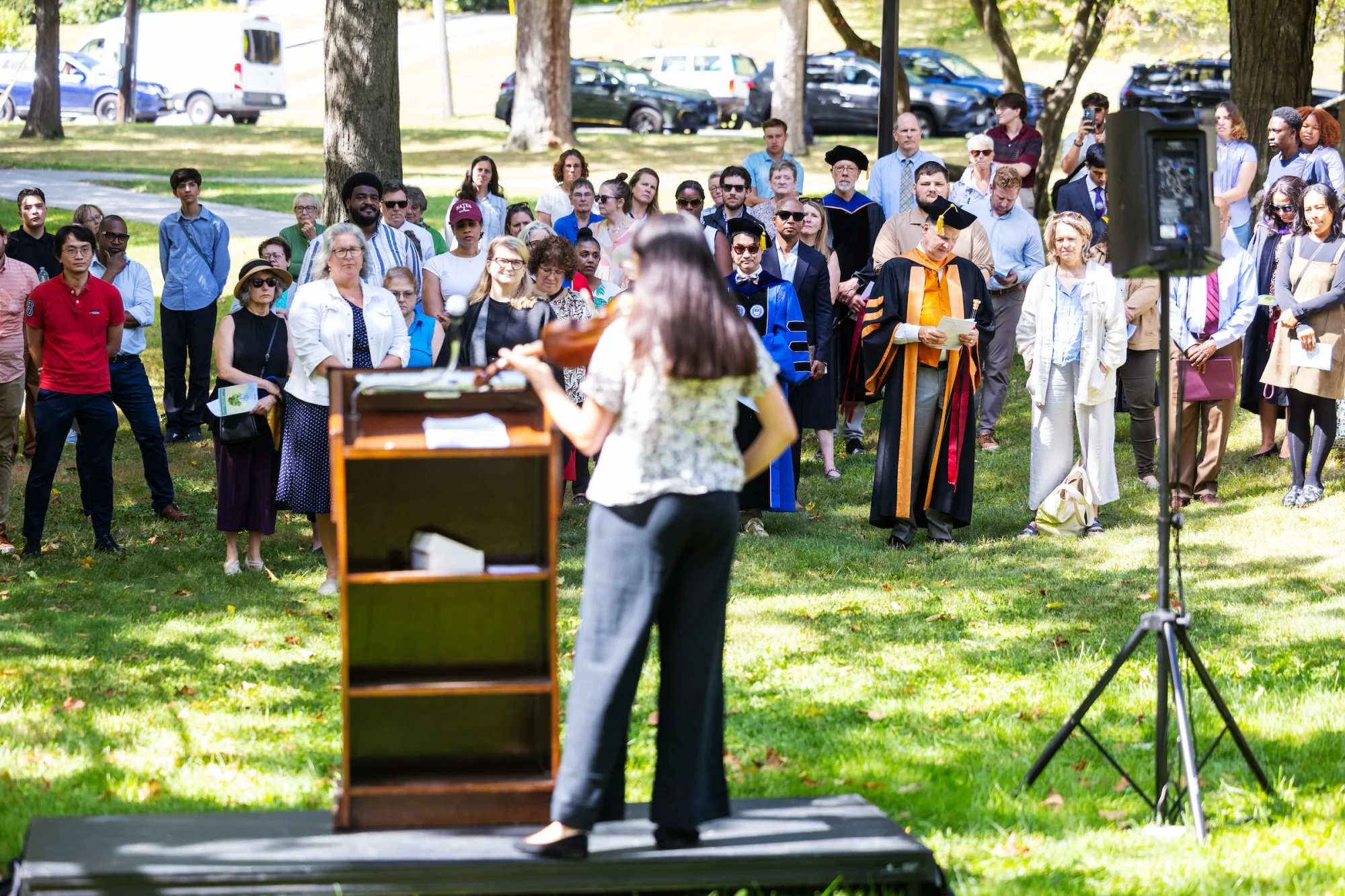
Kazumi Haag ’28 of College Park, Md., opened the ceremony with the first of two pieces she played on violin, followed by a welcome from Benson. Jenkins read the poem “On the Death of the Beloved” by John O’Donohue and Bobby Bosse, supervisor of Post and Print, the college’s mail and package service, read the names of those the Bates community lost in the last year, including his late colleague Laurie Henderson, who joined Bates in 1992 and died in April at the age of 64.
Following are the names of who were remembered:
Martin Andrucki — Professor of theater, Department of Theater and Dance
Judith Andrucki — Beloved member of Bates Community and spouse of Martin Andrucki
Harold Williams — Head of security, Campus Safety
Susan Gangemi Murphy ’70— Assistant director of technical support services, Information and Library Services
Ruth Leahey – beloved member of Bates Community and spouse of Chick Leahey, former head coach of Bates baseball
Laurie Henderson — Director of Post and Print
Eric Mackey — Head coach of alpine skiing
Jane Katherine Frizzell — Network services administrator, Information and Library Services
John K. Pribram — Professor of physics, Department of Physics and Astronomy
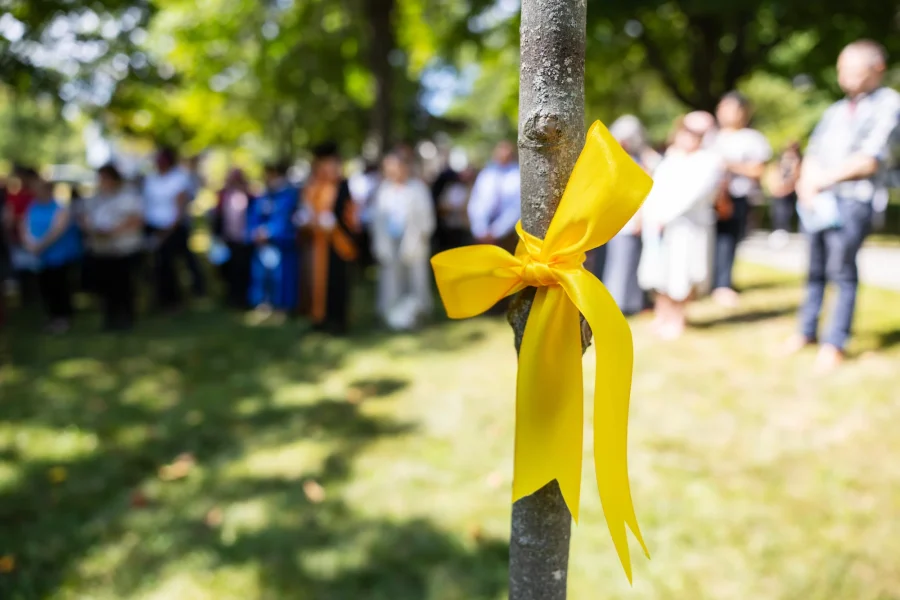
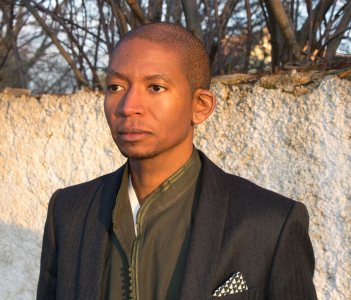
Myronn Hardy, associate professor of English and the recent recipient — along with his colleague in English, associate professor of English Jessica Anthony ’96 — of a Guggenheim fellowship, read his poem “The Moth in the Dryer” at the ceremony. Water from Lake Andrews was available for attendees to water the young tree.
Faculty Featured
Myronn E. Hardy
Associate Professor of English
Amy Bradfield Douglass
Whitehouse Professor of Psychology
Categories BatesNews