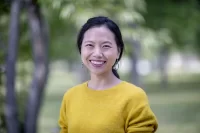
Since her freshman year, Sheila Robledo ’26 of Alton, Texas, has spent a lot of time in Bates’ Student Center for Belonging and Community.
“It’s just one of my favorite places on campus, to be honest,” Robledo says.
The SCBC is home to many of Bates’ community-building events and programs, including the college’s first-generation student programs: Bobcat First, which all first-gen students are automatically enrolled in, and Kessler Scholars, a smaller and newer program within Bobcat First.
Robledo, a Bobcat First student, found community and support in Bates’ first-gen programming. That mentorship program, through which older Bobcat First students mentor students who are new to Bates, had a major impact on her, particularly as a first-year student when she turned to her peer mentor Belize Iteriteka ’23 for advice about adjusting to life at Bates.
“Having a mentor was such a big deal for me,” Robledo says. “I hadn’t toured campus. I didn’t know what I was going to do, who I was going to be friends with, and it was just a whole new experience.”
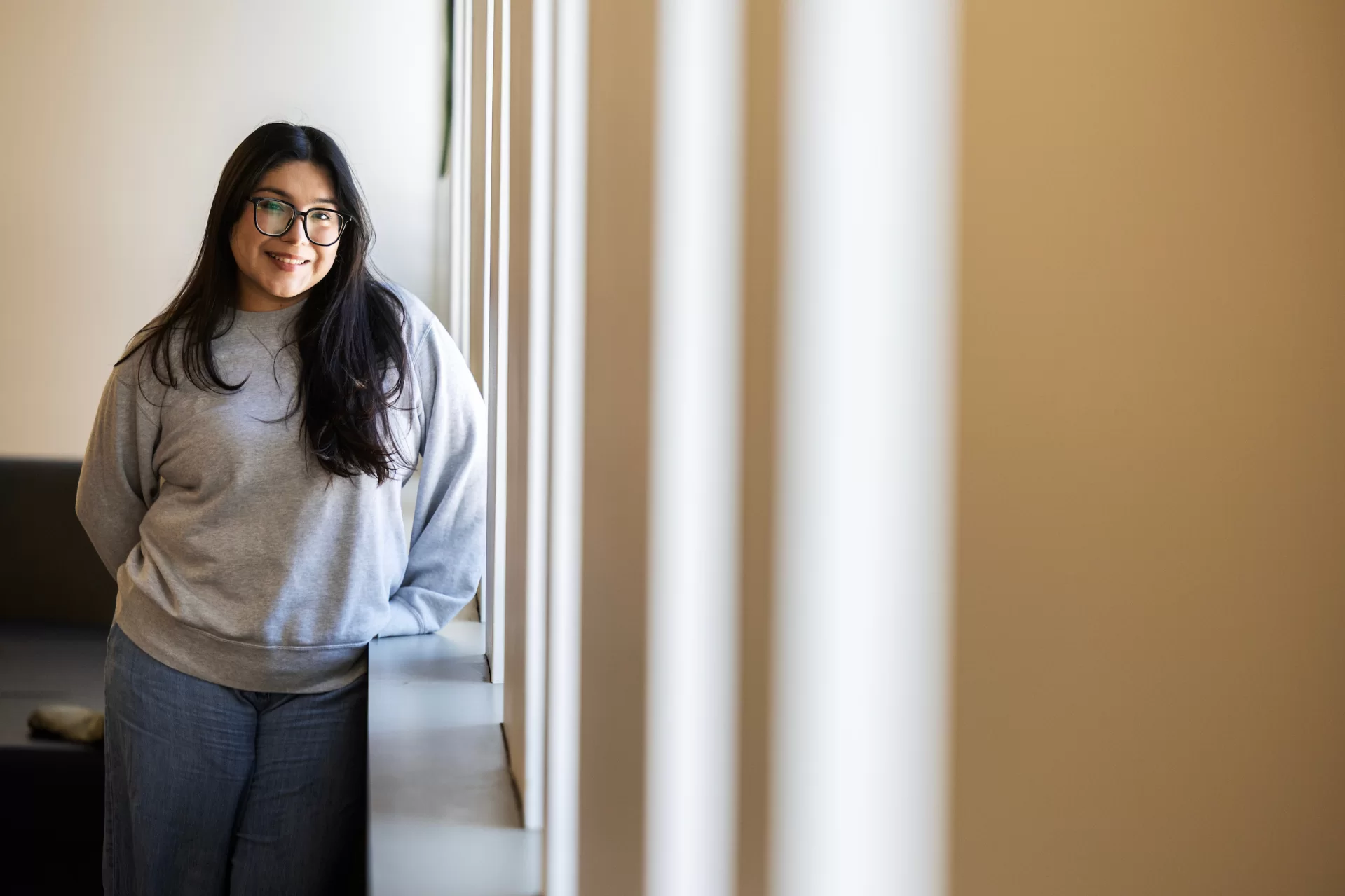
Robledo wanted to offer other students the same support she received from Iteriteka, so she became a first-gen peer mentor her sophomore year and is now in her third year in the role. She is one of eight mentors for the 2025–2026 academic year, each of them hosting one hour of drop-in sessions weekly in the SCBC, where they field questions about everything from academics to internships to navigating the Bates social scene.
Misa Beltran-Guzman, director of first-gen student programs at Bates, oversees the first-gen peer mentorship program.
“First-gen students are aware of the help and support they received to get to a place like Bates, and they are eager to repay or pay forward the encouragement, community, and mentorship they received along their educational journey,” Beltran-Guzman says. “Peer mentorship and student-to-student support are core to what we do: it develops the mentors as leaders while providing mentees with an approachable and genuine source of support.”
First-gen peer mentorship extends beyond the walls of the SCBC. For mentor Ross Tejeda ’26 of Milton, Mass., and mentee Alex Rodgers ’29 of Lowell, Mass., some of their best conversations happen when the two track and cross country athletes are running dozens of miles together each week.
“If Alex ever has anything that he wants to talk about, he’ll bring it up there,” Tejeda says. “It’s just something we can chat about, and it always comes up naturally.”
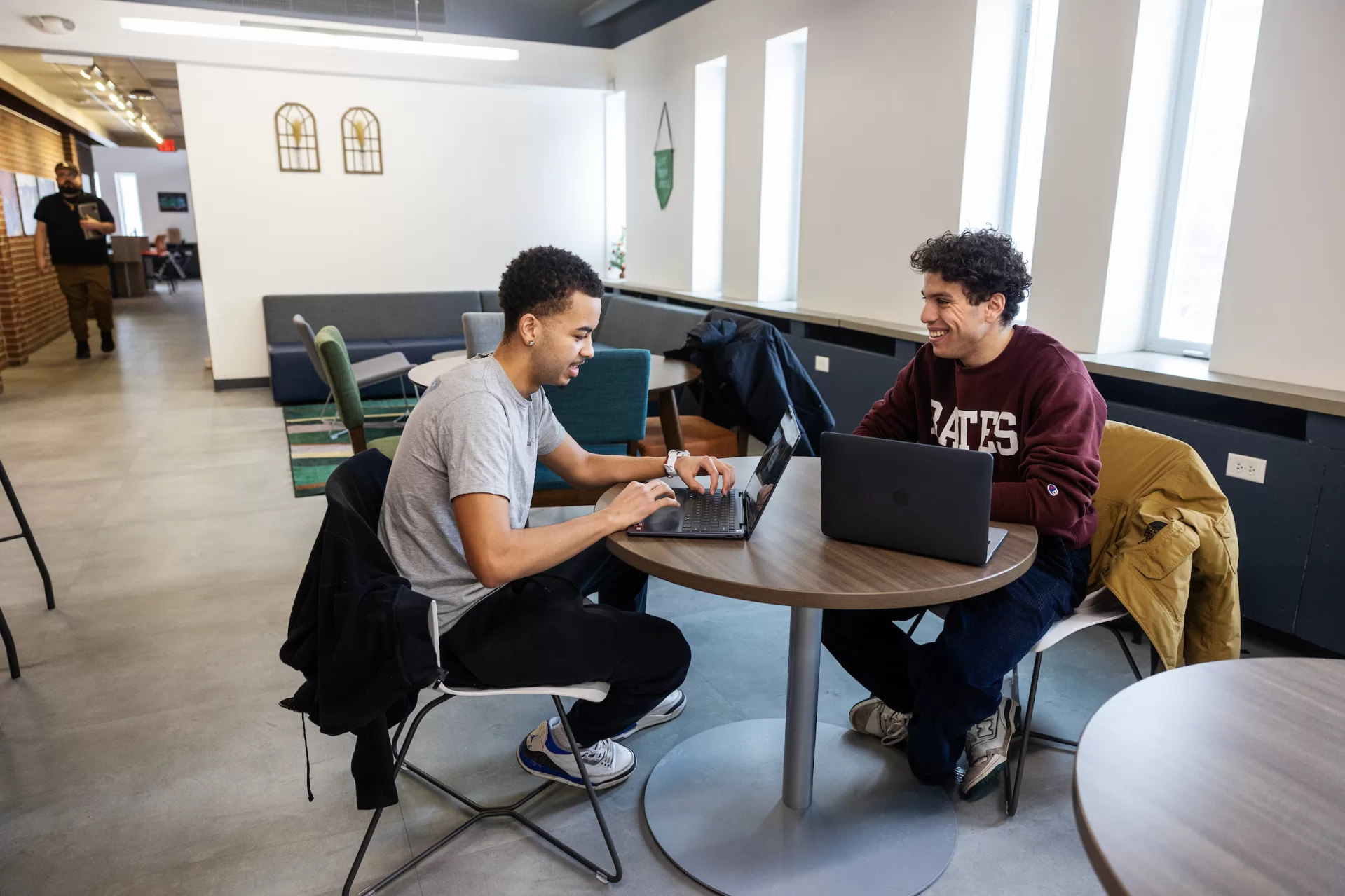
They had an early jump on the mentor-mentee relationship. Tejeda hosted Rodgers for an overnight visit when he was a high school student touring campus. They connected over similar childhood experiences, their shared home state of Massachusetts, and music — despite differing opinions on the Kendrick Lamar versus Drake drama.
“We have these shared experiences of things that we’ve gone through in the past, and it’s just good to be able to have someone to connect with,” Rodgers says.
When he was a freshman, Tejeda’s own mentor, Abraham Mieses ’23, took him “under his wing” and helped him learn to navigate social spaces at Bates as a man of color.
“In these spaces that are predominantly white, it’s really easy for you to fall into a certain way of being and almost, at times, abandon who you really are to assimilate into these spaces,” Tejeda says. “He did a really good job of guiding me through that experience.”
Like Robledo, Tejeda is now paying it forward, supporting other students in the same way.
“It’s a good opportunity, once you learn the ropes, to share them with other people,” Tejeda says. “You have a duty or responsibility — at least me specifically, as a Dominican, first-gen student-athlete. I feel like I can really make a difference.”
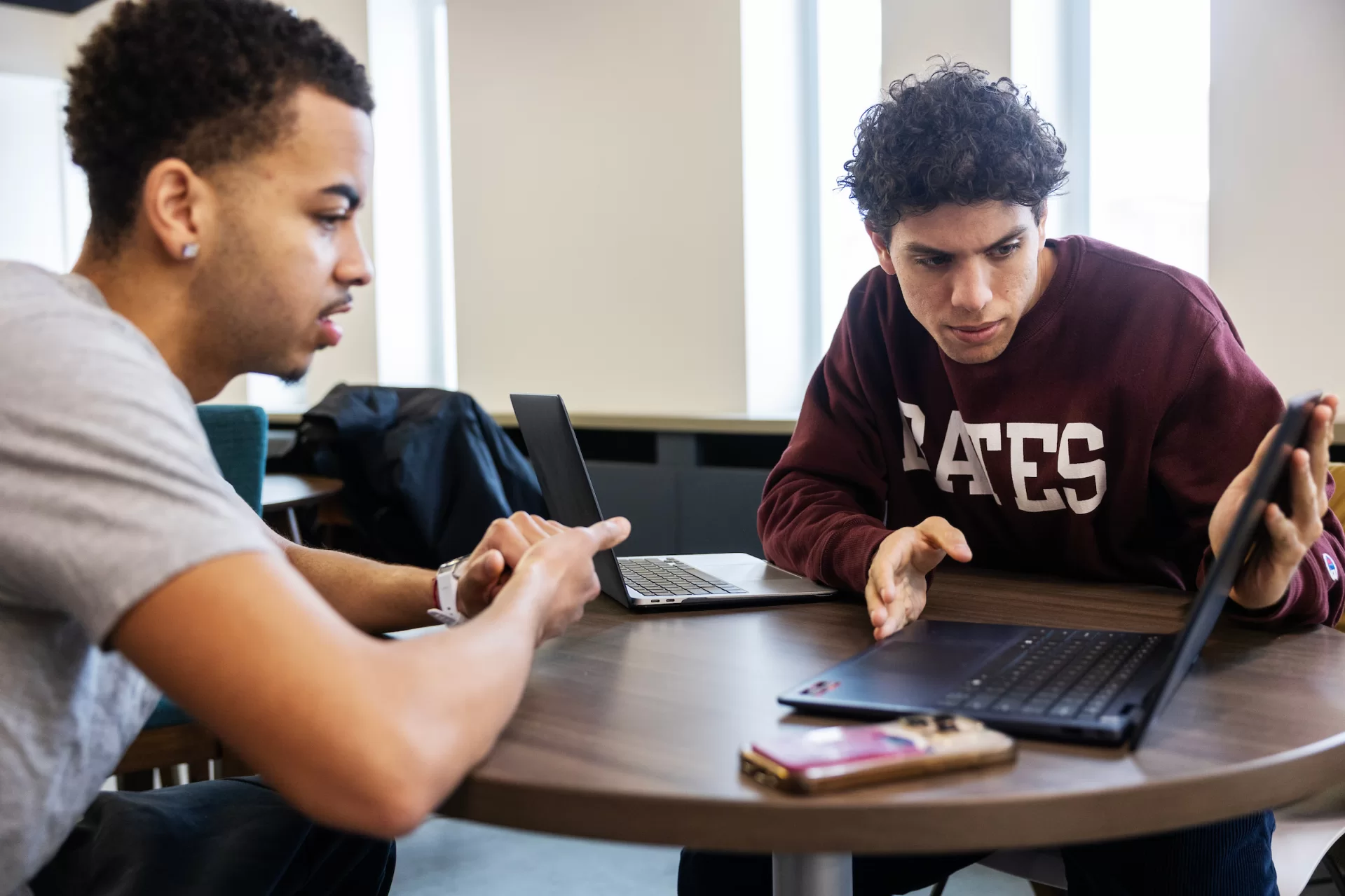
Tejeda, who is a double major in economics and English, has guided Rodgers, who plans to major in economics, along his academic path. Robledo, a biology major, has done the same for mentee and biology major Andrea Alfonzo ’28 of Cary, N.C.
“Having a mentor shaped a lot of the way I navigate through school,” Alfonzo says. “I do have somebody to talk to if I need to.”
“It’s a good opportunity, once you learn the ropes, to share them with other people. You have a duty or responsibility — at least me specifically, as a Dominican, first-gen student-athlete. I feel like I can really make a difference.”
Ross Tejeda ’26 on the importance of first-generation peer mentorship
For Robledo, part of a mentor’s responsibility is affirming to mentees that while they may experience challenges in college, they will be capable of overcoming them — and they won’t be doing it alone.
“Of course, I cried when I failed exams,” Robledo tells her mentees. “I’ve stumbled, and I’ve fallen, but we all get back up, and I’ll help you get back up in those moments.”
Sometimes, through the process of reflecting on what mentees need, mentors gain new insights into themselves. When Shristi Tamang ’28 of Kathmandu, Nepal, advises her mentees to seek out help or tutoring if they need it, she’s reminded that as a first-year student at Bates, she was hesitant to ask for academic support after never seeking out tutoring as a high school student. Now, she confidently reminds her mentees that they don’t have to do everything on their own and that it is OK to ask for help — even if you are a mentor yourself.
“That shift feels like I’m growing,” Tamang says.
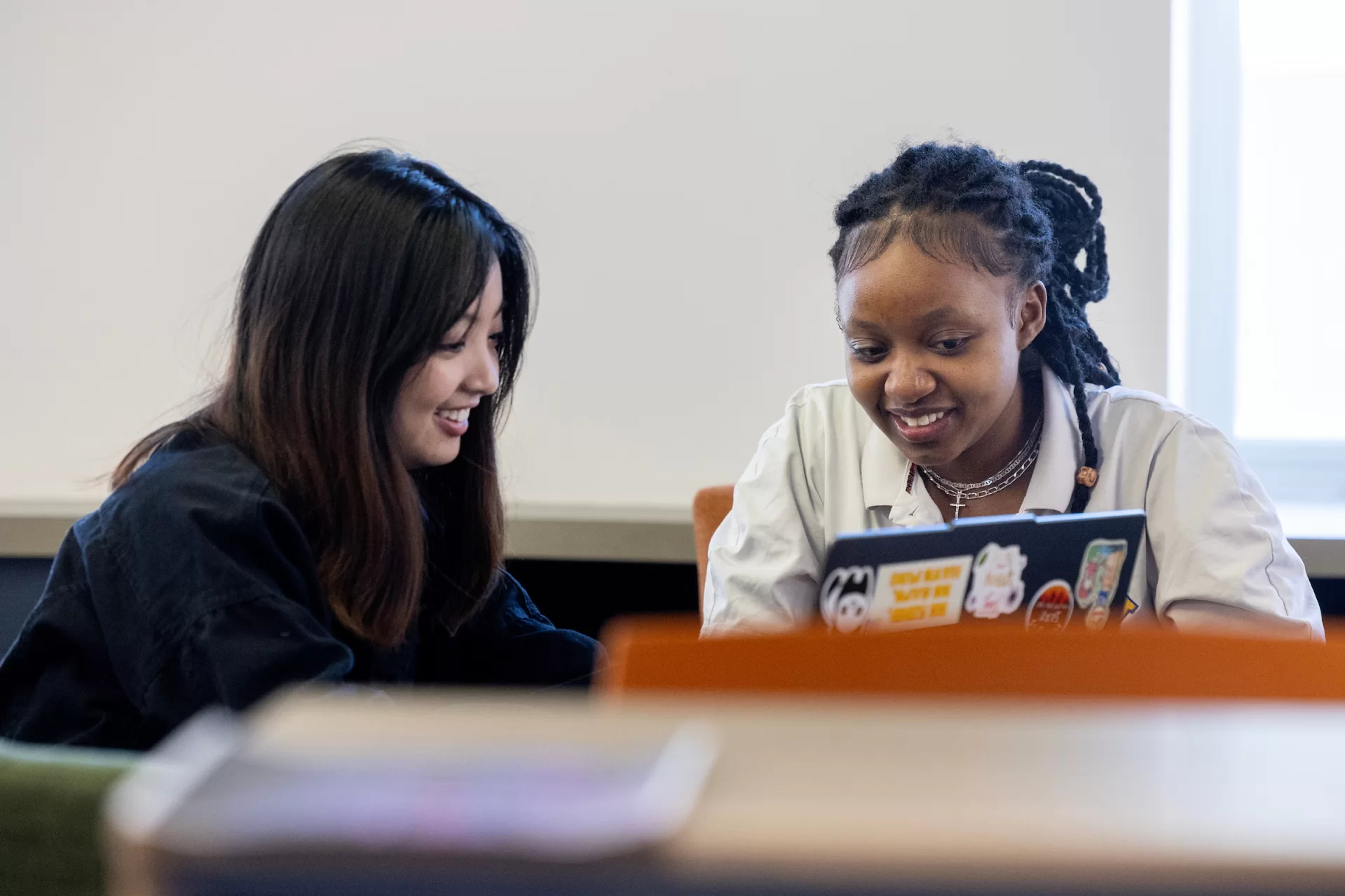
Tamang hopes to help other students navigate the imposter syndrome that students of color at a predominantly white institution may experience. Bates’ first-gen student programs offer a safe space to explore this subject, Tamang says, which felt more taboo in high school.
“The program made me feel like it’s an identity that is celebrated rather than something that is hidden,” Tamang says.
When Margaret Ndirangu ’29 of Nyahururu, Kenya, arrived at Bates, she found herself in a new educational system, unsure how to balance school with searching for jobs and internships. Tamang stepped in with advice and action; she helped Ndirangu secure a job at Ladd Library and showed her how to search for fellowship and internship opportunities.
“Having someone you can talk to who’s also a student and more like a friend … it has been helpful,” Ndirangu says. “I don’t know if I would be where I am, especially with my job and figuring out what I should do, if I didn’t talk to her.”
First-gen programs at Bates offer a suite of other support and programming opportunities, such as collaborations with the Center for Purposeful Work and the STEM Scholars program, which provides mentoring, coursework, and community to a select cohort of students, including those traditionally underrepresented in science and mathematics.
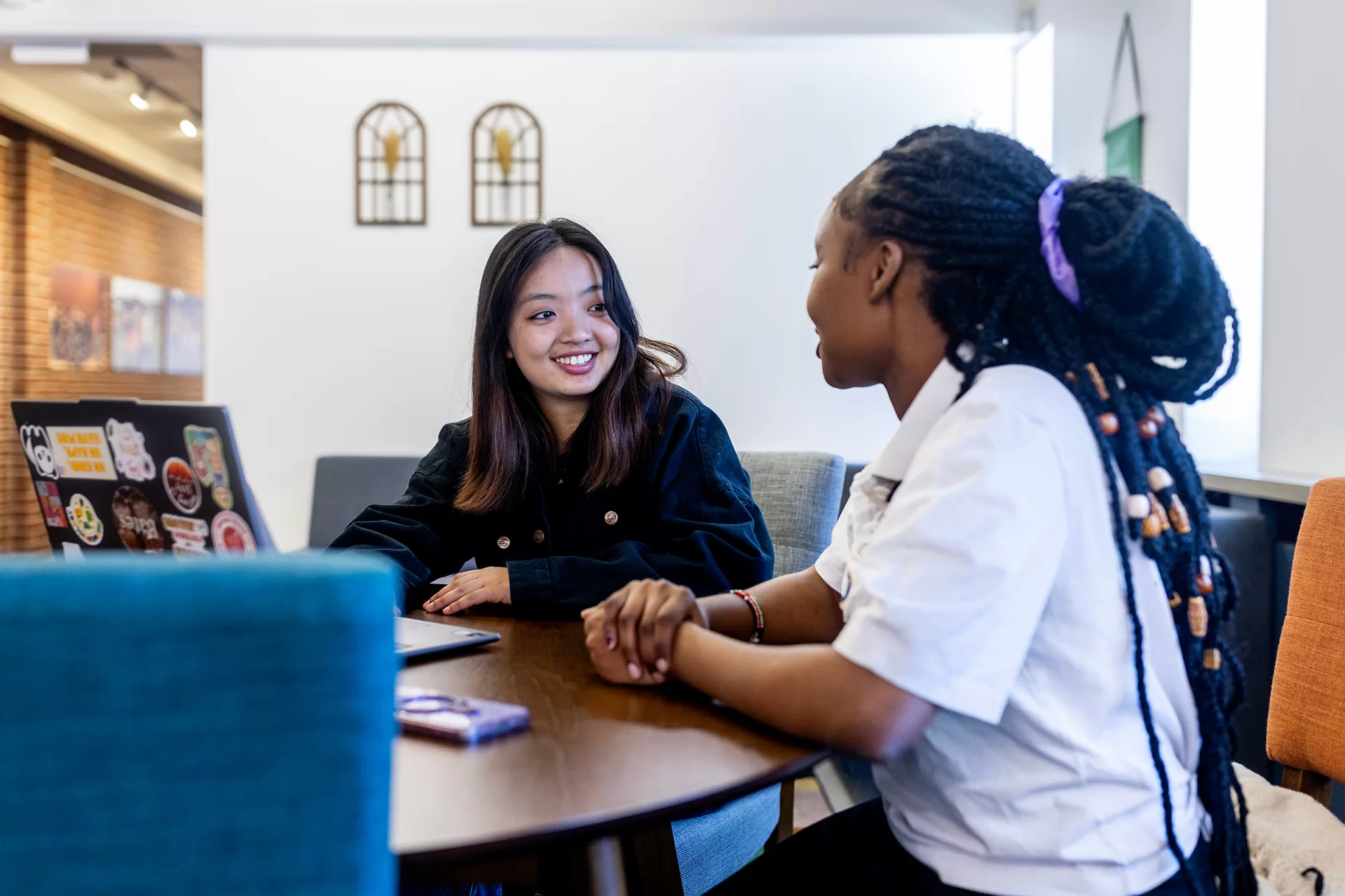
Beyond formal programming, students gather in the SCBC for fun and food between classes and during weekly First-Generation Snack and Chats. Robledo has spent countless hours there with her Bobcat First cohort, from their Bates pre-orientation to their senior year.
“I’m growing up with them,” Robledo says. “To think that I’ll be graduating with them soon in a couple of months, it’s a bittersweet moment.”
Even as the Class of 2026 Bobcat First cohort graduates, their wisdom won’t be lost. They have already passed it down to their mentees, many of whom will likely become mentors themselves and return the same favor to the next generation of Batesies.
Categories BatesNews