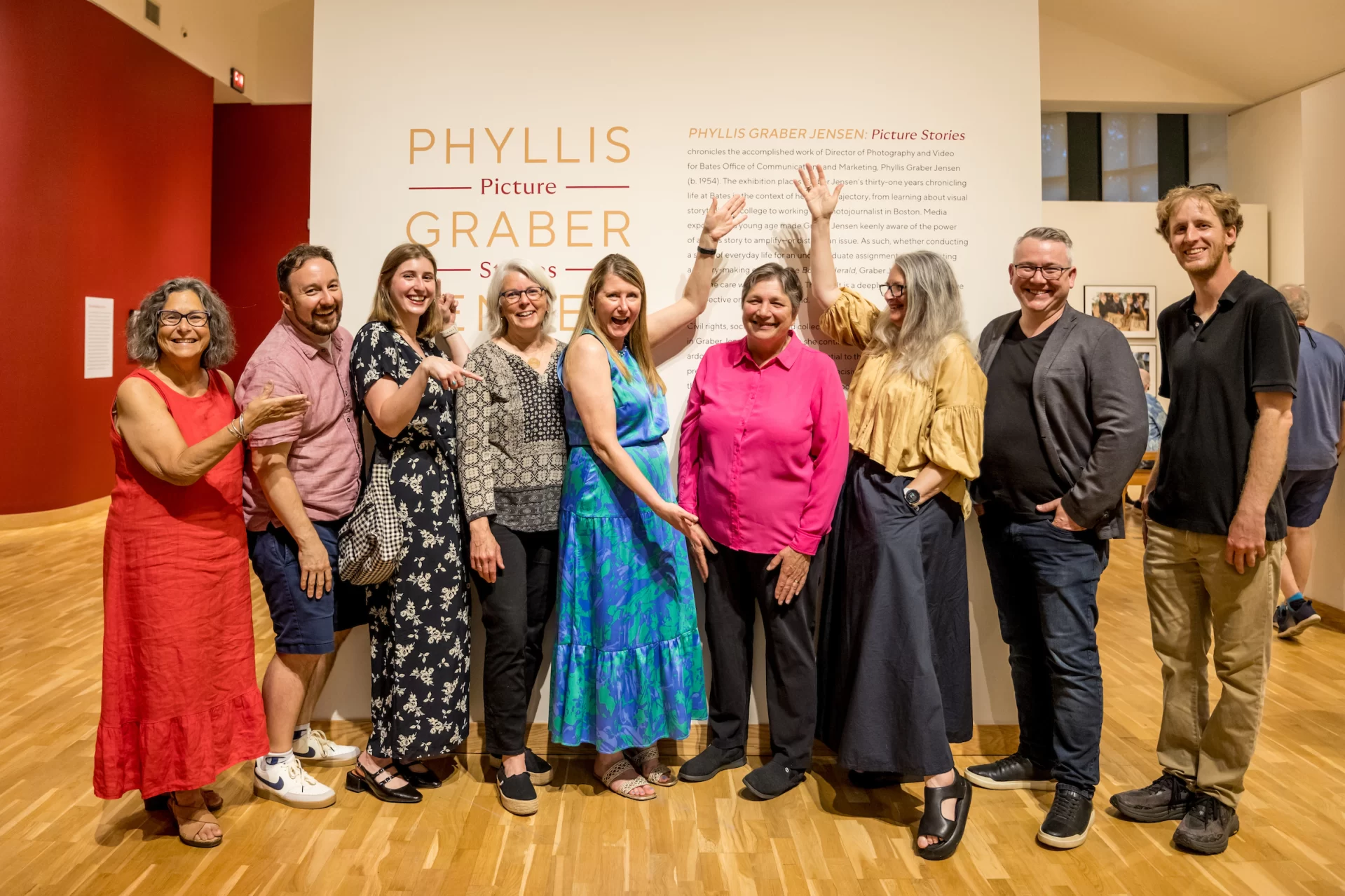
On June 12, with Reunion in full swing, Phyllis Graber Jensen, the college’s longtime director of photography and video, did something highly unusual. She showed up at a Bates College event without any camera, save the one on her cell phone, and she did not make a single image.
That’s because the event was the opening of the Bates College Museum of Art’s exhibition, Phyllis Graber Jensen: Picture Stories, which will be up through Sept. 19. Curated by museum Director Carrie Cushman, this is a true retrospective of Graber Jensen’s work, spanning her time from student photographer to staff photographer at the Boston Herald and then her 31 years in Maine at Bates.
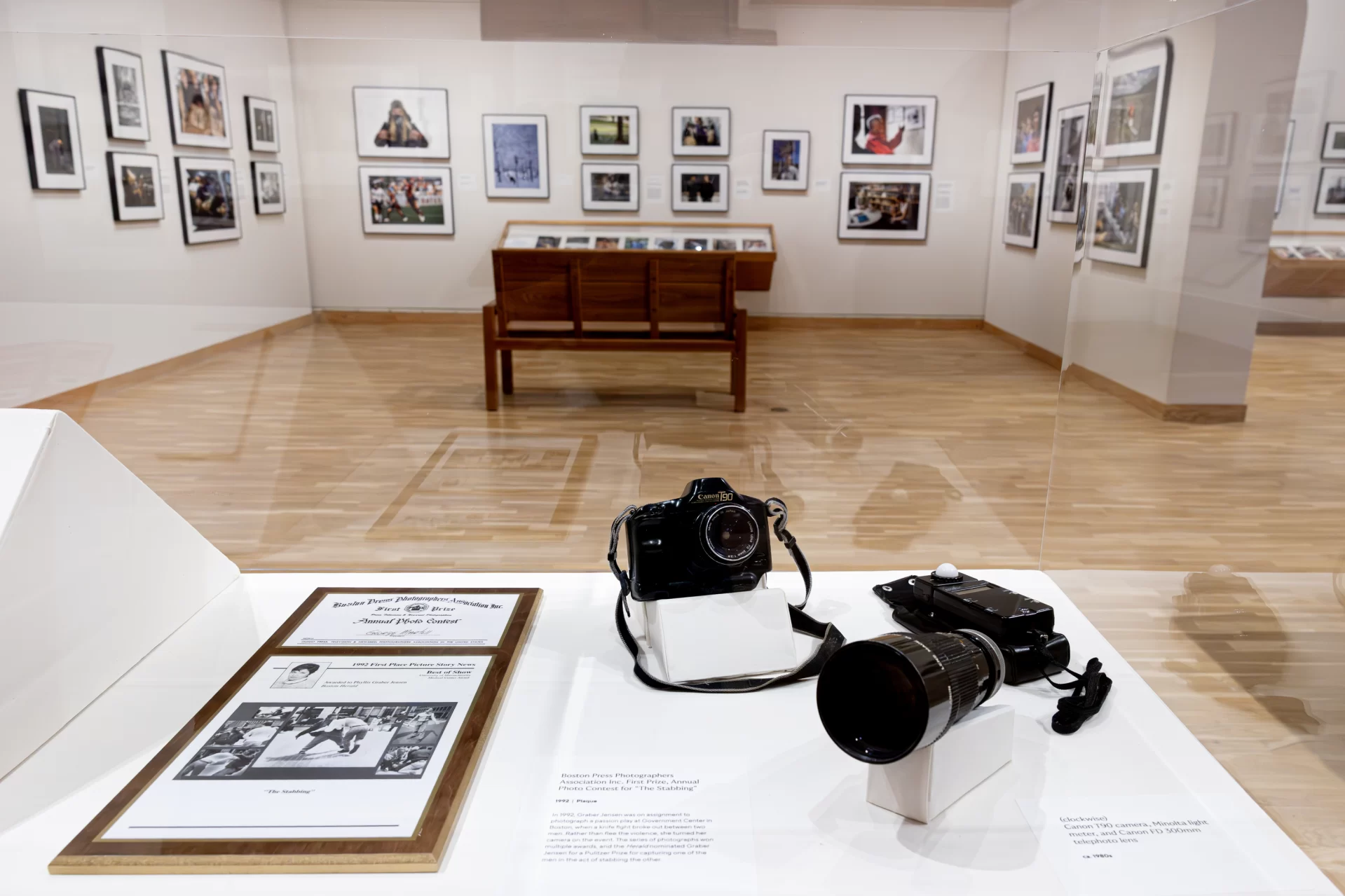
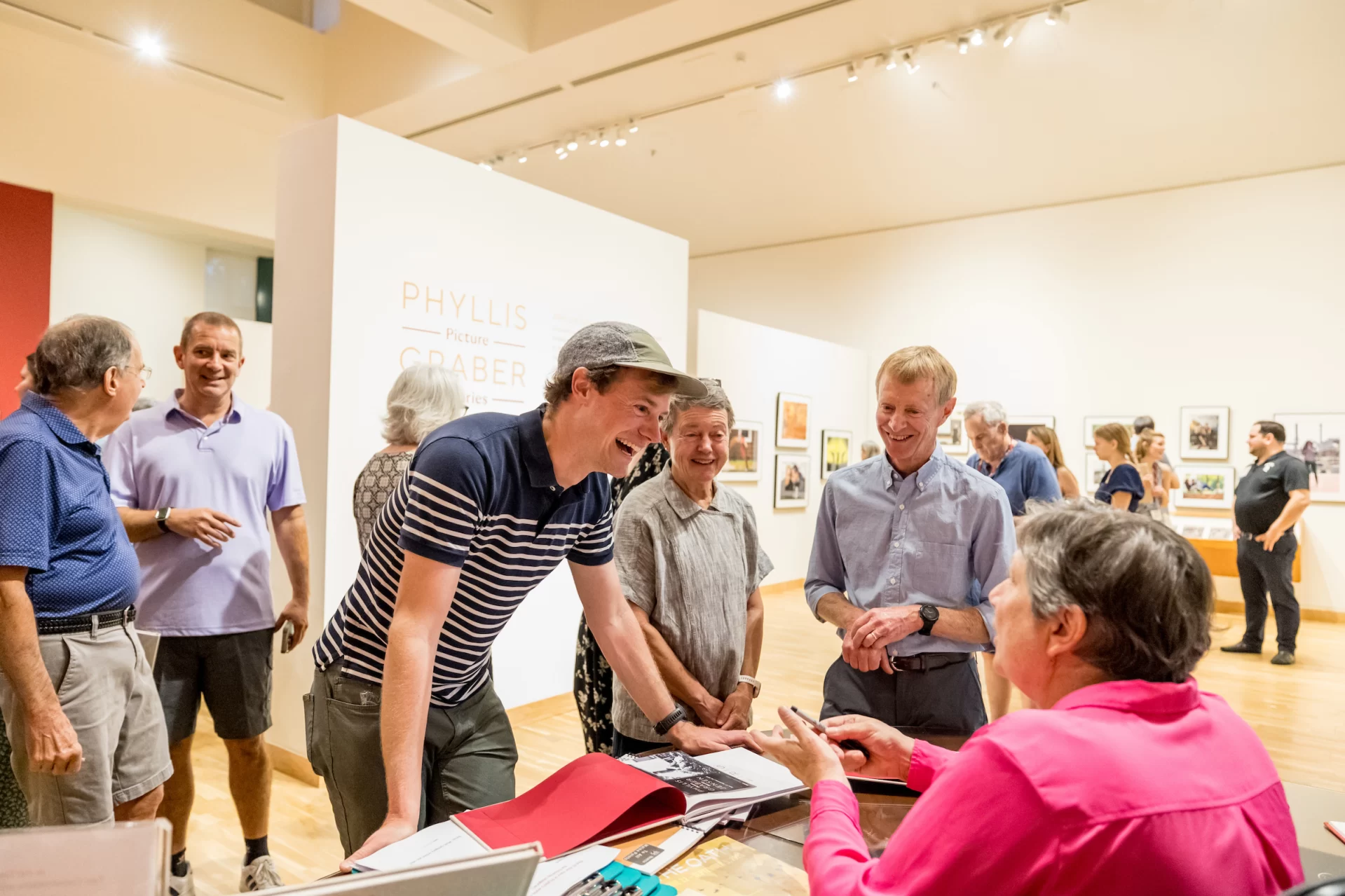
The exhibition takes up the entire first floor of the museum, and on Friday evening, fans of Graber Jensen’s work, from alumni (including former student workers) to faculty and staff, as well as her family, filled the space to capacity.
Speaking to the audience, Graber Jensen praised the “imagination and vision” of Cushman, who joined Bates in August 2025 and took on the retrospective as the first exhibit she would curate.
“It’s a gift and a privilege to have someone of such immense talents and kindness, someone who barely knew me and had just arrived on the scene, take such an interest in offering context and insight to the work I produced during the last 50-plus years of my life,“ Graber Jensen said. “That’s lots of ground to cover in a very short period of time. Yet she persevered, and here we are.”
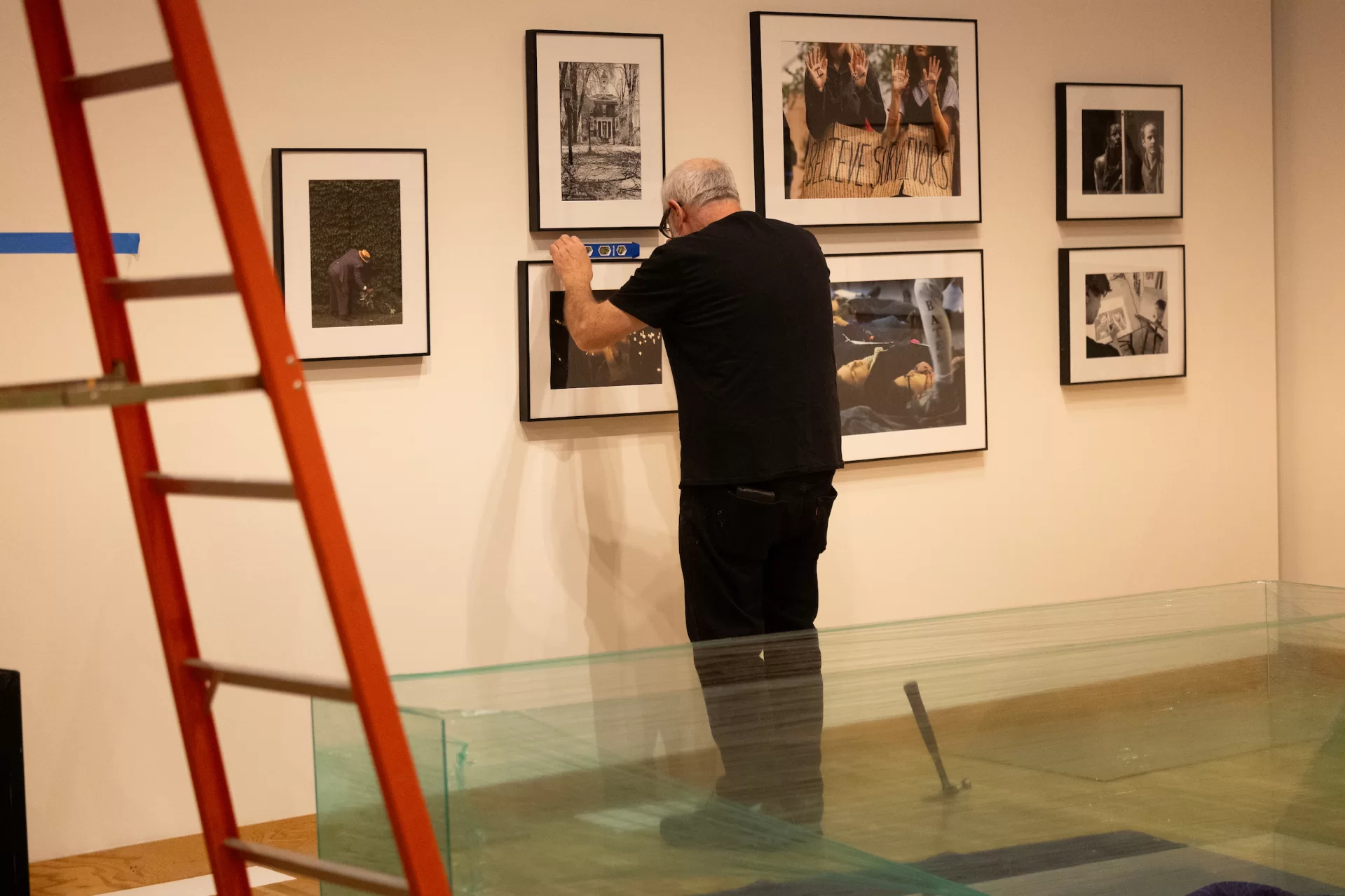
There are 91 objects on display, including 51 newly printed and archival photographs, and ephemera such as contact sheets, cameras, and newspapers from Graber Jensen’s time as a photojournalist. And of course, many, many photographs from her time at Bates.
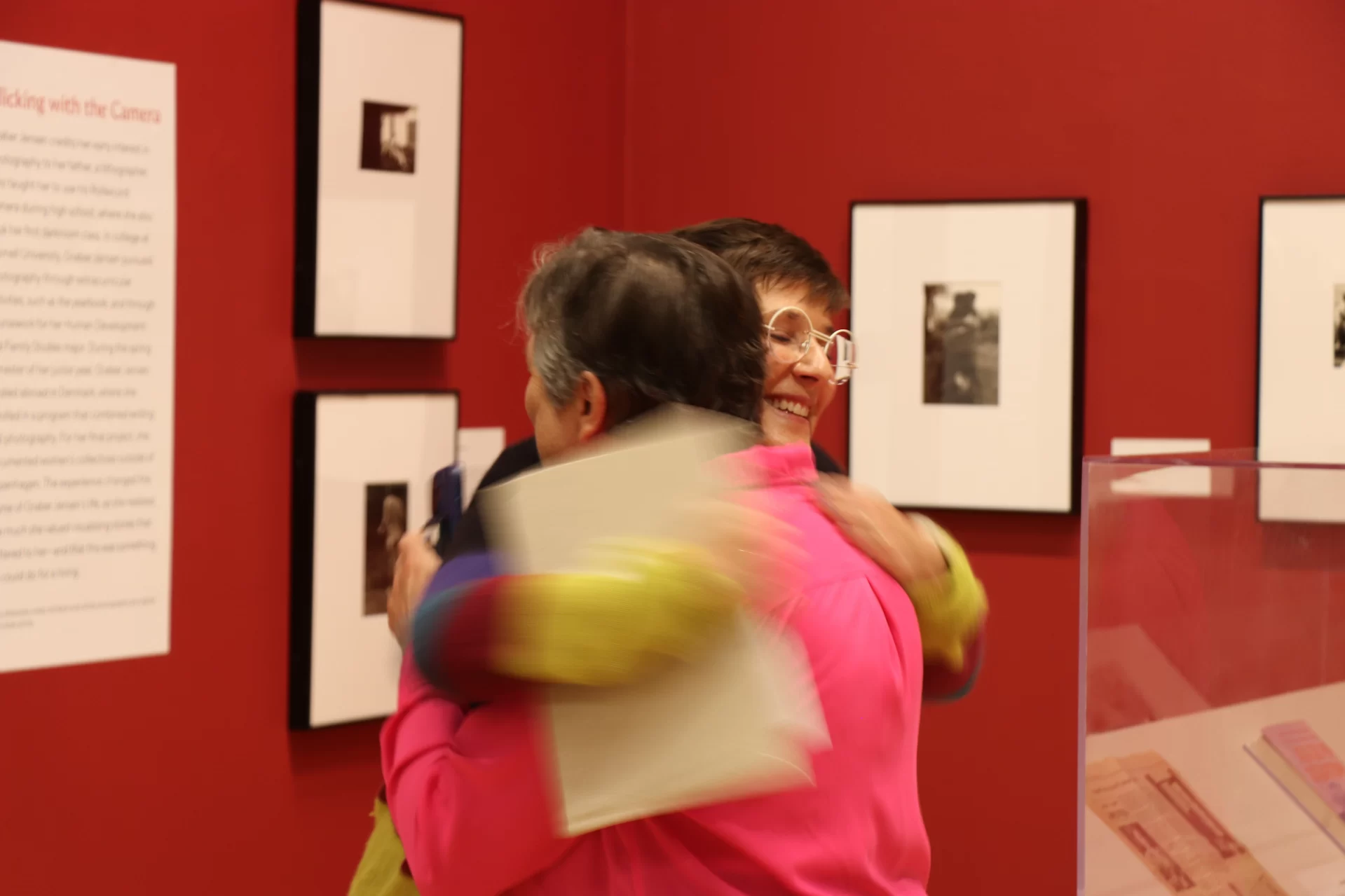
“Working with Phyllis on this show has meant that I have gotten a crash course on the past 31 years of Bates history, but also a really deep understanding of the spirit of this place, of what makes Bates Bates,” Cushman told the gathered crowd. Every photograph contains a story, she said, and, “I encourage you to pick one out, and ask Phyllis tonight, and she’ll be able to recall, without hesitation, who is in the photo, what they taught, where they worked, what they majored in, their graduation years! This in addition to all the details that led to the making of the photo.”
That recall is a testament to her intellect and her fortitude on the job, Cushman said, “but also to the tremendous amount of care that she takes with her work.”
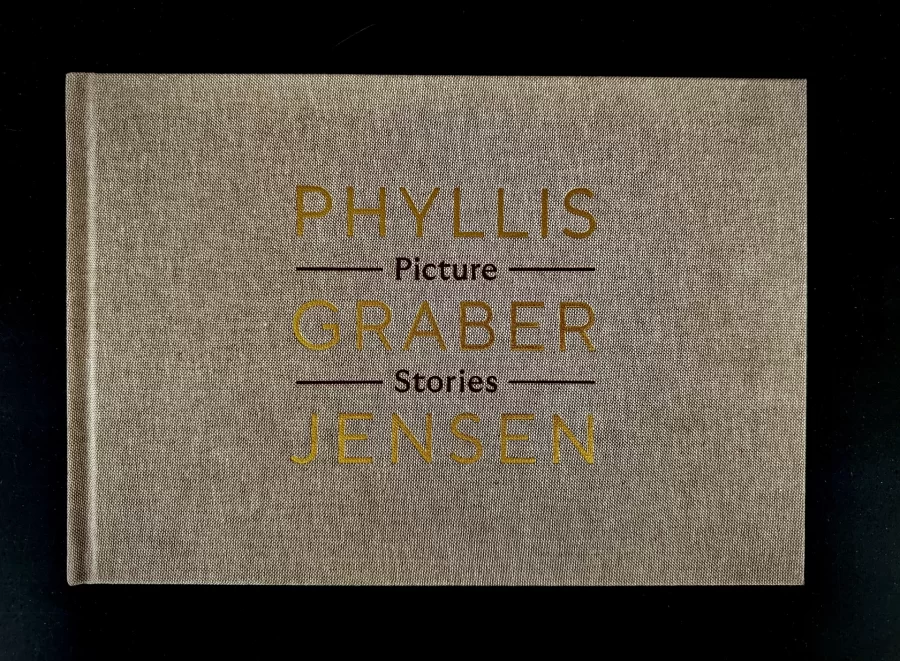
Cushman’s scholarly essay on Graber Jensen’s work serves as the introduction to the book accompanying Picture Stories (available for purchase at the museum and at the Bates College Store) and an assessment of her work in the medium.
In it she writes, “I have not heard Phyllis describe herself as an artist, but she is keenly aware of her responsibility as a maker of visual material (as I believe all great artists should be), and she approaches that responsibility with a creative spirit and relentless curiosity that positions the photographic medium as an essential mode of storytelling, inquiry, and community building — photography at its best.”
Graber Jensen’s earliest forays into the medium include photographing her brother Norman, who, when they were children, was often mistaken for her (and vice versa) and her documentation of the women’s liberation movement in Denmark in 1975 when she was a Cornell undergraduate studying abroad. She continued to make photographs during her time in graduate school for journalism at Boston University, and then as a stringer for the Associated Press. About 15 images in the exhibit come from Graber Jensen’s eight years as a staff photographer at the Boston Herald.
There is also a biographical section that chronicles her time as an early — pre-Title IX — advocate for girls and women in sport when she was just a teenager, wanting to play tennis competitively. During the 50th anniversary of Title IX, a New York Times reporter wrote about Graber Jensen’s fierce determination to challenge the status quo in a story headlined The Forgotten Teenage Trailblazer of Women’s Tennis.
Graber Jensen joined Bates in 1995 as a staff writer but by 2002 was working as a photographer and multimedia producer, just as the social media age was taking off. In the years since, Graber Jensen, more than any other person, has been responsible for creating, nurturing, and stewarding the college’s visual identity, a role she honors with a dedication that extends well beyond an eight-hour workday. On campus, she is too recognizable — and beloved by students — to truly melt into the background the way she might like, but her methods are purely journalistic and her energy unmatched by anything but the care she brings to an assignment.
Want to visit? Summer hours at the Bates College Museum of Art are Monday-Saturday, 10 a.m. to 5 p.m. The museum is closed on Sundays.
For Cushman, a scholar who has specialized in Japanese art and worked extensively in photography, it’s evident that Graber Jensen came to her profession with an intuitive approach to putting subjects at ease. In the accompanying book, Cushman writes that Graber Jensen’s quiet assurance and empathy result in “images that feel genuinely of their moment.”
“Here’s what I have found,” Graber Jensen said to the crowd gathered at the museum Friday night, telling them she was paraphrasing documentary photographer Eve Arnold. “If a photographer brings compassion and curiosity to an assignment, that’s a lot. It’s those qualities, rather than the camera, that lead to a trust between photographer and subject and yield strong photographs. I hope that the framed ones on these walls reflect some of that compassion and curiosity. Call it an obsession, but it’s really a love story with Bates and its community from which I hope never to recover.”
Graber Jensen plans to retire late this summer.
Graber Jensen credits former Vice President of Communications and Public Affairs Sean Findlen ’99, who was her supervisor until 2022, with planting the seed for the exhibition. “At one point, before he left, he said ‘I’d love to see you have an exhibit at the museum,’” Graber Jensen remembers. Findlen remembers that he might have even said it would be a “crime” if such an exhibition didn’t happen.
“Phyllis’ work reflects the soul of the college and its many facets, contours, and angles,” Findlen said. “She has an eye that sees the heart of any situation and the skill that brings it to life in a picture. She’s simply the best of the best.”
The exhibition is made possible with funding from the Jane Costello Wellehan Endowment Fund, the Dorothy Stiles Blankfort ’31 Fund, the Alex Katz Foundation, and Bates Arts Collaborative.
Categories BatesNews