Carolina González Valencia, associate professor of art and visual culture, was tired of the ways that she saw representations of women like her mother on the screen. She was weary of the ways that she did not see her mother Beatriz on the screen. She hated seeing dynamic people like her mother — who is funny, creative, and opinionated — portrayed as quiet and humble domestic workers. Her mother has a “big personality,” and González Valencia, who is accustomed to using art and film to reach an audience, wanted to create a narrative that captured the complexity of her mother’s experience — as a domestic worker in the U.S., but also as a full and complex person.
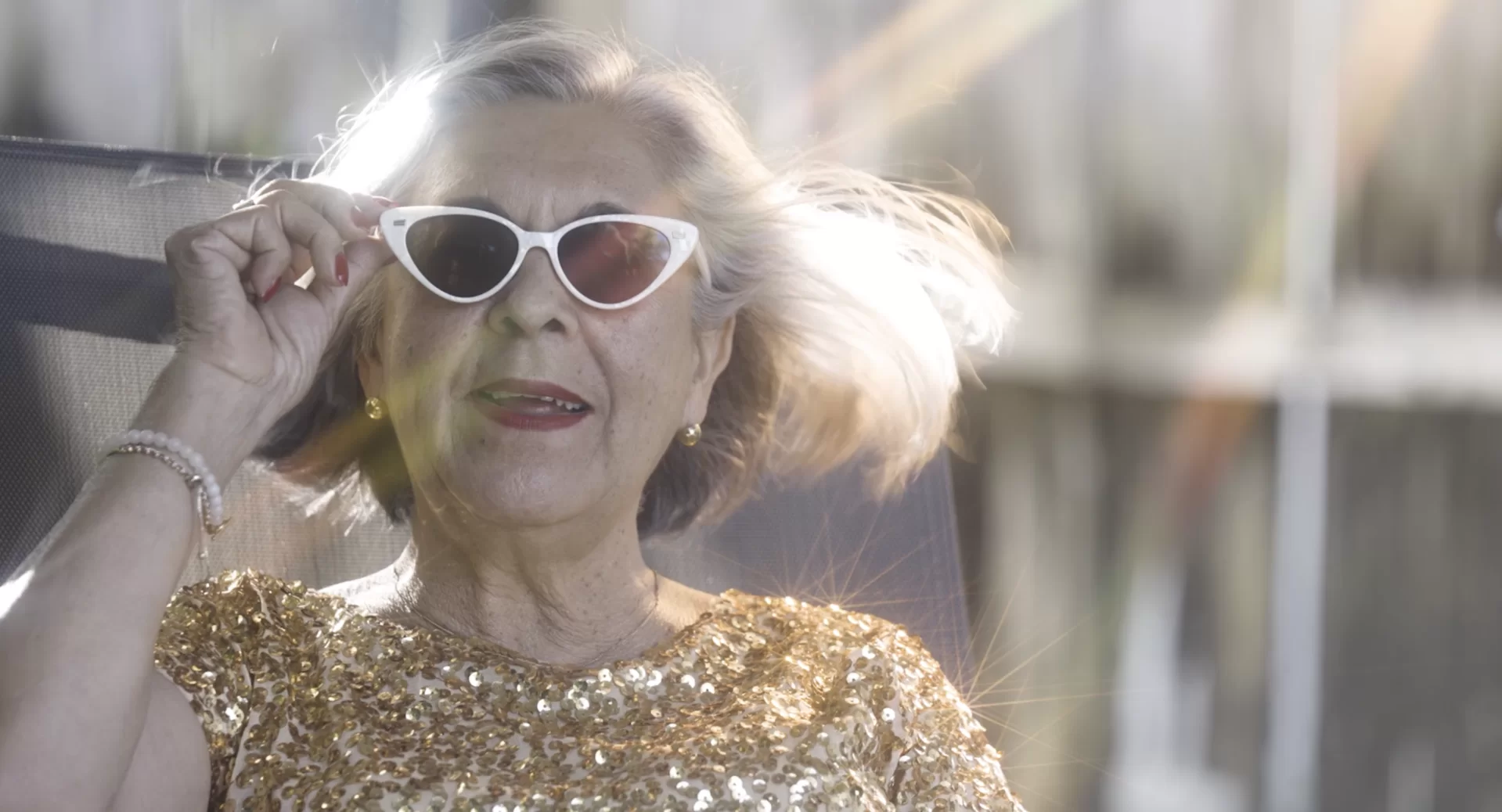
The result is How to Clean a House in 10 Easy Steps, which is in final post-production this month, and will be complete by the end of the year. A recent grant from Unbound Philanthropy gave the final push to bring the film toward completion. In its early stages, though, the biggest obstacle was finding how to authentically tell a story featuring domestic workers that felt new … and true.
When González Valencia began the process, she sat down to talk to her mother, Beatriz Valencia, about her work. In these early conversations, she saw her mother shrink into a prescribed role. There didn’t seem room for her mother’s complexities to show up in a film when she approached it as a documentarian. She also was aware of “the complicated waters of having this power of representing another person.” González Valencia began really thinking about how to approach this project — meant to represent a domestic worker in the U.S. — collaboratively.
González Valencia has frequently drawn on collaboration to access authenticity. In an installation in Beirut in 2018, she posted a question (“Are you afraid you’ll keep moving forever?”) on flyers that hung across the neighborhood where she was in residency and invited responses via text. Her 2019 “Video Postales” featured photographs and videos shared by artists to accompany lines from González Valencia’s writing. The result was surprising and beautiful — accessing something more true than she could have created alone. Tapping into her collaborative instinct as well as her background in performance art, González Valencia engaged her mother in some improvisatory exercises.
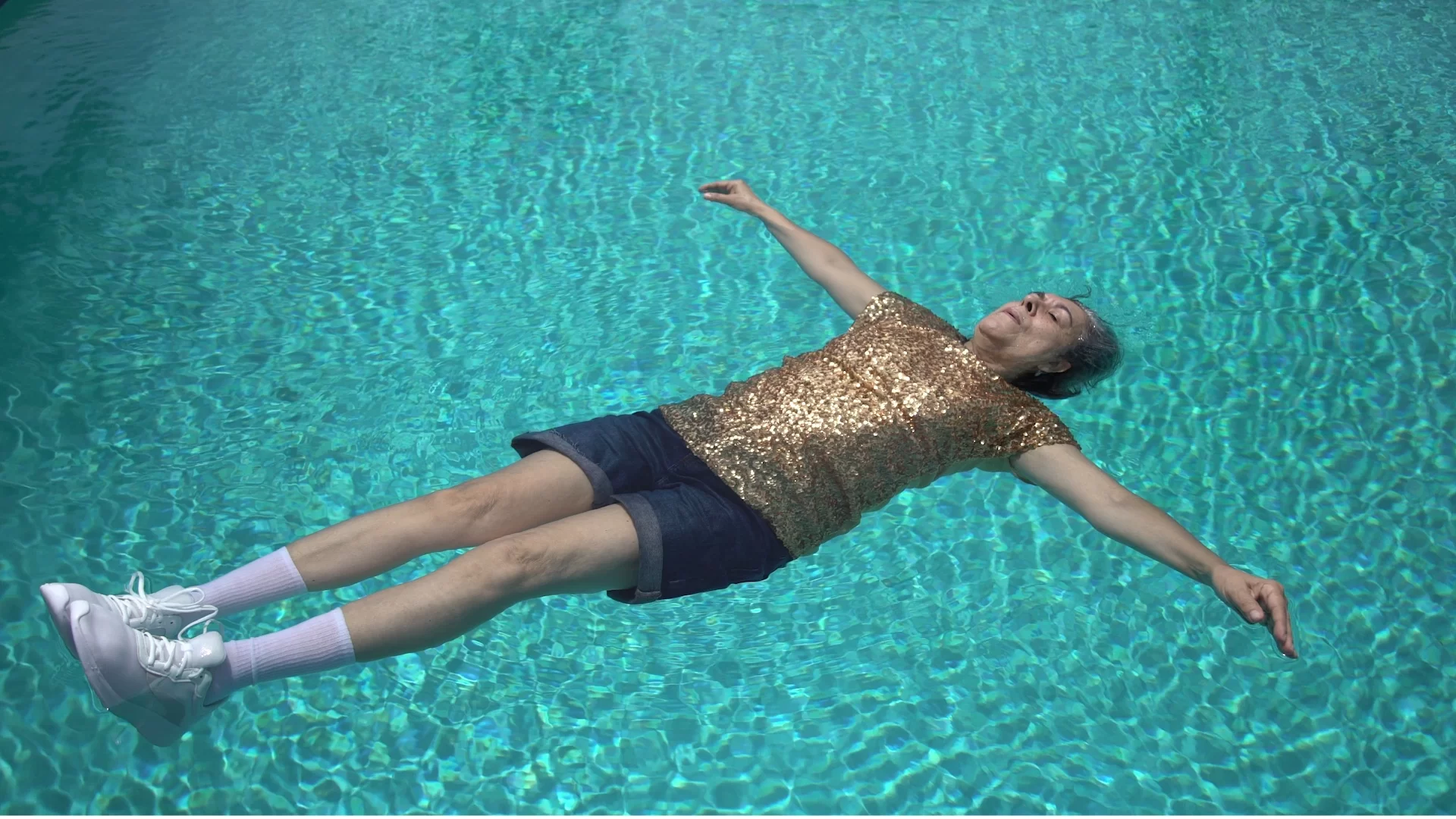
“Let’s pretend I’m a journalist and I’m here to interview you and you’re a very, very accomplished person,” González Valencia said to her mother during the early stages of the film. “What do you want to be very accomplished at?” Her mother immediately responded that she would want to be a famous writer. What emerged was a central fictional character around which the collaborative genre-bending film took shape.
As soon as the fictional writer emerged as a character that Beatriz played, her mother spoke more freely and truthfully to her daughter. “That fiction allowed us to be more honest,” González Valencia said.
González Valencia likely already knew that this film was going to push against boundaries. Documentary is a complicated genre that sometimes poses as simple or straightforward.
“I was really interested in pushing what we can do as a documentary. It’s a form that needs to be questioned because it comes from a legacy of a very colonial way of looking at the ‘other.’” González Valencia was not traveling to a new land to represent another culture, but she knew that she could still fall into the patterns of misrepresentation if her mother was not empowered as a collaborator.
González Valencia notes that other artists have blurred genres — drawing from fiction to access the truth. Author Claudia Rankine, for example, is creating a sort of “collage” in her writing, which has served as a model for González Valencia in her art. She also cites two Belgian filmmakers as influences: Chantal Akerman, who explored her own relationship with her mother in genre-blurring documentary films, and Agnès Varda, who blurred fiction and fact in her documentary films. Models like these allowed González Valencia to collaboratively create a documentary about her mother as a domestic worker, who is playing the role of a famous writer in parts of the film.
As the semester wrapped up, González Valencia traveled to Splendor Omnia just outside of Mexico City, which she described as a dream studio. This is her first feature-length film, so the experience at Splendor Omnia will not only allow her to finish the film in a very high-end way, but it is also offering González Valencia an education. “It’s kind of like a school to me,” she said.
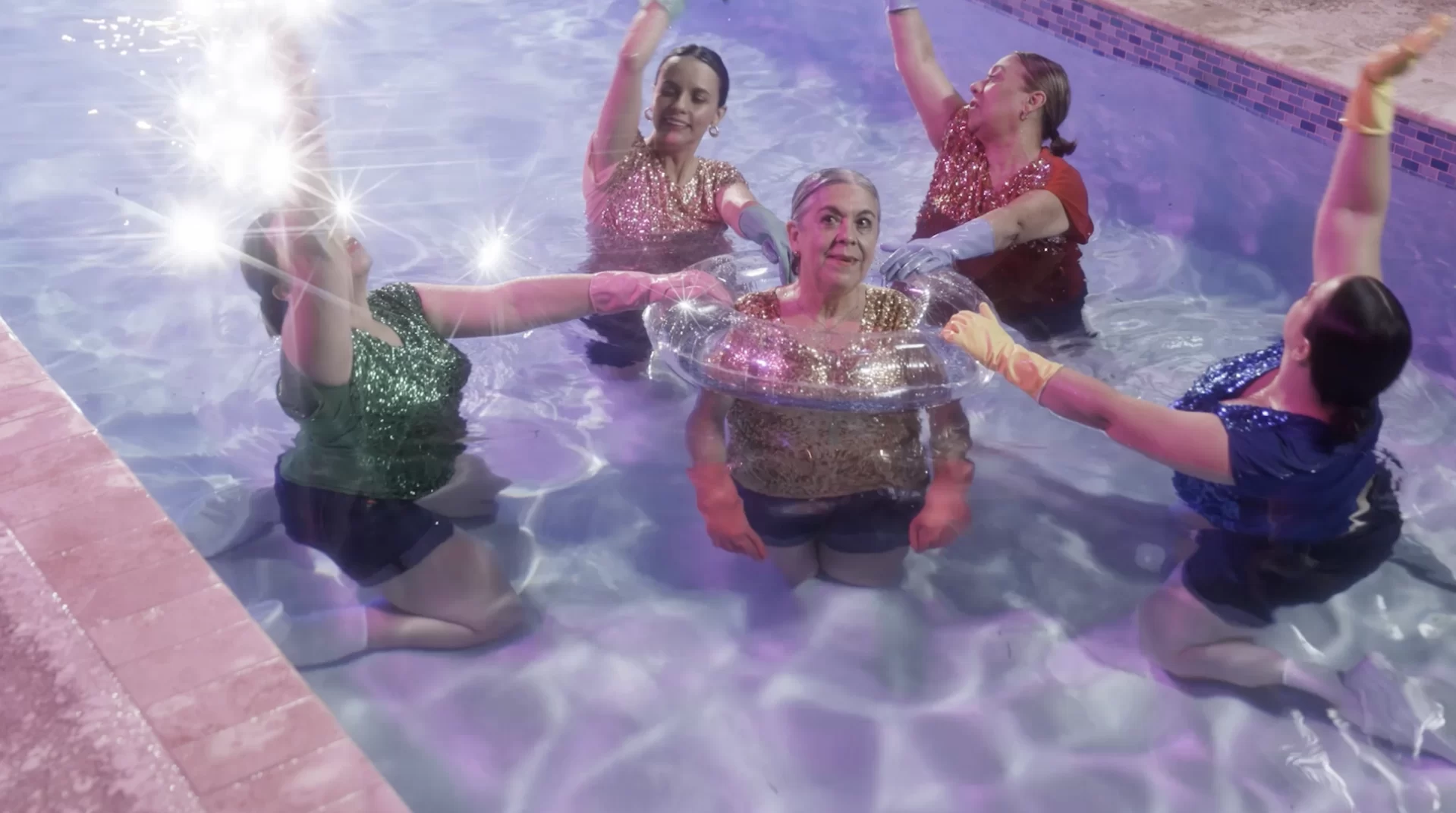
How to Clean a House in 10 Easy Steps is the result of what happened when González Valencia and her mother dared to let go of the factual in favor of the truth. Of course deciding upon an approach for the film was only the very beginning. González Valencia’s project has received a slew of grant support. The production of the film has been made possible by support from sources that include the Sundance Film Festival, Abundant Futures Fund, and the LEF fund. The most recent $50,000 grant from Unbound Philanthropy enabled the film to move into post-production.
González Valencia has high hopes for the impact that her film can make. Primarily, she wants to contribute to ongoing conversations about narrative structure, domestic work, and immigrant rights.
“I don’t believe in the single story,” González Valencia said. And when you are part of a group that gets represented by a superficial, single story, the stakes are higher. “I’m interested in being part of the conversation that complicates it, that shows that there is not one story.”
González Valencia and her mother are certainly pushing back against a single narrative created “from the perspective of pain and trauma.” González Valencia hopes that this film can show that “when we talk about immigrants, when we talk about domestic workers — we are people full of joy and laughter.” Especially now, she hopes the creativity and joy of the film — which includes a musical sequence — will “help people to feel closer.”
Faculty Featured
Carolina González Valencia
Associate Professor of Art and Visual Culture