Four Bates seniors are hoping to get the chance to spend the next year seeking answers to some big questions. Finalists for the Watson Fellowship, these students are exploring differing approaches to work across cultures, persistent traditions amid changing political boundaries, how meaning can be made from movement, and community-driven approaches to power grids.
The Watson Fellowship offers college graduates support to travel for a full year exploring a complex topic. Fellows receive $40,000 along with health insurance and a year’s worth of student loan payments (if needed). In exchange, they must remain outside of the United States for a full year, beginning in the August following their college graduation.
“This is some version of heaven,” said Robert Strong, director of national fellowships. “The Watson allows Batesies to spend a year traveling the earth constrained only by the limits of their curiosities, which Watson believes should be limitless.” Bates is one of 41 colleges and universities that can nominate students. Each institution is allowed to nominate up to four students from within their own highly competitive pool. The last time Bates students were awarded a Watson was in 2023, when two Bates seniors, Adilene Sandoval and Elizabeth LaCroix, received the prestigious fellowships.
This year Bates has four nominees: Poppy Marsh ’26 of San Francisco, Calif., John Harun-DeLong ’26 of Fairbanks, Alaska; Brett Karpf ’26 of Ridgewood, N.J., and Linh Hoang ’26 of Hanoi, Vietnam. And if awarded, their travels could span 19 countries — from Nepal to Norway to New Zealand.
We caught up with these four finalists, to learn more about what they hope to accomplish if they receive a Watson. Poppy Marsh, a double major in English and politics, has proposed a project to explore identity and community among those impacted by political borders in five countries. Marsh was an Otis Fellow in 2024 and spent eight weeks in the Italian Dolomites, hiking and talking to people about climate change and environmental degradation. Marsh sees the Watson as “the grandparent of the Otis,” with a longer time frame, larger scope, and increased independence on the part of the fellow. For the Watson, she explains, “I’m curious about individual and communal conceptions of identity as it relates to the invention of the modern state through, around, and between communities whose presence on this land predates the state’s modern borders. So my project is thinking about this through distinct methods of cultural, linguistic, and social preservations of these communal identities as they relate to the land that they’ve remained on.”
Marsh’s interdisciplinarity shows up in her work at Bates. Her politics thesis, which is “a comparative study of the refugee accommodation regimes in Greece and Kenya,” focuses on policy differences in shifting communities. Her year-long poetry thesis allows another way to explore questions of place. “For that, I’m interested in ideas of homeland, ideas of what it means to come from a place and no longer be with it or what it means to come from a place and remain with it.”
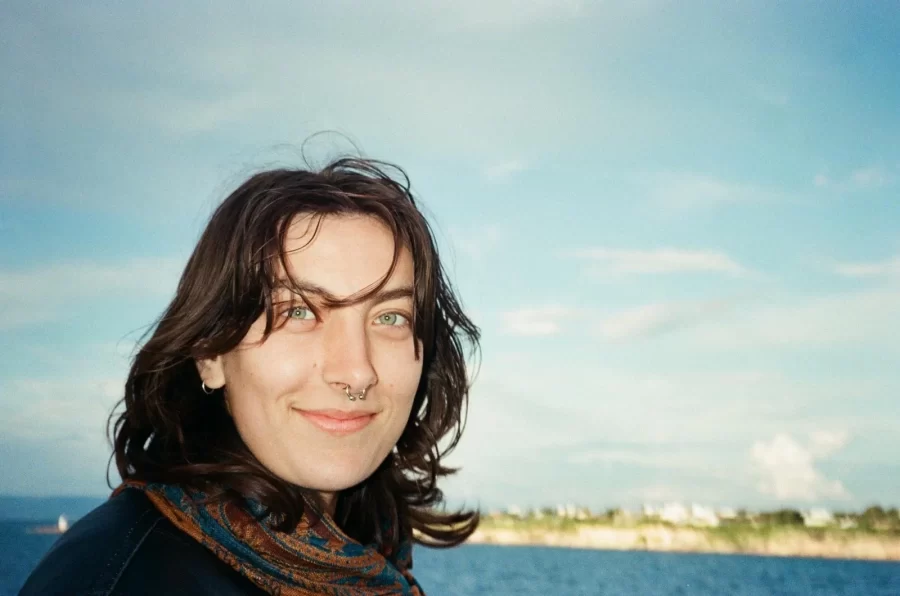
Marsh’s idea for the Watson builds on questions of belonging, but never aims to find answers or offer solutions. “I’m not really after a specific political or social definition. I’m not interested in proving a rightful belonging to land or affirming a rightful belonging to land. That’s so far from my place. What I want is structured around open-ended curiosity. I want it to be stretchy. I want it to be bent and folded and contradicted. I want it to be able to hold water and leak as well, depending on where I am.”
Marsh credits her first-year seminar professor and advisor, Senem Aslan, professor of politics, for her growing enthusiasm and curiosity about these questions. Aslan has been Marsh’s advisor all four years and has encouraged Marsh to move toward these goals.
John Harun-DeLong ’26 of Fairbanks, Alaska, could have selected any number of big questions to follow for his proposed year abroad. He is a cellist, on the debate team, and majoring in biochemistry with minors in philosophy and Hispanic Studies. But within those varied interests is a throughline: “Climate change is what really drives me. I need to think of it. For me, my life isn’t just my own body. It’s like my entire community of Alaska and my hometown. And so the destruction of that is fundamental. Everything that shaped you, if those are being destroyed, that’s the most complete destruction of the self that can exist, really.”
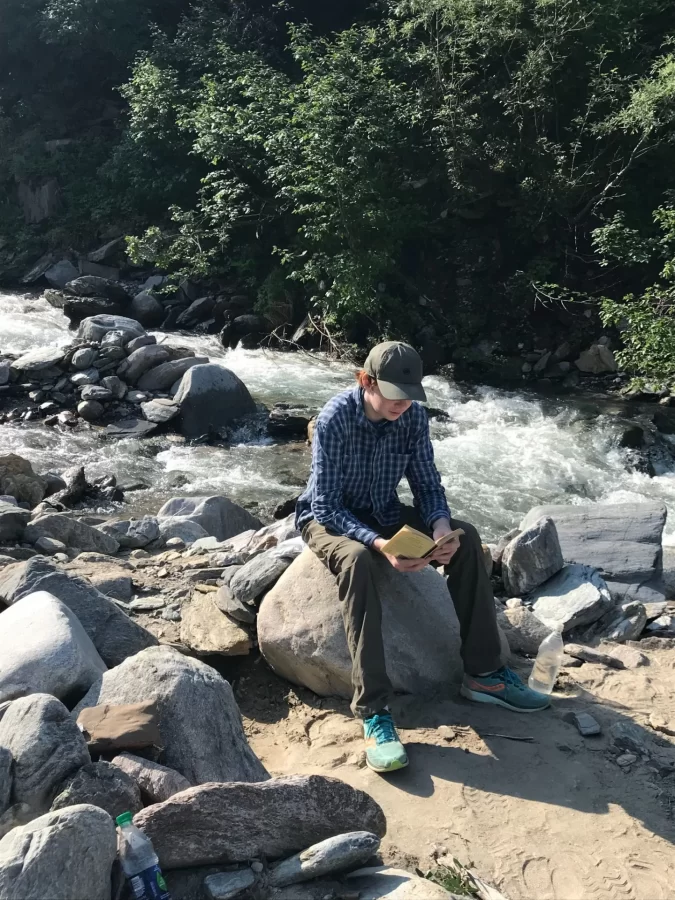
Though he aims to work toward a MD/PhD in the future, Harun-DeLong first wants to spend time understanding, and comparing, power grids around the world to work toward more sustainable and safer solutions for the U.S..
His plan is to travel to countries with a decentralized power grid or microgrids that are more resilient than the aging – and vulnerable – grid in the U.S. It isn’t only the science that interests Harun-DeLong. These microgrids also “allow [citizens] to have truly democratic control over the grid because the people in the village are supposed to maintain and decide what the best grid policy is.”
There’s a precedent for Harun-DeLong to figure it out as he goes, and find opportunities along the way. Last summer, when Harun-DeLong knew that he wanted to work with some of the top cancer researchers in the world, he cold-called them. He showed up in Spain and ended up working as a research assistant for Maria Blasco, director of the Spanish National Cancer Research Center.
Linh Hoang ’26 of Hanoi, Vietnam was traveling in Svalbard, Norway, when she met a stranger who changed her life. In a shared kitchen, over instant ramen, Hoang struck up a conversation with a man who explained his own big questions. He had spent the past two decades in constant motion, always striving through work to reach the next rung on the ladder. He suddenly stopped and asked himself: “What do I actually want?” That reflection struck Hoang as she was busy working toward her own future. Why wait for a mid-life break to ask this question? Talking to friends across the globe who are building lives in a time of uncertainty, Hoang believes that it is worth pausing to notice how various cultures respond to and help shape relationships to work.
Hoang’s Watson project emphasizes existential questions and places her generation in a broader context of work culture. “From my Watson, I will learn how people across cultures navigate the same tensions I’ve felt: between ambition and meaning, belonging and freedom, expectation and reality. I will return with a deeper understanding of how systems and emotions intertwine, and with the humility to know that both matter.”
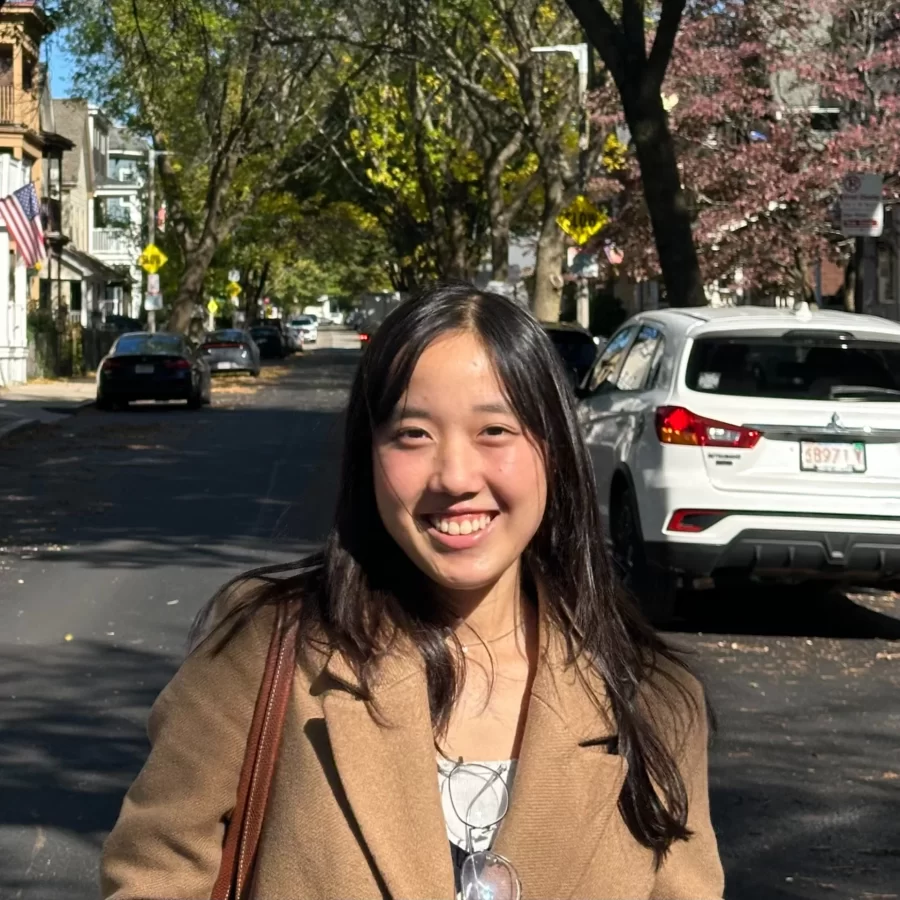
Those who know Hoang as a double major in math and economics might be surprised that she is focusing on philosophical questions. Hoang’s understanding of economics will certainly impact the questions that she asks, but she really is interested in a more personal approach in her travels. Hoang’s proposal lays out a plan to visit nine countries in the coming year.
Hoang is already making plans to pursue graduate work that bridges math and finance. She isn’t on the fence about her next steps, and she does not see the Watson as “opting out.” Instead, she is remembering the stranger in Norway reflecting on his life and his choices. And in framing these questions comparatively in cultures both known for their high-pressure or their laid-back approaches to work, Hoang is certain to move toward her next phase with more understanding. “What I’ve found,” Hoang says, ”is that when I talk to more people, I learn more about myself.“
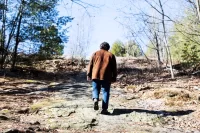
Brett Karpf ’26 of Ridgewood, N.J. spends a lot of time walking. Whether covering hundreds of miles along trails in Italy on his Otis Fellowship, wandering through urban Morocco during study abroad or simply moving from place to place in Maine, walking gives meaning to his life. As he has grown and reflected more on the role of motion in his own life, he has begun asking more questions about walking and movement, such as “Why is it that moving, walking especially, can enable us to gain a better sense of faith or understanding or contentedness?”
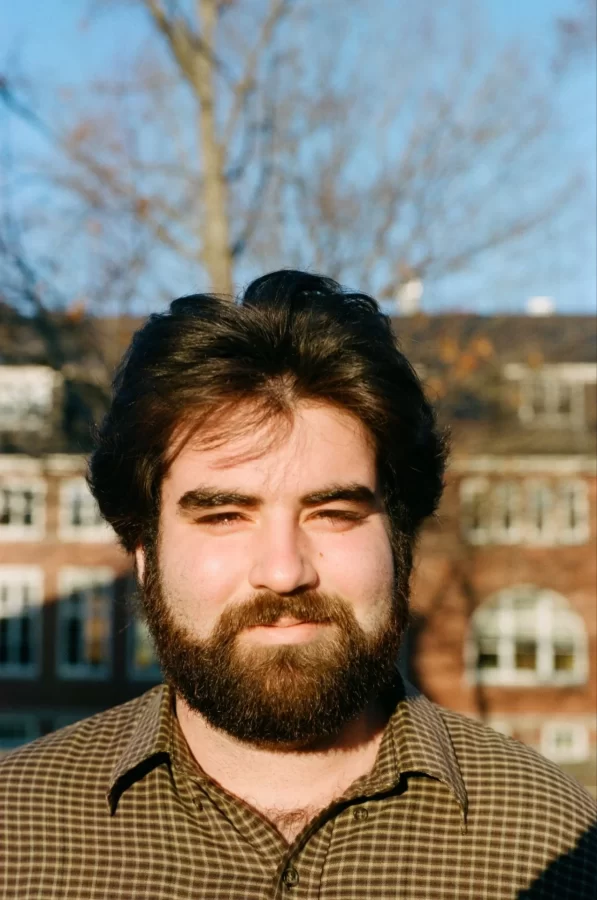
An English major, Karpf is deeply engaged in analyzing words; his two-semester thesis project explores sublimity in William Faulkner’s Absalom, Absalom! But Karpf has also served as an assistant to Bates horticulturalist Jeremy Lavertu and worked as a gardener for Sanford Freedman, associate professor of English. His proposal for the Watson allows him to combine his love of the natural world with his analytical skills as he works to understand what happens for people who spend time walking outside.
Though Karpf’s experiences walking have been selective and intentional, he is drawn to nomadic cultures whose very existence is tied to movement. “I’m looking for similarities and oppositions between different groups. You can find so much cultural similarity between places that are thousands of miles apart, if not tens of thousands of miles apart, and who are using motion to sort of reach similar ends.”
Karpf will explore people who walk for various reasons, including religious pilgrims. He hopes to learn “by interacting with people who are walking as a means of religious observance or as a way to become closer with what they deem to be divine.” The project will also explore “cultures where motion and movement are prioritized — herders, semi-nomadic peoples, including people that used to be nomadic and no longer are,” in order to understand the drive to hold to traditions that are increasingly threatened.
Karpf hopes to find meaningful answers — and at minimum, answers that help him understand himself more. “I am seeking how others experience purpose and understanding when it feels deeply entangled with movement: Can their experience help me understand my own?”