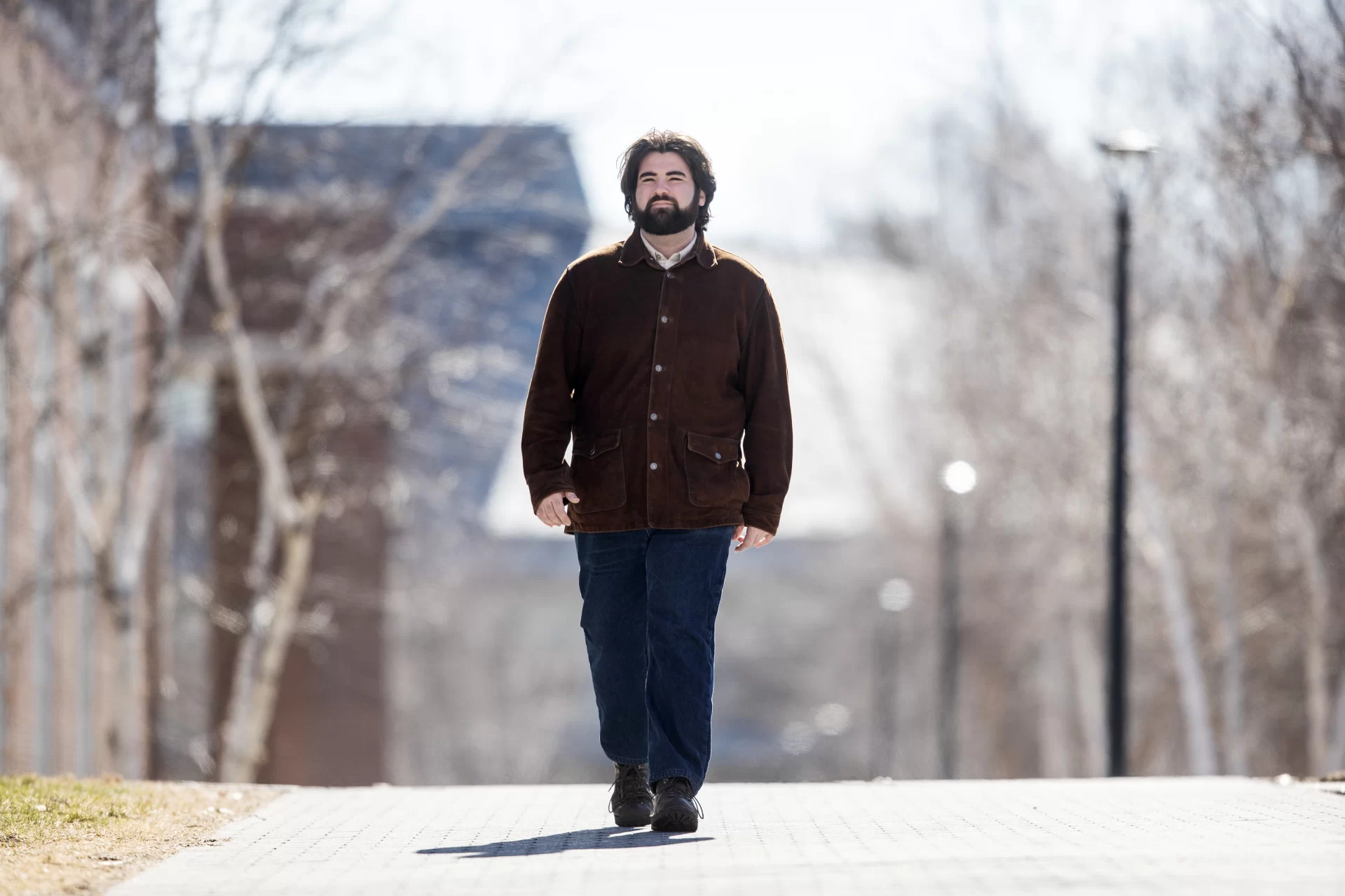
Brett Karpf ’26 walks to make sense of the world. He walks because he loves to walk. And he walks because he has to, for reasons he’s still trying to understand. Beginning in August, fully funded by a fellowship from the Thomas J. Watson Foundation, Karpf will spend a full year walking — and thinking about walking. His proposal, “Seeking Meaning in Motion,” was one of 39 winning projects out of 155 Watson finalists nationally. Bates is one of 40 participating colleges that can nominate up to four students each year.
Karpf, who grew up in and around New York City, cannot remember a time when he was not in motion. Shuttling by car, subway, and bus from place to place, movement settled him. It was when he began attending a summer camp just an hour away from Bates that he really began to understand how motion felt different when he was walking.
“When you’re moving slowly, you’re constantly being met with new stimuli, such that your mind is refreshing at a natural pace,” Karpf says. “As opposed to, for example, when you’re in a car, you’re passing by everything so that it’s hard to focus on any one thing.”
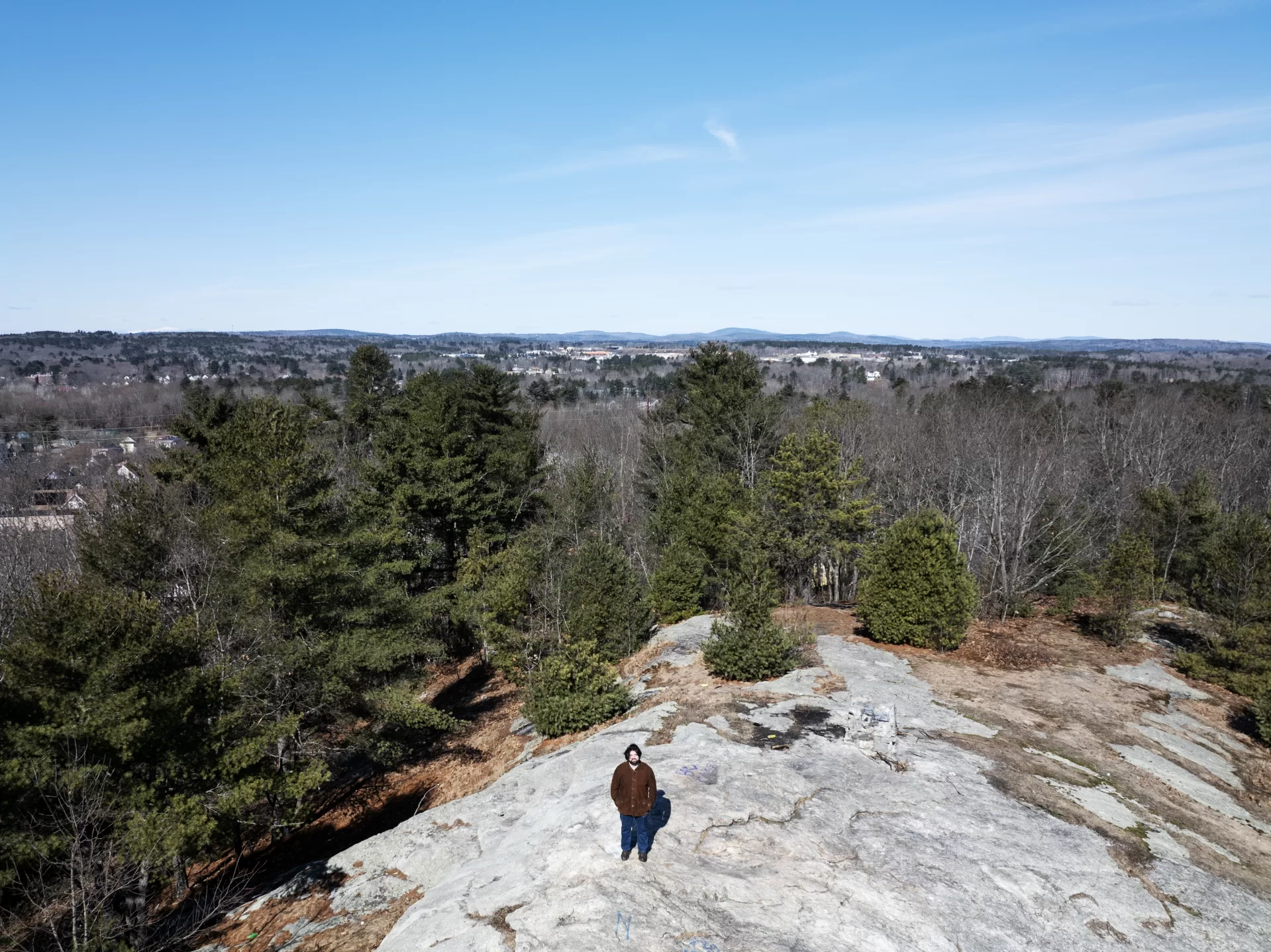
When he arrived at Bates, he took to walking across Lewiston every night after dinner. “It was an incredible way for me to get to know the place,” he says. “It grants you a level of intimacy that otherwise is kind of hard to reach. You’re more autonomous in what it is that you’re observing. It also allowed me to find my own place within Bates.”
Karpf, an English major who frequently drops lines from various texts to tell a story of his own, is inspired by Henry David Thoreau’s writing about walking. Thoreau celebrated what he called
“sauntering,” derived from sans terre meaning “without land or a home.” To Thoreau, sans terre means “having no particular home, but equally at home everywhere. For this is the secret of successful sauntering.”
Karpf plans to “saunter” through seven countries, spending time with a cooperative of herders in Mongolia, Zen Buddhists in Japan, semi-nomadic Sámi reindeer herders in Sweden, and others. He will also visit Australia, Norway, Nepal and India, each of which has a culture attached to movement. Karpf will bring his curiosity to more deeply understand the role of walking within those cultures, while self-examining his own motivations.
“I think in some part what I’m hoping for is a comfort in stillness. At the end of it, I’d like to have a sense that I can settle down a little bit.”
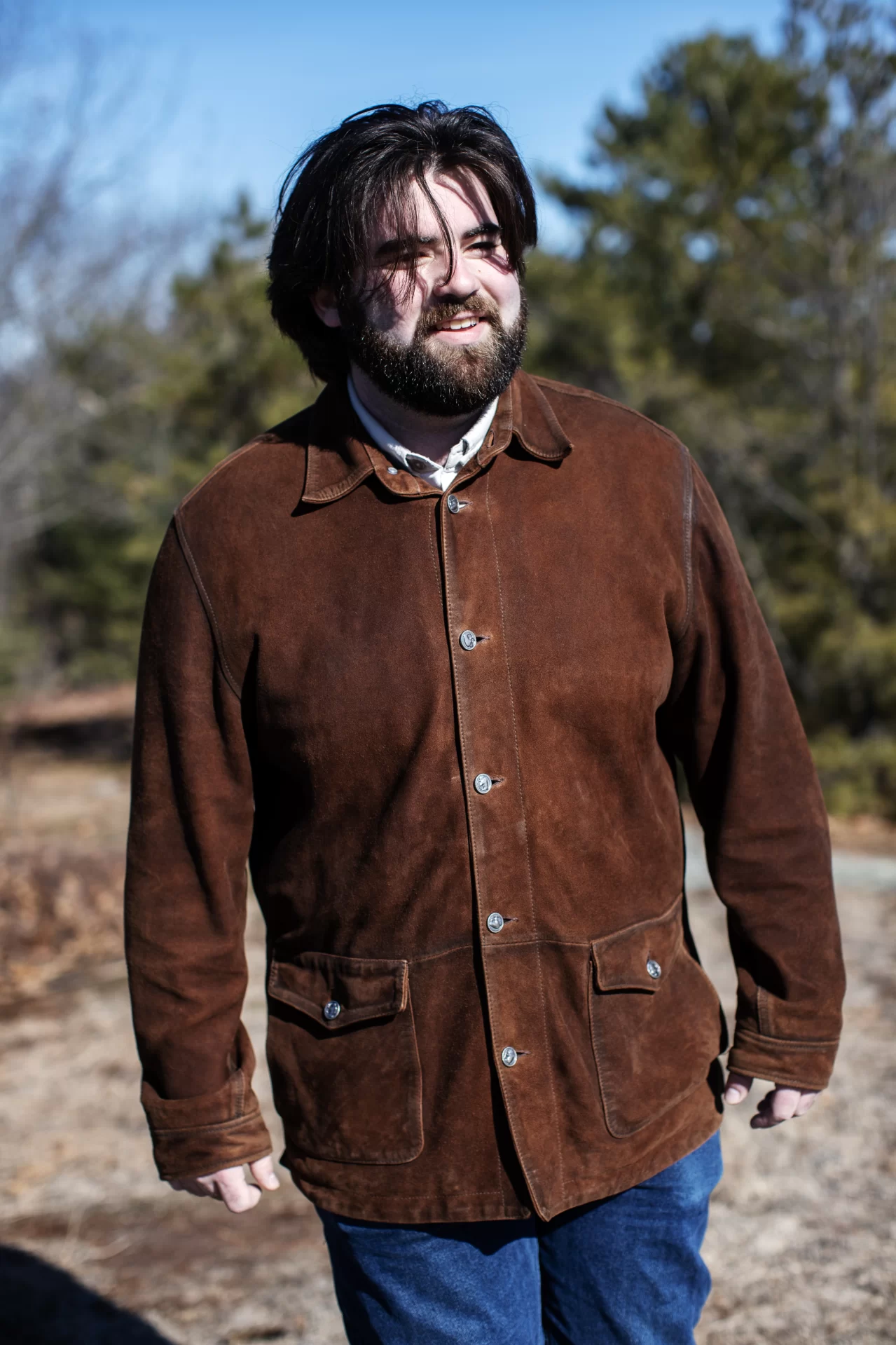
Karpf was encouraged to apply for the Watson after spending time with friend and fellow Watson finalist Poppy Marsh ’26 of San Francisco, Calif., on an Otis Fellowship in 2024. That experience — framing a project, moving through the application, and then visiting the Dolomites — informed his Watson application and his initial interview. The Bates Watson fellowship committee, led by Robert Strong, director of national fellowships, saw that this was a strong project.
“Brett’s Watson project intrigued the Bates committee because it is internally tuned but seeking externally as well,” Strong says. “Throughout his application process, Brett was reaching to articulate something just beyond the reach of words — but something he feels and knows when walking.”
Working to harness an idea beyond the reach of words and turn it into an actionable plan, Karpf knew he would need support. Each of Bates’ four Watson finalists was paired with a Bates mentor, and Andrew Mountcastle, associate professor of biology, was Karpf’s.
“His research project was just totally organic to who he is as a person and authentic to him,” Mountcastle says. “We saw that right away in both his written material as well as his interview process.”
In addition to serving on the Watson committee for Bates, Mountcastle has a special perspective on the Watson. Following his own college graduation, he won a Watson fellowship and used it to study different cultural responses to sea mammal beachings in seven countries. And while he did learn about the question at hand, he learned the most about himself, which made him uniquely qualified to help Karpf with the messier questions about a year away from home.
“At first glance, the Watson feels very outward,” Mountcastle says. “You’re traveling to different countries, doing a self-designed project. You’re exploring the world. But I think the lasting impact on me was what was happening internally.”
The duo met almost weekly, leading up to the interviews with the Watson Foundation in December. “We’d talk about his latest draft,” Mountcastle says. “He’d get really excited about different angles and exploring different potential components of his project. And then he’d disappear for a week and spend all his time writing.”
Karpf also went into the application process with the support of Associate Professor of English Sanford Freedman, who has come to know Karpf well over his four years at Bates. In addition to working together on Karpf’s senior honors thesis on William Faulkner’s Absalom, Absalom!, Karpf helps Danielle Freedman, Sanford’s wife, with her gardens.
“Brett Karpf’s powerful ability is to speak to people at all levels,” Freedman says. “What may go unnoticed is the capacity of what he brings to these exchanges: friendship, hope, goodwill, and an amazing perspicacious consciousness registering and analyzing life exchanges.”
As Karpf begins to plan the year ahead in earnest, he is humbled by this opportunity. “Motion is a great privilege. An American passport is a great privilege. A lot of people can’t go as easily around the world as I’ll be able to, and many people can’t even leave their own neighborhood.” Karpf is also aware of the opportunities that have opened up for him because he was in a community that encouraged him, at a school that supported him. Faculty and staff, but also fellow students, helped Karpf feel like his questions were worth asking.
The one thing that he wants to tell Bates students as his time comes to a close?
“Apply to stuff! One reason I got this Watson is because I had applied for other things at Bates, whether that be the Otis Fellowship or an environmental grant.” One experience leads to confidence to apply for the next. And support from the Otis family will continue to help Karpf on the roads ahead. “The Otis family helped fund my summer last year where I was working on the Allagash doing trail work and made it possible for me to purchase gear,” including a pair of boots that will carry him across seven countries in the coming year.
“I love these boots, by the way,” he says. “Though I may have to get them re-soled again.”
Faculty Featured
Andrew M. Mountcastle
Associate Professor of Biology
Sanford A. Freedman
Associate Professor of English