
Sun Journal, Mainebiz highlight new fitness and well-being center
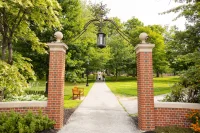
The Lewiston Sun Journal covered news of Bates’ plans to construct a new $45-million fitness facility, the Stoddard Fitness and Well-Being Center. A $10 million donation from Bates alumni Jon W. ’90 and Jocelyn Stoddard Brayshaw ’88, P’25 brought the project within $4 million of its $31 million fundraising goal, the Sun Journal reported.
Mainebiz also covered the news, sharing that the college is set to break ground on the project on May 1. The 8,500-square-foot facility will include upgrades to preexisting facilities, new locker rooms and coaches’ offices, and a yoga and Pilates studio, among other infrastructure supporting fitness and well-being.
High-Profile announces news of Bonney Science Center’s architectural Honor award
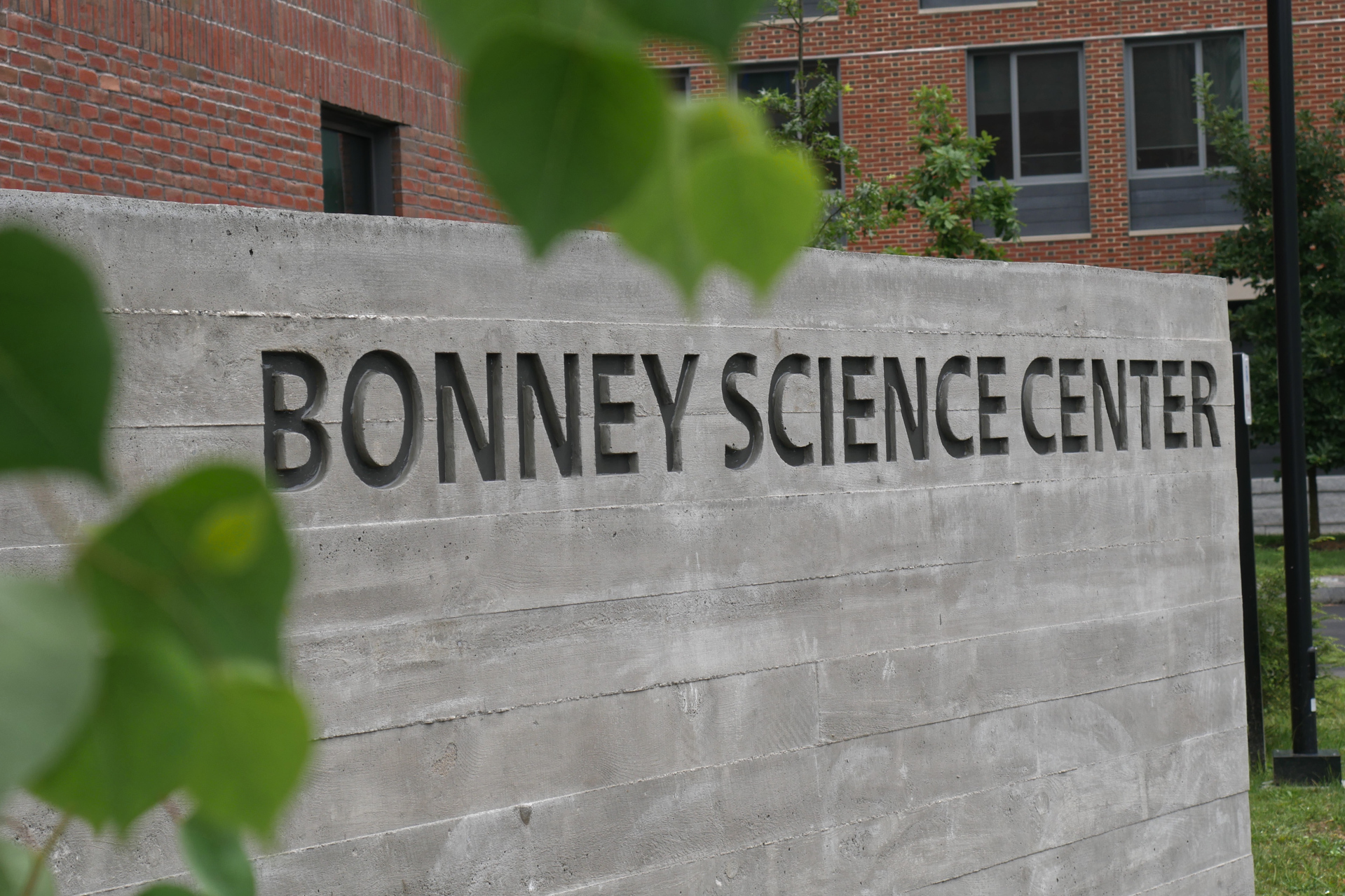
The Boston Society for Architecture recognized the Bonney Science Center and its designer, Boston-based architecture firm Payette during the society’s annual award gala, High-Profile reported.
Payette’s design for Bonney earned an Honor award, the highest category of design award bestowed by the BSA, for Built Design, Educational Facilities. Bonney’s construction, completed in 2021, marked a significant advancement in Bates’ scientific facilities. The center is home to cutting-edge teaching and research spaces for chemistry, biology, and neuroscience, in addition to classrooms and study spaces.
The BSA bestowed a total of 31 design awards to structures in and around Boston to “collectively recognize the power of the built environment to empower communities, promote change, and build a more sustainable and equitable Boston,” High-Profile wrote. Zweig List also announced the news.
Alabama Public Radio features Anelise Hanson Shrout in its St. Patrick’s Day coverage
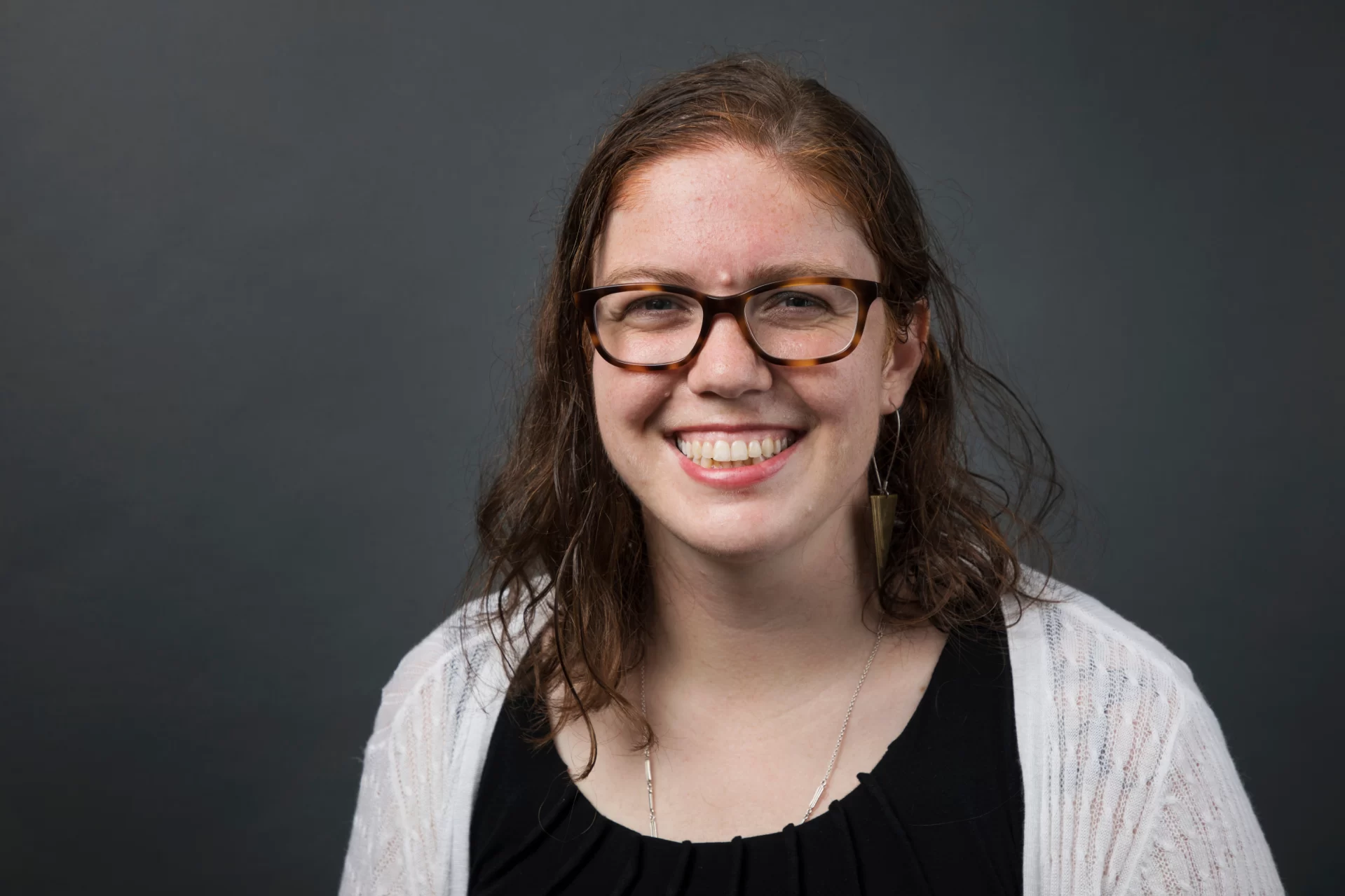
Alabama’s WBHM, a public radio station, highlighted Associate Professor of Digital and Computational Studies Anelise Hanson Shrout’s research about unlikely philanthropists during the Great Famine in Ireland in the mid-19th century. Reporter Andrew Gelderman, who hosts Alabama’s All Things Considered, asked Shrout about a group of enslaved people from Lowndesboro, Alabama, whose story she included in her 2024 book Aiding Ireland: The Great Famine and the Rise of Transnational Philanthropy.
This group raised money for the starving Irish, after their enslaver, Morgan Smith, asked them in the spring of 1847 to sacrifice for the Irish.
“He doesn’t suggest that they give money,” Shrout told Gelderman. “He suggests that they give up one meal a day to aid the starving Irish. These enslaved people go away and confer with one another and they come back and they say, ‘No, we’re not gonna give up one meal a day, but what we will do is give you this $50 that we have.’”
To learn more about why this act of generosity was so remarkable, listen to the full interview, which aired on March 17.
Carolina González Valencia premieres her film How to Clean a House in 10 Easy Steps to accolades at the True/False Film Fest

Carolina González Valencia, associate professor of art and visual culture, premiered her film How to Clean a House in 10 Easy Steps at the True/False Film Fest in Columbia, Missouri, earlier this month to glowing reviews and mentions in multiple publications. The film is about her mother Beatriz, a Latin American domestic worker who has long resided in the U.S. and was the family’s sole breadwinner when González Valencia was growing up. González Valencia recently told Bates News that her goal was to create a narrative that fully captured her mother’s experience — as a domestic worker in the U.S., but also as a full and complex person.
At the True/False festival, which was celebrating its 23rd year, reviewers lauded her efforts, with publications such as Collider naming How to Clean a House in 10 Easy Steps one of the five best films at the festival and The Criterion Collection’s The Daily citing González Valencia for receiving the 2026 True Life Fund selection for her directorial debut.
Filmmaker Magazine recommended the documentary (which includes fantastical elements) as one of “four world premieres (and one North American) that are worth checking out, whether you’re on the ground at this epicenter for non-fiction fanatics or are just keeping your eyes peeled for these films’ future festival stops.” Their mini review:
“Carolina González Valencia’s debut feature feels particularly potent amid our current political climate. Confronting the prospect of being separated from her mother Beatriz, a Latin American domestic worker who has long resided in the U.S. and is the family’s sole breadwinner, Valencia copes by creating a work of fiction that’s rooted in truth. Elements of docu-fiction, dance and quotidian routines culminate in a story that is as personal for Valencia as it is her and Beatriz’s overarching community. The result is an attempt to disrupt preconceived notions about labor, immigration, and belonging by way of sparking creative joy. “
In a thoughtful, full length review, The Maneater said González Valencia’s “blending and blurring of reality leaves the audience questioning their interpretation of the film and of the people they overlook in their own lives.” Meanwhile St. Louis magazine, which described the whole festival as long feeling like “a homecoming for hip Missourians,” described How to Clean a House in 10 Easy Steps as “surprisingly experimental” and a “vital text” about immigration. Reviewer Max Havey said, “The magic of this film is the way it consciously removes and applies layers of artifice along the way to tell Beatriz’s story.”
Mara Tieken discusses school closures in The Maine Monitor, Bangor Daily News
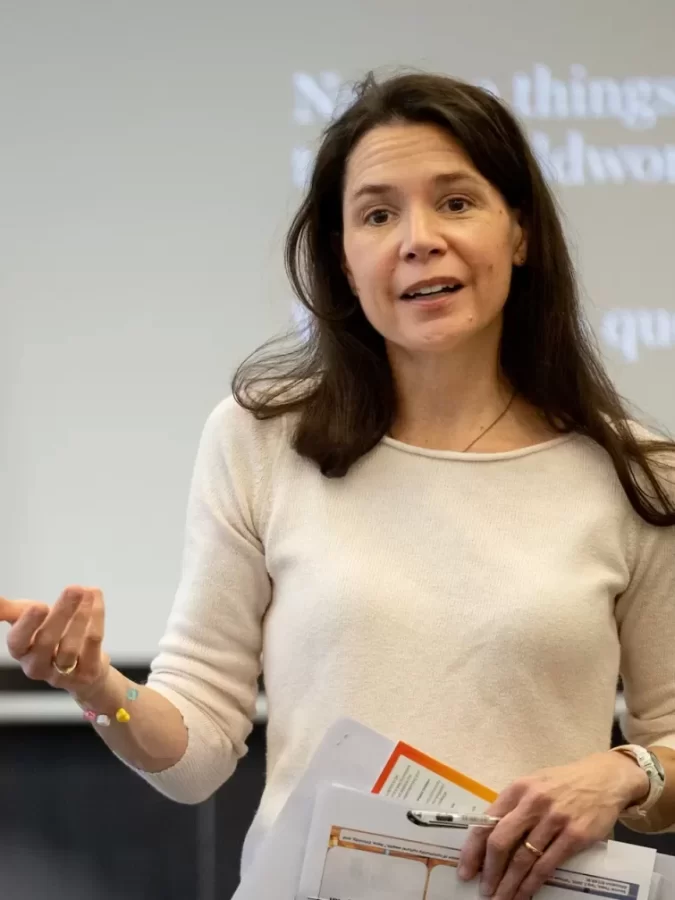
Professor of Education Mara Tieken spoke to The Maine Monitor about school closures in Maine, offering context for a story about converting closed school buildings into housing.
Enrollment in Maine’s public schools has dropped 6.6 percent over the past decade, the Monitor reported, leading to school closures or consolidation and leaving a host of empty school buildings across the state, particularly in rural areas. Declining enrollment, likely a result of Maine’s aging population, and financial challenges are the primary reasons why schools close, Tieken said.
“There are less young families, less young children,” she said.
Schools in smaller communities, with smaller tax bases, may be driven to closure when they can’t afford to fund school improvements, Tieken explained. At the same time, as a school’s enrollment drops, the state will decrease funding for the school per Maine’s cost-per-pupil formula.
Lawmakers in the Maine State Legislature are currently debating whether to create a $5 million fund that would help towns turn vacant school buildings into housing. Bangor Daily News also published the story.
Women in Academia Report publicizes Bates faculty tenure among women professors
Among the seven Bates faculty members who earned tenure and promotion to associate professor this spring, five were women, the Women in Academia Report shared. (There were nine total promotions announced at Bates this semester.)
They include Yunkyoung (Yun) L. Garrison, associate professor of psychology; Lisa R. Gilson, associate professor of politics; Seulgie Claire Lim, associate professor of politics; Zhenzhen Lu, associate professor of Chinese; and Sarah B. Lynch, associate professor of classical and medieval studies and history. Their expertise includes everything from psychological well-being among people of color to literature in imperial China to education in medieval France.
Kennebec Journal covers career-best basketball performance for Mya Hicks ’27
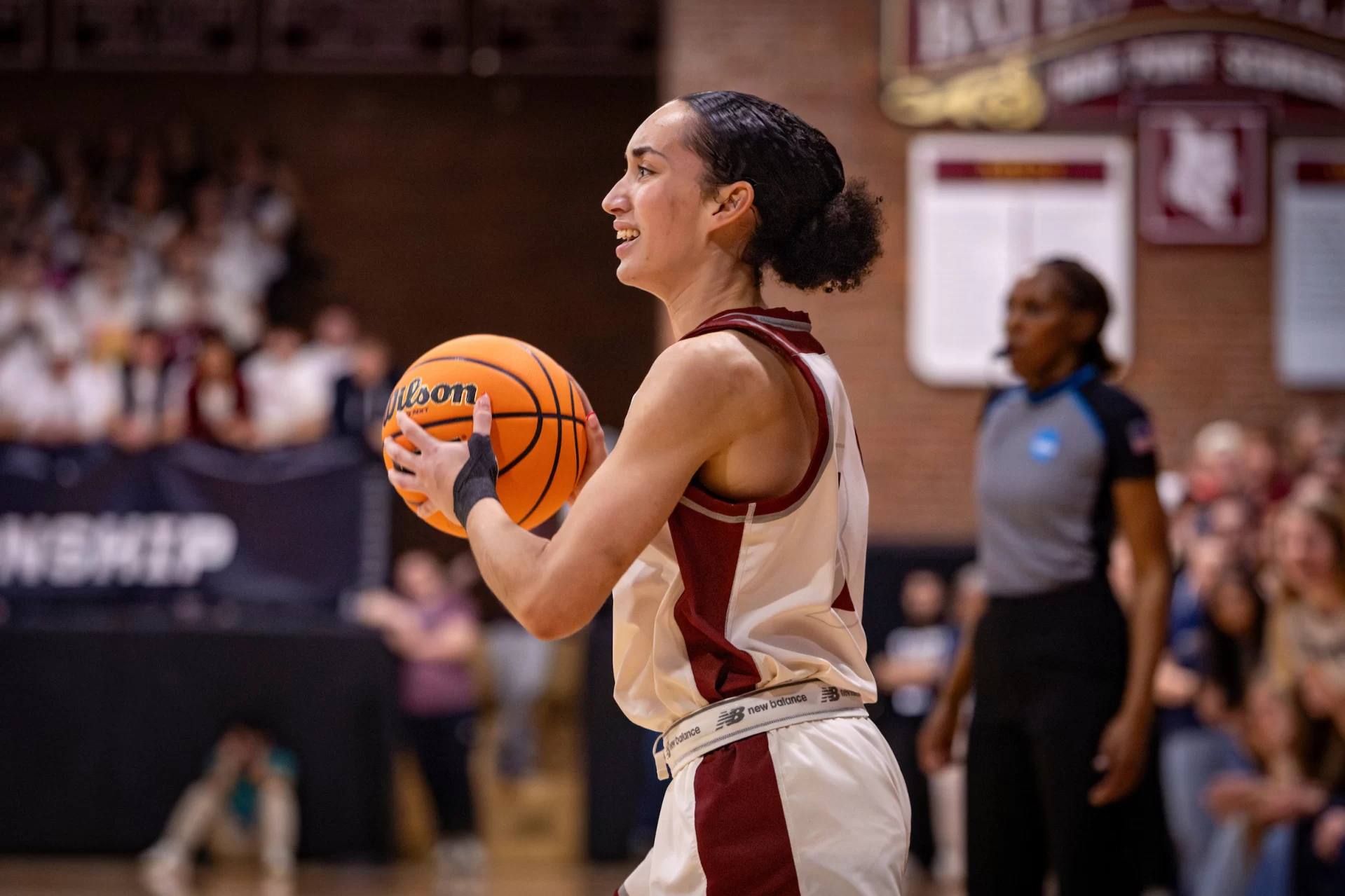
Women’s basketball player Mya Hicks ’27 of Ann Arbor, Mich., gave a career-best performance during a game against Smith College on March 7, the Kennebec Journal reported. Hicks scored 19 points and hit five 3-pointers, leading Bates to an 18-point comeback and victory in overtime — and securing the team’s spot in the NCAA Division III tournament’s Sweet 16, the Journal reported.
Hicks, who the Journal calls a “utility-type player,” only took the game-tying shot, which was drawn up for another player, because she ran the play wrong. With a split-second decision, Hicks stepped up to the challenge.
“My role is very specific on this team, and I do that role with pride,” Hicks told the Journal. “In that moment, I knew my teammates had all the confidence in me. I had all the confidence in that moment.”
Head Coach Alison Montgomery, who describes Hicks as “very strong,” was not at all surprised by her fantastic performance.
“I’m like, ‘Yeah, of course she did that,’ … just knowing how capable she is,” Montgomery told the Journal.
Theri Pickens’ poetry collection recommended in The Seattle Times

In advance of April’s poetry month, The Seattle Times ran a recommendation from the Seattle Public Library of four poetry collections, including Charles A. Dana Professor of English and Africana Therí Pickens’ debut collection of poetry, What Had Happened Was, published by Duke University Press in March 2025.
Pickens, librarian Okunyi Bëhree writes, “seamlessly explores personal narrative, Black American life, systemic injustices, pop culture, history and chronic disability.”
See all the recommendations at The Seattle Times.
Michael Rocque comments on a controversial bad neighbors case in the Bangor Daily News
Michael Rocque comments on a controversial bad neighbors case in the Bangor Daily News
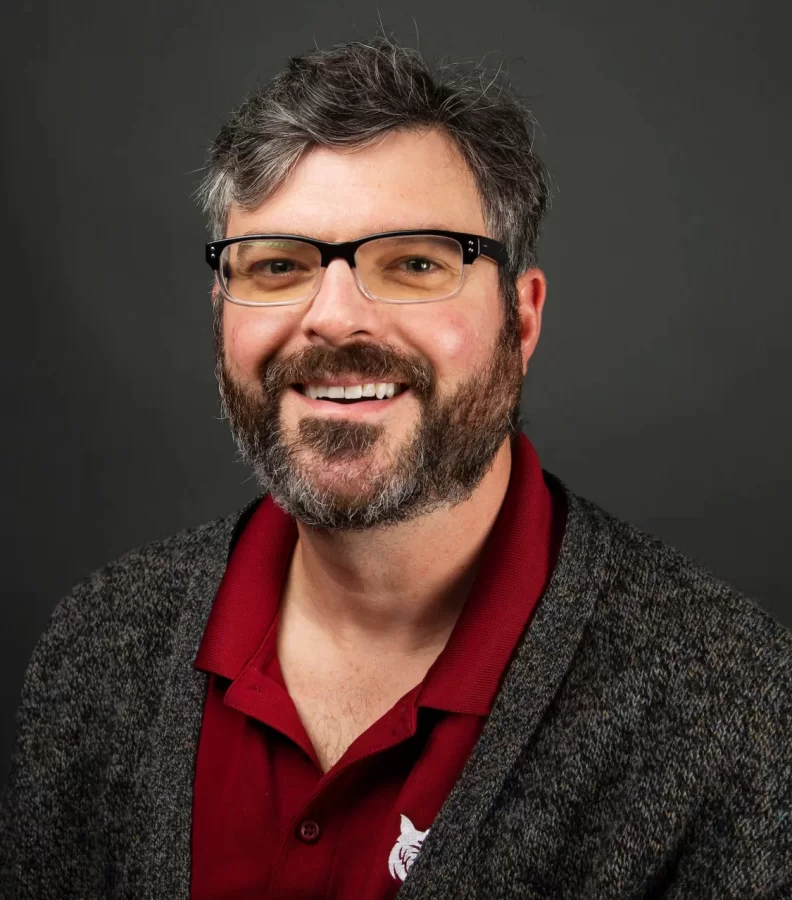
News stories about some high profile poisonings of trees by homeowners in posh Maine locations who apparently wanted better views have captivated national readers. The New York Times reported on incidents in Camden and in Rockport in recent years and the fallout — along with fines — continues. The Bangor Daily News interviewed Professor of Sociology and Associate Dean of the Faculty Michael Rocque, who studies criminology, about the poisoning in Camden, where a “Missouri couple paid more than $1.8 million in fines, settlements, and cleanup costs after they poisoned a neighbor’s trees and contaminated the town’s only public beach in the process.”
Rocque told the BDN, “It was a bit of a stunning example of somebody who’s just like, ‘The rules don’t apply to me.’” Neighborliness and sharing natural resources are values widely shared in Maine, Rocque said. Seeing people act in ways that violate those norms is “a shock to the senses.”
The Journal of Blacks in Higher Education reports on Valerie Smith ’75 retiring as Swarthmore College president
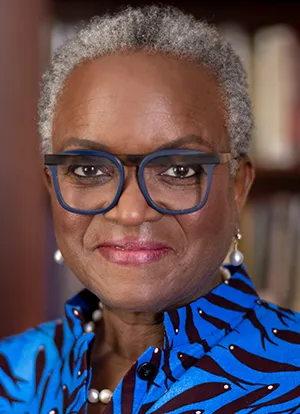
Valerie Smith ’75 is retiring as president of Swarthmore College at the conclusion of the 2026–2027 academic year, The Journal of Blacks in Higher Education reported.
Smith has held the role since 2015, when she became the college’s first Black president. She also serves as Swarthmore’s inaugural Roy J. and Linda G. Shanker Presidential Chair.
“Serving as Swarthmore’s 15th president has been one of the great privileges of my life,” said Smith in a statement to the Swarthmore community. “Swarthmore is defined by the students whose curiosity and conviction inspire us all; the faculty whose teaching and scholarship expand the boundaries of knowledge; by the staff members whose dedication sustains our shared work; and by alumni, families, and friends.”
Prior to joining Swarthmore, Smith was dean of the college and the Woodrow Wilson Professor of Literature at Princeton University, and a faculty member at the University of California, Los Angeles.
Vermont Daily Chronicle on Hannah Sessions ’99 launching a Vermont Senate campaign
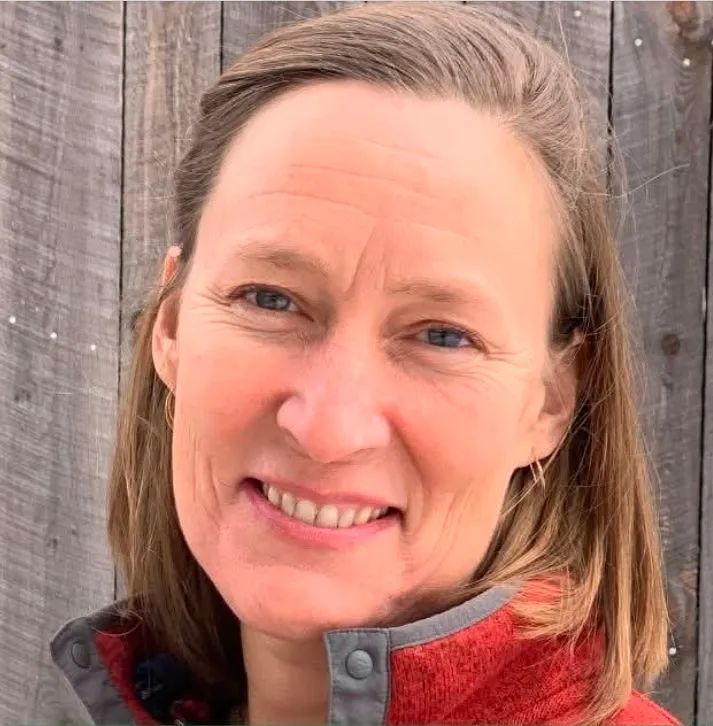
Hannah Sessions ’99 is running for a seat in the Vermont Senate representing Addison County, the Vermont Daily Chronicle reported.
“I am running because my life experience has taught me not only to work hard but also to ask questions and listen, three skills that will help me represent you in Montpelier,” Sessions said in her campaign announcement on social media. “I want to build pragmatic coalitions to help improve the lives of current and future Vermonters.”
A Democrat and native of Addison County, Sessions now owns and operates goat dairy farm Blue Ledge with her husband. If elected, Sessions would be the first full-time farmer in the Vermont Senate, the Chronicle reported.
Sessions, who is also a painter, studied studio art and political science at Bates before moving home to Vermont, where her family ties date back generations. Her father William Sessions is a federal court judge in Vermont.
Categories BatesNews Faculty and staff