Throughout his time at Bates, biochemistry major Sebenele Lukhele ’26 of Manzini, Eswatini, has been a researcher. But he’s also been a dancer. And a club volleyball player. And a track and field athlete. And a tutor, and a tour guide, and a member of student government. To sum it up, he was able to be “whatever I wanted to be.”
As he will explain when he delivers the Senior Address at Commencement, Lukhele believes this was possible because of the environment that Bates cultivates — one that encourages exploration and discourages judgement. It is an environment that follows through on the college’s promise to be defined by inclusivity, community, and support, coupled with academic rigor.
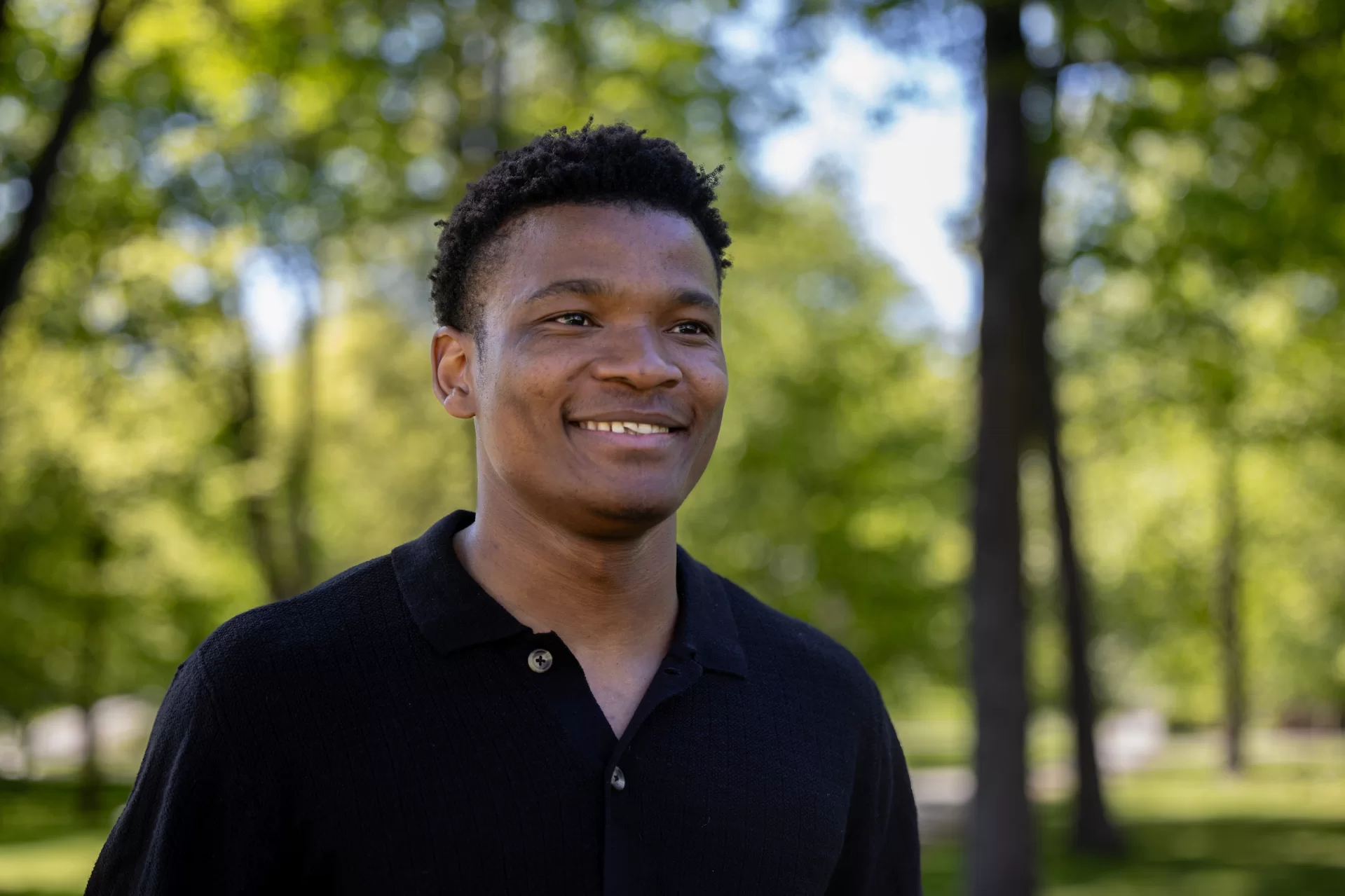
This promise, outlined in the Bates mission statement and emphasized by Admission representatives, resonated so deeply with Lukhele that he enrolled at Bates having never visited campus. He had a feeling he would love the place — and he was right.
How to Watch Commencement
Livestreamed on the Bates website and the Bates Facebook page, the 160th Bates Commencement ceremony begins at 10 a.m. on Sunday, May 31. The academic procession begins arriving at Coram Library at approximately 9:30 a.m. The livestream kicks off at 9 a.m.
Bates’ belief in “the transformative power of our differences” is not just about helping students thrive on campus, Lukhele will explain, but also teaching them to be unabatedly curious members of a global society.
Alexandra DeMarco of Bates Communications and Marketing spoke recently with Lukhele. The following is a condensed and edited version of their conversation.
Students who are interested in delivering the Senior Address submit a speech and are selected by a committee. Why did you want to give the Senior Address?
As an international student and a person of color, I came to Bates because it promised a community, a place where I can be myself without needing to assimilate or be someone different. I wanted to present a speech on Commencement as a way to show my gratitude for Bates giving me that space to explore. I’ve grown so much as a person, and I feel like the community here has been supportive of me in many ways, and I’ve also contributed my support in different ways.
What is the theme of your speech?
Difference and diversity. I have perspectives, or lived experiences, that are very different from my colleagues here. We all have traits that make us different. My speech is highlighting that those differences are our strengths rather than our weaknesses because those are the things that bring us together as a community, if we celebrate them and appreciate them.
At Bates, I feel like I was able to be whatever I wanted to be and express myself in whatever way I wanted without needing to be someone different. The speech does try to address a very complex issue of diversity and differences amongst people and how you can approach being a global community that accepts or appreciates each other — coexistence, in a sense.
Could you share an example of a time where you felt like differences were really being celebrated at Bates?
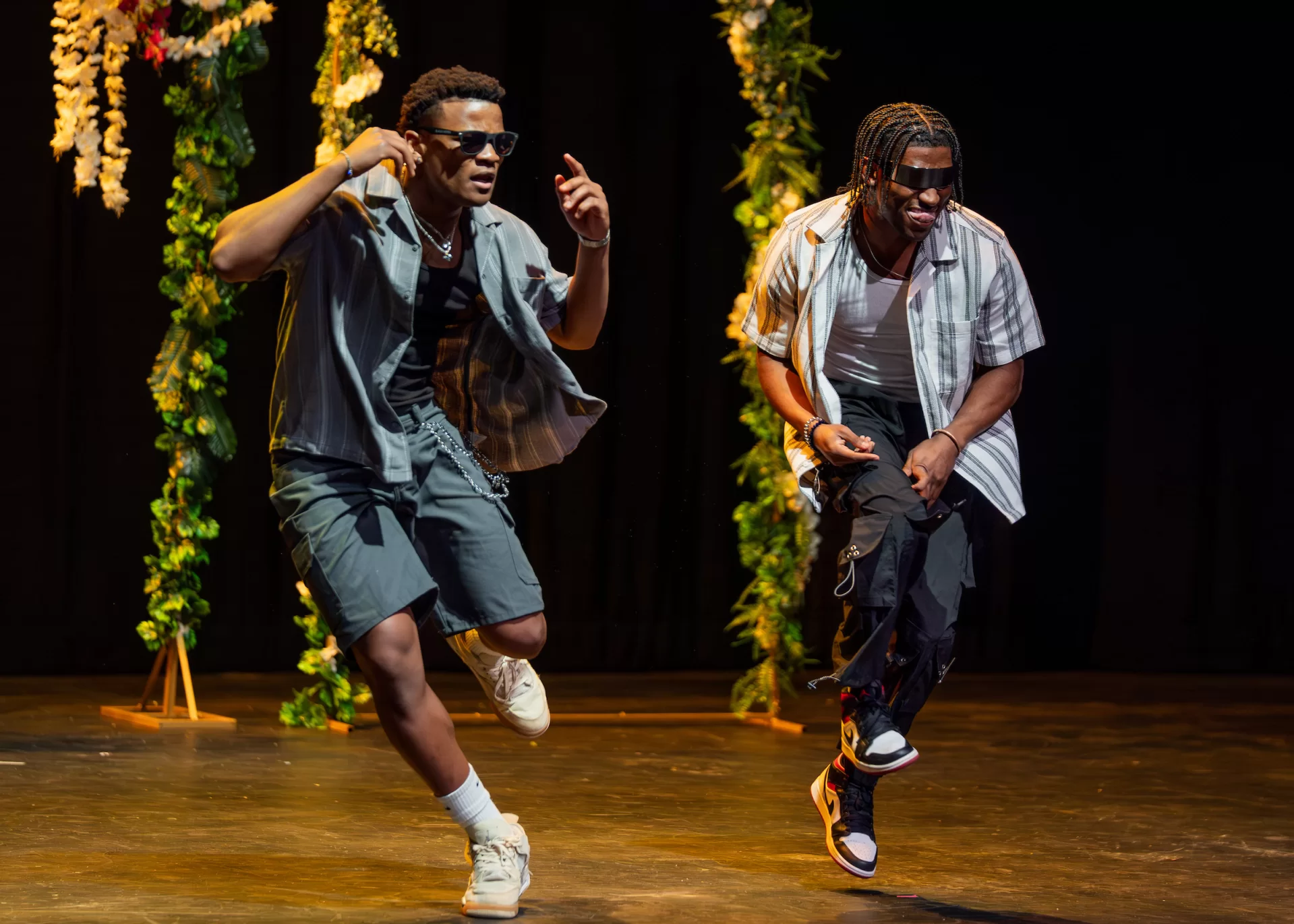
Dancing in the 2026 Cultural Showcase, “Here to Stay: Rhythms that Raised Us.” I prepared a piece with one of my friends, Mohamed Al-jabry ’28 from Shinyanga, Tanzania, and we wanted to showcase an African style of dancing. We didn’t feel that we had to do something that was going to be “accepted” by the community, but we felt like we could do something to express ourselves as we are. The crowd was very, very excited.
People here at Bates take anything as long as it’s good and it’s full of energy. No one is looking like, “Oh, this is not something that I’m used to, so I’m going to criticize or judge.” People accept or appreciate those kinds of expressions. That was a very heartwarming moment, and those very small moments are the things that accumulate to make this community what it is.
I’ve experienced a lot of these moments where people will sit down and listen to you when you have something to say. It also gives you the responsibility to listen to others because when people appreciate and accept you like that, you have a natural instinct to be appreciative of others.
In my major, biochemistry, professors are able to build a space for differences as things that don’t really affect the way you are viewed in the major. The differences themselves are something that makes it even more interesting, in a sense, because it allows for different perspectives that push research forward.
You have completed a lot of research during your time at Bates, both on campus and during an internship in the summer of 2025 at the Mount Desert Island Biological Laboratory. How has research shaped your career plans?
It actually has shaped my career so much because I came here as a pre-med student from a typical African household. When I was young, I was talented in the sciences. With that came a lot of pressure to become a doctor, and that propelled me toward a medical career. I wanted to come to liberal arts school because I wanted to really discover myself and make sure that I’m in a career that gives me purpose.
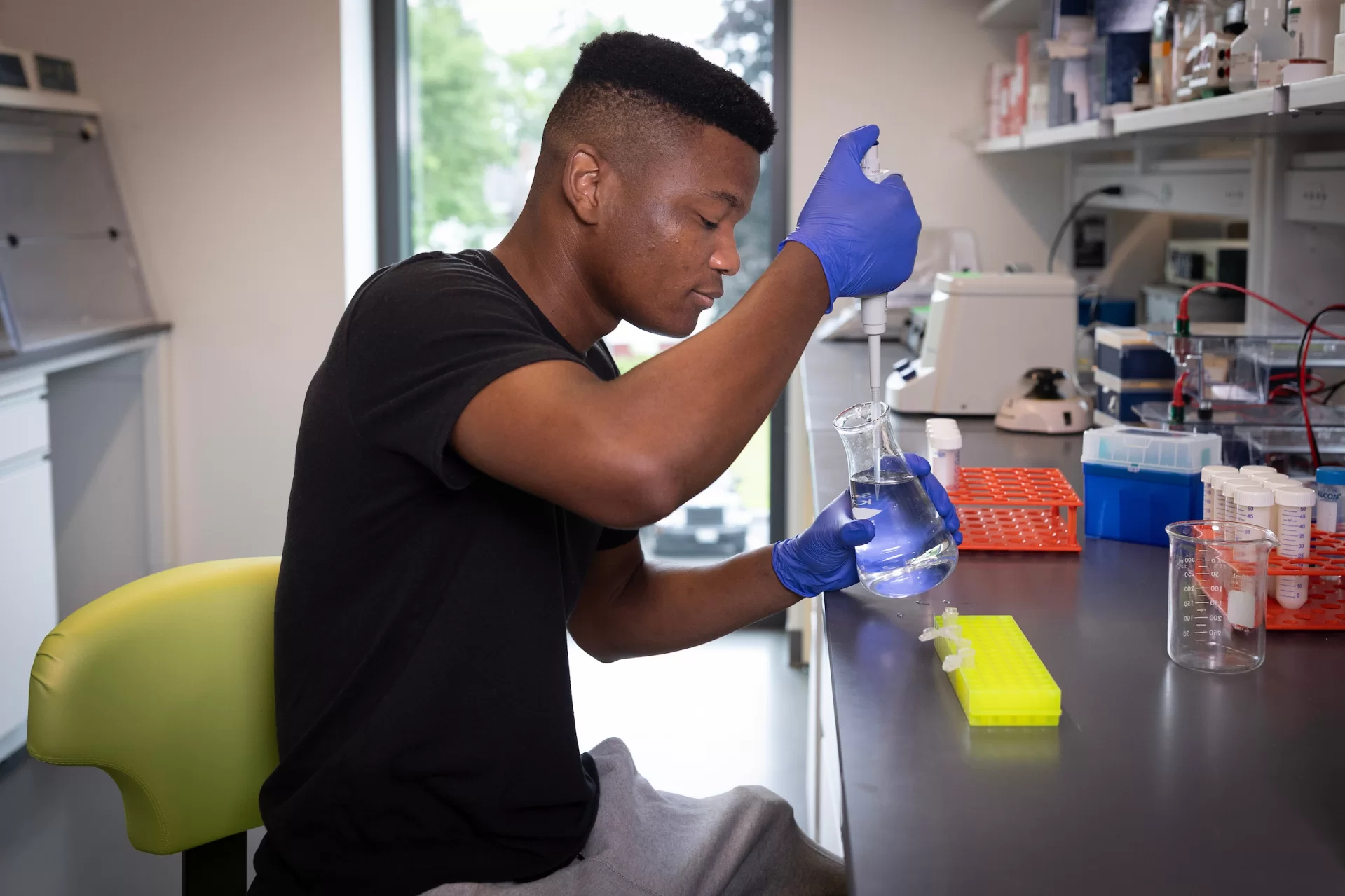
Being a biochemistry major gave me a very different perspective into what I can do with my passion for science. As time went on, I felt like I would have a greater impact being a researcher. I felt like that would be, at least for me, an approach to science that serves a greater community.
I really like the fact that Bates changed my perspective on what my career could be and provided me with options that I didn’t know existed. There were people who were also able to talk to me through that — the Center for Purposeful Work, advisors, research supervisors.
You did a senior thesis project. What was it about and how did you choose your subject?
I’m very curious about the impact of changes in cells at the molecular level and how those things drive how cells behave and how everything ends up working in the body of a person. This kind of research, even though it sounds very abstract and not very applicable to the real world, drives a lot of the efforts that end up being very impactful to society itself because they end up making new treatments for very threatening diseases.
I was very interested in the overarching topic of the research, which was manipulation of sphingolipid metabolism in cells by common cold coronaviruses. That basically is analyzing how viruses affect the structure of a cell, specifically the membrane of the cell. My experience involved a lot of method development, which was very different from the research experiences that I’ve had before. My advisor, Assistant Professor of Chemistry and Biochemistry Scotty Farley, was also there to support me. Other students were doing similar projects, and we were able to talk about different things and discuss how our data is working and help each other through the process.
What on-campus support have you found as you’ve balanced your various interests — biochemistry, dance, global engagement?
Bates is very academically rigorous, and, at the same time, there’s a lot of effort by the institution to support students to make sure that they are succeeding both as people and also as students. I have really explored that and took advantage of those support systems.
The relationships that professors build with students at Bates was something that was very substantial to me in balancing things. I also used to be on the track and field team, and I appreciated Curtis Johnson, head coach of men’s and women’s track and field, so much. He’s a very great guy who goes beyond viewing students just as athletes and is concerned about what is going on in your academic life and your personal life, if you so wish to talk about that.
I want to give a shout out to James Reese, who was the dean of international students and is now the associate dean of students. People say he’s the “father of international students” because he’s supportive in many different ways.
Also, being part of student government and working with Campus Life on many things, like organizing TEDxBates last fall, opened a window where I could know a lot of the support systems that existed — from major advisors to student advisors and the deans who are waiting for you to talk to them about anything that you need.
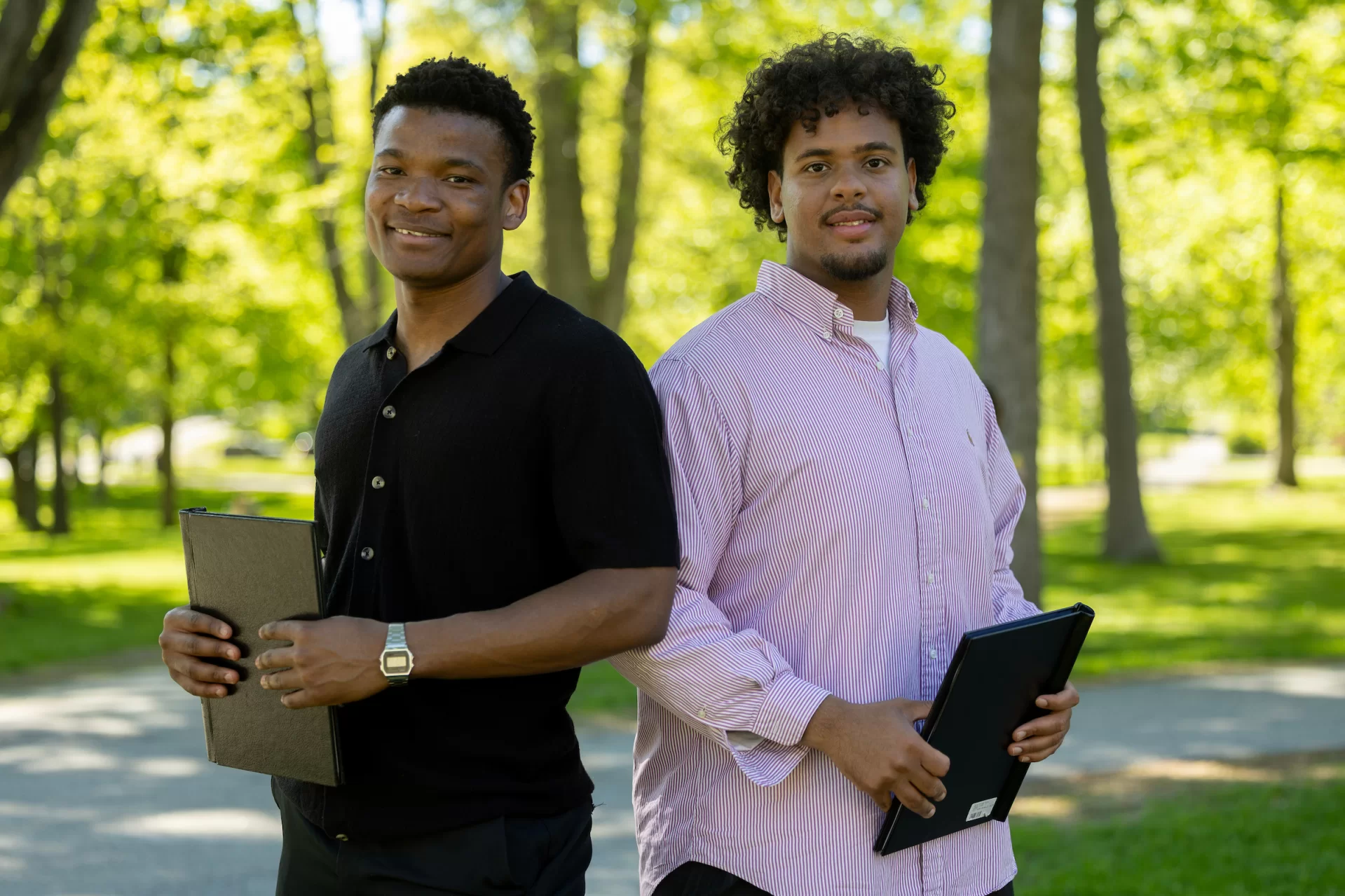
How have those experiences and campus activities helped you build community, especially a diverse and inclusive one, at Bates?
TEDxBates started off with a conversation in Commons with my friends about how diverse communities can be truly diverse and what kinds of things are never talked about that make communities less practically diverse than they should be. You can have statistics, but what we want really with diversity is people to interact and be part of an active community — talk to each other and collaborate, which is what the Bates mission statement is all about.
Our motivation was to bring the topic of diversity to a place where a lot of people can interact with it and not at a professional level, but at a very lowkey, chill level. We called TedxBates “Unasked Questions,” which basically speaks to the questions that we never ask as communities and the things that we don’t really talk about that would have a great impact in making us a strong community.
I wanted a team full of leaders who think in diverse perspectives and see things that I didn’t see myself. Something I learned being part of leadership roles is that you don’t know everything. Being able to see who can help you in different ways is a great skill.
I was involved in the Africana Club this past semester, as a community liaison on the executive board. I was not just making a community for myself but also building a community for a lot of people and showcasing my identity as an African person. This allowed me to meet new people that I never thought I would interact with on campus. I was able to have conversations with people and have discussions, which were eye-opening in different ways.
I participated in club volleyball, and that was a way to meet new people through a very different platform, and enjoy the sport.
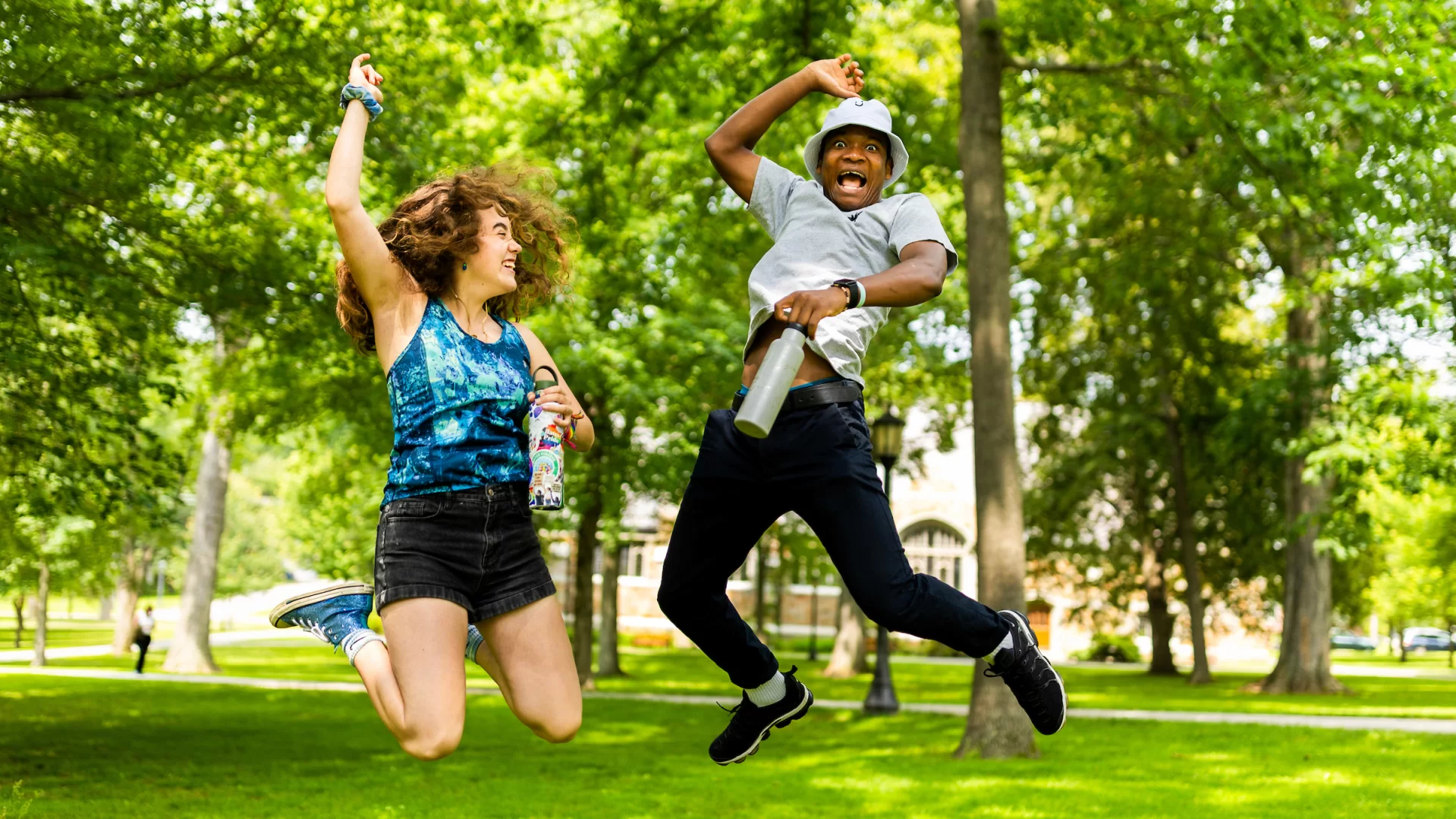
I was also an officer with student government’s Funding and Activities Board. That perspective made me appreciate the efforts and resources that are put into making sure that clubs thrive, there is equity being achieved, and every club has the chance to express their interest and identities in campus life.
Bates students are very intentional people who care about the things that they do, who care about the work that they do. They don’t just do it for the sake of doing it. That’s something that I’ve really, really appreciated about the people here.
That’s built by the community that exists at Bates — the support and the size of the community and the way the place is structured. We have one dining hall, for example, and that allows people to interact and be part of a community every day. That creates a space where people get more and more comfortable to step out of their comfort zone and become the most purposeful and genuine, happy versions of what they could be.
What are your post-graduate plans?
I’m going to be a research associate at the UMass Chan Medical School in a lab that researches autoimmunity. There are two Bates alumni (Olivia Dekker ’24 and Aurora Beaumont ’24) that also work there. They were really excited to see me come into the interview, and I had a lot of Batesie conversations with them.
I’m very excited about that both at the professional level — it’s going to give me a chance to explore my research career even more and refine topics I really want to get into — and also being able to embody the characteristics that Bates has built in me and taking that in the world out there. That’s my next chapter.
Faculty Featured
Scotty Farley
Assistant Professor of Chemistry and Biochemistry