The Bates Program in Neuroscience kicked off its new Neuroscience Seminar Series with a talk from Peter Strick P’98, Thomas Detre Professor and Chair of Neurobiology at the University of Pittsburgh.
Neuroscience faculty and staff launched the new seminar series in response to student desire to learn more about developments in the field outside of campus, said Justin Hulbert, Bates associate professor of neuroscience and chair of the program. Gwendolyn Calhoon, instructional specialist in neuroscience, is overseeing the creation of the series, which is funded in part by a donation from psychiatrist Robin Bitner ’95.
“The more exposure our students get to different types of questions and types of evidence-gathering in neuroscience, the better,” Calhoon said. “It equips them with more tools for coming up with their own great ideas.”
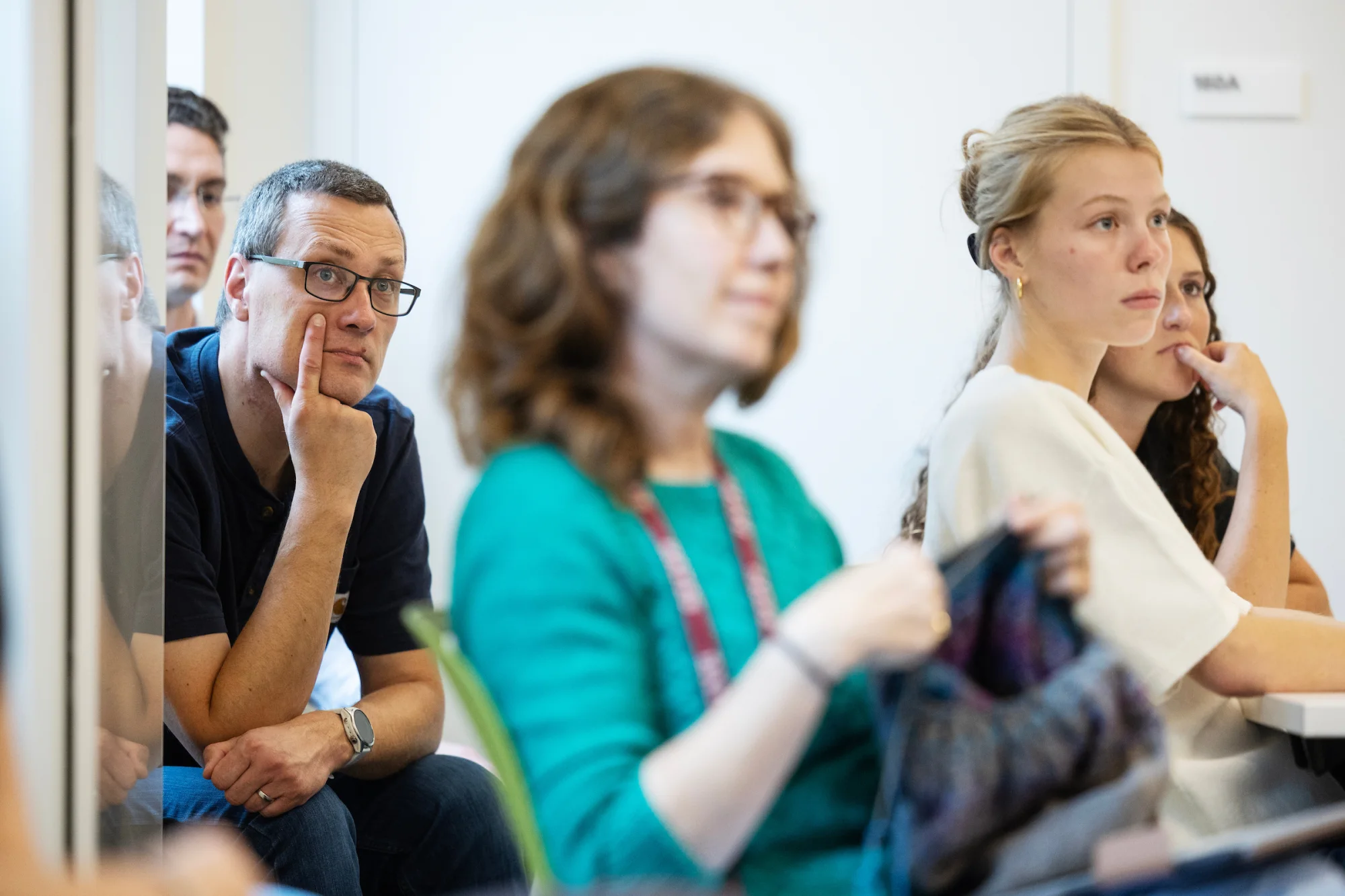
On Wednesday, Sept. 30, Strick discussed his research on mapping brain circuitry and central nervous system control with a group of faculty, staff, and about 30 students in Bonney Science Center.
Strick’s interest in neuroscience originally began with a desire to understand human volition and the ability to act on it. He wanted to know what neurological steps were involved in something as simple as lifting a finger — and what was happening when the body prevented volition from evolving into movement, as is the case with diseases like Parkinson’s and ALS.
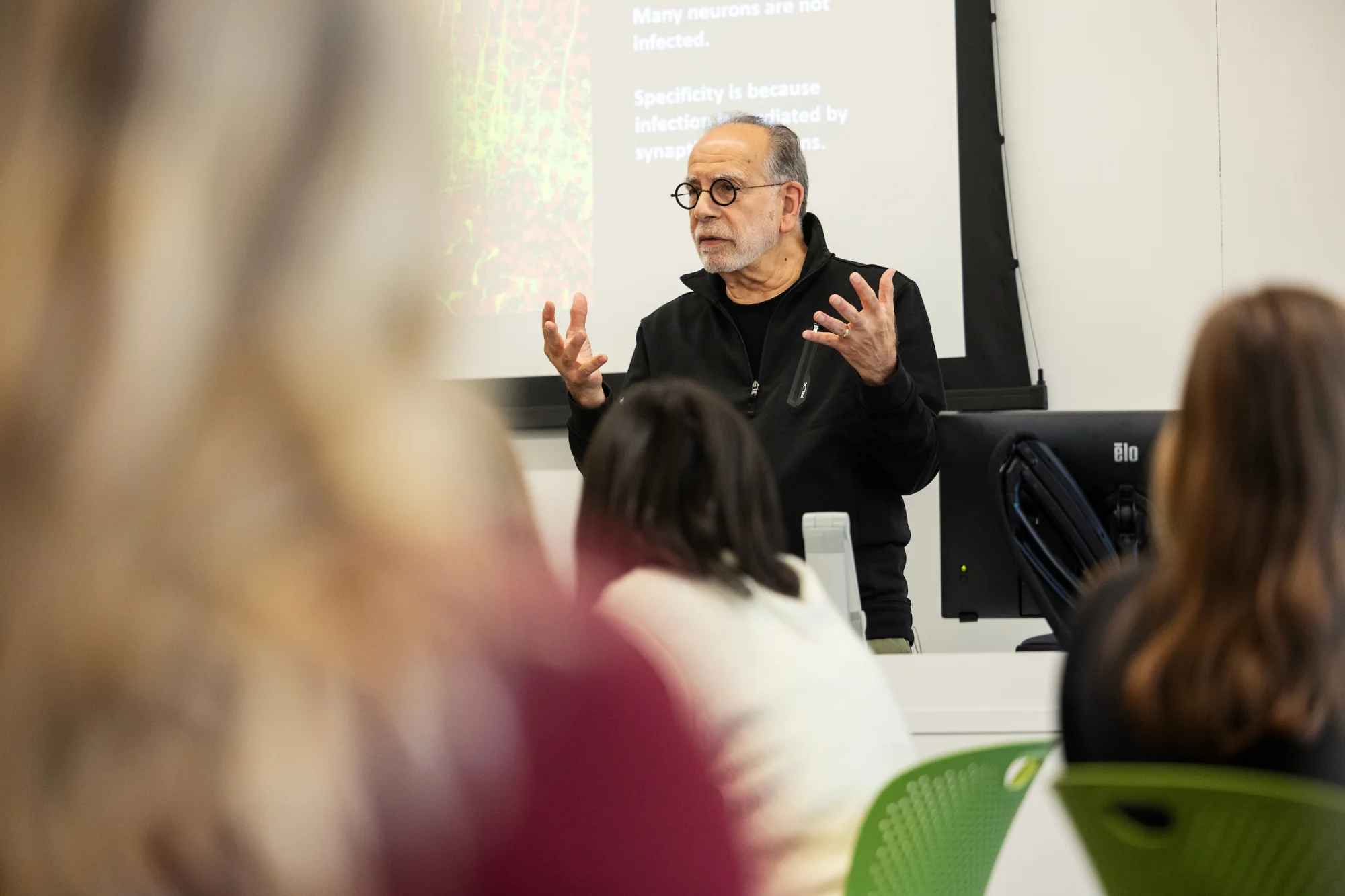
While on the faculty at the State University of New York Upstate Medical University, Strick pioneered a technique to more intricately trace neural connections in the brain. He discovered that after infecting a brain with a neurotropic virus — one that impacts nerve tissue, such as herpes simplex virus or rabies — scientists could follow the disease’s path from one neuron to the next, mapping large portions of the brain’s wiring diagram.
“It allows us to look at brain circuits in a way that we’ve never been able to before,” Strick told Bates News.
That expanded knowledge has helped Strick and colleagues research how the central nervous system controls feeling, cognition, and movement.
“We don’t think often about all of the housekeeping that the brain has to do for normal movement, but we’re very aware of it whenever it fails,” Strick said. “And rabies viruses allowed us for the first time to look at those large-scale networks.”
Strick studies the nervous system’s complex neural networks and the neural basis for the mind-body connection, as well as the generation and control of voluntary movement by the cerebral cortex, the brain’s outermost layer of neural tissue. He also studies the motor, cognitive, and affective functions of the basal ganglia and cerebellum, brain structures beneath the cerebral cortex. His research supports evidence that dysfunction in these areas is correlated with behavioral disorders, a conclusion that could lead to more tangible solutions for mental health patients and, in certain instances, interrogate the label “psychosomatic.”
“These are brain-based problems, and that means there are brain-based solutions,” Strick said. “When people understand that, it can be very gratifying to see that something isn’t imaginary, that it’s a real issue.”
At the University of Pittsburgh, Strick trains graduate students and postdoctoral fellows, as well as resident doctors in neurosurgery and pediatric neurology. One such graduate student of Strick’s was Bates Professor of Neuroscience Jason Castro, who completed his Ph.D. at the University of Pittsburgh in 2008.
“His classes were crystal clear, theatrical in the best sense, and made the material feel alive and relatable. … Peter’s teaching has shaped not just his students, but his students’ students as well,” Castro said while introducing Strick before the seminar.
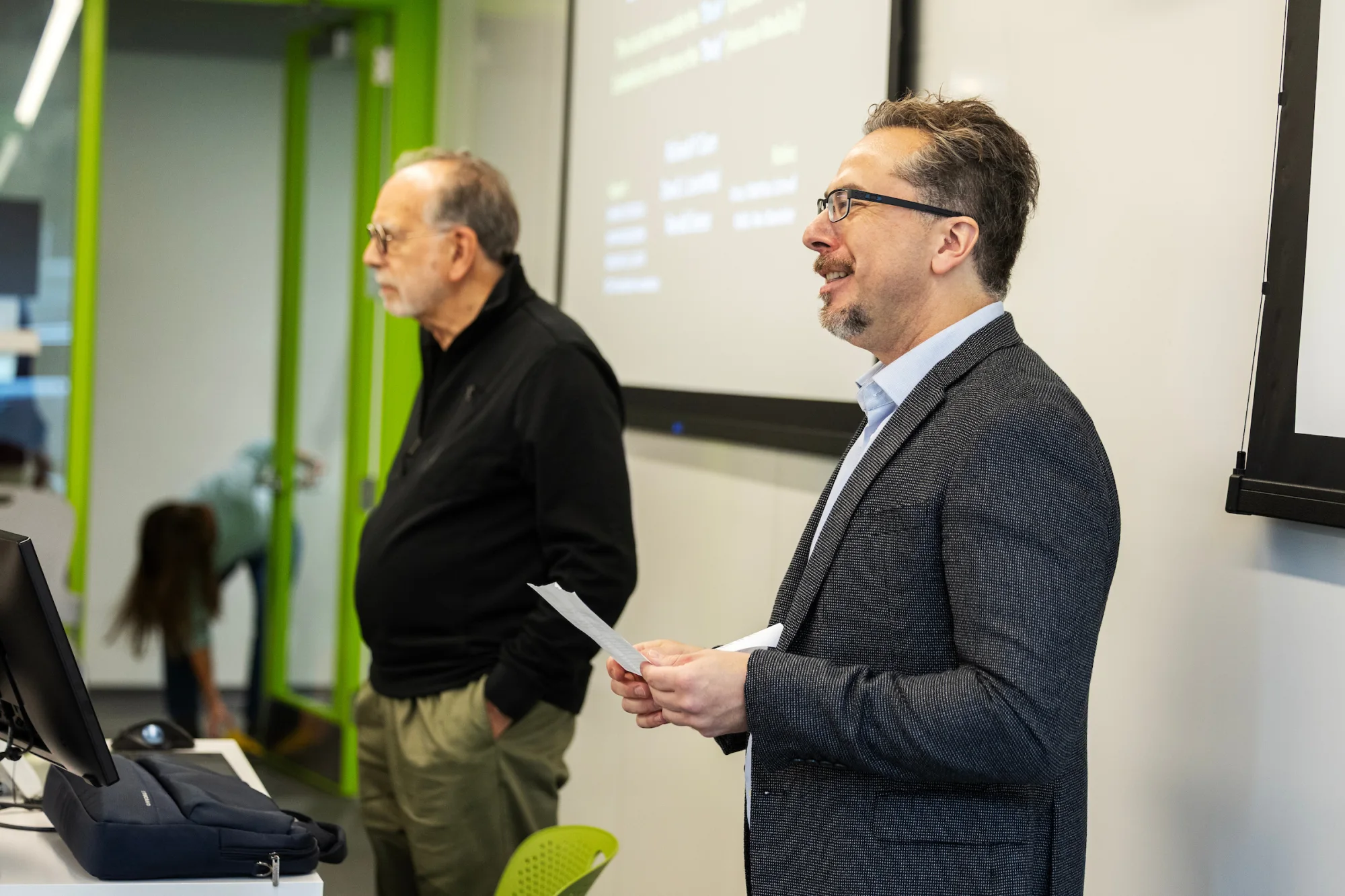
Strick is the co-director of the university’s Center for Neuroscience and, beginning in 2027, will be the president of the Society for Neuroscience, the world’s largest organization of scientists and physicians dedicated to studying the brain and nervous system.
The Program in Neuroscience “couldn’t ask for a better first speaker to launch this series,” Hulbert said. Prior to the talk, neuroscience students had the opportunity to have lunch with Strick and ask questions. Making connections with leaders in the field and learning about how major research institutions like the University of Pittsburgh operate is key for students preparing for internships and graduate school, Hulbert said.
“Not only can Strick speak to his own research, which is incredible, but also, he is one of the major players guiding the field of neuroscience at large,” Hulbert said. “It’s a wonderful opportunity for students, faculty, staff alike.”
Neuroscience major Molly Sullivan ’28 of Raleigh, N.C., who’s interested in the biological side of neuroscience, attended the talk and was excited about the opportunity to learn more about the brain-body connection from Strick.
“I feel like we’re really lucky, especially to have such cool researchers like him come here,” Sullivan said. “It’s incredible that we were able to get him.”
Strick’s Bates connection is the cherry on top of his credentials; a self-proclaimed “Proud Bates parent,” his son Benjamin Strick ’98 is the vice president of outpatient and community services at Spurwink, a Maine behavioral health nonprofit.
“When Benjamin got to Maine, he felt like he was at home,” Strick said. “He instantly thought the school, the quality of the education, its location were terrific, and it was an instant love affair.”
At the same time, the series is part of a larger goal to bolster community and connection in the neuroscience program, which, because of its interdisciplinary nature, involves players from around the college. Neuroscience just opened its new student lounge, which it shares with the Department of Physics and Astronomy in Carnegie Hall.
“The students are so excited to have a place to come study together,” Calhoon said. “We’re very thrilled to be putting together more community building initiatives in neuroscience.”
After Strick’s talk, attendees were invited to a reception with refreshments in the Bonney Living Room.
“Oftentimes, that’s where the most brilliant ideas emerge from — these more relaxed settings where you can bounce ideas off one another,” Hulbert said. “And it’s not every day that our students get to hobnob with the incoming president of the Society for Neuroscience.”
Aside from conducting research, Strick also enjoys mentoring budding scientists, especially in a moment characterized by unreliable federal funding for research. He experienced similar challenges himself when he began his career during the Vietnam War, which diminished research opportunities.
“Many people wonder, should they go into science? And my answer is, you’ve got to be obsessed with it and enjoy it and want to answer questions,” Strick said.
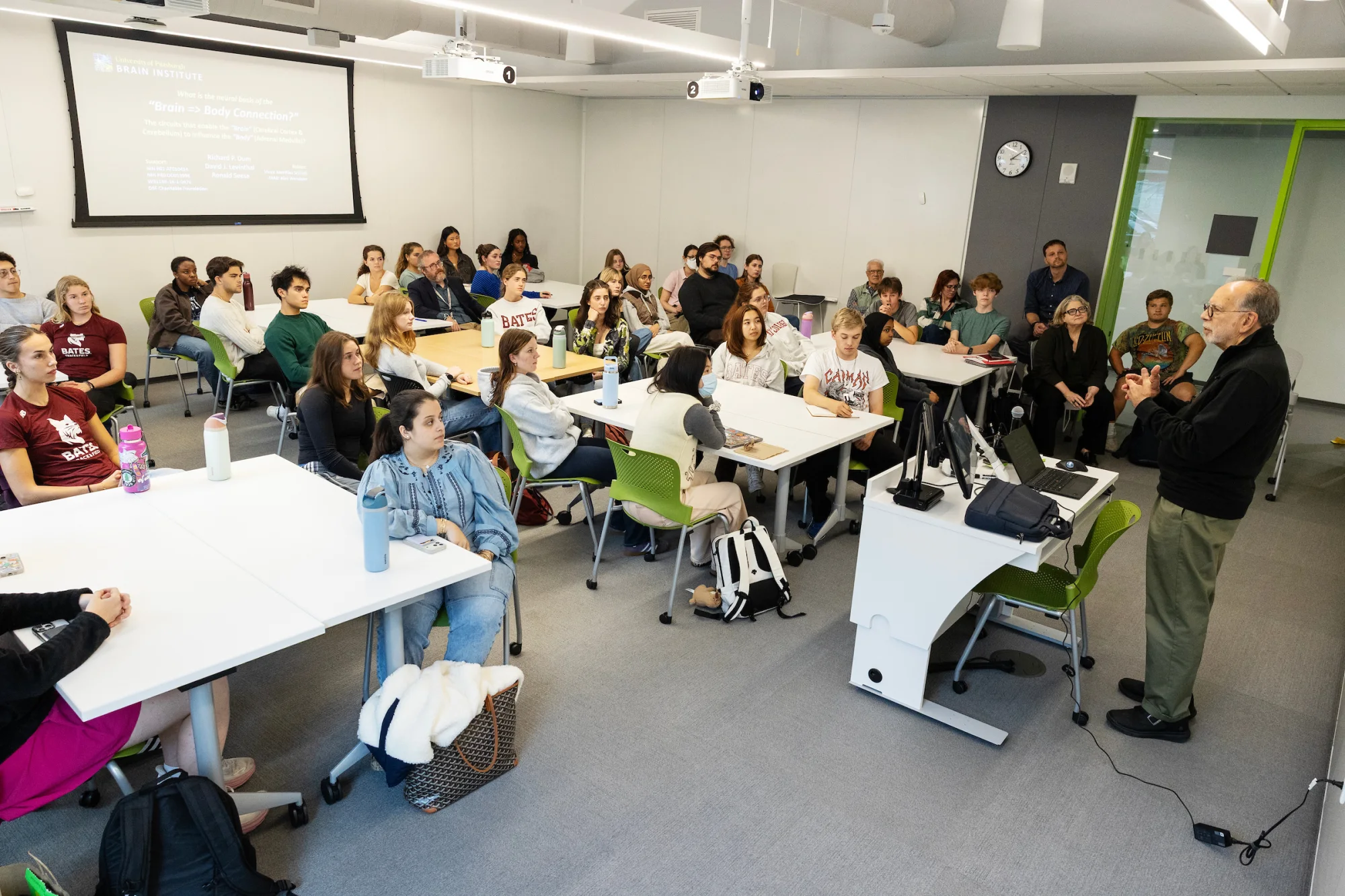
Now, perhaps more than ever, the world needs neuroscientists, Strick said. Baby boomers are aging, instances of Parkinson’s and Alzheimer’s are rising, and 178,000 Americans die from alcohol use disorders each year. He hopes that his tenure as president of the Society for Neuroscience can advance access to research.
“These are incredibly difficult times in science,” Strick said. “My hope is that we can take our message to the public, and that I can do things that facilitate the careers of the 30,000 scientists that are members of the Society for Neuroscience.”
Strick’s seminar is the sole installation of the series this semester; the neuroscience program hopes to eventually host three seminars each semester, Calhoon said, and will begin scaling up the series with two speakers during the upcoming winter semester.
Faculty Featured
Jason B. Castro
Associate Professor of Neuroscience and Digital and Computational Studies
Justin C. Hulbert
Associate Professor of Neuroscience
Categories BatesNews