Research
Current Projects
Bobcat Ecology in Central Maine
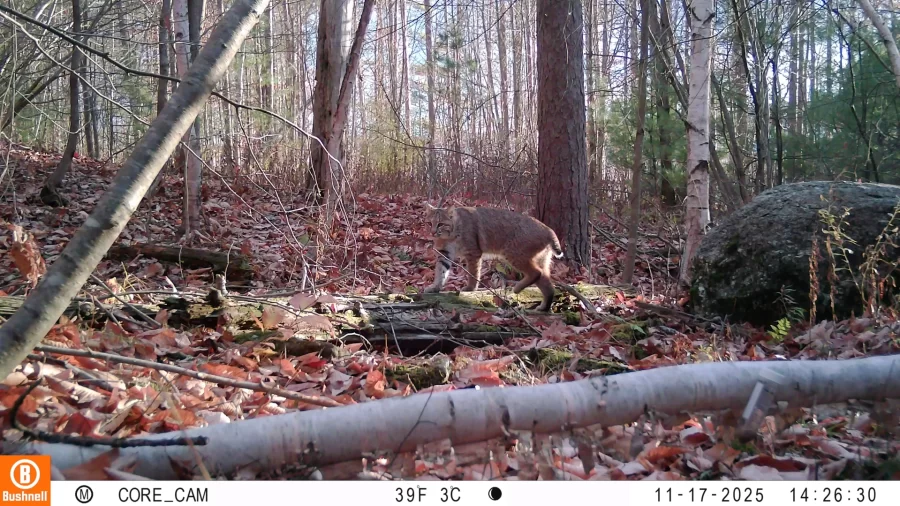
Bobcat (Lynx rufus) are the most widely distributed wild felid in North America, and they have not been rigorously studied in Maine in around fifty years. State wildlife managers rely on imperfect harvest data to track population trends. Meanwhile, as development expands and the landscape grows more fragmented, understanding where bobcats live, how they move through human-modified areas, and what factors shape their distribution has become increasingly important for managing the species. A key part of that picture is competition with other carnivores, particularly the eastern coyote (Canis latrans), which can limit bobcat numbers through direct killing and competitive displacement. My lab is testing whether bobcats avoid coyotes by using different spaces, different times of day, or some combination of both, and whether that balance shifts as the landscape grows more developed and spatial refuges shrink. Using camera traps and GPS collars, we are sampling across an urban-rural gradient running from downtown Lewiston-Auburn out into the surrounding countryside. Beyond the ecology, this project trains Bates undergraduates in field methods, statistics, and GIS, and feeds directly into Maine’s state wildlife management priorities for both species. Alongside our community partners, we are building a long-term picture of how carnivores navigate a landscape increasingly shaped by people.
Community Partners, please feel free to check out a snapshot of the data from your camera stations at the Bates Wildlife Cam Network!
Sociocultural Dimensions of Human-Wildlife Conflict in Botswana
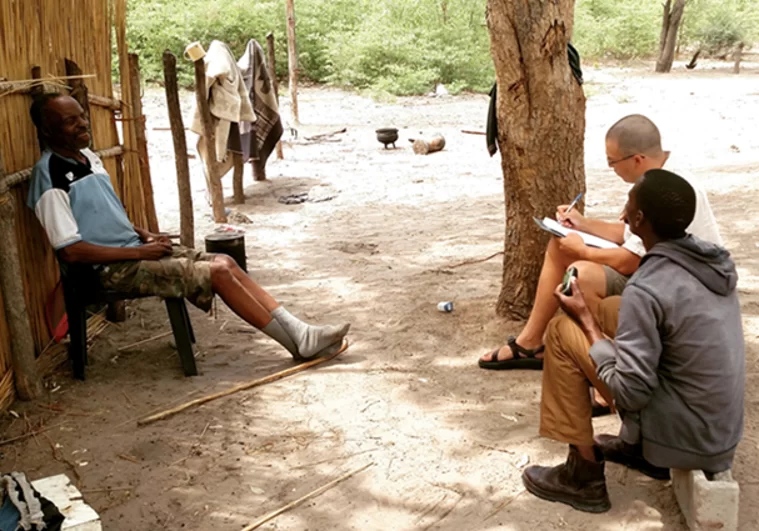
When lions (Panthera leo) kill livestock or elephants (Loxodonta africana) raid crops, the conflict is rarely just about animals. It is also about land, history, and trust. In northern Botswana, tensions between people and wildlife are tightly bound with colonial-era fencing policies, shifting land tenure, and communities’ dependence on livestock and farming for their livelihoods. My lab, working with the Okavango Research Institute, Round River Conservation Studies, and local community trusts, is studying how historical and social forces shape human-wildlife conflict in the Okavango Delta, and what it would take to manage conflicts more equitably. We are comparing communities in the Okavango Delta that sit at different stages of community-based conservation development. Working with local research assistants, we aim to understand how residents experience wildlife, conservation programs, safari ecotourism, and the associated benefits and burdens. Rather than treating local knowledge as secondary to ecological data, this project puts community perspectives at the center of conservation planning and asks what conservation looks like when it takes history and power seriously, not just species distributions and population counts.
Previous Projects
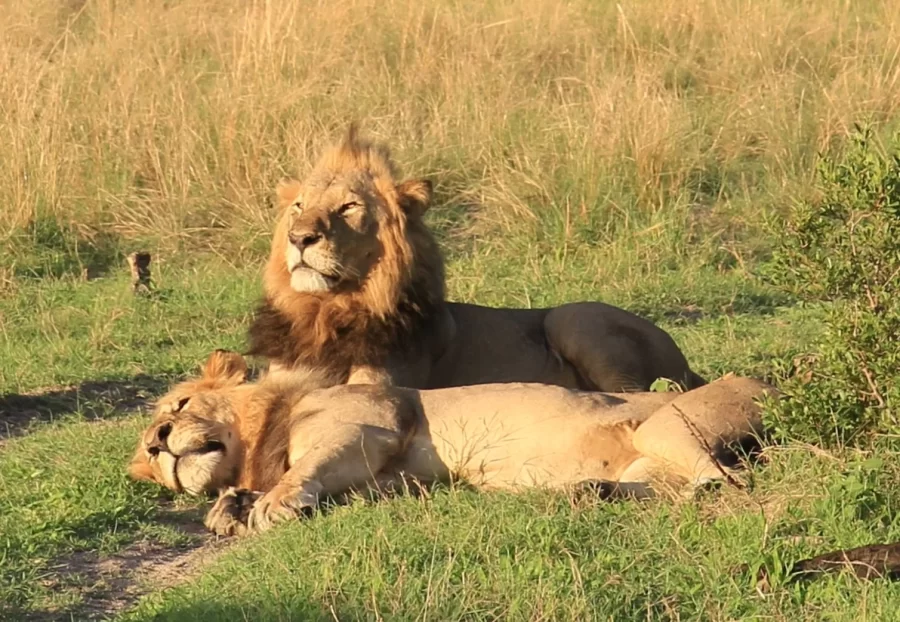
Pride in Our Prides: Mitigating Human-Lion Conflict In The Okavango Delta, Botswana
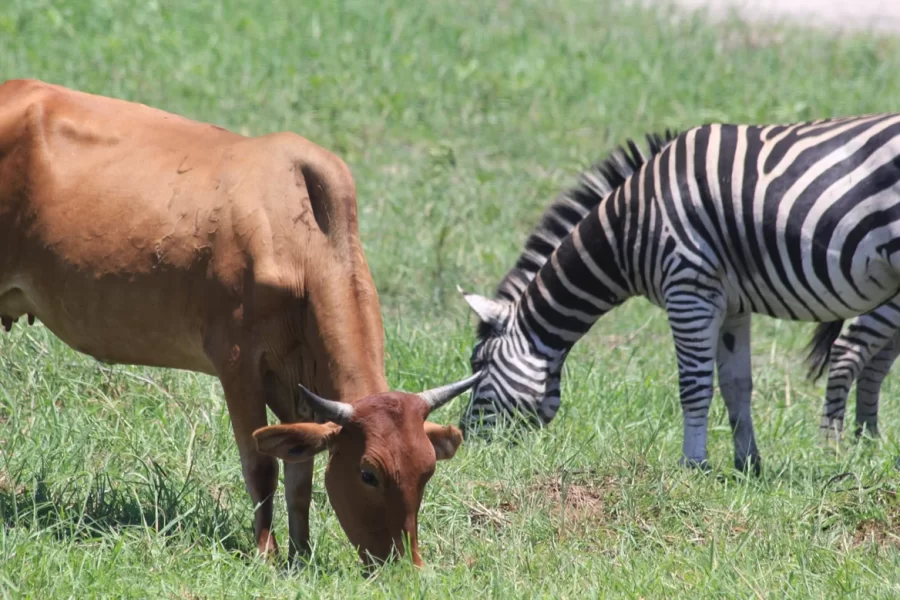
People and lions (Panthera leo) have tenuously coexisted for eons, but in northern Botswana and throughout the continent, lions regularly prey on livestock causing people to respond by killing lions. I developed and led a community-based conservation program in the eastern panhandle of the Okavango Delta, Botswana aimed at reducing human-lion conflicts. My local research team and I tracked the area lion population with GPS satellite collars, built predator-proof livestock enclosures from local materials, investigated livestock depredation events, and developed an early-warning system linked with the lion collars to alert villagers when a collared lion moved near villages or livestock grazing areas. We also interviewed over 400 community members before and after these interventions to understand how attitudes toward lions and conservation shifted as a result of our conservation program. Lions turned out to be responsible for about 75 percent of livestock losses in the area, and our investigations and the new mitigation tools significantly increased tolerance for lions over the course of the study, even though attitudes toward lions near villages remained largely negative. This project showed that intensive, locally grounded management can shift how people feel about coexisting with large carnivores, and it laid the groundwork for the more sociocultural questions I’m now pursuing.