
Carrie Cushman talks Museum of Art’s Marsden Hartley Legacy Project on Maine Public
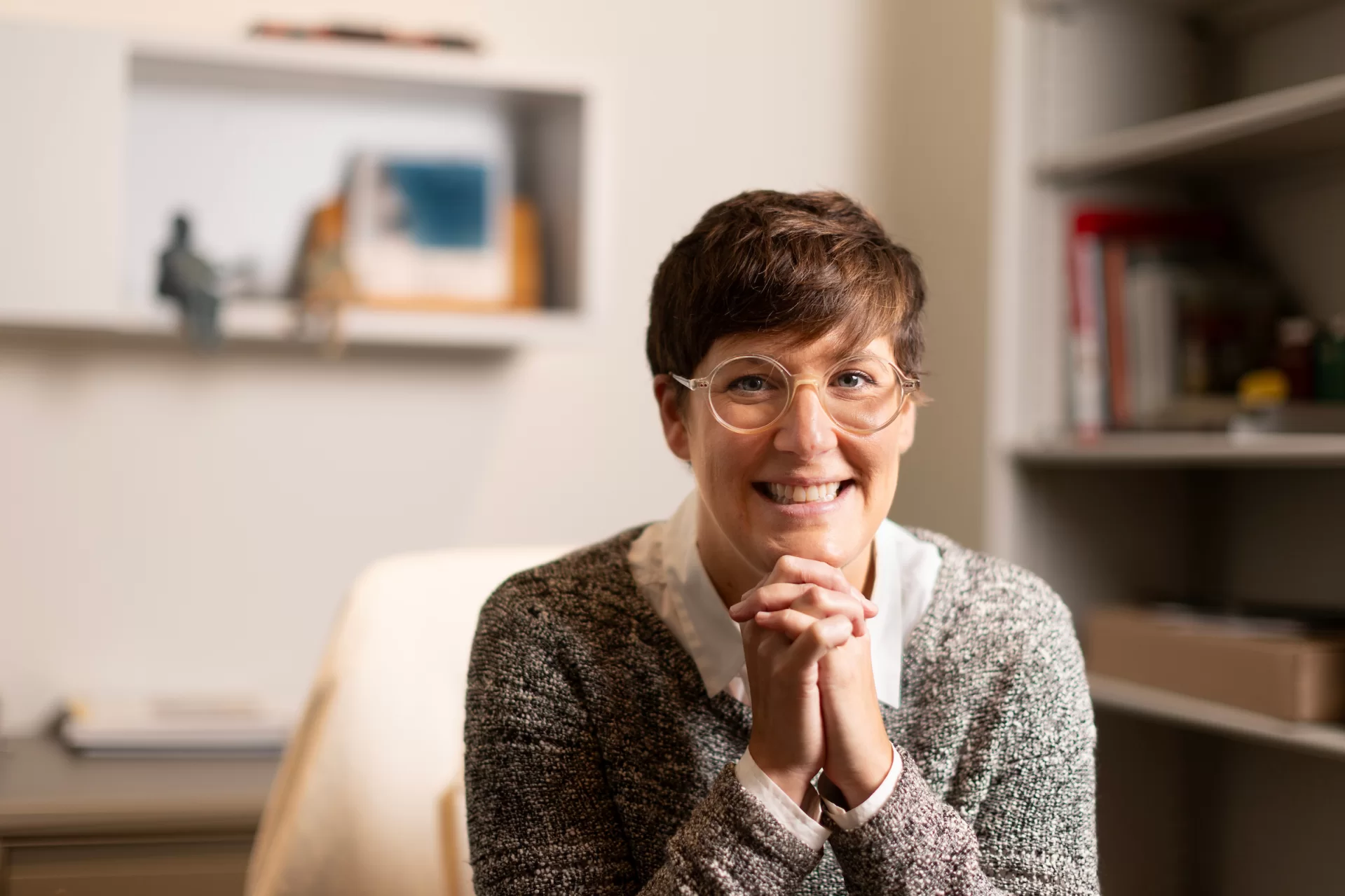
Carrie Cushman, director of the Bates Museum of Art, spoke about the museum’s current projects on Maine Public Classical’s State of the Art radio show.
In conversation with Heather McDougall, manager of music and people at Maine Public Classical, Cushman, who joined the museum in August 2025, discussed the excitement of arriving at Bates. The museum is preparing to launch the Marsden Hartley Legacy Project, an online digital catalog of all known paintings and ephemera by modernist painter and Lewiston native Marsden Hartley, which has been in development since 2019.
“We’re really lucky that this is happening at Bates, and we will be the home of it and responsible for stewarding it into the future,” Cushman told McDougall.
The Bates Museum of Art was founded because of the Marsden Hartley Memorial Collection, Cushman explained, comprising over 400 paintings and ephemera by Hartley — by far the largest collection of Hartley’s work — which Hartley’s niece donated to the college in 1955.
“We have people coming to the museum almost weekly requesting to see work from the collection, and many are artists who are looking for inspiration in this 20th century modernist who is finally getting his due,” Cushman said.
Additionally, Cushman’s exhibition The Worlds of Ilse Bing was featured in a list of February’s best photography exhibitions in the online magazine What Will You Remember?.
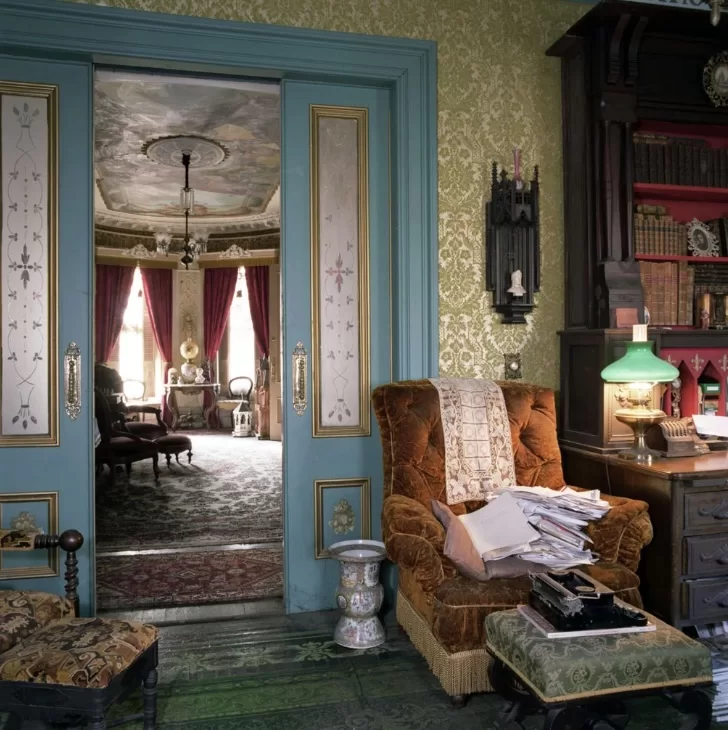
The exhibition is on view through May 24 at Wellesley College’s Davis Museum, where Cushman previously worked as the Linda Wyatt Gruber ‘66 Curatorial Fellow in Photography. Exploring Bing’s rise to prominence, coinciding with 35mm photography’s growing popularity, the exhibition “brings her work into conversation with her creative influences and with those who she influenced in the worlds of modern art.”
What Will You Remember? also included the Bates Museum of Art’s exhibition Shellburne Thurber: Full Circle, co-curated by Thurber and Bates assistant curator Samantha Sigmon, in its February roundup. On view through March 21, the exhibition demonstrates how Thurber’s photography has “visualized interior work that is private, domestic, psychological, or insular.”
Mara Tieken opines on rural schools, students in The Hechinger Report; Women Writers, Women’s Books
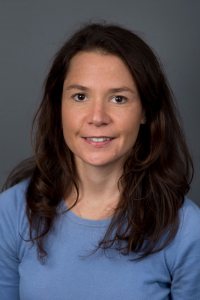
Though public school closures and consolidations are becoming increasingly common, they rarely serve their intended purpose of saving struggling school districts money, writes Professor of Education Mara Tieken in an op-ed for The Hechinger Report.
For school districts with declining enrollment or decreasing state and federal funding, “school closures may seem logical,” Tieken writes. “Close schools, ‘right-size’ districts, save money. Problem solved.”
However, she explains, school closures require additional transportation and renovation costs, often leading to districts saving little to no money, while students’ test scores and future college and employment outcomes decrease.
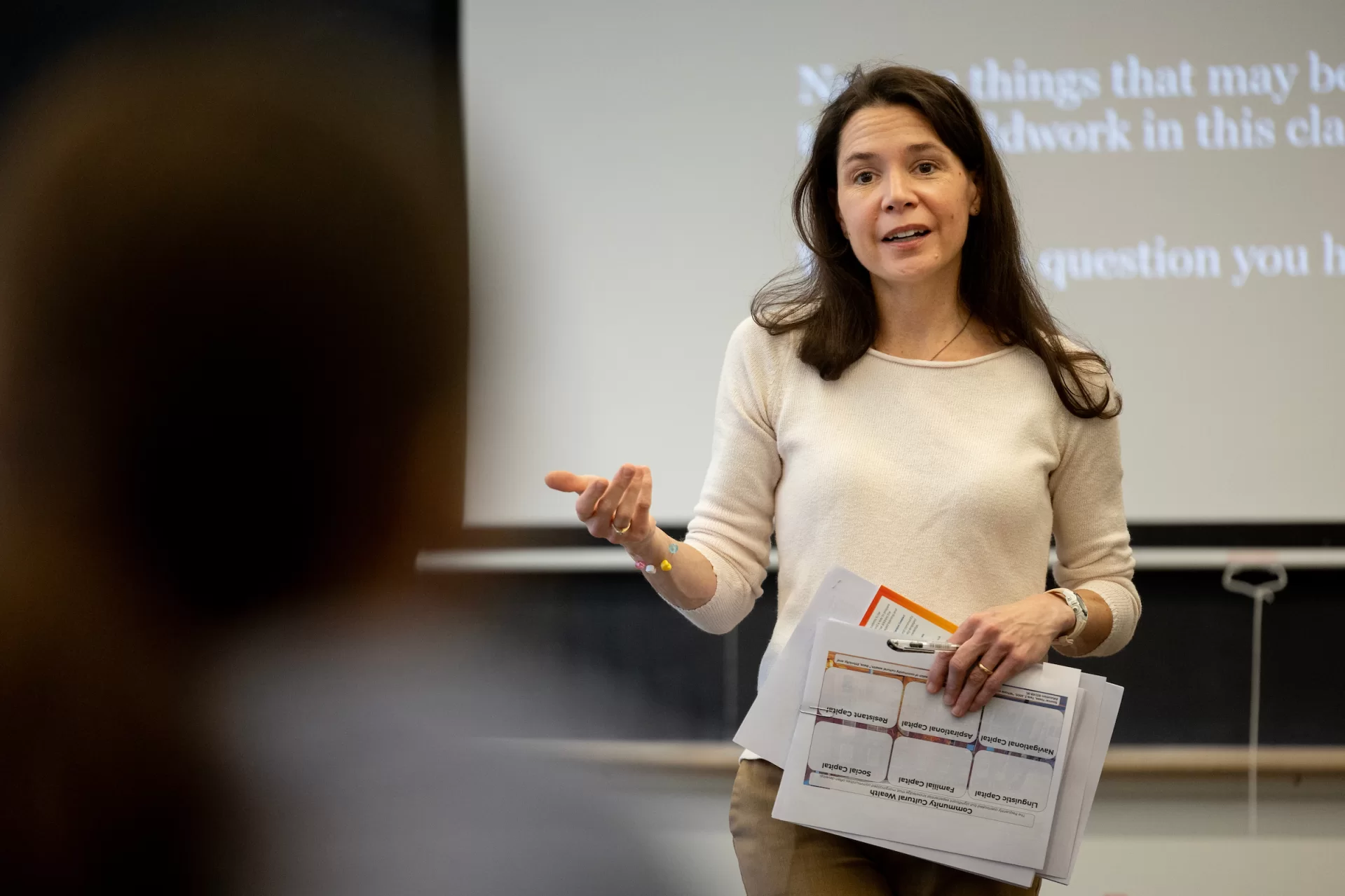
Tieken has extensively researched and written about rural schools and their students. On Feb. 5, she published a piece about the process of developing her latest book — Educated Out: How Rural Students Navigate Elite Colleges—And What It Costs Them — in an op-ed for Women Writers, Women’s Books.
While writing the book, which explores how students from rural places experience attending a small elite college, Tieken developed an approach to research characterized by slowly developing relationships with the students she was interviewing, she writes.
“We often think of research as a one-way process, a passing of ‘data’ from ‘subject’ to ‘researcher,’” Tieken writes. “But that approach is neither ethical (in fact, it’s often quite exploitative) nor useful. So much more can be learned when the relationship is actually relational.”
The 13 years that Tieken spent researching and writing the book taught her to be a more patient teacher, she says, with an expanded awareness of the struggles that her students from rural backgrounds may be facing. The book culminates with suggestions for how academic institutions can better support rural students.
“All those recommendations that I make in the book’s final chapter?” Tieken writes. “I have to do them, too, and I feel obligated—in a really good way—to encourage others to do them, as well.”
Caylin Carbonell ’12 gives public talk exploring daily life, labor dynamics in colonial New England
Caylin Carbonell ’12, an assistant professor of history at Bowdoin College, gave a public lecture about labor dynamics in colonial New England households, Wiscasset Newspaper reported.
The talk, entitled “Laboring Lives and Hidden Stories in Colonial New England,” was the second installment in a series of free online lectures hosted by the Lincoln County Historical Association, based in Wiscasset, Maine.
Carbonell shared insights on “the daily lives inside colonial households as the country was beginning to take shape, with a focus on laborers, often a diverse group ranging from enslaved and indentured people to hired workers, including Indigenous, African, and European women and men.”
She also discussed the challenges of uncovering the stories of 17th and 18th century laborers from incomplete or nonexistent records. Carbonell, who majored in history at Bates, is currently working on a book manuscript that closely explores daily life in colonial New England households.
Boston Globe, Sun Journal cover MLK Day at Bates
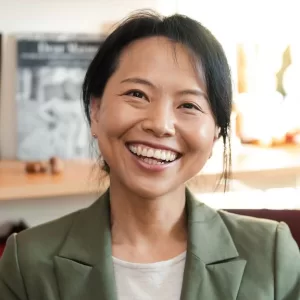
The Boston Globe reported on a workshop held during Bates’ Dr. Martin Luther King Jr. Day, “From Silencing to Empowerment: Exploring Anger, Justice, and Post-traumatic Growth Among Refugee Women and Women of Color,” led by Yun Garrison, assistant professor of psychology, and Fowsia Musse from Maine Community Integration.
During the workshop, Garrison and Musse presented a framework of healing from trauma that they developed by examining the experiences of refugee women. For Musse, herself a refugee from Somalia, and other Somalian refugees and immigrants living in Lewiston, the workshop was particularly topical, the Globe reports; Musse said that anxiety caused by the Trump administration’s immigration deportation agenda led her to reflect on past trauma from her immigration experience.
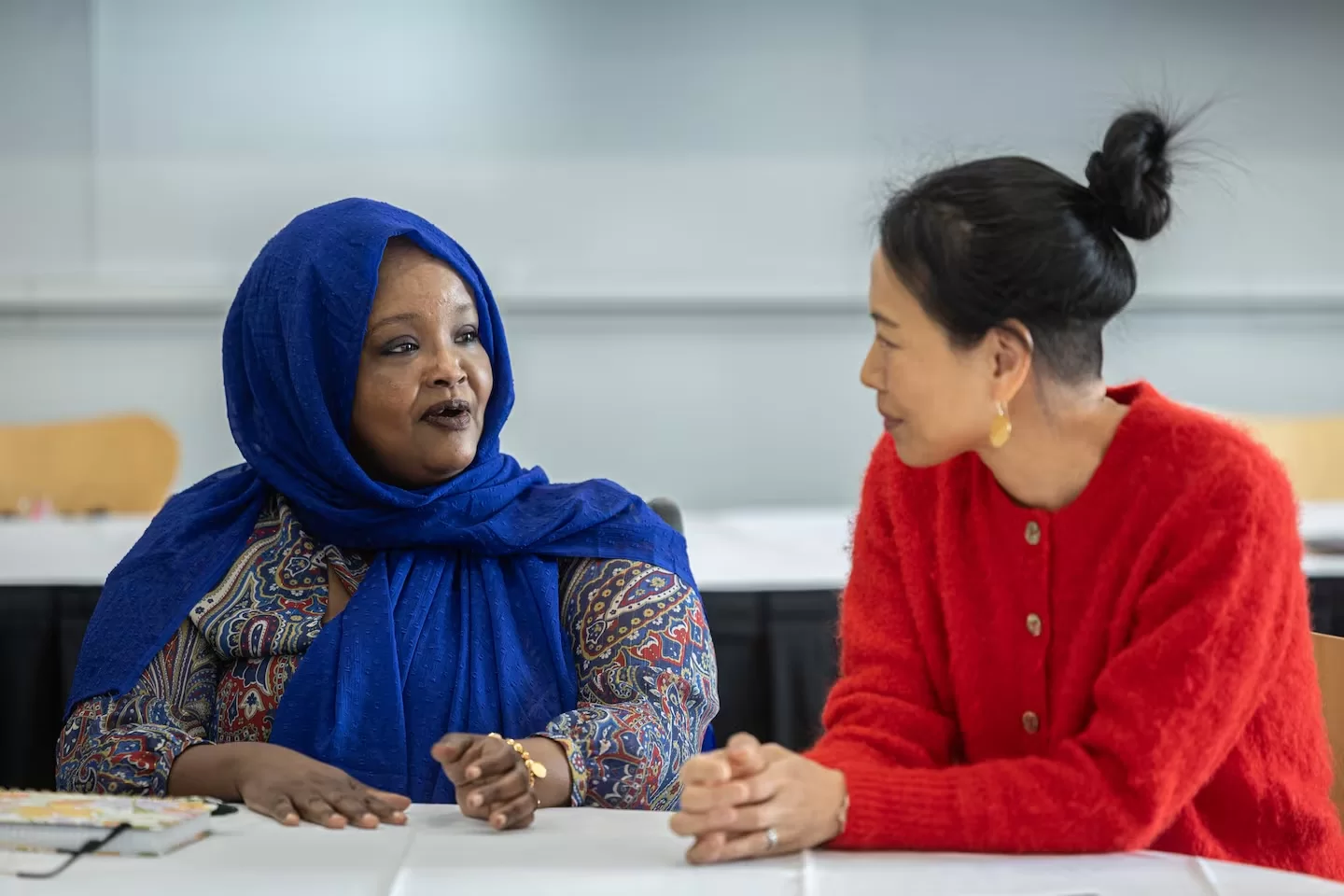
“When something traumatic happens, how do we hold both anger and peace at the same time? Because sometimes they are pulling us in opposite directions,” Garrison said. “Maybe love and healing can bridge this. I do not know, but that’s what I’m sitting with right now.”
The Lewiston Sun Journal also covered the day’s keynote address given by Myisha Cherry, an associate professor of philosophy at the University of California, Riverside.
Cherry’s address — “What Do We Do With All This Fear?” — explored the day’s theme of “Love, Anger and the Struggle for Justice” by closely examining and interpreting MLK’s writings and words.
The Sun Journal quoted from President Garry W. Jenkins’ introductory remarks addressing the day’s theme, sharing his interpretation of how love and anger may intersect in the pursuit of justice.
“I would rather spend my days in a space of love rather than a space of anger,” Jenkins said. “But we don’t always get to make that choice. … In linking these two, we have to wrestle with how they exist together — both in tension and in harmony.”
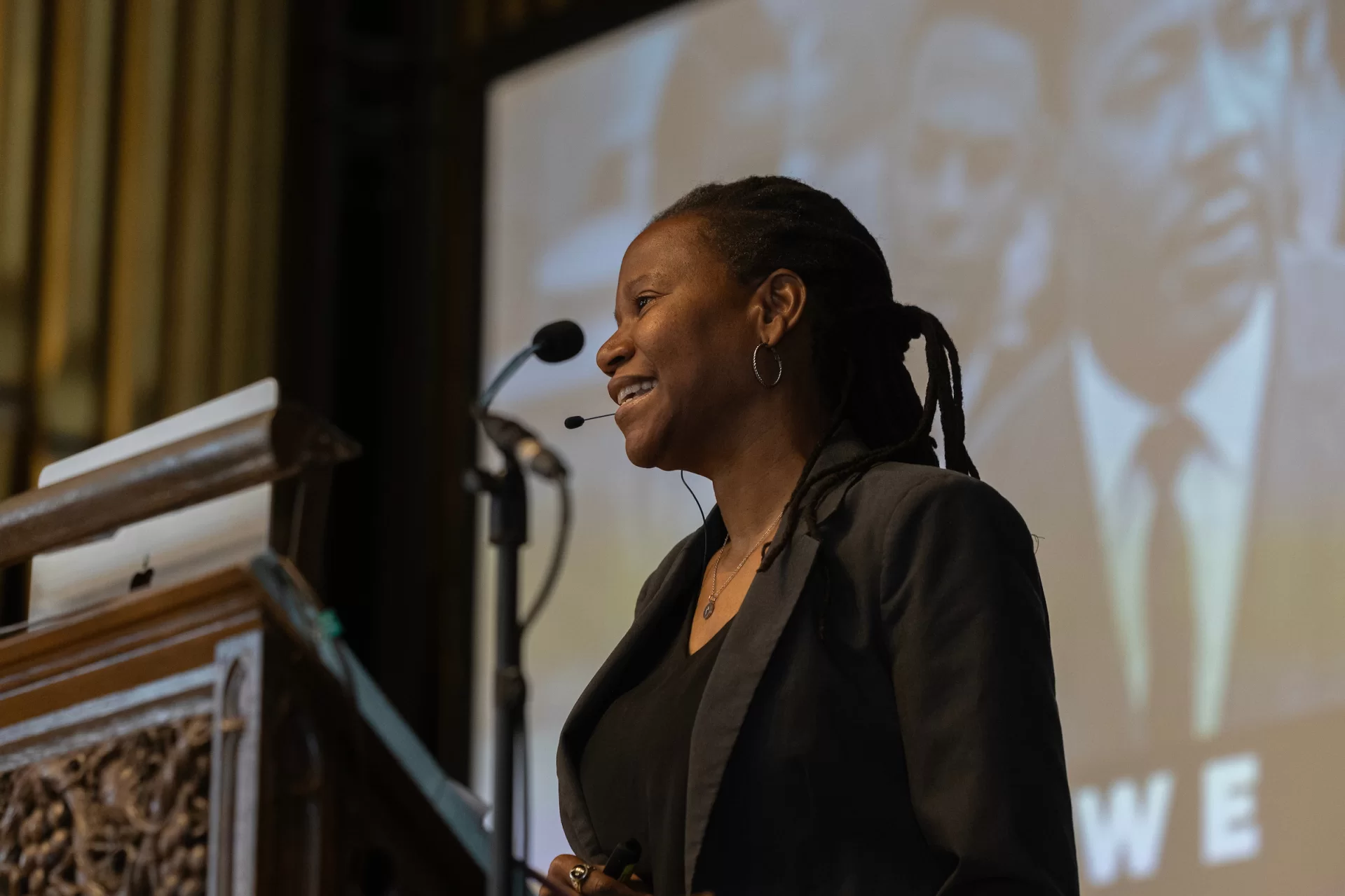
In sharing MLK’s thoughts about fear, Cherry explained that not all fear was negative; it can, in fact, be harnessed and transformed into a powerful force for change, the Sun Journal reported.
“We should be maestros as opposed to mere masters of our normal fears … and we should transition that normal fear into courage,” Cherry said. “Courage is just not doing something in spite of your fear, it’s taking your fear and matching it up with confidence … and engaging in action.”
As the Sun Journal reported, Cherry linked this healthy fear to MLK’s nonviolent protests and actions, urging all in the audience to use their “normal” fear to advance causes they care about.
“What we should do with this fear is make something beautiful out of it,” Cherry said. “This is a time of fear for lots of us … Turning to King has been illuminating, and I find that fear doesn’t mean that we are weak, it doesn’t mean we’ve given people the upper hand. It means that we’re sensitive to injustice. It means we value the people we’re fearful for and we value the principles that we are scared we are going to lose.”
Brian Shankar Adler featured in DownBeat magazine’s cover story
Brian Shankar Adler — percussionist and Bates instructor of drum set, tabla, and other hand percussion — and Grammy-award winning soprano saxophonist Jane Ira Bloom released their debut album once like a spark, DownBeat magazine reported in their February issue’s cover story, “Making music in the moment.”
The magazine used the stage at Olin Concert Hall as the setting for a photo shoot with the two musicians, who have performed extensively in Lewiston and Portland, Maine as a duo.
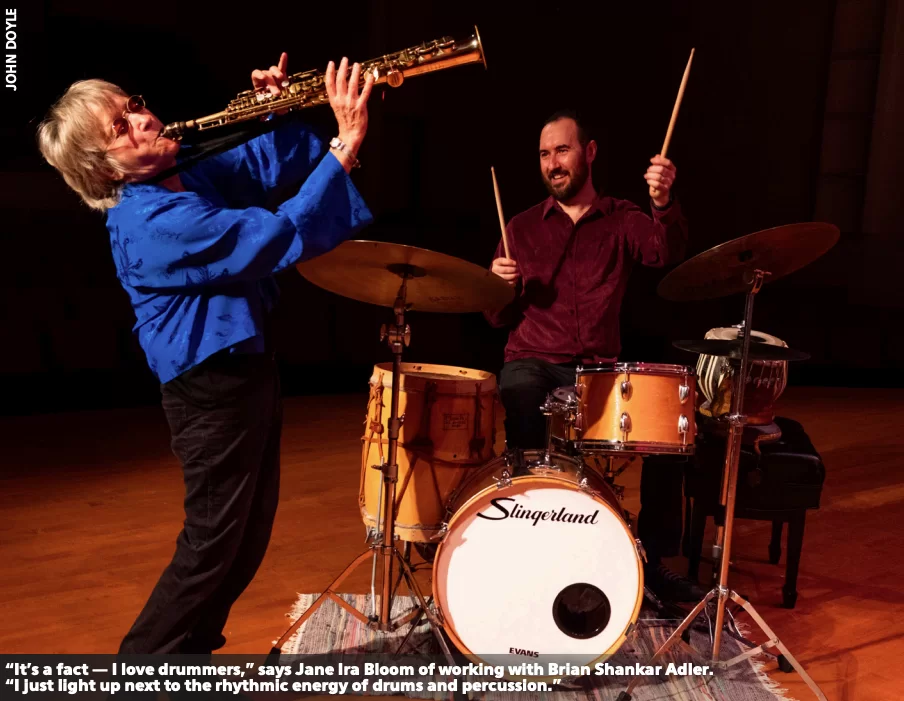
“We played each other’s compositions, and the music came alive instantly,” Adler told DownBeat. “Over the years, we built up a hefty book of tunes and a musical language with which to communicate.”
Without chorded or bass instruments, the brass-drum duo is a rare one, DownBeat reported. The combination makes for a unique, melodic sound, with roots in jazz, North Indian Hindustani, and Indonesian musical traditions.
“The way I see it, music is interconnected and has the power to communicate beyond borders,” Adler told DownBeat. “Listening to and playing jazz, it’s evident that the music has roots beyond America and arms that extend to virtually every corner of the world. When approached with open ears, curiosity and a sense of respect for the traditions, the possibilities for exchange are really limitless.”
Art New England reviews current exhibition at the Bates Museum of Art
On Feb. 5, Art New England ran arts writer Carl Little’s enthusiastic review of “Precision and Expression: American Studio Ceramics from the E. John Bullard Collection,” the current show at the Bates Museum of Art, co-curated by Assistant Curator Samantha Sigmon and Lecturer in Art and Visual Culture Susan Dewsnap. “…Bullard sought diversity and individuality in his acquisitions,” Little writes. “He also embraced humor and joy: many of the pieces will prompt a smile.”
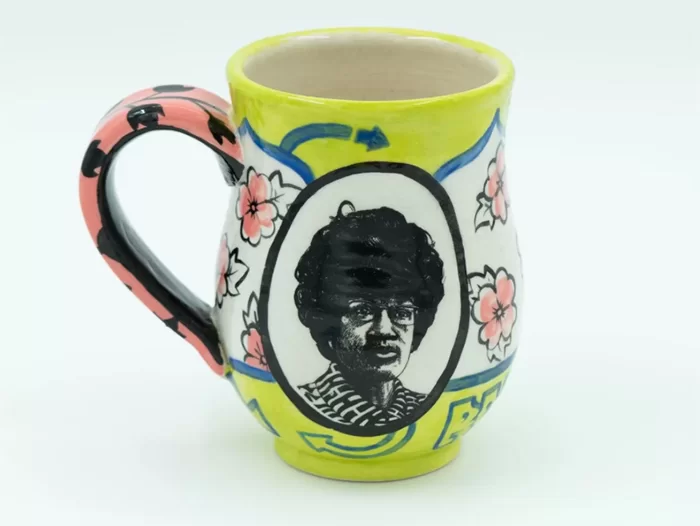
Calling it an “entertaining and enlightening exhibition,” Little highlighted an “exquisite vessel” by Mark Bell, “Spherical Vase,” ca. 2011, which he said “exemplifies the Blue Hill, Maine, artist’s seamless style.”
Little also explained the motivation behind Bullard’s generous gift to the museum. “The collector’s longtime ties to Haystack and the Watershed Center for the Ceramic Arts in Newcastle, Maine, inspired his gift, as did the college’s ceramics program led by Susan Dewsnap, who co-curated the exhibition and accompanying catalogue,” Little writes. “Bullard envisions future students exploring and learning from these singular objects. That vision is already happening: interns at the Bates Museum researched artists for the catalogue and labels.”
Faculty Featured
Yunkyoung Garrison
Assistant Professor of Psychology
Mara C. Tieken
Professor of Education