During Short Term, a number of Bates community members received letters in envelopes marked only with the word “INVITATION.”
“Greetings,” each message began. “The time is almost here.”
The signature was mysterious: “ETTGS.” At the same time, a new Instagram account containing those same five letters started making cryptic posts. Strange event invitations popped up on students’ Google calendars. A smattering of punch cards quietly appeared inside vinyl table displays in Commons.
Those who followed the clues all ended up in the same place: Olin Arts Center, home of the Bates Museum of Art.
For three days this May, the Olin lobby shape-shifted into a first for Bates, a pop-up museum gift shop. Students in “Exit Through the Gift Shop,” a Short Term course taught by Visiting Assistant Professor of Art and Visual Culture Erin Nolan, created and ran the gift shop, with help from the VizLab, Post and Print, and the museum itself.
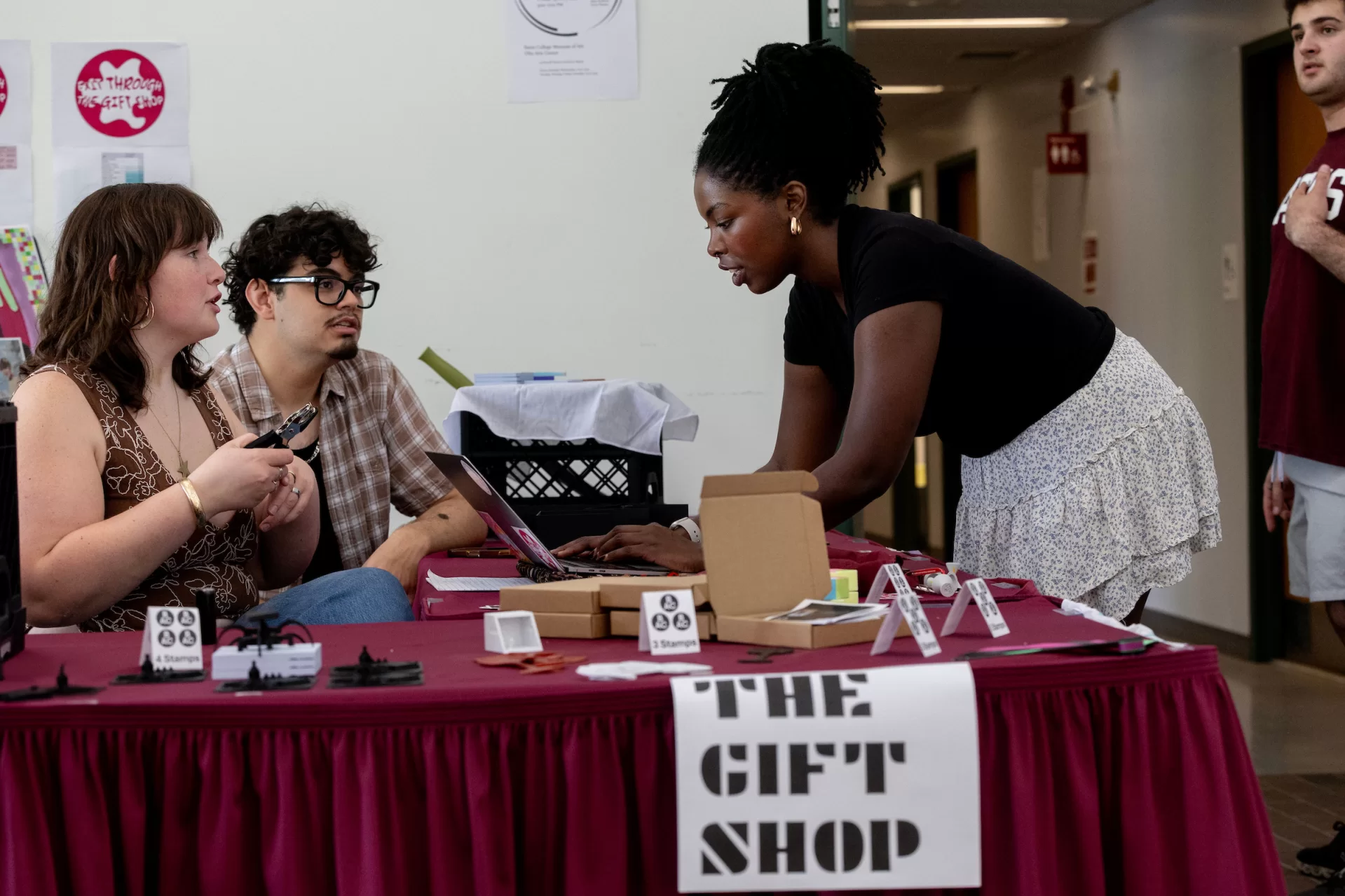
In three-and-a-half weeks, the 13 students designed and brought to life a collection of products — including 3D-printed puzzles, laser-cut keychains, and posters — inspired by student works in the senior art thesis exhibition, “At the Table,” which was on display at the Museum of Art through May 31.
“It’s clear that they’ve put so much work and thought into all the products and how they relate to the art,” said gift shop customer Jade Pierce ’27 of Dracut, Mass. “That’s super cool.”
Even though the gift shop attracted many customers, no money was exchanged. The purpose of the gift shop was never to generate revenue, Nolan explained.
She originally had the idea for the shop when students in another course, “Decolonizing the Museum,” posed questions about commodification in museum shops. Nolan, who spent several years working in museums, wondered: Could she teach a course on museum gift shops? As a “microcosm” of a museum, a gift shop would be a fitting place, she thought, to interrogate many of the ideas her courses explore, including neutrality, accessibility, and power in museums.
“It was initially a joke,” Nolan said. “And then the more I thought about it, it seemed like a possibility, like a different kind of experiential, immersive class.”
With the senior art thesis exhibition on display at the Bates Museum of Art, Nolan thought that Short Term would be the perfect time for the course. In order to encourage genuine engagement with the art and museum installation, the shop would sell at least one item inspired by each student in the senior thesis show, Nolan decided, and its currency would be stamps on punch cards, with customers earning a stamp each time they visited the senior thesis exhibition. Nolan derived the title from iconic and elusive street artist Banksy, who directed a documentary also named Exit Through the Gift Shop and whose work has often interrogated the relationship between money and art.
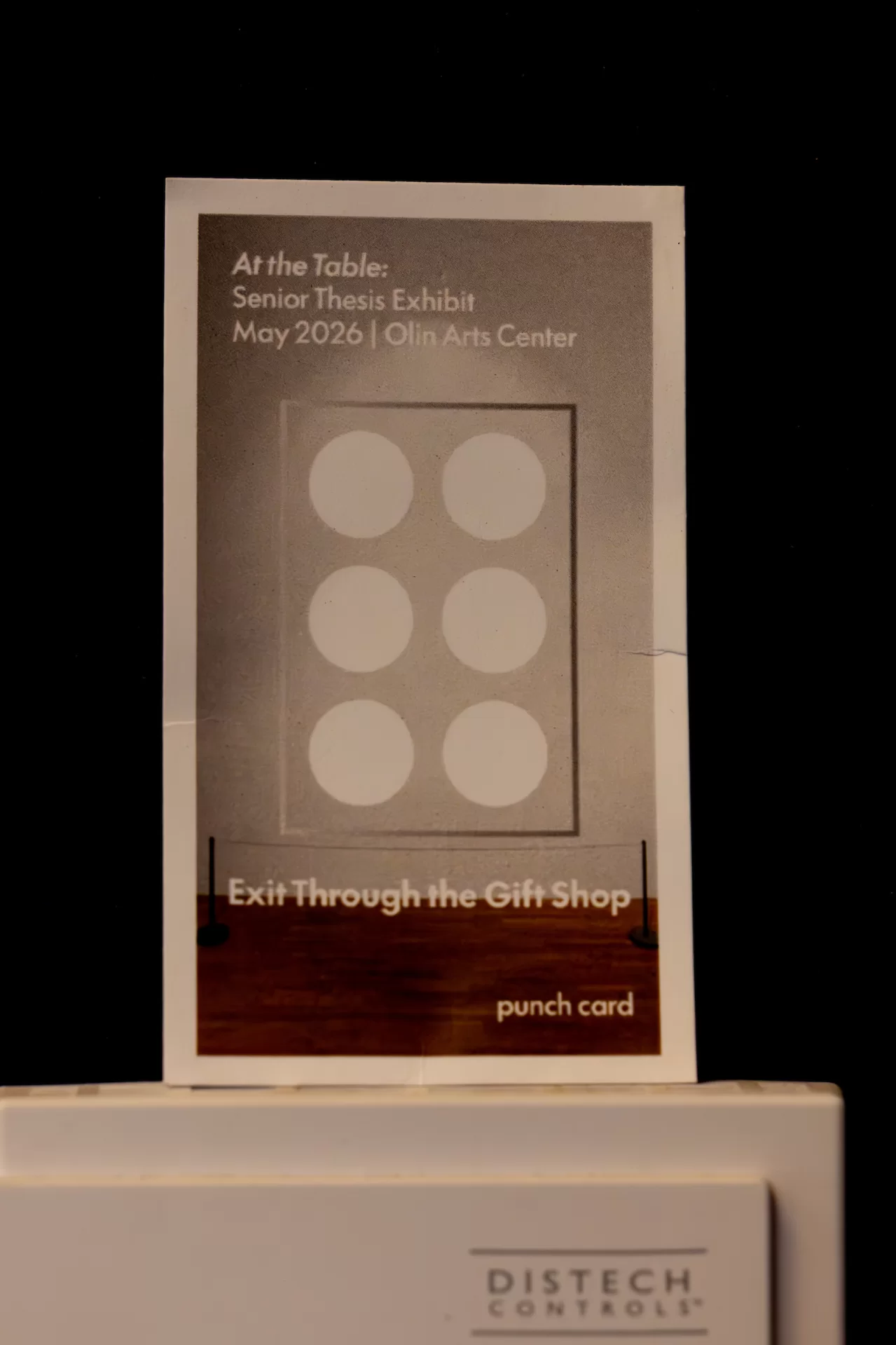
“I liked the idea of activating student work, especially living artists in the Bates community. To celebrate studio practice and the department’s studio was exciting, but it was also necessary to think about the responsibility and care that comes with dealing with student artwork,” Nolan said.
A lot of hands-on work would have to be done to make Nolan’s vision into a reality. Though “Exit Through the Gift Shop” was an art and visual culture course, she wanted it to function more like a scientific laboratory, where students leaned on knowledge gleaned from readings and classroom discussion to conduct successful experiments. The academic demographic of the class lent itself well to this; students represented three different class years and a variety of majors, including biology, psychology, music, physics, history, and theater.
Nolan spent months organizing the logistics of the course, and when Short Term began, she and her students hit the ground running. They visited the senior thesis exhibition, dove into texts on museums and gift shops, and brainstormed a flurry of products based on student artwork.
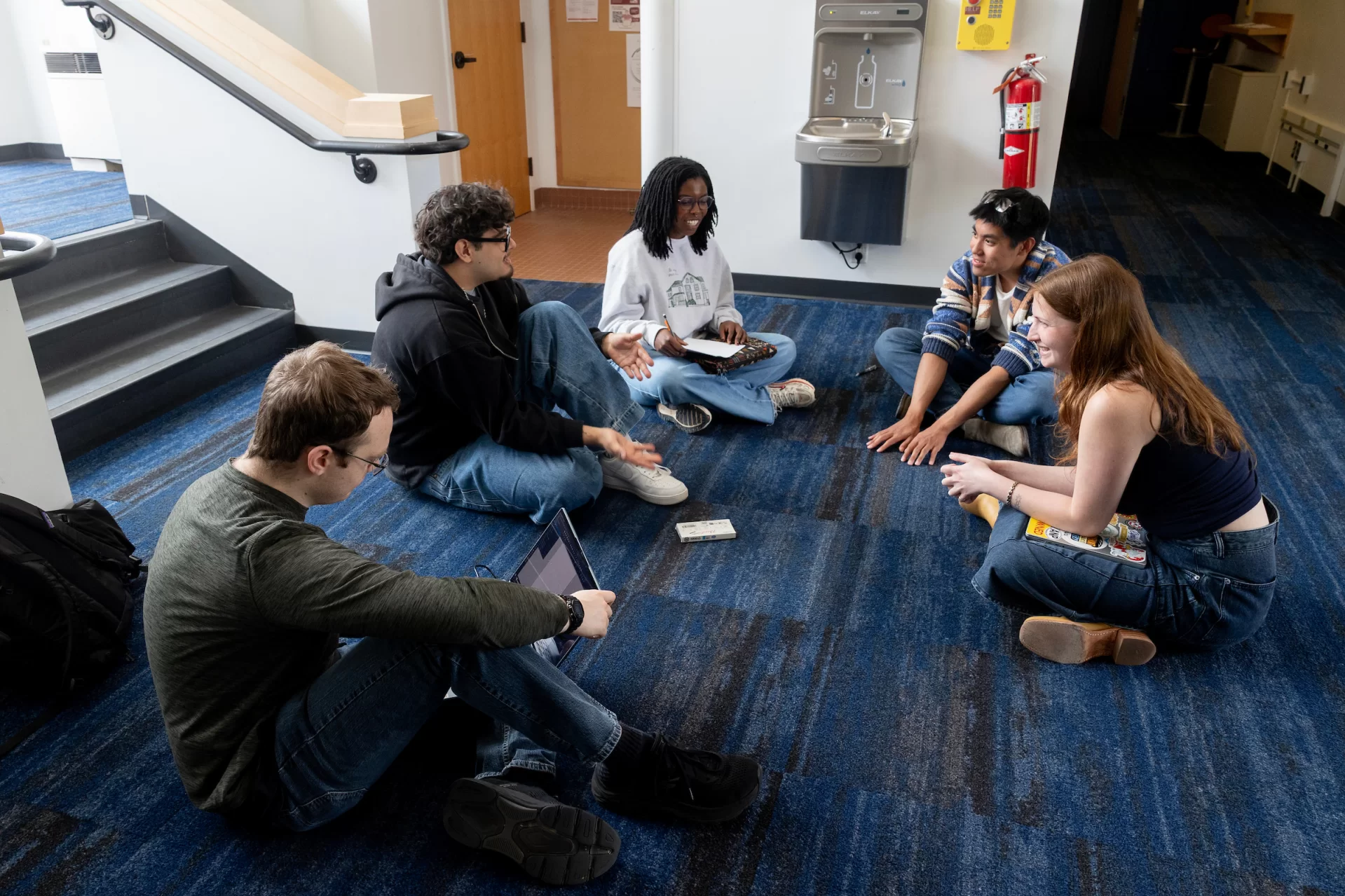
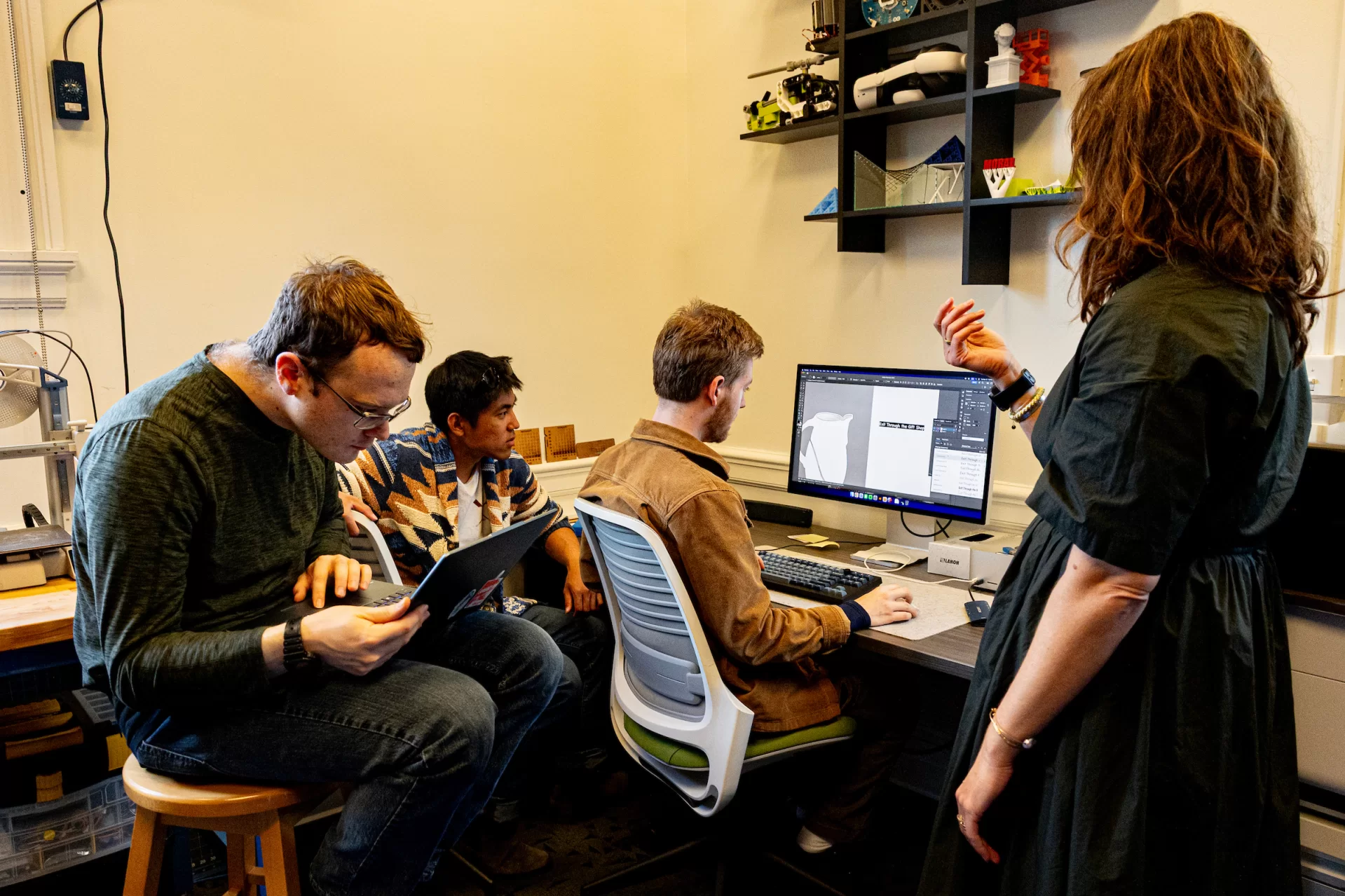
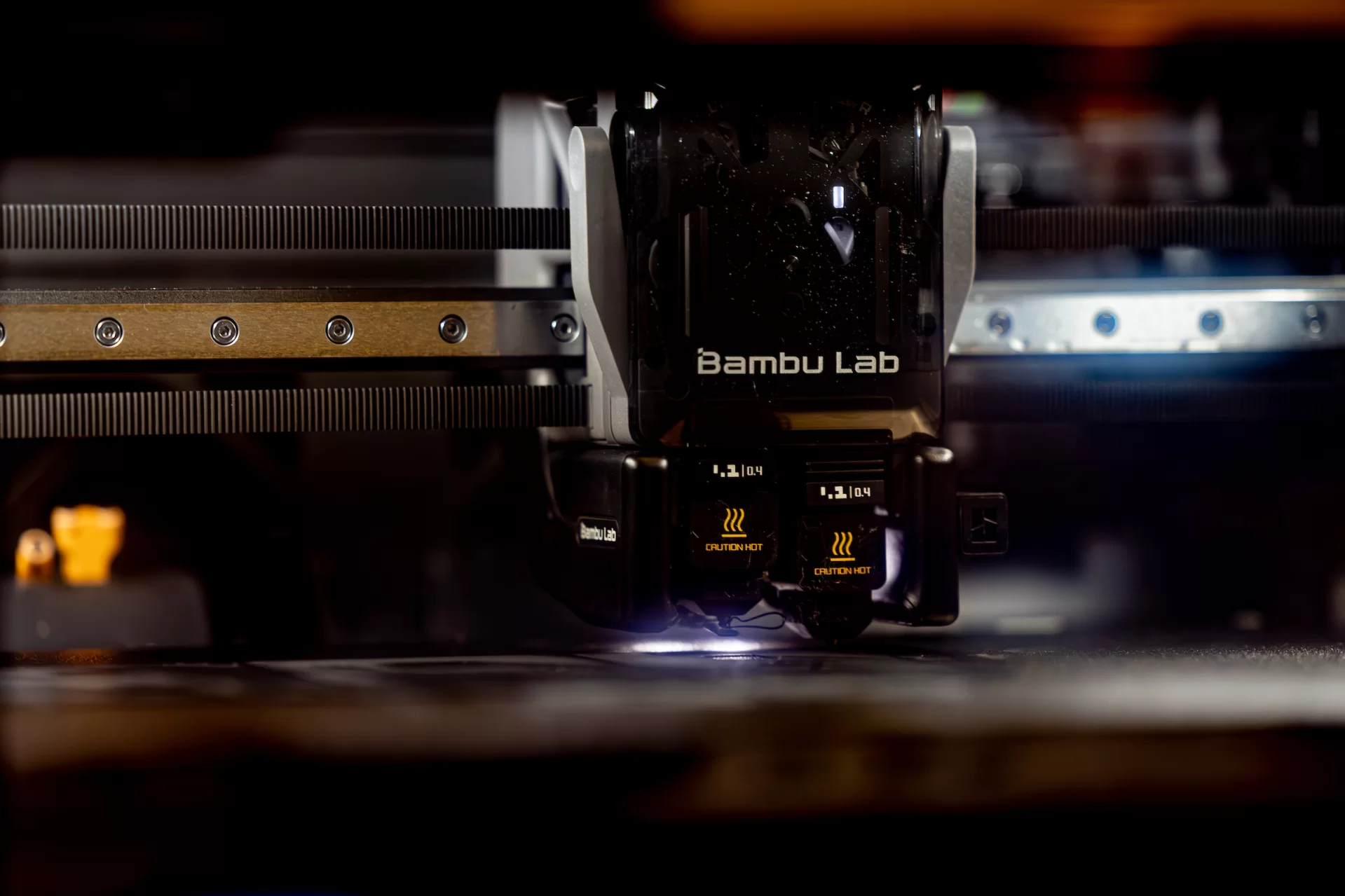
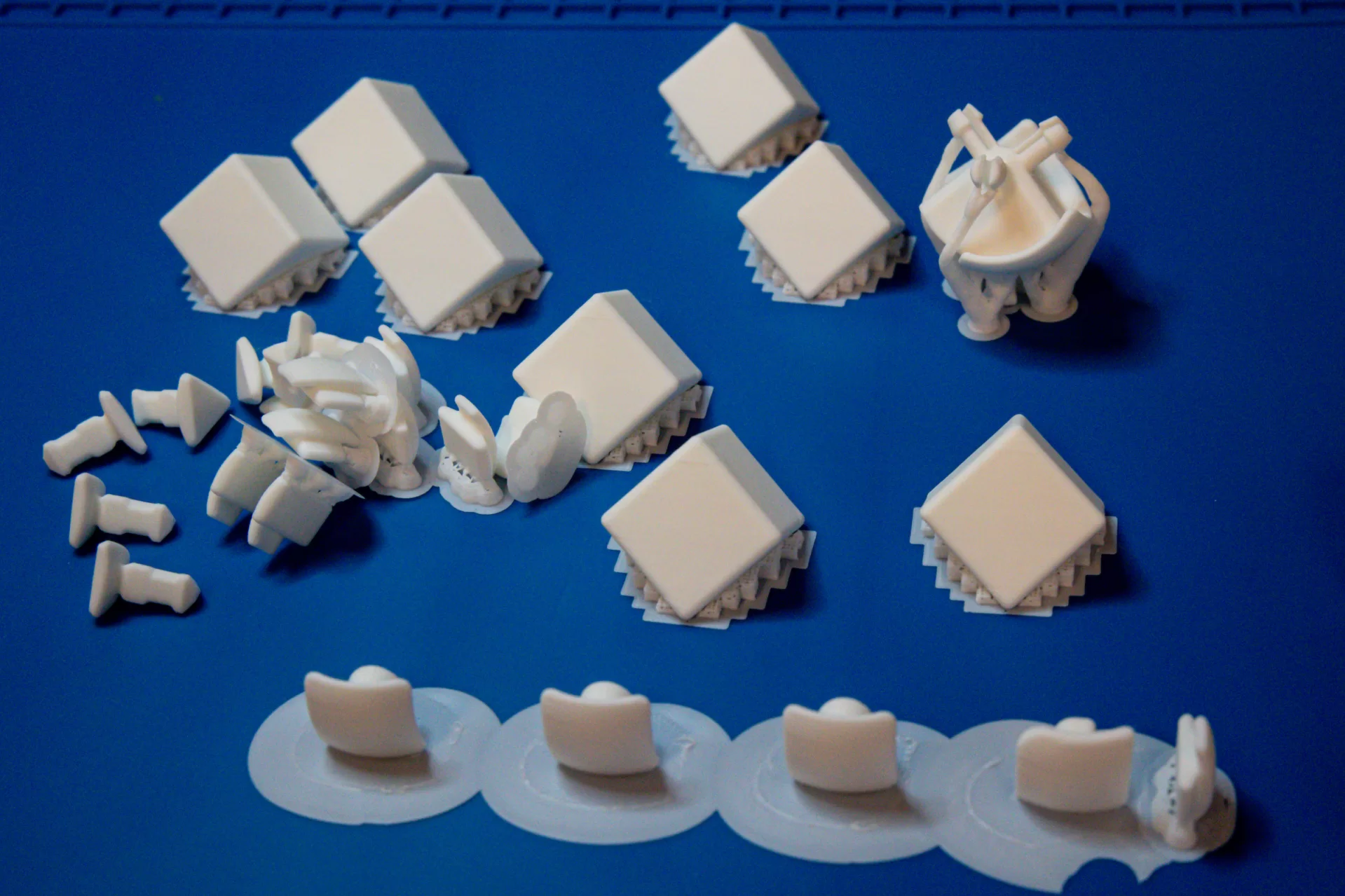
Then they headed to the VizLab, a makerspace in Coram Library with technology like 3D printing and laser cutting, to bring their ideas to life. The VizLab’s senior academic technology consultants, Branden Rush and Dale Rothenberg, supported their process, including helping students with computer-aided design and searching through online repositories for design templates. One of the VizLab’s goals, Rush said, is to be open and accessible to anyone on campus.
“A lot of times they’re surprised about what’s even possible. … Even if they did 3D printing in a different institution or in high school or something, these are ways of modifying and getting creative that weren’t possible before,” Rush said.
The VizLab frequently collaborates with clubs and courses, especially during Short Term. Those collaborations sometimes result in students, like VizLab student worker Evan Boxer-Cook ’26 of Scarborough, Maine, spending years developing their technical skills in the lab. A classical and medieval studies major, Boxer-Cook enrolled in “Exit Through the Gift Shop” because he is interested in pursuing museum studies as a career.
“This just seemed like a really nice opportunity to gain some practice translating museum objects into consumer goods,” Boxer-Cook said.
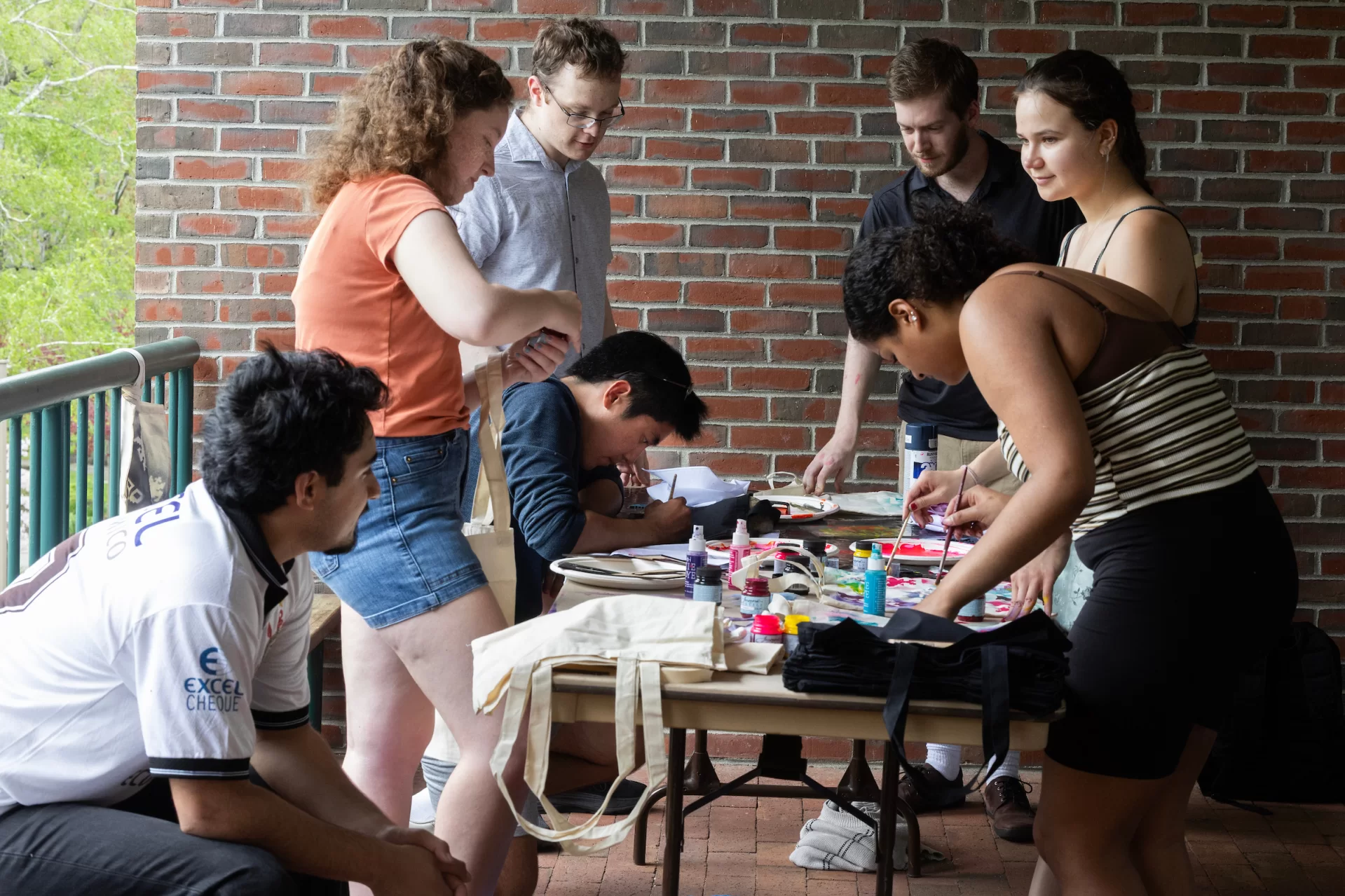
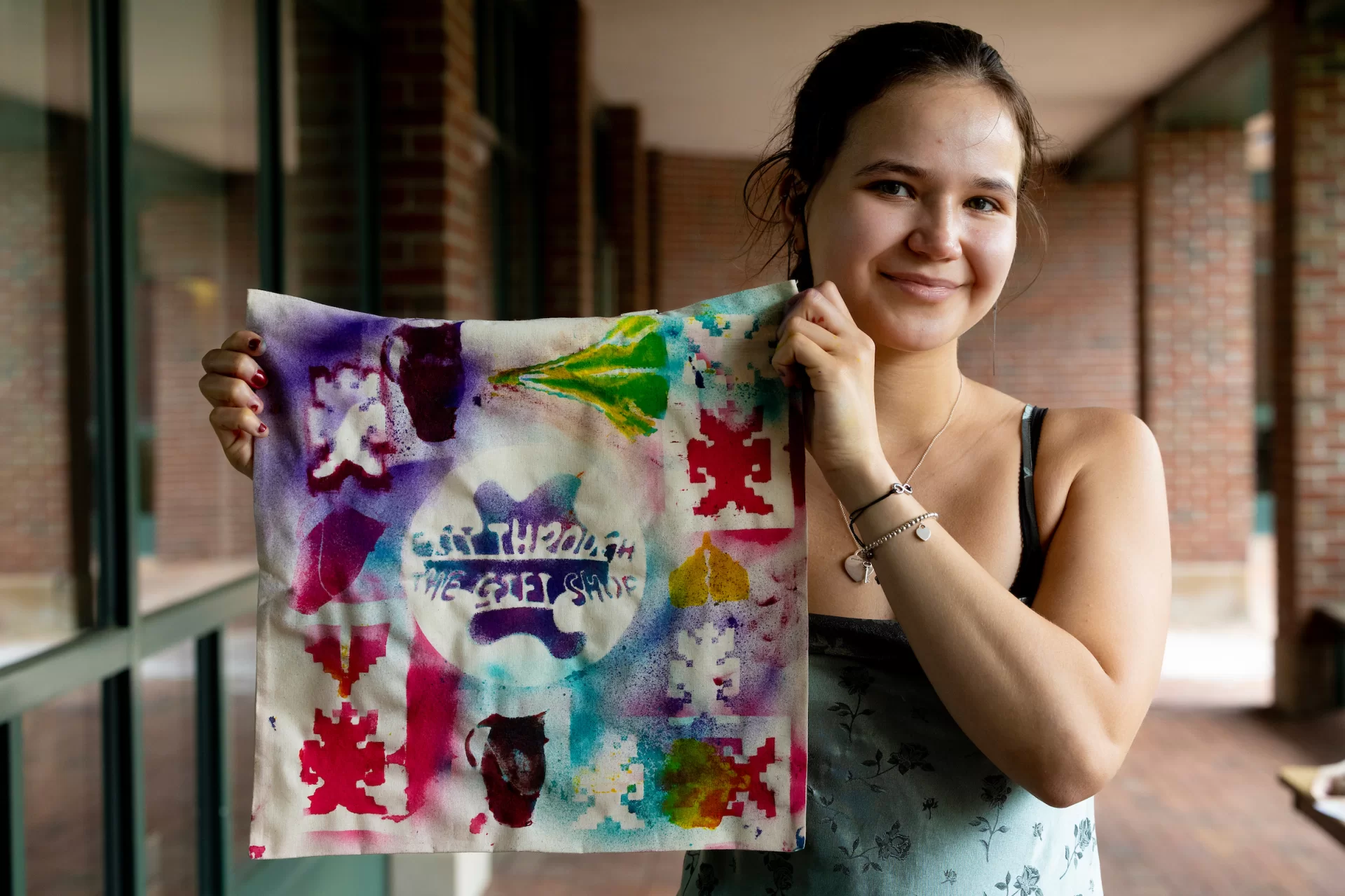
Perched in front of a computer in the back of a VizLab room filled with colorful 3D-printed objects, Boxer-Cook digitally traced the shape of ceramic works by Jeremy Felton ’26 of Sebastopol, Calif. He then laser-cut stencils of the shapes onto thin sheets of wood, which students later used to spray-paint designs onto tote bags.
For arts and visual culture major Audrey Esteves ’26 of Cranford, N.J., 3D printing and laser cutting were new skills, though she had taken several courses with Nolan.
“I love her classes so much,” Esteves said. “I think they’re so engaging and make you think critically about so many different parts of the art world and institutions and education.”
While Esteves was excited to explore the blending of digital technology with physical art, she was particularly looking forward to offering her perspective as one of two students in the course who also had artwork in the senior thesis exhibition — the other being Ella Hannaford ’26 of South Portland, Maine, who designed the gift shop punch cards.
“I wanted to see how we could develop mine and Ella’s objects and others’ into physical reproductions and see where that could stretch to because I’ve never really thought about that with my work,” Esteves said.
Esteves creates oil paintings inspired by ideas of sleep and rest, which are dark and subtly textured. She knew it would be difficult to reproduce them through 2D products such as posters. Instead, with Rush’s help, she 3D-printed a miniature replica of a room in one of her paintings, featuring a bed, table, and lamp.
Hannaford, a photographer, had previously 3D-printed with the VizLab for another art and visual culture course. She had an ambitious idea to create a 3D-printed stereoscope à la the classic View-Master with miniature prints of her senior thesis photographs inside.
“I’ve seen a lot of change in the time that I’ve been here in utilizing these spaces [like the Vizlab] for the purposes of art,” Hannaford said. “What can be created multiplies exponentially when you start thinking about the possibilities that are available to you in concert with these spaces. I think that it’s a really wonderful opportunity.”
The stereoscope would expand upon themes of viewership and tourism in Hannaford’s senior thesis photography, which, inspired by her childhood growing up in coastal Maine, features a metal viewfinder at Two Lights State Park in Cape Elizabeth.
Hannaford printed replicas of her photographs onto transparency paper and glued the paper onto a film sheet she laser cut. She worked with VizLab staff to find an online template for a 3D-printed stereoscope, which she then printed and manually glued together before placing the film sheet inside.
She wasn’t sure if it would work, but it did; she could place her face against the lens and, pushing the film sheet through the viewing device, watch her tiny photographs tick by. Hannaford ultimately printed six stereoscopes, which “sold” for the most expensive price on the table: 10 stamps.
“It made me feel excited about my own art again because I had been so close to it,” Hannaford said. “Then suddenly, I was having to relinquish some control and let it take on a new identity and a life of its own.”
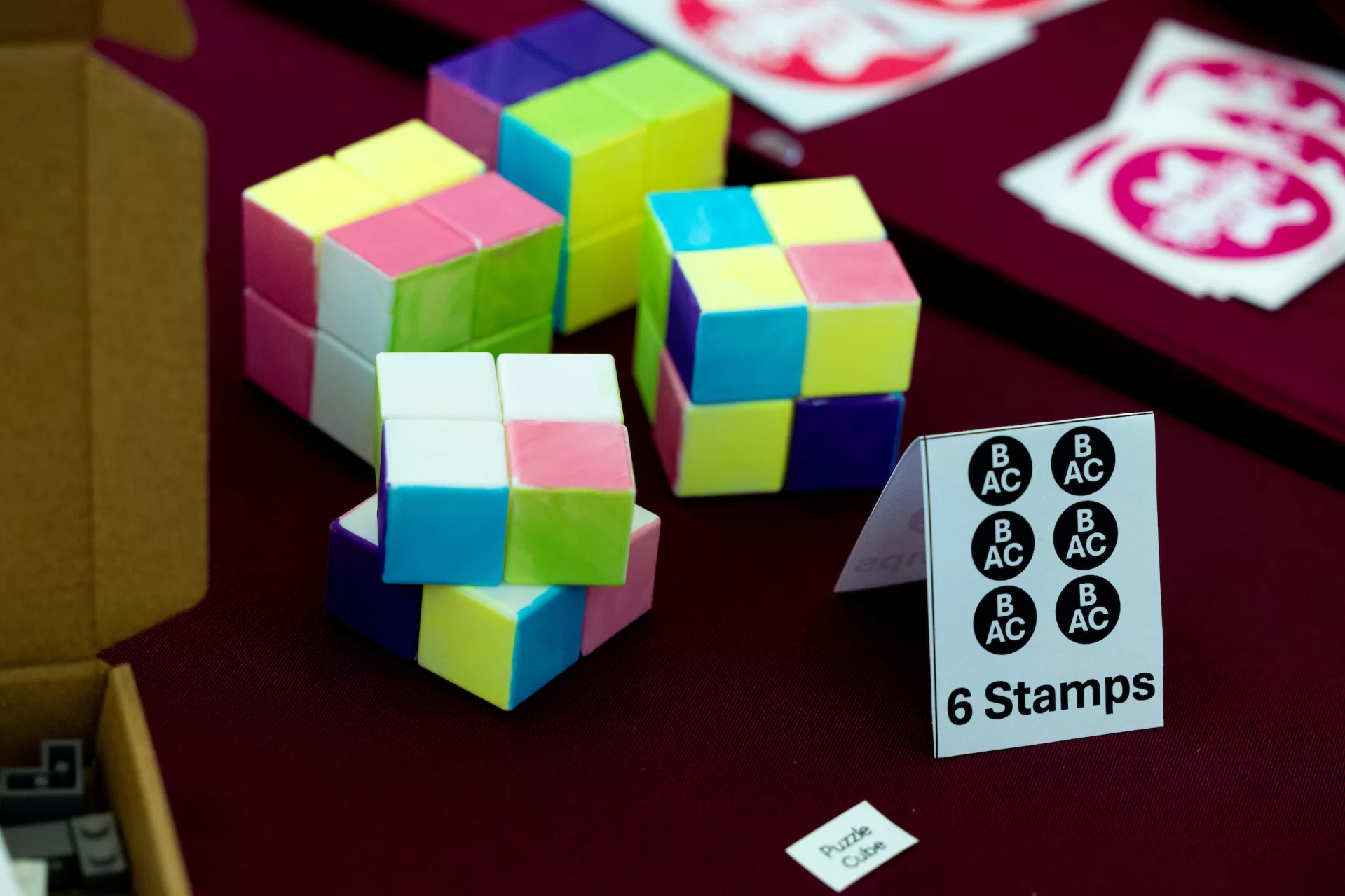
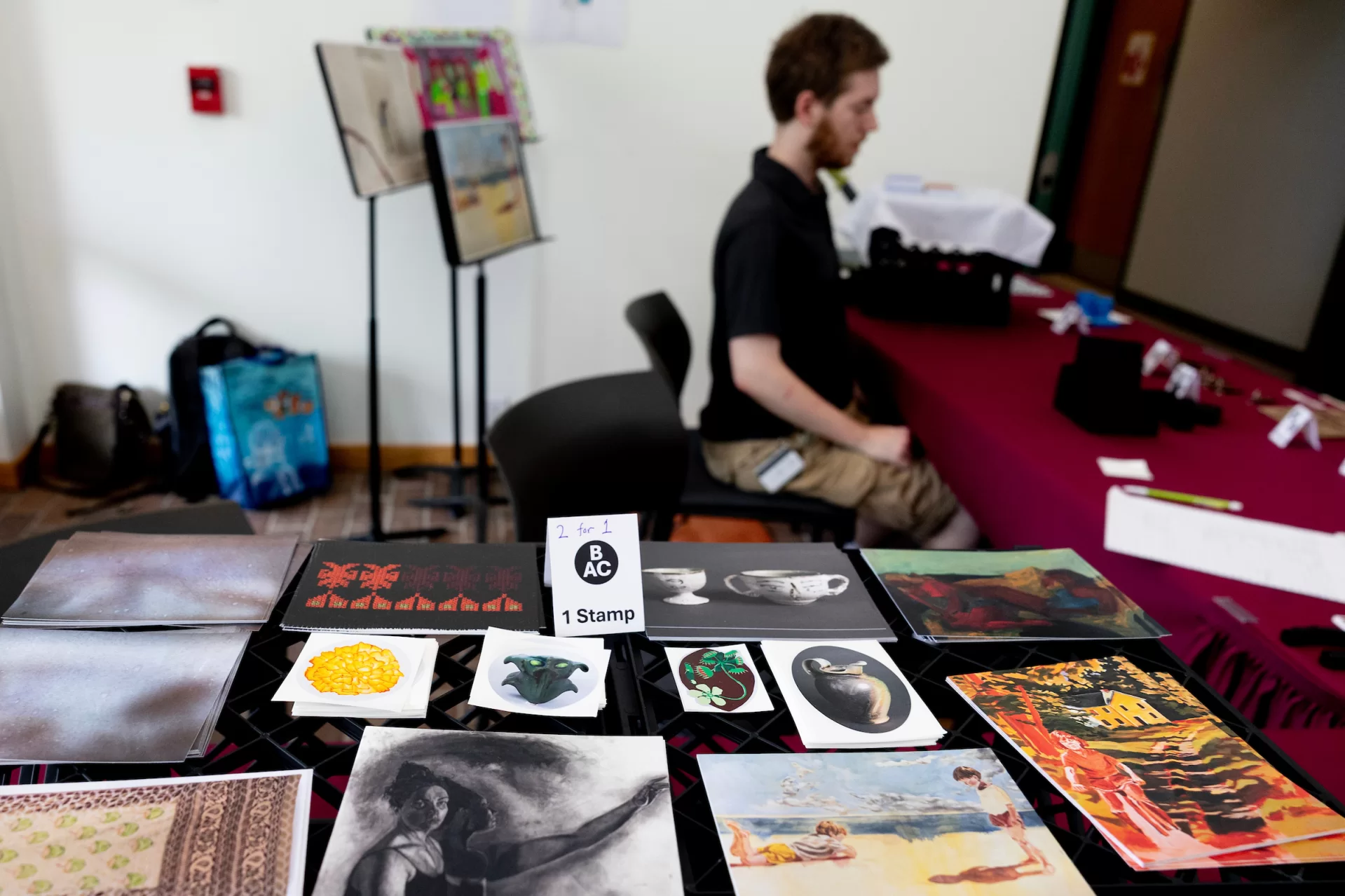
Other 3D-printed products included a Rubik’s-like cube with colors pulled from a tunnel book by Grace Thomas ’26 of Bethesda, Md.; kits to put together miniature chairs modeled after a piece by Qwynn Kobertz ’26 of Framingham, Mass.; and LEGO-style sets modeled after a vase by Jeremy Felton ’26. The gift shop also sold stickers, posters, and postcards of student artwork, printed on campus by Post and Print.
“I thought this was such an incredible opportunity that teaches so many different skills,” said Abby Salkind-Foraker ’29 of Washington, D.C. She designed a laser-cut wood puzzle based on an embroidered tapestry by Bissan Kablawi ’26 of London. “You’re getting three-and-a-half dedicated weeks to devote yourself to the creation of this and working with the team and studying art.”
Operating on a tight deadline, the students had to carefully divide their time, especially because certain products, like the LEGO-style kit, took upward of five hours to 3D print and required some trial-and-error. But the gift shop opened successfully on May 19 without encountering any major logistical problems, said Caroline McCarthy ’26, an English and Hispanic studies double major from New Haven, Conn.
“It’s honestly been a smashing success in that regard,” McCarthy said as she worked at the shop. “I also have been liking the wide range of attendees we’ve been getting. It has been students, staff, and faculty.”
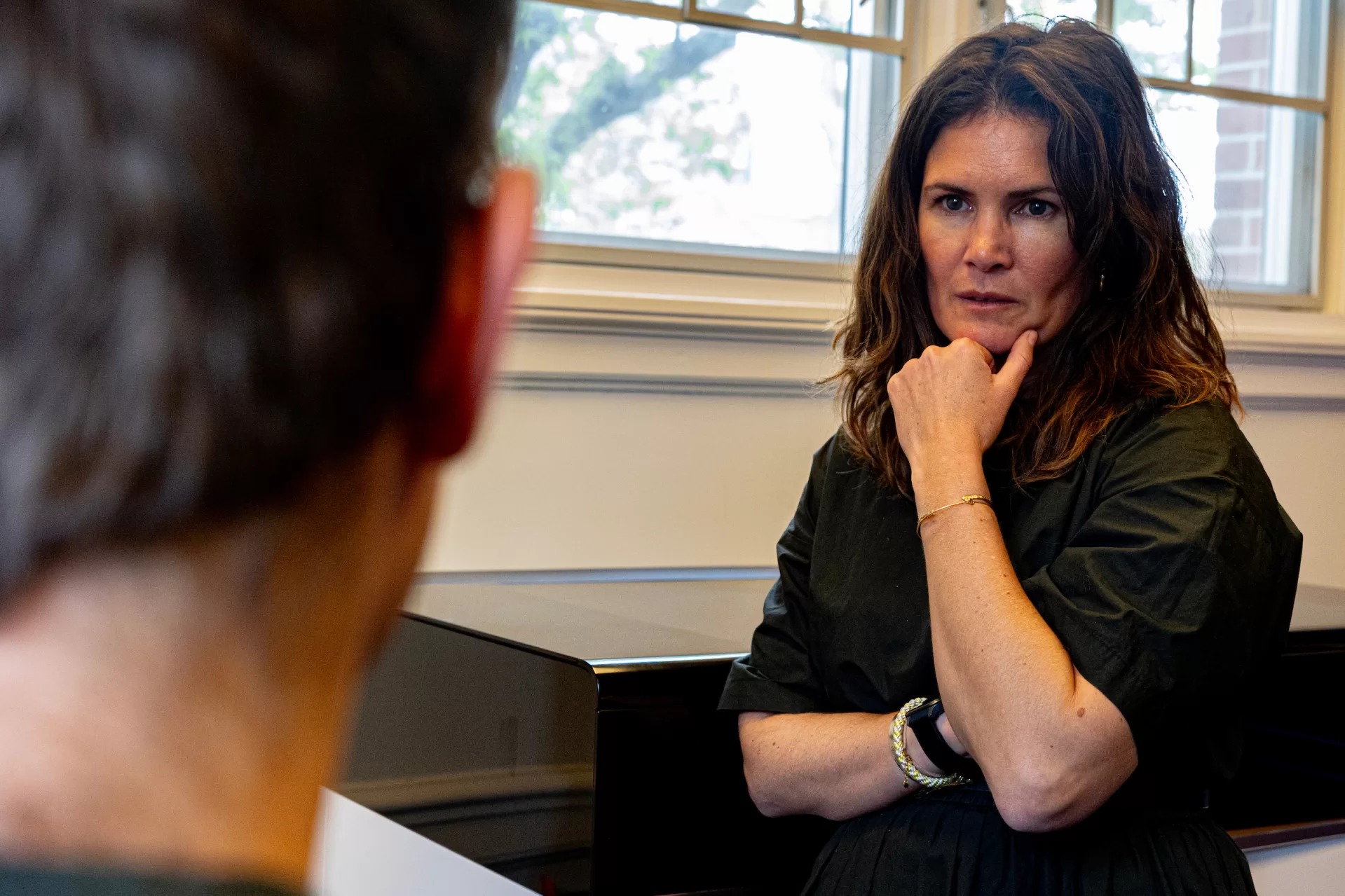
Students worked the gift shop in “shifts” with support from Nolan, who was always nearby to offer advice and support. Hoping to expand opportunities to connect with the senior thesis artwork, the students gave customers extra stamps if they arrived at the gift shop ready to share their thoughts on the exhibition. Making exhibition attendance the shop’s currency “was a genius move,” said Bates Museum of Art Director Carrie Cushman.
“Museums can have a reputation for being unwelcoming and stuffy, which is the opposite of the environment that we are hoping to cultivate at the Bates Museum,” Cushman said. “The students seemed to really understand the opportunity they had with this class to break down those barriers.”
The students were also in charge of publicity. They designed the mysterious, guerilla-style marketing campaign in the image of Banksy, known for sporadically creating public artwork under the cover of night. Students asked their Bates community members to show up for them, and they did, with friends like Whitney Moore ’28 of South Lake, Texas, stopping by to shop or spray paint a tote bag with the stencils designed by Boxer-Cook.
“I was super excited to see what they would come up with, and it definitely exceeded my expectations,” Moore said. “They have a lot of beautiful stuff here for sale.”
Nolan’s hope was that students would walk away with a new appreciation for what an art and visual culture course could be like. “This provided an alternative to a traditional course where students used the museum, the VizLab, and the campus, more broadly, as a classroom,” she said. “The experiential and immersive nature of the class, hopefully, allows students to think about their own experience as consumers in the world.”
The students agreed: this course had a little bit of everything, teaching lessons in design, interpreting art history, working with a museum, and more.
“I thought this was such an incredible opportunity that teaches so many different skills,” said Abby Salkind-Foraker ’29 of Washington, D.C. She designed a laser-cut wood puzzle based on an embroidered tapestry by Bissan Kablawi ’26 of London. “You’re getting three-and-a-half dedicated weeks to devote yourself to the creation of this and working with the team and studying art.”
For seniors in the course, designing the gift shop was their final hurrah at Bates. Hannaford — whose work as a photographer for the Portland Sea Dogs included an opportunity to photograph the Boston Red Sox — thought that the project was a fantastic blend of visual art and art history, her respective major and minor.
“This was the perfect way to wrap up my academic career at Bates and so cool too that I get to work with my own art and keep kind of interrogating it on so many levels,” Hannaford said. “I’m continuing to think about it and think of ways to work with it, which I think will serve me really well even after I graduate.”
Faculty Featured
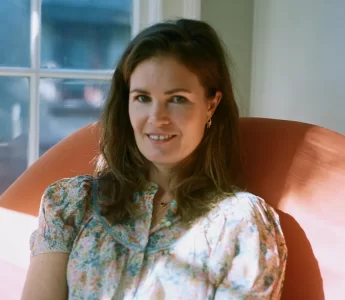
Erin H. Nolan
Visiting Assistant Professor of Art and Visual Culture
Categories BatesNews