A shorter version of this story about Jack Sapoch ’18 was published in Bates Magazine’s Spring 2026 issue.
From the dozens of TikTok videos Jack Sapoch ’18 has open on his laptop at any time, one might think he’s doomscrolling or goofing off. But he’s actually looking very closely for clues — scrutinizing the clothes people are wearing, where they’re filming, who they’re talking to. For Sapoch, an open source digital investigator with Lighthouse Reports, these details represent enormous stakes.
Sapoch uses free, public resources on the internet — like social media, government publications, and satellite imagery — to investigate human rights violations and other crises, with the goal of aiding people affected by bringing awareness to their circumstances.
“What we’re trying to bring to every investigation is this very analytical approach at verifying what it is that we’re seeing,” Sapoch said.
Sapoch has analyzed everything from drownings in the Rio Grande River to the Kutum Massacre in Sudan to the Jan. 6 insurrection at the Capitol. One of his projects involved analyzing 3D animations shared by the Israeli Defense Forces during the war between Israel and Gaza. Sapoch and his colleagues found that the IDF was incorporating pre-existing graphics pulled from the Scottish Maritime Museum, online 3D art, and online marketplaces for digital assets, among other sources, into their animations to legitimize them. In animations of underground missile factories in Syria and Iran, for example, investigators discovered images of workbenches, cabinets, and an electricity box from the Scottish Maritime Museum.
“It’s important and serious, but in other ways absurd,” Sapoch said.
The IDF’s animations are often used in international reporting and might be taken as direct depictions of real events and places.
“It inherently lends this feeling of reality and truthfulness to it — this legitimizing voice,” Sapoch said.
In uncovering the origins of the animations, Sapoch’s investigation prompted larger questions about how anyone can trust what they see — even materials distributed by governmental bodies — in an age where digital editing and artificial intelligence loom large. Sapoch publicized the investigation on X, where the post reached over two million people.
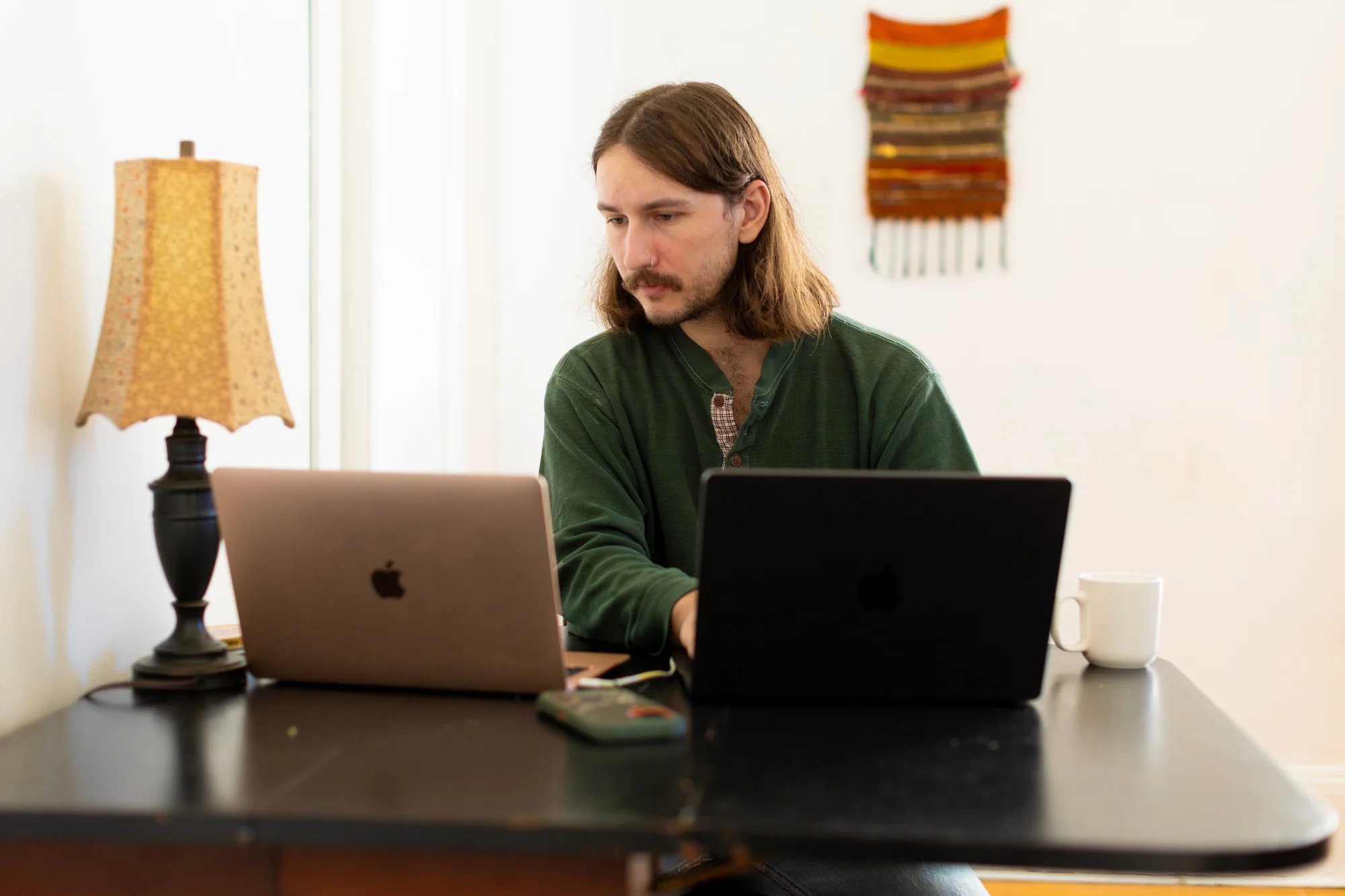
Open source digital detective work can have big impacts, including on its practitioners, and it’s a field that many people don’t even know exists — because Sapoch isn’t quite a reporter, nor a detective, nor a lawyer. His role combines elements of those three professions and then some, to end up with a job that’s a bit like being a private eye for humanity.
“It’s relatively emergent within the field of journalism in the last 10 years or so,” Sapoch said. “A lot of the most well-respected practitioners are self-taught like myself.”
A few serendipitous opportunities helped lead Sapoch down this unusual path. He first became seriously interested in studying human rights and migration while taking “Comparative Politics of Latin America” with Professor of Politics Clarisa Pérez-Armendáriz. She was one of those “people who I really felt a connection with and who I felt like could see something in me that I couldn’t necessarily see in myself at the time,” Sapoch remembered.
Sapoch worked as Pérez-Armendáriz’s research assistant for a year on a project about the dynamics of migration. Then, as he got to know his advisor Jim Richter, recently retired professor of politics, Sapoch became increasingly interested in the Balkans and the former Yugoslavia, Richter’s area of expertise. This interest led Sapoch to study in Belgrade, Serbia, for a semester with the School for International Training. There, he met a friend at a climbing gym who introduced Sapoch to No Name Kitchen, a grassroots movement and nonprofit organization that supports people who are migrating due to conflict, discrimination, and poverty.
Sapoch began volunteering with the group, cooking hot food for migrants. As he would learn, the Balkans were home to a major migration pathway, and many migrants crossing through the region faced serious harm or death at the hands of state authorities. In Croatia, police officers were accused of what are called violent pushbacks, defined by the European Center for Constitutional and Human Rights as “forcing refugees and migrants out of their territory while obstructing access to applicable legal and procedural frameworks.”
Returning to Bates after study abroad and fascinated by the complicated dynamics of border politics, Sapoch earned a Barlow thesis research grant to return to Serbia during his senior year.
“This ended up being a super transformative experience, “Sapoch said. “I got super lost in it.”
After graduation, Sapoch went back to work at No Name Kitchen and stayed in Serbia for three years. His role began with hands-on humanitarian work, connecting migrants and refugees with resources, but evolved to focus on outreach as Sapoch became increasingly determined to raise awareness of the humanitarian crises he was witnessing.
“At the time, there were so many questions and denials from the state government who were engaged in this behavior,” Sapoch said.
Sapoch organized a network of grassroots organizations similar to No Name Kitchen throughout the Balkans and compiled testimonials from migrants to send out as monthly reports to his peer organizations. Sapoch was dedicated to getting to know the people he was collecting testimonials from and improving his language skills, a crucial component in connecting with people.
“So many people, especially if they’ve talked to reporters, are so burnt out of this idea of somebody trying to extract something from them,” Sapoch said. “It’s really important to form human connections with people before you’re asking them to go to a super dark place.”
When the Croatian government continued denying their involvement in the violent deportations, Sapoch began more deeply investigating humanitarian crimes in the region. Turning to images captured for Google Earth and social media accounts run by Croatian police officers, Sapoch uncovered evidence of border violence, including video of a migrant man who was whipped and thrown into a river by police officers. As a result of that investigation, the man is pursuing justice against Croatian officials before the UN’s Human Rights Committee.
Sapoch developed a reputation as an expert on migration in the Balkans, and media requests turned into opportunities for freelance journalism and investigative work. He was torn between pursuing a career in investigations or continuing to work in direct humanitarian aid.
“Purposeful work is something that you think about at Bates so much,” Sapoch said. “I knew that there were certain impacts that I could have by continuing this work and this grassroots advocacy support field. I also really felt like there were specific impacts that I could provide through this other pathway of investigations and research that were maybe, in some ways, more impactful or punchy.”
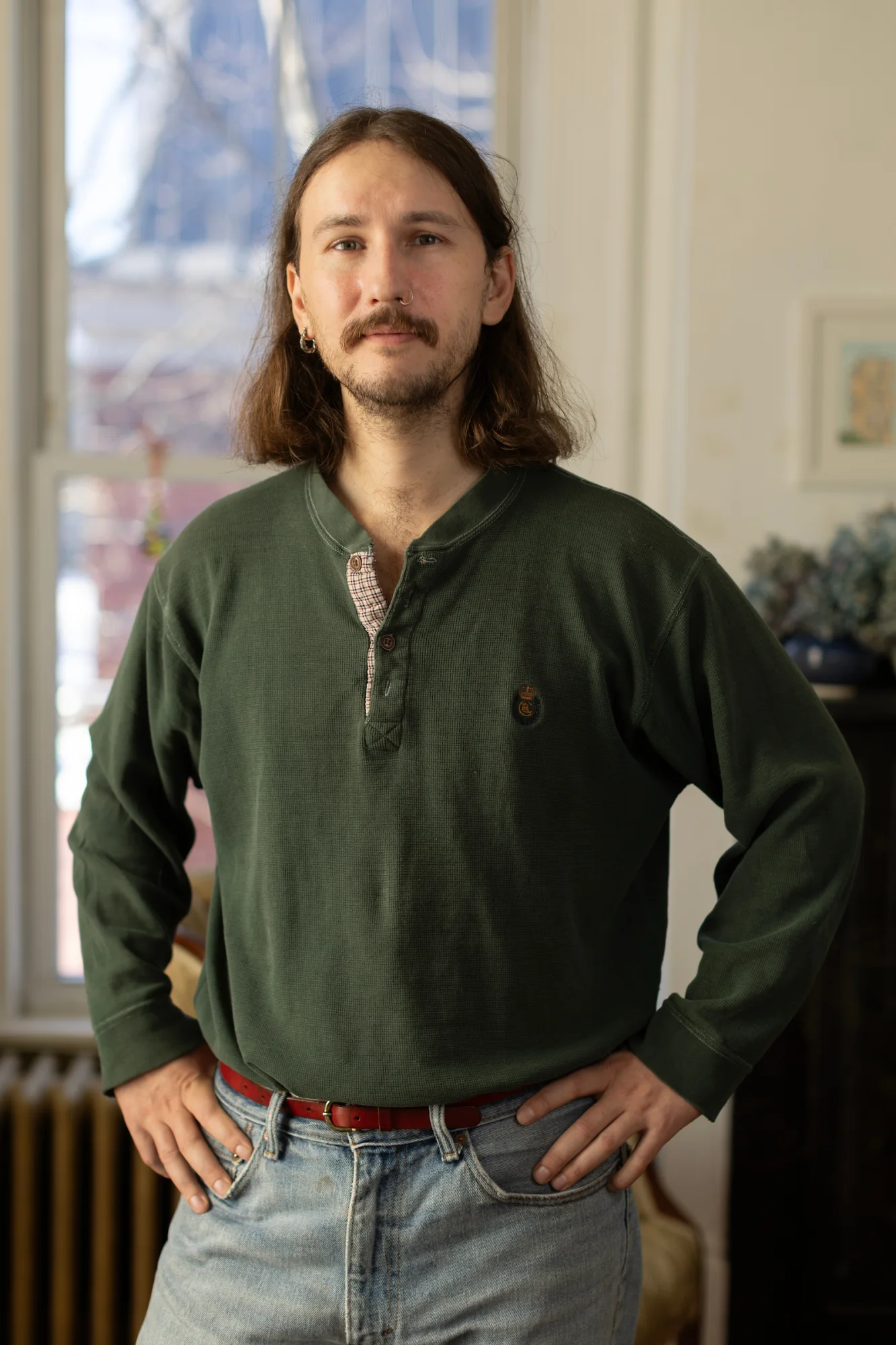
Sapoch relocated to New York City, earning a master’s degree in human rights and humanitarian policy from Columbia University, then going on to be a full-time open source investigative reporter with Lighthouse Reports, where he had previously freelanced. Lighthouse is not a publication outlet; instead, the group collaborates with publication partners to conduct investigative work and share their results. Results of Sapoch’s investigations have been published in outlets including The Washington Post, Le Monde, and Der Spiegel.
Sapoch compiles the results of his investigations into written and visual reports that often include intricate, 3D recreations of events or places, which Sapoch taught himself how to create online. While investigating, Sapoch follows the Berkeley Protocol outlining the professional standards for online open source investigations, developed by the UC Berkeley Human Rights Center and the United Nations Office of the High Commissioner for Human Rights.
The Bates liberal arts curriculum prepared Sapoch well for working at the intersection of politics, journalism, research, and design, he said.
“Certainly in the sense of being comfortable working in a multidisciplinary environment, I think that this background at Bates was so important for this work,” Sapoch said.
Through its investigations, Lighthouse Reports has a goal of making positive change and staying engaged with the communities it covers. Though it can take years to see change through legal efforts, investigations can also spur improvements through other avenues, Sapoch explained. After the investigation about the man who was whipped by Croatian officials was published, a leaked email from the Croatian Ministry of the Interior confirmed that the government had seen the investigation and would be changing the way they handled deportations as a result. While violent deportations didn’t entirely stop, Sapoch’s team did confirm that the frequency and severity of violence had decreased.
“I mean, that is a real purpose, to change the amount of violence that somebody receives onto their body,” Sapoch said.
But doing this work takes a mental toll. Sapoch often analyzes violent and disturbing videos, watching them over and over again looking for clues. The audio of people being hurt is the most difficult for him to engage with, and he turns the sound off whenever possible.
“If you’re hearing some scream over and over, that’s really something that can stick with you,” Sapoch said.
Investigators and reporters who frequently handle disturbing material may experience second-hand trauma, as Sapoch learned during a training about trauma-informing reporting by Columbia’s former Dart Center for Journalism and Trauma. Thinking back on the person he was when he graduated from Bates, Sapoch sees how, in certain respects, he has become a more serious person. “My demeanor has changed since working on these topics,” he said.
But despite the personal consequences of his job, the work is still worth it to Sapoch. “Being able to look back on some of these works and see tangible change,” Sapoch said, “it’s something I can be really proud of.”
Faculty Featured
Clarisa Pérez-Armendáriz
Professor of Politics