Every other week, an open space in the Student Center for Community and Belonging (SCBC) used by students for studying, gaming, and just spending time together transforms. Furniture is repositioned. Speakers are connected and music plays. Ring lights are placed. On the windowsills, light filters through containers filled with Barbasol and combs. Barber chairs are wheeled into their spots. For a few hours, the SCBC becomes a barbershop.
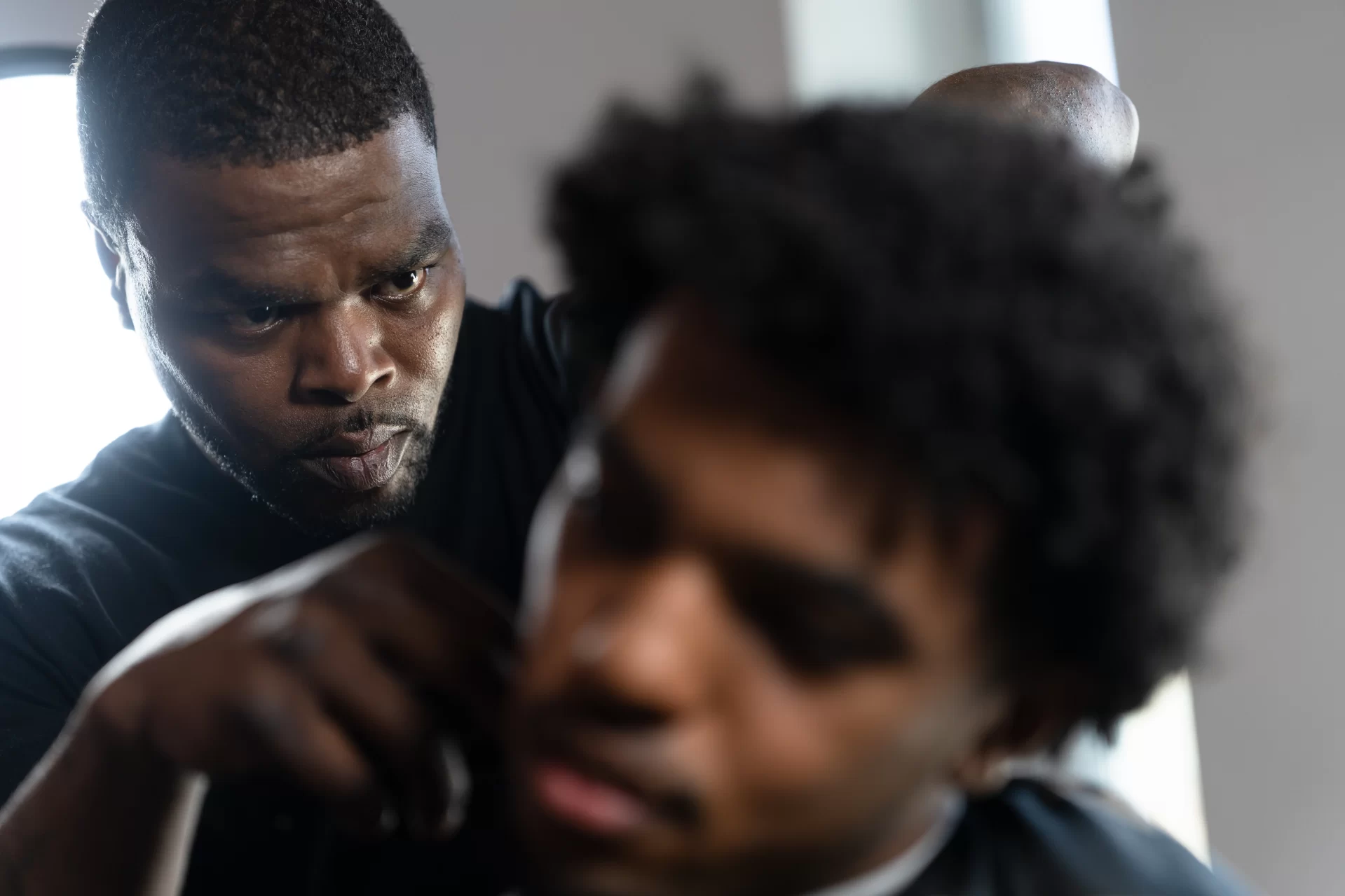
Faded Lines, as the program is known, emerged from need and evolved out of desire. Tonya Bailey, associate dean and director of the SCBC, knows that a trip to the barbershop is about more than a trim.
“Men in my family have always gone to a barbershop every Saturday, but they spend all day there,” Bailey said. “It’s not just because they’re getting a haircut, it’s because they’re in community there.”
A hairstylist or barber can be hard to find in any new place. Those who come to Bates for Faded Lines specialize in ethnic hair, filling an important need for many Bates students.
“We are literally able to witness students relaxing their shoulders as they sit in the chair,” Bailey said. “Seeing a barber that looks like you, can make you feel safer and trust that you will get a cut that feels familiar and makes you feel confident. And if something that small can make that big of a difference, then I think that we’re doing good work.”
As accepted students are visiting campus to finalize their choices, Assistant Director of LGBTQ+ Programs Anthony Del Real has noticed that Faded Lines stands out as a program to facilitate that belonging. He talked with students at Bates Beginnings, a program for admitted students held on days in March and April, where the barbers and stylists seemed to be a highlight for several prospective students.
“A lot of people are not so used to having that as an accessible thing on campus,” Del Real said, “so they were really surprised and excited to learn about Faded Lines.”
It can be difficult to manage tasks like getting a haircut while juggling classwork, activities and campus jobs. Having the haircut come to you eases that stress. Students pop in for a trim or come with friends ready to try out a whole new style. The barbers and stylists are available for all students, regardless of identity or need.
Bailey, who also worked as a stylist, understands that these students are looking for more than a haircut when they walk into the SCBC on Faded Lines days.
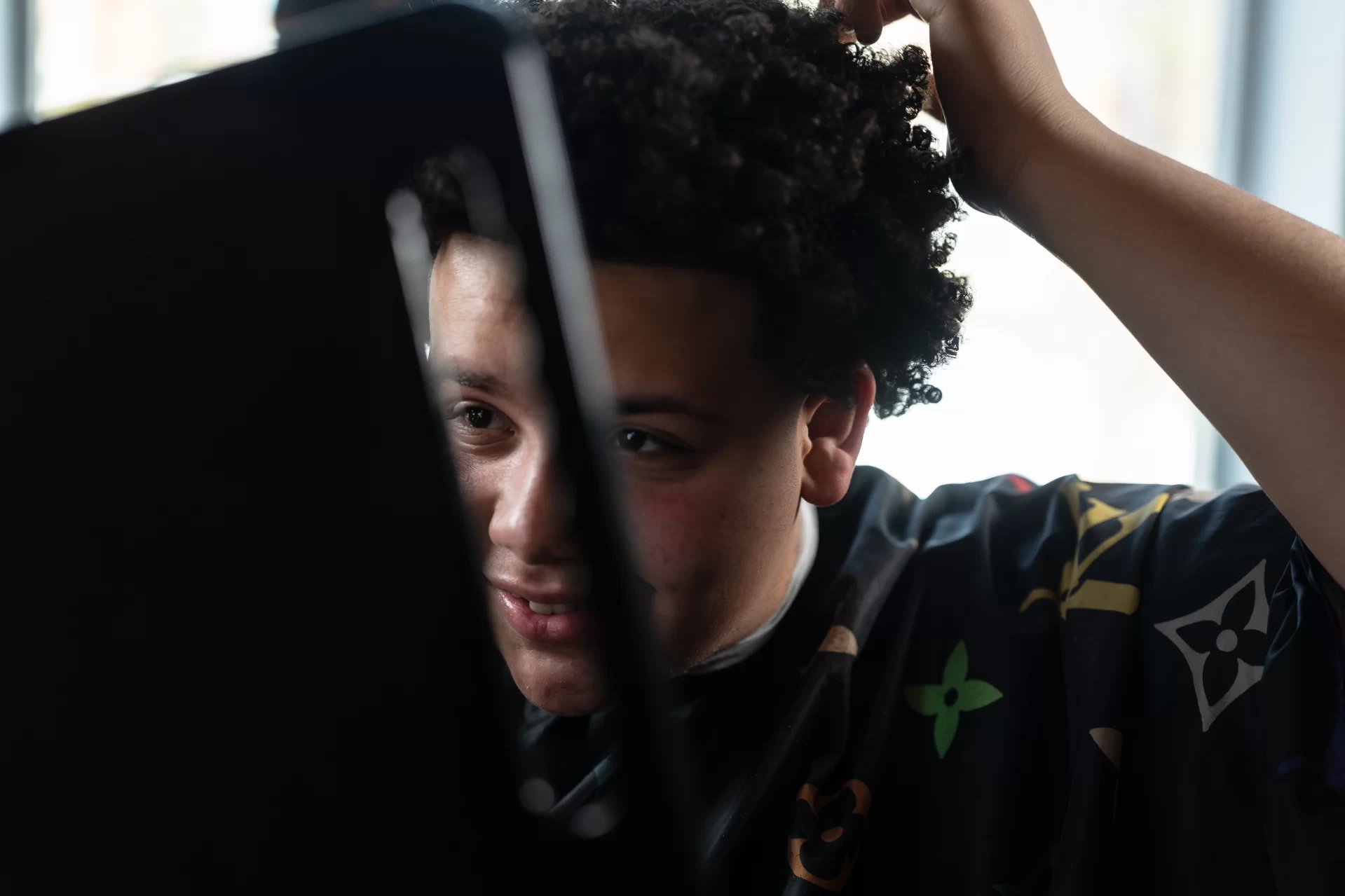
“Folks tend to ask me how we are able to have a space that truly is for everyone with so many moving parts. And hair care is just central to that for many cultures, but I think speaking really culturally, for Black and brown communities, hair has always been an area of expression. And when you are surrounded by folks that may not look and express themselves in the way that you do, and then you don’t see yourself when you look in the mirror, it is hard to feel that you belong in that environment. So when we think about identity, we think about how closely we can help you feel that you are all of who you are. And part of that is how you visually present.”
When Mekkawy Mohamed ’29 of Alexandria, Egypt, came to Bates, it wasn’t long before he gravitated toward the SCBC. “I met my best friends here at Bates in the SCBC. It’s a place that makes you feel at home. I told my mom, ‘There’s a place that you can go play games, relax, read, study, and just be with your friends.’ As an international student, I was really surprised to learn how hard it was to get basic things done here in the U.S.” Basic things, he said, like “just getting a haircut.” Mohamed couldn’t believe that Bates had thought of that.
“An inclusive environment,” Mohamed said, “means that everyone is welcome and that people have thought about ways to welcome them without students having to tell them what they need. Somebody actually thought about stuff like that before we asked. They thought about us.”
Part of the beauty of the project is the community that is forming beyond the chair. Students are building relationships and extending their circles beyond Bates. Kenny “Free” Scales is one of the two barbers who offers haircuts on these packed days. An independent barber, he has been working in the field for 21 years. He keeps showing up because he sees that he is meeting a need.
“It’s a great program,” Scales said. “I was in Maine when they didn’t have Black barbers or Black barbershops. I know what it feels like to need something.”
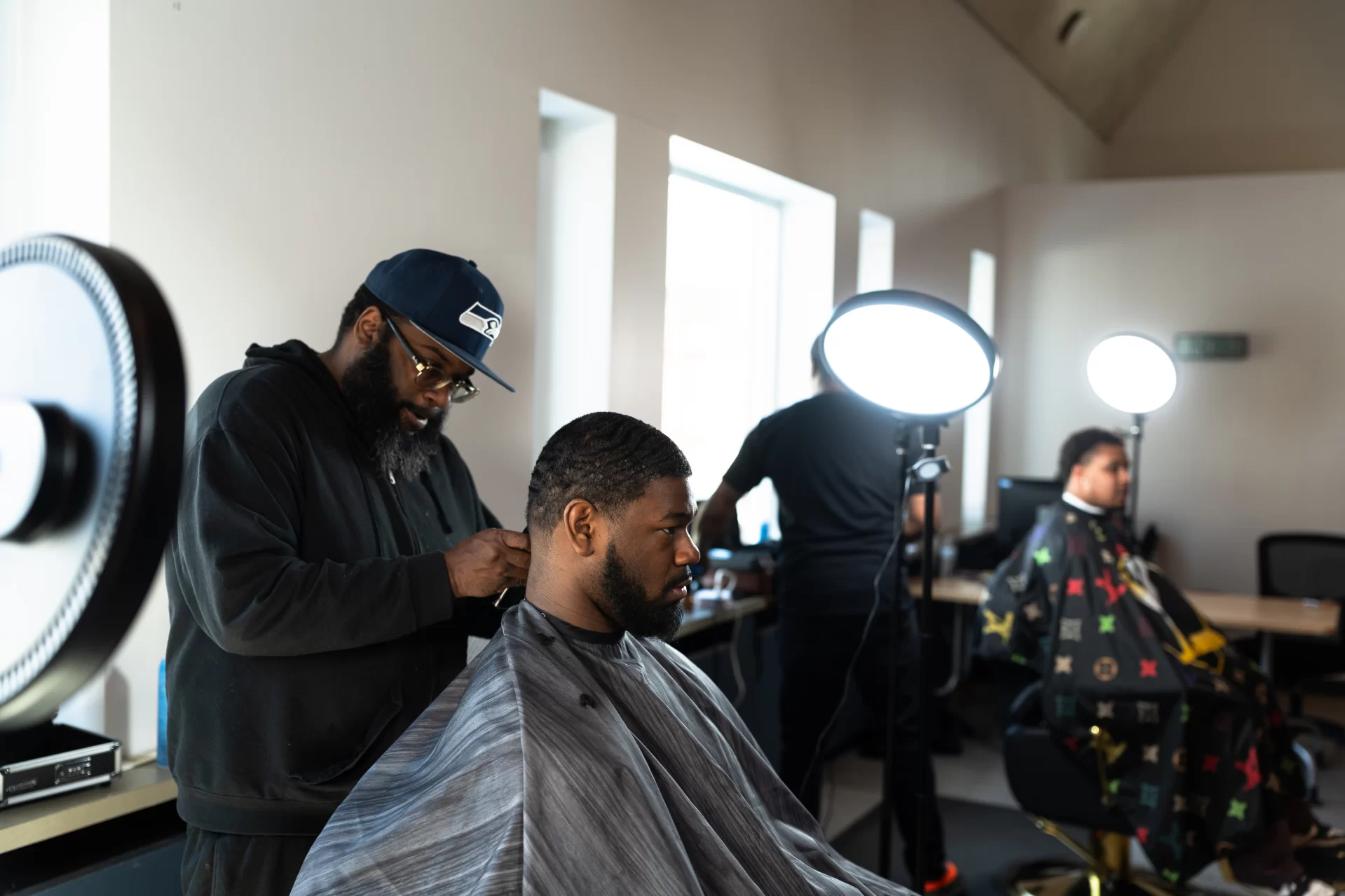
The second barber who is also crucial to the success of Faded Lines is Tyrone “Rome” Jones, who understands giving haircuts as a way of “giving back to the students who can’t go back home. The look on their faces when they leave the chair — that’s the best feeling,” he said. Jones has been working for six years as an independent barber.
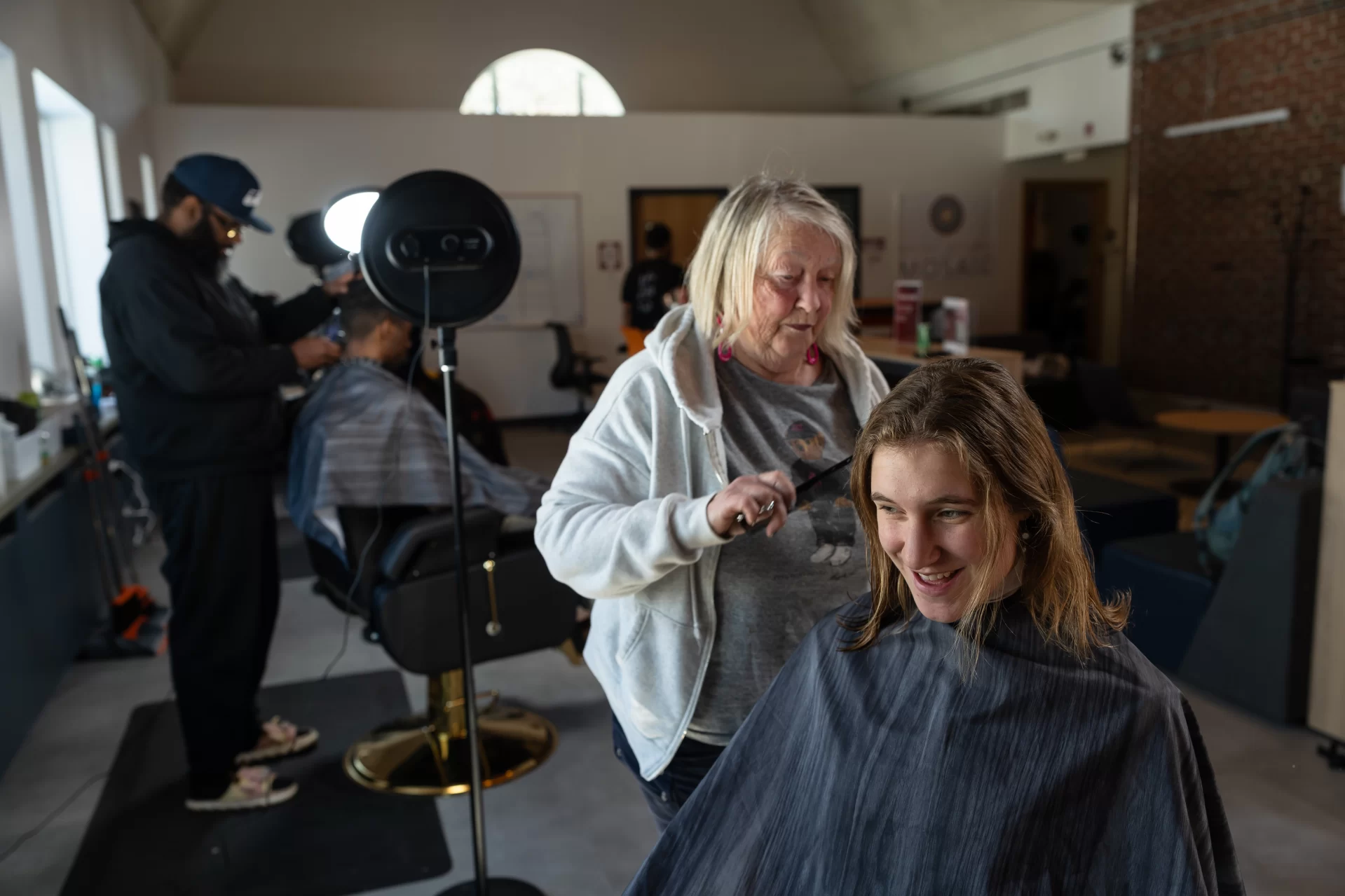
Scales and Jones work with clippers, and although they are fully-booked, they still try to make space for students who walk in. Cindy Storer-Blazer, who owns Taboo Hair Design in Lewiston and has been a stylist for 40 years, uses shears for her cuts.
Collectively, the two barbers and the stylist give about 50 haircuts every two weeks. What’s unique at Faded Lines is the collaboration that sometimes happens between these three.
“They’re not in competition with one another at all and they just really value the fact that what they’re doing is so appreciated by who they’re doing it for,” Bailey said. Even at Bates, collaboration from campus partners enables the work. This program has been jointly sponsored by the Office of Equity and Inclusion, the Center for Purposeful Work, Campus Life, the Office of Residence Life, and the Center for Global Education. “It’s about a collective ownership of the purpose. And to me, that’s the quintessential part of the program. And why it needs to be widespread.”
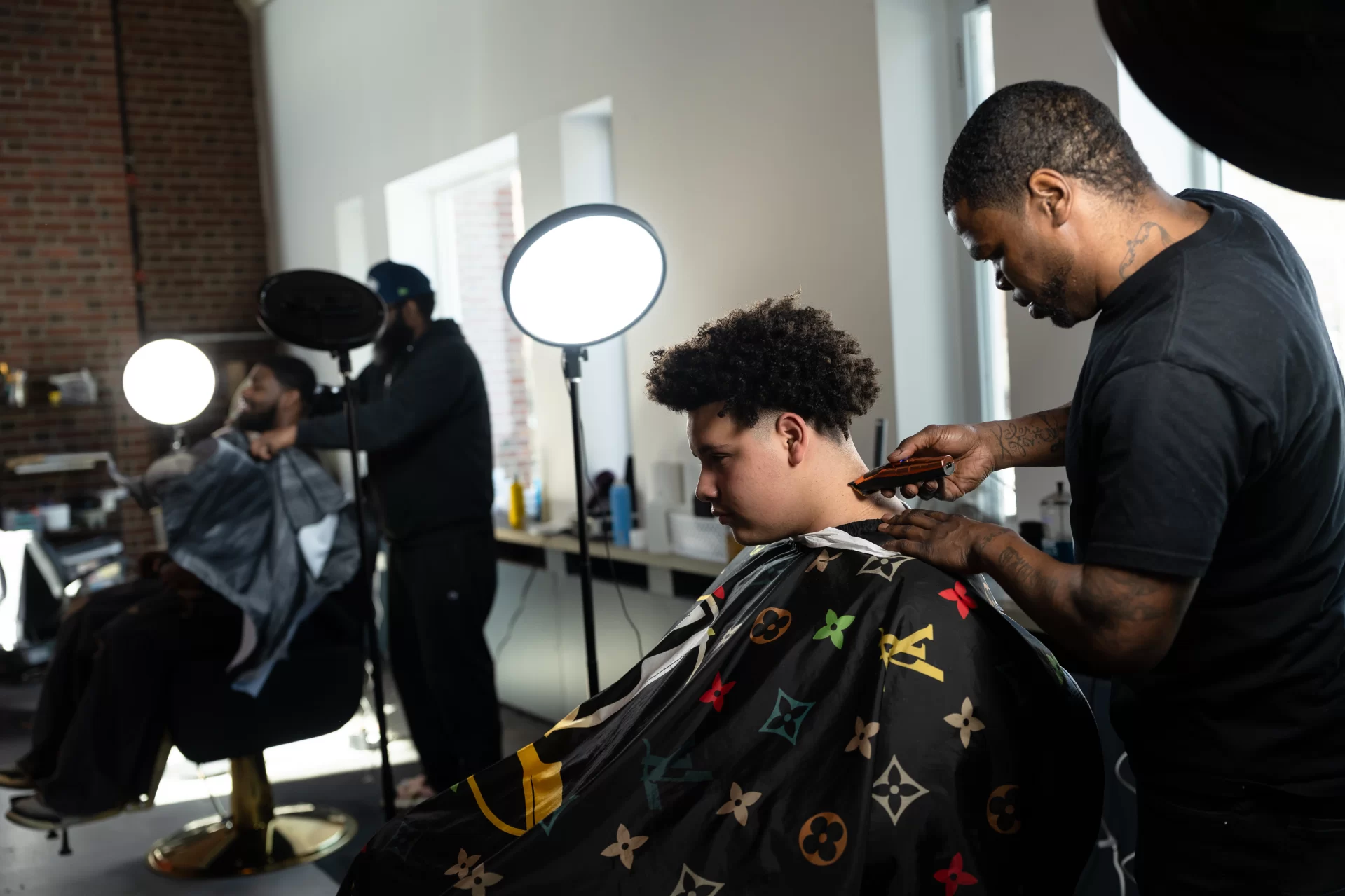
The popularity of Faded Lines has created what Bailey calls “a good problem.” The barbers are booked solid, but there are more students who need and want haircuts. It’s “brutal” to see them turned away, Bailey said, although the students adapted to make sure they get a spot in the next session, booking early.
She has two longer term hopes for Faded Lines: to expand the program and to make it a permanent offering. Additional funding is needed to make those hopes a reality, but Bailey is sure of one thing. “What is happening on these afternoons matters,” Bailey said.
Categories BatesNews Student Life