Hadley Blodgett ’26 of Buckfield, Maine, spends a lot of time thinking about just that — time.
In a laboratory in Carnegie Science Hall, as she conducts research for her senior thesis, Blodgett gazes over 7,000 years of history condensed into a sediment core extracted from a lake in northern Greenland. As a double major in earth and climate sciences and music, with a minor in religious studies, Blodgett enjoys reflecting on the way that time has constructed and altered her fields of study. Sometimes, when the immensity of the sediment sample’s past hits her, she thinks, “How am I holding this?”
“To think about the scale of what’s in front of me is just kind of crazy,” Blodgett says.
How exactly did sediment buried deep beneath Arctic waters find its way to the surface, then to Bates? The story crosses oceans and icebergs, tundras and deserts, but connects to Bates through Blodgett’s thesis advisor, Associate Professor of Earth and Climate Sciences Nick Balascio.
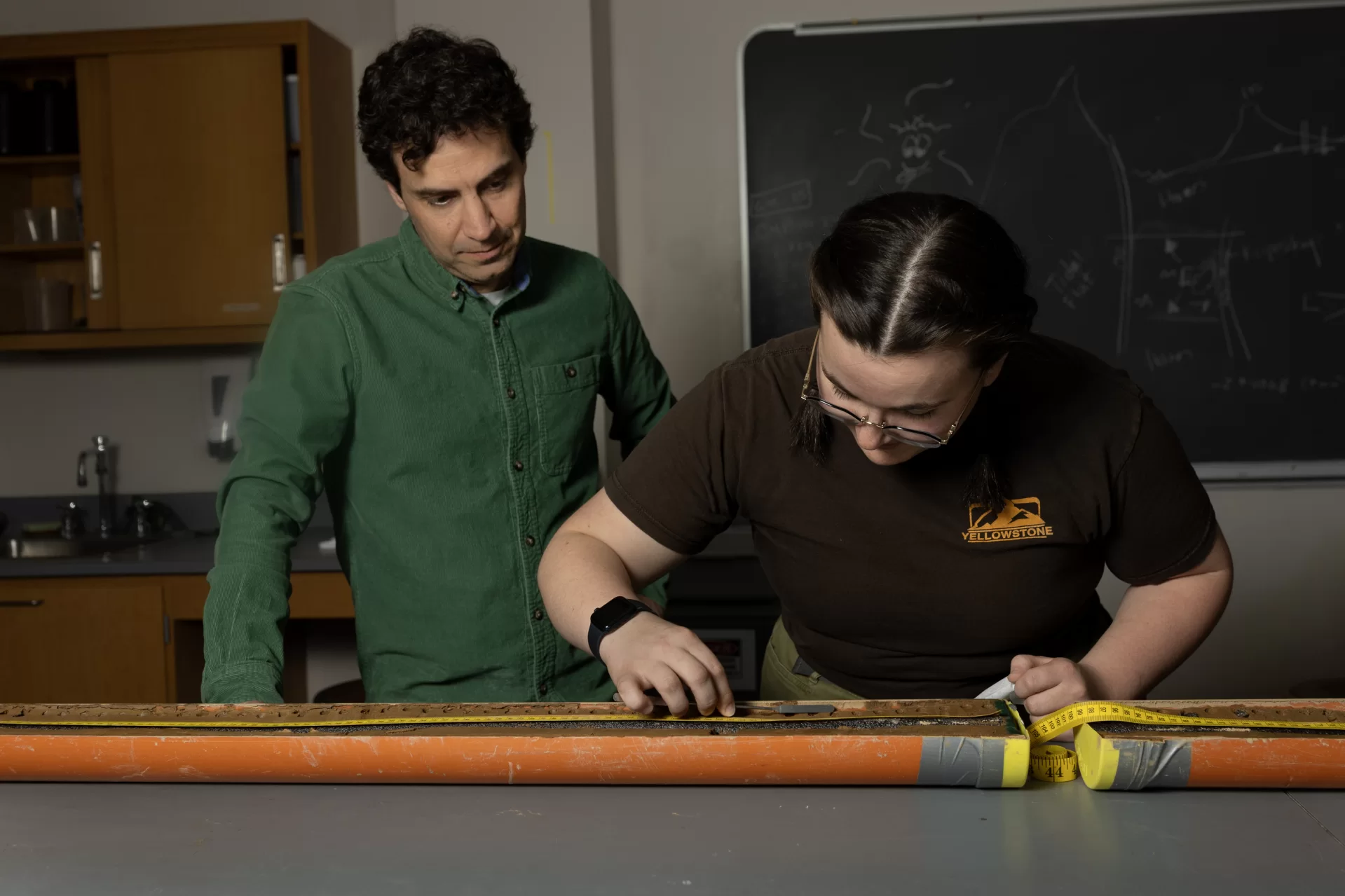
As a paleoclimatologist, Balascio studies how Earth’s climate system has changed across millennia, primarily through analyzing lake sediment cores, which are layers of mud, dirt, and organic material extracted from the bottom of lakes in long tubes.
“Those lakes are natural history books that record what’s going on around the watershed of the lake as well as within the lake itself,” Balascio says.
In 2022, Balascio helped launch the Wandel Dal Project, a multi-national scientific effort investigating climate conditions of ancient Greenland, with support from a National Science Foundation grant. The project is studying Wandel Dal — a remote, uninhabited arctic desert valley less than 500 miles from the North Pole in Greenland’s Peary Land. Beneath its icy facade, Peary Land is a wealth of Greenlandic history, the one-time home of the island’s first people who crossed into the region from northern Canada.
Over the past 4,500 years, Peary Land was inhabited and then abandoned by three different groups of indigenous people. The Wandel Dal scientists hypothesize that migration in and out of the region corresponded with climate fluctuations — people occupied the area in warmer climate periods, then left when the climate began to cool again and the area became more difficult to live in because of dwindling natural resources.
“These are people with stone tool technology living in a pretty harsh and foreboding environment,” Balascio says.
By understanding Peary Land’s past climate contexts, scientists will gain a better overall understanding of how changing climate conditions affect the Arctic, which is already warming about four times faster than average global warming rates under anthropogenic, or human-caused, climate change.
“There is very little coverage of this high Arctic region in terms of what we know about the past climate history,” Balascio says. “It’s right at the margins of the Greenland ice sheet, so understanding the sensitivity to climate change is really important.”
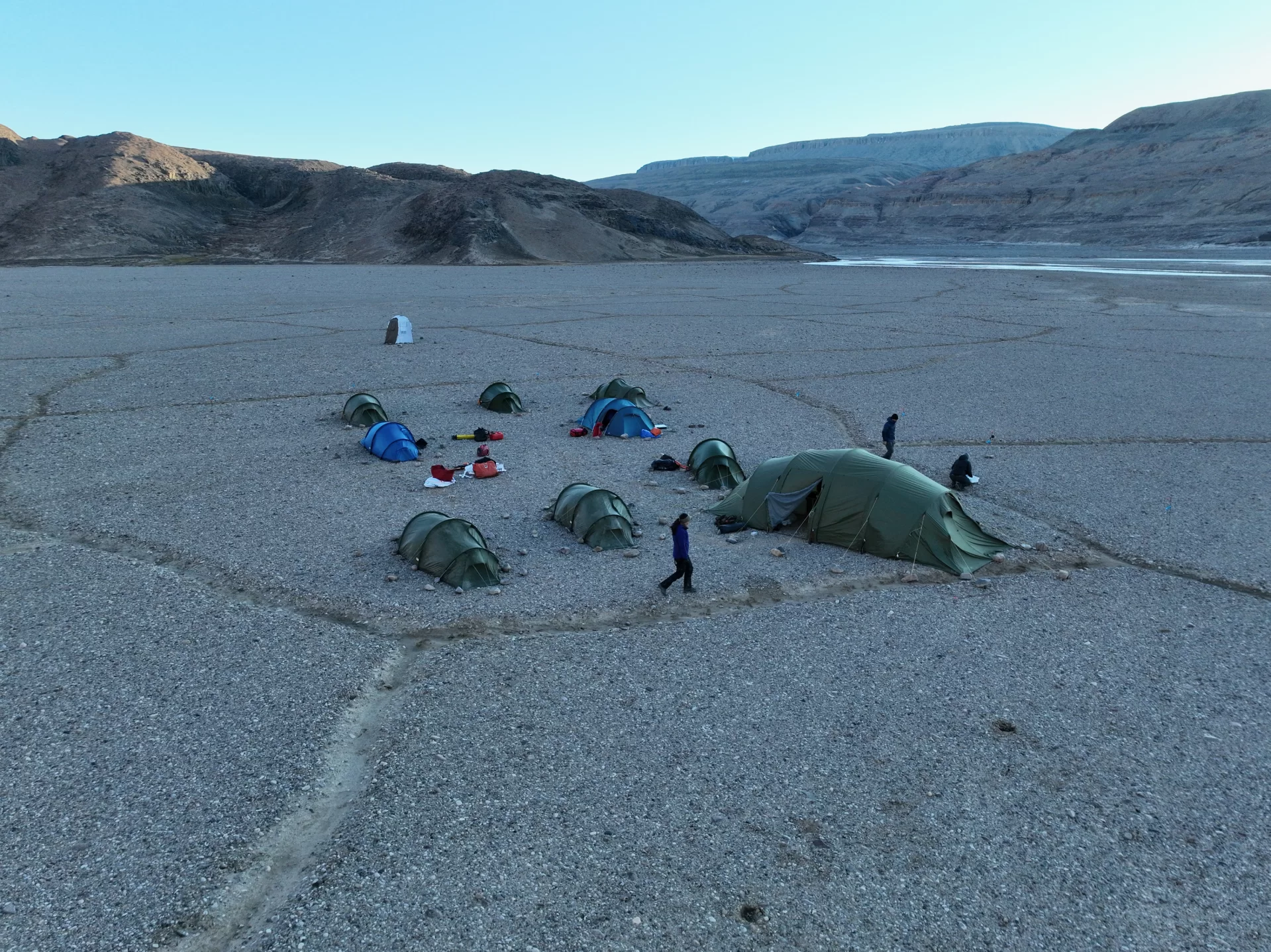
In the summer of 2024, Balascio and colleagues traveled to Peary Land to collect lake sediment cores. They flew to Svalbard, Norway, then chartered a plane to eastern Greenland, flew in a prop plane to Wandel Dal, and finally rode in a helicopter to their research site, where stone tools and tent sites made by ancient humans still littered the barren landscape.
“Working in these extremely remote and remarkable landscapes is inspiring as an earth scientist, to see the natural beauty that the earth has,” Balascio says.
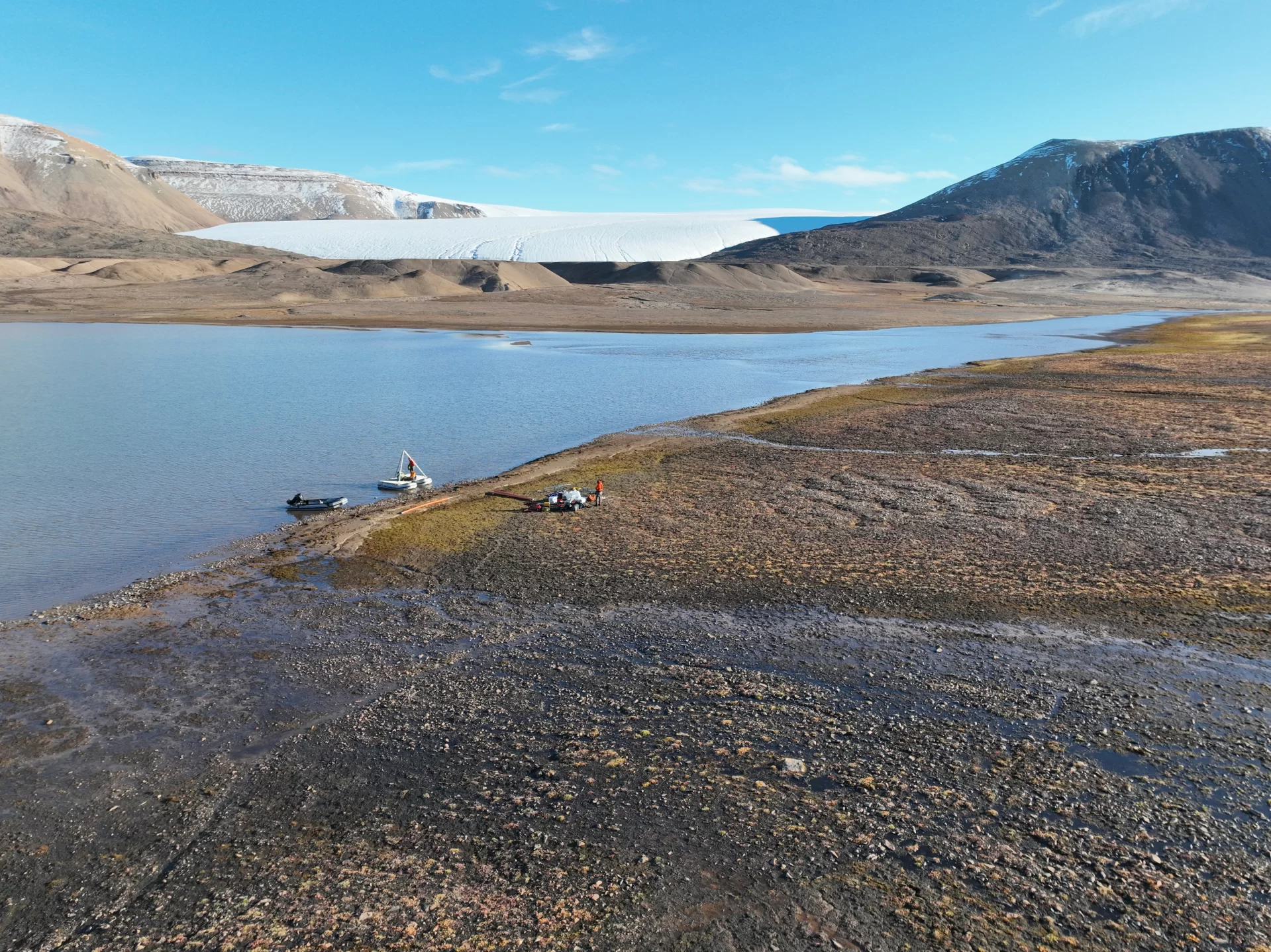
It was the end of July, the beginning of the brief and only time of year when Wandel Dal’s lakes are not frozen, a necessity for obtaining lake sediment cores. Balascio and colleagues set up coring platforms on inflatable rafts and guided large, heavy tubes called corers overboard into the 200-foot-deep lakes to collect six-meter long sediment samples.
The sediment cores, several of which are now stored in Bates’ core storage facility in Carnegie’s basement, have been a fantastic resource for students, Balascio says. In addition to Blodgett, Fletcher Libre ’26 of Alta, Utah, and Zach Van Dusen ’25 also used the cores for their senior theses in earth and climate sciences. The samples “are very precious,” Balascio says. “I feel fortunate that we have those here at Bates and that Bates students can literally put their hands on these really remarkable records and learn about an environment that they might never travel to but can experience in some way.”
While Blodgett hasn’t been to the Wandel Dal region, she did have the opportunity to visit Greenland during a trip with Balascio to Nuuk, Greenland’s capital, for Greenland Science Week in November 2025. The trip was funded by Balascio’s NSF grant, which includes funds for supporting student research and mentorship. Blodgett was so excited by the opportunity that she hardly allowed herself to believe it was real until she was on the way to Greenland.
“This is just too cool to happen,” Blodgett thought to herself. “And then, I was on a plane.”
Presenting her thesis research during the conference and at a community outreach event, Blodgett contributed new scientific discoveries that could have implications far beyond her own project.
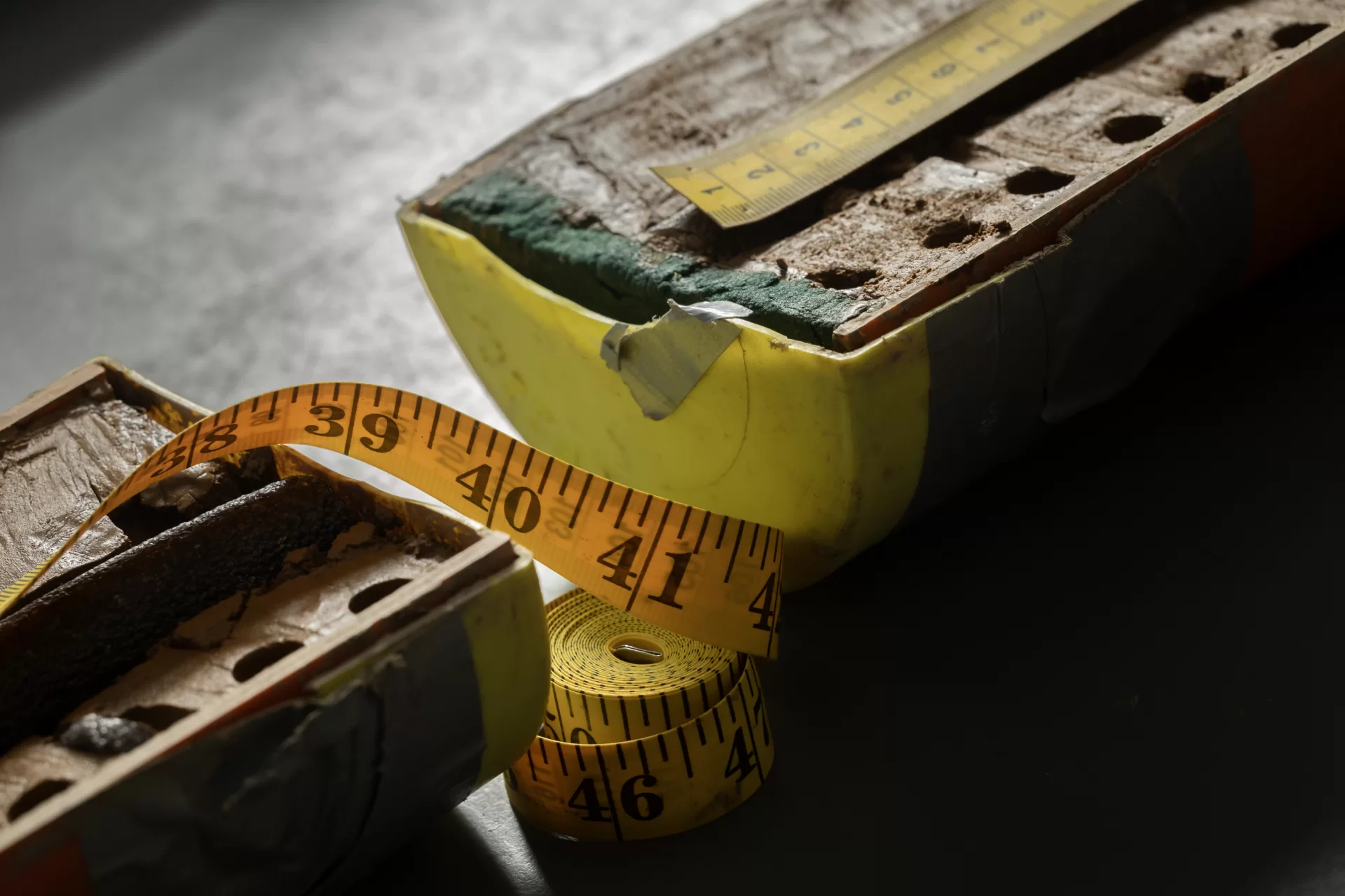
When she began her thesis research on the sediment cores in the summer of 2025, Blodgett was surprised by how clearly she could tell time from changes in the sample’s composition. The sediment follows a fairly consistent pattern — denser sediment for what were likely warmer climate periods, less dense sediment for cooler periods — until the top four centimeters.
Blodgett initially thought she was doing something wrong when she began analyzing that top section and had trouble pulling out a “plug,” a sample of sediment removed for detailed analysis. She took a closer look and observed thick, laminated layers of sediment building up the top and newest portion, strikingly different from the millimeter-sized, less dense layers of sediment that comprised the rest of the sample.
“Something in the climate is causing the environment to react in such a way that it makes this sediment deposit in a different way than it has for the entire rest of the record,” Blodgett says.
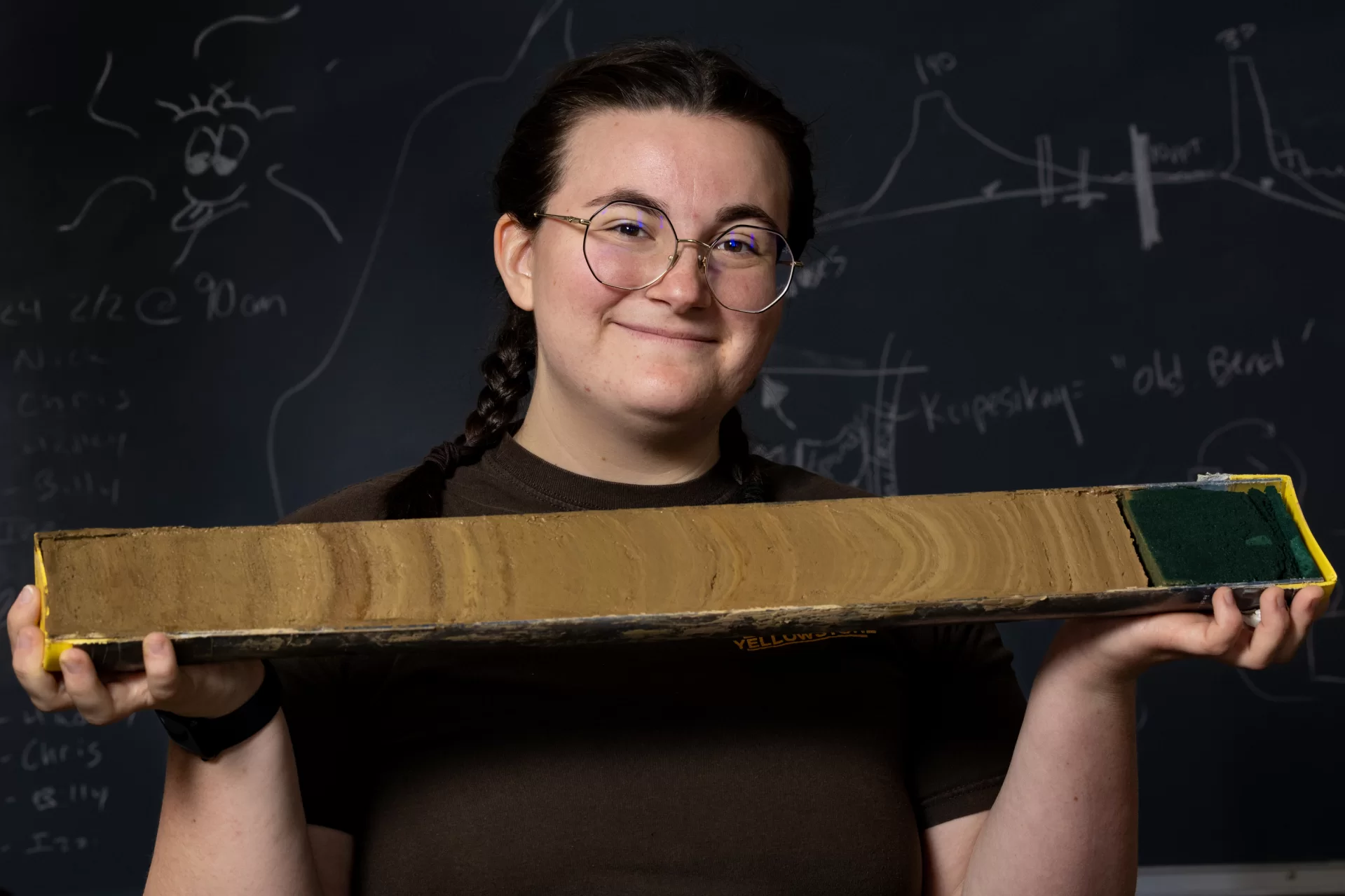
She’s hypothesizing that this top portion of the sample is reflecting changes caused by anthropogenic climate change.
“I don’t know why [sediment cores] fascinate me, but I just really enjoy working with them,” Blodgett says. “Before I started all this, I had no clue what they were. I’m always open to doing new things.”
Trying new things has defined Blodgett’s Bates career. She arrived on campus planning to major in history but pivoted to earth and climate sciences after taking the Short Term course “Soil Geography of New England” and realizing how much she enjoyed working with soil — and the way that this work allowed her to discover more about the Maine land she grew up exploring.
“I definitely have an appreciation for just how important [the land] can be culturally and the need to treat it with respect,” Blodgett says.
This idea of respect for the land and awareness of its value to its inhabitants, past and present, is a central tenet of the Wandel Dal Project. As a cradle of the country’s civilization, Peary Land is of great cultural significance to the Greenlandic people. The Wandel Dal scientists are supporting a Greenland National Museum initiative to rename the region — currently named for American explorer Robert Peary — to “Inutoqqat Nunaat,” meaning “land of the ancient people” in Greenlandic. A team of archaeologists are also a part of the Wandel Dal Project and investigating the human history of northern Greenland.
When he began his career as a paleoclimatologist, Balascio wasn’t particularly focused on the human aspect of the landscapes he was studying. But, over time, as he began collaborating with archaeologists to study Viking settlements in Norway or the Rapa Nui people of Easter Island, where human impact on the land is undeniable, Balascio became more and more interested in understanding how human history is interlaced with climate history. Working with the archaeologists in Wandel Dal in particular “became a very enriching experience and gave me a new perspective on this field of study that I had been working on previously for a decade,” Balascio says.
During Greenland Science Week, while chatting with scientists and archaeologists, and showing eager kids artifacts from Wandel Dal, Blodgett, too, was reminded of the key role that people and culture play in her field.
“You get so disconnected from the ‘people part’ sometimes in climate science, even though people are such an important part of it,” Blodgett says.
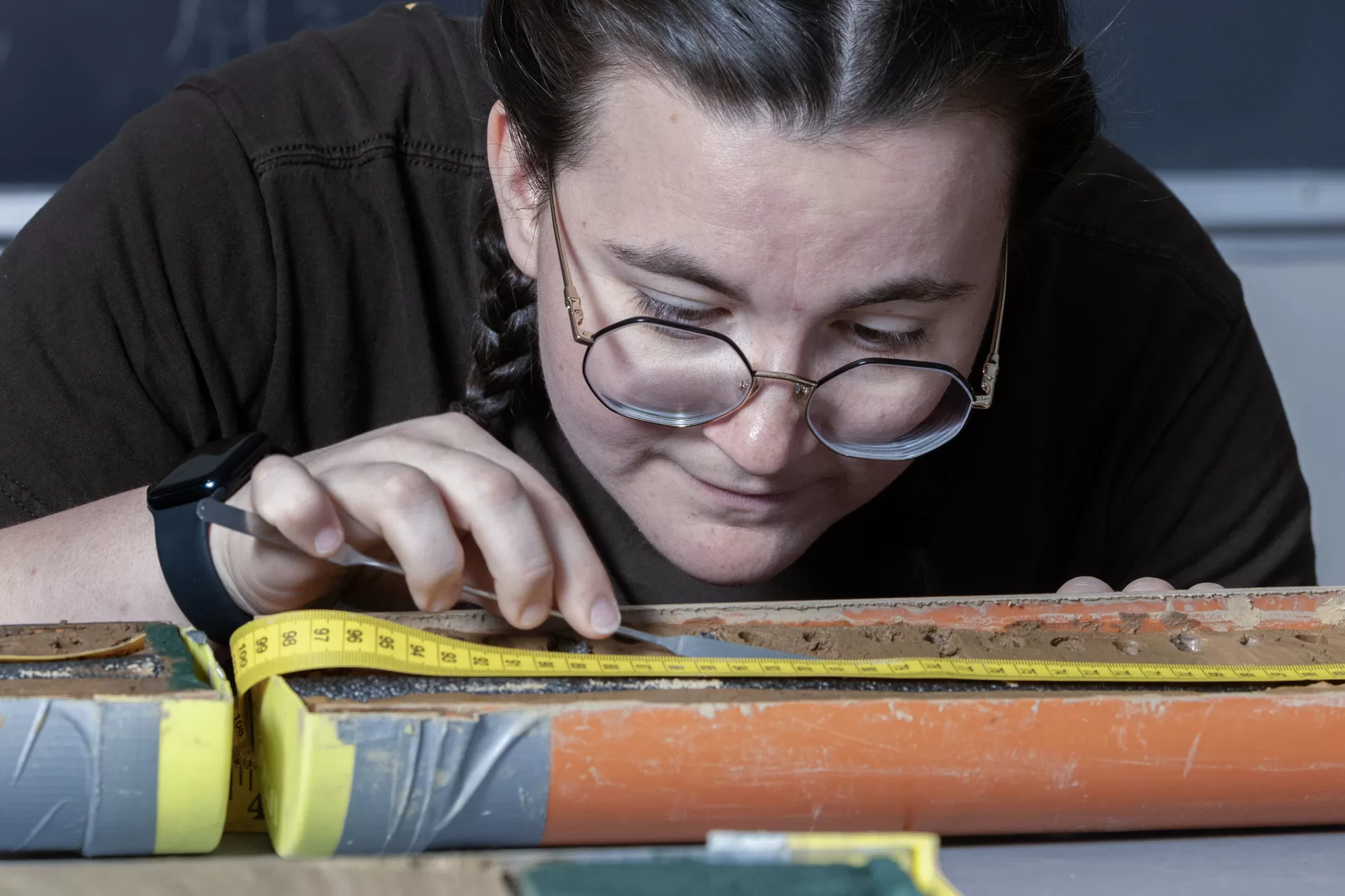
The trip to Nuuk was also an opportunity for Blodgett to field advice from scientists about graduate school and research as she prepares for life after Bates. Balascio has been an attentive mentor in that sense as well, Blodgett says. While guiding her through her thesis research, he’s helped her explore opportunities at Bates and beyond.
“No matter where I end up after May,” Blodgett says, “I know for certain that the trajectory of my career has been changed because of the guidance shown to me by Professor Balascio and so many essential people in the Bates community.”
This material is based upon work supported by the National Science Foundation under Award Numbers 2524995 to Bates College and 2126047 to College of William & Mary. Any opinions, findings and conclusions or recommendations expressed in this material are those of the author(s) and do not necessarily reflect the views of the National Science Foundation.
Faculty Featured
Nick Balascio
Associate Professor of Earth and Climate Sciences