
Two Bates students have been awarded 2026 Davis Projects for Peace grants to carry out individual humanitarian projects — one focused on expanding economic opportunities for women, and the other on safe menstrual waste disposal.
The grantees, Angel Guitcha ’27 of Accra, Ghana, and Vyshu Viju ’26 of Atlanta, will each receive $10,000 to complete projects in Ghana and India, respectively, this summer. Projects for Peace, which is based at Middlebury College, is funding 142 projects in 2026, taking place across 59 countries and seven U.S. states.
Since its inception in 2007, Projects for Peace has funded more than 2,200 projects. The organization’s goal is to support student-led, community-centered, and scalable projects addressing pressing issues — anywhere in the world. To develop their projects, Bates students work closely with staff from the Harward Center for Community Partnerships, including Daphne Comeau, associate director for center operations and Davis Partners for Peace campus liaison, and Director of the Harward Center Darby Ray.
Last summer, 2025 Projects for Peace grantee Axelle Tougouma ’27 of Fada N’Gourma, Burkina Faso, led the installation of an irrigation system and agricultural training for women refugees from Burkina Faso living in Ouangolodougou, Ivory Coast.
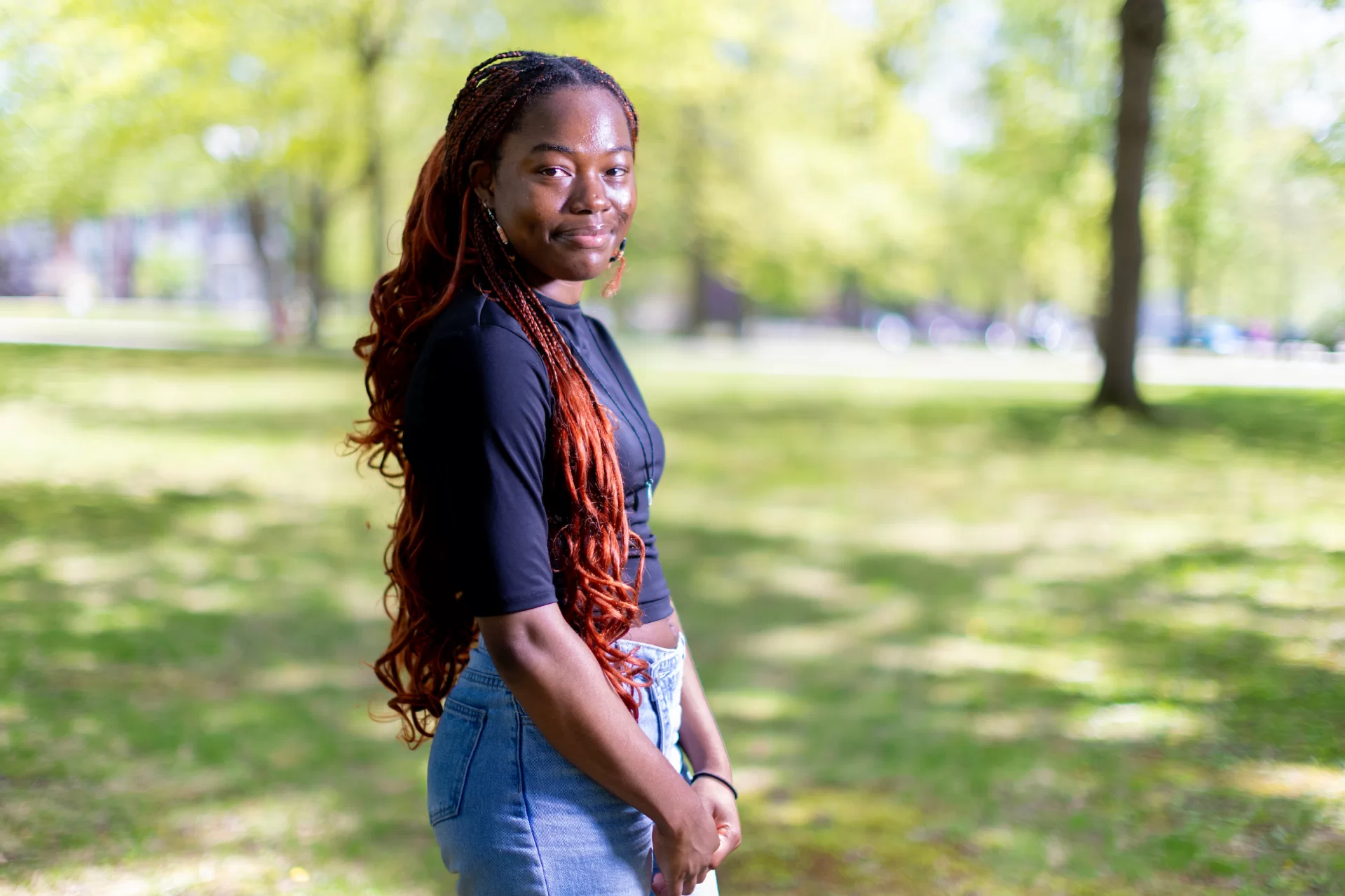
Tougouma aimed to create an agricultural system through which refugee women could not only improve their food security but also support themselves financially. She led the three-month-long project virtually while also completing an internship in Boston.
“It was definitely fulfilling,” Tougouma says. “It also made me realize that the small action we do can also contribute in solving problems. Because sometimes when I sit down and I read news about my country, about terrorism attacks, and [I see] those millions of people being displaced, I wonder, being abroad and not living in that situation, how can I give back to my community?”
Tougouma hired an engineer to install the irrigation system, identified teachers to lead agricultural lessons, and gave financial literacy classes via WhatsApp. While managing the $10,000 project budget, she leaned on what she’s learned at Bates as an economics major and math minor.
“We really needed to maximize our budget at some points, and that required giving up on some things,” Tougouma says.
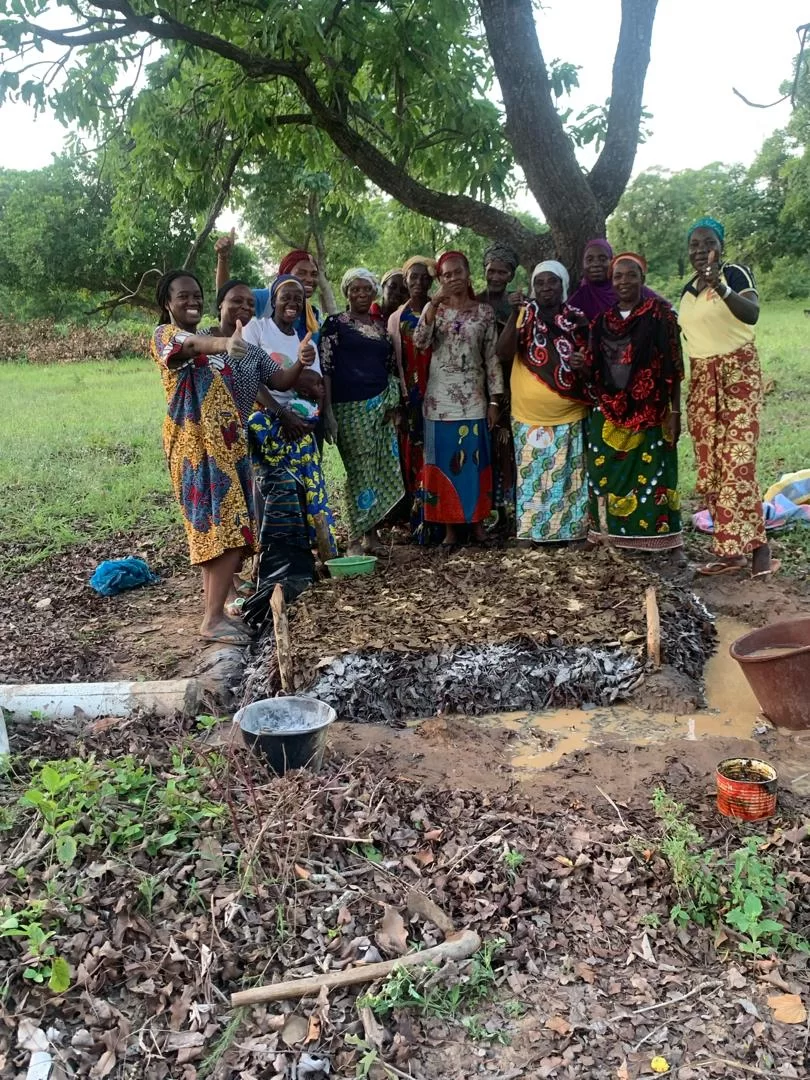
Since the project’s conclusion, Tougouma has remained in contact with the refugee women — as has the irrigation engineer, who has offered ongoing consultation free-of-charge — and plans to pursue other grant and funding opportunities to continue her work in Ouangolodougou.
“[We are] making sure that they feel like we are still supporting them, and this is something that we really care about,” Tougouma says. “We are definitely ready to step in if other opportunities open up.”
2026 Davis grantee Angel Guitcha applied for Projects for Peace after learning about the opportunity from Tougouma. She will be completing her project, “Kayayei Artisan Initiative: Economic Empowerment for Women in Accra,” in Ghana, which borders both Burkina Faso and Ivory Coast.
In Accra, Ghana’s capital city, tens of thousands of women workers called “kayayei” make their living as porters, carrying heavy loads of market items in large baskets atop their heads. When Guitcha was growing up in Accra, she met a girl working as a kayayoo. The girl was desperate to earn a living after a rape made her a mother at only 12. Her circumstances were not unusual; many kayayei work for as little as a few dollars a day in unsafe labor conditions, sleeping on the streets where they are vulnerable to gender-based violence.
Talking with the girl, Guitcha became determined to organize a project to improve kayayei’s quality of life.
“That conversation sort of radicalized me. … That was a very difficult conversation to have with someone at that age,” Guitcha says.
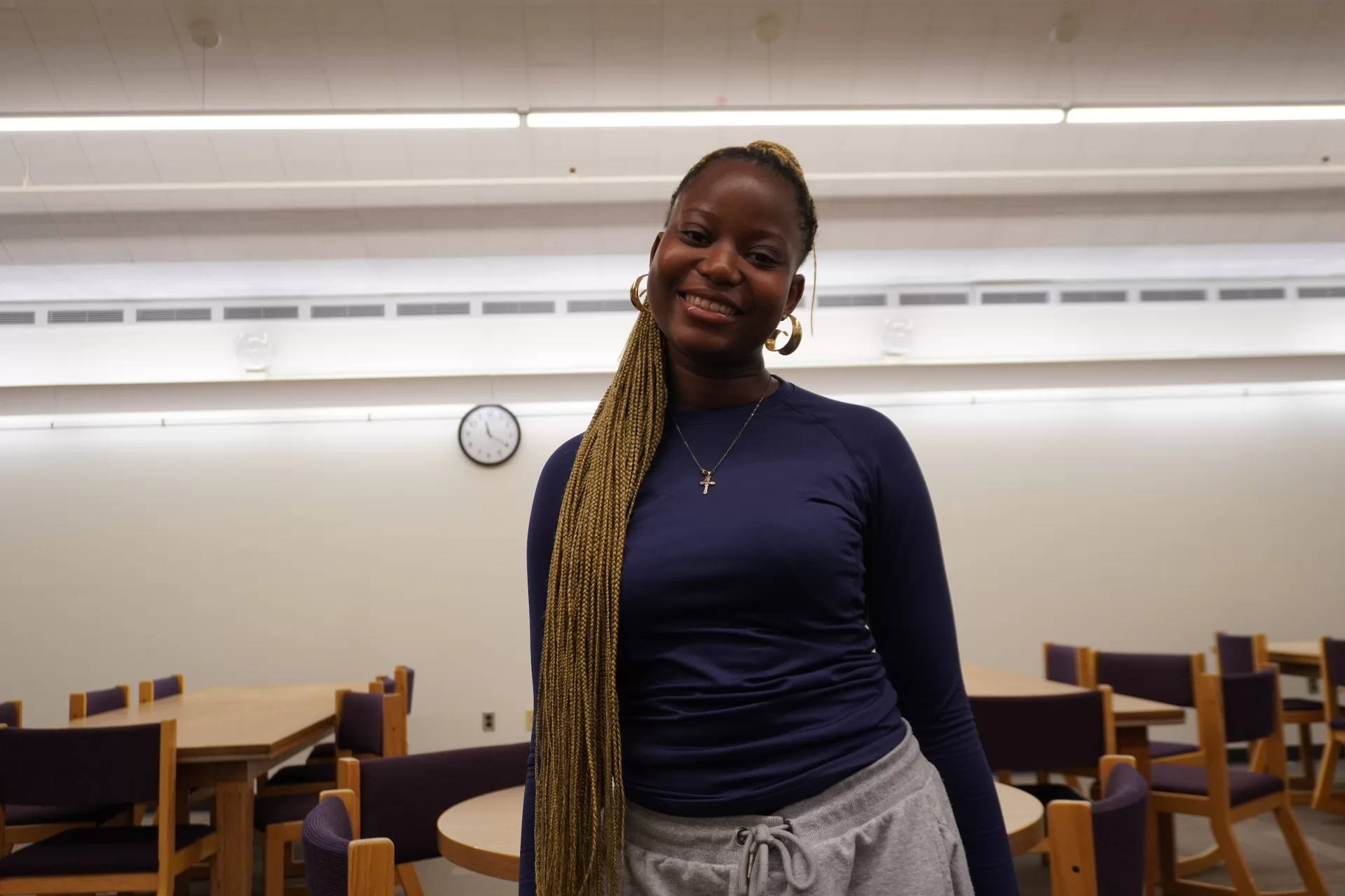
Guitcha will return to Accra this summer to coordinate a six-week workshop on craftsmanship skills for 50 kayayei, with the goal of fostering autonomy and economic empowerment. Women will learn how to make beaded jewelry and embellish Kente clothing, then how to sew reusable menstrual pads with fabric leftover from textile companies. In addition to teaching the women how to create products they can sell and keeping discarded fabric out of landfills, the workshop will also make it easier for the women to take care of their menstrual health, which they often don’t have the money or time to properly maintain.
At the end of the workshop, Guitcha will host a graduation ceremony, during which the women will be able to sell the products they’ve made.
“I’m hoping that they leave their workshops feeling more empowered and more in control of their lives,” Guitcha says.
Guitcha, a biochemistry major with a math minor, volunteers regularly in the Lewiston community through the Harward Center and at St. Mary’s Hospital. She plans to attend medical school.
“I’m very passionate about community service,” Guitcha says.
Davis grantee Vyshu Viju will head to India this summer for her project “Sustainable Cycles: Integrating Hygiene Equity and Waste Sovereignty in Chelannur,” which aims to improve access to menstrual waste disposal by installing trash incinerators specifically for menstrual waste.
![Vyshu Viju ’26 poses for a portrait in Pettengill Hall’s Perry Atrium. Davis grantee Vyshu Viju will head to India this summer for her project “Sustainable Cycles: Integrating Hygiene Equity and Waste Sovereignty in Chelannur,” which aims to improve access to menstrual waste disposal by installing trash incinerators specifically for menstrual waste. The town of Chelannur, where Viju’s grandparents live, is known for its excellent trash management system. However, menstrual product waste is excluded from regular trash pickup because of health safety concerns. Residents are instead expected to dispose of it at a site two hours away, but many residents burn their menstrual waste at home, Viju says, which causes pollution. “They’re supposed to collect [their menstrual waste] for two to three months and then throw it away,” Viju says. “But most people just find that to be a lot of work, and it just takes up too much of their time.” Viju and her grandparents will together work to secure government approval for the incinerators, then purchase and install them around Chelannur.](https://www.bates.edu/news/files/2026/04/260422_Vyshu-Viju_Davis_Peace_Award_0180A.webp)
The town of Chelannur, where Viju’s grandparents live, is known for its excellent trash management system. However, menstrual product waste is excluded from regular trash pickup because of health safety concerns. Residents are instead expected to dispose of it at a site two hours away, but many residents burn their menstrual waste at home, Viju says, which causes pollution.
“They’re supposed to collect [their menstrual waste] for two to three months and then throw it away,” Viju says. “But most people just find that to be a lot of work, and it just takes up too much of their time.”
Viju and her grandparents will together work to secure government approval for the incinerators, then purchase and install them around Chelannur.
“I’m hoping it decreases pollution and creates a more sustainable pathway in the way that trash is done,” Viju says. The incinerators’ emissions from burning waste could also be harvested as an energy source, she says.
Viju has long been passionate about issues related to reproductive justice and access; she volunteers with Maine Family Planning as a Harward Center Bonner Leader and hopes to pursue a Ph.D. in neuroendocrinology. She thought up the idea for the incinerators in conjunction with her grandmother, who is involved in a local feminist group called Kudumbashree.
Staff at the Harward Center were instrumental in helping the project come together, Viju says, including Comeau and Ray, along with Ellen Alcorn, associate director of community-engaged learning and director of student leadership programs, who initially connected Viju with Maine Family Planning.
Viju has also learned a lot about waste management while working as a landscape assistant with Bates Facility Services, specifically from Bates grounds and maintenance workers Amy Ray and Ian Brownlie.
“That’s been a very meaningful part of my Bates experience, and I think it very much inspired this project,” Viju says.
Both Projects for Peace are scheduled to be completed by September.