Activator
January 20 – March 20, 2006
“…if on previous occasions in his march-past in front of the picture-walls, he was lulled by the painting into a certain passivity, now our design should make the man active. This should be the purpose of the room.” –El Lissitzky
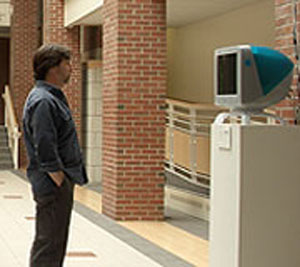
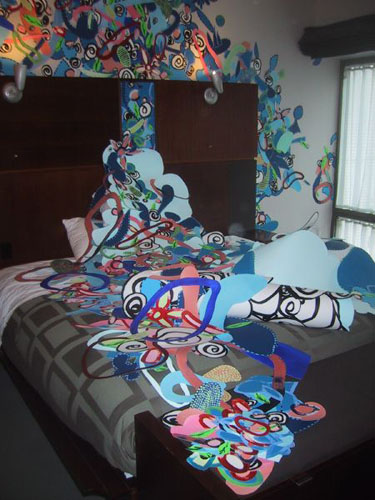
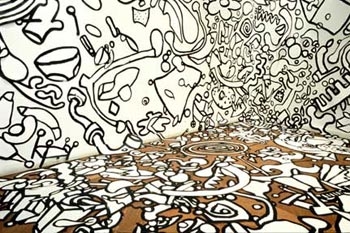
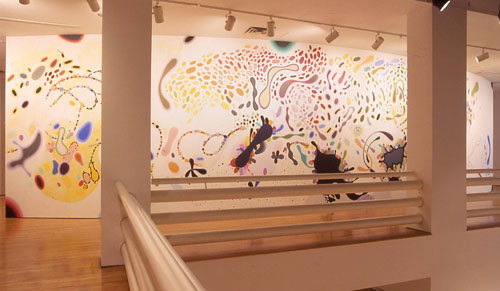
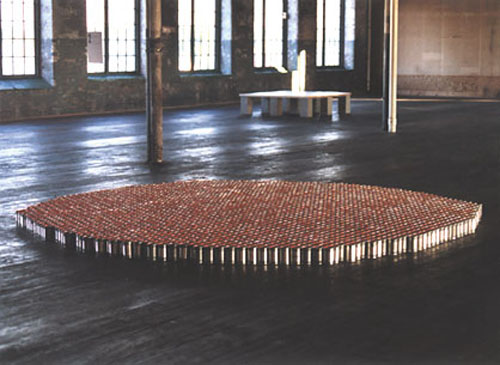
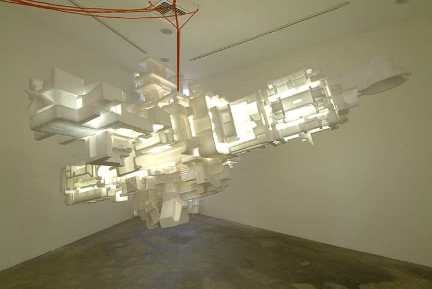
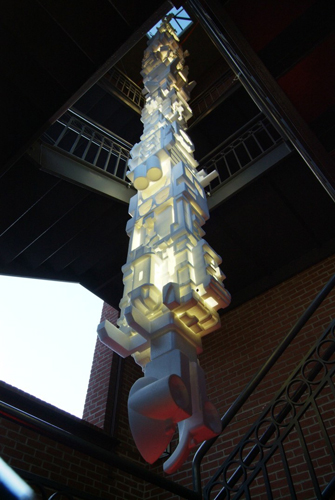
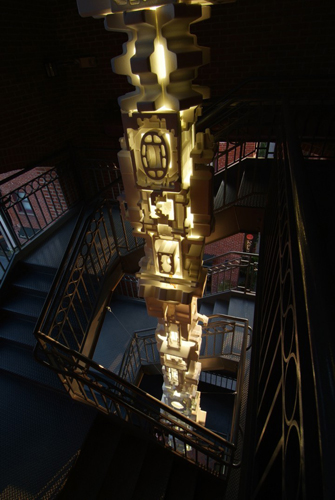
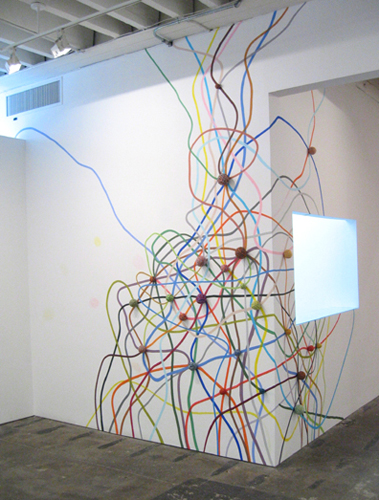
The desire to jolt the museum visitor out of passive contemplation dates back at least to the beginning of the century, when Russian artists El Lissitzky and Vladimir Tatlin broke the two-dimensional plane of the wall with the assemblages that gave the Constructivist movement its name. In the 1960s, performance artist Allan Kaprow attempted to erase the distance he perceived still existed between art and the viewer by creating work that encouraged participation. His “Environments” – room-size multimedia works that could be entered physically – were inherently politically charged, constructed with non-art materials in alternative spaces to promote art as a social, everyday experience. Kaprow’s experiential philosophy is encompassed within installation art, a hybrid form of artmaking that considers the architectural framework, and the realm of viewer experience within it, as key elements. This relationship is a dynamic one, as the six installations in Activator attest. Energy is their connective element: with fluorescent-lit Styrofoam, computer-generated sound, vibrant color, humor, tension, playful scale, and directed movement, the artists in this exhibition refocus our attention on the museum space as an active presence.
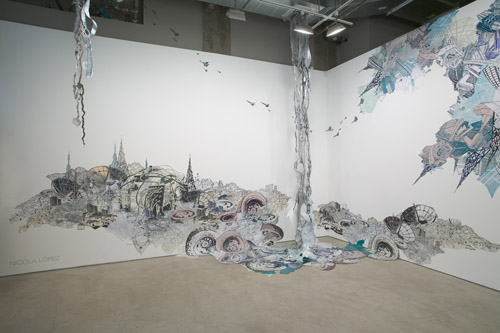
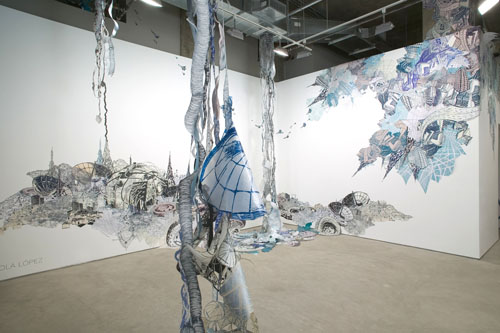
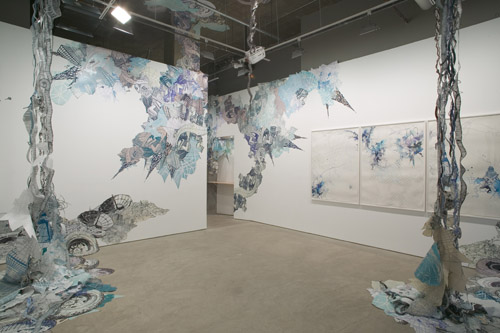
Activator features work by N.B. Aldrich and Zach Poff, Astrid Bowlby, Amy Stacey Curtis, Eric Hongisto, Nicola Lopez, and Jason Rogenes (click on names for more information).