Teaching and Pedagogical Innovation
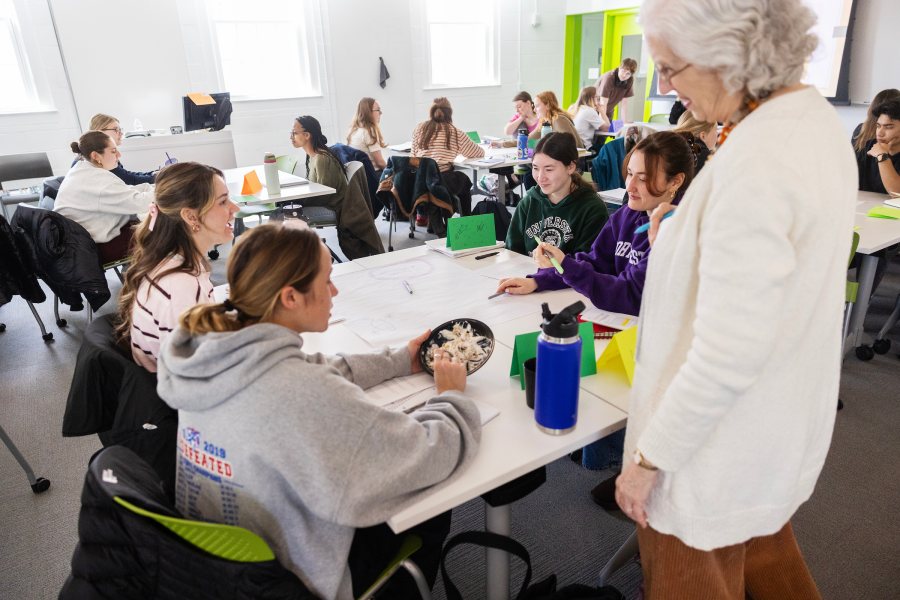
Short Term Innovative Pedagogy Program
Short-term (Re)design courses provide faculty the time and support to explore the literature on teaching and learning and available models for pedagogical innovation within their fields and integrate that exploration with a specific course design or redesign project.
CITL – Center for Inclusive Teaching and Learning
Opened in 2022, the Center for Inclusive Teaching and Learning, known as CITL, supports faculty and staff educators through ongoing professional development in evidence-based and inclusive pedagogies in support of student success.
Bringing Scholars and to Artists Campus
Bates Learning Associate Program. Learning Associates are graduate scholars, practitioners or other experts who work with students at any point during their four years at Bates to develop the skills, knowledge and growth important during their senior thesis experience. They are associates, whose expertise and advice enhance the faculty member’s teaching.
Visiting Scholars. Bringing Scholars and Artists to campus for a short visit can offer students unique perspectives and insights enhancing their classroom experience.
Faculty Awards and Recognition
Kroepsch Awards. Established in 1985, and awarded annually, the Robert H. Kroepsch ’33 LL.D. ’71 award recognizes outstanding teaching. Beginning in 2026, two additional Kroepsch awards will be awarded, the Kroepsch Early Career Educator Award and the Kroepsch Award for Innovative Pedagogy.
Faculty Recognition Program. The Dean of Faculty’s Office recognizes and celebrates outstanding teaching and scholarship at meaningful moments in the career of faculty members: promotion, tenure, and retirement.
Endowed Professorships. Bates has more than 30 endowed professorships to honor exceptional teaching faculty.
Faculty Profiles. We offer faculty the ability to create a profile of their scholarly work. Faculty can update their profile themselves or with the help of their Academic Administrative Assistant (AAA).
Faculty Remembrances. We offer remembrances and memorial minutes for our colleagues who are recently deceased.
Memoranda of Understanding. If they feel it is helpful, a member of the faculty can create a memorandum of understanding that makes visible their contributions to multiple academic units and curricula. For more information, please contact the Vice President for Academic Affairs and Dean of the Faculty (deanoffaculty@bates.edu).
Lunch and Learn
To celebrate and share the outstanding scholarly and creative work being done by our faculty, a monthly Lunch and Learn series creates a regular, informal space where faculty members can share a recent publication or book launch, discuss a performance or art show, give a practice talk for an upcoming conference, or discuss ideas for a work in progress, all while sharing a meal with colleagues. Each lunch features two speakers allowing us to spotlight accomplishments or works in progress as well as foster cross-disciplinary dialogue, collaboration, and community. Look for announcements of DOF Lunch and Learns in the daily Bates Now email.
Mentoring
- For Mentors and Mentees: Information and resources for faculty at Bates.
- Peer Review of Teaching: The Committee on Teaching and Learning developed recommendations for peer review of teaching in collaboration with the Faculty Personnel Committee.
Teaching
- Center for Inclusive Teaching and Learning: Supports faculty and staff educators through ongoing professional development, including work in developing reflective, innovative, and inclusive pedagogies.
- FYS Pedagogy Portal: Provides helpful resources for FYS instructors
- STIP: Information on the Short Term Innovation Pedagogy Grants
- Bates’ Writing-Attentive Curriculum: Important information about these courses and tools to help faculty develop them.
- The DOF has a small set of useful assessment resources. Additionally, the CITL newsletter has an “Assessment Corner” feature written by our ad hoc assessment specialist.
Travel
Travel to Conferences. The Dean of Faculty encourages travel to conferences for faculty in support of pedagogy and offers partial support for travel costs associated with professional activity.
Travel Funds for Instructional Specialists. Bates supports Assistants in Instruction with travel funding to academic workshops and conferences to support professional development. Details and Application
Traveling with Family. The Dean of Faculty understands that in some circumstances faculty and staff may wish to ask family members or partners to join them on an official Bates trip. See guidelines for Traveling with Family Members
Administrative Course Procedures
The Dean of Faculty’s Office supports faculty with many of the administrative aspects of teaching. Some specific policies are noted below and additional information may be found in the Faculty Handbook, particularly in Part V. Instruction.