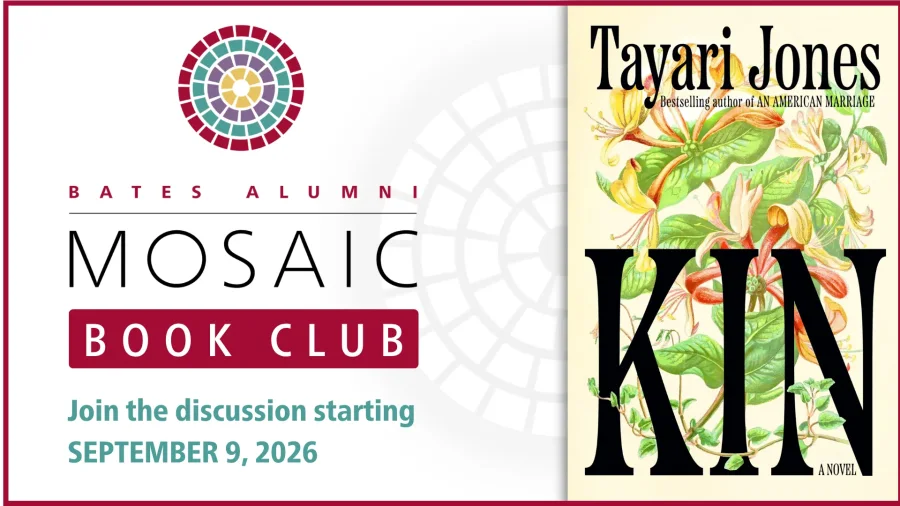
MOSAIC Book Club: KIN
In Progress
Wednesday, September 9, 2026 — 7:30 pm
MOSAIC offers opportunities for Bates alumni to connect within and across the diverse identities and lived experiences that shape the Bates community. Grounded in the knowledge that affinity spaces are a vital part of fostering belonging, strengthening the community, and cultivating lifelong connections, MOSAIC events provide intentional space for BIPOC, LGBTQ+, first-generation-to-college, and international alumni to build lasting relationships that extend beyond their time at Bates. All allies, advocates, and supporters are welcome!
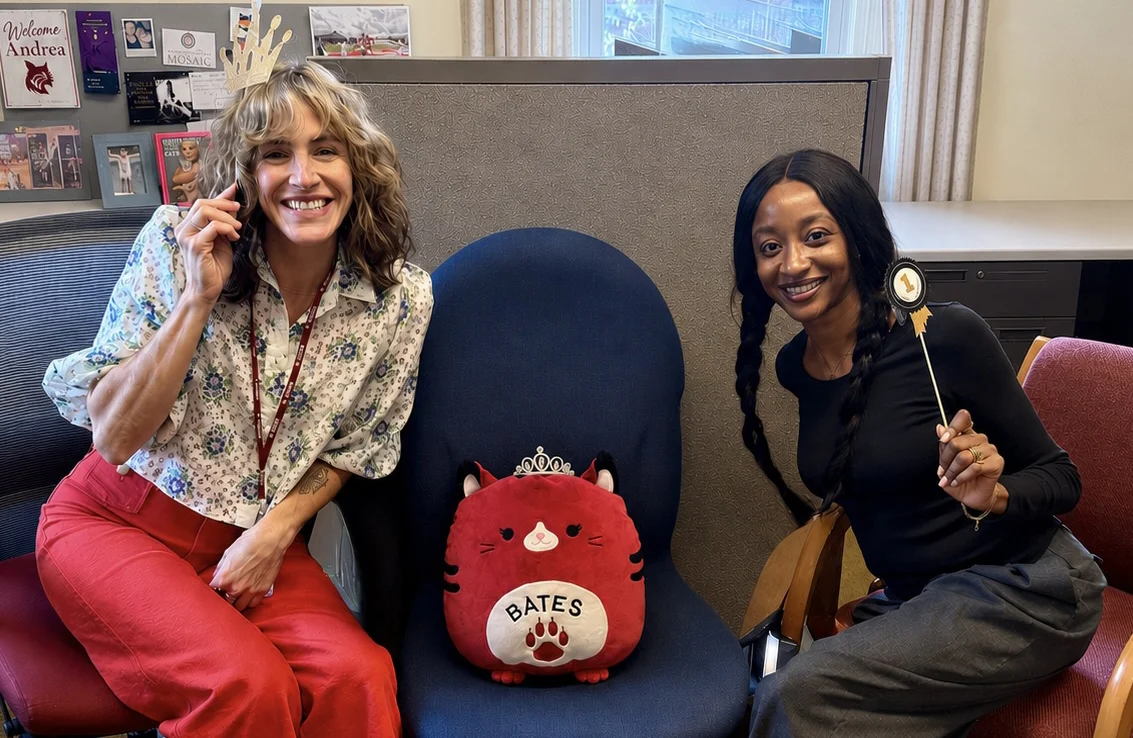
Whether you’re new to MOSAIC or have been part of the community for years, we want you to get to know the people behind the curtain! In July, we welcomed our new Director of Alumni Equity & Inclusion Programs, Andrea Breau. Together with Assistant Director of Alumni Engagement – Identity & Affinity Programs, Adama Diaby ’22, we’re the new, self-proclaimed MOSAIC “A Team”!
Andrea: Curiosity! I’m endlessly interested in people: how we make sense of the world, what we might learn from one another. When we come together within and across our differences, I’m interested not just in what makes our experiences distinct, but in the bigger systems and stories that connect them. This work gives me a chance to ask how Bates has been and can be a space where connection, community, and new ways of seeing the world are possible. So, basically I get to ask a lot of questions, bring people together, learn stuff and call it my job. Pretty great gig.
Adama: I bring authenticity. As a native New Yorker, born and raised in Harlem, I think it’s important to lead with honesty and stay true to who you are. I try to bring that into every aspect of my life, especially in a world where being performative can feel like the new aesthetic. I’m intentional about creating spaces that foster authentic relationships and allow people to show up as their full selves, knowing they will be welcomed, heard, and valued.
Andrea: The possibilities! I’m new enough that I’m still in the delightful phase of asking, “Wait, could we actually do that?” I’m excited to meet more MOSAIC alumni, learn what kinds of programs people want or need, and find ways to help alumni turn their own ideas into reality. I want MOSAIC to feel less like something Bates creates for alumni and more like something we create together.
Adama: I want alumni – especially young alumni like me – to know that I’m still figuring things out, and I see MOSAIC as a space where we can learn from and support one another. These programs, conversations, and connections have helped me better understand myself, navigate predominantly white spaces, and connect with people who share my experiences. I encourage fellow alumni to take up space in MOSAIC and in other institutional spaces. Seeing Black alumni in spaces like the Alumni Council and Board of Trustees reminds me that we belong at the table and that our voices matter.
Andrea: What would make you say, “Oh, I’d definitely show up for that!”? Maybe it’s something we haven’t thought of yet. I’d especially love to hear about the people, topics, traditions, and ideas you think MOSAIC could be making more room for. What helped you find belonging at Bates? How can we help create space for that kind of community-building after Bates?
Adama: Keep using your voice and creating spaces where you can show up fully as yourself. As a Black woman, there can be so many moments when you feel pressure to adapt, prove yourself, or navigate spaces that weren’t created with you in mind. I’d remind my college-age self that she doesn’t have to wait for someone else to create a space for her. You have the power to create that space for yourself and for others.
Andrea: The kind that doesn’t end when the event or program does! I hope MOSAIC can help alumni find old friends, make unexpected new ones, connect across generations, and feel more connected to Bates on their own terms. Whether starting, deepening, or improving connections with the college – all are a win in my book!
Andrea: Coastal culture doesn’t define Maine! Working-class, inland Mainers have our own distinctive experiences of Maine. As a kid, Bar Harbor, Camden, and even Portland felt like faraway lands. I didn’t eat lobster until high school. I didn’t visit Acadia until well into my 40s (this year when I took my 10-year-old)! And finally – though this may not be controversial to a group of Batesies – as someone born and raised in Lewiston, I truly believe it’s the heart of Maine.
Adama: My most controversial Maine opinion would have to be the idea that Maine is only for true outdoor enthusiasts. As someone who has lived in the city for the majority of my life, I’ve really enjoyed getting my feet wet with the outdoors. From Level 1 Maine coast chilling during AESOP to exploring trails with friends as an employee at my alma mater, I’m a true testament to the fact that Maine creates space for anyone and everyone to appreciate the outdoors at whatever level feels right for them.
Funny enough, part of me actually craves the outdoors whenever I return to city life, lol.
GOT A BRILLIANT IDEA? Reach out to Andrea Breau (abreau3@bates.edu) or Adama Diaby ’22 (adiaby@bates.edu) with questions, thoughts, or just your pure genius.
A quick highlight reel from a busy spring and summer — because nobody needs an annual report hiding inside their newsletter.
WE ATE REALLY WELL
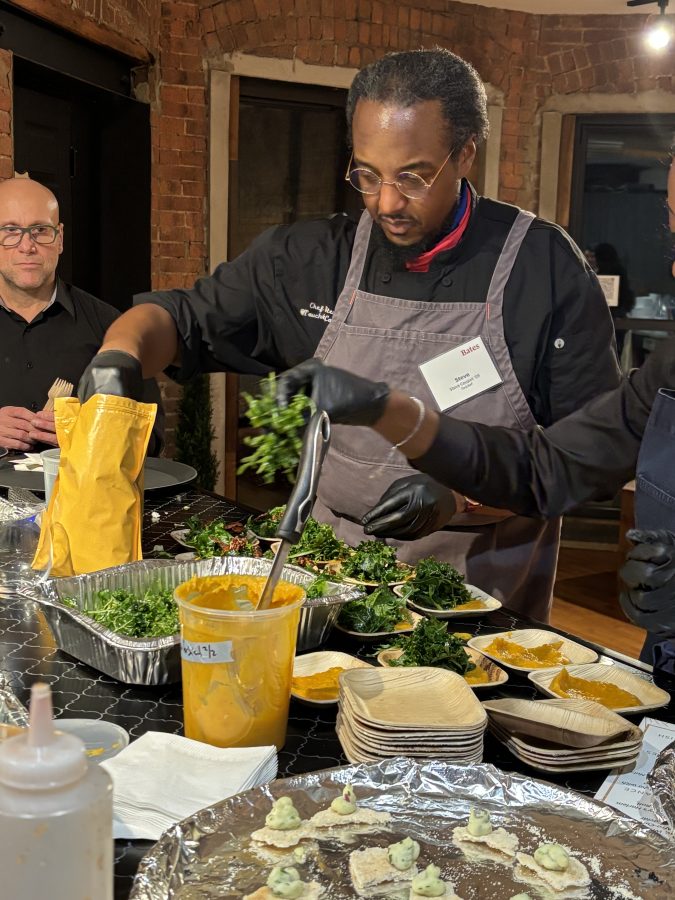
To kick off Black History Month, MOSAIC hosted a one-of-a-kind dining experience in New York City with Bates alum and chef Steve Coupet ’09, AKA Toúchef. Thirty alumni and their guests — representing nearly 50 years of the Black experience at Bates! — gathered around small plates inspired by foods of the Black diaspora, with Steve sharing the history and cultural context behind the dishes.
We kept the food-and-community theme going at MOSAIC Boston Bites, where alumni gathered at Black-owned BRED Gourmet for Caribbean and Creole-inspired comfort food. Student leaders from the Student Center for Belonging and Community joined the fun and had a chance to “break BRED” with fellow Batesies.
Finally, a small group of alumni gathered in D.C. to paint a lasting sunset and create lasting memories at Black-owned business Sade Paint & Sip!
WE GOT OUT & PROUD
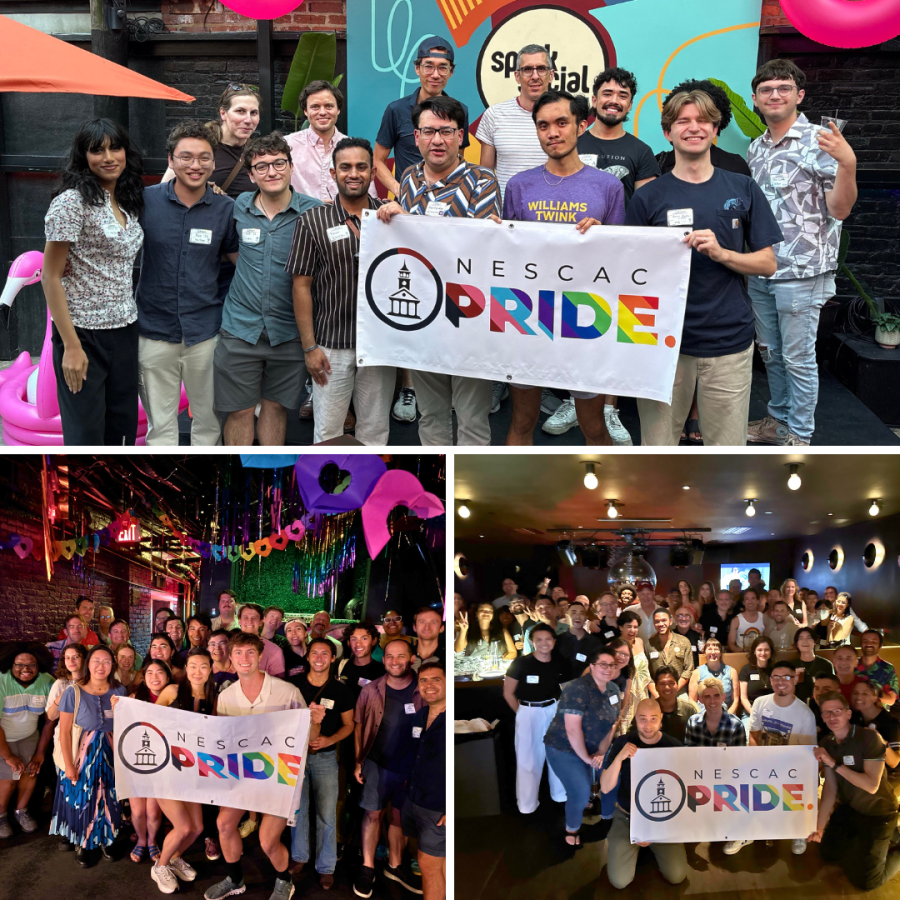
This past winter, Out and Proudly NESCAC brought LGBTQIA+ alumni together in Boston, New York, D.C., and San Francisco for queer history, banned books, museum and library visits, and — of course — time to socialize. In May, MOSAIC also joined this year’s Lavender Ceremony & Lavender Awards celebrating graduating LGBTQ+ and allied students.
WE CELEBRATED ALUMNI & STUDENTS
The Benjamin Mays Black Alumni Society hosted its annual Spring Luncheon in D.C., honoring retired American television journalist and sportscaster, Bryant C. Gumbel ’70, LL.D. ’86; Co-Founder and Executive Director of the MAAFA Redemption Project, Rev. Marshall E. Hatch Jr. ’10; and mathematician and current Provost of the University of the Virgin Islands, Dr. Camille A. McKayle ’85.
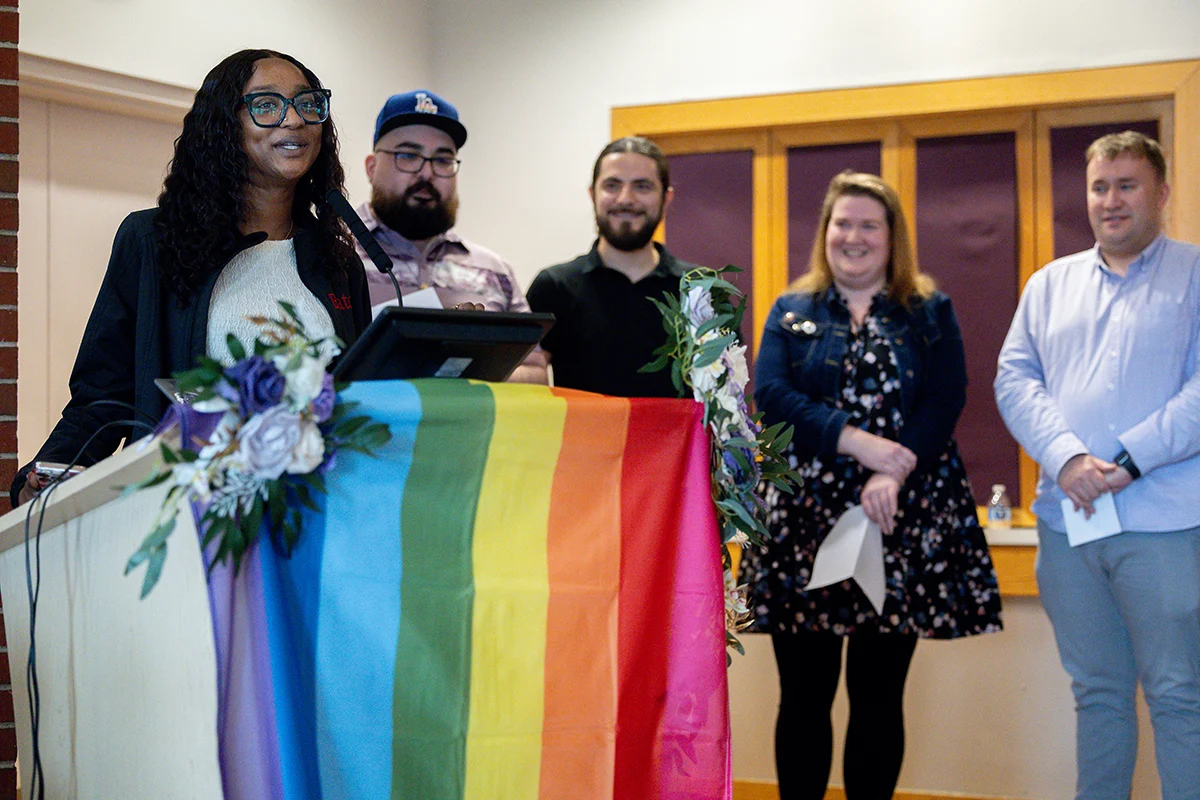
MOSAIC also connected with graduating seniors/soon-to-be-alumni through Spring Senior Chats and the Senior Toast.
WE LAUNCHED SOMETHING NEW
This spring we launched our Student Philanthropy Ambassador (SPA) Program. SPAs help connect students with alumni and give students a peek behind the curtain at how alumni support shapes the Bates experience. This year, we’re hoping to bring even more students into the mix by expanding outreach and reducing barriers to participation.
AND THEN EVERYBODY CAME BACK TO BATES
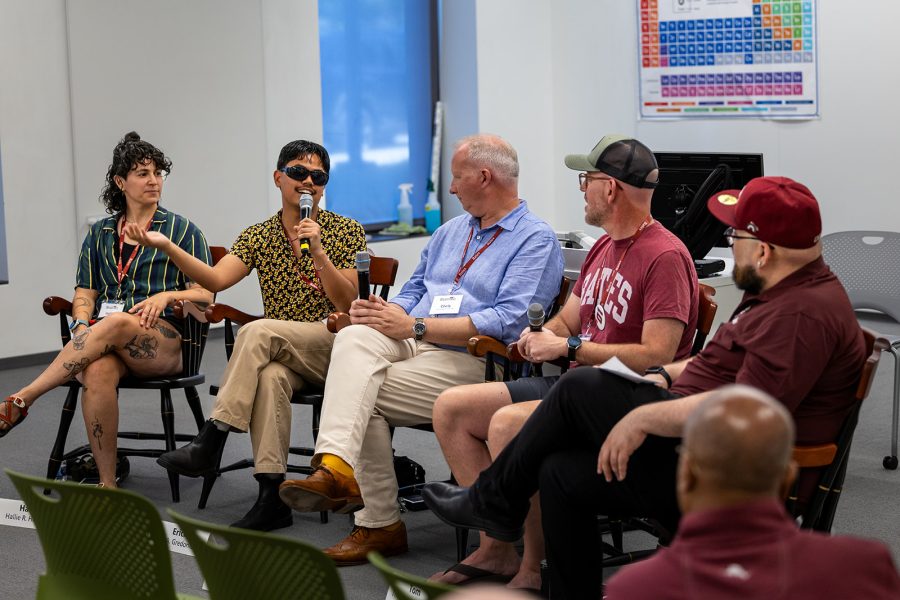
At Reunion this summer, our “Queer Through the Years” panel brought together Bobcats whose experiences spanned four decades of queer life at and after Bates. Huge thanks to moderator Anthony Del Real, Assistant Director of LGBTQ+ Programs, and panelists Chris Tine ’96, Tom Armet ’01, Hallie Herz ’11, and Erick Gredonia ’21 for sharing their stories.
Our MOSAIC Reception, hosted by the Student Center for Belonging and Community, gave students and alumni another chance to connect, reconnect, and grow the MOSAIC community — with remarks from our SCBC Director Tonya Bailey and President Garry W. Jenkins.
Our first virtual book club took us into Katherine Boo’s Behind the Beautiful Forevers and sparked lively conversations about ambition, survival, inequality, corruption, hope, and what “good choices” even mean when the system around you is stacked against you.
We’re already onto the next one: new pages, new perspectives, new debates, and hopefully a few more “Wait, what did everyone else think about THAT?!” moments. Bring your thoughts, your hot takes, and your favorite snacks. Join at any point for these biweekly virtual chats!
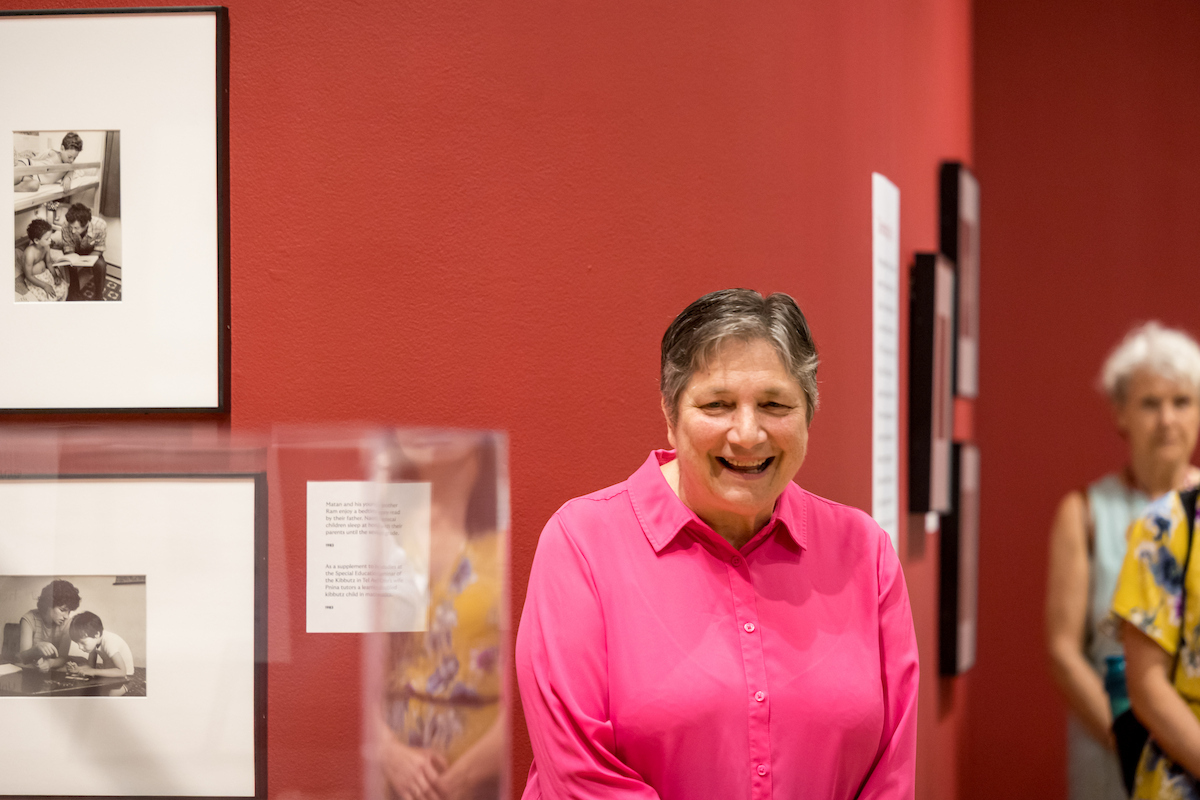
The Bates College Museum of Art recently featured Picture Stories, an exhibition celebrating the work of longtime Bates photographer Phyllis Graber Jensen. Among the photographs on view were many Bates Magazine covers featuring alumni that represent the MOSAIC community.
We’re excited to feature Phyllis and her work in this issue — and to think about what three decades of photographs can tell us about who makes up the Bates community and how that story has been told over time.
Q & A With Phyllis:
I think that the use of photography, and subsequently video, allowed for a more authentic portrayal of life at Bates. The arrival of online publications in the mid-1990s, followed by the proliferation of social media platforms, led to the chance to tell the stories of a broader range of individuals. In sharing these varying perspectives, we were able to present richer, more nuanced reporting about Bates. Although we were never visual journalists in the real sense (we were, after all, a communications and marketing outfit), we liked to say we used the tools of photojournalism to interpret the cyclical life of the college and its historical moments. Sometimes these moments reveal the tensions and emotions that surround an institution’s history.
Responding to this question is sort of like explaining which of your children you love the most. It feels like a betrayal of the ones you don’t mention. Of course, that’s understandable, but ridiculous. So I will call out one.
Anyone who spends time in Commons knows there are the quiet times and the not-so-quiet times. After working on a day-in-the-life feature, where we spent up to 18 hours documenting staff, faculty, students, and others using the building, I felt a deep appreciation for this photograph. (“An Uncommon Moment”)
As Dining Services staff members Diana Mba Oyana (left) and Sonia Roy finished their early dinner before the arrival of the supper crowd, they enjoyed a quiet moment. Or maybe a private joke.
To peer through a lens and “capture” the lives of others can feel very intrusive. Whatever they experienced was just for the two of them. I know nothing about it other than what I saw, which was enough for me.
I hope that the section of Bates photographs will stimulate their memories of a time and place that held deep meaning for them.
Students develop their adult identities in college, and I’d like to think that encountering these situations, gestures, and expressions — a celebration on the playing field, a protest against injustice, a quiet conversation with a professor — reminds them how they felt about themselves and the world they lived in.
This project follows earlier “Letters from Bobcats Who Came Before” collections written by first-generation-to-college and international alumni.
What do you wish someone had told you when you were an LGBTQIA+ student at Bates?
At a moment when LGBTQIA+ identities are so often the subject of political debate, we want current students to hear a different message: you are part of a long, vibrant community of LGBTQIA+ Bobcats, and you are not navigating this moment alone.
We’re inviting LGBTQIA+ alumni to write a letter to current queer students. Share some wisdom, encouragement, humor, honesty — or simply a glimpse of the life that can exist beyond college.
Your letter doesn’t need to tell a perfect story, and it definitely doesn’t need to offer perfect advice. Be heartfelt, funny, serious, messy, hopeful — or all of the above. Mostly, we want it to sound like you.
SUBMIT YOUR LETTER:
MOSAIC works best when alumni help shape it, so tell us what topics, traditions, places, or ideas you’d like us to make room for.
SEND US YOUR GENIUS IDEA
→ Andrea: abreau3@bates.edu Adama: adiaby@bates.edu